DD
MM
YYYY

PAGES

DD
MM
YYYY

spot_img

PAGES

Home Blog Page 2923

Navigating Africa’s Financial Lifeline Amidst Economic Turbulence

0

In the face of mounting economic challenges, Africa’s financial resilience has been put to the test. The continent’s economies, diverse and rich in potential, have encountered a series of unprecedented global and local shocks that have strained their financial systems. However, amidst this economic turbulence, there are lifelines and strategies being employed to navigate these troubled waters.

The African Economic Conference 2024, set to take place in Gaborone, Botswana, aims to address these very issues. Themed “Securing Africa’s Economic Future Amidst Rising Uncertainty,” the conference will explore practical strategies for building resilience, innovative development financing, and the role of technology in fostering stability.

One of the most pressing concerns for African economies is the risk of debt distress. With 23 African countries at high risk or already in distress, the need for a robust financial support system is critical. The International Monetary Fund’s allocation of Special Drawing Rights has provided some relief, but only a fraction of this global allocation has been directed towards Africa.

Innovative development financing plays a pivotal role in Africa’s economic growth, especially in the private sector and small to medium enterprises (SMEs). Here are some specific examples of innovative financing mechanisms that have been implemented across the continent:

Blended Finance Instruments: These are financial structures that combine capital with different levels of risk, allowing for the mobilization of private investment in development projects. For instance, the Africa Agriculture and Trade Investment Fund is an example of a blended finance instrument that attracts private capital for agricultural development.

Diaspora Bonds: These bonds allow members of the diaspora to invest in their home country’s development. They are a form of innovative financing that taps into the wealth of the African diaspora to fund infrastructure and development projects

The call for financial reform is loud and clear. African leaders are advocating for a restructured global financial architecture that better serves the continent’s needs. This includes improved multilateral debt restructuring frameworks and access to finance at competitive rates.

Moreover, the continent is not standing still. It is actively seeking solutions to protect itself against emerging threats. The United Nations Economic Commission for Africa reported a significant GDP loss due to the pandemic’s impact, highlighting the need for urgent action to bolster economic recovery and sustainable growth.

As the world grapples with the effects of COVID-19, climate disruption, conflicts, and geopolitical tensions, Africa’s proactive stance on financial reform and resilience is a beacon of hope. The continent’s efforts to secure its financial future amidst economic turbulence are not just a regional concern but a global one, with implications that transcend borders.

The upcoming African Economic Conference 2024 represents a pivotal moment for the continent to come together, share experiences, and forge a path forward. It is an opportunity for established academics and young researchers to present solution-oriented research and for policymakers to engage in meaningful dialogue.

Africa’s financial lifeline in these turbulent times lies in its ability to adapt, innovate, and collaborate. The continent’s journey towards economic sovereignty and sustainable development is a testament to its resilience and determination to overcome adversity.

Avalanche and XRP Stumble as IntelMarkets Emerges as a New Crypto Contender

0

The crypto market took a sharp downturn as Bitcoin retested $55,000 earlier this week. Top crypto projects like Avalanche (AVAX) and Ripple (XRP) stumbled, losing even more gains and key price levels.

Meanwhile, a new contender has emerged in this new ICO: IntelMarkets (INTL). Its upside potential as one of the most promising low-cap gems, along with its convergence of AI and DeFi, make it an instant favorite.

IntelMarkets (INTL): A New Crypto Contender

IntelMarkets (INTL), a new crypto contender, is gearing up to reshape the $36 billion global crypto trading market. Standing at the crossroads between artificial intelligence and DeFi, the idea is to create an AI-driven smart trading platform.

In addition to AI tools, users can employ advanced trading features like trading bots, copy trading and up to 1,000x leverage. More importantly, its dual-chain functionality means it can operate on the Solana and Ethereum blockchains, giving it a competitive edge above established trading platforms.

Bearing the above in mind, analysts couldn’t be more optimistic. In the first stage of the presale, almost $300,000 has been raised. It is also heavily discounted, priced at $0.009 per token and tipped to explode by over 100x after its debut. As it prepares to shake up the crypto space, it is a more compelling bet than Avalanche and XRP.

Avalanche (AVAX): Tumbles from a Weekly High of $23

The Layer-1 blockchain Avalanche (AVAX) was among the top altcoins hit the hardest as the wider crypto market nosedived. Several key prices were lost, as were previous gains, sparking concerns among current holders. Interestingly, new investors couldn’t be more excited, bidding lower and waiting to fill their orders.

On the weekly charts, the Avalanche coin has declined by over 5%, tumbling from a high of $23. It recently confirmed the $20 support, which optimists believe might be the start of a jump toward $37.

However, another Bitcoin dump might invalidate this thesis. The coming days promise to be exciting and regardless of the short-term price fluctuations, the long-term outlook of the Avalanche crypto is promising. Top analysts anticipate a new ATH at the peak of this bull cycle—fingers crossed.

Ripple (XRP): Further Downturns or a Breakout?

Ripple (XRP), a digital asset that focuses on cross-border transactions and payments, also tumbled amid a wider market downturn. After registering an annual peak of $0.7 in quarter one, it briefly touched $0.41 in July. While there has been a slight uptick since then, it remains on the downside.

In the past seven days, the XRP coin has tumbled by 3%, highlighting declining investor interest and mirroring broader bearish sentiments. It hovers above the $0.5 support, with pessimists calling for further downswings below $0.4.

On the bright side, the XRP price is attractive, capturing the attention of savvy investors. A bullish XRP price prediction hints at a breakout above $0.6 and sustained traction toward $0.7, placing it on the list of altcoins to watch out for. Nevertheless, its next move is largely uncertain and sentiment remains cautious.

Conclusion

The overall market decline can be linked to Avalanche’s and XRP’s underwhelming performances. Meanwhile, IntelMarkets has emerged as a new crypto contender, preparing to transform the trading scene. With a projected 100x rally after its debut, it might be this year’s biggest breakout star.

Discover More About Intel Markets:

Presale: https://intelmarketspresale.com/

Buy Presale: https://buy.intelmarketspresale.com/

Telegram: https://t.me/IntelMarketsOfficial

Twitter: https://x.com/intel_markets 

Verizon Announces Plan to Acquire Frontier in A $20bn Deal

0

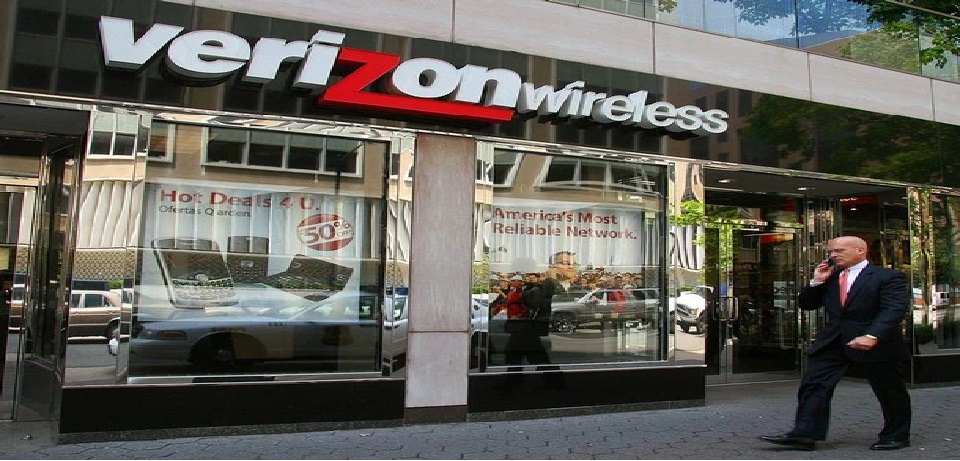
Verizon has announced its plans to acquire Frontier Communications, an internet service provider with a customer base of around 3 million across 25 states, in a deal valued at $20 billion. The all-cash transaction will see Verizon pay $9.6 billion while assuming over $10 billion in Frontier’s existing debt.

The acquisition, which is subject to regulatory approval and a shareholder vote, is expected to be finalized within the next 18 months.

As part of the deal, Verizon will purchase Frontier at a price of $38.50 per share, representing a 43.7 percent premium over Frontier’s 90-day volume-weighted average share price (VWAP) as of September 3, 2024. This move brings Verizon full circle, as it reacquires a portion of its own network that it sold to Frontier in 2016, which included its FiOS and DSL operations in Florida, California, and Texas. That transition in 2016 faced substantial technical issues, leading to outages that impacted tens of thousands of customers, creating significant disruption for Frontier during the early days of the acquisition.

Frontier has faced its own set of challenges over the years. After purchasing Verizon’s assets, the company struggled with operational difficulties, which were further compounded by its 2014 acquisition of AT&T’s network in Connecticut.

In April 2020, Frontier filed for bankruptcy, citing unsustainable debt levels and operational inefficiencies. However, it managed to emerge from bankruptcy in 2021 with a renewed focus on upgrading its network, shifting from outdated copper DSL infrastructure to fiber-to-the-home (FTTH) services. Since its restructuring, Frontier has heavily invested in fiber technology, which has made it an attractive acquisition target for Verizon.

The acquisition includes Frontier’s 2.2 million fiber subscribers, spread across 25 states, adding to Verizon’s existing 7.4 million FiOS connections in 9 states and Washington, D.C. Combined, the two companies will have fiber networks that pass over 25 million premises across 31 states and the District of Columbia.

Verizon has disclosed that Frontier’s presence in regions like the Midwest, South, and West will complement its own stronghold in the Northeast and Mid-Atlantic markets, enabling Verizon to expand its offerings of bundled services, including both internet and mobile service.

Frontier’s transformation in recent years has made it more appealing for Verizon. Over the past four years, Frontier invested $4.1 billion into upgrading and expanding its fiber network. Today, more than half of Frontier’s revenue is generated from fiber products.

The company’s commitment to fiber has helped it grow, even though it still faces challenges in customer retention and growth, with 2.05 million residential fiber subscribers and 721,000 copper DSL customers. In its latest earnings report, Frontier recorded $1.48 billion in revenue for the second quarter of 2024, alongside a net loss of $123 million, indicating that while fiber has been a game-changer, the company still has a way to go toward profitability.

What The Deal Means for Both Companies

Verizon sees the acquisition as a strategic opportunity to enhance its fiber footprint across the U.S., particularly as Frontier is in the process of building an additional 2.8 million fiber locations by 2026, which would boost its network capacity to 7.2 million fiber locations. With Verizon’s well-established FiOS brand and Frontier’s complementary reach, the acquisition positions both companies to capture a larger share of the growing demand for high-speed internet, especially as consumers increasingly adopt fiber for more robust and reliable connections.

For Frontier, the deal represents a lifeline and a strategic exit. The company has faced well-documented financial struggles, culminating in its 2020 bankruptcy filing, and although it has made strides in its fiber upgrade plan, the pressures of maintaining both fiber and legacy copper networks were a burden. The all-cash transaction allows the company to offload its fiber network while avoiding the long-term capital expenditures needed to keep pace with larger players like Verizon and AT&T.

The decision to sell for $38.50 per share, representing a 43.7% premium over the 90-day volume-weighted average, indicates that Frontier’s shareholders are receiving substantial value. This could be seen as a win for investors who may have been wary of the company’s ability to sustain its recent momentum in fiber deployment.

However, the $10 billion debt that Verizon is absorbing from Frontier underlines the scale of the financial challenges Frontier has faced.

Looking at the broader market implications, analysts believe that this acquisition is likely to increase competitive pressure on other U.S. telecom providers, particularly AT&T and Comcast, which are also investing heavily in fiber rollouts. This means the consolidation of these networks under Verizon’s control could lead to a price war or accelerated network buildouts as companies vie for dominance in the fiber and 5G spaces.

Pavel Durov, Telegram CEO Breaks Silence 12 Days After Arrest

0

Twelve days after his arrest in France, Telegram CEO Pavel Durov has broken his silence with a 600-word statement that paints his legal troubles as a byproduct of the platform’s rapid growth and mounting regulatory pressures.

Durov, detained on allegations that his platform facilitated criminal activity, including the distribution of child sexual abuse material, defended himself by claiming that Telegram is experiencing “growing pains”—a phrase he used to underscore the challenges of policing an ever-expanding user base.

His statement comes as part of an ongoing clash between global tech platforms and regulators, particularly in Europe, where authorities have ramped up efforts to hold companies accountable for the illegal activities that occur on their platforms. Durov’s arrest is the latest episode in this struggle, as authorities seek to impose stricter accountability on tech CEOs.

While Durov expressed shock over the legal action, citing what he believes is miscommunication between French authorities and Telegram, he also admitted that “policing Telegram has become harder” as the platform’s user base has surged to 950 million. He went on to emphasize his personal commitment to “significantly improving things in this regard.”

In his full statement, Durov detailed the context of his arrest, offering a three-pronged defense. First, he noted that Telegram has an official representative in the EU to handle law enforcement requests, and its contact information is publicly available. Second, he highlighted that French authorities had multiple ways to contact him, given his French citizenship and regular visits to the country. Lastly, he argued that holding a CEO responsible for third-party activities on a platform is “a misguided approach.”

Durov argued that charging him personally is an example of authorities overreaching.

“Building technology is hard enough as it is. No innovator will ever build new tools if they know they can be personally held responsible for potential abuse of those tools,” he said.

This friction between tech innovators and regulators over privacy and security is not new, and Durov’s case exemplifies the complexity of balancing user rights with law enforcement needs. The Telegram CEO acknowledged this challenge in his statement, explaining how difficult it is to “reconcile privacy laws with law enforcement requirements” while ensuring a platform operates consistently across various legal systems.

As Durov explained, Telegram has had to make difficult decisions in the past when confronted with demands from authoritarian regimes. He highlighted Telegram’s refusal to hand over “encryption keys” to Russian authorities, leading to the platform being banned in Russia, as well as its refusal to block channels of peaceful protesters in Iran, which resulted in a similar ban. He reiterated that Telegram’s goal is not profit-driven, but rather focused on “defending the basic rights of people, particularly in places where these rights are violated.”

However, Durov did not shy away from admitting Telegram’s shortcomings. He said: “Even the fact that authorities could be confused by where to send requests is something that we should improve.”

Yet, he strongly refuted claims that Telegram is an “anarchic paradise” for criminals, stressing that the platform takes down millions of harmful posts and channels daily, and has transparent processes in place, such as daily transparency reports and direct hotlines with NGOs for urgent moderation requests.

Read His Full Statement Below:

Thanks everyone for your support and love!

Last month I got interviewed by police for 4 days after arriving in Paris. I was told I may be personally responsible for other people’s illegal use of Telegram because the French authorities didn’t receive responses from Telegram.

This was surprising for several reasons:

1. Telegram has an official representative in the EU that accepts and replies to EU requests. Its email address has been publicly available for anyone in the EU who googles “Telegram EU address for law enforcement”.

2. The French authorities had numerous ways to reach me to request assistance. As a French citizen, I was a frequent guest at the French consulate in Dubai. A while ago, when asked, I personally helped them establish a hotline with Telegram to deal with the threat of terrorism in France.

3. If a country is unhappy with an internet service, the established practice is to start legal action against the service itself. Using laws from the pre-smartphone era to charge a CEO with crimes committed by third parties on the platform he manages is a misguided approach. Building technology is hard enough as it is. No innovator will ever build new tools if they know they can be personally held responsible for the potential abuse of those tools.

Establishing the right balance between privacy and security is not easy. You have to reconcile privacy laws with law enforcement requirements, and local laws with EU laws. You have to take into account technological limitations. As a platform, you want your processes to be consistent globally, while also ensuring they are not abused in countries with weak rule of law. We’ve been committed to engaging with regulators to find the right balance. Yes, we stand by our principles: our experience is shaped by our mission to protect our users in authoritarian regimes. But we’ve always been open to dialogue.

Sometimes we can’t agree with a country’s regulator on the right balance between privacy and security. In those cases, we are ready to leave that country. We’ve done it many times. When Russia demanded we hand over “encryption keys” to enable surveillance, we refused — and Telegram got banned in Russia. When Iran demanded we block channels of peaceful protesters, we refused — and Telegram got banned in Iran. We are prepared to leave markets that aren’t compatible with our principles because we are not doing this for money. We are driven by the intention to bring good and defend the basic rights of people, particularly in places where these rights are violated.

All of that does not mean Telegram is perfect. Even the fact that authorities could be confused about where to send requests is something that we should improve. But the claims in some media that Telegram is some sort of anarchic paradise are absolutely untrue. We take down millions of harmful posts and channels every day. We publish daily transparency reports (like this or this ). We have direct hotlines with NGOs to process urgent moderation requests faster.

However, we hear voices saying that it’s not enough. Telegram’s abrupt increase in user count to 950M caused growing pains that made it easier for criminals to abuse our platform. That’s why I made it my personal goal to ensure we significantly improve things in this regard. We’ve already started that process internally, and I will share more details on our progress with you very soon.

I hope that the events of August will result in making Telegram — and the social networking industry as a whole — safer and stronger. Thanks again for your love and memes.

Fintech Companies Begin Deducting N50 EMT Levy on Transactions Over N10,000 Sept. 9

0

Nigeria’s fintech sector is bracing for the Electronic Money Transfer Levy (EMTL), a move that has drawn widespread attention for its timing and broader implications. Fintech companies, including OPay, Moniepoint, and others, have notified their customers of the N50 EMTL deduction on inflows of N10,000 and above starting from September 9, as directed by the Federal Inland Revenue Service (FIRS).

This marks the end of an era where several fintech platforms provided free banking services, as the charges will now go directly to the federal government.

The Background of the Levy

The EMTL was introduced as part of the Finance Act 2020, designed to raise revenue from electronic transactions. At its core, the levy is an N50 charge applied to any electronic transfer of funds amounting to N10,000 or more. The idea behind the levy was to tap into the burgeoning digital payments ecosystem to generate revenue that could help fund government projects and services.

The government initially announced the regulatory guidelines, signed by then Minister of Finance, Budget and National Planning, Mrs. Zainab Ahmed, in 2022. The FIRS was appointed to administer the levy. However, the timing was particularly sensitive, as Nigerians were already grappling with economic challenges that included high inflation.

Irony of The Extension to Fintechs

The extension of the EMTL to fintechs, at a time when the government claims it is working to reduce the tax burden on Nigerians has raised eyebrows. President Bola Tinubu’s administration, which recently inaugurated a tax reform committee to reduce multiple taxation, had promised relief for struggling Nigerians. Many believe that the imposition of the levy on fintechs contradicts those promises.

Moreover, this move is coming in the face of the Central Bank of Nigeria’s (CBN) push for a cashless economy. The CBN has spent years promoting digital payments, urging Nigerians to transition from cash to electronic platforms to enhance efficiency and reduce the cost of handling cash. Many fintech platforms, including Moniepoint and OPay, have been key players in advancing this cashless agenda by offering free transactions, thereby encouraging the adoption of electronic payments across the country.

Now, with the mandatory N50 charge on electronic transfers, critics argue that the EMTL could slow down this progress. The additional cost of making transactions might discourage people from using digital platforms, especially those who transact frequently. For lower-income individuals or small businesses that depend on several smaller transactions daily, the levy adds up, creating yet another layer of financial strain.

A Blow to Fintechs

The levy also poses a challenge to fintech companies that have built their businesses on providing seamless, low-cost, or free digital payment services. OPay, Moniepoint, and other platforms had long attracted users by eliminating or minimizing transaction fees, which set them apart from traditional banks. This business model helped fintechs capture a significant portion of Nigeria’s payments market, particularly among the underbanked and unbanked population.

With the EMTL coming into effect, fintechs will be forced to pass the cost onto their customers, which might weaken their competitive advantage. While the deduction goes to the federal government, customers are likely to associate these new charges with the fintech companies themselves. In addition, fintechs may see a decline in transaction volumes as users seek ways to avoid the added costs, either by reducing the number of transactions or reverting to cash.

Contradictions in Economic Policy

The extension of the EMTL to fintechs also reveals contradictions in Nigeria’s broader economic strategy. On the one hand, the government is looking to expand its revenue base through taxes like the EMTL. On the other hand, it claims to be committed to alleviating the tax burden on its citizens and promoting digital financial inclusion.

Experts warn that policies like the EMTL could backfire if they push more people out of the formal financial system. They say that the government risks undoing years of progress toward financial inclusion, as this levy could drive people back into cash-based transactions, undermining the CBN’s cashless policy.