DD
MM
YYYY

PAGES

DD
MM
YYYY

spot_img

PAGES

Home Blog Page 2929

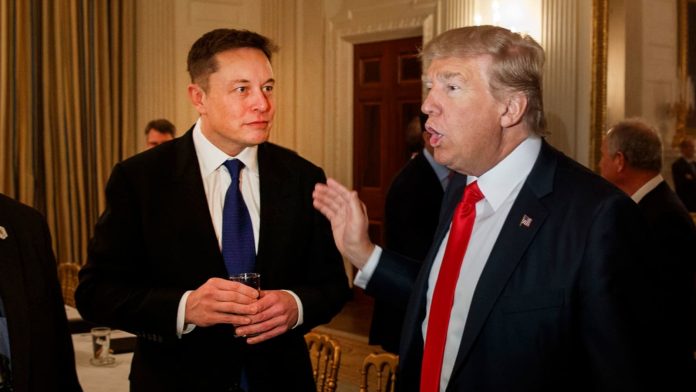
Elon Musk Appointed to Lead Trump’s Newly Formed Government Efficiency Commission

0

Former US President Donald Trump has appointed Elon Musk to lead the newly formed government efficiency commission.

As Donald Trump campaigns for re-election, he continues to advocate for major shifts in the way the U.S. government operates. In a speech at the Economic Club of New York, the former US President laid out his economic plans for a potential second term, expressing support for a government efficiency commission proposed by Elon Musk.

Trump who has also become a vocal supporter of cryptocurrencies, outlined plans to incorporate digital assets into government functions while addressing concerns about federal spending.

In a significant move to achieve this, he deemed Musk fit to head this newly formed Government Efficiency Commission. Trump revealed that Musk had suggested the idea, which would involve a comprehensive financial and performance audit of the federal government, aiming to identify areas for significant reform. The commission would be tasked with eliminating fraud and improper payments, with Trump predicting it could save “trillions of dollars”. The commission would also propose major reforms aimed at cutting waste and improving operations.

According to Reuters, Trump has been consulting with his advisors on this issue for weeks, but his announcement on Thursday marked the first official statement on the matter, appointing Musk at the center of his vision for change, should he win the 2024 U.S. presidential election.

The Republican presidential nominee claimed that in 2022, “fraud and improper payments alone cost taxpayers an estimated hundreds of billions of dollars.” He noted that  the commission would recommend “drastic reforms” and develop a plan to eliminate fraud and improper payments within six months, which he said would save trillions of dollars.

“We need to do it. Can’t go on the way we are now. This will save trillions of dollars”. Trump noted. He also promised to cut 10 government regulations for every new regulation implemented if he’s elected in November. It is understood that Trump had previously floated the idea of Musk serving as an advisor, in his government.

In a recent development, Musk, who runs X (formerly Twitter), has agreed to take on the role.

In a post on X, he wrote,

“I look forward to serving America if the opportunity arises. No pay, no title, no recognition is needed”.

The commission headed by Musk is tasked with eliminating “fraud and improper payments” within its first six months, a key part of Trump’s strategy to address the ballooning national debt, which reached $35 trillion in 2024.

Trump believes this initiative would be a crucial step in managing the federal spending crisis. “It’s massive”, Trump  emphasized, touting the potential impact of the initiative. He announced the plans in a speech to the Economic Club of New York, a group ofexecutives and industry leaders, where he also unveiled proposals to slash regulations and boost energy production, embrace cryptocurrencies, and drastically cut government spending as well as corporate taxes for companies that produce in the N.S.

Trump’s proposal for the commission however drew an immediate rebuke from Everett Kelley, president of the American Federation of Government Employees, a union whichrepresents about 750,000 federal workers. He accused Trump and Musk of wanting to gut the non-partisan civil service and replace fired workers with allies.

Meanwhile, several American Netizens have taken to the X platform (formerly Twitter), to express excitement at Trump’s newly proposed commission.

@Paul A. Szypula wrote,

The US Government needs drastically improved efficiency more than any other company in the world”.

@Penny Lane wrote,

This is long overdue.  Cutting wasteful spending should be at the top of every taxpayer’s bucket list. Kudos to Elon for stepping up for America.”

@Keith Outen wrote,

“Excellent idea. Maybe do away with EPA, Dept of Interior,  Dept of Education, give 84,000 new IRA agents the option to go to Border Patrol or quit, do away with TSA, and put back in the hands of airports and airlines who have the most to lose if not secure, and dissolve DHS.”

@Myrna Sokoloff wrote,

“Great idea! We need someone brilliant like Elon who can see what needs to be done and do it!! He had had experience in taking over companies and making them more efficient and productive!  I’ve worked in government and it definitely needs reform.”

@Bülent Özder wrote,

“What an exciting initiative! A government efficiency commission could lead to much-needed transparency and improvements in how our resources are managed. Having a visionary like Elon Musk at the helm of this task force is a promising step toward innovative solutions. Looking forward to seeing the positive changes this could bring for the country! Let’s work together for a more efficient and effective government!”

While Trump had already said he wanted to cut the tax rate to 15%, he has also called for the creation of a sovereign wealth fund, in part to fund major infrastructure projects, including highways, airports and manufacturing hubs.

Japan’s FSA to align Crypto Tax Rates with Traditional Financial Assets

0

Japan’s Financial Services Agency (FSA) is making significant strides towards modernizing the country’s approach to cryptocurrency taxation. In a bold move, the FSA has proposed a major tax overhaul aimed at aligning the tax rates of cryptocurrencies with those of traditional financial assets. This initiative is seen as a positive step towards fostering a more welcoming environment for investors and could potentially encourage greater engagement with virtual digital assets (VDAs).

The current tax system in Japan places a heavy burden on crypto investors, with tax rates on crypto profits ranging from 15% to 55%, depending on the individual’s income bracket. This is in stark contrast to the tax rates on traditional financial assets like stocks, which are taxed at a much lower rate of 20%. The FSA’s proposal seeks to reduce this disparity by lowering the tax rates on crypto assets and treating them as a viable investment target for the public. Additionally, there is an inhabitant tax of 10% on these profits, which consists of a prefectural and municipal rate of 4% and 6%, respectively. Therefore, the effective tax rate on crypto can be as high as 55%.

It’s important to note that these rates apply to residents and non-permanent residents who must report crypto earnings exceeding 200,000 JPY. The high tax rates have been a point of contention, prompting discussions for potential reforms to align crypto tax rates more closely with those of traditional financial assets, such as stocks, which are taxed at a flat rate of 20%.

This proposed tax reform is not just about reducing rates; it’s about recognizing the legitimacy of cryptocurrencies as a part of the financial ecosystem. By potentially lowering the tax rate on crypto assets in 2025, the FSA is acknowledging the growing importance of digital currencies and their role in the future of finance. The move also aligns with the global trend of integrating cryptocurrencies into mainstream financial systems, providing clarity and stability for investors.

The FSA’s efforts reflect a broader push within Japan to foster growth in the nation’s crypto sector. Advocacy groups like the Japan Blockchain Association have been campaigning for tax reforms for several years, highlighting the need for a more conducive tax environment to support the burgeoning industry.

This move by the FSA is not only a response to the growing integration of cryptocurrencies in global finance but also a reflection of the Japanese government’s recognition of the potential of digital assets. By proposing a tax structure that treats cryptocurrencies similarly to stocks and gold, the FSA aims to remove barriers.

This proposed legislation could reduce the financial barriers to entry for new investors, making it more affordable for individuals to participate in the crypto market. For existing investors, the lowered tax burden could encourage more frequent trading and investment activities, as the reduced costs could lead to higher net returns on their investments.

Moreover, the alignment of tax rates signifies a step towards the normalization and legitimization of cryptocurrencies within Japan’s financial ecosystem. It sends a message that the government recognizes the importance and potential of digital assets, which could boost investor confidence and support the growth of the crypto industry in Japan.

The tax reform could also spur innovation and attract crypto-related businesses to Japan, contributing to the country’s reputation as a forward-thinking and technologically advanced nation. As the global interest in cryptocurrencies continues to rise, Japan’s proactive approach to crypto taxation could position it as a competitive player in the international crypto market.

Top 5 Advanced Features of Modern Betting Apps

0

Since the legalization of sports betting in several U.S. states and other countries worldwide, the industry has seen a surge in competition. Betting platforms are racing to capture the attention of both seasoned bettors and new users. With more options available to consumers, the days when a simple betting interface would suffice are long gone. 

Now, companies must continually innovate to stand out in a crowded market. Features that enhance user experience, offer greater control, and provide unique engagement are at the forefront of this battle for dominance.

The drive to differentiate stems from the need to attract and retain customers in a rapidly evolving landscape. Betting apps today are far more than tools for placing wagers; they’re full-service platforms with capabilities designed to keep users coming back. 

In response to growing competition, apps now offer live streaming, AI-driven analytics, and customizable betting options, transforming the user experience into something dynamic and interactive.

Live Streaming and In-Play Betting 

The combination of live streaming with in-play betting has completely transformed the sports betting landscape. Instead of making a bet before a game and waiting for the result, bettors can now watch the match unfold in real time and adjust based on the action. 

Whether it’s a football game or a tennis match, live streaming allows fans to track momentum shifts and react immediately by placing new bets or changing existing ones. It creates a fast-paced, interactive experience that keeps fans engaged throughout the event.

Top betting platforms have recognized the importance of this feature, offering a wide variety of live betting options across multiple sports. Users can enjoy live streams from major football leagues to niche sports while betting in real time, giving them the edge to make informed decisions. For fans looking for the best in live betting can download betking mobile app for the best experience.

Cash-Out Options for Greater Control

The cash-out options have transformed how bettors manage risk. The ability to withdraw part or all of a bet before the final whistle gives users a crucial control element, especially in unpredictable games. It’s no longer about waiting until the end to see if your bet wins or loses; you can now opt out early to secure a profit or minimize potential losses.

Not every bettor wants to ride the highs and lows until the bitter end. Some prefer to take a safer route, locking in a portion of their winnings when they sense the tide could turn. Apps are becoming more intelligent, allowing for both full and partial cash-outs, giving users more flexibility to play it their way.

Bet Builders for Personalized Bets

Bet builders have made betting personal in ways that weren’t possible before. Rather than sticking to standard markets, users can now craft their bets by combining multiple outcomes into a single wager. The options are almost endless, depending on whether you want to bet on the first scorer, the total number of goals, or even the number of corners in a football match. 

The appeal of this feature lies in its flexibility—whether you’re a casual bettor or a pro, it allows you to be creative in placing wagers that align with your predictions.

Gamification and Loyalty Programs for Engagement

Betting apps are embracing gamification to keep users engaged beyond placing wagers. By incorporating loyalty programs, daily challenges, and achievement badges, these apps make the betting experience more dynamic. 

Users bet to win and earn points and rewards that can later be redeemed for bonuses or exclusive offers.

Summary

Modern betting apps have become sophisticated platforms offering far more than simple wagers. From live streaming to AI-driven insights and personalized bet-building tools, they cater to casual users and more experienced bettors. 

With each feature enhancing the experience uniquely, betting has become a fully immersive activity, combining excitement with data-driven decision-making and personal customization.

Bitcoin’s Dominance in the Cryptocurrency Market

0

Bitcoin has consistently maintained its position as the frontrunner, often outpacing its counterparts in market cycles. This phenomenon has intrigued investors and analysts alike, leading to an exploration of the underlying factors that contribute to Bitcoin’s dominance.

One of the primary reasons for Bitcoin’s exceptional performance is its foundational status as the original cryptocurrency. Created in 2009, Bitcoin introduced the concept of a decentralized digital currency, paving the way for subsequent cryptocurrencies. Its first-mover advantage has allowed it to establish a robust network effect, where the value of the network increases with the number of users and transactions, solidifying its market position.

Furthermore, Bitcoin is often perceived as a digital store of value, akin to digital gold. This perception is bolstered by its limited supply of 21 million coins, which contrasts with the inflationary nature of many fiat currencies. Investors tend to flock to Bitcoin as a hedge against economic uncertainty and inflation, contributing to its price resilience.

Another factor contributing to Bitcoin’s lead is its security and decentralization. Being the most secure and decentralized form of digital money, Bitcoin provides a level of trust and stability that is challenging for other cryptocurrencies to match. Its proof-of-work consensus mechanism, which requires significant computational power to validate transactions and create new blocks, adds to its security and deters potential attacks.

The influence of institutional adoption cannot be overlooked. High-profile investments by companies like MicroStrategy and Tesla have not only increased Bitcoin’s visibility but also validated its legitimacy as an investment asset. Such endorsements have a ripple effect, encouraging more institutions to consider Bitcoin as part of their portfolios.

One significant risk to Bitcoin’s dominance is the rise of alternative cryptocurrencies, or altcoins. With over 13,000 cryptocurrencies in existence, the introduction of new coins with substantial potential can divert attention and investment away from Bitcoin. Altcoins often offer different functionalities, such as smart contracts or faster transaction speeds, which can attract a dedicated user base.

Regulatory changes also pose a risk to Bitcoin’s market position. Governments and financial institutions worldwide are still grappling with how to regulate cryptocurrencies. Stricter regulations, or even outright bans in certain jurisdictions, could impact Bitcoin’s accessibility and attractiveness to investors. Conversely, regulatory clarity and acceptance could bolster Bitcoin’s position as a ‘safe’ crypto asset.

Market sentiment is another factor that can influence Bitcoin’s dominance. Emotional reactions to market events can lead to sudden spikes or dips in Bitcoin’s market share. For instance, during periods of high volatility or uncertainty, investors may flock to Bitcoin, increasing its dominance. In contrast, during bull markets or periods of innovation, investors may diversify into altcoins, decreasing Bitcoin’s dominance.

In contrast, other cryptocurrencies often serve different purposes, such as facilitating smart contracts or providing utility within specific ecosystems. While they may excel in their niches, they do not necessarily compete directly with Bitcoin’s role as a store of value or medium of exchange.

Bitcoin’s dominance in the cryptocurrency market can be attributed to its first-mover advantage, perception as a digital store of value, unparalleled security and decentralization, and increasing institutional adoption. As the digital asset landscape continues to mature, Bitcoin’s position may be challenged by emerging technologies and market dynamics. However, its foundational role in the cryptocurrency ecosystem is likely to remain a significant factor in its market performance.

What are your thoughts on Bitcoin’s dominance? Do you think it will maintain its lead, or will other cryptocurrencies eventually catch up? Share your insights and join the discussion.

Lesson from Apple App Economy And Why Nigeria Must Reform Its Tax System

1

Scenario A:

Company Alpha needs 100 entry level industrial welders. It partners with a local community college (think of a Polytechnic which offers only OND), supporting the school with $1 million, to train those 100 young people, with a custom curriculum it has created with the school. At the end of the two years, those 100 young people are hired by Company Alpha. And the company also deducts that $1 million from its tax.

Scenario B:

Company Beta needs the same 100 welders but because its partnerships with any school  is likely treated as an expense, it sees no strategic benefit to do that industry-college collaboration. So, instead of putting that $1M in the school, it opens a training unit, with $2m to do the same thing. As that happens, it is distracted from its core mission since it is now running a big training program, with associated asset under-utilization challenges. 

Lessons: Scenario A is what happens in the United States. Companies save money as they partner with universities and colleges because the tax system encourages that. The companies which do these things are not doing them because they like those schools, they do them because they use one stone to kill many birds: you support a local school, you get all you want, and you still save tax money.

Scenario B is really what we have in Nigeria unless you have sophisticated accountants. Largely, when you give, it could be an expense line with no strategic tax repositioning. In the US, you can donate your software to a university to use to train their students, which if they become very familiar with, it benefits you, since most will ask for what they are familiar with at work. You get tax credits on that donation and the process is simple; quantify the value and deduct when you file your tax.

Many years ago, when I was a student in Johns Hopkins, they added this optional course on IOS development, and Apple engineers were to teach it with a professor. Yes, that was an the early phase of IOS-based app development evolution, and Apple distributed their staff across leading American universities to inject the courses into school programs. Apple possibly deducted everything it spent on those partnerships even as it seeded a foundation for the IOS App Economy.

My Last Line: Nigeria must evaluate why companies do not like to partner with our schools, preferring to replicate practically whatever schools have. Can the reform of the tax system help?