DD
MM
YYYY

PAGES

DD
MM
YYYY

spot_img

PAGES

Home Blog Page 2930

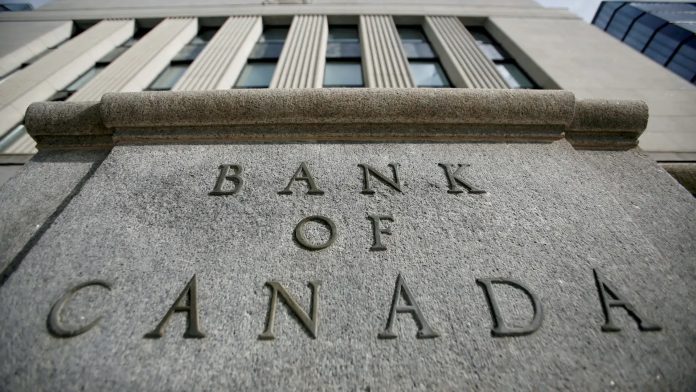
Bank of Canada cuts Policy Rate by 25 Basis Points

0

The Bank of Canada’s recent move to cut the policy rate by 25 basis points marks a significant step in the country’s monetary policy amidst global economic shifts. This decision, the third consecutive cut this year, brings the policy rate down to 4.25%, reflecting the central bank’s response to the current economic landscape. This is particularly pertinent given the slight increase in economic growth in Canada during the second quarter, led by government spending and business investment, which was slightly stronger than forecasted in July.

The rationale behind the rate cut is multifaceted. Primarily, it aims to stimulate economic growth by making borrowing more affordable for consumers and businesses. Lower interest rates typically encourage spending and investment, which can help boost economic activity. On the other hand, it acknowledges the need to adapt to the softening labor market and the slower pace of economic activity observed in recent months.

Moreover, the global economy’s expansion by about 2.5% in the second quarter, consistent with projections in the Bank’s July Monetary Policy Report (MPR), has been a contributing factor. However, the labor market continues to show signs of slowing, with little change in employment in recent months, despite wage growth remaining elevated relative to productivity.

The implications of this rate cut are significant for both the financial sector and the average consumer. Following the Bank’s announcement, major financial institutions such as RBC Royal Bank have adjusted their prime rates accordingly, which is expected to influence the rates applied to mortgages and other loans.

Economists had widely anticipated this move, and it aligns with the Bank’s strategy to ensure price stability and support the Canadian economy. The Bank of Canada has indicated that future monetary policy decisions will be guided by incoming data and its implications for the inflation outlook. This suggests a cautious approach, with the Bank poised to respond proactively to both domestic and international economic developments.

For homeowners with existing variable-rate mortgages, this rate cut could translate into lower monthly payments. For example, on a $100,000 mortgage, a 25-basis-point reduction could mean about $15 less in monthly payments. Therefore, on a larger scale, a $600,000 mortgage could see monthly savings of approximately $90.

Prospective homebuyers may also find more favorable borrowing conditions as a result of the rate cut. Lower mortgage rates can increase affordability, allowing buyers to qualify for larger loans or reduce the cost of borrowing.

However, it’s important to note that fixed-rate mortgages, which are more influenced by the bond market, may not see immediate changes as a result of the policy rate cut. Fixed rates tend to respond more slowly to changes in the policy rate, and their movement is also dependent on other economic factors such as inflation and growth expectations.

As the Bank of Canada continues its policy of balance sheet normalization, it remains vigilant in its assessment of the global economy’s performance. Economic growth in the United States has exceeded expectations, primarily driven by consumer spending, while the Euro-area has benefited from a surge in tourism and services, despite a downturn in manufacturing. Meanwhile, China faces challenges with weak domestic demand impacting its economic growth.

In Canada, the economy exhibited a growth of 2.1% in the second quarter, spurred by government spending and business investment. However, preliminary indicators suggest a softening of economic activity, which has been a contributing factor to the Bank’s decision to lower the policy rate. The Bank of Canada’s next scheduled interest rate announcement is set for October 23, 2024, when it will also publish its full outlook for the economy and inflation in its Monetary Policy Report.


Eight Million Small Businesses Have Closed in Nigeria From Jan 2023 to June 2024 – ASBON

1

Nigeria’s economic headwinds have taken a severe toll on small businesses, with the Association of Small Business Owners of Nigeria (ASBON) sounding the alarm on the dire situation faced by entrepreneurs in the country.

In an exclusive interview with SaharaReporters, ASBON’s National President, Mr. Femi Egbesola, painted a grim picture of the devastating effects of the economic policies implemented under former President Muhammadu Buhari and President Bola Tinubu’s administrations.

Egbesola revealed that from January 2023 to June 2024, a staggering 20% of businesses in Nigeria were forced to shut down, a development he attributes to the harsh economic policies that have compounded challenges for small businesses. With Nigeria having an estimated 40 million small businesses, the closure of 20% amounts to approximately 8 million businesses ceasing operations during this period.

The human cost of these shutdowns is even more alarming, as Egbesola explained that many business owners have succumbed to the pressure of failing enterprises and unmet loan obligations.

“Many persons have died from shutting their businesses,” Egbesola stated. “Some could not fulfil their loan obligations, so they died from the pressure. Others are in the hospital as of now.”

The economic crisis gripping Nigeria has not only forced businesses to close but also led to mass downsizing in those still operational. Egbesola’s personal experience underscores the scale of the problem.

“I used to have 52 workers but now I have only 14,” he shared, highlighting how widespread downsizing has become due to the economic hardship. This contraction of the workforce adds to the unemployment crisis, further destabilizing the country’s economic fabric.

Egbesola emphasized the role that small businesses play in Nigeria’s economy, stating that they account for 86% of the country’s workforce. With small-scale businesses being the highest employers of labor, the ongoing closures present a significant threat to the livelihoods of millions of Nigerians. He urged the government to declare a state of emergency on the economy to prevent further damage.

“A state of economy should be declared as we are the highest employer of labour,” Egbesola urged. “You can imagine what happens when small businesses cannot survive.”

The broader economic climate in Nigeria has been deteriorating, with inflation continuing to rise and further straining the financial health of both businesses and consumers. The hike in petrol prices, which have reached as high as N1,200 per liter in some parts of the country, has compounded the cost of living and doing business, particularly affecting sectors reliant on transportation and energy.

Small business owners in Nigeria have long been at the mercy of economic instability, and the situation has only worsened in recent years. Under the Buhari administration, the country faced two recessions and a continuous rise in inflation, which eroded the purchasing power of consumers and increased operational costs for businesses. Policies that failed to address the fundamental challenges faced by small enterprises, such as access to credit and affordable energy, left many struggling to stay afloat.

The current administration of President Bola Tinubu has yet to provide relief to small businesses, as policies aimed at stabilizing the economy have yet to bear fruit. While Tinubu’s government inherited a host of economic problems, compounded by his own policies, such as the removal of fuel subsidies and ongoing currency devaluation, the lack of immediate and targeted interventions has exacerbated the situation for small business owners. The consequences are evident in the widespread business closures and downsizing reported across the country.

Big Businesses Too

The economic turbulence in Nigeria has not only crippled small businesses but has also significantly impacted large corporations, including multinationals. The mass exodus of multinationals from the country has been a glaring consequence of these economic challenges since 2015, underscoring the broader implications of Nigeria’s economic policies on its business environment.

Nigeria’s escalating inflation, foreign exchange volatility, insecurity, and policy unpredictability have contributed to making the business climate increasingly hostile for many global companies. Multinational corporations, once thriving in Africa’s largest economy, have found it difficult to navigate the harsh economic landscape and began to pull out of the country en masse.

One of the most notable examples is the departure of Shoprite, the South African retail giant, which announced its exit from Nigeria in 2020 after 15 years of operations. Shoprite’s decision to leave was largely due to difficulties repatriating profits caused by dollar shortages, heightened inflation, and the overall tough economic climate.

Similarly, Mr Price, another South African retailer, exited Nigeria in 2020, citing the country’s volatile economic conditions, forex liquidity issues, and increasing costs as key factors behind its exit. The retailer struggled with reduced consumer spending and supply chain disruptions that were further worsened by the recession and inflationary pressures.

PZ Cussons, the British multinational known for its personal care and home care products, drastically scaled down its operations in Nigeria in 2019 due to persistent foreign exchange issues, rising operating costs, and slow consumer demand. Although the company retained a footprint in Nigeria, it significantly reduced its presence, citing economic headwinds and security concerns as major obstacles.

Other big names, like Etisalat (now 9mobile) and HSBC, also made the decision to exit or drastically downsize their operations. Etisalat faced financial distress in 2017, eventually transferring its ownership to 9mobile after defaulting on a $1.2 billion loan due to the weak economy. HSBC, one of the world’s largest banking groups, closed its representative office in Nigeria in 2018, citing adverse economic conditions as the primary reason.

The oil and gas sector, too, has seen a significant pullback from multinational oil companies such as ExxonMobil and Shell. Both companies have scaled down their operations in Nigeria due to regulatory uncertainties, oil theft, pipeline sabotage, and rising production costs.

These exits have sent shockwaves through the Nigerian economy, leading to increased unemployment and reduced foreign direct investment. The situation has further aggravated Nigeria’s dollar shortages, as these corporations previously contributed substantial foreign exchange inflows. For small businesses, the departure of these multinationals has had cascading effects, as many smaller firms were dependent on the supply chains and operations of these larger entities.

In light of the severity of the situation, experts have called for immediate government intervention to prevent further damage to the small business sector. A state of emergency on the economy, as suggested by Egbesola, could pave the way for more aggressive and targeted measures to support small businesses. Economists have noted that the survival of this critical sector is essential not only for job creation but also for the stability of the economy as a whole.

Over 2m Users in Four Days: X’s Ban Shoots Bluesky to Meteoric Rise in Brazil – But for How Long?

0
The Bluesky social media app logo is seen on a mobile device in this photo illustration in Warsaw, Poland on 21 April, 2023. Founder Jack Dorsey of twitter has released the Bluesky application on Android. (Photo by Jaap Arriens / Sipa USA)(Sipa via AP Images)

Elon Musk’s X, the platform formerly known as Twitter, has recently found itself in deep waters in Brazil. Following a decision by the Brazilian Supreme Court, the platform has been banned in the South American country, and its users are now unable to access it.

This abrupt suspension has given way to a surge in users flocking to Bluesky, a decentralized social media app that has quickly gained traction as an alternative to Musk’s embattled platform.

In just four days, Bluesky has seen a staggering increase of over 2 million new users, a meteoric rise attributed in part to the vacuum left by X’s ban in Brazil. According to TechCrunch, this overwhelming influx of users resulted in some encountering “Not Enough Resources” errors as the platform’s engineering team scrambled to expand server capacity to accommodate the surge. Despite these technical hiccups, Bluesky has swiftly claimed the title of the most downloaded app in Brazil, outpacing Meta’s X rival, Threads, in remarkable fashion.

According to Appfigures, Bluesky’s downloads have surged by an astronomical 1,018,952 percent, a figure that underscores how quickly the platform has gained popularity in Brazil.

Factors Driving The Growth

One key factor behind this preference for Bluesky over Threads lies in its interface, which mirrors the familiar look and feel of X, particularly the timeline layout that many former Twitter users have grown accustomed to. While Threads offers its own set of features, Brazilians appear to favor Bluesky’s resemblance to the platform that Musk has reshaped since taking over.

Another critical driver behind Bluesky’s ascent is its decentralized structure, a stark contrast to the more centralized nature of X. The decentralized framework of Bluesky, akin to platforms like Mastodon, allows for more resilient operations, particularly in situations where political motivations might lead to shutdowns or restrictions.

In the case of X, which has been embroiled in controversy over its approach to content moderation and speech freedoms, Bluesky’s model presents a stark alternative. Users on Bluesky are given more autonomy to manage content, compared to X’s centralized moderation policies. This decentralization offers users a sense of security and resilience, which could explain the mass migration from X to Bluesky in Brazil.

Bluesky’s rise is not just a story of technical alternatives; it reflects the broader search for social media platforms that offer greater control, freedom, and reliability. Since its creation during Jack Dorsey’s tenure as Twitter CEO in 2019, Bluesky has been built around the principle of decentralization, with an emphasis on allowing users to move between different Bluesky providers and gain greater control over their content feeds. The app’s decentralized architecture has gained appeal as users increasingly seek platforms that are less prone to sudden changes or regulatory challenges that could disrupt access or service.

Although still missing some features that X offers, Bluesky has managed to maintain its appeal to former X users due to its intuitive and familiar interface. For many Brazilians, the platform’s resemblance to Twitter’s layout offers a sense of continuity, making it easier to transition and rebuild their digital presence without feeling like they are starting from scratch.

Additionally, Bluesky’s recent performance indicators reflect its growing engagement, with likes on the platform rising to 106.4 million and followers reaching 100.8 million, a significant leap for an emerging platform.

Meanwhile, Meta’s Threads has struggled to keep pace with Bluesky’s growth in Brazil. Despite being positioned as a rival to X, Threads has been overshadowed by Bluesky’s rapid adoption, which highlights a gap in user preference.

While Threads may appeal to those invested in the Meta ecosystem, Bluesky’s more decentralized and flexible structure offers something distinct—a sense of freedom and control, particularly valuable in environments where social media platforms face political interference.

However, Bluesky’s moment in the sun may be short-lived. A significant number of Brazilians have turned to Virtual Private Networks (VPNs) to bypass the Supreme Court’s ban on X, despite the court’s stipulated $9,000 fine for doing so. This is seen as a reflection of the depth of loyalty many users have to Musk’s platform. This means, that if the legal conflict between X and Brazil’s judiciary is resolved, it is highly likely that the majority of Bluesky’s new users will return to X, leaving Bluesky’s future in Brazil uncertain.

The Back Story of X’s Ban in Brazil

The face-off between Musk’s platform and Brazil’s judiciary stems from ongoing concerns about X’s content moderation policies, or lack thereof, under Musk’s ownership. After Musk’s $44 billion acquisition of Twitter in late 2022, concerns over hate speech, misinformation, and extremist content have been a constant source of tension. Brazil’s judiciary, under the leadership of Supreme Court Justice Alexandre de Moraes, has been particularly firm in cracking down on online misinformation, especially since the country’s tumultuous 2022 presidential elections.

In the lead-up to the 2022 elections, social media platforms, including X, played a significant role in the spread of misinformation and extremist rhetoric. Supporters of former President Jair Bolsonaro were accused of using social media to incite violence, spread conspiracy theories, and undermine Brazil’s electoral process.

Musk’s hands-off approach to content moderation, coupled with his personal statements supporting “free speech absolutism,” clashed with the Brazilian judiciary’s attempts to control online discourse. These differences came to a head in recent months when the Supreme Court demanded that X appoint a legal representative in Brazil to ensure compliance with local laws on misinformation. X’s refusal to comply led to the platform’s ban.

But For How Long?

While the ban has driven many Brazilians to alternatives like Bluesky, the widespread use of VPNs to access X suggests that the pull of Musk’s platform remains strong. However, without the ban on X, Bluesky’s user base would not have swelled so quickly. Thus, it is believed that many of its new users are likely temporary migrants from X, simply waiting for the resolution of the legal dispute.

Analysts believe the outcome of the faceoff between Musk’s X and the Brazilian judiciary will largely dictate Bluesky’s long-term prospects in the country. They note that should X comply with the court’s demands and resume operations in Brazil, Bluesky may see a sharp decline in its user base, as many will likely revert to the platform they initially sought to avoid. On the other hand, if X continues to resist the judiciary, Bluesky could further solidify its position as a viable alternative for disenchanted users seeking a decentralized, censorship-resistant platform.

Elon Musk Appointed to Lead Trump’s Newly Formed Government Efficiency Commission

0

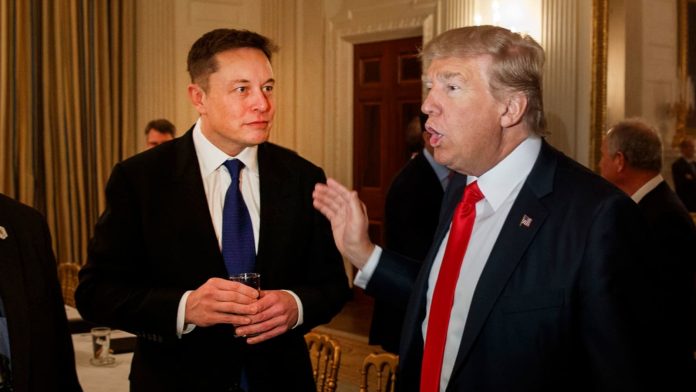
Former US President Donald Trump has appointed Elon Musk to lead the newly formed government efficiency commission.

As Donald Trump campaigns for re-election, he continues to advocate for major shifts in the way the U.S. government operates. In a speech at the Economic Club of New York, the former US President laid out his economic plans for a potential second term, expressing support for a government efficiency commission proposed by Elon Musk.

Trump who has also become a vocal supporter of cryptocurrencies, outlined plans to incorporate digital assets into government functions while addressing concerns about federal spending.

In a significant move to achieve this, he deemed Musk fit to head this newly formed Government Efficiency Commission. Trump revealed that Musk had suggested the idea, which would involve a comprehensive financial and performance audit of the federal government, aiming to identify areas for significant reform. The commission would be tasked with eliminating fraud and improper payments, with Trump predicting it could save “trillions of dollars”. The commission would also propose major reforms aimed at cutting waste and improving operations.

According to Reuters, Trump has been consulting with his advisors on this issue for weeks, but his announcement on Thursday marked the first official statement on the matter, appointing Musk at the center of his vision for change, should he win the 2024 U.S. presidential election.

The Republican presidential nominee claimed that in 2022, “fraud and improper payments alone cost taxpayers an estimated hundreds of billions of dollars.” He noted that  the commission would recommend “drastic reforms” and develop a plan to eliminate fraud and improper payments within six months, which he said would save trillions of dollars.

“We need to do it. Can’t go on the way we are now. This will save trillions of dollars”. Trump noted. He also promised to cut 10 government regulations for every new regulation implemented if he’s elected in November. It is understood that Trump had previously floated the idea of Musk serving as an advisor, in his government.

In a recent development, Musk, who runs X (formerly Twitter), has agreed to take on the role.

In a post on X, he wrote,

“I look forward to serving America if the opportunity arises. No pay, no title, no recognition is needed”.

The commission headed by Musk is tasked with eliminating “fraud and improper payments” within its first six months, a key part of Trump’s strategy to address the ballooning national debt, which reached $35 trillion in 2024.

Trump believes this initiative would be a crucial step in managing the federal spending crisis. “It’s massive”, Trump  emphasized, touting the potential impact of the initiative. He announced the plans in a speech to the Economic Club of New York, a group ofexecutives and industry leaders, where he also unveiled proposals to slash regulations and boost energy production, embrace cryptocurrencies, and drastically cut government spending as well as corporate taxes for companies that produce in the N.S.

Trump’s proposal for the commission however drew an immediate rebuke from Everett Kelley, president of the American Federation of Government Employees, a union whichrepresents about 750,000 federal workers. He accused Trump and Musk of wanting to gut the non-partisan civil service and replace fired workers with allies.

Meanwhile, several American Netizens have taken to the X platform (formerly Twitter), to express excitement at Trump’s newly proposed commission.

@Paul A. Szypula wrote,

The US Government needs drastically improved efficiency more than any other company in the world”.

@Penny Lane wrote,

This is long overdue.  Cutting wasteful spending should be at the top of every taxpayer’s bucket list. Kudos to Elon for stepping up for America.”

@Keith Outen wrote,

“Excellent idea. Maybe do away with EPA, Dept of Interior,  Dept of Education, give 84,000 new IRA agents the option to go to Border Patrol or quit, do away with TSA, and put back in the hands of airports and airlines who have the most to lose if not secure, and dissolve DHS.”

@Myrna Sokoloff wrote,

“Great idea! We need someone brilliant like Elon who can see what needs to be done and do it!! He had had experience in taking over companies and making them more efficient and productive!  I’ve worked in government and it definitely needs reform.”

@Bülent Özder wrote,

“What an exciting initiative! A government efficiency commission could lead to much-needed transparency and improvements in how our resources are managed. Having a visionary like Elon Musk at the helm of this task force is a promising step toward innovative solutions. Looking forward to seeing the positive changes this could bring for the country! Let’s work together for a more efficient and effective government!”

While Trump had already said he wanted to cut the tax rate to 15%, he has also called for the creation of a sovereign wealth fund, in part to fund major infrastructure projects, including highways, airports and manufacturing hubs.

Japan’s FSA to align Crypto Tax Rates with Traditional Financial Assets

0

Japan’s Financial Services Agency (FSA) is making significant strides towards modernizing the country’s approach to cryptocurrency taxation. In a bold move, the FSA has proposed a major tax overhaul aimed at aligning the tax rates of cryptocurrencies with those of traditional financial assets. This initiative is seen as a positive step towards fostering a more welcoming environment for investors and could potentially encourage greater engagement with virtual digital assets (VDAs).

The current tax system in Japan places a heavy burden on crypto investors, with tax rates on crypto profits ranging from 15% to 55%, depending on the individual’s income bracket. This is in stark contrast to the tax rates on traditional financial assets like stocks, which are taxed at a much lower rate of 20%. The FSA’s proposal seeks to reduce this disparity by lowering the tax rates on crypto assets and treating them as a viable investment target for the public. Additionally, there is an inhabitant tax of 10% on these profits, which consists of a prefectural and municipal rate of 4% and 6%, respectively. Therefore, the effective tax rate on crypto can be as high as 55%.

It’s important to note that these rates apply to residents and non-permanent residents who must report crypto earnings exceeding 200,000 JPY. The high tax rates have been a point of contention, prompting discussions for potential reforms to align crypto tax rates more closely with those of traditional financial assets, such as stocks, which are taxed at a flat rate of 20%.

This proposed tax reform is not just about reducing rates; it’s about recognizing the legitimacy of cryptocurrencies as a part of the financial ecosystem. By potentially lowering the tax rate on crypto assets in 2025, the FSA is acknowledging the growing importance of digital currencies and their role in the future of finance. The move also aligns with the global trend of integrating cryptocurrencies into mainstream financial systems, providing clarity and stability for investors.

The FSA’s efforts reflect a broader push within Japan to foster growth in the nation’s crypto sector. Advocacy groups like the Japan Blockchain Association have been campaigning for tax reforms for several years, highlighting the need for a more conducive tax environment to support the burgeoning industry.

This move by the FSA is not only a response to the growing integration of cryptocurrencies in global finance but also a reflection of the Japanese government’s recognition of the potential of digital assets. By proposing a tax structure that treats cryptocurrencies similarly to stocks and gold, the FSA aims to remove barriers.

This proposed legislation could reduce the financial barriers to entry for new investors, making it more affordable for individuals to participate in the crypto market. For existing investors, the lowered tax burden could encourage more frequent trading and investment activities, as the reduced costs could lead to higher net returns on their investments.

Moreover, the alignment of tax rates signifies a step towards the normalization and legitimization of cryptocurrencies within Japan’s financial ecosystem. It sends a message that the government recognizes the importance and potential of digital assets, which could boost investor confidence and support the growth of the crypto industry in Japan.

The tax reform could also spur innovation and attract crypto-related businesses to Japan, contributing to the country’s reputation as a forward-thinking and technologically advanced nation. As the global interest in cryptocurrencies continues to rise, Japan’s proactive approach to crypto taxation could position it as a competitive player in the international crypto market.