DD
MM
YYYY

PAGES

DD
MM
YYYY

spot_img

PAGES

Home Blog Page 2935

Petrol Prices In Nigeria Will No Longer Be Regulated – NNPCL

0

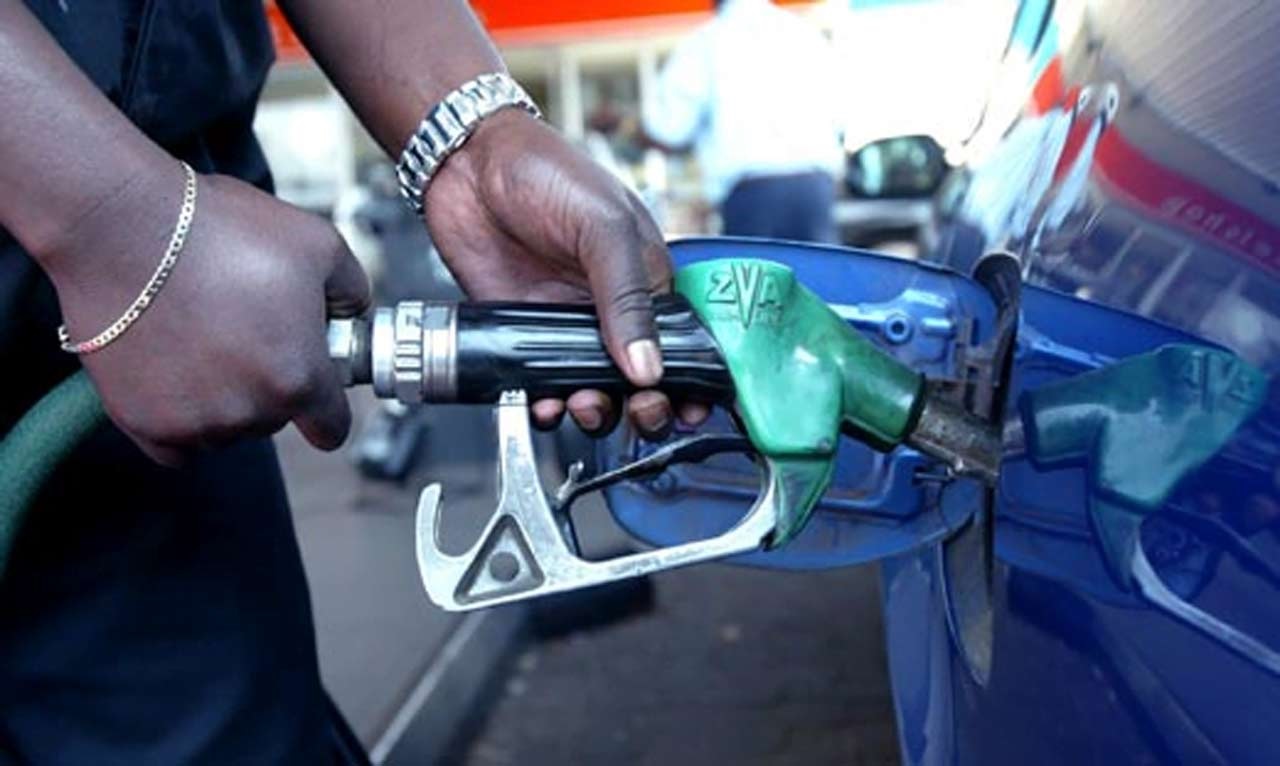
The Nigerian National Petroleum Company Limited (NNPCL) has announced that Premium Motor Spirit (PMS), commonly referred to as petrol, from the Dangote Refinery, will begin entering the market starting September 15, 2024.

In a statement signed by NNPCL’s Chief Corporate Communications Officer, Olufemi Soneye, and released in Abuja, the company confirmed that the prices of PMS will no longer be regulated by NNPCL or the government but will be determined by market forces. This statement, attributed to NNPCL’s Executive Vice President of Downstream, Adedapo Segun, comes amidst speculation that NNPCL might continue fixing prices even after the sector’s deregulation.

Segun disclosed that the downstream sector is now fully deregulated, and petrol prices will be dictated by unrestricted free market forces, as outlined in the Petroleum Industry Act (PIA).

This recent announcement contradicts previous remarks made by Aliko Dangote, the founder of the Dangote Group. Earlier, Dangote had stated that the government would still have a role in determining the price of refined petrol, even after deregulation. He had indicated that the prices of petrol from his refinery would not be left solely to market forces, raising hopes among Nigerians that prices might remain somewhat controlled.

However, NNPCL’s clarification that prices will be determined by the open market, influenced heavily by foreign exchange fluctuations and global oil prices, means that the Nigerian will have to pay more for fuel. This marks a significant policy shift and underscores the full extent of the deregulation initiative undertaken by the government, leaving no room for direct price controls as previously speculated.

One major challenge highlighted in the statement was the issue of foreign exchange (forex) illiquidity, which NNPCL identified as a critical factor affecting petrol prices. The ongoing scarcity of forex in Nigeria has been directly tied to the volatility in PMS pricing.

Segun explained, “The market has been deregulated, meaning that petrol prices are now determined by market forces rather than by the government or NNPC Ltd. Additionally, the exchange rate plays a significant role in influencing these prices.”

The statement also addressed the ongoing fuel scarcity across the country. Segun assured Nigerians that the scarcity was expected to ease within a few days as more filling stations recalibrate their systems and resume selling PMS. NNPCL is working closely with marketers to ensure extended operational hours at stations, intending to meet the demands of Nigerians and alleviate the current scarcity.

Segun said, “No right-thinking individual would be comfortable with the current fuel scarcity.”

The Dangote Refinery, which is expected to be a game-changer in Nigeria’s fuel supply chain, has long been anticipated to alleviate the country’s dependence on imported refined petroleum products. Once the refinery ramps up production and begins supplying the local market with PMS, it is expected to reduce Nigeria’s vulnerability to global oil price fluctuations and forex volatility.

Segun also hinted at broader economic reforms, which might be necessary to ensure a stable and competitive market for PMS.

NNPCL’s Supply to Dangote Refinery

In addition to the refining timeline, NNPCL revealed that it has already supplied 30 million barrels of crude oil to the Dangote Refinery, with plans to deliver another 17 million barrels soon. Of these, 6.3 million barrels are expected in September, followed by 11.3 million barrels in October, delivered in seven cargoes.

While this substantial supply signals a robust partnership between NNPCL and the Dangote Refinery, Segun expressed concern that current petrol pump prices do not accurately reflect market realities.

“The pump price today is not market reflective,” Segun explained, noting that while NNPCL remains the sole importer of PMS in Nigeria, this is not a sustainable situation.

“NNPCL is the sole importer of PMS in the country, which is abnormal. We should be coming to a situation where the free market determines prices,” he added, indicating a shift towards a fully competitive market.

Addressing Concerns of Monopoly

NNPCL’s role as the sole importer of PMS has been a contentious issue, especially with rumors of monopolistic tendencies. However, Segun clarified that this position was not a deliberate strategy by the company but a response to market conditions.

“NNPCL did not put itself in the position of sole importer. We decided to step in when others reduced their participation in the market. It’s not about us wanting to be monopolists,” Segun clarified.

He also emphasized that achieving price stability and an ideal fuel supply would require a more liquid forex market, as well as broader economic reforms.

“Market conditions need to be perfect, and there needs to be FX liquidity,” Segun said.

Nigerians to Brace for Price Hikes

With NNPCL’s confirmation that it will not interfere with price determination, experts have predicted that fuel prices could spike significantly once Dangote’s petrol enters the market. Already, prices of petrol have surged, with reports indicating that PMS is being sold for as high as N1,200 per liter in some parts of Nigeria due to scarcity. The deregulated market, combined with forex shortages and the broader economic downturn, points to the likelihood of further price increases.

It is important to note that Dangote Refinery has yet to announce the official price at which it will sell refined petrol. However, market analysts have warned that Nigerians should brace for prices around N1,000 per liter or even higher, depending on prevailing market conditions and forex availability.


Tekedia Mini-MBA Holds Learners-Lead Graduation Event in Lagos Today

0

Across many cities, Tekedia Institute Learners are having learners-led graduation events. I want to congratulate all our graduates. #ready2lead. These events are academic festivals as some of our faculty members will be giving lectures also [see photo].

At Tekedia Institute, we solve the equations of markets, helping organizations and professionals to master the fundamental mechanics of translating ideas into products and services, to solve market frictions, and advance communities. Our core product is Knowledge, and that knowledge is built on the tripod of people, processes and tools, which driving the elemental factors of production, help us turn professionals into leaders in organizations, and communities.

More learners attend Tekedia programs than any university in Africa.  It is about co-learning to liberate minds and pursue the best possible business models, because markets continue to evolve. As they gather for these events, they are building societal networks to create companies, advance professionally, and improve communities.

LOC members

Tekedia Institute mission is to see that whoever comes here is well prepared through that singular product: Knowledge. Experience it: engineer turns manager, doctor turns manager, accountant turns manager, priest turns manager, trader turns manager, banker turns manager, …and whatever you do, we have a template to prepare you on business management and leadership.

Ndubuisi Ekekwe

Lead Faculty, Tekedia Institute

Nigeria Announces Plan to Shutdown Unregistered PoS Businesses as Deadline Expires

0

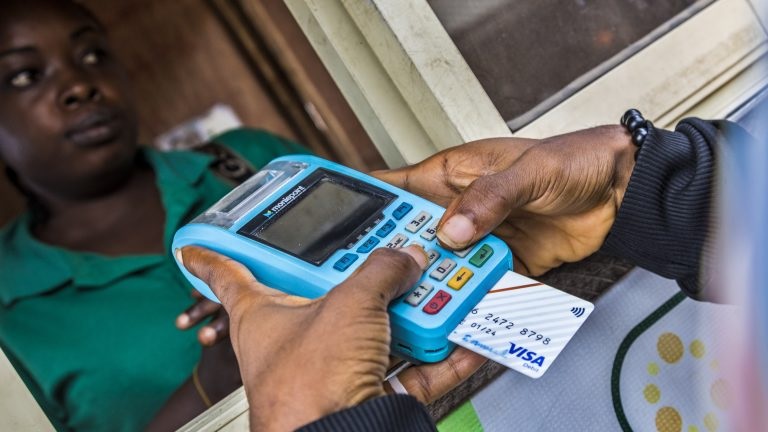
The Corporate Affairs Commission of Nigeria (CAC), has announced plans to take decisive action to shut down Point of Sales (PoS) businesses that have failed to register, following the expiration of its September 5 deadline.

The commission announced this via a public notice released on Friday, expressing concern over the lack of compliance by most of these PoS businesses despite its warning. The CAC further stated that those who have so far failed to register may be engaging in “unwholesome activities”.

The CAC notice reads,

“The Corporate Affairs Commission wishes to remind the general public particularly Fintech operators also known as Point of Sale (POS) operators, that the 60-day deadline given in daily newspaper publications of July 7, 2024, for the registration of such businesses expired on September 5, 2024. The Commission notes inadequate compliance with the directive for formalization when viewed from the background of the large number of POS operators in the country.

“Those who have taken steps to formalize in line with the Commission’s directive are commended for their positive attitudes. Recalcitrant operators have refused to adhere to the advice for formalization due possibly, to engagements in unwholesome activities or for some reasons best known to them. We are to make it clear that the Commission is working with Law Enforcement Agencies and other relevant stakeholders to deploy comprehensive enforcement and sanction framework that may include not only possible shutdown but other severe legal Consequences.”

Following the CAC decision to shut down unregistered PoS businesses, the Association of Mobile Money and Bank Agents in Nigeria (AMMBAN), has taken legal action against the Commission over its directive requiring Point of Sale operators to register their activities, which ended on Thursday, September 5, 2024. With the deadline for registration already ended, AMMBAN is challenging the CAC’s directive in court, arguing that it is unfair and potentially harmful to their businesses.

The National General Secretary, AMMBAN, Oluwasegun Elegbede, argued that the registration requirements imposed by CAC, violated the provision of the Companies and Allied Matters Act, Laws of the Federation of Nigeria, 2004, which “explicitly states that the commission has no jurisdiction over individuals not operating as a company.

In his words,

“According to section 863(1) of the Companies and Allied Matters Act, 2004, the order to enforce CAC directive on individual PoS agents operating under their name is wrong and will be challenged, as it contravenes the Companies and Allied Matters Act, Laws of the Federation of Nigeria, 2004, which explicitly states that CAC has no jurisdiction over individuals not operating as a company.

“The matter is already in court and the court has scheduled this September for hearing. The court will have to intervene in the interpretation of the quoted section of the CAMA if individuals operating as a sub-agent (likened to a bank branch) must register with CAC”.

On his part, The National Vice President Association of Mobile Money and Bank Agents in Nigeria, Dr Obioha Oti, said CAC’s deadline was null and void.

Backstory

Recall that in 2013, the Central Bank of Nigeria (CBN) launched agent banking and point-of-sale systems to increase financial inclusion in the country. The financial system which aided in financial inclusion as well as easing financial transactions was however ravaged by fraudulent cases.

This spurred the CBN in January this year, to collaborate with the Association of Mobile Money and Banking Agents of Nigeria (AMMBAN) to create a new feature on PoS terminals to flag fraudulent transactions. Also, the initiative was created to eliminate the unauthorized utilization of mobile money wallets, bank accounts, or credit cards.

Fast forward to May 2024, the CAC introduced a regulation aimed at curbing financial fraud in Nigeria’s financial services sector, especially as carried on using POS operators. Under this new mandate, POS operators were mandated to register with the CAC to carry on business in Nigeria.

The directive came against the backdrop of frequent fraud incidents involving POS terminals. According to a report by the Nigeria Inter-Bank Settlement System (NIBSS) Plc, POS terminals accounted for 26.37 percent of fraud incidents in 2023, according to fraud. CAC said the move would curb fraud in the system, kidnapping, and payment of ransoms.

Nigeria Makes A U-Turn, Reverses Policy Prohibiting Under 18 from Taking SSCE

0

The Nigerian government found itself caught in a storm of controversy following a statement made by the Minister of Education, Tahir Mamman, concerning age restrictions for students sitting the Senior School Certificate Examination (SSCE). What started as an attempt to streamline educational standards quickly snowballed into public outrage, prompting the government to backtrack on its earlier position.

It all began when Mamman, during a television interview, announced that students below a certain age—specifically those younger than 18—would no longer be permitted to take crucial secondary school exit exams like WAEC and NECO. He argued that the 6:3:3:4 system of education, which mandates specific years in primary, junior, and senior secondary school, should culminate in students reaching at least 17 and a half years before they take the exams. According to him, this alignment was necessary to ensure that students followed the education system as designed.

However, this seemingly well-intentioned move immediately triggered a wave of backlash. Parents, educators, and even policymakers expressed discontent, accusing the government of imposing arbitrary restrictions on students’ academic progress. For many, the suggestion that underage students would be barred from taking SSCE exams felt like a blanket punishment that did not account for exceptional cases of gifted students or even for regional disparities in access to quality education.

Social media was ablaze with criticism. Parents of young, high-achieving students voiced their frustrations, worried that their children’s academic trajectories would be stunted. Educators also chimed in, pointing out that age was never a valid metric for gauging academic preparedness. Some critics went so far as to call the policy regressive, arguing that it would harm students more than help them.

In the midst of mounting opposition, many questioned how practical such a rule could be, especially, given a horde of challenges that Nigeria’s education sector is mired in. Nigeria’s education system is already plagued with challenges, including inconsistent access to quality education, overcrowded classrooms, and underfunded schools.

The Government’s U-Turn

Faced with widespread condemnation, the government was forced to take a step back. In a sharp reversal, the Minister of State for Education, Yusuf Sununu, addressed the growing concerns and clarified the government’s stance. He assured the public that no official age restriction had been placed on students taking the SSCE, directly contradicting the earlier comments made by Mamman.

Speaking at an event for International Literacy Day in Abuja, Sununu said that the earlier statement had been misinterpreted.

“Nobody said no child will write WAEC, NECO or any other examination unless at age 18. This is a misconception and misrepresentation of what we have said,” he declared.

He further explained that Mamman’s comments were meant to address the entry age for university admissions, not secondary school exit exams. The 18-year age limit, he clarified, referred to when students should be entering tertiary institutions, not when they should be taking their SSCE.

Despite the government’s reversal, the controversy left many wondering how such a drastic statement could have been made without considering the repercussions.

In an effort to calm the situation, Sununu also revealed that the Ministry of Education was working on creating a guideline to identify and accommodate exceptionally talented children who might be ready for university before the age of 18. This was an acknowledgment of the public’s concern that gifted students could be unfairly blocked from advancing due to rigid policies.

Sununu highlighted that while exceptions could be made for students with extraordinary intellectual capabilities, such cases would be rare and handled on a case-by-case basis.

“We have agreed that we are going to consider it as a work-in-progress. The National Assembly is working and we are also working.

“It was shocking to say that a university in this country gave admission to children at ages 10, 11, and 12 years. This is totally wrong.

“We are not saying there are no exceptions,” he noted, “but there must be a rule.”

Although the government’s reversal was quick, the entire episode has raised deeper questions about the state of Nigeria’s education policy. The backlash itself illustrated just how sensitive the topic of education is in a country where millions of young people are eager to excel but are often held back by systemic challenges. The hasty retraction of the age limit also signaled that education policies in Nigeria are still subject to public sentiment, especially when they appear not aligned with global best practices.

Changpeng Zhao faces a Lifetime Ban from Managing Binance

0

Changpeng Zhao, commonly known as “CZ,” the founder and former CEO of Binance, has been given a lifetime ban from managing the cryptocurrency exchange. This development follows a series of legal challenges and regulatory scrutiny faced by Binance, one of the world’s largest cryptocurrency exchanges.

The ban comes as a result of a plea deal with US authorities, where Zhao pleaded guilty to one felony charge related to violations of the Bank Secrecy Act. As part of the settlement, Zhao agreed to step down as CEO and was replaced by Richard Teng. The plea deals also included Zhao paying $50 million to US regulators, although Binance’s case with the US Securities and Exchange Commission remains ongoing as of September 2024.

Changpeng Zhao has been a prominent figure in the cryptocurrency industry, leading Binance to the pinnacle of success. However, his journey took an unexpected turn when U.S. authorities charged him with multiple violations tied to the exchange’s operations. These included allegations of offering unregistered securities, market manipulation, and deficiencies in the platform’s anti-money laundering protocols.

Zhao’s ban is a significant event in the cryptocurrency world, as it underscores the increasing regulatory pressures on crypto exchanges and the importance of compliance with financial regulations. The lifetime ban prevents Zhao from resuming any leadership role at Binance, marking the end of an era for the exchange that he built into a crypto powerhouse.

Despite the ban, Zhao retains his status as the majority shareholder of Binance, which allows him to retain some influence over the company’s direction. He can propose changes to management or appoint new board members, although he is barred from running the organization as a CEO. In November 2023, Zhao stepped down as CEO of Binance as part of a plea deal with the U.S. Department of Justice. The agreement required his permanent removal from the “management or operations” of the company, effectively ending his role in the day-to-day running of Binance.

One of the most notable legal challenges for Binance was the guilty plea to federal charges, which resulted in a resolution of over $4 billion. This settlement addressed violations related to the Bank Secrecy Act, failure to register as a money transmitting business, and the International Emergency Economic Powers Act.

Furthermore, Binance agreed to a complete exit from the U.S. market, paying billions in fines to the Financial Crimes Enforcement Network (FinCEN) and the Office of Foreign Assets Control (OFAC). This decision was part of a settlement that also included the appointment of a monitor to oversee the exchange’s compliance with sanctions for a period of five years.

The Securities and Exchange Commission (SEC) has also brought forth allegations against Binance, accusing the platform of artificially inflating trading volumes and engaging in deceptive practices. Additionally, the Commodity Futures Trading Commission (CFTC) sought to ban Binance for operating illegally in the U.S. and failing to register properly with authorities.

These legal challenges highlight the importance of compliance with international financial laws and regulations, especially for companies operating within the rapidly evolving cryptocurrency market. As the industry continues to mature, it is likely that regulatory scrutiny will increase, necessitating a greater focus on legal and operational structures within crypto enterprises.