DD
MM
YYYY

PAGES

DD
MM
YYYY

spot_img

PAGES

Home Blog Page 2943

Nigerian Government to Decide Price of Dangote Petrol – Dangote

0

Africa’s richest man, Aliko Dangote, on Tuesday confirmed that Premium Motor Spirit (PMS), commonly known as petrol, from his $20 billion Lagos-based refinery is ready for distribution, marking a significant development that promises to reshape Nigeria’s petroleum industry.

According to Dangote, the fuel could reach filling stations across the country within the next 48 hours, contingent on the operations of the Nigerian National Petroleum Company Limited (NNPCL).

However, Dangote’s announcement, made during a video interview by Channels Television, has sparked widespread anticipation, as he refused to put a price on the product.

The introduction of petrol from Dangote’s refinery comes at a critical juncture for Nigeria. Since President Bola Tinubu declared an end to the petrol subsidy in May last year, the price of petrol has surged by over 400%, skyrocketing from N189 per liter to over N900. This drastic price increase has exacerbated inflation, putting additional strain on Nigerians already grappling with economic challenges.

Dangote’s refinery is widely seen as a potential game-changer, offering a local solution to the country’s fuel supply issues. However, when asked about the pricing of the new petrol, Dangote revealed that it would be determined by the Federal Executive Council, led by President Tinubu.

“It is an arrangement which is designed and approved by the federal executive council led by President Tinubu.

“As soon as it is finalized, once we finish with NNPCL, which can be today, can be tomorrow we are ready to roll into the market,” Dangote said.

Government’s Stance on Pricing

The announcement also comes amid swirling rumors that the Federal Government had directed NNPCL to increase petrol prices to N1,000 per liter. These claims were swiftly debunked by Sen. Heineken Lokpobiri, the Minister of State for Petroleum Resources (Oil), who labeled the rumors as “baseless, malicious, and a deliberate attempt to incite public discontent.”

In a statement released by his Special Adviser on Media and Communication, Nnemaka Okafor, Lokpobiri stressed that the government had issued no such directive and emphasized that NNPCL operates as an independent entity under the Companies and Allied Matters Act (CAMA). He further clarified that the Ministry of Petroleum Resources does not interfere in NNPCL’s internal decisions, including pricing matters, urging the public to dismiss the rumors and rely only on verified information from official channels.

Current Market Realities

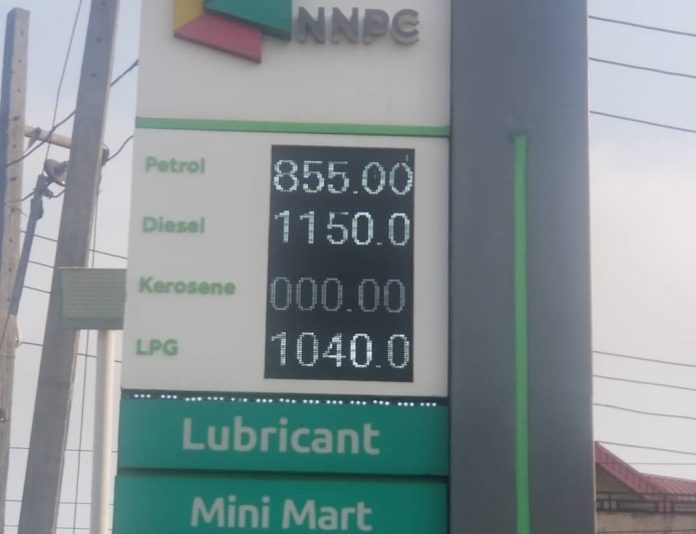
However, petrol prices remain high across the country. As of Tuesday, NNPCL retail stations had adjusted their pump prices to N897 per liter, up from N617. Independent marketers are selling petrol at rates ranging between N930 and N1,000 per liter, reflecting the ongoing volatility in the market.

This has buoyed speculation that the price of fuel from Dangote Refinery will be around N1,000 per liter.

A Milestone for Quality Assurance

On a more optimistic note, Dangote has declared today “a celebration day” for Nigerians, assuring the public that the petrol produced at his refinery will be of the highest quality, comparable to any in the world.

“You will not be having an engine issue, which a lot of us were having. It won’t happen at all. The quality here will match that of anywhere in the world; US, America, we will make sure nobody will beat us in terms of quality,” he said, offering a glimmer of hope to motorists and consumers weary of substandard fuel.

While this development is seen as a significant step in addressing the ongoing fuel crisis in Nigeria, the potential pricing of Dangote’s petrol remains a point of concern for many Nigerians, particularly as petrol stations across the country increase their pump prices to around N1,000 per liter. The question of pricing remains a significant concern, especially in light of the economic hardships already faced by the population.

Although the arrival of Dangote’s petrol could provide much-needed relief in terms of fuel availability and quality, the ultimate impact will depend on the final pricing decision by the Federal Executive Council and how it aligns with the economic realities facing the nation.

The Trump’s Interest of US Presidency Over the $Billions in Truth Social

0

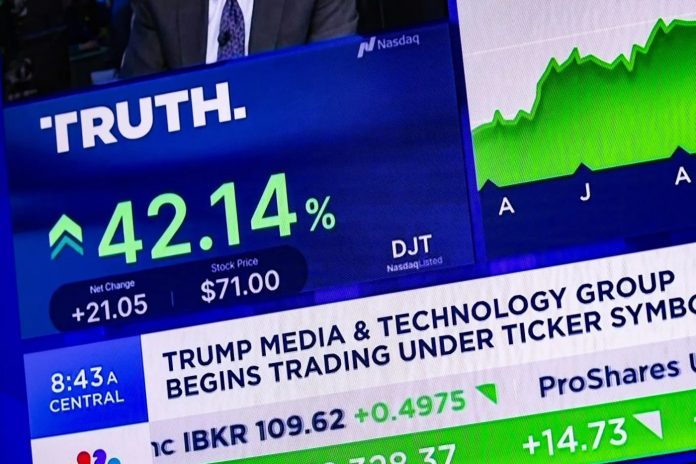
Trump, the majority shareholder of the company, saw his net worth fall nearly 4%—or $163 million—to $3.9 billion on Tuesday, making him the 851st wealthiest person as of 4:30 p.m. EDT. Trump Media and Technology Group, which uses the ticker DJT, closed at $18.08 on Tuesday, marking a 68.82% fall from when the company debuted on the Nasdaq exchange in late March after merging with a special-purpose acquisition company. Tuesday’s price surpassed Friday’s previous record low ($19.50) since DJT began trading as its own entity. Trump Media wasn’t alone in struggling Tuesday: All three U.S. stock indexes saw their worst day since Aug. 5 and other social media companies suffered, too, with Reddit falling 4% and Snap falling 5%  – Forbes

I praised him when in the process of responding after being de-platformed across many social media ecosystems, he made $billions and created millionaires in the process, via Truth Social. But that was before a tough election battle, against a totally emergent opponent, who came from the flanks, catching him unprepared. The Trump universe was built to defeat Biden,  but Kamala is the opponent today!

So between those $billions and winning in November the US Presidency, Trump has made a call: anything it will take to return to White House, the benjamins can wait. Yes, Trump returned to X (Twitter), rattling his media company investors. And they have responded, and the numbers do not look great: “Trump Media, the parent company of Truth Social and a significant holding for former President Donald Trump, has seen its share price decline, marking a notable low since it began public trading.”

Why did Trump make this call? Twitter is the political village square for all nations. No other platform comes close, and not being there is costing him votes. While Truth Social is there, you do not win elections by speaking only to your “tribe”; you find ways to reach across the aisles. Trump is hoping that by coming to Twitter, he could energize the political citizens there.

Remember: in politics, it is the permanent interest that matters. The stock value can wait as there is an election that has to be won. Good People, it is what it is. Of course, if he wins, Elon Musk can acquire Truth Social, saving the investors.

Shares of Trump Media Drop to A New Low Following His Return to X

0

Trump Media, the parent company of Truth Social and a significant holding for former President Donald Trump, has seen its share price decline, marking a notable low since it began public trading in March.

On Tuesday, shares under the ticker DJT fell to $17.89 per share, a sharp drop from its previous low of $19.38 on August 28. By the close of trading on Wednesday, DJT ended at $18.08 per share, down over 7% for the day.

This decline reflects a staggering 77% drop from its peak of $79.38 per share on March 26, following the company’s merger with a publicly traded special purpose acquisition company (SPAC). The fall coincides with a broader market downturn, particularly in the tech sector, where the Nasdaq fell by 3.26%, the Dow Jones Industrial Average by 1.51%, and the S&P 500 by 2.12%.

However, while market trends have contributed to the downward movement, the recent sharp drop in DJT shares has also been linked to Trump’s return to X (formerly Twitter). As the presidential election draws near, Trump’s re-engagement with the platform signals a strategic move to reach a broader audience, potentially diverting attention from Truth Social, the social media platform he helped launch as a direct competitor to X.

Trump’s return to X comes at a critical time for both his political ambitions and the fortunes of Trump Media. Truth Social was created as an alternative platform following Trump’s ban from major social media networks in the wake of the January 6 Capitol riots. The platform has been central to his communication strategy with his base, offering a space where his messages could be broadcast without the restrictions imposed by other platforms.

However, Trump’s reappearance on X has raised eyebrows, given his previous vow to remain exclusive to Truth Social—in the aftermath of the January 6th Capitol riot which led to his social media ban. Trump launched Truth Social as a haven for free speech, promoting it as the only platform where he would engage with his followers.

For months, the former president was active solely on Truth Social, posting frequently and using it as his primary communication tool with his base. The platform became a central part of his post-presidency brand, serving both his political ambitions and business interests. His commitment to Truth Social was so firm that he publicly stated he would never return to Twitter, even if invited back.

As Trump returns to X, some investors may be concerned that Truth Social’s relevance and user engagement could wane, leading to a further decline in DJT’s stock price.

The stock’s decline also comes just weeks before Trump and other major shareholders are permitted to sell their shares. Currently, they are restricted by a “lockup agreement,” set to expire on September 25. This agreement could be moved up to as early as September 20 if the stock price remains above $12 per share for 20 trading days within a 30-day period that began last Friday. Trump’s nearly 59% ownership in DJT, valued at over $2 billion as of Tuesday, adds further complexity to the situation.

Speculation is rife about whether Trump will cash in on his shares, given the considerable financial pressures from his campaign expenses and ongoing legal battles. Should Trump choose to sell, it could exacerbate investor concerns, potentially triggering a broader selloff and further depressing the stock’s value.

However, Trump’s return to X has fueled speculation about the future of Truth Social, a platform whose success is closely tied to his active participation. The market seems to have responded to this development, with investors interpreting Trump’s activity on X as a potential sign of waning confidence in Truth Social.

As speculation swirls about whether Trump will sell his shares, especially given his campaign expenses and ongoing legal battles, investors are on edge. A selloff by Trump could intensify doubts about the company, potentially triggering a broader stock selloff.

Nigeria Rises to Third-Largest Debtor to World Bank’s IDA, Borrowed $2bn Under Tinubu

0

Nigeria has emerged as the third-largest debtor to the World Bank’s International Development Association (IDA) as of June 30, 2024, intensifying the growing unease surrounding Nigeria’s public debt.

In a detailed financial statement released by the World Bank, Nigeria’s exposure to the IDA soared by 14.4%, climbing from $14.3 billion in the fiscal year (FY) 2023 to a substantial $16.5 billion by the close of FY2024. This $2.2 billion increase not only places Nigeria among the top three IDA debtors for the first time but also signifies a dramatic shift from its previous rank as the fourth-largest borrower in 2023.

This leap into the top three debtor nations highlights Nigeria’s escalating dependence on international financing amidst its ongoing economic challenges. The fiscal year 2024, spanning from July 2023 to June 2024, has seen Nigeria receiving at least $2.2 billion from the World Bank, a financial influx occurring under President Bola Tinubu’s administration.

It is essential to note that this debt is separate from any outstanding loans Nigeria has with the World Bank’s International Bank for Reconstruction and Development (IBRD).

Comparative Analysis of Other IDA Debtors

Nigeria’s ascent in the IDA debtor ranks is set against a broader backdrop of global borrowing trends. Bangladesh retains its position as the largest IDA debtor, with its exposure increasing from $19.3 billion in 2023 to $20.5 billion in 2024. Pakistan follows closely, maintaining its second-place standing with a stable exposure of $17.9 billion. Meanwhile, India, which held the third spot in 2023 with an IDA exposure of $17.9 billion, experienced a decrease to $15.9 billion in 2024, paving the way for Nigeria to surpass it.

Other significant IDA borrowers include Ethiopia, which saw its exposure rise from $11.6 billion in 2023 to $12.2 billion in 2024, and Kenya and Vietnam, each with $12.0 billion in 2024. These nations, along with Tanzania, Ghana, and Uganda, make up the top ten IDA debtors, collectively accounting for 63% of the IDA’s total exposure as of June 30, 2024.

The Implications for Nigeria’s Public Debt

This development has not only propelled Nigeria into the spotlight of global debt but has also amplified domestic concerns over the country’s growing public debt burden. The increasing reliance on international loans, particularly from the World Bank’s concessional arm, raises questions about Nigeria’s long-term economic sustainability and its ability to manage and service this mounting debt.

The IDA plays a crucial role in providing concessional loans and grants to the world’s poorest countries, offering financial support with low interest rates and extended repayment periods. These loans are designed to foster economic growth, reduce inequalities, and improve living conditions in developing countries.

However, Nigeria’s ballooning debt profile under the IDA now casts a shadow over these objectives, as the nation grapples with rising external debt servicing costs.

Nigeria has secured a total of $4.95 billion in loans from the World Bank under President Tinubu’s administration, although it has so far received only about 16% of the funds, suggesting a potential delay in disbursement or challenges in project implementation.

The Debt Management Office (DMO) data reveals that as of March 31, 2024, Nigeria owed the World Bank a total of $15.59 billion. With the possibility of an additional $2 billion in loans being approved for Nigeria this year, the nation’s public debt is poised to swell even further, heightening the urgency for effective debt management strategies.

While the concessional nature of IDA loans offers some relief in terms of low interest rates and extended repayment periods, it also adds to the long-term impact of rising debt on Nigeria’s economy.

Nigerian Tax Committee Proposes Removal of Taxes on Food, Public Transportation, and Housing to Ease Economic Burden

0

In a move to alleviate the economic pressures faced by millions of Nigerians, the Presidential Committee on Fiscal Policy, chaired by Taiwo Oyedele, has proposed sweeping tax reforms aimed at removing taxes on essential goods and services critical to the well-being of the populace.

This proposal, shared by Oyedele during an interview with Channels TV in Abuja on Monday, marks a critical step in the federal government’s broader effort to create a more equitable and sustainable economic framework.

Key Components of the Proposal

The committee’s recommendations include the removal of all taxes on food, public transportation, and housing—items deemed essential for everyday living. These measures are intended to directly benefit low- and middle-income Nigerians, who have been disproportionately affected by the country’s economic challenges, including rising inflation and the removal of fuel subsidies.

A particularly notable aspect of the proposal is the exemption of Value-Added Tax (VAT) on these basic necessities. Oyedele emphasized that this approach is designed to ensure that the cost of living is more manageable for the average Nigerian.

“What we have taken into account is what are those basic necessities of life—food, accommodations, transportation, education, and health. We’ve deliberately identified those items. And we’ve removed almost all the taxes applicable to them, including no VAT,” Oyedele explained.

He further clarified that while certain forms of public transportation, such as shared passenger buses, will be entirely tax-free, services that cater to more affluent individuals, like private taxi hires, will still attract taxes. “If you hire a taxi, we assume that you’re not the poorest Nigerian, so you have to pay the tax. Whereas if you get into a bus, that will be completely tax-free,” Oyedele noted.

The Federal Government had earlier directed the Nigerian Customs Service (NCS) to remove import duties on select food items and other essential goods, including medicines.

Job Creation Incentives

In addition to alleviating the tax burden on basic necessities, the committee has also put forward proposals aimed at stimulating job creation within the private sector. One of the key recommendations is offering tax exemptions to companies that significantly increase their workforce. This policy is designed to encourage businesses to expand their operations and hire more workers, thereby addressing the high unemployment rate in the country.

“We’ve also developed some proposals where the government can give relief to private sector employers who provide transportation relief to their workers,” Oyedele added. “Also, we have had proposals around more employment. So if an employer employs more people than they will normally do, they get some relief. That helps to stimulate employment generation.”

The Challenge of Multiple Taxation

The committee’s recommendations come at a time when Nigeria’s complex tax environment has been widely criticized for stifling economic growth. Multiple taxation has been a major impediment, with various sectors of the economy bearing the brunt.

For example, in the first half of 2024, MTN Nigeria, the country’s largest mobile network operator, reportedly paid an astonishing N232 billion in taxes—a 586% increase from the same period last year. The company paid 54 different taxes in 2024 alone, imposed by federal, state, and local government agencies.

This overwhelming tax burden, which is expected to increase next by the end of the year, is not unique to MTN but affects the entire telecommunications sector. The Association of Licensed Telecommunication Operators of Nigeria (ALTON) has highlighted that state governments collect the majority of these taxes, which include building permits, sewage fees, and other arbitrary levies.

Gbenga Adebayo, President of ALTON, revealed that these taxes have increased the operational costs of telcos by 50% in 2024.

“The multiple taxes are driven primarily by revenue,” Adebayo stated. “There is a perception that the telecoms industry is highly profitable and so can be treated as a cash cow.”

He warned that the current tax environment threatens the expansion of broadband infrastructure, which is crucial for integrating millions of Nigerians into the digital economy.

Tackling the Menace

The federal government’s ongoing tax reform initiative, launched following the establishment of the tax and fiscal policy committee by President Bola Tinubu in August 2023, is a response to the pressing need for a more balanced and growth-oriented tax system. The committee, led by Oyedele, is tasked with crafting a new tax framework that not only drives economic growth but also ensures that the tax burden is equitably distributed.

The proposed tax exemptions on essential goods and services represent a bold step in this direction. However, the successful implementation of these reforms will depend on their approval by the National Assembly and the ability of the government to enforce them effectively.