DD
MM
YYYY

PAGES

DD
MM
YYYY

spot_img

PAGES

Home Blog Page 2943

Solana (SOL), Cardano (ADA), and Ripple (XRP) Consolidate as Rexas Finance (RXS) Shines with $4,000,000 Presale Milestone

0

Diverse moves are taking place in the cryptocurrency market, and for major companies like Cardano, XRP,  Solana, and Rexas Finance, the results are not all that clear. While XRP aims for a comeback, Cardano experiences price fluctuation, Meanwhile Rexas Finance is garnering attention thanks to its successful presale. Investors are still on the lookout for these developments in the cryptocurrency market. 

Rexas Finance (RXS) Hits $4 Million in Presale.

Rexas Finance is on the verge of something massive, with its current presale already bringing in $4 million. Token value increased by 101% from $0.060 to $0.120 in the fourth presale stage. With more than 150,000 investors and a dedication to tokenizing physical assets, Rexas Finance continues to attract attention. The project has focused on tokenizing real assets like real estate and commodities in order to build trust with investors. Analysts predict that the token may hit $0.20 by the start of 2025 and will remain available before being listed on exchanges. This suggests that Rexas Finance has the potential to play a major role in the RWA tokenization sector.

Solana (SOL) : Solana Surges Past $170 as Analysts Predict Potential $250 by Month-End

Solana (SOL) has experienced a notable increase to above $170, attracting investors’ attention and reaching its peak in the past two months. Coinglass reports that SOL has seen increases in both price and open interest, suggesting a strong bullish outlook. The market data indicates that derivative traders are fueling this rally, with an inverse head-and-shoulders pattern developing. Experts predict that $190 is the upcoming resistance point for SOL, with potential for $230 or $250 if it surpasses current levels. Conversely, a drop under $160 could lead to a decrease to $140 or $130. Investors should exercise caution despite excitement because of market volatility. Investors are closely monitoring Solana’s performance to see if it can continue growing at its current rate. 

Ripple (XRP): XRP’s Future in Flux as SEC Appeal Sparks Price Volatility Concerns

Recently XRP saw a 0.62% rise, recovering from the previous day’s decline to close at $0.5474. However, the token remains under the crucial $0.55 mark due to the continuing pressure from the SEC’s challenge to the ruling on XRP’s programmatic sales. The SEC’s latest filing, submitted after the October 16 deadline, confirmed its intent to appeal Judge Torres’ ruling, which stated that programmatic sales of XRP did not meet the criteria of the Howey Test. This ruling had initially provided relief to XRP, but the appeal now places XRP’s legal status back in uncertainty. In addition to legal developments, Grayscale and other funds are pursuing XRP-spot ETFs, though market speculation suggests that the SEC’s appeal may delay or prevent these launches. Price volatility is expected as the appeal progresses, with key market shifts likely based on the courts’ decisions. Investors remain cautious, as the outcome of the SEC’s appeal could significantly impact XRP’s demand and price trajectory, with potential moves above $0.60 or below $0.50 depending on the legal proceedings. 

Cardano (ADA): Cardano Gains Investor Optimism Amid Market Volatility Post-Upgrade

Cardano’s value has surged, however, the market remains unstable. The recent visibility of the currency has been boosted by the implementation of the Chang Hard Fork upgrade in September. This has additionally boosted investors’ confidence in Charles Hoskinson’s future development plans for the Ouroboros Peras protocol. Nevertheless, ADA’s price continues to be unpredictable because of market instability and recent whale movements. Even though the market is feeling optimistic, Cardano’s price remains under $1. While investors are cautiously optimistic about the altcoin, its short-term performance will depend entirely on overall market trends. 

Conclusion

Cardano, Solana, and XRP’s paths are still unclear as the cryptocurrency market develops because of market volatility and legal constraints. But with notable presale accomplishments under its belt and an expanding investor base drawn to its creative tokenization strategy of actual assets, Rexas Finance is establishing itself as a noteworthy player. With its ambitious goals and projections for future growth, Rexas Finance is set to play a pivotal role in the real-world asset tokenization sector.  As investors closely watch these developments, Rexas Finance’s momentum may just be the spark needed to reshape the landscape of cryptocurrency investment.


Website: https://rexas.com

Whitepaper: https://rexas.com/rexas-whitepaper.pdf

Twitter/X: https://x.com/rexasfinance

Telegram: https://t.me/rexasfinance 
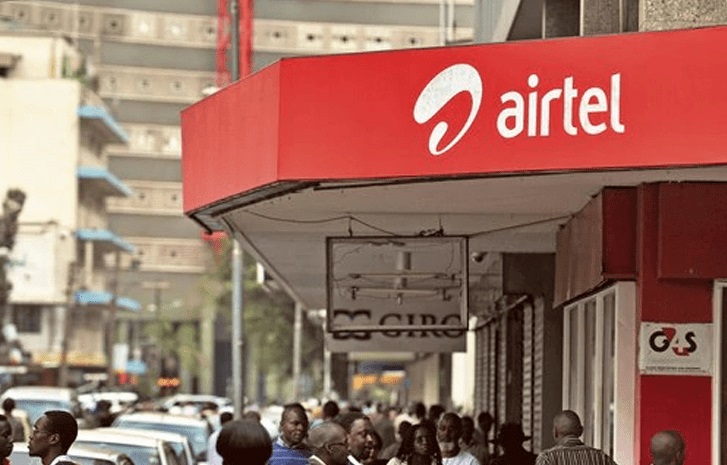
 

Airtel Africa Records Strong Half Year 2024 Report, Amidst Economic Challenges

0

Airtel Africa posted results for half the year ended 30 September 2024, which showcased solid growth despite currency devaluations and rising operational costs.

The company reported a 6.1% increase in its customer base, now totaling 156.6 million, driven by greater mobile data and mobile money adoption across the continent. Data consumption per user surged by 30.9%, reaching 6.6 GB monthly, while smartphone penetration grew by 5.3% to 42.9%. This growth underscores the strength of Airtel’s strategy to leverage Africa’s increasing digital adoption.

The telecoms revenue grew by 19.9% in constant currency, though it declined by 9.7% in reported currency due to currency devaluation impacts, especially in Nigeria. In Q2’25, Nigeria’s revenue growth accelerated to 38.2%, while Francophone Africa saw a steady 9% increase.

Mobile services revenue increased by 18.4%, with mobile money revenue rising by 28.8% in constant currency. Profit after tax was $79 million, affected by $151 million in foreign exchange and derivative losses tied to naira depreciation. The constant currency mobile money revenue growth was driven by revenue growth in both East Africa and Francophone Africa of 31.4% and 20.2%, respectively.

In Nigeria, the company announced that it has continued to focus on customer acquisitions with 1.4 million active customers registered for mobile money services at the end of September 2024. Additionally, it reported the addition of almost 117,000 agents during the year reaching over 231,000 agents as of 30 September 2024.

Other Operational Highlights

Revenue and ARPU Increase: Data and mobile money ARPU rose by 13.5% and 10.9%, respectively, contributing to an overall ARPU growth of 11.1% year-over-year.

Network and Capacity Expansion: With c & 2,800 new sites and 3,500 kilometers of fiber added, Airtel increased data capacity by 20% across its networks, supporting customer demand

Revenue and ARPU Increase: Data and mobile money ARPU rose by 13.5% and 10.9%, respectively, contributing to an overall ARPU growth of 11.1% year-over-year.

Network and Capacity Expansion: With over 2,800 new sites and 3,500 kilometers of fiber added, Airtel increased data capacity by 20% across its networks, supporting customer demand and enhancing service reliability.

Regional Performance Highlights

1. Nigeria:

Constant currency revenue in Nigeria surged by 35.6%, despite a 44.3% decline in reported currency due to naira depreciation. Data usage grew by 44.4%, driven by an expanding customer base, while voice services increased by 23% in constant currency, demonstrating resilience despite regulatory challenges.  A 90% rise in diesel prices and currency depreciation impacted profitability, but cost management initiatives are gradually offsetting these pressures.

2. East Africa:

Revenue in East Africa grew by 19.1% in constant currency, with strong growth in data (26.1%) and mobile money (31.4%). With smartphone penetration and 4G coverage reaching 98.8%, Airtel strengthened its mobile money hub in East Africa. Despite rising energy costs, margins improved in Q2, showing operational resilience.

3. Francophone Africa:

Revenue grew modestly by 5.3% in constant currency, led by data growth of 18.1%. Voice services faced challenges due to regulatory changes and price competition in markets like Congo B and Niger. Data volume increased by 41.8%, with smartphone usage averaging 6.2 GB per month. EBITDA margin declined due to higher energy costs and regulatory fees.

Financial Strategy and Capital Allocation

Debt Reduction and Currency Management: Airtel significantly reduced its foreign currency debt exposure by repaying $809 million. Currently, 89% of the company’s operating debt is in local currency, up from 71% last year.

Investment in Tower Infrastructure: Extending lease agreements for 7,100 sites across four markets, Airtel is focused on renewable energy investment to lower costs and improve cash flow.

Dividend and Share Buyback: An interim dividend of 2.6 cents per share was declared, a 9% increase. The ongoing $100 million share buyback program has acquired 61 million shares, totaling $88 million by the end of September.

Conclusion

Despite the challenges posed by currency devaluation, Airtel Africa’s half-year results reflect a resilient business model. The company’s focus on expanding mobile and financial services continues to pay dividends, with mobile money now contributing 19.6% of total revenue.

Airtel’s emphasis on cost efficiency and network investment positions it for continued growth, with East Africa leading mobile money adoption and Nigeria driving substantial data usage growth.

Nigeria Needs A Semiconductor & Microelectronics Roadmap

0

Many great questions and comments after I posted that Nigeria must develop a semiconductor & microelectronics roadmap. I get the point: why are startup funds in Nigeria not investing in these types of businesses? The simple response: complicated.

For Nigeria, we need a national vision on semiconductors and microelectronics, and it is time to set up something like MOSIS or Europractice. Largely, a foundry which all universities in Nigeria will key-in, making it possible for students to experience end-to-end chip design, from schematics to test chip from the foundry.

I am a semiconductor veteran.  Since Prof Nwachukwu introduced us to Semiconductor Physics in Federal University of Technology Owerri and Prof Ejimanya explained Transistors (Prof Chukwudebe and Prof Ndinechi took the Microelectronics part), my interest in the area has remained unalloyed. FASMICRO, my business, is Africa’s only programmable microprocessor knowledge partner of Intel; see at Intel.com website ).

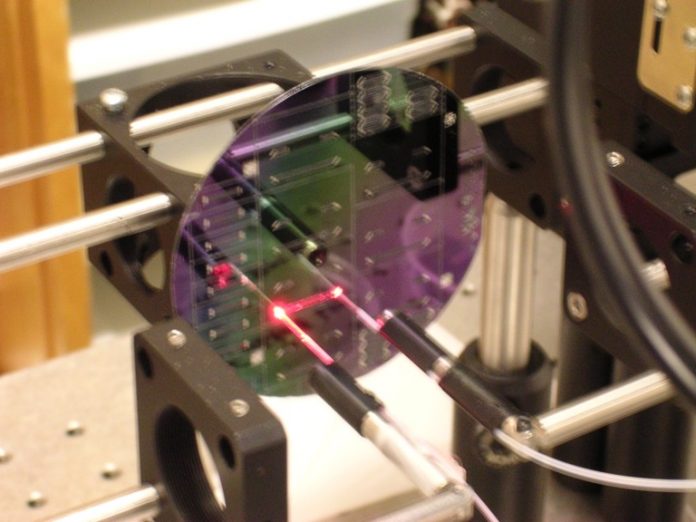
In Carnegie Mellon, I taught electronics and in Analog Devices, I built and shipped products. This photo was my test system for a photonic system which can enable information to move in circuits, not as electrons, but light [Tekedia Capital just invested in a quantum computing startup which makes qubits, the basic information unit in quantum computers, analogous to bits in classical computers]. My book in this space received the IGI Global Book of the Year award. So, I understand this industry.

You can make a lot of money from this, but it is one of the most challenging domains in technology. Semiconductors & Microelectronics is not like software where you can launch in the morning and provide an update in the evening if things go wrong. In other words, developing that industry does not happen by chance. Good People, you require a national vision to make it work in a developing country like Nigeria because the human element is critical. Yes, you need well-trained students as feeders.

So, I welcome your comments and be open to support. But so far, I do not see how to put money on this without a talent pipeline. But if we do, economic glory awaits as most things they do in Aba, Ibadan, Kano, etc will improve as electronics makes them better.

Comment on Feed

“I am tempted to suggesting that this Professor may wish to collaborate with NUC and the 274 Nigerian Universities plus Polytechnics to possibly mass produce Nigerian undergraduates in this field” – not really. Please, the talent pipeline is not just having many universities offering courses in electronics. Note that even the US has a shortage of these skills. TSMC has been importing people from Taiwan to help with its business in the US. You may have more than 3,000 colleges and universities, but only about 50 produce these graduates at a decent level of quality. If you run the numbers, that is about 5000 students which is way short of the industry needs. https://finance.yahoo.com/news/tsmc-complains-t-enough-skilled-100125351.html

How profits are Shifting from Capital-Intensive to Idea-Intensive Businesses

0

In 2015, the McKinsey Global Institute published a report highlighting a significant shift in business profits. This shift predicted a move from heavy-duty, capital-intensive industries, such as manufacturing and heavy industries, towards idea-intensive businesses that thrive on innovation and intellectual property. If you think about it, you will realize that between 2015 when the prediction was made, and 2024, this is now the reality. In the past, one needed to have big capital, get heavy-duty machines and be involved in mass production to make a lot of money. But now, someone somewhere simply comes up with an innovation, spending very little to make it, with huge profit margins, and ends up making lots of profit.

For entrepreneurs, understanding this trend is crucial for positioning their ventures in a rapidly evolving market. The most evident reason for this shift is the changing nature of value creation. Traditionally, capital-intensive businesses relied heavily on physical assets—think factories, machinery, and large-scale infrastructure. While these businesses can generate substantial revenues, they often come with high fixed costs and lower profit margins. In contrast, idea-intensive businesses, which include sectors like R&D, brands, software, algorithms, technology, consulting, finance, information technology, media, and creative industries, rely on intellectual capital. These businesses often have lower overhead costs and can scale quickly, leading to higher profit margins.

Consider tech startups, which have disrupted established industries by leveraging innovative ideas and technologies. Companies like Airbnb and Uber have built billion-dollar valuations with minimal physical assets. Their profitability stems from smart ideas and efficient business models rather than large-scale capital investments.

Next, look at business operations costs in both idea-intensive and capital-intensive businesses. According to various studies, knowledge-based firms can enjoy profit margins significantly above their capital-intensive counterparts. This is so because they can charge premium prices for their unique offerings, driven by innovation, creativity, and brand value.

Operational efficiency also plays a crucial role. Idea-intensive businesses often rely on agile methodologies and lean operations, enabling them to pivot quickly in response to market demands. This flexibility is vital in today’s fast-paced business environment, where consumer preferences can shift overnight. Entrepreneurs who understand this can not only reduce costs but also adapt their strategies to capitalize on emerging trends.

For entrepreneurs, the competitive landscape has transformed. In the past, barriers to entry in capital-intensive sectors were high due to the significant investment required. Today, the barriers are lower in many sectors, allowing new entrants to disrupt established players. This democratization of business opportunities means that anyone with a great idea and the right execution can find success, and there are so many platforms out there that give small players a chance to compete with the big guys. Take Amazon for instance. With Amazon, a small business in a small town somewhere can have its products reaching several countries, without having to invest in any logistics or transportation system.

Does this mean that we should all move to the ideas or knowledge-driven sector? Certainly not.

But knowing this can help you understand that there has been a change in the business scene. So, if you are about to become an entrepreneur, you will understand better that a higher capital may not necessarily translate to higher profits. You must then focus on building a strong competitive strategy that emphasizes differentiation. This can be achieved through innovative product development, exceptional customer service, or creating unique brand experiences. The key is to leverage the intellectual assets of the business—be it through talent, technology, or proprietary processes.

Emphasizing Innovation and Intellectual Property

Innovation is the lifeblood of idea-intensive businesses. Entrepreneurs must foster a culture that encourages creativity and experimentation. This can involve investing in research and development or creating environments where employees feel empowered to share ideas. Intellectual property (IP) also becomes a vital asset. Protecting innovations through patents, trademarks, or copyrights can provide a significant competitive edge. For instance, tech companies often rely on IP to safeguard their innovations, creating barriers for competitors and allowing for greater profit retention.

This shift may have been gradual, but it is here to stay. The change in how businesses operate and create values is fundamental, and with this understanding, entrepreneurs in capital-intensive businesses can also focus on innovation, optimizing operations for agility, and crafting effective competitive strategies to improve their profit margins. Keep in mind that it is not just about ideas. It is about having the right ideas and the ability to execute them effectively. So, as you embark on your entrepreneurial journey, remember: the future belongs to the innovators.

Trader Who Made $30M with Recent Neiro’s (NEIRO) 5,500% Pump Invests Heavily in Rexas Finance (RXS) Under $0.10

0

Investors were drawn to the very unknown coin Neiro (NEIRO), which jumped an incredible 5,500% in value over 30 days. With its all-time high (ATH) hitting on October 15, 2024, the coin surged the crypto scene from $0.00004 to a height of $0.0023.  However, a trader who made $30M with the NERO bull surge has made a significant move by investing heavily in Rexas Finance (RXS), a promising new player in the blockchain asset management space, currently priced under $0.10.

Rexas Finance (RXS): The New Altcoin Contender

With the ability to transform asset management by tokenization, Rexas Finance (RXS) is presenting itself as a game-changing blockchain token. Rexas Finance is based on real utility unlike meme coins, which mostly depend on hype. Real-world assets (RWA) can be tokenized thanks to blockchain technology, enabling individuals and companies to tokenize real estate, art, goods, intellectual property, and so more.For both investors and asset owners, the Rexas Finance (RXS) platform creates new opportunities by democratizing and streamlining the tokenization process of real-world assets.

Rexas Finance is dedicated to offering a safe, open, and effective asset tokenization solution even as it develops and grows. Still in its presale stage, Rexas Finance (RXS) offers a reasonably $0.06 price. Over $3.95 million has been collected thus far, and project interest keeps rising. The coin has already appeared on CoinMarketCap, a significant event that will drive price momentum even further.Furthermore, the $1 million token gift has attracted a lot of interest; already, over 132,000 people have taken part. This early-stage pricing combined with the coin’s innovative approach to asset tokenization is attracting substantial interest from investors seeking the next big opportunity in crypto. Among those bullish on Rexas Finance is the very trader who made headlines with his NEIRO success. By investing heavily in Rexas Finance (RXS) while it’s priced under $0.10, the trader signals confidence that this project could see significant growth, possibly surpassing NEIRO’s impressive run.

Rexas Finance (RXS) Potential For a Surge

Although NEIRO’s meteoric rise may seem impossible to replicate, Rexas Finance (RXS) holds several advantages that could allow it to see a similarly dramatic surge. First, Rexas Finance has already established a use case with real-world applications, setting it apart from purely speculative meme coins. Its better basis from this utility-driven approach helps it to draw in long-term investors. Furthermore, Rexas Finance (RXS) gains an advantage by joining the market during a time when investors are actively looking for interesting substitutes for known cryptocurrencies.

Rexas Finance, a new cryptocurrency valued at less than $0.10, has been positioned as a growing rival in this market and has attracted a lot of interest from people searching for the next breakthrough coin. Given the trader’s large investment emphasizes the token’s potential to skyrocket shortly, it could also spur more adoption and price movement.

Why Rexas Finance (RXS) Could Surge Next

Memecoin hype propelled NEIRO’s ascent, but Rexas Finance (RXS) presents a radically different value proposition. Tokenizing real-world assets (RWA) is one of the most interesting and rapidly developing areas of the blockchain business.  Almost any asset may be globally tokenized using Rexas Finance, enabling blockchain trading and accessibility.Furthermore, the trader’s investment timeframe is exactly in line with Rexas Finance’s current, fourth-stage presale. With a token price of just $0.06, this is a unique chance to invest early in a project with enormous growth potential.Rexas Finance is getting the kind of traction that frequently results in exponential development, as evidenced by the $3.95 million it has received so far, its listing on CoinMarketCap, and the engaged community involvement in its $1 million prize.

Conclusion

Rexas Finance, with a price under $0.10, presents an intriguing chance for investors hoping to profit from the next significant upswing in the cryptocurrency market. The token appears to be poised for a big breakthrough based on its creative approach to asset tokenization and its momentum throughout the presale.  Don’t miss out on your chance to be part of this revolution in asset management—invest in Rexas Finance (RXS) today and position yourself for potentially massive returns. 


For more information about Rexas Finance (RXS) visit the links below:

Website: https://rexas.com

Win $1 Million Giveaway: https://bit.ly/Rexas1M

Whitepaper: https://rexas.com/rexas-whitepaper.pdf

Twitter/X: https://x.com/rexasfinance

Telegram: https://t.me/rexasfinance