DD
MM
YYYY

PAGES

DD
MM
YYYY

spot_img

PAGES

Home Blog Page 2953

The NNPCL’s Challenge on Supplying Petrol to Nigerians

0

I have tried to ignore the own goal policy frameworks in Nigeria. But this one is painful to ignore since it is coming from NNPCL, an iconic national institution. Recall that in June 2023, I noted that Nigeria would be unable to float Naira and remove fuel subsidy at the same time.  I posited that within 18 months, the nation would get into a vicious circle of carry-capacity, where trying to “suppress” subsidies and “hold” Naira, Nigeria will trigger significant welfare losses for the citizens.

For NNPCL to drop this statement, it does mean it wants to open the veil: “NNPC Ltd. has acknowledged recent reports in national newspapers regarding the company’s significant debt to petrol suppliers. This financial strain has placed considerable pressure on the Company and poses a threat to the sustainability of fuel supply.” Whoever tells you that you can float Naira and keep the prices of petrol and diesel constant is lying to you.

PRESS RELEASE – NNPC Ltd Faces Financial Strain Due to PMS Supply Costs, Impacting Supply Sustainability

NNPC Ltd. has acknowledged recent reports in national newspapers regarding the company’s significant debt to petrol suppliers. This financial strain has placed considerable pressure on the Company and poses a threat to the sustainability of fuel supply.

In line with the Petroleum Industry Act (PIA), NNPC Ltd. remains dedicated to its role as the supplier of last resort, ensuring national energy security. We are actively collaborating with relevant government agencies and other stakeholders to maintain a consistent supply of petroleum products nationwide. – NNPC /1st September, 2024

A Great Summary from TC Daily newsletter

Nigeria’s petrol subsidy, a decades-long government intervention that has defied all efforts at dismantling, was scrapped unceremoniously in May 2023. It was hailed as an important but poorly executed reform, but other problems like FX volatility and a government struggling to raise revenues have made follow-through difficult.

The devaluation of the naira, for instance, has increased the cost of importing petrol and has ensured that a 3x increase in fuel price is no longer sufficient. Depending on who you talk to, the current landing price of petrol is ?1,000 ($0.63)/litre, significantly higher than the ?610 ($0.38) fuel currently retails for. It means the federal government has been paying subsidies for months.

Those subsidies have strained the government’s finances and caused late payments to fuel importers. Late payments lead to long fuel queues and Nigeria’s fuel scarcity, which has historically been seasonal, is now a feature in many major cities.

It is creating headaches for individuals and businesses. Logistics operators are struggling to get fuel and sometimes paying above market price. They’re also passing on those costs to end users. The scarcity also makes life difficult for millions of people who generate their own power given the country’s unreliable power supply.

Yet the situation may only get worse.

On Sunday, the Nigeria National Petroleum Company Limited (NNPC) admitted that its debts to fuel importers are significant and the “financial strain has placed considerable pressure on the company and poses a threat to the sustainability of fuel supply.”

If you’re not versed in government speak, the NNPC, which reported ?3.3 trillion ($2.07 billion) in 2023 profits in August, will likely use all of those profits to pay subsidies. And that may not even be sufficient. Some reports put the backlog of payments at $6 billion.

While NNPC continues to “engage with stakeholders,” Nigerians have to brace themselves for more queues and a possible fuel price increase.

Tekedia Mini-MBA Edition 14 Learners Have Graduated…They’re #Ready2Lead

0

Congratulations to the Tekedia Nation. Our Tekedia Mini-MBA edition 14 co-learners graduated yesterday, and they’re #Ready2Lead the world of business.

To all graduates, thank you for choosing Tekedia Institute. Knowledge brings the liberation of the mind, and I am confident that we delivered as promised.

The certificates are now ready; follow the steps in the classboard for yours.  #Win the future. You are #ready2lead the world. Congratulations!

Sanctum to add Binance, Bitget, Bybit as Partners on Liquid Staking Tokens

0

The cryptocurrency landscape is continually evolving, and a significant development in the sector is the partnership between Sanctum and major crypto exchanges Binance, Bitget, and Bybit. This collaboration is set to launch Solana liquid staking tokens (LSTs), which are anticipated to bring a new level of liquidity and accessibility to the Solana ecosystem.

The integration of these exchanges with Sanctum is a strategic move that could potentially reshape the DeFi space. Binance, being one of the largest crypto exchanges globally, holds a substantial amount of Solana, with its proof of reserves indicating custody of nearly 33 million SOL, valued over $4 billion. The partnership is not just a testament to Sanctum’s robust platform but also signals a growing interest and confidence in the Solana network’s capabilities.

Liquid staking tokens represent a significant innovation in the crypto world. They allow users to stake their cryptocurrencies and receive a liquid token in return, which can be traded or used in other DeFi protocols while still earning staking rewards. This mechanism provides flexibility and liquidity, addressing one of the limitations of traditional staking methods where assets are locked up and illiquid.

The tokens teased by the exchanges—BNSOL, bbSOL, and BGSOL—highlight the collaborative approach to enhance the Solana staking ecosystem. Bybit has already added its bbSOL to Sanctum’s LST list on GitHub, indicating swift progress in this partnership. The anticipation of Binance and Bitget’s tokens joining the list adds to the excitement surrounding these developments.

Sanctum’s model, which facilitates access to the platform’s reserve and router, essentially means access to deep liquidity created by hosting several LSTs on one platform. This could be a game-changer for users and investors looking for diversified exposure and yield opportunities within the Solana ecosystem.

Traditional staking can often mean your assets are locked up and inaccessible. Liquid staking tokens, however, can be traded or used in other DeFi protocols, providing liquidity while still earning staking rewards. These tokens offer more flexibility in managing your investments. You can participate in other DeFi activities without un-staking your assets, allowing you to respond to market movements and opportunities quickly.

Liquid staking tokens enable users to earn staking rewards while also engaging in other yield-generating activities with the same assets, potentially increasing the overall return on investment. By converting staked assets into liquid tokens, investors can diversify their portfolio within the DeFi ecosystem, spreading risk across different platforms and products.

They lower the barrier to entry for participating in staking, especially for networks that require a significant minimum stake, making it more accessible for smaller investors. Liquid staking can contribute to the security of a blockchain network by increasing the number of staked tokens, which helps in maintaining a robust and decentralized network.

Moreover, the partnership aligns with the broader trend of centralized exchanges adopting open-source, decentralized, community-owned programs. This move could attract millions of new users to the Solana network, as predicted by Sanctum co-founder FP Lee. It also underscores a shift towards more collaborative and integrated DeFi solutions, where exchanges leverage each other’s strengths to provide better services to users.

As the crypto industry continues to mature, partnerships like these are crucial for the growth and adoption of blockchain technologies. They not only provide users with more options and flexibility but also contribute to the overall resilience and innovation of the crypto market. With Sanctum’s expertise in launching and aggregating Solana LSTs, and the massive distribution power of exchanges like Binance, Bitget, and Bybit, the future of Solana’s DeFi ecosystem looks promising.

China Constructing 33,000 Capacity Mandjafa Stadium in Chad

0

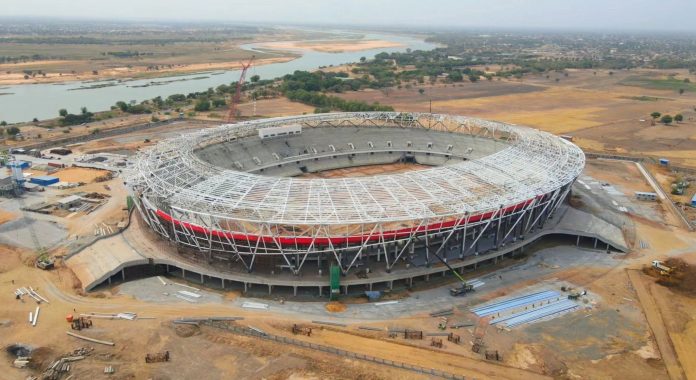
In the heart of Africa, a new landmark is rising in N’Djamena, the capital city of Chad. The Mandjafa Stadium, a project backed by China, is set to become a beacon of sports and unity for the nation. With a seating capacity of 30,000, this stadium is not just a construction project; it’s a symbol of the growing relationship between Chad and China, and a testament to the power of sports to bring people together.

China’s involvement in Africa’s infrastructure development is extensive and multifaceted, reflecting a strategic partnership that spans various sectors and countries across the continent. The Belt and Road Initiative (BRI), proposed by President Xi Jinping in 2013, is a cornerstone of this engagement, aiming to enhance regional connectivity and embrace a brighter future together.

Under the BRI, China has embarked on numerous infrastructure projects, including the construction of roads, railways, ports, and energy facilities. These projects are designed to fill the infrastructure gap in Africa, boost economic growth, and foster bilateral ties. For instance, the Tanzania-Zambia railway, an 1800 km line, stands as a significant example of China’s commitment to improving transportation networks in Africa.

Moreover, China’s role in African infrastructure extends to capital projects that are vital for the continent’s economic development. Investment in these projects is seen as crucial for promoting private sector activity, industrialization, and job creation for Africa’s growing population. The Deloitte Insights article highlights China as the biggest financier of Africa’s infrastructure, with Chinese banks playing a pivotal role in funding these developments.

The impact of these projects is far-reaching, with the potential to increase GDP per capita, foster innovation, and reduce transaction costs. This, in turn, facilitates trade and talent transfer, contributing to more inclusive growth and poverty alleviation across the continent. China’s infrastructure footprint in Africa is evident in 35 countries, with a concentration of projects in nations like Angola, Nigeria, and Sudan. Plans for new projects continue to emerge, demonstrating China’s ongoing commitment to the continent’s development.

The architectural marvel, designed with the principles of economy, practicality, and beauty, is poised to provide a ventilated, shaded, and comfortable environment for spectators. The design concept of “Victory” is embodied in the V-shaped columns that adorn the facade, representing a positive attitude and the Olympic spirit of “higher, faster, stronger”.

This stadium is more than just a venue for sports; it’s a platform for cultural exchange and a catalyst for economic growth. It will host national and international events, including the potential to welcome the prestigious “African Cup,” elevating Chad’s presence on the global sports stage. The project also signifies China’s commitment to supporting infrastructure development in African nations, fostering a spirit of cooperation and mutual development.

The Mandjafa Stadium stands as a promise of progress for Chad’s youth, eagerly anticipated by a generation aspiring to compete and excel in sports. It fills a long-standing void in sports infrastructure in the country, providing state-of-the-art facilities for athletes and fans alike. The stadium is not just a structure of steel and concrete; it’s a home for dreams, ambitions, and the indomitable spirit of Chadian athletes.

As the construction progresses, the excitement is palpable among the citizens of N’Djamena and beyond. The Mandjafa Stadium is set to become a hub of activity, a place where the community can gather to celebrate their athletes and their nation. It’s a project that transcends sports, embodying the hopes and aspirations of a country on the rise.

The completion of the Mandjafa Stadium will mark a new chapter in Chad’s sporting history, one that will hopefully inspire other nations to invest in the power of sports as a unifying force. It’s a story of partnership, perseverance, and the universal language of sports that connects us all.

Exploring Dubai’s Embrace of Crypto in Salary Payments

0

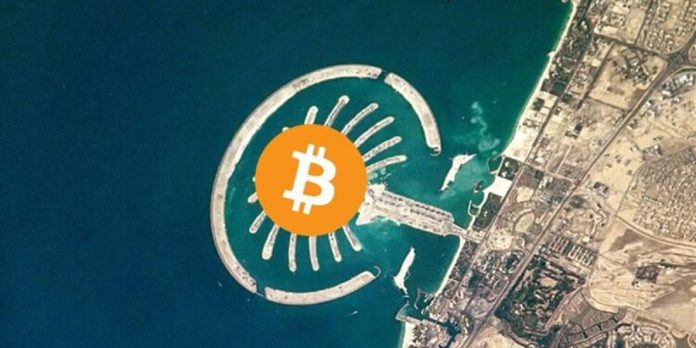
In a landmark decision, the Dubai Court of First Instance has set a precedent by recognizing cryptocurrency as a valid form of salary payment. This ruling, stemming from case number 1739 of 2024, signifies a pivotal shift in the legal landscape of the United Arab Emirates (UAE) regarding digital currencies. The case involved an employee who had not received their wages and sought compensation for wrongful termination. The court ruled in favor of the employee, ordering the employer to pay the crypto salary as per the employment contract without converting it to fiat currency.

This ruling aligns with the global trend of integrating digital finance into mainstream legal frameworks. It reflects a growing recognition of cryptocurrencies’ potential to function as a legitimate medium of exchange. However, it’s important to note that this ruling may not necessarily legalize cryptocurrency for salary payments across the board. Legal experts suggest that the decision may be specific to the case and the particular cryptocurrency involved.

The court’s decision supports the notion that salaries can be paid in cryptocurrencies, provided there is a mutual agreement between the employer and the employee, as stipulated in the employment contract. This opens up possibilities for other sectors to consider including virtual assets as part of compensation packages. Nonetheless, there are still unanswered questions, such as which virtual assets are permissible and whether approval from Dubai’s Virtual Assets Regulatory Authority is required.

The recognition of cryptocurrency as a valid form of salary payment is a topic of increasing interest as digital currencies gain prominence in the global economy. Following Dubai’s recent legal acknowledgment of crypto for salary payments, other countries have also taken steps to integrate cryptocurrency into their employment and financial regulations.

Japan stands out as a leader in this area, allowing companies to compensate their employees with cryptocurrency. However, such arrangements must adhere to Japan’s stringent tax and labor laws, ensuring proper reporting and tax withholding in Japanese Yen.

In addition to Japan, several other countries have shown openness to the use of cryptocurrency in various capacities. While not all may specifically recognize it for salary payments, countries like Angola, Costa Rica, Ecuador, Lebanon, Turkey, Iran, Argentina, Brazil, Pakistan, Chile, South Korea, Malaysia, the Philippines, Thailand, Vietnam, and New Zealand have deemed cryptocurrency legal, which could pave the way for its acceptance as a form of remuneration.

It’s important to note that the legal status of cryptocurrency payments can vary widely from one jurisdiction to another, and often depends on specific regulatory frameworks and the nature of the cryptocurrency in question. Employers and employees considering crypto for salary payments should seek legal advice to ensure compliance with local laws and regulations.

The implications of this ruling are far-reaching. It not only legitimizes the use of digital currencies in the UAE but also encourages other jurisdictions to consider the role of cryptocurrencies in employment contracts. The decision may serve as a catalyst for further regulatory clarity and the development of comprehensive legal frameworks governing digital assets.

As the world continues to embrace digital transformation, the integration of cryptocurrencies into legal and financial systems becomes increasingly crucial. Dubai’s latest ruling is a testament to the progressive stance of the UAE in adapting to these changes. It marks a significant step towards the acceptance of digital currencies, not just as investment vehicles but as functional tools in everyday transactions.