DD
MM
YYYY

PAGES

DD
MM
YYYY

spot_img

PAGES

Home Blog Page 297

Tether Mints $1 Billion USDT on Ethereum

0

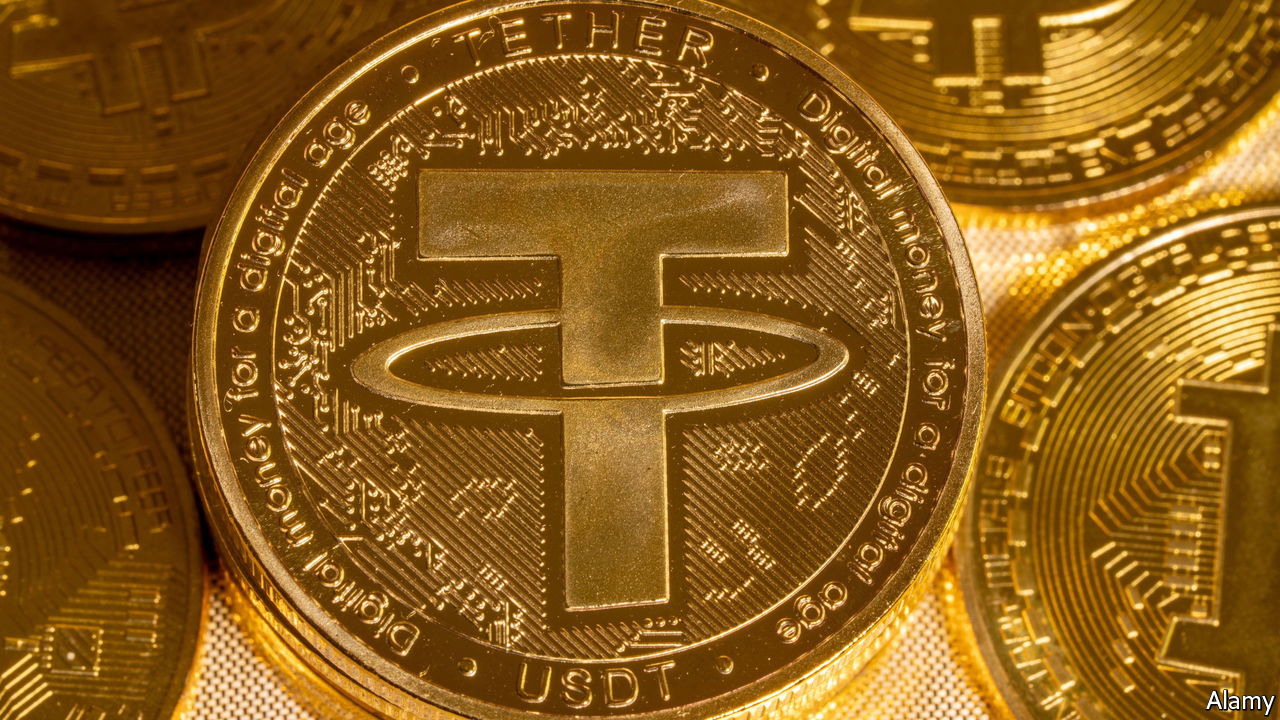
Tether Treasury minted an additional 1 billion USDT valued at approximately $1 billion directly on the Ethereum blockchain.

This transaction was flagged by on-chain analytics firm Lookonchain and is verifiable via Etherscan at the Tether Treasury address  http://0xc6cde7c39eb2f0f0095f41570af89efc2c1ea828 .The mint increases Ethereum’s USDT supply to over $62.9 billion, maintaining its position as the largest network for Tether tokens.

This isn’t an isolated event—Tether has been aggressively expanding stablecoin liquidity amid post-crash market recovery. Tether and Circle USDC issuer have collectively minted $6 billion in stablecoins since the market dip on October 11, 2025. Tether alone has added $4 billion USDT during this period.

Tether has minted over $32 billion USDT across chains this year, with Ethereum receiving the bulk. Recent $1B mints include September 16, September 14, and August 20. These issuances are typically held in Tether’s reserves and released to exchanges or DeFi protocols as demand rises, rather than being immediately circulated.

Large USDT mints often signal incoming buying power for BTC and ETH pairs. Historical patterns show such events correlating with 10-20% volume spikes and short-term rallies, as they replenish exchange reserves.

With BTC hovering near $100K resistance and ETH above $4,200 ahead of the Fusaka upgrade, this could fuel upward momentum. Ethereum’s dominance in USDT vs. Tron’s $62.7B underscores its role in DeFi and institutional flows.

Combined with Circle’s $2B USDC mint on Solana, total stablecoin supply growth points to renewed investor confidence post-Fed rate cuts. While bullish, mints can precede volatility if redeemed en masse. Traders should monitor USDT contract events on Etherscan and stablecoin velocity metrics for confirmation.

Tether typically mints USDT to replenish reserves held in its Treasury, which are then distributed to exchanges (e.g., Binance, Kraken) or DeFi protocols as liquidity demand rises. This mint is not immediately circulated but signals potential market activity.

Large USDT mints often correlate with short-term bullish price action for major cryptocurrencies due to increased liquidity.  Following these mints, BTC saw a 7-12% price increase within 7 days, with trading volume spiking by 15-20% on major exchanges. ETH followed with 5-8% gains, driven by DeFi activity.

BTC rallied 10% within 10 days, with USDT-margined trading pairs (e.g., BTC/USDT) on Binance showing a 25% volume surge. Large mints (e.g., $1.5B in March 2024) preceded BTC pumps of 8-15% within 2 weeks, as exchanges absorbed USDT for trading pair liquidity.

Mints signal increased buying power, as USDT is often used for BTC and ETH purchases. Per Bitfinex data, 70% of BTC trading volume is USDT-based, amplifying the impact. Direct Price Impact on BTC and ETH.

The $1B USDT mint could add liquidity to BTC/USDT pairs, potentially pushing BTC past $100K. Historical patterns suggest a 5-10% upside within 7-14 days, assuming no external shocks (e.g., regulatory news).

Glassnode shows rising stablecoin inflows to exchanges, with Binance reporting $400M USDT inflows post-mint. If $100K resistance holds, profit-taking could cap gains. Watch for USDT redemption events, which could signal sell pressure.

ETH benefits from USDT mints due to its dominance in DeFi 60% of DeFi TVL is on Ethereum. The mint could drive 4-8% gains, especially if DeFi protocols absorb USDT for yield farming. Uniswap and Aave have seen $150M in stablecoin inflows since October 19

ETH’s price is sensitive to gas fees and network activity. High fees post-mint could deter smaller traders, limiting upside. Combined with Circle’s $2B USDC mint on Solana, the $6B stablecoin issuance since October 11 reflects a post-crash recovery. Stablecoin supply growth historically precedes market rallies, as seen in Q1 2025 15% BTC surge after $10B in mints.

Exchanges like Binance and Coinbase have increased USDT reserves by $1.2B since October 11. This suggests preparation for higher trading volumes, with USDT/BTC and USDT/ETH pairs likely to see 10-20% volume spikes.

DeFi protocols such as Curve, MakerDAO absorb USDT for liquidity pools, potentially boosting altcoin prices. Institutional demand, fueled by Fed rate cuts, could amplify this effect, with Grayscale reporting $500M in crypto ETF inflows last week.

Large mints can precede corrections if USDT is redeemed rapidly (e.g., $800M redeemed in June 2025 led to a 5% BTC dip). Monitor Tether Treasury outflows via Etherscan for early signals.

High USDT transaction volume per Glassnode indicates active trading, boosting prices.
Binance and Kraken order book depth via Kaiko will show if USDT liquidity translates to buy pressure. Rising Ethereum TVL (Dune Analytics) post-mint suggests altcoin upside.

The $1B USDT mint on Ethereum is a bullish signal for BTC, ETH, and the broader market, likely driving 5-10% price increases in the next 7-14 days, based on historical trends and current liquidity trends.

BTC could test $105K, while ETH may approach $4,500, especially with Fusaka upgrade hype. However, risks include: Large USDT burns could trigger sell-offs. Fed policy shifts or regulatory news could dampen optimism.

OpenAI Launches ChatGPT Atlas: An AI-Powered Web Browser

1

OpenAI unveiled ChatGPT Atlas, a revolutionary web browser designed to integrate its flagship AI chatbot directly into the browsing experience.

This launch positions OpenAI as a direct challenger to Google Chrome’s market dominance, aiming to redefine how users interact with the internet through AI assistance. CEO Sam Altman described it as a “rare once-a-decade opportunity to rethink what a browser can be,” emphasizing AI’s role in making web use more productive and intuitive.

Atlas is built on the open-source Chromium engine the same foundation as Chrome but centers ChatGPT as its “beating heart.”

Ask ChatGPT Sidebar

A persistent sidebar that lets you query ChatGPT about the current webpage—e.g., summarize articles, compare products, analyze data, or rewrite highlighted text via “cursor chat”. It supports split-screen views for searches, showing results alongside ChatGPT’s conversation.

All users free tier included. Agent Mode: An autonomous AI agent that performs multi-step tasks on your behalf, like researching trip options, shopping for ingredients from a recipe, or booking flights.

Users can watch in real-time, intervene with a “take control” button, or stop it entirely. Limited to ChatGPT Plus and Pro subscribers initially

Browser Memories

Optional AI that logs and recalls your browsing history (e.g., past job searches) to provide personalized suggestions, like summarizing trends or automating routines. Data is user-controlled—you can view, archive, or delete it anytime. Sites opting out of GPTBot crawling are respected.

All users, opt-in only. No Traditional Address Bar; Search and navigation happen via the ChatGPT chat window, blending AI synthesis with links for a more conversational flow.

In a live demo, OpenAI showcased Agent Mode navigating Instacart to buy groceries from a recipe, completing the task in minutes without user input. The browser is “smooth and quick,” per Altman, with privacy controls ensuring chats and memories align with your ChatGPT settings.

Globally available on macOS via chatgpt.com. Windows, iOS, and Android versions are “coming soon.” Free for basic use; advanced features like Agent Mode require a paid ChatGPT subscription.

OpenAI collects browsing data to enhance personalization if opted in, but emphasizes user control and compliance with web standards. This move expands OpenAI’s ecosystem beyond chatbots, leveraging its 800 million weekly ChatGPT users to gather richer behavioral data for AI training—potentially accelerating competition with Google in search and browsing.

It’s part of a wave of AI browsers: Perplexity’s Comet, The Browser Company’s Dia, and updates to Chrome and Edge with Gemini/Copilot integrations. Analysts see it as a strategic play amid Google’s antitrust battles, though mainstream adoption may take time as users stick with familiar tools.

Early reactions on X highlight excitement over its ambition but note the crowded market—e.g., “Feels ambitious but a bit rushed” amid rivals like Arc and Rabbit. For developers and power users, Atlas promises to turn browsing into an “agentic” workflow, where AI handles the grunt work.

Atlas Agent Mode is the crown jewel of OpenAI’s ChatGPT Atlas browser, transforming passive browsing into an active, AI-orchestrated workflow. Think of it as an AI co-pilot that handles the tedious clicks, form-filling, and research, but with real-time oversight to prevent mishaps.

It’s an evolution of OpenAI’s earlier “Operator” tool and “ChatGPT Agent,” but deeply integrated into the browser for faster, context-aware execution. This is based on OpenAI’s official docs, launch demos, and initial hands-on reports.

Agent Mode leverages ChatGPT’s reasoning capabilities powered by models like GPT-4o to interact with web pages in a “closed-loop” system: it observes the screen, plans actions, executes them, and iterates based on results.

Enter natural language instructions, like “Book a flight from NYC to LA next Friday under $300” or “Research and add ingredients from this recipe to my Instacart cart.” You can add custom instructions upfront (e.g., “Always prioritize eco-friendly options” or “Pause for approval on payments”) to guide behavior.

ChatGPT analyzes the current page or opens new tabs as needed. It simulates human-like interactions: searching, clicking buttons, filling forms, scrolling, and extracting data. A visual overlay described as a “weird sparkle effect” in demos highlights actions in real-time, showing exactly what it’s doing.

It draws on “Browser Memories” (opt-in history logging) for personalization—if you’ve shopped on Amazon before, it might recall your address. The agent pauses at key decision points (e.g., before submitting a form) and reports back via chat.

You approve, edit, or stop. Once done, it summarizes results and offers next steps, like exporting to a doc or calendar. Uses your existing cookies/sessions for seamless access (e.g., auto-logging into Expedia).

It’s built on Chromium, so it’s fast for simple tasks but can lag on complex ones due to sequential processing no parallel tab handling yet. Agent Mode shines for “agentic” workflows—multi-step processes that blend research, decision-making, and execution.

OpenAI’s launch demo highlighted grocery shopping from a recipe: it scraped ingredients, navigated Instacart, added items to cart, and estimated costs in under 5 minutes.Here’s a table of standout capabilities with examples.

Early tests show 80-90% success on straightforward tasks, but it falters on CAPTCHAs or dynamic JS-heavy sites.Controls, Safeguards, and PrivacyOpenAI emphasizes “always under your control” to build trust—Agent Mode isn’t set-it-and-forget-it.

OpenAI is iterating fast: expect better multi-tab handling, voice input, and integration with tools like Google Workspace by early 2026. Power users rave about ideation workflows (e.g., one generated 25 ranked AI startup ideas in 2 minutes, exported to a spreadsheet).

Developers appreciate custom instructions for API-like chaining. Critiques focus on speed: “Needs to be 10x faster” for booking demos, and privacy hawks worry about data sharing for logins. Overall, it’s seen as a Chrome-killer in theory, but adoption hinges on rivals like Perplexity’s Comet catching up with free agents.

PENGU Surges, Litecoin Stabilizes, but BlockDAG’s $1 Vision and Binance AMA Countdown Dominate Talk

0

As crypto prices recover, market attention is shifting toward coins showing real growth and proof of progress. BlockDAG (BDAG), nearing its long-awaited Genesis Day and aiming for a $1 milestone, has drawn wide attention among traders searching for the next crypto to explode. At the same time, Pudgy Penguins (PENGU) and Litecoin (LTC) are showing strong technical signals and community strength, marking their return to the spotlight.

This growing interest in these three coins shows how the market is moving from hype to real performance. PENGU’s short-term setup and Litecoin’s steady trend both look promising, but BlockDAG’s combination of proven funding, rapid development, and upcoming mainnet launch gives it a sharper edge heading into the final quarter of 2025.

PENGU Pushes Higher with Eyes on $0.10 Mark

Among medium-tier coins, Pudgy Penguins (PENGU) is making a solid comeback. It has built strong support near $0.027 and keeps climbing as it trades above $0.031. Analysts identify $0.0345 as a key resistance level. If cleared, it could open the way toward $0.0376, and possibly $0.10, which represents an impressive 170% gain.

Experts like Ali and Captain Faibik see a clear bullish flag pattern and increasing demand in lower timeframes. They note that indicators are turning positive, showing that sellers are losing control while buyers gain confidence.

The improved market tone, supported by Bitcoin’s rebound, has pushed liquidity back into mid-cap coins like PENGU. The project’s active community and expanding ecosystem are adding even more support, making it one of the strongest gainers in its range. If PENGU maintains its structure above $0.027 and breaks $0.0376 with high trading volume, analysts expect a move toward $0.10.

Litecoin’s Chart Shows Strength for Another Rally

Litecoin (LTC) continues to hold steady among large-cap coins. It has stayed above its 20-day Exponential Moving Average (EMA), showing resilience despite broader market swings. The support area around $115 remains firm, while $124 is acting as the main barrier before a likely push toward $135.

On-chain data supports this strong outlook. Open Interest (OI) has jumped to $730 million from $600 million last month, suggesting that more large traders are building positions. This rise in OI during a stable price phase usually signals confidence in the coin’s next move.

Litecoin’s Sharpe Ratio has also risen to 2.14, meaning holders are getting better risk-adjusted returns. Combined with growing institutional interest, this points to a steady long-term climb. If Litecoin breaks $124, experts forecast a move to $135, or higher if sentiment stays positive. With these signals aligning, Litecoin stands out as a dependable large-cap pick for those seeking solid returns in 2025.

BlockDAG’s $1 Target Makes It the Next Crypto to Explode

While PENGU and Litecoin gain traction, BlockDAG continues to lead conversations with its measurable progress and advanced network design. The project has already raised nearly $430 million, sold over 27 billion BDAG coins, and attracted 312,000+ holders worldwide. Currently in Batch 31 at $0.0015 per coin, it targets a $0.05 listing, while long-term projections suggest a climb to $1 after its mainnet rollout.

The countdown to Genesis Day (November 26) has turned into a major event. This marks the shift from presale to full launch, giving early buyers rank-based unlocks and early exchange access.

BlockDAG is set to go LIVE on Binance for an exclusive AMA this Friday, October 24 at 3PM UTC, marking one of its biggest global appearances yet. The session will feature insider updates, new roadmap reveals, and major insights ahead of Keynote 4: The Launch Note and Genesis Day.


BlockDAG’s hybrid Proof-of-Work (PoW) and Directed Acyclic Graph (DAG) framework allows 2,000–15,000 transactions per second, much faster than standard blockchains.

With 20,000+ miners sold and 3.5 million X1 app users, real adoption is already visible. Confirmed listings on MEXC, BitMart, Coinstore, LBank, and XT.com guarantee liquidity from launch day. These strengths have made experts call BlockDAG the next crypto to explode, offering both strong fundamentals and large upside potential.

Which One Is the Next Crypto to Explode?

As the market recovery continues, BlockDAG, PENGU, and Litecoin each stand out for specific reasons. PENGU’s setup points to near-term growth, and Litecoin’s metrics highlight lasting stability. But BlockDAG’s $1 target, nearly $430M raised, and upcoming Genesis Day clearly put it ahead.

With the upcoming Binance AMA adding global exposure and investor momentum, BlockDAG is positioned to dominate headlines this week. Moreover, with its solid technology, verified progress, and expanding user network, BlockDAG is redefining what real crypto growth looks like. As the countdown to launch nears its end, excitement across the community is building fast, confirming BlockDAG as the next crypto to explode and a leading force heading into 2026.

Presale: https://purchase.blockdag.network

Website: https://blockdag.network

Telegram: https://t.me/blockDAGnetworkOfficial

Discord: https://discord.gg/Q7BxghMVyu


ApeCoin and BullZilla Lose Steam While Buyers Flock to BlockDAG: Is it the Next 100x Presale Pick?

0

The race toward Crypto Presales 2025 has reached a defining point, capturing traders’ attention with BlockDAG (BDAG) standing at the center. Entering its last confirmed presale stage before the official launch on November 26, the project’s momentum continues to grow. The new Code “TGE” lets buyers lock BDAG at a special rate of $0.0015, well below the current Batch 31 price of $0.0304.

Having raised over $425 million, BlockDAG nears its $600 million milestone, confirming strong community backing. With verified audits by CertiK and Halborn, a functioning Testnet, and over 4,500 developers contributing across 300+ dApps, the project proves its credibility. As this final phase unfolds, buyers securing BDAG at $0.0015 are positioning themselves for major returns once GENESIS Day arrives.

BlockDAG: Final Countdown Before GENESIS

As GENESIS DAY approaches, BlockDAG (BDAG) stands out as the frontrunner in Crypto Presales 2025. The Code “TGE” continues to determine launch-day ranking and airdrop priority. With over $425 million raised and a confirmed $0.05 listing price, the project forecasts a potential 27x ROI post-launch.

The new TGE code introduces a phased early-access system designed to reward rank holders at launch. Participants ranked from 1 to 300 will receive an instant airdrop, while those between 301 and 600 will get theirs after 30 minutes. Ranks 601 to 1000 will follow within 60 minutes, 1001 to 1500 after two hours, 1501 to 2000 after four hours, 2001 to 5000 after six hours, and any ranks above 5001 will receive their airdrop within 24 hours. This structured rollout ensures fairness and stability as BlockDAG’s network goes live.

Each presale round has sold out faster than the previous, reflecting strong market demand supported by credible audits, a live Testnet, and 4,500+ active developers. Combined with the BWT Alpine Formula One® Team partnership, BlockDAG’s exposure has reached global audiences, further boosting interest. As whales and leaderboard participants continue to secure positions, the market’s shift from entry to execution will define this presale’s success. Those capitalizing now may become the earliest beneficiaries once BlockDAG enters open trading after GENESIS.

ApeCoin (APE): Governance Challenges Under DAO Reform

While BlockDAG dominates Crypto Presales 2025, ApeCoin (APE) faces internal shifts following governance debates. Yuga Labs’ proposal to dissolve the ApeCoin DAO and introduce a new structure under ApeCo has sparked mixed reactions. Trading near $0.58–$0.59, APE maintains stability in price and volume but faces uncertainty regarding its decentralization path.

This structural change has divided its community; some consider it a strategic revival, while others believe it threatens community autonomy. In contrast, BlockDAG’s transparent roadmap and consistent execution give it a more stable outlook compared to projects struggling with governance ambiguity. As Crypto Presales 2025 progresses, ApeCoin’s next steps could define its long-term market position.

BullZilla (BZIL): Strengthening Its Meme Appeal in Crypto Presales 2025

BullZilla (BZIL) continues to gain recognition among meme-based Crypto Presales 2025 through its scarcity-driven design and evolving utility model. The token’s pricing structure, increasing every 48 hours or once $100,000 is raised, has now elevated its value to $0.00014574, with total funding surpassing $850,000.

Its ecosystem integrates features such as the Roarblood Vault, offering staking rewards up to 70% APY, and automatic supply burns at specific milestones. Although these mechanisms strengthen deflationary demand, the project remains in early development without proven scalability.

In comparison, BlockDAG’s verified audits, technical infrastructure, and $425M presale fund showcase far stronger fundamentals, highlighting why it remains the standout choice for those eyeing substantial ROI opportunities.

Final Words

Crypto Presales 2025 are showcasing intense rivalry and evolution across major projects. ApeCoin faces governance restructuring, and BullZilla advances meme utility through creative supply mechanisms. Yet, BlockDAG (BDAG) dominates the narrative with its unmatched progress, trust, and scale.

Having exceeded $425 million in presale funding, selling nearly 27 billion coins, and offering a unique price of $0.0015 via the “TGE” code, BlockDAG continues its journey toward GENESIS Day on November 26. As the presale nears its close, BlockDAG’s final lap could transform early participants into top crypto gainers of 2025.


Presale: https://purchase.blockdag.network

Website: https://blockdag.network

Telegram: https://t.me/blockDAGnetworkOfficial

Discord: https://discord.gg/Q7BxghMVyu

CenterPoint Energy Sells Ohio Gas Distribution Business to National Fuel for $2.62bn

0

U.S. utility giant CenterPoint Energy has agreed to sell its Ohio natural gas distribution unit to National Fuel Gas Company for $2.62 billion, marking the latest in a wave of divestments by utilities narrowing their focus on core regulated markets amid surging power demand.

The Houston-based utility said Tuesday that the sale includes approximately 5,900 miles of transmission and distribution pipelines serving about 335,000 metered customers across Ohio. CenterPoint said the deal, which represents about 1.9 times the business’s 2024 rate base, is expected to close in the fourth quarter of 2026, pending regulatory approvals.

Shares of National Fuel Gas fell 4.7% in morning trading following the announcement, while CenterPoint’s stock slipped marginally.

Chief Executive Officer Jason Wells said the sale aligns with CenterPoint’s long-term strategy to strengthen its balance sheet and reinvest in high-growth regulated electric and gas operations in states such as Texas, Indiana, and Minnesota.

The company said it expects to receive $1.42 billion of the proceeds in 2026 and the remainder in 2027. Analysts see the transaction as a key step in a broader restructuring across the U.S. utility sector as firms reposition for a new phase of electricity demand growth driven by data centers, AI computing, and electrification.

Scotiabank analysts said in a research note that the Ohio sale highlights CenterPoint’s progress toward its goal of achieving annual profit growth near 9%, among the fastest in the U.S. utilities sector.

The transaction gives National Fuel Gas an expanded footprint in Ohio and further diversifies its regulated utility portfolio, which already serves customers across western New York and Pennsylvania. For National Fuel, the acquisition represents a steady source of revenue and greater operational scale in the U.S. Midwest, helping to balance its exposure to natural gas exploration and production markets.

CenterPoint said it will continue to focus on regulated operations where it sees long-term demand and growth potential. The company delivers electricity and natural gas to more than seven million customers across six states — Indiana, Louisiana, Minnesota, Mississippi, Ohio, and Texas. In late September, the utility outlined a $65 billion capital spending plan for 2026 through 2035, focused primarily on grid modernization, energy reliability, and the expansion of electric infrastructure in high-growth markets.

That long-term investment plan reflects CenterPoint’s intent to position itself at the forefront of the accelerating energy transition in the United States, as rising industrial activity, electric vehicle charging, and data center demand reshape load patterns for utilities.

The sale of the Ohio gas distribution network is part of a wider industry trend among U.S. utilities that are selling or restructuring lower-growth assets to free up capital for projects tied to grid expansion, renewable energy integration, and reliability upgrades. Many of these companies are responding to the same pressures — rapid electrification, federal clean energy incentives, and increasing capital intensity of utility operations.

The Ohio sale is seen as a disciplined portfolio management consistent with our focus on regulated businesses where we can drive value through operational excellence and capital deployment.

Analysts see the deal as consistent with CenterPoint’s long-running strategic realignment that began several years ago when it started divesting non-core operations to focus on rate-regulated utilities with stable returns. Those efforts have helped the company streamline operations and reduce exposure to market volatility, particularly in unregulated businesses that carry higher earnings uncertainty.

National Fuel Gas, based in Williamsville, New York, operates an integrated model that includes exploration and production, pipeline and storage, gathering, and utility segments. By adding CenterPoint’s Ohio operations, it gains a new service area and approximately 335,000 additional customers. The company said the acquisition will broaden its regulated natural gas distribution base and contribute to steady earnings growth.

The $2.62 billion deal value, which includes the assumption of certain liabilities, is viewed as relatively modest compared to other recent utility asset transactions, denoting the mature and stable nature of Ohio’s gas distribution market. Still, the sale price provides CenterPoint with significant flexibility to fund upcoming capital programs and reduce leverage.

The timing of the sale, with proceeds spread across 2026 and 2027, also aligns with the company’s capital deployment cycle, ensuring sufficient liquidity for its $65 billion investment plan over the next decade.

For investors, the deal signals that CenterPoint is doubling down on its high-growth regulated markets, particularly Texas, where population and industrial expansion are driving record energy demand. Texas has emerged as a central pillar of CenterPoint’s strategy, given its role in power transmission for the rapidly growing Houston region and the state’s expanding industrial and data center corridor.

Scotiabank’s analysts said CenterPoint’s combination of growth prospects and disciplined financial management could make it one of the top performers among U.S. utilities in the coming years.

For National Fuel, the addition of the Ohio operations offers both stability and incremental growth at a time when natural gas demand in regulated markets remains strong. The company’s broader strategy has been to balance its commodity-sensitive upstream business with steady revenue from regulated utilities — and the CenterPoint assets fit neatly into that plan.

Once completed, the sale will cap a multiyear effort by CenterPoint to streamline its asset base and concentrate resources where it can deliver predictable returns and infrastructure expansion opportunities.