DD
MM
YYYY

PAGES

DD
MM
YYYY

spot_img

PAGES

Home Blog Page 2974

The Hidden Identity Layer for Solana

0

In the ever-evolving world of blockchain technology, privacy remains a paramount concern for users and developers alike. Solana, a high-performance blockchain known for its speed and efficiency, has taken significant strides in addressing this concern with the introduction of a hidden identity layer. This advancement is not just a technical leap but also a philosophical one, as it balances the inherent transparency of blockchain with the need for confidentiality in transactions.

The hidden identity layer for Solana leverages Zero-Knowledge Proofs (ZK Proofs), a cutting-edge cryptographic method that allows one party to prove to another that a statement is true without revealing any information beyond the validity of the statement itself. This technology is a game-changer for Solana, as it enables fully private transactions while maintaining the integrity and security of the blockchain.

One of the key projects utilizing this technology is Elusiv, which aims to enhance transaction privacy to meet compliance standards. Another notable project is Light Protocol, which allows users to transfer SOL without linking the transaction to their wallet. These developments indicate Solana’s commitment to innovation and its foresight in addressing the growing demand for financial privacy.

The introduction of the Civic Pass by Civic Technologies further strengthens Solana’s identity layer. This tool integrates digital identity verification with decentralized finance (DeFi) applications, creating a permissioned environment that could attract institutional players. The Civic Pass uses technology from Identity.com to vet users through a comprehensive know-your-customer (KYC) process, which includes email address, phone number verification, photo ID scanning, and a 3D face-map.

Civic Technologies has taken a significant step in this direction by developing DeFi identity tools on Solana. Their collaboration with Solrise Finance to create a decentralized exchange (DEX) with permissioned access based on digital identity verification is a game-changer. This approach contrasts with the permissionless nature of traditional DeFi, where transactions are typically anonymous and require only a wallet address and assets.

The implications of these advancements are profound. They offer a glimpse into a future where blockchain can provide both transparency for public verification and privacy for individual security. This dual capability could potentially reshape the landscape of financial transactions, making blockchain technology more palatable for mainstream adoption, especially among institutions that require a higher degree of regulatory compliance.

However, the journey towards a fully private and secure blockchain ecosystem is not without its challenges. Regulatory scrutiny is an inevitable aspect of financial innovation, especially when it involves privacy features that could be misinterpreted or misused. The debate over the legality of such features in various jurisdictions continues to unfold, with some countries expressing concerns over the potential for illicit activities.

Despite these challenges, the progress made by Solana showcases the blockchain community’s dedication to advancing the technology while respecting the diverse needs of its users. As the conversation around privacy and identity in blockchain continues, Solana’s hidden identity layer stands as a testament to the potential of blockchain to evolve and adapt in the face of changing demands and expectations.

The hidden identity layer for Solana is more than just a technical feature; it is a statement of intent, a commitment to the principles of privacy and security that are increasingly becoming non-negotiable in the digital age. As we move forward, it will be interesting to see how this layer develops and what new possibilities it unlocks for the world of blockchain and beyond.

Transforming Intra-African Trade: The Role of Fintech in Revolutionizing Cross-Border B2B Payments

0

The landscape of intra-African trade is currently undergoing a profound transformation, driven by the modernization of cross-border B2B payments. This evolution is reshaping the continent’s economic dynamics and unlocking new opportunities for businesses across Africa.

A recent report from Duplo, the leading provider of payment, spend, and vendor management solutions for African Businesses,  delved into the pivotal role that Fintech is playing in revolutionizing intra-African cross-border B2B payments. As fintech innovations take center stage, the report highlights that the future of intra-African trade is becoming increasingly digital, efficient, and inclusive.

The report titled “The State of Cross-Border Payments in Africa and its Impact on Trade”, noted that the evolution of payment, using different Fintech platforms, is reshaping Africa’s economic dynamics as well as creating new opportunities for businesses across Africa.

The report reveals that the value of intra-African trade reached an estimated $193 billion in 2022, accounting for 13.8% of total African trade. This figure, while significant, likely understates the true scale of intra-African commerce, as a significant proportion of cross-border trade is however informal and underreported.

According to the report, 40 percent of cross-border trade payments between East and West African countries are made in cash, with underreporting ranging from 12 to 76 percent. Meanwhile, the current state of intra-African trade has steadily grown, reaching an estimated value of $193 billion in 2022, accounting for 13.8% of the continent’s total trade.

Fintech Evolution: A Catalyst for Change

The evolution of fintech is playing a pivotal role in reshaping cross-border payments in Africa, thereby facilitating and expanding intra-African trade. These innovations are addressing long-standing challenges in the payment process and are proving to be game-changers for businesses across the continent.

Here are several key Impacts of Fintech on Cross-Border Trade:

1. Reduced Costs:

Fintech solutions are cutting out intermediaries and optimizing payment processes, resulting in lower transaction fees compared to traditional banking channels. This reduction in costs makes cross-border trade more affordable, especially for small and medium-sized enterprises (SMEs).

2. Faster Transactions:

Digital payments can be processed much more quickly than traditional methods, significantly reducing the time it takes for funds to move between countries. This increased speed positively impacts cash flow management for businesses engaged in cross-border trade, enabling them to operate more efficiently.

3. Increased Transparency:

Fintech platforms offer real-time tracking and reporting of transactions, providing businesses with greater visibility into their cross-border payments. This transparency not only aids in financial planning but also helps companies stay compliant with regulatory requirements.

4. Improved Access:

Fintech solutions are often more accessible than traditional banking services, particularly in underserved areas. By providing easier access to financial services, fintech is helping bring more businesses into the formal economy and facilitating their participation in cross-border trade.

5. Currency Conversion:

Several fintech platforms offer competitive exchange rates and the ability to hold multiple currencies, simplifying the process of dealing with different national currencies in cross-border transactions. This feature reduces the complexity and risk associated with currency conversion, making trade across borders smoother.

A Game-Changer for Intra-African Trade

The expansion of fintech in cross-border payments goes beyond merely replacing old systems with new technology. Several innovative fintech companies are reimagining how cross-border trade can work in Africa. By removing friction from the payment process, these fintech innovations are encouraging more businesses to engage in intra-African trade.

As a result, they are contributing to greater economic integration and growth across the continent. In conclusion, as regional integration efforts continue and fintech innovations take hold, the future of intra-African trade looks increasingly promising.

By addressing the challenges of cross-border payments and offering more efficient, transparent, and accessible solutions, fintech is helping to unlock the full potential of Africa’s economic landscape. This transformation is not only about modernizing trade, but also helps to create a more connected, prosperous, and resilient Africa.

Nigeria’s 0.9% Negative GDP Growth Rate Started in 2014 – Okonjo-Iweala

0

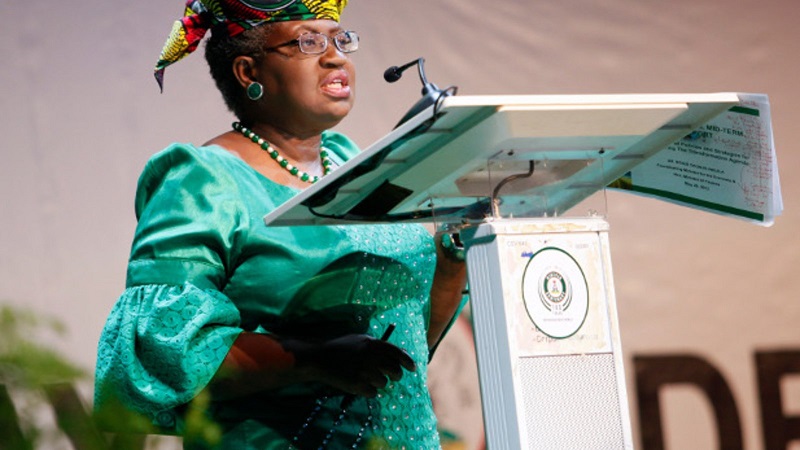
At the annual General Conference of the Nigerian Bar Association (NBA), Ngozi Okonjo-Iweala, the Director-General of the World Trade Organization (WTO), delivered a sobering assessment of Nigeria’s economic trajectory. She highlighted a troubling trend: Nigeria’s Gross Domestic Product (GDP) growth rate has been on a steady decline since 2014, underlining a downturn in the economic well-being of the average Nigerian.

Okonjo-Iweala pointed out that the years between 2000 and 2014 represented a period of robust economic growth for Nigeria. During that time, the country’s average GDP growth rate was approximately 3.8% annually, a figure that significantly outpaced the population growth rate of around 2.6%.

This period of economic expansion led to tangible improvements in the standard of living for many Nigerians, as the economy grew faster than the population, allowing for real per capita income growth.

However, since 2014, the situation has reversed. Okonjo-Iweala noted that the country has struggled to maintain the positive growth momentum of the previous decade, with the average annual GDP per capita now experiencing a negative growth rate of 0.9%. This means that, on average, Nigerians have been getting poorer over the past decade as the economy has failed to keep pace with population growth.

“Many of the big problems the NBA is grappling with today have their roots in Nigeria’s failure to sustain the rate of economic growth and development that consistently outpaced the growth of our population,” Okonjo-Iweala remarked.

She explained that while Nigeria had episodes of reforms and faster economic growth that were not solely dependent on oil prices, the inability to consolidate and build on those gains has led to millions of Nigerians facing diminished job prospects and reduced human well-being.

The former Finance Minister went on to argue that Nigeria’s economic woes are largely due to policy inconsistencies. She stressed the importance of sustaining good economic policies irrespective of the administration or political party in power, to foster long-term development. According to Okonjo-Iweala, policy reversals and a lack of continuity have significantly contributed to the country’s economic challenges.

To address these issues, she advocated for a social contract between the government and the people that transcends political affiliations. This contract, she argued, should focus on generally accepted economic policies that will be followed regardless of who is in power.

“Maintaining good economic and social policies, maintaining policy consistency, and adding more reforms on top of that will lead us along the path of good progress that we all desire,” she added.

This call for consistency comes at a critical time, as Nigeria’s economy continues to face significant challenges. According to the National Bureau of Statistics (NBS), Nigeria’s GDP growth rate declined to 2.98% in the first quarter of 2024, down from 3.46% in the fourth quarter of 2023. While this figure is an improvement over the 2.31% recorded in the corresponding quarter of 2023, it still falls short of the levels needed to significantly improve the standard of living for Nigerians.

The decline in GDP growth is compounded by other economic challenges, including low exports, a reduction in oil sales (which account for about 90% of Nigeria’s revenue), and rising inflation. These issues have raised concerns about the feasibility of President Bola Tinubu’s ambitious goal of transforming Nigeria into a $1 trillion economy.

GDP Growth Reversed by Buhari Policies

The decline in GDP that began in 2014 was accelerated by the economic policies introduced by former President Muhammadu Buhari. These policies, including the controversial exchange rate management, and restrictions on certain imports, contributed to two economic recessions within a span of five years. The first recession occurred in 2016, just a year into Buhari’s administration, while the second hit in 2020, exacerbated by the global COVID-19 pandemic.

One of the critical issues during Buhari’s administration was the significant rise in inflation, which ballooned into double digits and has since remained stubbornly high. The inflationary pressures were partly driven by policy missteps, such as the border closure, delayed response to the economic shocks, and the administration’s focus on exchange rate controls, which led to a widening gap between the official and parallel market rates.

No Plan Yet to Accelerate GDP Growth

Since assuming office, President Bola Tinubu’s administration has faced the daunting task of addressing these economic challenges. However, the current government has yet to develop a clear-cut plan to mitigate the continued decline in GDP. While President Tinubu has articulated ambitious goals, such as growing Nigeria’s GDP to a $1 trillion economy, many analysts remain skeptical about the feasibility of such targets given the current economic conditions. High inflation, low employment rates, and rising national debt continue to pose significant hurdles.

Analysts have noted that the government’s economic reforms, while necessary, have been piecemeal and reactive rather than proactive. They said that the absence of a comprehensive plan to address the underlying structural issues in the economy—such as over-reliance on oil revenues, inadequate infrastructure, and a challenging business environment—has made it difficult for the country to regain its growth trajectory.

NASA’s Decision to Bring Boeing’s Starliner Spacecraft Back to Earth Uncrewed Casts Shadow on the Company’s Space Future

0

NASA has decided to bring Boeing’s Starliner spacecraft back to Earth without astronauts Butch Wilmore and Suni Williams aboard. This decision, announced by the agency on Saturday, underlines the growing concerns surrounding the Starliner program—a program that was once heralded as the future of American spaceflight but now teeters on the brink of obsolescence.

Boeing’s Starliner, which was meant to symbolize a new era of space travel, has instead become a cautionary tale. Initially launched with great fanfare and billions in government funding, the spacecraft has faced one setback after another.

Ten years ago next month, NASA awarded a significant portion of its funding to Boeing, one of its most trusted and experienced contractors, as part of an ambitious effort to end the agency’s reliance on Russia for transporting astronauts to and from low-Earth orbit.

At the time, Boeing secured a $4.2 billion contract from NASA to complete the development of its Starliner spacecraft and to conduct at least two, and potentially up to six, operational crew flights to rotate astronauts between Earth and the International Space Station (ISS). SpaceX was awarded a $2.6 billion contract for a similar scope of work, marking the beginning of a competitive era in commercial spaceflight.

SpaceX, under the leadership of Elon Musk, has redefined the possibilities of commercial space travel. Its spacecraft, Dragon, has become a symbol of reliability and innovation, consistently performing successful missions that include delivering both crew and cargo to the ISS. SpaceX has already completed its contracted missions with NASA and continues to support ISS operations.

Now, as Boeing’s spacecraft returns uncrewed, the question on everyone’s mind is whether Boeing can recover from this latest setback—or if the Starliner program is destined to be a costly footnote in the history of human spaceflight.

Boeing’s Bumpy Road: From Helium Leaks to Thruster Failures

The decision to return the Starliner without its crew is not without precedent. Since its June 6 arrival at the ISS, the spacecraft has encountered a series of technical failures, including helium leaks and issues with its reaction control thrusters. These problems have cast a long shadow over the mission, with NASA engineers expressing concern that the spacecraft might not be able to safely return to Earth with astronauts aboard.

“Spaceflight is risky, even at its safest and most routine. A test flight, by nature, is neither safe, nor routine. The decision to keep Butch and Suni aboard the International Space Station and bring Boeing’s Starliner home uncrewed is the result of our commitment to safety: our core value and our North Star,” said NASA Administrator Bill Nelson.

The Starliner’s troubles are rooted in design flaws that have plagued the program from the beginning. The spacecraft’s thrusters, housed in four doghouse-shaped propulsion pods, have been operating at higher temperatures than they were designed for, leading to overheating and failures. This issue, compounded by a Teflon seal problem in the thrusters, has raised serious questions about the spacecraft’s reliability.

These technical issues are not isolated incidents. The Starliner has a history of problems, dating back to its first test flight in 2019, which was cut short due to software errors. Subsequent missions have been marred by delays and additional technical difficulties, including a nearly year-long delay due to corroded valves in the propulsion system. The current mission, which was supposed to demonstrate the spacecraft’s readiness for crewed flights, has instead highlighted the ongoing challenges Boeing faces in delivering a reliable spacecraft and safe space mission.

NASA said Wilmore and Williams will continue their work formally as part of the Expedition 71/72 crew through February 2025.

“They will fly home aboard a Dragon spacecraft with two other crew members assigned to the agency’s SpaceX Crew-9 mission. Starliner is expected to depart from the space station and make a safe, controlled autonomous re-entry and landing in early September,” the agency stated.

Against the backdrop of Boeing’s failures, NASA’s decision to rely on SpaceX’s Dragon spacecraft to bring Wilmore and Williams home underscores the agency’s lack of confidence in the Starliner. SpaceX, which has now successfully completed eight crewed missions to the ISS, has become NASA’s go-to partner for human spaceflight. In contrast, Boeing’s Starliner, once seen as a rival to SpaceX’s Dragon, is struggling to prove its worth.

The consequences of this decision extend beyond the immediate mission. Boeing’s ability to fulfill its commercial crew contract with NASA is now in question. With the ISS scheduled to retire in 2030, there is little time left for Boeing to complete the six operational crew rotation missions it was contracted to deliver. As it stands, NASA has only placed firm orders for three of these missions, reflecting the agency’s uncertainty about the Starliner’s future.

Boeing’s Multibillion-Dollar Gamble Takes A Financial Toll

Boeing’s financial investment in the Starliner program has been substantial. The company has already reported $1.6 billion in charges due to delays and cost overruns, and that figure is expected to grow as Boeing works to address the spacecraft’s ongoing technical issues. Under the terms of its fixed-price contract with NASA, Boeing is responsible for covering the costs of these fixes, adding to the financial strain on the company.

The Starliner program was once seen as a cornerstone of Boeing’s space portfolio, a program that would secure the company’s place in the future of human spaceflight. Unfortunately, it has become a costly and problematic endeavor instead.

What’s Next for NASA and Boeing?

NASA’s decision to return the Starliner without its crew raises broader questions about the future of human spaceflight. The agency’s commercial crew program was designed to foster competition and innovation by partnering with both Boeing and SpaceX. However, as SpaceX continues to deliver successful missions, Boeing’s struggles have cast doubt on the viability of a two-provider model.

Looking ahead, NASA and Boeing will need to determine whether another test flight is necessary before the Starliner can be certified for operational use. If the spacecraft is grounded for an extended period, NASA may have no choice but to rely solely on SpaceX for crewed missions to the ISS. This would mark a significant shift in the agency’s strategy, which has always emphasized the importance of having multiple providers to ensure redundancy and competition.

The Challenges Facing Starliner

Starliner’s issues began as it approached the International Space Station (ISS) in June, where five of its 28 reaction control system thrusters overheated and failed. These problems raise concerns about the spacecraft’s ability to safely return to Earth, leading NASA to opt for an uncrewed return to gather more data and assess necessary improvements.

Boeing’s Starliner program, once seen as a cornerstone of NASA’s commercial crew program, now faces an uncertain future. The company has already incurred $1.6 billion in charges due to delays and cost overruns. With NASA’s decision, Boeing is likely to incur additional costs to address the thruster issues.

What Does The Future Hold For Starliner?

This development has made the future of Starliner uncertain. Even if Boeing resolves the current issues, Starliner may not fly astronauts again until 2026, leaving limited time to fulfill its contract before the ISS is decommissioned.

As NASA moves towards developing commercial space stations, Boeing’s ability to participate in this future depends heavily on resolving Starliner’s issues. If successful, Starliner could play a role in transporting crew to private space stations.

However, if the ISS is retired in 2030 without extending its life, Starliner’s future could be in jeopardy, potentially marking the end of Boeing’s involvement in commercial human spaceflight.

Russia Seizes Over $100M from Google in Another Retaliation for Western Asset Freezes

0

In a move that underlines the deepening rift between Russia and the West, Russian authorities have seized more than $100 million from Google’s Russian bank accounts, marking a significant escalation in the ongoing economic tit-for-tat.

The Kremlin’s decision to appropriate these funds is widely seen as retaliation for the West’s freezing of Russian assets in response to the Ukraine invasion. The seizure of Google’s assets marks a new phase in the economic conflict between Russia and the West, one characterized by the aggressive reallocation of foreign-owned wealth to support domestic agendas.

Retaliation for Western Sanctions

The seizure of Google’s assets is not an isolated incident but rather part of a broader strategy by Russia to counter the extensive economic sanctions imposed by Western nations following its annexation of Crimea in 2014 and the full-scale invasion of Ukraine in 2022. These sanctions have targeted key sectors of the Russian economy, including energy, finance, and technology, and have led to the freezing of billions of dollars in Russian assets held abroad.

Notably, Western governments have frozen the reserves of the Central Bank of Russia held in foreign currencies, estimated to be around $300 billion. Additionally, high-profile assets belonging to Russian oligarchs, including yachts, luxury properties, and bank accounts, have been seized across Europe and the United States. This unprecedented level of economic warfare has crippled Russia’s ability to access its foreign-held wealth, prompting the Kremlin to retaliate by targeting Western companies operating within its borders.

Google’s Russian subsidiary declared bankruptcy in 2022, attributing its collapse to the Kremlin’s seizure of its funds. The court documents reveal that the $100 million taken from Google’s accounts far exceeded the $12.5 million (1 billion roubles) it was ordered to pay Tsargrad TV—a pro-Kremlin propaganda channel owned by oligarch Konstantin Malofeev.

This overreach highlights the Kremlin’s broader objective: to co-opt foreign assets to finance its state-controlled media and bolster support for its military activities in Ukraine.

Tsargrad TV, along with other state-aligned media outlets like RT, has been instrumental in spreading the Russian government’s narrative on the Ukraine war, painting it as a defensive operation against Western aggression. The funds seized from Google were reportedly redirected to these channels, further entrenching the Kremlin’s control over the flow of information within Russia and beyond.

Western Companies Caught in the Crossfire

Google is not the only Western company to fall victim to the Kremlin’s retaliatory measures. Since the onset of the Ukraine conflict, several Western corporations have been forced to exit the Russian market, often leaving behind significant assets that the Russian government has swiftly appropriated. Companies like McDonald’s, which once operated over 800 restaurants in Russia, have exited the country, selling their operations at a steep discount or simply abandoning their assets. The fast-food giant’s former outlets were quickly rebranded under Russian ownership, with the state taking control of the lucrative businesses left behind.

Energy giants like BP and Shell, which had extensive operations in Russia, have also been compelled to divest from their Russian ventures, often at a significant loss. In many cases, the Kremlin has taken over these assets, repurposing them to support its economy as it grapples with the effects of Western sanctions. The exodus of these companies has left a vacuum that the Russian state has eagerly filled, further tightening its grip on key sectors of the economy.

Google’s Response

In response to the seizure of its funds, Google has launched legal actions in the United States and the United Kingdom against the Russian broadcasters—Tsargrad TV, RT, and NFPT. The tech giant is seeking court orders to prevent these entities from pursuing Google’s assets in foreign jurisdictions, including South Africa, Turkey, and Serbia. Google’s legal filings argue that the penalties imposed by Russian courts are arbitrary and designed to punish the company for complying with international sanctions against Russian individuals and organizations.

This legal battle highlights the broader implications for multinational corporations navigating the increasingly treacherous waters of international geopolitics. As companies face growing pressure from their home governments to adhere to sanctions, they also risk severe financial repercussions from host nations like Russia that are willing to use any means necessary to counteract these measures.

Russia’s willingness to seize the assets of Western companies as a form of retaliation is likely to increase as it continues to face international isolation and economic sanctions.

For Western corporations, this development underscores the escalating risks of doing business in Russia. The Kremlin’s actions have made it clear that foreign companies operating in the country are no longer just business entities—they are pawns in a broader geopolitical struggle.