THE MYTH OF SINO AMAZONS
The legend was the Amazons were a race of Greek female warriors whose queen was named Hippolyta.
The Amazon River was so named because European expeditions attacked by local tribes when landing at its estuary, believed them to be women.
The Sino Amazons were a loose group of female maritime warriors who terrorized the East Coast of Asia between approximately 1100 and 1700 AD. They operated across the Sea of Japan, the East China Sea, the Yellow Sea, the South China Sea, the Sulu Sea, the Celebes Sea, the Java Sea, and the Gulf of Thailand.
They generally had no fixed home, although they were frequently seen in large numbers on the Paracel Islands where they were rumoured to keep stocks of food, an armoury, and a ‘booty’ vault.
This was the only place they could be found on dry land if not on a mission.
Maritime Activities.
The Sino Amazons operated as a loose collective under a specific sisterhood code and a warrior code. As individuals, they weren’t ‘service bound’ to any particular vessel in collective ownership. Individual Sino Amazons tended to board their ships opportunistically, depending on which one weighed anchor off a coast where they completed a land mission, or when they were ready to go back to sea again, having taken respite at the Paracels.
Sino Amazon craft were lightly armoured but much faster and more easily manoeuvrable than European colonial navy vessels of the day. The great sailing skills they had made it almost impossible for traditional sovereign naval wisdom to prevail against them.
Sino Amazon craft also had shallower draft and could operate in rock strewn waters that caused problems for the big sovereign navies whose ships required deeper berths. The Sino Amazons intimately knew every inch of water all the way from the Sea of Japan to Java.
They frequently lured adversaries into troubled waters where they may strike rock, or have insufficient flexibility to make an ‘about face’. This fixed the European naval craft with bow or stern facing the broadside guns of a Sino Amazon vessel, with no ability to move for fear of tearing the ship apart on rocks.
If not sunk, defeated vessels were never kept to support the Sino Amazon fleet as they didn’t suit their maritime skills. They mostly broke them up in small local ports, using some parts for ship repairs or enhancements, trading what they didn’t want, to locals, or sometimes allowing locals to scavenge for free, in return for their silence and secrecy if ever questioned by any authorities.
Sino Amazons preferred wood from a special forest in Japan at the base of Mount Fuji. The Aokigahara forest is also known as ‘Jukai’ meaning ‘Sea of Trees’, which added to the maritime perspective.
The forest was a place where Harakiri was committed by Japanese in the absence of rites of Seppuku (either because they were not Samurai or a caste deserving of the rites, or society had disenfranchised them for some reason).
Today, Japan has high incidents of depression and mental instability. The area is a known choice for suicide.
Sino Amazons believed the wood from the trees had some powers infused by haunted souls, which added some demonic and supernatural advantage in naval battles.
They also attacked or harassed merchant ships, both owned by colonial powers or regional authorities, though they tended to leave fishing vessels and small local trading craft alone.
Contrary to popular film and media work depicting pirate and mercenary craft of the era, Sino Amazon vessels never flew the notorious ‘skull and crossbones’ flag. When without an agenda, they flew a flag fashioned from clothing of the captain of the last ship they conquered, preferably underwear! At other times, they flew flags of different nations to cause distractions and confusion when approaching seaborne prey.
Sino Amazon craft were so far ahead of their time around 1100 that they seemed like the ‘UFO’ of their day, to anybody who never saw them before. However, their technology didn’t change much over their 600 years of notoriety.
‘The Whispers of the Sea’, Warrior Code and Sisterhood Code.
‘The Whispers of the Sea’ is a manuscript which a ‘Sea Dragon’ according to folklore, rose from the depths of the sea, and handed to a Sino Amazon elder.
From ‘The Whispers of the Sea’ comes the doctrines of the Warrior Code and the Sisterhood Code.
While ‘The Whispers of the Sea’ constitutes the cornerstone of the Sino Amazon religious belief system, the belief itself does not have a deity. Before naval engagement, or battle, there is an incantation from the manuscript which Sino Amazons recite. It isn’t addressed to any specific entity.
The ‘Sea Dragon’ which delivered ‘The Whispers of the Sea’ is seen as merely a messenger of a ‘higher power’, which is only mentioned once in the manuscript, where it says, the identity of which ‘will be revealed in the fullness of time’. It isn’t implied that this ‘higher power’ is a deity, or should at any point be idolized or worshipped. There is no effort to define a relationship between Sino Amazons and this ‘higher power’ in ways that are common between followers and a deity in other religious texts. Simply put, the manuscript autonomously elevates individual Sino Amazons above the status of ‘follower’ within their belief system.
Sisterhood Code – The Sisterhood Code defines how Sino Amazons come into being, and how they are expected to function in relation to each other, in what is an ordered system, but with a lot of individual autonomy.
While there is a ‘pecking order’ that generally decides who is going to be ‘acting Captain’ on any vessel at sea from the shipmates present, in practice, actions taken lack hierarchy and are quite fluid. There is always someone that has to make the tough call in the moment though, someone the ‘buck’ stops with.
There are less provisions within the Sisterhood Code that govern what happens when not at sea.
Not a lot is known about the Sisterhood Code as it was a closely guarded secret. ‘The Whispers of the Sea’ requires the Sisterhood Code to be kept shielded from the eyes, ears and minds of non-Sino Amazons, to be defended with their lives if necessary.
Warrior Code – The Warrior Code defines the decisions Sino Amazons make in combat, and when engaging with non-combatant civilians. ‘Civilians’ did not board Sino Amazon vessels – Sino Amazons loaded and unloaded themselves. Civilian engagement was generally local villagers close to shore, or randomly encountered while on land missions.
Code Summary:
- Respect all life. Vanquished foes should only be killed if living would pose a future threat to local peasantry, compromise secrecy of the Sisterhood Code, or other mitigating factors – such as letting them live from failed combat would bring them and their family dishonour.
- Avoid unnecessary cruelty.
- All challenges of Mortal Combat from ‘adults of sound mind’ must be accepted.
- Choose combat options/scenarios which mitigate risk to non-combatants as far as possible.
- Do not fight alongside forces who do not value the lives of non-combatants.
- Do not steal from simple peasantry or accept grace and favour they give in fear.
- Insist on paying fairly for goods and services received from market stalls, local small artisans, innkeepers and traders. Do not use intimidation or fear to get a better deal.
- Contracts pay for a job or a service, they do not buy enduring loyalty.
- All mercenary contracts must be honoured except the contract holders’ actions begins to contravene other aspects of the Warrior Code.
Origin, Appearance, Dress Code and Weapon Choices.
Nobody knows where Sino Amazons came from, how new members are admitted, and what kind of requirements and initiation processes they may have had. Most of what people knew were from local accounts.
They were extremely secretive about their internal structures, in particular, the Sisterhood Code. Subsistent peasant communities of old were highly superstitious and exaggerated when passing on eye witness accounts. They filled gaps in knowledge with their imagination and fables were prone to conjecture and embellishment.
Fireside stories were passed down through ages by word-of-mouth with each village storyteller adding their own bit of dramatic artistic free licence in how they captivated their audiences.
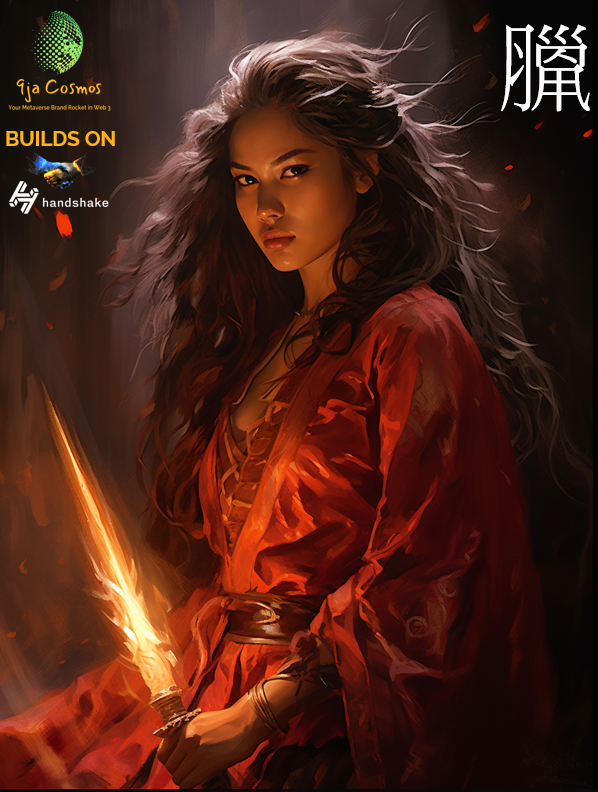
There is no telling to what extent modern graphic representations of Sino Amazons are fact or fiction.
It was known that Sino Amazons were consummate polyglots. Apart from knowing several regional languages, individual Sino Amazons knew different combinations of, example, Arabic, Persian, Kurd, Turk, Sanskrit, and indigenous tribal Central and South American, African and Australasian languages.
From around 1500 forward, they also gained command of the European languages of Colonial Powers – Dutch, English, French, Portuguese and Spanish.
Sino Amazons didn’t have one uniform ethnic appearance. They bore features which seemed to be some fusion of regional origin with other origins further afield, often individually aligned with the range of languages they spoke.
Dress Code – As only Sino Amazons took to sea on their vessels, accounts of their clothing choices while at sea are minimal. On land, they didn’t have a fixed way of dressing and a lot depended on the land mission.
When battle engagement was their only consideration, individual Sino Amazons had their own preferences – While Sino Amazons were typically in a completely different league to average sovereign troops local militia and lone criminal vagabonds, they occasionally fell short in the strength stakes facing exceptional opponents. Some used torso armour, some used protection of lower arms and shin bones but Amazons generally favoured freedom and speed of movement over protection accessories. They were generally faster, more agile, and had quicker reactions than the most formidable of opponents.
In a collective effort, some charged fiercely at enemies wielding a weapon, naked from the waist up, something men only did in exhibition and prize fights, and was unheard of with female warriors. The tactic often had a strong intimidatory effect, as Sino Amazons were already rumoured to be demons, have supernatural powers, possess immortality, or various other irrational superstitious beliefs. Opponents were often ‘dead’, defeated in their own minds before a Sino Amazon blade came anywhere near them.
Otherwise on Land Missions, Sino Amazons dressed to blend in, often in dowdy and drab clothing of impoverished peasants, sometimes in the style and quality consistent with the rest of the crowd, when infiltrating a prestigious event. On some assignments they had to follow some uniform guidelines as set by their paymaster.
Weapons – By the early 11th Century, simple hand-held weapons called ‘hand cannons’ were available in East Asia. These were unreliable and had a one in five chance of malfunctioning, causing injury to the user when fired. Gradually they improved and by the 16th Century, reasonably reliable muskets, single shot matchlock and wheel lock pistols and blunderbusses were appearing.
Sino Amazons did not use any weapons that fired projectiles whose motion was created from an explosive charge.
They possessed many different types of blades, throwing weapons, staffs, spears and pikes. Early fire arms took far too long to reload, and were quite useless against a Sino Amazon who moved so fast, all could be seen is a blur, if anything at all.
There were also rumours that some Sino Amazons had weaponized body parts, and this sat well with the mythical notions of demonic or supernatural powers. Stories were told as if these enhancements were somehow organic, with no clear demarcation where inorganic feature starts and Sino Amazon flesh ended. Accounts were retold as if they were not implants. Other stories included the presence of snakes in hair, head horns, and animal claws in hands, some reminiscent of Hippolyta and others conjuring images of Medusa, Minotaurs, and Hades, entrenching the association of the Sino Amazons with ancient Greece.
This is all reflected in the artwork depicting Sino Amazons. The appearances of some of their weapons are also confusing, and seem to defy conventional design of hand-held tools intended to deliver lethal cutting actions or blunt force. The unlikelihood based on appearance, that these weapons can strike lethal blows also adds to the perception that they hold ‘unnatural powers’.
The end of the Sino Amazons Era.
Nobody really knew the reason why Sino Amazons disappeared. Locals believed they were not of this earth, and they were called away from it to serve some ‘higher cause’ in some unearthly realm.
Both the suppressive dictatorial regional regimes, and the colonial navies were very boastful about military and naval conquests. While they had different alliances and conflicts between themselves, they all hated the Sino Amazons with a passion.
Any that had succeeded in exterminating them, would have been quick to establish ‘bragging rights’.
None made such claim.
As revenue from trade in the region rose, so did the size of colonial fleets present in regional waters. They were sufficiently distributed so individual ships in fleets were within lantern sight distance of at least one other ship most of the time, which made signalling possible.
Over time, they also developed micro-detail maps of subsea rock formations, current behaviours, localized weather formations and other maritime risks. This created problems for success of Sino Amazon maritime tactics, which relied heavily on engaging just one ship at a time, and using local sea knowledge against them.
By 1700, hand-held firearms, which Sino Amazons never used, had vastly improved. It’s possible they started taking casualties when boarding conquered ships.
At one point in the early 18th Century, it became noticeable that no Sino Amazon had set foot on East Asia shores for several months, neither had any of their vessels been sighted at sea.
A sovereign scouting party of The Sultanate of Sulu (Part of what is now known as The Philippines) landed and scouted the length and breadth of the Paracel Islands, finding no traces of the Sino Amazons.
Other rumours circulated that they had left en-masse to support a troubled King Kanthirava Narasaraja II, who ruled the Kingdom of Mysore (now part of India) from 1704 until his death in 1714.
Such speculation failed to shed any light on what relationship existed between the Sino Amazons and Kanthirava Narasaraja II, what link they had with Mysore, or what pretext they had for going there (if any).
English-French hostilities had by this time broken out in South Asia, and if the Sino Amazon Armada had docked at Putucceri (now Puducherry) this would have been be high on both colonial powers radar, and would have shown up in logs.
All that is known is that they disappeared like evaporated mirages or exorcized ghosts.. as mysteriously as they came, adding to their mystique and legend.
Sinosignias
A Sinosignia is a written character which is individual to one particular Sino Amazon.
Characters in different East Asian languages can be created from brush strokes. The range of brush stroke types in languages differ, though it is possible they have some common roots or origins.
The brush strokes used across different Sinosignias do not conform to brush strokes of any one language and may have influences from outside the operational geographies of the Sino Amazon Armada. Many nations did not use the phonetic (Roman) alphabet during the Sino Amazon Era.
A completed Sinosignia doesn’t set out to mean a word in any language.
A Sinosignia can be used as an ID, and the seal of a contract or bond. Sino Amazons use their Sinosignia in any circumstance where it would be normal to sign their name.
Sino Amazons tattoo their Sinosignia in an obscure and concealed part of their body. A preferred location is under the right big toe. This is less painful to create than some other less popular concealed locations, such as the upper inner thigh, lower groin, or close to the centre of the armpit.
Sino Amazons secret instruction is to refrain from placing the sinosignia on any part of a foot except for underneath the right big toe. This is to confuse ‘would be’ impersonators and fraudsters. Rumours circulate about the foot location but not the thigh, groin or armpit. Frauds can easily be exposed through making the mistake of random placement on the foot, or using the wrong one.
Authentication at closed meetings with critical negotiations or taking delivery of assets, involve exposing the sinosignia to a witness, who will compare it with those signed on contracts, bonds or other documents.
While Sino Amazons are no more, Sinosignias still persist among criminal networks and secret societies in East Asia, the Asian Pacific, and Diaspora East Asia communities, though the practice is fragmented and they are known by a variety of different names.
Web 3 Enabling Product
Each Product contains two components –
The Sino Amazon is a tokenized digital artwork (such as NFT), depicting pose and surroundings consistent with the Sino Amazon legend.
The Sinosignia is a Web 3 TLD (Top Level Domain) minted to the ‘Handshake’ blockchain that looks like an East Asian letter character.
Digital collectible + Web 3 domain = complete product
Amazing Use Cases
Digital collectible (the artwork) Web 3 domain – virtual ID, Web3 website conceptuality – joint historic narrative; Sinosignia can also be used as a unique personal tatoo IRL.
security – hack proof as a wallet drained of digital collectibles will only net the collectible – useless on its own without proof of Sinosignia (the web3 domain) to validate it. Impervious to centralized weaknesses of off .eth chains, as proof of Sinosignia provides a recovery route.
Impervious to counterfeiting/plagiarism because each artwork and Sinosignia is a unique pair. There is no copy run of each collectible, they are sold only once with their unique Sinosignia. The issuer 9ja Cosmos can’t do copies later causing it to be non-unique. The allocated punycode domain can’t be duplicated.
Video Infusion is for promotional only. The high definition artworks are stills.
Preview our Sino Amazon/Sinosignia releases (Ente)
See if your .det0x Web 3 name is still available
View ‘det0xants’ on special promo with your .det0x
9ja Cosmos on LinkedIn