DD
MM
YYYY

PAGES

DD
MM
YYYY

spot_img

PAGES

Home Blog Page 2986

Donald Trump and A Lesson on Luck and Timing

1

Time is most things. For Donald Trump, it is even more. On two recent occasions, in the political world, time has not aligned for him. In 2020, he was on an ascension to be re-elected. Then the pandemic struck and changed many things. It was not just the tanking of the economy and the associated loss of jobs. The real deal was that pandemic normalized “Remote Voting” or what they call mail-in voting at scale. 

Before the pandemic, virtual conferences, training, mail-in voting, etc were seen as sub-par, but when the pandemic struct, most cities and states defaulted to the “virtual option”. Unfortunately for Trump, Democrats typically outperform on that mail-in voting. I do posit that he lost partly as a result. I voted via the mail-in voting process.

Fast forward to 2024. I called the election for Trump here even before the game began. Personally, I made up my mind that I was not going to vote since I could not vote for Biden; he had served and should retire. But then something happened and Biden and Trump decided to debate.

Yes, the question remains: why did they do that before the conventions when it would have been impossible to change candidates? It comes down to Timing. Trump wanted early debate. Had he waited for post-convention, Biden would have remained his opponent. But by debating earlier, he gave Democrats the opportunity to see what I saw which made me call the election for Trump. Quickly, Biden was replaced by Kamala Harris. Just like that, it is game on. I have since requested the paperworks to now vote!

Good People, despite how brilliant or excellent you are in life, desire and wish to also meet the fortune of LUCK, favour, grace or whatever you call it. If Trump loses this election, he will never forget the date he agreed to debate Biden before the Democrats’ convention, instead of the post-convention when it would have been impossible to replace his opponent!

Exploring How Artificial Intelligence (AI) Assistants will Transform the Job Market

0

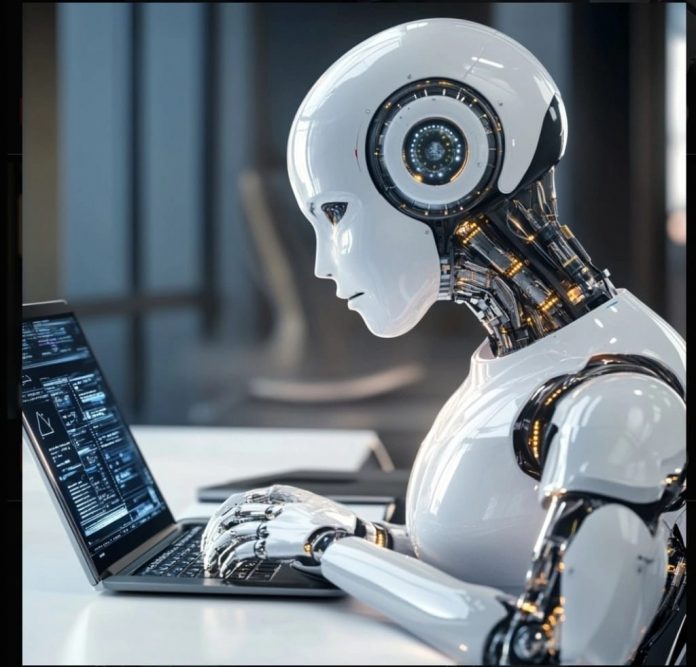
The advent of artificial intelligence (AI) has ushered in a new era of technological innovation, fundamentally altering the landscape of the job market. AI assistants, with their advanced capabilities, are at the forefront of this transformation, reshaping the way businesses operate and employees work.

One of the recurring themes of the societal discussion on generative AI is how it will transform the future of work. According to CEO of MotleyCrew, Egor Kraev it doesn’t seem too far-fetched that systems using Large Language Models (LLMs) could, for example, produce code comparable in quality to that of at least a junior programmer – and there is no shortage of investment, in both large firms and startups, into making that happen. The same holds for other knowledge workers, for example copywriters and illustrators. 

AI’s journey began in the mid-20th century, but it has seen exponential growth in recent years, especially with the advent of generative AI technologies. Companies like Microsoft have recognized the potential of AI to drive efficiencies and enhance data-driven decision-making. The market for generative AI is expected to burgeon into a $1.3 trillion industry by 2032.

Would large-scale societal disruption follow as whole segments of white-collar work are automated? 

Let us start with some historical perspective. How many of our readers know what a typing pool is? These days encountered almost only in last-century detective novels, the typing pool was, before computers became commonplace, a room where typists sat, that is people whose job was to type business correspondence fast and without mistakes (as correcting typos made with a mechanical typewriter was unsightly).

With the advent of computers, one could correct errors before printing the letter (if it needed to be printed at all), and typing pools, and the profession of typist, disappeared. Did typing disappear? Of course not, but from a profession, it turned into merely a skill that people in certain jobs are supposed to possess. 

Let us also consider another profession, that of a car mechanic. Once upon a time, when cars were a novelty and required constant maintenance, to own and use one, it was necessary to employ a full-time mechanic who took care of the car. As cars evolved and required ever less routine maintenance, did the profession of car mechanic disappear? On the contrary, as cars became cheaper and easier to own, the total demand for cars, and thus car mechanics, has only grown. The profession has become more demanding and highly skilled but is unlikely to become obsolete. 

A combination of these two trajectories is precisely the path that many current knowledge-intensive roles, such as data analysis or programming, will follow: their basic level will go from a full-time job to a skill that people in other roles, such as product management, are simply expected to have; and their advanced level will become even more advanced and powerful, due to all the new generative AI tools available to practitioners.  

Contrary to the common fear that AI will replace human jobs, the reality is more nuanced. AI is creating new job roles and augmenting existing ones, enabling workers to focus on more strategic tasks. There is a burgeoning demand for AI experts, including programmers, data scientists, and professionals well-versed in AI frameworks.

Over the last half a century or so, programming has moved from assembler (literal “copy memory address x to memory address y” kind of instructions) to languages like C++, with their explicit control over memory allocation, to simpler and more forgiving languages such as Python. Of course, use cases for assembler or C++ are still there, but someone wanting to learn coding to do, for example, data analysis these days will likely start with Python and often find it enough for their needs. As this was happening, the profession of the programmer was never in danger of becoming extinct, just like that of the car mechanic – it only changed tools – Egor Kraev.

Many other creative professions (and yes, programming is a highly creative pursuit), for example, copywriters or illustrators, as well as managerial roles, haven’t experienced a similar sort of change merely because until the current generation of Generative AI Models, Computer Algorithms just weren’t very good at working with natural language text, or with images.

Now that this has changed, we can expect a similar evolution in those professions: ever more powerful tools that take away the drudgery and leave to the human the quintessentially human part: the human dimension, the intent of the work, its strategic implications, and the judgment calls involved. 

The potential impact AI goes beyond front-line jobs, too. When you think about it, how much management work in large companies can be thought of as consuming and generating text according to a set of relatively fixed (if not always explicitly written down) rules? Not all of it, certainly, but a lot. 

The integration of AI into business systems has led to a significant shift in hiring trends. The Upwork Research Institute reports a 600% increase in job posts seeking generative AI skills from the fourth quarter of 2022 to the first quarter of 2023. Moreover, 49% of hiring managers surveyed indicated they would hire more independent talent and full-time employees due to generative AI.

Millennials and Gen Z are leading the conversation on AI, with the latter being particularly tech-savvy and open to embracing emerging technologies. This generational shift is crucial as it indicates a growing AI literacy among the workforce, which is essential for navigating the AI-transformed job market. Professional services, technology, and education are the sectors most actively engaging with AI. In these industries, AI is not only popular but is also driving significant changes in job functions and skill requirements.

As AI takes over routine tasks, the remaining jobs will increasingly require critical thinking and soft skills such as communication, collaboration, and problem-solving. This shift may lead to job displacement in certain roles, but it also opens up opportunities for innovation and the creation of new job categories.

Zoom Upgrades Platform to Enable Webinar Hosting of up to 1 Million Attendees

0

Zoom, a popular video and online communications platform has unveiled a groundbreaking update to its webinar feature, enabling it to host up to 1 million attendees in a single webinar.

This upgrade is a significant step forward, solidifying Zoom’s position as a leader in virtual event technology and expanding the possibilities for large-scale online gatherings. The increase in the platform’s webinar capacity to host 1 million attendees, is coming where it previously accommodated up to 100,000 attendees and 1,000 panelists.

Zoom’s Chief Product officer Smita Hashim via a press release disclosed,

“Zoom’s expanded capacity webinar offering is revolutionizing the way organizations can seamlessly connect and engage with massive audiences”.

Zoom Webinars can now accommodate groups as large as 1 million (with the expanded single-use license) and last up to 30 hours with 1,000 interactive video panelists. It is Ideal for large-scale training, company kickoffs, executive panel discussions, and leadership seminars. The webinars give hosts greater control and flexibility.

By limiting the audio, video, and screen-sharing functionality to designated presenters, hosts can reduce the risk of disruptions from the audience. This newly upgraded capability is particularly beneficial for organizations that need to reach vast audiences, such as multinational corporations, educational institutions, government agencies, and global media outlets.

Whether it’s a product launch, a global conference, an educational seminar, or a large-scale corporate announcement, the ability to host such a massive number of participants makes Zoom Webinars an ideal solution for events that demand extensive reach and engagement.

Despite the significant increase in capacity, Zoom remains committed to maintaining the high-quality user experience it is known for. The platform’s infrastructure has been optimized to handle this massive scale, ensuring that audio and video quality, as well as real-time interaction features, remain consistent and reliable.

Zoom Webinars also offer a range of engagement tools that help keep large audiences involved and attentive. Features such as Q&A, polling, chat, and virtual hand-raising are available to all participants, allowing for interactive and dynamic webinars. Additionally, hosts can manage these interactions efficiently, even with millions of attendees, through advanced moderation and control settings.

Flexibility and Customization Zoom Webinars continue to offer a high degree of flexibility and customization, even with the expanded capacity. Hosts can tailor the webinar experience to their specific needs, whether they require a fully interactive session with multiple speakers or a broadcast-style event where the focus is on one or two key presenters.

Zoom’s expansion of its webinar capacity to 1 million attendees is a game-changer for the virtual space industry. It opens up new possibilities for large-scale online events, providing organizations with a powerful tool to connect with vast audiences around the world.

As Zoom continues to innovate and scale its platform, it remains at the forefront of the digital transformation of communication and event hosting, setting new standards for what is possible in the virtual space.

Record and Play Your Career Moment, Quantify Your Webinality for Impact | Tekedia Mini-MBA

0

They tell you that “your work will Speak for you”. That is a voodoo advisory because “Work”, from my secondary school biology class, is inanimate, and does not talk.

Humans talk; work does not! Make humans know what you are doing. The biggest illusion is thinking that your “work” will speak for you. Work does not talk; only humans do!

Do great things, and find ways to make sure people know you did them. Until humans, not work, begin to speak for you, that promotion may not come.

Be a great team player, but make sure you make it easier for humans to help you! Greatness comes in careers when people can recommend you in your absence. Record and Play  that career moment!

Today, at Tekedia Mini-MBA Live, our Faculty Gbenga Ogunniyi??, will educate on how to build tools to improve our webinality (web + personality) for career success.

Beyond Business Education, the Tekedia Personal Economy series is designed to help Learners create their own personal economies, and not just the ones for their companies and nations. Register for the next edition here

Implications of Colombia Banning Coal Exports to Israel

0

Colombia is a major supplier of coal to Israel, with exports worth hundreds of millions of dollars. The ban could have a direct economic impact on Colombia’s mining industry and trade revenues. It may also affect Israeli power generation, as the country relies on imported coal for a significant portion of its energy needs.

The ban is a clear indication of deteriorating diplomatic relations between Colombia and Israel. Such a move could lead to a cooling of ties and affect various aspects of bilateral cooperation, including military and trade agreements. The ban raises questions about compliance with international trade laws and existing free trade agreements. It could potentially lead to legal challenges and disputes in international forums.

The decision could signal to international investors that Colombia is willing to make abrupt policy changes that could affect market stability. This might influence future investment decisions in the country’s mining sector and beyond. The ban reflects Colombia’s stance on the Gaza conflict and could influence its relationships with other countries. It may lead to Colombia aligning more closely with nations that share similar views on the conflict.

This move sets a precedent for how countries might use trade bans as a form of political expression or pressure. It could encourage other nations to consider similar measures in response to international events. The ban is positioned as a response to humanitarian concerns in Gaza. It highlights the role of economic measures in addressing human rights issues and could prompt discussions on the effectiveness of such approaches.

Economic measures have become a significant tool for countries to respond to international conflicts, often serving as a means to exert pressure without resorting to military action. These measures can take various forms, such as sanctions, embargoes, and trade restrictions, and they aim to influence the policies or actions of the target nation.

Sanctions are perhaps the most common economic measure used in response to conflicts. They can be comprehensive, affecting nearly all trade, or they can be targeted, focusing on specific individuals, organizations, or sectors. The intent behind sanctions is to create economic hardship that will compel the target country to alter its behavior. For example, the United Nations has imposed sanctions on North Korea with the aim of curtailing its nuclear program.

Another form of economic response is the embargo, which is a prohibition on trade with a particular country. Embargoes can be imposed unilaterally by one country or collectively by a group of countries. A historical example is the oil embargo that Arab nations imposed on the United States and other countries during the 1973 Arab Israeli War, which was meant to protest against their support for Israel.

Trade restrictions can also be used as a response to conflicts. These restrictions can include increased tariffs, quotas, or other barriers to trade. The goal is to disrupt the normal flow of goods and services to and from the target country, thereby putting economic pressure on it. The United States’ trade war with China, which began in 2018, involved the imposition of tariffs on hundreds of billions of dollars’ worth of Chinese goods, in part as a response to what the U.S. viewed as unfair trade practices.

For Israel, the ban may accelerate the search for alternative energy sources and suppliers. This could have environmental implications if it leads to increased use of renewable energy. The ban could influence public opinion both within Colombia and internationally, potentially leading to increased support or criticism of the Colombian government’s policies.

The international community’s reaction to the ban will be telling. It could lead to support, condemnation, or further isolation of Colombia, depending on how other nations view the ban’s justification.

The ban on coal exports from Colombia to Israel is a complex issue with wide-ranging implications. It underscores the interconnectedness of international trade, diplomacy, and human rights, and serves as a reminder of the power of economic tools in international relations. The full impact of the ban will unfold over time, as the involved parties and the international community respond to this significant policy change.