DD
MM
YYYY

PAGES

DD
MM
YYYY

spot_img

PAGES

Home Blog Page 3

Palantir Says AI Is Rewriting Enterprise Software As Commercial Revenue Surges 149% With ‘A Minuscule And Shrinking Sales Head Count’

0

Palantir Technologies delivered another blockbuster quarter on Monday, strengthening its position as one of the biggest corporate beneficiaries of the artificial intelligence boom as Chief Executive Alex Karp said that the company’s explosive growth is proving that AI can fundamentally reshape how software companies operate.

The data analytics and AI software company reported second-quarter results that comfortably exceeded Wall Street expectations, driven by surging demand from businesses seeking to deploy AI while keeping sensitive corporate data inside their own environments rather than relying entirely on frontier AI providers.

Palantir reported revenue of $1.94 billion, up 93% from about $1 billion a year earlier and ahead of analysts’ expectations of $1.8 billion, according to LSEG. Net profit reached $1.1 billion, meaning the company earned more in quarterly profit than it generated in total revenue during the same period last year.

The strongest growth came from its U.S. commercial business, which generated a record $764 million in revenue, soaring 149% year over year and 28% from the previous quarter alone. Government revenue climbed 90% to $809 million, while total U.S. revenue rose 115% to $1.6 billion.

The results prompted Palantir to raise its full-year outlook, with the company forecasting revenue of between $8.15 billion and $8.158 billion and commercial revenue exceeding $3.424 billion. Shares rose more than 16% in premarket trading following the earnings release.

For investors, the report provides further evidence that enterprise AI spending remains robust even as markets increasingly question whether massive investments in artificial intelligence infrastructure will generate sustainable returns.

Unlike chipmakers and cloud providers that depend on continued AI capital expenditure, Palantir sits further down the value chain, helping governments and businesses integrate AI models into existing operations while maintaining control over proprietary data. That positioning has differentiated the company as enterprises become more cautious about exposing sensitive information to third-party AI providers.

Karp used the quarterly shareholder letter to note that Palantir’s growth defies traditional software industry assumptions.

“On a quarter-by-quarter basis, our US commercial business grew 28%. Such growth indeed, such acceleration gives the impression that what others might require a year or even longer to achieve, we can do in 90 days,” he wrote.

He also highlighted what he described as one of the company’s most unconventional advantages.

“It must be noted that we have achieved these results with a minuscule and shrinking sales head count, another way in which we have discarded conventional wisdom in favor of our own, unique path,” he said.

The remarks support Karp’s long-held view that AI is changing not only customer products but also how technology companies themselves are organized.

Earlier this year, Karp said Palantir employed roughly 70 salespeople, adding that only seven were responsible for most direct sales activity.

“What a comparable company would need 7,000 people to do,” he said in May, “seven” people at Palantir were accomplishing.

Silicon Valley companies are now embracing so-called “tiny teams” that use AI to automate work traditionally performed by much larger human workforces. Rather than expanding headcount alongside revenue, many AI-first companies are attempting to scale through software agents and automation, allowing smaller teams to manage engineering, customer support, coding, sales and administrative tasks.

Palantir’s own workforce strategy, however, has evolved.

Karp told CNBC in 2025 that he hoped to grow the business tenfold while reducing employee numbers to roughly 3,600. Instead, the company’s latest annual report showed it employed 4,429 full-time workers, a 13% increase from the previous year.

Karp has also rejected the idea that AI should primarily be viewed as a tool for eliminating jobs. Speaking on the technology program TBPN in June, he criticized executives who celebrate AI mainly for reducing staffing levels.

Executives who boast that AI allows them to fire much of their workforce, he said, might as well sign up for “the Bernie Sanders manifesto.” Instead, Palantir says that AI should increase productivity while enabling companies to tackle complex work rather than simply replacing employees.

Many corporations remain reluctant to place sensitive intellectual property, financial information, or customer data inside externally hosted frontier AI models because of security, regulatory, and confidentiality concerns.

Palantir has positioned itself as an alternative by allowing organizations to deploy AI models within secure environments while retaining control over proprietary data and existing software infrastructure. That focus on what the company calls “AI sovereignty” has become one of its strongest competitive advantages as businesses seek to adopt generative AI without exposing strategic information to external model developers.

The strategy appears to be resonating with investors.

Analysts at Citi said the latest results further undermine the bearish argument that intensifying competition in artificial intelligence would erode Palantir’s growth prospects.

“The results further weaken the bear case around rising AI competition,” the analysts wrote, arguing that demand for secure enterprise AI continues to differentiate Palantir from companies focused primarily on developing large language models.

They added that the results reinforce “Palantir’s position as one of the clearest beneficiaries of enterprise AI adoption, with accelerating commercial demand demonstrating the company is benefitting from similar demand as the fastest AI natives on the market.”

“We expect shares up meaningfully given the significant snapback in U.S. Commercial performance, which pushes back against slowing growth,” Citi said.

The quarter also underpins an important divide within the AI industry. While companies such as OpenAI, Google, Anthropic and Meta compete to build ever more capable frontier models, Palantir is benefiting from enterprises that want those capabilities without surrendering control of their data.

As corporate AI adoption moves beyond experimentation toward large-scale deployment, investors are rewarding companies that solve practical implementation challenges rather than simply building larger models.

Palantir’s latest results suggest that the next phase of the AI boom may be driven not only by advances in model performance, but also by the software platforms that allow businesses to deploy artificial intelligence securely and integrate it into existing operations.


Iran Rejects U.S. Claim That the Strait of Hormuz Is Fully Under American Control

0

Iran has rejected recent claims by the United States that the Strait of Hormuz is completely under American control, reigniting debate over one of the world’s most strategically important maritime corridors.

The statement comes amid heightened geopolitical tensions in the Middle East, where military deployments, diplomatic negotiations, and energy security remain closely intertwined.

Tehran insists that no foreign power can claim complete authority over the narrow waterway, emphasizing that the Strait of Hormuz lies within a region where multiple coastal states, including Iran, possess legal rights and security responsibilities.

The Strait of Hormuz is one of the world’s busiest energy transit routes, connecting the Persian Gulf to the Gulf of Oman and the Arabian Sea. Roughly one-fifth of global oil consumption passes through the strait each day, alongside significant volumes of liquefied natural gas.

Because of its importance to international trade, any suggestion that shipping could be disrupted immediately captures the attention of governments, financial markets, and energy companies worldwide.

American officials have long argued that the U.S. Navy plays a critical role in ensuring freedom of navigation through the strait. The United States maintains a strong naval presence in the region and works closely with allies to escort commercial vessels, deter attacks, and respond to potential security threats.

Washington frequently highlights these operations as evidence of its commitment to protecting one of the world’s most vital maritime chokepoints. Iran strongly disputes the notion that the United States exercises complete control over the waterway.

Iranian officials argue that geography alone gives Tehran a central role in the security of the Strait of Hormuz, as much of Iran’s southern coastline borders the passage. They also maintain that regional security should be managed primarily by neighboring countries rather than foreign military forces.

According to Iranian authorities, any characterization suggesting exclusive American control ignores international maritime law and the realities of the region.

The disagreement reflects broader strategic competition between Washington and Tehran that has persisted for decades. Issues ranging from Iran’s nuclear program and regional influence to sanctions and military deployments have repeatedly brought the two countries into confrontation.

Statements regarding the Strait of Hormuz often carry significance beyond maritime security, serving as political messages intended to project strength and reassure domestic and international audiences. Global markets remain particularly sensitive to developments involving the Strait of Hormuz.

Even without actual disruptions to shipping, heightened rhetoric can influence oil prices, insurance costs for commercial vessels, and investor confidence. Energy-importing nations closely monitor the situation because any prolonged instability could tighten global supply and contribute to inflationary pressures in economies already facing volatile commodity markets.

Despite recurring tensions, commercial shipping has continued through the strait under international navigation rules. Many analysts believe that while both the United States and Iran seek to demonstrate resolve, neither side has a strong interest in triggering a prolonged conflict that would severely disrupt global energy flows.

Such a scenario would carry significant economic consequences not only for the region but also for the broader international community. Iran’s rejection of U.S. claims underscores the continuing geopolitical importance of the Strait of Hormuz.

As competing narratives emerge over security and control, the waterway remains a focal point of international diplomacy and military strategy. Moving forward, sustained dialogue, careful crisis management, and adherence to international maritime law will be essential to preventing misunderstandings from escalating into broader regional confrontations.

S&P 500 Ends Just $20 Below Record High as Iran Peace Prospects Boost Market Confidence

0

Wall Street edged closer to a historic milestone as the S&P 500 closed just 20 points below its previous all-time high, fueled by growing optimism that a new peace agreement involving Iran could reduce geopolitical tensions in the Middle East.

The rally reflected a broad shift in investor sentiment, with traders moving back into risk assets as fears of an extended regional conflict began to ease.

Markets have spent much of the year reacting to uncertainty surrounding geopolitical flashpoints, inflation, and central bank policy.

The latest developments surrounding Iran, however, introduced a rare wave of optimism. Reports suggesting that negotiations toward a new peace framework are progressing encouraged investors to believe that one of the world’s most significant geopolitical risks may be entering a more stable phase.

Energy markets were among the first to respond. Oil prices softened as expectations of reduced military tensions lowered concerns about supply disruptions in the Persian Gulf, one of the world’s most important energy corridors.

Lower oil prices are generally welcomed by equity investors because they ease inflationary pressures, reduce costs for businesses, and improve consumer purchasing power. Those factors collectively strengthen the outlook for corporate earnings and economic growth.

The S&P 500’s strong performance was broad-based, with technology, financial, industrial, and consumer discretionary stocks contributing to the advance.

Technology companies continued to attract investors due to their exposure to artificial intelligence, cloud computing, and digital infrastructure, while industrial firms benefited from expectations of stronger global trade if geopolitical risks continue to decline.

Investor confidence has been supported by resilient economic data. Despite higher interest rates over the past two years, the U.S. economy has remained remarkably durable. Employment has stayed relatively strong, corporate profits have exceeded many analysts’ expectations, and consumer spending has continued to support growth.

These fundamentals have provided a solid foundation for equities even during periods of heightened uncertainty. The possibility of a diplomatic breakthrough with Iran carries significance beyond financial markets.

Reduced tensions could improve global trade flows, stabilize commodity markets, and lessen the risk premium that investors have attached to assets over recent months. While negotiations remain delicate and any agreement would still require careful implementation.

Markets often respond well before political agreements are formally completed. Analysts caution that volatility remains a possibility. Peace negotiations are rarely straightforward, and unexpected developments could quickly reverse investor sentiment.

Additionally, markets continue to monitor the U.S. Federal Reserve’s policy decisions, inflation trends, and upcoming corporate earnings reports. Any disappointment in these areas could temporarily slow the current rally.

For long-term investors, the market’s approach toward a new all-time high demonstrates the resilience of U.S. equities. Even after navigating geopolitical conflicts, elevated interest rates, banking sector concerns, and economic uncertainty, the benchmark index has continued to recover.

This resilience highlights investors’ confidence in the long-term earnings potential of leading American companies. Should diplomatic progress continue and macroeconomic conditions remain supportive.

The S&P 500 may soon surpass its previous record and establish a fresh all-time high. Such a milestone would not simply represent a symbolic achievement but would reinforce confidence that financial markets can continue advancing despite periods of global uncertainty.

For investors worldwide, the combination of easing geopolitical tensions and resilient economic fundamentals offers renewed optimism that the current bull market still has room to run.

25 Democratic-Led States Sue Trump Administration Over New Tariffs, Arguing White House Exceeded Legal Authority

0

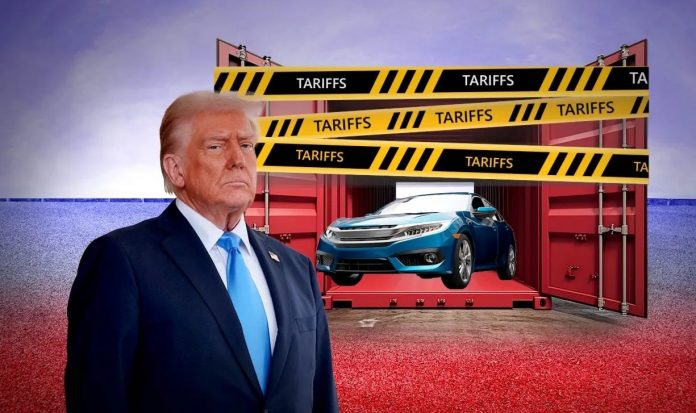
A coalition of 25 Democratic-led U.S. states has launched a fresh legal challenge against President Donald Trump’s latest round of global tariffs, arguing that the administration once again exceeded its statutory authority by imposing sweeping import duties that affect virtually all U.S. trading partners.

The lawsuit, filed on Monday in the United States Court of International Trade in New York, marks the latest escalation in a consequential legal battle over the scope of presidential trade powers. The outcome could shape not only the future of Trump’s aggressive tariff strategy but also define the limits of executive authority over U.S. trade policy for years to come.

The case follows multiple successful legal challenges brought by small businesses against previous rounds of Trump’s tariffs during his second term, even as the administration has continued to introduce new import duties under different statutory authorities after suffering repeated courtroom defeats.

The lawsuit targets tariffs imposed on July 24, when the administration introduced import duties of 10% and 12.5% on goods from approximately 60 trading partners, including the European Union.

The White House justified the measures by arguing that affected countries had failed to adequately prevent exports produced with forced labor, making the tariffs necessary to protect American workers and commerce.

The tariffs took effect immediately after an earlier 10% global tariff expired, ensuring there was no interruption in the administration’s broader trade strategy.

The coalition, led by states including Oregon and New York, argues that the latest measures amount to another attempt to impose broad-based import taxes without congressional approval.

Oregon Attorney General Dan Rayfield accused the administration of ignoring repeated judicial rulings.

“Despite losing every step of the way, Trump is trying yet again to inflict more chaos on working families and homegrown Oregon businesses,” Rayfield said.

The administration rejected the lawsuit, maintaining that the tariffs are both lawful and necessary. White House spokesman Kush Desai said that countries that fail to prevent the export of goods linked to forced labor impose unfair burdens on American workers and businesses.

“A foreign country’s failure to impose and effectively enforce a prohibition on the importation of goods produced with forced labor is unreasonable and burdens U.S. commerce, including American workers, and must be addressed,” Desai said.

The administration argues that addressing forced labor falls squarely within the government’s responsibility to protect U.S. economic interests.

New Legal Strategy After Earlier Court Defeats

The lawsuit exposes the Trump administration’s repeatedly shifted legal strategies after earlier tariff authorities were struck down by the courts. Trump initially relied heavily on the International Emergency Economic Powers Act (IEEPA) to impose broad tariffs on imports from numerous countries.

However, the Supreme Court of the United States ruled on February 20 that IEEPA does not authorize a president to unilaterally impose sweeping tariffs on trading partners. Rather than abandoning the policy, the administration introduced temporary global tariffs under another statutory authority. Those measures were likewise ruled unlawful by the Court of International Trade, although they have remained in force while the administration pursues an appeal.

The latest tariffs instead rely on Section 301 of the Trade Act of 1974, a legal provision historically used to respond to unfair or discriminatory trade practices by specific foreign countries.

Unlike IEEPA, Section 301 has been employed by previous administrations, most notably during trade disputes with China.

The states argue that the administration has stretched Section 301 well beyond its intended purpose. According to the complaint, previous presidents have used the law to target specific countries, products or industries following detailed trade investigations.

Trump’s latest tariffs, by contrast, apply broadly across roughly 99% of U.S. imports, making them unprecedented in both scale and scope.

The lawsuit contends that Congress never intended Section 301 to become a mechanism for imposing near-universal tariffs on dozens of trading partners simultaneously. The states also argue that the administration’s reliance on allegations involving forced labor is merely a legal workaround designed to restore tariffs that courts have already declared unlawful.

According to the complaint, imposing broad import duties would do little to address the underlying problem of forced labor while instead raising costs throughout the U.S. economy.

The case carries implications extending far beyond the immediate tariff dispute. Analysts note that if the courts ultimately invalidate the latest measures, it would represent another significant setback for one of Trump’s signature economic policies and could substantially narrow the executive branch’s ability to impose tariffs without explicit congressional authorization.

Conversely, if the administration prevails, future presidents could gain considerably broader authority to reshape U.S. trade policy through executive action.

For businesses, the uncertainty continues to complicate investment decisions and global supply chain planning. Companies importing goods into the United States must navigate tariffs that remain legally contested while adapting procurement strategies to account for potentially shifting trade rules.

The ongoing litigation also creates uncertainty for U.S. allies and trading partners, many of whom have struggled to assess the durability of American trade policy amid repeated legal challenges.

Tariffs have become a central pillar of President Donald Trump’s economic and foreign policy agenda during his second term. The administration has argued that higher import duties are necessary to protect American manufacturing, combat unfair trade practices, reduce dependence on foreign supply chains and pressure trading partners into changing their policies.

PLTR Surges 8% After Earnings Beat and Stronger Forward Guidance

0

Shares of Palantir Technologies (NASDAQ: PLTR) jumped roughly 8% after the company reported stronger-than-expected quarterly earnings and raised its forward guidance, reinforcing investor confidence that demand for artificial intelligence-driven software remains robust.

The rally adds to an already remarkable year for Palantir, whose rapid expansion across both government and commercial markets has positioned it as one of the leading beneficiaries of the global AI boom.

The latest earnings report exceeded Wall Street expectations on several key metrics, including revenue, earnings per share, and customer growth.

Palantir continued to demonstrate strong execution by expanding existing customer relationships while winning new contracts across industries such as healthcare, manufacturing, finance, and defense.

The company’s Artificial Intelligence Platform (AIP) remained a major growth driver, helping enterprises integrate generative AI into real-world operations with measurable business outcomes. One of the biggest catalysts behind the stock’s sharp rise was management’s decision to raise its full-year guidance.

Increasing revenue and profit expectations signals that executives are confident current demand trends will continue through the remainder of the year. Investors often view higher guidance as a stronger indicator than quarterly results because it reflects management’s expectations for future business performance rather than past achievements.

Palantir’s government business continues to provide a stable foundation for growth. The company has long been a trusted technology partner for defense agencies, intelligence organizations, and public-sector institutions.

Increasing geopolitical tensions and rising defense spending across several countries have created additional opportunities for advanced data analytics and AI-powered decision-making platforms. These long-term contracts generate recurring revenue while strengthening Palantir’s competitive position.

Equally important has been the acceleration of Palantir’s commercial business. Over the past two years, the company has successfully broadened its customer base beyond government agencies by helping private enterprises deploy AI solutions that improve productivity, optimize supply chains, automate workflows, and enhance strategic decision-making.

This diversification has reduced reliance on public-sector contracts while opening significantly larger addressable markets. The strong earnings report also highlights a broader trend unfolding across global markets. Companies that can successfully commercialize artificial intelligence are attracting significant investor interest.

While many businesses continue to experiment with AI technologies, Palantir has differentiated itself by delivering production-ready software capable of solving complex operational challenges. This practical approach has translated into growing revenues, expanding margins, and improving profitability.

Despite the positive momentum, some analysts continue to debate whether Palantir’s valuation accurately reflects future growth potential. Following substantial gains over the past year, the company’s shares trade at premium multiples compared with many traditional software firms.

Supporters argue that Palantir deserves a higher valuation because of its leadership in enterprise AI, while skeptics caution that maintaining such rapid growth will become increasingly challenging as the business scales.

The latest earnings release strengthens the bullish case. Strong financial performance, expanding AI adoption, healthy cash generation, and improved forward guidance suggest that Palantir remains well-positioned to capitalize on one of the fastest-growing segments of the technology industry.

As enterprises accelerate digital transformation and governments continue investing in advanced data infrastructure, Palantir appears poised to remain a central player in the evolving AI ecosystem.

The market’s enthusiastic response to its latest results reflects growing confidence that the company is not merely benefiting from AI hype but is converting technological leadership into sustainable financial performance.

If current execution continues, Palantir could remain one of the standout technology stocks to watch throughout the coming quarters.