DD
MM
YYYY

PAGES

DD
MM
YYYY

spot_img

PAGES

Home Blog Page 3

Bitcoin’s Three-Day Rally Signals a Potential Rotation From AI to Crypto

0

Bitcoin has delivered its strongest three-day rally since 2023, reviving debate over whether capital is beginning to rotate away from the overheated artificial intelligence trade and back into cryptocurrencies.

The move comes at a time when concerns about the enormous cost of AI investment are becoming harder for investors to ignore. For prominent investors including Bill Miller IV and macro strategist Jordi Visser, the shift may already be underway.

The argument rests on a simple but increasingly important question: can the extraordinary spending on artificial intelligence generate returns large enough to justify the valuations attached to companies leading the boom?

Over the past two years, investors have poured enormous amounts of capital into AI-related stocks, infrastructure and semiconductor companies. The enthusiasm has been supported by rapid advances in AI capabilities and strong earnings growth.

But expectations have risen dramatically. Warning signs have been emerging for months. K33 observed in June that Bitcoin was losing institutional attention as investors pursued stronger returns from AI-related assets.

The trend highlighted how competition for capital had increasingly favored technology stocks over digital assets. In July, investor Steve Eisman disclosed that he had sold his position in Google, another indication that some market participants were becoming cautious about exposure to an increasingly crowded AI trade.

Now, Bill Miller IV argues that doubts surrounding the returns from massive AI expenditure could become a catalyst for Bitcoin. His thesis is not simply that investors will abandon technology stocks.

Instead, he believes some long-term capital could seek alternative assets that offer different sources of potential returns and protection against broader macroeconomic risks.

Bitcoin fits that description for investors who view it as a scarce digital asset outside traditional monetary systems. Miller also points to government debt as another reason capital could move toward Bitcoin. The United States is projected to run a $1.8 trillion deficit this year, a figure that illustrates the enormous scale of government borrowing.

Miller’s comparison is striking: the annual US deficit is larger than Bitcoin’s entire market capitalization. That comparison underscores the monetary argument behind Bitcoin. Supporters increasingly view the cryptocurrency not merely as a speculative asset.

But as a potential hedge against fiscal deterioration, currency debasement and expanding government debt. If investors become increasingly concerned about the sustainability of government finances, scarce assets such as Bitcoin could attract additional demand.

The potential rotation from AI to crypto, however, should not be treated as an established fact. AI remains one of the most powerful investment themes in global markets, and companies benefiting from AI adoption continue to generate substantial revenues and profits.

Bitcoin remains highly volatile, meaning capital can move rapidly in both directions. The latest rally suggests that investor positioning may be changing. If concerns about AI spending continue to increase while Bitcoin maintains strong momentum, the cryptocurrency could become an increasingly attractive destination for capital seeking diversification.

The significance of Bitcoin’s three-day surge extends beyond its price. It may represent an early signal that investors are reassessing where the next major opportunity lies.

If the AI trade becomes too crowded and macroeconomic risks intensify, Bitcoin could emerge as one of the most visible beneficiaries of a broader shift in global capital.

Truth API Puts Trump Media at the Center of a New Market-Data Debate

0

Trump Media’s Truth API is quickly becoming one of the most controversial products in the intersection between social media, financial markets and politics.

The service gives high-frequency trading firms early access to posts published through Donald Trump’s Truth Social platform, reportedly at prices reaching as much as $100,000 per month. While Trump Media’s interim CEO Kevin McGurn has defended the product as a response to market demand.

The service is now attracting scrutiny from lawmakers and legal challengers who question whether politically significant public communications should be monetized before the broader public can see them.

Speaking on CNBC, McGurn argued that Truth API is not fundamentally different from data services that social media companies have historically provided to professional investors.

His argument is straightforward: financial markets place enormous value on speed, and traders are willing to pay for information that can help them react before competitors. In that context, Truth API represents another premium data feed designed for institutional customers.

The early numbers suggest that there is genuine demand. Sign-ups reportedly increased from roughly 10 earlier in August to the mid-teens, generating more than $1 million since the service launched on August 1.

That revenue demonstrates the economic value investors place on rapid access to Trump’s communications, particularly because his statements have repeatedly influenced financial markets, individual companies, cryptocurrencies and broader investor sentiment.

However, the controversy surrounding Truth API goes beyond ordinary market-data subscriptions. Critics argue that selling advance access to posts creates an information advantage that can potentially affect market fairness.

If professional trading firms receive Trump’s statements seconds or minutes before ordinary investors, they may be able to position themselves ahead of market-moving reactions.

The concern becomes even more significant when the information originates from a political figure whose statements can influence government policy and investor expectations.

Congress is now examining the service, while at least one lawsuit reportedly challenges Trump Media’s ability to commercialize early access to posts that ultimately become public.

These legal and political questions could determine whether Truth API becomes an accepted financial-data product or an example of the growing tension between information monetization and equal market access.

McGurn, appears prepared to push the concept further. Trump Media plans to expand Truth API into retail trading platforms and prediction markets, potentially transforming Trump’s social-media activity into a broader financial-data infrastructure.

Such an expansion could significantly increase the service’s commercial reach while also intensifying regulatory scrutiny. The debate reflects a larger transformation in financial markets, information has always been valuable.

But the difference between receiving it first and receiving it publicly can now be measured in milliseconds and millions of dollars. Social media has made political communication increasingly market-sensitive, while algorithmic trading has made speed increasingly important.

Truth API therefore represents more than a new subscription service. It is a test of how financial markets should handle politically influential information in an era where social-media posts can move prices almost instantly.

Its success could encourage other platforms to commercialize privileged data feeds, while regulatory opposition could establish new boundaries around who gets access to market-moving information and when.

Trump Media has found a lucrative market for speed, yet Truth API may force regulators, courts and investors to reconsider where the line should be drawn between premium financial information and equal access to public information.

Standard Chartered Becomes First Bank to Distribute Hong Kong Stablecoin

0

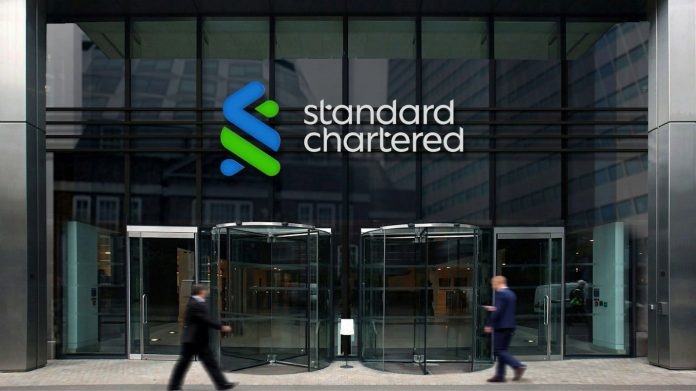
Standard Chartered has become the first bank authorized to distribute HKDAP, a regulated Hong Kong dollar-backed stablecoin issued by Anchorpoint Financial, marking a significant step in the integration of blockchain-based money with traditional banking infrastructure.

The announcement places one of the world’s major international banks directly at the center of Hong Kong’s emerging regulated stablecoin economy.

HKDAP is designed as a Hong Kong dollar-backed digital asset that can function as a programmable, interoperable settlement instrument.

Standard Chartered Bank (Hong Kong) is not only the first bank distributor but also the largest shareholder of Anchorpoint Financial, a joint venture established with HKT and Animoca Brands. This structure gives the bank an unusually direct role in both the development and distribution of the stablecoin.

The move is particularly important because HKDAP is being positioned less as a speculative cryptocurrency and more as financial infrastructure. Standard Chartered said it is engaging eligible institutional clients and partners to explore applications involving fund settlement, treasury management and cross-border payments.

These functions could demonstrate how stablecoins can reduce operational friction in traditional financial markets by enabling transactions to occur around the clock on blockchain networks.

One of the first planned applications involves tokenized money market funds. Standard Chartered intends to launch subscriptions and settlements for tokenized money market funds with international and local asset managers during the fourth quarter of 2026.

The bank plans to use HKDAP for intragroup settlements across its network, potentially creating a practical example of how tokenized money can improve liquidity and treasury operations within multinational financial institutions.

The development follows Hong Kong’s establishment of a formal regulatory framework for stablecoins. The Hong Kong Monetary Authority granted Anchorpoint a stablecoin issuer licence in April 2026 under the Stablecoins Ordinance.

Anchorpoint was among the first entities approved under the framework, alongside HSBC’s Hong Kong banking arm. The regulatory environment is crucial to HKDAP’s institutional ambitions. Rather than relying solely on crypto-native exchanges, the stablecoin can now reach eligible clients through a major regulated banking institution.

This could help address one of the biggest barriers facing digital assets: institutional confidence. Banks provide established compliance procedures, client relationships, custody infrastructure and connections to traditional financial markets.

HKDAP’s rollout has been deliberately phased. Anchorpoint initially made the stablecoin available to institutional distributors and professional investors, with early applications focused on payments and tokenized real-world assets.

The strategy reflects Hong Kong’s broader attempt to encourage digital-asset innovation while maintaining regulatory controls around issuance, reserves, redemption and anti-money-laundering requirements.

Standard Chartered’s involvement highlights a broader transformation taking place across global banking. Financial institutions are increasingly experimenting with stablecoins, tokenized deposits and blockchain settlement systems as they search for faster and more efficient alternatives to traditional payment infrastructure.

Earlier this month, Standard Chartered and HSBC completed a live cross-border tokenized-deposit transaction through Swift’s blockchain-based ledger, demonstrating that regulated banks are already testing blockchain infrastructure for institutional payments.

Bank distribution could provide a bridge between conventional finance and the city’s expanding digital-asset ecosystem. If HKDAP can demonstrate reliable settlement, treasury and cross-border payment applications.

It could encourage corporations, asset managers and other financial institutions to experiment with regulated tokenized money. Standard Chartered’s milestone therefore represents more than the distribution of a new digital currency.

It signals the gradual movement of stablecoins from the margins of financial markets toward regulated banking infrastructure. As Hong Kong develops its digital-asset framework.

The success of HKDAP could help determine whether stablecoins become merely another crypto product or evolve into an important component of the global financial system.

Saylor’s Strategy Swings From Billions in Losses to Profit as Bitcoin Reclaims $80K

0

Michael Saylor’s Bitcoin strategy has moved dramatically back into positive territory, highlighting both the enormous upside and extraordinary volatility attached to Strategy’s aggressive digital-asset accumulation.

According to Lookonchain data, Strategy swung from more than $9.5 billion in unrealized losses to over $4.7 billion in unrealized profit within a single week, as Bitcoin’s powerful rally lifted the value of its holdings.

The reversal is a striking example of how quickly Bitcoin’s price movements can reshape the financial position of one of the world’s most prominent corporate Bitcoin holders.

Strategy, formerly known as MicroStrategy, has spent years accumulating Bitcoin and positioning the cryptocurrency as its primary treasury reserve asset.

That strategy has produced spectacular gains during Bitcoin’s strongest rallies, but it has also exposed the company to substantial paper losses whenever the market turns lower. The latest move demonstrates the other side of that equation.

As Bitcoin recovered sharply and pushed above the $80,000 level, the value of Strategy’s enormous Bitcoin holdings increased rapidly. A position that had recently appeared deeply underwater suddenly moved into billions of dollars of unrealized profit.

The development represents more than a temporary improvement in a corporate balance sheet. It reinforces his long-standing argument that Bitcoin should be viewed as a scarce digital asset capable of appreciating significantly over long periods.

Strategy’s approach has effectively transformed the company into a publicly traded vehicle with substantial sensitivity to Bitcoin’s price. However, the size of the recent swing also illustrates the risks involved.

A movement from a $9.5 billion paper loss to a $4.7 billion gain in just one week represents a swing of more than $14 billion. That magnitude demonstrates how quickly market sentiment and cryptocurrency prices can alter Strategy’s financial position.

The key question now is whether Bitcoin can maintain its footing above $80,000. If the cryptocurrency continues climbing, Strategy’s unrealized gains could expand considerably, strengthening the narrative surrounding its Bitcoin treasury strategy.

Higher Bitcoin prices could improve investor confidence in the company and potentially increase its ability to raise capital for additional acquisitions.

The opposite scenario would be equally significant. A sustained decline below $80,000 could quickly reduce the cushion created by the recent rally.

Because Strategy’s exposure to Bitcoin is so large, even relatively modest percentage declines in the cryptocurrency can translate into billions of dollars in changes to the value of its holdings.

This makes Strategy an important barometer for the broader institutional Bitcoin trade. Its experience shows that corporate Bitcoin adoption can generate extraordinary returns, but those returns come with equally extraordinary volatility.

Unrealized profits are not the same as realized cash gains. Strategy’s improved position provides a valuation cushion, but that cushion remains tied to Bitcoin’s price. Until holdings are sold, the reported profit can expand or disappear as quickly as markets change.

Saylor’s return from billions in paper losses to billions in profit is a reminder that Bitcoin’s market cycles can move with remarkable speed. The turnaround may strengthen Strategy’s conviction, but it does not eliminate the underlying risk or its exposure to volatility.

For now, the company is back in the green. Whether that cushion becomes a durable advantage or another temporary milestone will depend heavily on Bitcoin’s ability to remain above $80,000 and sustain its broader upward trajectory.

X Plans Crypto Buy and Sell Features, Opening Direct Trading to 600M+ Users

0

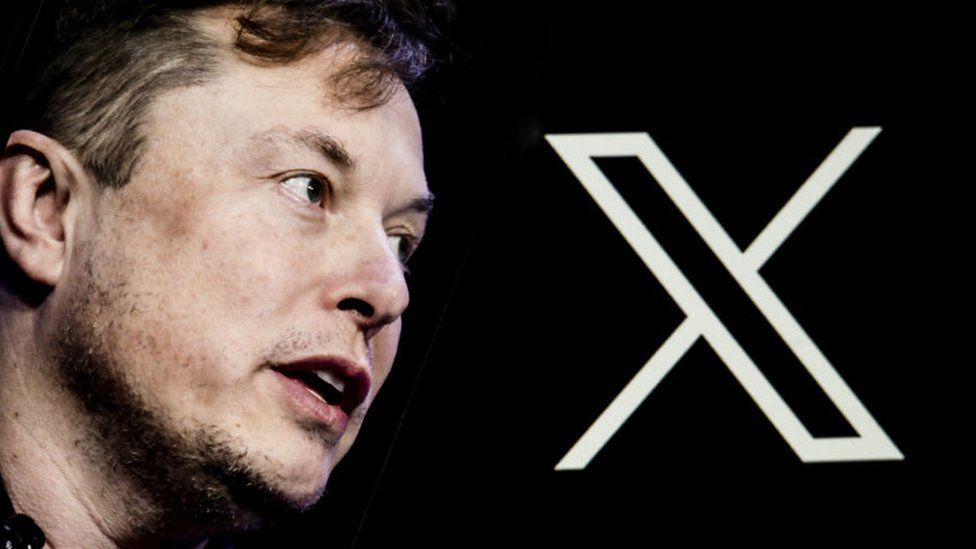
Elon Musk-owned social media platform X is moving closer to letting users trade cryptocurrencies without leaving the app.

On August 25, 2026, Nikita Bier, the former head of product at X who now serves in an advisory role, confirmed that trade buttons will soon be added to the platform’s Cashtags feature.

Bier made the remarks while responding to accusations that he had limited the visibility of crypto-related accounts. In his reply, he highlighted the tools he helped introduce for traders.

“I literally built Cashtags, allowing people to add Solana and Ethereum charts directly into posts, with trade buttons coming soon,” he wrote. “You can even paste contract addresses for newly minted tokens. There wasn’t a single feature on X for crypto traders until I joined.”

Cashtags first launched on X in April 2026 for iPhone users in the United States and Canada. The feature lets users embed live price charts for Solana and Ethereum directly into posts.

Tapping a cashtag or a contract address displays the chart alongside related discussions on the platform, so users no longer need to switch apps to check prices or context. Support for pasting new token contract addresses has already made it easier to verify and discuss freshly launched assets.

The planned trade buttons represent the next step. Once available, users would be able to initiate buys or sells from within a post or chart view. X has previously clarified that it does not plan to act as a brokerage or execute trades itself.

Instead, the buttons are expected to connect users to external partners or existing financial tools while keeping the experience inside the X app.

This is not the first time the idea has surfaced. Bier and the X team have discussed integrated trading options multiple times since early 2026, starting with “Smart Cashtags” announcements in January and February.

What ultimately shipped in April focused on charts and data rather than full trading functionality. The latest statement has renewed interest among users who want a more seamless path from discovering a token on their timeline to acting on it.

Some users joked that the feature could see millions of people quickly experience the volatility of crypto markets. In contrast, others suggested that its arrival signals a broader shift toward mainstream cryptocurrency adoption.

Several other users emphasized the move’s potential significance for crypto adoption, describing the integration as a major step that could bring digital-asset trading to a much broader audience.

Notably, this feature fits directly into Elon Musk’s long-standing ambition to transform X from a social media platform into an “everything app”—a vision he highlighted when he acquired Twitter for $44 billion in 2022.

Recall that Musk described the acquisition as an “accelerant” toward building X, with the broader concept modeled partly on China’s WeChat, where users can communicate, make payments, shop, and access financial services within one platform.

The planned crypto trading buttons represent another step in that direction. By allowing users to buy and sell digital assets directly from Cashtags and their timelines, X would move beyond simply providing financial information and into facilitating transactions.

The move also follows X’s broader expansion into financial services. The platform has introduced X Money, which provides features such as peer-to-peer transfers and a Visa debit card, reinforcing Musk’s goal of making X a platform where users can manage more aspects of their financial lives.

In this context, crypto trading could become an important component of X’s evolution. Rather than forcing users to leave the platform to access an exchange, X could eventually combine social discussions, real-time market information, payments, and trading within the same ecosystem.

No exact launch date or full list of supported assets has been announced. Coverage of Cashtags remains limited to certain markets and devices for now, so any trading feature would likely expand in stages.

Still, Bier’s comments have drawn attention across crypto circles, with many viewing the update as a logical extension of the tools already in place.

As X continues refining its financial features, the combination of charts, contract lookups, and eventual trade buttons could make the platform a more complete environment for following and acting on crypto markets in real time.