DD
MM
YYYY

PAGES

DD
MM
YYYY

spot_img

PAGES

Home Blog Page 3

SoFi Technologies Launches SoFiUSD to Drive Stablecoin Acceleration

0

SoFi Technologies announced the launch of SoFiUSD, a fully reserved U.S. dollar stablecoin issued by its nationally chartered bank, SoFi Bank, N.A.

Launched initially on Ethereum, a public, permissionless blockchain, with plans to expand to other chains over time. Backing: 1:1 fully backed by cash reserves held at the Federal Reserve, ensuring immediate redemption and no credit or liquidity risk.

SoFi claims this makes it the first U.S. national bank to issue a stablecoin on a public blockchain distinguishing it from private/permissioned ones like JPMorgan’s JPM Coin.

Primarily for faster, 24/7 settlements in payments, remittances, crypto trading, and enterprise use. It positions SoFi as a “stablecoin infrastructure provider,” allowing other banks and fintechs to white-label their own interoperable stablecoins or integrate SoFiUSD directly.

Currently used for internal settlements; rollout to SoFi members is coming soon. This follows SoFi’s recent re-entry into crypto trading and aligns with clearer U.S. regulations like the GENIUS Act passed in July 2025.

The introduction of SoFiUSD by SoFi Bank marks a significant milestone as the first stablecoin issued by a U.S. national bank on a public blockchain like Ethereum. This development has broad implications for the financial sector, blending traditional banking with decentralized technology under evolving regulations like the GENIUS Act of 2025.

SoFiUSD operates under strict oversight from the OCC, FDIC, and Federal Reserve, ensuring 1:1 backing with cash reserves held at the Fed. This eliminates credit and liquidity risks associated with non-bank issuers, positioning it as “regulated bank money” rather than a pure crypto asset.

It aligns with the GENIUS Act’s requirements for reserve backing and federal supervision, potentially paving the way for more banks to enter the space without facing the same hurdles. However, it also highlights a potential fault line in crypto governance, where bank-issued stablecoins could enable greater regulatory control, such as freezing accounts or blocking transactions, raising concerns about centralization versus individual sovereignty.

SoFiUSD intensifies competition in the $200B+ stablecoin market, challenging dominant players like USDT and USDC with its bank charter advantage—direct Fed reserve access reduces liquidity risk and builds a “regulatory moat.

By offering “stablecoins as a service,” SoFi enables white-label issuance for other banks, fintechs, and enterprises, lowering entry barriers and potentially expanding the overall stablecoin ecosystem. This could democratize access, turning stablecoins into standard infrastructure rather than niche crypto tools.

It bridges traditional finance (TradFi) with decentralized finance (DeFi) by providing bank-grade infrastructure on permissionless blockchains. This facilitates applications like crypto trading within SoFi’s platform, remittances via SoFi Pay, and enterprise settlements through partners like Galileo.

For SoFi, it enhances economics through trapped deposits, better margins, and new revenue streams from fees and reserve yields, while boosting user engagement and cross-selling.

Broader implications include accelerating crypto adoption now at 10-12% of global population by offering FDIC-insured, yield-bearing options that appeal to risk-averse users. SoFi can monetize its balance sheet as on-chain infrastructure, handling stress scenarios like mass redemptions through robust reserves.

It reframes stablecoins as “internet-native money rails” for B2B settlements, potentially evolving into a serious settlement layer via API integrations. While bullish for SoFi’s stock and operations, it’s seen as more about efficient bank plumbing than a “crypto revolution.”

This launch validates on-chain finance, signals institutional bridging, and could spur more banks to follow, but it underscores tensions between compliance-driven efficiency and decentralized ideals. SoFiUSD enhances liquidity by injecting trusted, regulated USD equivalents into digital ecosystems, enabling faster capital flows and deeper market participation.

Fully backed by Fed reserves with immediate redeemability, it minimizes issuer risks, encouraging adoption and increasing the pool of stable USD assets on Ethereum. White-labeling allows partners to issue interoperable stablecoins, expanding supply without regulatory burdens, which amplifies overall market liquidity.

Unlike traditional rails like SWIFT with T+1/T+2 delays, SoFiUSD offers near-instant, low-cost transfers, improving liquidity in payments, remittances, and trading by allowing constant capital movement.

This is key for crypto trading; on/off-ramps and enterprise uses like B2B flows. Interoperability with public blockchains enables DeFi applications like lending and yield farming, drawing institutional capital for better market depth and reduced volatility.

Regulated status attracts risk-averse entities, enhancing liquidity through higher volumes and partnerships. Reserves generate yield 4% on $1B float yields ~$40M annually, which can be passed to holders, incentivizing holding and circulation.

For partners, it streamlines liquidity management with transparent, programmable money. In essence, SoFiUSD drives liquidity by making USD more fluid and accessible in digital realms, fostering a more efficient, interconnected financial system.


ICE’s Potential Investment in MoonPay amid Uniswap’s UNIfication Proposal Going Live

0

Bloomberg reported that Intercontinental Exchange Inc. (ICE), the owner of the New York Stock Exchange (NYSE), is in talks to invest in cryptocurrency payments firm MoonPay as part of a new funding round.

The round could value MoonPay at approximately $5 billion, a significant increase from its previous $3.4 billion valuation in 2021.
Talks are described as advanced but private, and the deal is not yet finalized—it could fall through or change terms.

This potential investment aligns with ICE’s broader push into digital assets, following moves like its up-to-$2 billion commitment to Polymarket earlier in 2025 and ownership of the Bakkt crypto platform.

MoonPay has strengthened its position with: Regulatory approvals in New York including a Limited Purpose Trust Charter alongside its BitLicense. Expansion into custody services and stablecoins. High-profile hires, such as former acting CFTC chair Caroline Pham joining as chief legal officer.

This reflects growing bridges between traditional finance— Wall Street and the crypto sector amid a more favorable regulatory environment. While the deal is not finalized and could change or fall through,

ICE’s involvement would link Wall Street’s institutional network directly to MoonPay’s fiat-to-crypto on/off-ramps, making it easier for institutions and retail users to enter crypto. This could lower barriers and embed crypto payments into broader financial ecosystems, including potential integrations with NYSE-linked services.

Faster global reach for stablecoins and payments, positioning crypto as a viable alternative in commerce. A $5 billion valuation represents a ~47% increase from MoonPay’s 2021 peak of $3.4 billion, serving as a strong signal of recovery and maturity post-2022 downturn.

Backing from a legacy giant like ICE which also owns Bakkt and recently committed up to $2 billion to Polymarket indicates that mainstream finance views regulated crypto infrastructure as a legitimate, long-term asset class.

This could encourage more venture capital inflows—crypto funding has already hit nearly $19 billion in 2025—and stabilize valuations across the industry. Its builds on its crypto push— Bakkt custody, Polymarket bet, stablecoin explorations with Circle’s USDC, diversifying beyond traditional exchanges into payments, tokenization, and on-chain infrastructure.

Its aligns with trends like asset tokenization like DTCC’s tokenized settlements and a more pro-crypto U.S. regulatory and political environment under the Trump administration. This positions ICE to capture value in emerging areas like regulated custody, stablecoins, and cross-border efficiency.

MoonPay’s recent New York regulatory wins make it an attractive, compliant partner. The investment would fuel expansions in custody, stablecoins, and acquisitions, evolving MoonPay from a simple on-ramp to a full-service institutional gateway comparable to Coinbase or PayPal in regulatory standing.

It einforces the shift toward “regulated” crypto growth, reducing risks from past volatility and scandals. No immediate direct price impact on crypto markets noted, but it contributes to positive sentiment amid Wall Street’s increasing exposure.

This could pave the way for more hybrid products blending tradfi and crypto, such as tokenized assets or integrated clearing services. This potential deal highlights a maturing crypto industry where bridges between Wall Street and blockchain are forming rapidly, driven by regulatory progress and institutional interest. If completed, it would mark another milestone in crypto’s integration into global finance.

Uniswap’s UNIfication Proposal is Live on Uniswap Governance Portal

The on-chain governance vote for Uniswap’s “UNIfication” proposal—including activation of the long-awaited fee switch—is Live.

The proposal was submitted on-chain on, and voting officially starts today with some sources noting ~10:30 PM EST on December 19, effectively beginning late today. It runs until December 25, 2025. If passed after a 2-day timelock: 100 million UNI tokens burned immediately from the treasury a retroactive adjustment for missed fees since launch.

Fee switch activated on Uniswap v2 and v3 pools on Ethereum mainnet, with protocol fees routed to buy and burn UNI making the token deflationary and tied to protocol revenue. Unichain sequencer fees also used to burn UNI.

Uniswap Labs formally aligns with governance via a legally binding agreement under Wyoming’s DUNA law. This marks a major shift for UNI, turning it from a pure governance token into one with direct value accrual through burns linked to trading volume.

The proposal passed earlier off-chain Snapshot votes with strong support >63M UNI in favor. This has generated significant buzz in the community, with many viewing it as a bullish catalyst for $UNI.

100 million UNI ~10-16% of circulating supply, worth ~$500-800M at recent prices burned retroactively from the treasury. Ongoing protocol fees from v2/v3 on Ethereum mainnet and Unichain sequencer revenue routed to buy and burn UNI, creating a deflationary mechanism tied to trading volume.

UNI evolves from a pure governance token to one with “cash flow” characteristics—estimated 2.5-3% annual implied yield via supply reduction under moderate growth. At current run-rates ~$1B+ annualized fees in 2025, this could generate hundreds of millions in annual burns.

UNI has already rallied significantly on anticipation 40-70% pumps post-initial proposal. Passage could sustain momentum, positioning UNI as a top “fundamentals” play in DeFi. Fee switch diverts a portion of fees to the protocol, v2: LP fees drop from 0.30% to 0.25%, protocol takes 0.05%; v3: 1/6 to 1/4 of LP fees.

This taxes LPs, potentially leading to liquidity migration to competitors like Aerodrome on Base, Curve offering higher yields. Cleaner ecosystem eliminates many scam/honeypot pools which rely on zero protocol fees, improving overall quality and reducing rug risks.

Minimal direct impact fees mostly unchanged, but potential higher slippage if liquidity fragments. Long-term, more efficient routing via v4 hooks, UniswapX could benefit users. It merges Uniswap Foundation into Labs, eliminates Labs’ interface/API fees set to 0%, and funds growth via treasury 20M UNI/year budget.

Labs binds legally to governance via Wyoming DUNA framework, reducing misalignment risks. Gradual rollout starting Ethereum mainnet, expanding to L2s/v4 minimizes disruption. Could solidify Uniswap as the “default DEX” with deeper liquidity and innovations like MEV capture, aggregator hooks.

It sets a model for protocol revenue sharing via burns, encouraging similar moves elsewhere while addressing past criticisms of “untapped” value ~$4T+ lifetime volume without holder accrual. If LPs migrate en masse, short-term volume/TVL drop possible some analysts predict significant Base volume is “scammy” and will vanish.

Ties revenue directly to holders; could attract SEC attention though resolved prior issues. Phased approach and governance flexibility adjustable fee tiers mitigate risks, but competition remains fierce.

This is widely viewed as a net positive catalyst for UNI and DeFi maturation—turning Uniswap into a revenue-generating, deflationary asset while unifying operations.

Market sentiment is overwhelmingly bullish, with passage expected to drive further upside. Track the vote on Uniswap governance portal for real-time updates.

Google Takes Legal Aim at Data Scraping Firms as AI Intensifies the Fight Over Online Content

0

Google has escalated its battle against large-scale data scraping by filing a lawsuit against SerpApi, a Texas-based company it accuses of systematically siphoning content from its search results using massive volumes of fake queries, in what the tech giant describes as industrial-scale theft of copyrighted material.

The lawsuit, filed on Friday in federal court in California, alleges that SerpApi generated hundreds of millions of automated Google search requests to bypass Google’s technical safeguards, extract data embedded in search results, and then resell that information to third parties. Google argues that the practice allows SerpApi and its customers to “take it for free at an astonishing scale,” undermining both content creators and Google’s own contractual obligations to partners.

Google’s general counsel, Halimah DeLaine Prado, said the company had little choice but to resort to legal action after other measures failed.

“We devote significant resources to fighting this abuse and protecting websites’ content in our results,” she said in a statement. “When our technical security protections are circumvented in such a brazen way, as a last resort we take legal action to stop this behavior.”

At the heart of the dispute is the growing value of search data in the age of artificial intelligence. Google said its search results often include licensed and copyrighted material from third parties across products such as Knowledge Panels, Google Maps, and Google Shopping. These results, described in the complaint as “high-quality, content-rich,” are precisely what make Google a prime target for scrapers seeking structured data that can be repurposed for analytics, resale, or AI-related applications.

SerpApi did not immediately respond to requests for comment on the lawsuit. Google is seeking unspecified monetary damages as well as a court order to block SerpApi from continuing its scraping activities.

The case adds Google to a growing list of platforms pushing back against companies accused of harvesting online content without permission, a conflict that has intensified alongside the rapid expansion of generative AI. In October, Reddit filed a lawsuit against SerpApi and other scraping firms, alleging that its content was being taken to help train Perplexity’s AI-powered search engine. While Perplexity is not named in Google’s complaint, the overlap highlights how search data and user-generated content have become critical inputs in the AI ecosystem.

A Reddit spokesperson welcomed Google’s move, saying the company was “encouraged” by the lawsuit.

“When bad actors scrape content without permission or guardrails, they are turning the openness of the Internet against itself,” the spokesperson said.

For Google, the lawsuit also reflects broader strategic and legal pressures. The company sits at the center of the global information economy, aggregating and organizing vast amounts of data from across the web, often under complex licensing arrangements. Large-scale scraping threatens not only its infrastructure and revenue models, but also its relationships with publishers, map providers, and retailers whose content appears in search results under specific terms.

More broadly, the case underscores how the AI boom is reshaping old debates about web scraping, fair use, and data ownership. What was once a niche technical practice has become a high-stakes commercial activity, with companies racing to secure training data and real-time information at scale. Courts are increasingly being asked to draw lines between legitimate access, competitive intelligence, and outright misappropriation.

The lawsuit is titled Google LLC v. SerpApi LLC, filed in the U.S. District Court for the Northern District of California under case number 5:25-cv-10826. Its outcome could help set new boundaries for how far third-party firms can go in extracting value from search engines — and may shape how data flows across the internet as AI systems continue to proliferate.

Delaware Supreme Court Reinstates Musk’s $56 Billion Tesla Pay Deal, Clearing Path for $1tn Package

0

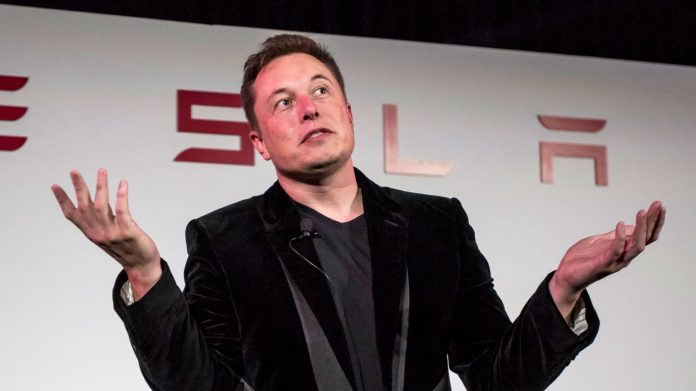
On Friday, Delaware’s highest court overturned a 2024 ruling by the Court of Chancery that had voided Musk’s $56 billion, milestone-based pay plan, calling the lower court’s decision to rescind the package an excessively harsh remedy.

The justices said Tesla was never given a proper opportunity to demonstrate what a fair level of compensation for Musk might be, and awarded only $1 in nominal damages to the shareholder who brought the suit.

The decision effectively ends the long-running Tornetta v. Musk case and restores what remains the largest CEO pay package in corporate history. But its implications extend well beyond settling an old dispute.

At the heart of the ruling is a clear signal from the Delaware Supreme Court that even where flaws exist in a board’s process, courts should be cautious about unwinding compensation agreements that have already been approved by shareholders and executed over time. That principle is now being closely watched in light of Tesla’s latest and far more controversial move: a new compensation framework presented to Musk in 2025 that could, under optimistic scenarios, be worth around $1 trillion.

Background: the 2018 deal and the legal fight

Musk’s original 2018 package was revolutionary. He agreed to take no salary or cash bonus, instead tying his pay entirely to Tesla’s performance across 12 tranches of stock options. Each tranche was linked to aggressive targets for market capitalization, revenue, and profitability. If Tesla failed, Musk earned nothing. If it succeeded, shareholders would benefit alongside him.

Tesla’s explosive growth meant the plan was fully vested, turning the package into a symbol of Silicon Valley excess — and a magnet for legal scrutiny.

Shareholder Richard Tornetta sued, accusing Musk and Tesla’s board of breaching fiduciary duties by approving the deal through what he described as a conflicted and opaque process. In January 2024, Chancellor Kathaleen McCormick sided with Tornetta, ruling that Musk “controlled Tesla,” that the board was insufficiently independent, and that shareholders were not given all material information before voting. She ordered the pay package rescinded outright.

That ruling triggered a fierce backlash. Musk publicly attacked the decision, moved Tesla’s incorporation out of Delaware, and encouraged other companies to follow. Tesla also attempted to ratify the 2018 package through a second shareholder vote in 2024, while appealing the ruling.

The Supreme Court’s reversal

In overturning the Chancery Court, the Delaware Supreme Court did not fully vindicate Tesla’s process, but it rejected rescission as an appropriate solution. The justices said the lower court failed to consider alternative remedies and denied Tesla the chance to argue what compensation would be reasonable, given Musk’s role and Tesla’s performance.

By restoring the pay package, the court reinforced the idea that shareholder-approved compensation, especially when tied to extraordinary corporate outcomes, should not be easily undone after the fact.

A precedent for the $1 trillion question

That reasoning is now central to the debate around Tesla’s newest compensation proposal for Musk.

Earlier this year, Tesla board unveiled a new long-term incentive framework that would again rely heavily on equity awards tied to ambitious valuation and operational milestones. While the exact payout would depend on Tesla’s future performance, analysts estimate that if the company meets its most aggressive targets, the package could ultimately be worth close to $1 trillion — a figure that has stunned even seasoned observers of executive pay.

Critics have already warned that the proposal risks repeating the governance concerns raised in the 2018 case, particularly around board independence and Musk’s outsized influence. Supporters counter that Musk remains inseparable from Tesla’s value proposition and that shareholders should be free to reward him accordingly if he delivers exceptional results.

The Delaware Supreme Court’s ruling strengthens Tesla’s hand. By making clear that rescinding a shareholder-approved pay deal is an extraordinary step, the court has raised the legal threshold for successfully challenging future Musk compensation packages. While any new plan could still face lawsuits, legal experts say plaintiffs may find it harder to persuade courts to nullify such agreements outright, especially if Tesla improves its disclosure and approval processes.

The decision also lands amid a broader rethinking of Delaware’s role in corporate America. Tesla’s legal battle coincided with legislative changes to Delaware corporate law earlier this year, changes that were supported by firms representing major companies and aimed at reducing litigation risk for boards and executives.

Trump Administration Kicks Off Review for Nvidia AI Chip Sales to China, Eyeing 25% Fee Amid National Security Debate

0

In a bold pivot from previous U.S. export restrictions, President Donald Trump’s administration has initiated an inter-agency review that could greenlight the first shipments of Nvidia’s high-powered H200 AI chips to China, according to five sources familiar with the matter who spoke to Reuters.

The move fulfills Trump’s recent pledge to permit such sales while imposing a 25% fee on the U.S. government, but it has ignited fierce backlash from critics who warn it could bolster Beijing’s military capabilities and undermine America’s AI edge.

The review, launched by the U.S. Commerce Department—which oversees export controls—has forwarded license applications for the chip sales to the State, Energy, and Defense Departments for input, the sources said, speaking on condition of anonymity due to the confidential nature of the process. Under federal export regulations, these agencies have 30 days to provide their assessments, after which the final decision rests with Trump himself.

One administration official stressed that the evaluation would be rigorous, describing it as “not some perfunctory box we are checking.” The Commerce Department and Nvidia declined to comment immediately, while a White House spokesperson avoided specifics on the review but affirmed the administration’s stance: “The Trump administration is committed to ensuring the dominance of the American tech stack – without compromising on national security.”

This development marks a stark reversal from the Biden era’s stringent bans on advanced AI chip exports to China, implemented over fears that such technology could fuel Beijing’s military ambitions or be rerouted through third countries. Trump’s first term had similarly cracked down on Chinese access to U.S. tech, spotlighting allegations of intellectual property theft and dual-use applications for military purposes—claims Beijing has consistently rejected.

Proponents within the Trump team, including White House AI czar David Sacks, contend that allowing sales of the H200 chips could strategically deter Chinese firms like Huawei from accelerating their own AI advancements. By satisfying demand with American products, the argument goes, it reduces incentives for Beijing to invest heavily in domestic alternatives, helping U.S. companies like Nvidia and AMD maintain their lead.

However, the proposal has drawn sharp condemnation from China hawks on both sides of the aisle. Chris McGuire, a former National Security Council official under Biden and now a senior fellow at the Council on Foreign Relations, called the potential exports “a significant strategic mistake.” He labeled the H200 chips as “the one thing holding China back in AI,” questioning how agencies could deem the sales aligned with U.S. national security interests.

“I cannot possibly fathom how the departments of Commerce, State, Energy, and Defense could certify that exporting these chips to China is in the U.S. national security interest,” McGuire said.

The H200, Nvidia’s second-most advanced AI chip and predecessor to its flagship Blackwell series, excels in many industry tasks but has never been cleared for sale in China. Reuters previously reported that Nvidia is eyeing a production ramp-up for the H200 after early Chinese orders exceeded capacity. Trump had initially floated sales of a downgraded Blackwell variant but retreated, opting instead for the H200 amid ongoing scrutiny.

Uncertainties linger over Beijing’s response, including whether Chinese companies would be permitted to buy the chips and how swiftly approvals might materialize. The inter-agency process, unreported until now, underscores the high-stakes balancing act between economic gains—bolstered by the proposed 25% tariff-like fee—and geopolitical risks in the escalating U.S.-China tech rivalry.

As the 30-day clock ticks, the outcome is expected to impact global AI supply chains, testing Trump’s vow to prioritize American innovation while protecting the U.S.’ national security interests.