DD
MM
YYYY

PAGES

DD
MM
YYYY

spot_img

PAGES

Home Blog Page 3

Why Investors Are Regaining Confidence in Berkshire Hathaway

0

Berkshire Hathaway’s return to levels seen before Warren Buffett’s retirement is emerging as one of the clearest early signals that investors may be growing comfortable with the conglomerate’s post-Buffett era.

After years in which the company’s shares were closely associated with Buffett’s capital-allocation decisions, the recovery suggests that shareholders are increasingly evaluating Berkshire on the strength of its underlying businesses, balance sheet and new leadership.

When Buffett announced that Greg Abel would succeed him as chief executive, concerns immediately surfaced about whether Berkshire could maintain the discipline and consistency that had defined its investment strategy for decades.

Buffett had become inseparable from Berkshire’s identity, and investors had to consider whether the company’s valuation would suffer once the “Oracle of Omaha” was no longer running its day-to-day operations.

Those concerns initially weighed on the stock. Yet Berkshire has demonstrated that its investment appeal extends beyond the personality of its longtime leader.

The company remains a diversified financial and industrial powerhouse, with major operations spanning insurance, railroads, energy, manufacturing, services and retail. Its enormous balance sheet and substantial liquidity provide management with flexibility to respond when attractive investment opportunities emerge.

That flexibility has become particularly important under Abel. Berkshire’s second-quarter results showed after-tax operating earnings rising 16% to approximately $13 billion. More significantly, the company began putting a substantial portion of its enormous cash reserves to work.

Berkshire purchased roughly $23 billion of equities during the quarter, including about $10 billion of Alphabet stock, while also repurchasing approximately $4.5 billion of its own shares.

The moves are important because capital allocation has always been central to Berkshire’s investment thesis. Buffett built his reputation not simply by owning good companies, but by knowing when to deploy capital and when to remain patient.

Abel’s willingness to invest after years of relative caution could reassure shareholders that Berkshire’s capital-allocation machine has not stopped functioning with Buffett’s retirement. The stock’s recovery therefore carries symbolic significance.

Investors appear increasingly willing to separate Berkshire Hathaway the corporation from Warren Buffett the individual. That does not mean Buffett’s influence has disappeared. He remains chairman, while his decades of strategic decisions continue to shape the company’s portfolio and operating structure.

But the market is now beginning to judge Abel’s Berkshire on its own merits. There are still reasons for caution. Berkshire’s enormous size makes it increasingly difficult to generate the extraordinary returns that characterized its earlier decades. Its insurance operations remain exposed to catastrophe risks.

While economic conditions can affect its railroad, manufacturing and consumer businesses. Equity-market valuations also influence reported results because Berkshire owns a massive investment portfolio. Nevertheless, the stock’s recovery offers an important message about succession.

Berkshire did not depend entirely on Buffett’s presence to preserve its financial strength. Instead, Buffett spent years building a decentralized organization, maintaining a powerful balance sheet and preparing executives capable of operating the company.

Abel now faces the difficult task of proving that this architecture can continue producing value. His early decisions suggest he is willing to make that case through action rather than rhetoric.

If Berkshire can maintain disciplined underwriting, strong operating earnings and intelligent capital allocation, the return of its shares to pre-retirement levels could mark more than a temporary rebound.

It could represent the beginning of the market accepting that Berkshire’s next chapter does not have to be defined by the absence of Warren Buffett, but by the durability of the system he built.

Bitcoin ETFs Record $145 Million in Outflows as Gold Reclaims $4,400

0

Bitcoin and gold are moving in opposite directions as investors reassess risk, liquidity and the outlook for global markets. Bitcoin exchange-traded funds recorded approximately $145 million in daily net outflows, signaling renewed caution toward the cryptocurrency market.

While gold reclaimed the $4,400 level as demand for traditional safe-haven assets strengthened. The latest Bitcoin ETF outflows highlight a change in investor sentiment after a period of strong institutional interest in digital assets.

Spot Bitcoin ETFs have become an important channel for traditional investors seeking exposure to Bitcoin without directly holding the cryptocurrency.

However, when investors withdraw capital from these products, the flows can put additional pressure on the broader market, particularly when selling coincides with weaker risk appetite.

The $145 million daily outflow does not necessarily indicate that institutional investors have abandoned Bitcoin. ETF flows can fluctuate significantly from one session to another as investors respond to price movements, monetary-policy expectations and broader market conditions.

Sustained outflows would be a more important warning sign because they could indicate that investors are reducing exposure to Bitcoin rather than simply taking short-term profits.

Bitcoin’s sensitivity to liquidity and macroeconomic conditions remains one of the central factors influencing its performance.

Expectations surrounding interest rates, inflation and the strength of the U.S. dollar can quickly change the attractiveness of risk assets. When investors become more defensive, capital can move away from cryptocurrencies and toward assets perceived as more resilient during periods of uncertainty.

Gold’s move back above $4,400 demonstrates that defensive positioning is not limited to traditional financial markets. The precious metal has continued to benefit from its reputation as a store of value during periods of geopolitical and economic uncertainty.

Central-bank demand, concerns over inflation and expectations surrounding monetary policy have all contributed to gold’s long-term appeal. The contrast between Bitcoin ETF outflows and gold’s recovery above $4,400 raises an important question about how investors currently view the two assets.

Bitcoin is frequently described as “digital gold,” but its market behavior remains considerably more sensitive to liquidity conditions and speculative positioning.

Gold, by comparison, has a much longer history within institutional portfolios and is generally treated as a defensive asset. For cryptocurrency investors, the ETF outflows could therefore become an important metric to monitor alongside Bitcoin’s price and derivatives activity.

If outflows continue for several sessions while Bitcoin struggles to attract fresh demand, the market could face additional downside pressure. Conversely, a return to positive ETF flows could provide evidence that institutional investors are once again increasing their exposure.

Gold’s strength presents a different picture. A sustained move above $4,400 would reinforce the argument that investors are seeking protection against uncertainty, while continued strength could encourage further allocations toward precious metals.

The diverging performance of Bitcoin ETFs and gold reflects a broader debate about risk in global markets. Investors are not necessarily abandoning alternative assets, but they appear to be distinguishing between assets based on their perceived stability.

Bitcoin must attract renewed institutional demand to overcome the latest outflows, while gold’s ability to reclaim $4,400 demonstrates that traditional safe-haven demand remains powerful.

The coming sessions will reveal whether the Bitcoin ETF withdrawals represent a temporary pause or the beginning of a broader shift in positioning.

At the same time, gold’s performance will remain a key indicator of how much uncertainty investors are willing to price into global markets.

Nvidia’s $500B AI Financing Deal and Anthropic’s $9B Computing Push Signal a New Era for AI

0

Artificial intelligence is rapidly moving beyond the software industry and into the heart of global capital markets, energy infrastructure and computing.

Two developments involving Nvidia and Anthropic highlight the enormous financial commitments now required to support the next phase of AI growth.

Nvidia has announced a massive $500 billion AI financing initiative, while Anthropic has signed a $9 billion computing agreement with Riot as the company reportedly targets a potential initial public offering in September or October.

Nvidia’s financing commitment underscores the scale of the infrastructure race. The company has emerged as one of the most important suppliers of AI accelerators, with its processors powering data centers used to train and operate increasingly sophisticated models.

A $500 billion financing framework would represent a major effort to expand access to AI infrastructure and accelerate investment across the ecosystem. The significance of such a commitment extends beyond Nvidia itself.

AI development requires enormous quantities of advanced chips, data-center capacity, electricity, networking equipment and cooling systems. As companies race to build increasingly powerful models, access to computing capacity has become one of the industry’s most important strategic assets.

Nvidia’s role is therefore evolving. Rather than simply selling chips, the company is becoming increasingly connected to the broader financing and infrastructure ecosystem supporting AI. This could strengthen its position as demand for computing continues to expand.

While also helping customers overcome the enormous upfront costs associated with building AI infrastructure. At the same time, Anthropic’s reported $9 billion computing agreement with Riot demonstrates how AI companies are securing long-term access to energy-intensive computing resources.

Riot, known primarily for its Bitcoin mining operations, has significant power infrastructure that can potentially be adapted for high-performance computing and AI workloads.

The agreement reflects a broader trend in which cryptocurrency mining infrastructure is being repositioned for the AI economy.

Bitcoin mining requires substantial electricity and specialized infrastructure, while AI data centers also depend on reliable, high-capacity power. AI computing can provide an alternative source of demand as the economics of cryptocurrency mining fluctuate.

For Anthropic, securing substantial computing capacity could be critical as competition intensifies with OpenAI, Google and other AI developers. Training frontier models requires increasingly expensive infrastructure, and companies must secure computing resources well ahead of demand.

A multibillion-dollar agreement could provide Anthropic with greater certainty as it develops future generations of AI systems. The reported timing of Anthropic’s potential IPO adds another dimension to the story.

If the company targets September or October, investors could soon receive a public-market valuation of one of the world’s leading AI model developers. An IPO would give Anthropic access to additional capital while providing public investors with direct exposure to the rapidly expanding AI industry.

The Nvidia and Anthropic developments demonstrate that the AI boom is becoming an infrastructure story as much as a technology story. The next stage of competition will not depend solely on who develops the smartest models.

It will also depend on who can secure chips, electricity, data centers and capital at the necessary scale. As AI investment accelerates, hundreds of billions of dollars could flow into the infrastructure supporting the technology.

Nvidia’s financing ambitions and Anthropic’s massive computing commitment suggest that the industry is preparing for an era in which computing capacity itself becomes one of the most valuable strategic resources in the global economy.

Geopolitics, Artificial Intelligence and Crypto Drive Market Uncertainty

Oil prices surged more than 5% after President Donald Trump demanded compensation from Iran, adding fresh geopolitical risk to an already volatile energy market.

The sharp move highlights how quickly tensions involving major oil-producing countries can translate into higher crude prices, raising concerns for inflation, transportation costs and global economic growth.

The oil rally came as markets reacted to Trump’s increasingly forceful position toward Iran. Any threat to Iranian energy infrastructure, exports or regional shipping routes could tighten global supply expectations.

Iran remains a significant producer, while the broader Middle East is central to global oil flows. Investors therefore tend to price geopolitical risks into crude markets well before an actual disruption occurs.

The latest surge also demonstrates the sensitivity of oil prices to developments surrounding the Strait of Hormuz and other critical energy routes.

Even the possibility of disruption can encourage traders to build a risk premium into crude contracts. If tensions escalate, consumers and businesses could face higher fuel and energy costs, potentially complicating efforts by central banks to control inflation.

The technology sector is moving in the opposite direction, with OpenAI expanding its commercial footprint through the launch of ChatGPT for business. The move underscores the accelerating transition of artificial intelligence from an experimental technology into an enterprise productivity tool.

Businesses are increasingly using AI for research, writing, software development, customer support, data analysis and internal knowledge management. OpenAI’s business push places it directly in competition with other technology companies seeking to capture corporate AI spending.

The enterprise market is particularly important because companies are willing to pay for secure, scalable AI systems that can be integrated into existing workflows. The launch also reflects a broader shift in the AI industry. Competition is no longer limited to building the most capable model.

Companies are competing over distribution, enterprise relationships, developer ecosystems and recurring revenue. As businesses become more dependent on AI, the companies controlling these interfaces could gain significant influence over how knowledge work is performed.

Meanwhile, Trump Media has disclosed approximately $900 million in Bitcoin holdings, reinforcing the growing intersection between corporate strategy, politics and cryptocurrency.

The disclosure places Bitcoin at the center of another high-profile corporate balance sheet and demonstrates how digital assets are increasingly being treated as a strategic treasury asset rather than simply a speculative investment.

For the cryptocurrency market, corporate accumulation can provide an important source of demand while also strengthening Bitcoin’s institutional profile. Companies holding large Bitcoin positions are effectively making a long-term bet on the asset’s scarcity, liquidity and potential role in a changing financial system.

The three developments illustrate major forces reshaping global markets. Oil remains highly vulnerable to geopolitical conflict, artificial intelligence is becoming embedded in corporate operations, and Bitcoin continues to move deeper into mainstream corporate finance.

The common thread is uncertainty. Energy markets are responding to geopolitical risk, businesses are adapting to technological disruption, and corporations are experimenting with alternative financial assets.

For investors, these developments suggest that the next phase of global markets will increasingly be shaped by the interaction between geopolitics, technology and digital finance.

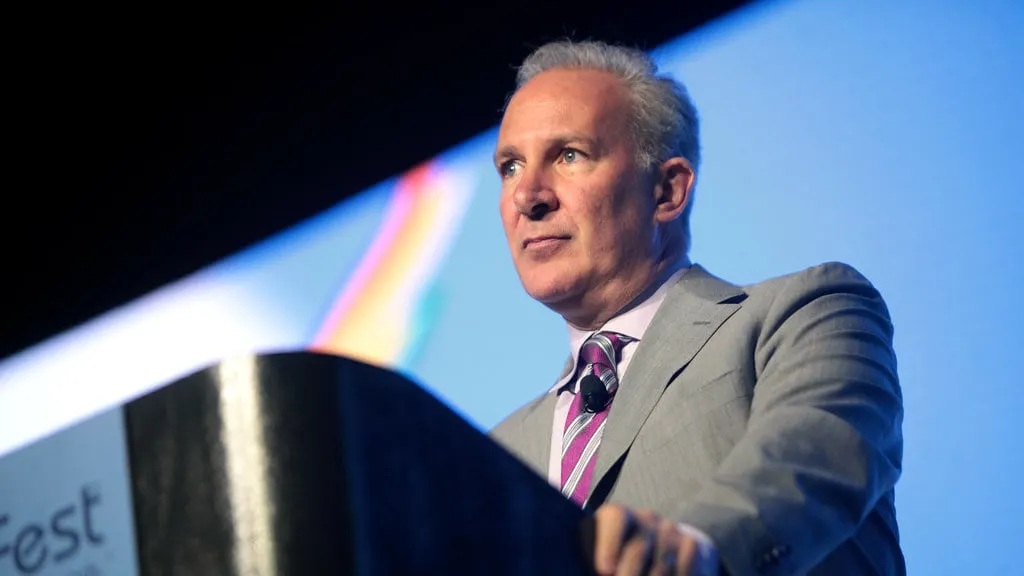
Peter Schiff Declares Bitcoin “Anti-Gold” as Prices Diverge

0

Peter Schiff has reignited the long-running debate over Bitcoin’s role as a store of value, arguing that its relationship with gold is becoming increasingly difficult to ignore.

As gold strengthens amid persistent demand for traditional safe-haven assets, Schiff argues that Bitcoin is moving in the opposite direction, challenging the popular narrative that it is the digital equivalent of gold.

In a post on X, he wrote,

“When gold initially broke out, Bitcoin broke down. When gold corrected, that’s when Bitcoin bounced. Now that the gold correction is over, and gold is back in rally mode, Bitcoin has resumed its decline. Bitcoin is anti-gold. The more gold goes up, the more Bitcoin will go down.”

The longtime gold advocate and outspoken Bitcoin critic has rejected the idea of Bitcoin as “digital gold,” arguing instead that the cryptocurrency shares none of gold’s physical properties as a commodity and often moves in the opposite direction.

In his view, capital rotating into gold as a safe-haven or inflation hedge frequently comes at Bitcoin’s expense, turning the digital asset into a vehicle for betting against the metal.

Market data around the time of his post showed gold trading near $4,300–$4,400 per ounce after a strong weekly advance driven by softer economic signals, lower Treasury yields, and safe-haven demand.

Bitcoin, by contrast, hovered in the mid-$64,000 range after slipping from recent levels near $65,000. Over the preceding year, gold had significantly outperformed, while Bitcoin remained well below its earlier peaks.

Schiff pointed to the short-term inverse relationship between Bitcoin weakening on gold strength and firming during gold’s brief pullback as confirmation of his thesis. He has repeatedly described Bitcoin’s multi-year bull runs as bubbles destined to deflate.

He has predicted deeper declines for the cryptocurrency and urged investors to favor gold and silver instead, especially in environments of persistent inflation, geopolitical tension, or de-dollarization.

On X, some users acknowledged the possibility that Bitcoin could regain momentum despite gold’s strength, pointing to the cyclical nature of markets and questioning whether future Bitcoin gains could be fueled by the large amount of money being created and circulating through the financial system.

Others strongly rejected Schiff’s argument, maintaining that Bitcoin has increasingly developed its own market identity. From this perspective, Bitcoin is no longer simply another asset tied to traditional financial-system liquidity, but an independent asset class operating on its own trajectory.

Another group of observers questioned the premise of an either-or relationship between Bitcoin and gold. They argued that both assets could benefit from declining confidence in fiat currencies, even if they serve different purposes within an investment portfolio.

Others shifted the focus from Bitcoin versus gold to the broader issue of leverage. One commentator argued that gold may be better described as “anti-leverage,” suggesting that investors tend to turn toward gold when concerns about highly leveraged trades, a potential yen carry-trade unwind or an artificial-intelligence-driven market correction begin to emerge.

Bitcoin and Ether, they suggested, may have already absorbed significant leverage and could eventually be positioned for a new market narrative.

The reactions ultimately show that Schiff’s “anti-gold” characterization remains highly contested. While gold and Bitcoin may diverge during certain market cycles, investors continue to debate whether their differences make them competitors or simply two alternative assets responding differently to the same underlying monetary and liquidity conditions.

Critics of his stance note that longer-term correlations between the two assets have fluctuated, sometimes turning positive during periods when both were viewed as alternatives to fiat currency.

The debate over whether Bitcoin can serve as digital gold continues to divide investors. Proponents emphasize its fixed supply, portability, and growing institutional adoption. 

Samsung SDI to Take Full Control of GM Battery Venture as EV Demand Slows

0

South Korean battery maker Samsung SDI said on Tuesday it will end its joint venture with General Motors in Indiana and acquire the U.S. automaker’s 49.99% stake, as weaker-than-expected electric vehicle demand forces the partners to rethink a project that was originally designed to supply batteries for a rapidly expanding EV market.

Samsung SDI said it will take full ownership of SDI-GM Synergy Cells Holdings and use the unit to respond more flexibly to demand for batteries used in electric vehicles and energy storage systems.

The change gives Samsung SDI greater control over the Indiana operation at a time when the U.S. battery market is undergoing a significant shift. Automakers have scaled back or delayed some EV production plans as consumer demand has grown more slowly than manufacturers had expected, leaving battery companies facing the risk of excess capacity.

“The ownership change was made in consideration of market changes since the joint venture was announced – including the slower-than-expected growth of EV demand,” Samsung SDI said in a statement. The companies will now seek “other forms of cooperation” outside the joint venture, it said.

The venture was announced two years ago and was initially expected to have annual battery production capacity of 27 gigawatt-hours, with mass production scheduled to begin in 2027.

The decision to abandon the joint ownership structure comes before that target is reached, underscoring how sharply expectations for the U.S. EV market have changed since the project was announced. Construction at the Indiana plant had already slowed amid weaker EV demand. GM and other automakers have reduced factory output and reassessed EV investments as sales growth has failed to match earlier forecasts.

The withdrawal also highlights a broader challenge for battery manufacturers. Companies expanded production capacity aggressively on expectations that the transition from gasoline-powered vehicles to EVs would accelerate rapidly. As that transition has progressed more slowly, manufacturers have increasingly looked for alternative applications for battery plants and technologies.

Energy storage is emerging as one of those alternatives.

Samsung SDI said its newly wholly owned U.S. unit will be able to serve both the EV and energy storage markets. That flexibility could become valuable as electricity demand rises from data centers, artificial intelligence infrastructure and industrial activity, while utilities and renewable-energy developers seek more battery storage capacity to stabilize power supplies.

The shift mirrors moves by other manufacturers. In March, GM and LG Energy Solution agreed to convert another battery plant in Tennessee from EV battery production to energy storage systems. That decision showed how facilities originally built around expected EV growth can be repurposed when market conditions change.

For Samsung SDI, the Indiana plant therefore represents more than an EV battery project. Full ownership could allow the company to determine how much capacity should be directed toward electric vehicles and how much could eventually be allocated to energy storage, depending on market demand.

The company said its existing investment plan will change as a result of the ownership restructuring, although specific investment and production plans have not yet been finalized. Samsung SDI said it would provide further disclosures as required.

The two companies are also maintaining cooperation on battery technology. Separately, Samsung SDI said it has signed an agreement with GM to jointly develop next-generation prismatic batteries for potential future EV applications.

That arrangement allows the companies to preserve a technological relationship even as they abandon the original joint-venture structure. Prismatic batteries, which use a rigid rectangular casing, are one of several battery formats being developed for next-generation electric vehicles.

GM’s decision to exit the joint venture also reveals the broader pressure on U.S. automakers to align EV investment with actual consumer demand. The expiration of the $7,500 federal EV tax credit last September further weakened the economics of some electric vehicles and contributed to manufacturers scaling back production.

GM has continued to invest in EVs, but the company and other automakers have been emphasizing flexibility in production and capital allocation rather than maintaining earlier aggressive expansion schedules.

For Samsung SDI, the challenge is to avoid allowing a slower EV market to leave newly built battery capacity underutilized. Redirecting some production toward energy storage could provide another source of demand and reduce its dependence on automakers’ EV production schedules.

The development also points to a broader recalibration across the global battery industry. The long-term transition toward electrification remains intact, but battery suppliers are increasingly being forced to distinguish between long-term demand expectations and the pace at which that demand is materializing.

While Samsung SDI’s move to take full control of the Indiana venture could consequently give it greater strategic flexibility, some analysts believe it also places more of the project’s financial and operational risk on the Korean battery maker.

The companies did not disclose the value of Samsung SDI’s acquisition of GM’s stake. Samsung SDI said further details would be disclosed in accordance with regulatory requirements.

The restructuring means the original plan for a jointly owned 27-GWh EV battery plant is being replaced by a more flexible model in which Samsung SDI controls the asset while continuing to work with GM on future battery technologies.