DD
MM
YYYY

PAGES

DD
MM
YYYY

spot_img

PAGES

Home Blog Page 3013

“Sovereign guarantee” clause And Seizing of Nigeria’s Presidential Jets in France

0

China again….they took some federal properties in the UK, and now aircraft: “The Nigerian government is embroiled in a deepening legal crisis following the seizure of three of its aircraft by French authorities, marking a new chapter in a long-standing legal dispute with Zhongshan, a Chinese company. The seizure, involving a Dassault Falcon 7X, a Boeing 737, and a newly acquired Airbus A330 valued at over $100 million, has drawn widespread attention and triggered reactions from both federal and Ogun State governments.”

Sometimes you actually pity these politicians. One regime can create problems for the next one. Imagine if Mr. President cannot have his new aircraft because of what Ogun State civil servants did. And from the federal government angle, this is another P&ID where international firms play bad games.

“The material facts in the transaction between the Ogun State Government and Zhongshan point to another P&ID case in which unscrupulous and questionable individuals falsely present themselves as investors with the sole objective of undercutting and scamming Governments in Africa” – Nigerian government.

“Sovereign guarantee” clause is a powerful clause in global business. As Nigeria offers that to states, it must understand the implications.  No Chinese firm will do anything for you without asking for Sovereign guarantee. This is where we are united. They can even go for our bank accounts in New York, London, etc.

French Court Orders Seizure of 3 Nigerian Presidential Aircraft Over Contract Dispute Between Ogun State and Chinese Firm

French Court Orders Seizure of 3 Nigerian Presidential Aircraft Over Contract Dispute Between Ogun State and Chinese Firm

0

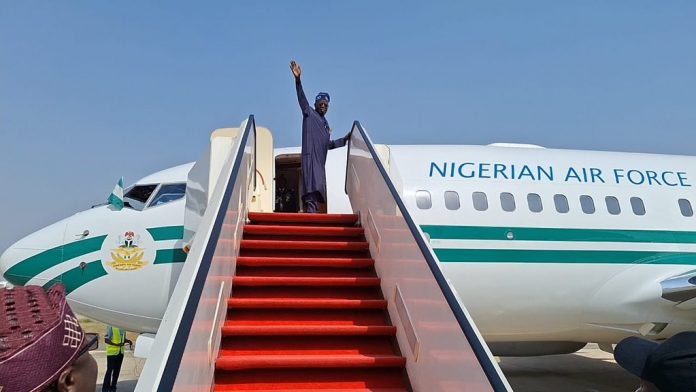
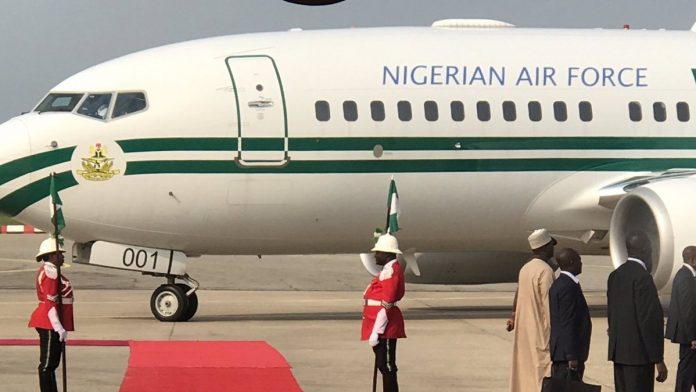
The Nigerian government is embroiled in a deepening legal crisis following the seizure of three of its aircraft by French authorities, marking a new chapter in a long-standing legal dispute with Zhongshan Fucheng Industrial Investment Co. Ltd, a Chinese company.

The seizure, involving a Dassault Falcon 7X, a Boeing 737, and a newly acquired Airbus A330 valued at over $100 million, has drawn widespread attention and triggered reactions from both federal and Ogun State governments.

According to a report by Premium Times, the three aircraft, which either form part of the Nigerian presidential fleet or were recently purchased by the government, were seized under orders from a French court. The Dassault Falcon 7X was undergoing maintenance at Paris-Le Bourget Airport, while the Boeing 737 and Airbus A330 were stationed at Basel-Mulhouse International Airport for similar services.

The seizures stem from a protracted legal battle in 2016 when Ogun State revoked Zhongshan’s management contract for a free-trade zone project in Nigeria. Despite an arbitral tribunal chaired by a former President of the UK Supreme Court ruling in favor of Zhongshan, awarding them €74.46 million in compensation, Nigeria has yet to comply with the judgment. Consequently, Zhongshan sought enforcement of the award through the French legal system, successfully obtaining a court order to seize Nigerian assets to secure their claim.

The court granted Zhongshan the authority to impound the aircraft, citing that “this protective seizure will take place to secure and preserve the claim arising from the arbitration award dated 26 March 2021, made by an ad hoc arbitral tribunal.”

To prevent the aircraft from leaving the airports, the court ordered that they be parked in a way that their cockpits face a wall or other structure, ensuring that the jets cannot take off autonomously.

Zhongshan has pursued similar enforcement actions in other jurisdictions, including the United Kingdom. In Liverpool, buildings owned by the Nigerian government have reportedly been seized, further aggravating the ongoing dispute.

Government Reactions

Federal Government Statement

In response to the aircraft seizures, Bayo Onanuga, Special Adviser to the President on Information and Strategy, released a statement acknowledging the situation but dismissing Zhongshan’s claims. The presidency emphasized that the Federal Government was not under any contractual obligation with Zhongshan and attributed the dispute to the Ogun State government. According to Onanuga, the Chinese company has no solid legal ground to demand restitution, as it only constructed a perimeter fence for the free-trade zone before the contract was revoked in 2015.

The presidency decried Zhongshan’s tactics, likening the situation to the notorious Process and Industrial Developments Limited (P&ID) case, where foreign entities sought to exploit Nigeria through questionable legal claims.

“The material facts in the transaction between the Ogun State Government and Zhongshan point to another P&ID case in which unscrupulous and questionable individuals falsely present themselves as investors with the sole objective of undercutting and scamming Governments in Africa,” the statement said.

The federal government accused Zhongshan of withholding vital information from the French court and misleading it regarding the nature of the presidential jets.

“We are convinced the Chinese company misled the Judicial Court of Paris regarding the use and nature of the assets it seeks to attach and did not fully disclose to the court as required by law,” the statement said.

“The Federal Government is not under any contractual obligation with the company. The case in which Zhongshan is trying to use every unorthodox means to strip our offshore assets is between the company and the Ogun State Government,” the statement added.

Ogun State Government’s Response

Ogun State issued a separate statement signed by Kayode Akinmade, Special Adviser on Media and Strategy to the Ogun State Governor. The state government condemned the seizure, labeling Zhongshan’s actions as part of a “subterfuge” aimed at defrauding the state and Nigeria at large.

“It must be said without any equivocation that Zhongshan has no solid ground to demand restitution from the Ogun State Government based on the facts regarding the 2007 contract between the company and the State Government to manage a free-trade zone,” the state said.

“We naturally regret any embarrassment this has caused the Federal Government of Nigeria, HE President Asiwaju Bola Tinubu, GCFR and the good people of Ogun State and re-affirm our commitment to constantly and consistently protect the integrity of the nation and its assets. We have taken all necessary legal steps to ensure that this spurious and baseless order is vacated within the shortest possible time,” it added.

Ogun State disclosed that it had been engaged in settlement negotiations with Zhongshan as recently as September 2023, but the discussions broke down when the company reversed its initial willingness to consider a reasonable settlement and instead insisted on full payment of the arbitration award.

It also emphasized that the current administration could not, in good conscience, accept the arbitral ruling, which was described as “unfair and unconscionable,” given that Zhongshan had only built a perimeter fence. The state also revealed that it had successfully resisted the enforcement of the award in eight different jurisdictions and that appeals were pending in both the U.S. and the UK.

A Case of Sovereign Immunity

Both the federal and state governments have invoked the principle of sovereign immunity, asserting that the aircraft used for sovereign purposes should not be subject to seizure under international and French law. They have vowed to take swift legal action to vacate the French court’s order and prevent further embarrassment to the nation.

“The use and nature of the Presidential jets as assets of a Sovereign entity whose assets are protected by diplomatic immunity forbid any foreign Court from issuing an order against them,” they said.

The Ogun State government reaffirmed its commitment to protecting Nigeria’s assets and the integrity of its legal framework.

“As a sovereign nation, whose assets are protected by laws of sovereign immunity, we vow to resist any attempts at blackmail and theatrics clearly designed to extort and embarrass our dear country,” it said.

Unfortunately, while the Federal and Ogun States governments are making efforts to resolve the matter, the U.S. Court of Appeals for the District of Columbia has reportedly rejected Nigeria’s sovereign immunity and authorized the Chinese consortium to proceed with its efforts to confiscate Nigeria’s assets abroad.

The U.S. court’s decision was particularly significant because it found that Nigeria had grossly violated both the commercial and fundamental rights of Zhongshan executives involved in the free-trade zone project. Following their successful case in the UK in 2021, Zhongshan was awarded $55.6 million in compensation for breach of contract and $75,000 in moral damages, with additional interest and fees.

Implications of Apple Opening Payment Chip to Third Parties

0

In a significant shift in its approach to third-party access, Apple Inc. has announced that it will open up the iPhone’s payment chip to third-party developers. This landmark decision marks a departure from Apple’s previous stance on maintaining exclusive control over the NFC (Near Field Communication) chip used for Apple Pay transactions.

The move comes after years of regulatory pressure and industry demand for greater access to the payment technology embedded within Apple devices. By allowing third-party banks, Blockchain-financial institutions, and other services to utilize the payment chip, Apple is fostering a more competitive environment and potentially broadening the utility of its devices.

The implications of this decision for blockchain infrastructures are profound. Blockchain technology, known for its decentralized and secure nature, could potentially integrate with Apple’s payment chip, paving the way for a more seamless and interoperable financial ecosystem. This integration could enhance the user experience by providing a more diverse range of payment options and increasing the speed and security of transactions.

Moreover, the opening of Apple’s payment chip could accelerate the adoption of blockchain-based payment systems and digital currencies, such as Bitcoin, Central Bank Digital Currencies (CBDCs), USDC payments and other cryptocurrencies. It could also foster the development of new applications that leverage the secure, near-field communication (NFC) technology for various uses beyond payments, such as access control and identity verification.

However, this development also raises questions about the future of payment processing fees and the role of traditional financial institutions in a landscape increasingly dominated by tech giants and decentralized networks. Apple’s decision to charge associated fees for access to the NFC chip indicates a continued commercial interest in maintaining some level of control over the payment process.

Starting with the iOS 18.1 update, developers will be able to integrate the iPhone’s payment chip into their own applications, enabling users to conduct a variety of transactions directly from third-party apps. These transactions include in-store payments, transit system fares, and even access to work badges, home and hotel keys, and reward cards. Future updates are expected to support government identification cards as well.

However, this openness does not come without stipulations. Developers looking to take advantage of this new capability will need to enter into a commercial agreement with Apple and adhere to the company’s security and privacy standards. Additionally, Apple will charge associated fees for access to the NFC chip, ensuring that only authorized developers who meet certain industry and regulatory requirements can integrate this technology into their apps.

This strategic move by Apple could potentially alter the landscape of mobile payments and digital wallet services. By enabling third-party access to the NFC chip, Apple is not only complying with regulatory demands but also enhancing the versatility of the iPhone as a digital wallet. Users stand to benefit from increased flexibility and choice in payment options, while developers gain the opportunity to innovate within a previously restricted space.

The implications of this decision are far-reaching, with potential impacts on consumer behavior, developer engagement, and the broader financial technology industry. As the program rolls out in various countries, including Australia, Brazil, Canada, Japan, New Zealand, the U.S., and the U.K., it will be interesting to observe how this new level of access influences the market dynamics of mobile payments.

Triple Your Money: These Cryptos Could Turn $1K Into $3M – Sui (SUI), DTX Exchange (DTX) and Toncoin (TON)

0

Currently, three crypto coins are getting attention from traders: Sui (SUI), DTX Exchange (DTX), and Toncoin (TON). While SUI and TON are well-established tokens showing green price charts, DTX is a rising force now in Stage 2 of its presale. But, it has already given early buyers a 100% return.

These three cryptos could make you a millionaire in the crypto market. But, one crypto stands out as analysts say it may become the next 60x coin in 2024 – DTX. Let’s see why they are saying this.

Sui (SUI): Ready To Explode

Sui (SUI) is a coin that has been soaring on the price charts. CoinMarketCap stats show that the Sui price jumped over 50% in the past year alone. Crypto analyst Sjuul says that this momentum will continue. His X article says that SUI may be the L1 to dominate this market cycle.

The technical signals for the Sui crypto are also in the buy zone. Currently, around 10 technical signals are green, and the price is above its 50-day exponential moving average.

Due to all these factors, experts have made a bold Sui price prediction. They predict that SUI will reach a value of $1.41 before September 2024 ends.

DTX Exchange (DTX): A Presale Phenomena

DTX Exchange (DTX) is making headlines with its ongoing presale performance. It has already raised over $1.3M and may hit the $2M level before August 2024 ends. Even big crypto influencers like Crypto Royal are taking notice of this presale star. In his YouTube video, he says that DTX will become a powerful force in the crypto market.

Unlike other platforms like Coinbase or Binance, DTX Exchange offers a hybrid trading model. Thanks to this model, people can buy over 120K asset classes, such as gold, FX, and cryptos, in one place with a leverage of 1000x. Holding its utility token, DTX will give you lower trading fees and better analytics tools.

At the moment, DTX costs $0.04 in Stage 2 of its presale, a 100% surge from its beginning price. But DTX will cost $0.06 when Stage 3 goes live soon. Because of this, market analysts predict a 60x growth for DTX when a Tier-1 CEX listing happens in Q3 of 2024.

Toncoin (TON): Showing an Uptrend

Toncoin (TON) is another crypto that has been showing green. In the past 12 months, the Toncoin price surged over 350%, CoinMarketCap statistics show. Analyst Brenda also remains confident in this coin’s growth potential. She says that TON is absolutely dominating and could reach $7.13 soon.

Currently, the Toncoin crypto is above its 100-day exponential moving average, and 23 technical signals show buy signs. Experts mention all these indicators when making their Toncoin price prediction.

In their latest forecasts, Toncoin has the potential to reach $8.30 before the end of October 2024.

Sui vs. DTX Exchange vs. Toncoin – Which Coin Gains the Upper Hand?

For those looking to see big returns, Sui, DTX Exchange, and Toncoin are the cryptos to watch. But DTX Exchange stands out since it has a lower market cap and actual connections to trillion-dollar markets like the $1.4T FX one. With these benefits, DTX needs less money to see a price increase while being more stable in the most turbulent markets.

Learn more:

Buy Presale

Visit DTX Website

Join The DTX Community

World Health Organization Declares Mpox as a Global Health Emergency

0

In a significant public health announcement, the World Health Organization (WHO) has declared MPOX, an infectious disease caused by the monkeypox virus, a global health emergency. This decision follows a surge in cases across Africa, with over 17,000 confirmed and suspected cases reported this year.

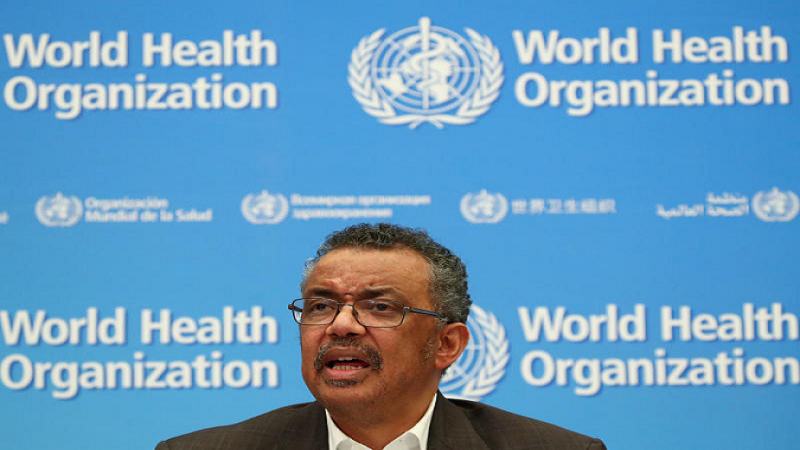
The WHO Director-General, Dr. Tedros Adhanom Ghebreyesus, made this declaration based on the advice of an independent expert committee, highlighting the rapid spread of a new clade of mpox in the Democratic Republic of the Congo (DRC) and its potential to spread further across countries in Africa and possibly beyond the continent.

The declaration of a Public Health Emergency of International Concern (PHEIC) is a call to action for the global community. It signifies a situation that is serious, sudden, unusual, or unexpected; carries implications for public health beyond the affected State’s national border; and may require immediate international action.

The current upsurge of mpox, along with the spread of a new sexually transmissible strain of the virus, underscores the urgency of a coordinated international response to prevent history from repeating itself. The previous global outbreak in 2022, which was also declared a PHEIC, was eventually declared over in May 2023 after a sustained decline in global cases.

The WHO’s response has been multifaceted, involving bolstering laboratory diagnosis, disease surveillance, readiness, and response actions to prevent further infections. Significant efforts are already underway in close collaboration with communities and governments, with WHO country teams working on the frontlines. With the growing spread of the virus, the WHO is scaling up further through coordinated international action to support countries in bringing the outbreaks to an end.

Mpox, caused by an Orthopoxvirus, was first detected in humans in 1970, in the DRC, and is considered endemic to countries in central and west Africa. The disease’s symptoms include fever, rash, and swollen lymph nodes, and it can be transmitted through close contact with lesions, body fluids, respiratory droplets, and contaminated materials. The initial symptoms typically manifest within 6 to 13 days after exposure to the virus, but this incubation period can range from 5 to 21 days.

The early signs of mpox are often flu-like, including:

Fever, often the first symptom to appear.
Headache.
Muscle aches and backache.
Fatigue.
Chills.
Swollen lymph nodes, also known as lymphadenopathy.

Following these initial symptoms, a distinctive rash usually develops 1 to 3 days after the onset of fever. This rash tends to start on the face and then spread to other parts of the body, most notably the palms of the hands and soles of the feet. It can also affect the mouth, genitalia, and eyes.

The progression of the rash through various stages is characteristic of mpox:

Macules – flat discolored areas on the skin.
Papules – slightly raised lesions.
Vesicles – small blisters filled with clear fluid.
Pustules – blisters filled with yellowish fluid.
Scabs – crusts that form as the blisters heal.

The rash goes through these stages before finally scabbing over and resolving. The entire process typically lasts 2 to 4 weeks. Most individuals recover without treatment, but complications can occur, especially in immunocompromised individuals or those with underlying health conditions. Complications may include secondary infections, bronchopneumonia, sepsis, or encephalitis.

Mpox can be transmitted from person to person through close contact with the lesions, body fluids, respiratory droplets, and contaminated materials. Understanding the symptoms and modes of transmission is crucial for early detection and prevention of further spread of the disease.

The WHO’s declaration is a critical step in mobilizing global resources and attention to combat the spread of mpox. It serves as a reminder of the interconnectedness of global health and the importance of swift and collaborative action in the face of emerging health threats. As the situation evolves, the WHO, along with health authorities worldwide, will continue to provide updates and guidance on how to best address this public health challenge.