DD
MM
YYYY

PAGES

DD
MM
YYYY

spot_img

PAGES

Home Blog Page 303

ApeCoin and BullZilla Lose Steam While Buyers Flock to BlockDAG: Is it the Next 100x Presale Pick?

0

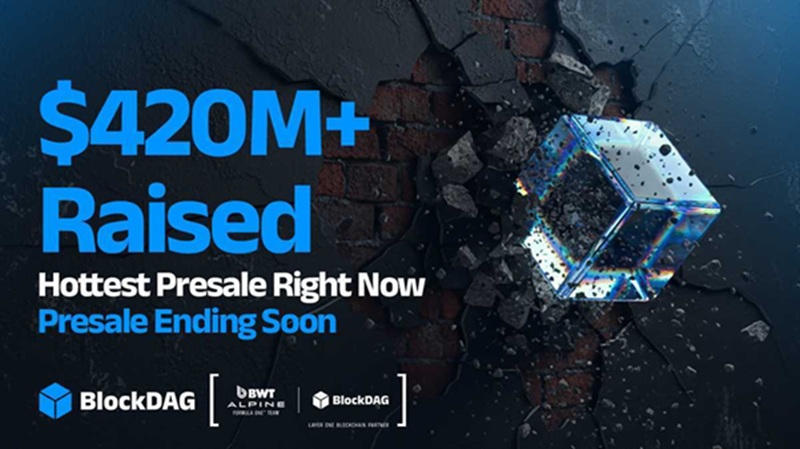
The race toward Crypto Presales 2025 has reached a defining point, capturing traders’ attention with BlockDAG (BDAG) standing at the center. Entering its last confirmed presale stage before the official launch on November 26, the project’s momentum continues to grow. The new Code “TGE” lets buyers lock BDAG at a special rate of $0.0015, well below the current Batch 31 price of $0.0304.

Having raised over $425 million, BlockDAG nears its $600 million milestone, confirming strong community backing. With verified audits by CertiK and Halborn, a functioning Testnet, and over 4,500 developers contributing across 300+ dApps, the project proves its credibility. As this final phase unfolds, buyers securing BDAG at $0.0015 are positioning themselves for major returns once GENESIS Day arrives.

BlockDAG: Final Countdown Before GENESIS

As GENESIS DAY approaches, BlockDAG (BDAG) stands out as the frontrunner in Crypto Presales 2025. The Code “TGE” continues to determine launch-day ranking and airdrop priority. With over $425 million raised and a confirmed $0.05 listing price, the project forecasts a potential 27x ROI post-launch.

The new TGE code introduces a phased early-access system designed to reward rank holders at launch. Participants ranked from 1 to 300 will receive an instant airdrop, while those between 301 and 600 will get theirs after 30 minutes. Ranks 601 to 1000 will follow within 60 minutes, 1001 to 1500 after two hours, 1501 to 2000 after four hours, 2001 to 5000 after six hours, and any ranks above 5001 will receive their airdrop within 24 hours. This structured rollout ensures fairness and stability as BlockDAG’s network goes live.

Each presale round has sold out faster than the previous, reflecting strong market demand supported by credible audits, a live Testnet, and 4,500+ active developers. Combined with the BWT Alpine Formula One® Team partnership, BlockDAG’s exposure has reached global audiences, further boosting interest. As whales and leaderboard participants continue to secure positions, the market’s shift from entry to execution will define this presale’s success. Those capitalizing now may become the earliest beneficiaries once BlockDAG enters open trading after GENESIS.

ApeCoin (APE): Governance Challenges Under DAO Reform

While BlockDAG dominates Crypto Presales 2025, ApeCoin (APE) faces internal shifts following governance debates. Yuga Labs’ proposal to dissolve the ApeCoin DAO and introduce a new structure under ApeCo has sparked mixed reactions. Trading near $0.58–$0.59, APE maintains stability in price and volume but faces uncertainty regarding its decentralization path.

This structural change has divided its community; some consider it a strategic revival, while others believe it threatens community autonomy. In contrast, BlockDAG’s transparent roadmap and consistent execution give it a more stable outlook compared to projects struggling with governance ambiguity. As Crypto Presales 2025 progresses, ApeCoin’s next steps could define its long-term market position.

BullZilla (BZIL): Strengthening Its Meme Appeal in Crypto Presales 2025

BullZilla (BZIL) continues to gain recognition among meme-based Crypto Presales 2025 through its scarcity-driven design and evolving utility model. The token’s pricing structure, increasing every 48 hours or once $100,000 is raised, has now elevated its value to $0.00014574, with total funding surpassing $850,000.

Its ecosystem integrates features such as the Roarblood Vault, offering staking rewards up to 70% APY, and automatic supply burns at specific milestones. Although these mechanisms strengthen deflationary demand, the project remains in early development without proven scalability.

In comparison, BlockDAG’s verified audits, technical infrastructure, and $425M presale fund showcase far stronger fundamentals, highlighting why it remains the standout choice for those eyeing substantial ROI opportunities.
Final Words

Crypto Presales 2025 are showcasing intense rivalry and evolution across major projects. ApeCoin faces governance restructuring, and BullZilla advances meme utility through creative supply mechanisms. Yet, BlockDAG (BDAG) dominates the narrative with its unmatched progress, trust, and scale.

Having exceeded $425 million in presale funding, selling nearly 27 billion coins, and offering a unique price of $0.0015 via the “TGE” code, BlockDAG continues its journey toward GENESIS Day on November 26. As the presale nears its close, BlockDAG’s final lap could transform early participants into top crypto gainers of 2025.


Presale: https://purchase.blockdag.network

Website: https://blockdag.network

Telegram: https://t.me/blockDAGnetworkOfficial

Discord: https://discord.gg/Q7BxghMVyu

CenterPoint Energy Sells Ohio Gas Distribution Business to National Fuel for $2.62bn

0

U.S. utility giant CenterPoint Energy has agreed to sell its Ohio natural gas distribution unit to National Fuel Gas Company for $2.62 billion, marking the latest in a wave of divestments by utilities narrowing their focus on core regulated markets amid surging power demand.

The Houston-based utility said Tuesday that the sale includes approximately 5,900 miles of transmission and distribution pipelines serving about 335,000 metered customers across Ohio. CenterPoint said the deal, which represents about 1.9 times the business’s 2024 rate base, is expected to close in the fourth quarter of 2026, pending regulatory approvals.

Shares of National Fuel Gas fell 4.7% in morning trading following the announcement, while CenterPoint’s stock slipped marginally.

Chief Executive Officer Jason Wells said the sale aligns with CenterPoint’s long-term strategy to strengthen its balance sheet and reinvest in high-growth regulated electric and gas operations in states such as Texas, Indiana, and Minnesota.

The company said it expects to receive $1.42 billion of the proceeds in 2026 and the remainder in 2027. Analysts see the transaction as a key step in a broader restructuring across the U.S. utility sector as firms reposition for a new phase of electricity demand growth driven by data centers, AI computing, and electrification.

Scotiabank analysts said in a research note that the Ohio sale highlights CenterPoint’s progress toward its goal of achieving annual profit growth near 9%, among the fastest in the U.S. utilities sector.

The transaction gives National Fuel Gas an expanded footprint in Ohio and further diversifies its regulated utility portfolio, which already serves customers across western New York and Pennsylvania. For National Fuel, the acquisition represents a steady source of revenue and greater operational scale in the U.S. Midwest, helping to balance its exposure to natural gas exploration and production markets.

CenterPoint said it will continue to focus on regulated operations where it sees long-term demand and growth potential. The company delivers electricity and natural gas to more than seven million customers across six states — Indiana, Louisiana, Minnesota, Mississippi, Ohio, and Texas. In late September, the utility outlined a $65 billion capital spending plan for 2026 through 2035, focused primarily on grid modernization, energy reliability, and the expansion of electric infrastructure in high-growth markets.

That long-term investment plan reflects CenterPoint’s intent to position itself at the forefront of the accelerating energy transition in the United States, as rising industrial activity, electric vehicle charging, and data center demand reshape load patterns for utilities.

The sale of the Ohio gas distribution network is part of a wider industry trend among U.S. utilities that are selling or restructuring lower-growth assets to free up capital for projects tied to grid expansion, renewable energy integration, and reliability upgrades. Many of these companies are responding to the same pressures — rapid electrification, federal clean energy incentives, and increasing capital intensity of utility operations.

The Ohio sale is seen as a disciplined portfolio management consistent with our focus on regulated businesses where we can drive value through operational excellence and capital deployment.

Analysts see the deal as consistent with CenterPoint’s long-running strategic realignment that began several years ago when it started divesting non-core operations to focus on rate-regulated utilities with stable returns. Those efforts have helped the company streamline operations and reduce exposure to market volatility, particularly in unregulated businesses that carry higher earnings uncertainty.

National Fuel Gas, based in Williamsville, New York, operates an integrated model that includes exploration and production, pipeline and storage, gathering, and utility segments. By adding CenterPoint’s Ohio operations, it gains a new service area and approximately 335,000 additional customers. The company said the acquisition will broaden its regulated natural gas distribution base and contribute to steady earnings growth.

The $2.62 billion deal value, which includes the assumption of certain liabilities, is viewed as relatively modest compared to other recent utility asset transactions, denoting the mature and stable nature of Ohio’s gas distribution market. Still, the sale price provides CenterPoint with significant flexibility to fund upcoming capital programs and reduce leverage.

The timing of the sale, with proceeds spread across 2026 and 2027, also aligns with the company’s capital deployment cycle, ensuring sufficient liquidity for its $65 billion investment plan over the next decade.

For investors, the deal signals that CenterPoint is doubling down on its high-growth regulated markets, particularly Texas, where population and industrial expansion are driving record energy demand. Texas has emerged as a central pillar of CenterPoint’s strategy, given its role in power transmission for the rapidly growing Houston region and the state’s expanding industrial and data center corridor.

Scotiabank’s analysts said CenterPoint’s combination of growth prospects and disciplined financial management could make it one of the top performers among U.S. utilities in the coming years.

For National Fuel, the addition of the Ohio operations offers both stability and incremental growth at a time when natural gas demand in regulated markets remains strong. The company’s broader strategy has been to balance its commodity-sensitive upstream business with steady revenue from regulated utilities — and the CenterPoint assets fit neatly into that plan.

Once completed, the sale will cap a multiyear effort by CenterPoint to streamline its asset base and concentrate resources where it can deliver predictable returns and infrastructure expansion opportunities.

OpenAI Unveils AI-Powered Browser “Atlas”, Redefining Browsing With AI Automation

0

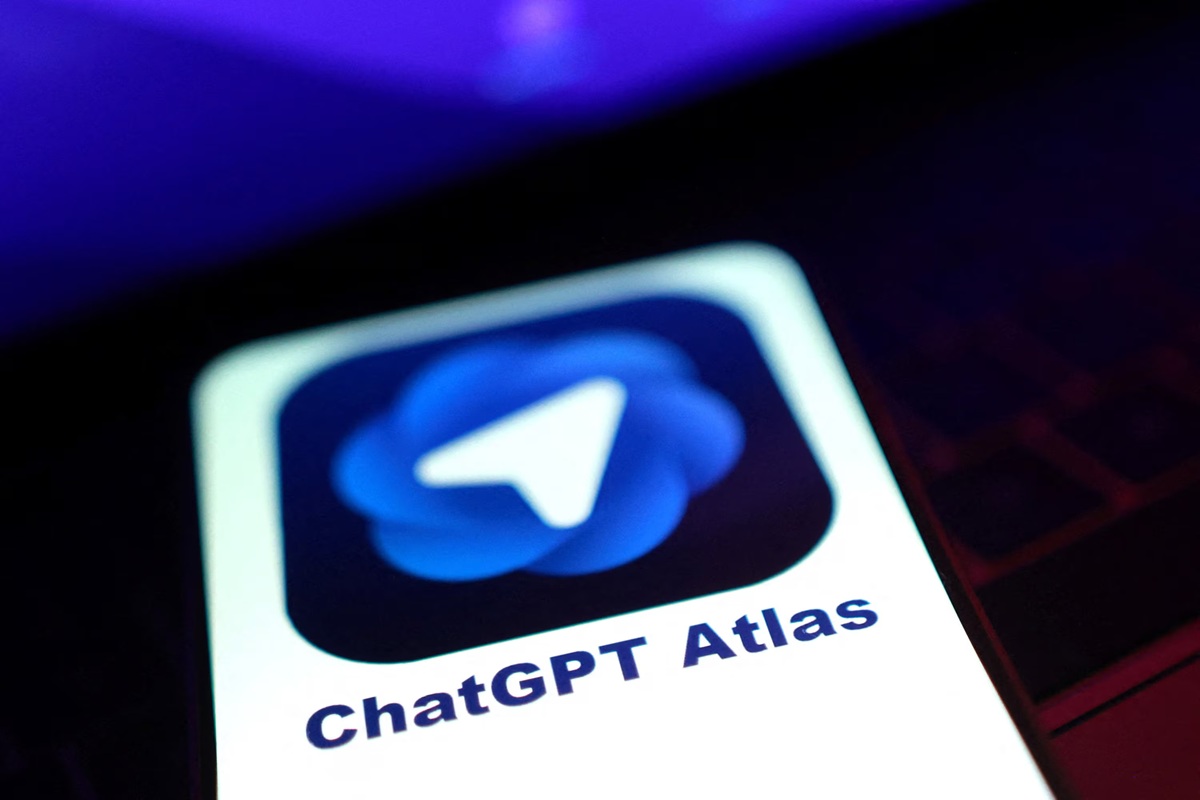
OpenAI has launched Atlas, a new AI-powered web browser designed to transform how users navigate the internet, perform research, and shop online.

Announced on Tuesday, Atlas goes live worldwide on macOS today, with Windows, iOS, and Android to emerge subsequently subsequently.

The new browser seamlessly integrates ChatGPT OpenAI’s chatbot, allowing users to bring the power of the AI assistant with them across every corner of the web, offering instant answers, smarter suggestions, and hands-on task support, all within a privacy framework users can control.

OpenAI CEO Sam Altman revealed that the company is trying to revolutionize how humans interact with the internet. He explains that the chat experience in a web browser can be a great analog for people in the future when using the internet.

Atlas features a ChatGPT sidebar that can be opened in any browser window. From there, users can instantly summarize web content, compare products, or analyze data directly from the site they are viewing. The browser is designed to make digital tasks more intuitive and efficient by keeping ChatGPT accessible at all times.

A key highlight of Atlas is its memory customization. Users can choose what ChatGPT remembers, enabling it to provide contextually relevant information whenever it’s needed. This gives users the flexibility to personalize their browsing experience while maintaining full control over what data is stored or forgotten.

One of Atlas’s most innovative capabilities is its “agent mode.” In this mode, ChatGPT can interact directly with websites on the user’s behalf,  but always under their supervision. The AI can handle end-to-end tasks such as researching, planning, or even shopping for a trip. Currently, agent mode is available in preview for ChatGPT Plus, Pro, and Business subscribers.

Atlas also transforms how users interact with text online. By simply highlighting text in emails, calendar invites, or documents, users can turn their cursor into a collaborator receiving quick insights, edits, or summaries from ChatGPT with a single click.

OpenAI emphasizes user control and privacy throughout the browsing experience. Users can decide which sites ChatGPT can access, clear their browsing history, use incognito mode, or manage browser memories at any time. To maintain safety and privacy, OpenAI included several safeguards. Atlas cannot run code in the browser, download files, install extensions, or access files and applications on users’ computers. Additionally, it pauses before performing actions on sensitive websites such as online banking or financial portals.

Industry experts believe this development could redefine online interaction. Microsoft’s Chief Communications Officer Frank Shaw earlier this year described this shift as the dawn of “the era of AI agents,” emphasizing a vision of an open, agentic web where intelligent systems make decisions and carry out tasks for individuals and organizations.

He described it as a transformative phase where AI helps “solve problems in new ways,” backed by real-world adoption.  Notably, Hundreds of thousands of customers are using Microsoft 365 Copilot to help research, brainstorm and develop solutions, and more than 230,000 organizations including 90% of the Fortune 500 have already used Copilot Studio to build AI agents and automations.

With Atlas, OpenAI has not only introduced a new way to browse the internet but also provided a tangible step toward a future where AI agents seamlessly handle online tasks, blurring the line between human intent and digital execution.

Veeam to Acquire Securiti AI for $1.73bn to Strengthen Data Privacy and AI Security Capabilities

0

Veeam Software has agreed to acquire California-based data privacy management company Securiti AI in a deal valued at about $1.73 billion, as the cloud data protection firm accelerates efforts to strengthen its position in cybersecurity and artificial intelligence infrastructure.

The companies announced on Tuesday that the acquisition will integrate Securiti AI’s flagship Data Command Center — a platform used to unify and secure data across multiple cloud environments — with Veeam’s established backup and recovery software suite. The integration is aimed at helping organizations manage, protect, and govern data used in AI applications, a growing challenge amid rising concerns about data breaches and privacy compliance.

The transaction, expected to close in the fourth quarter of 2025, underscores the growing convergence between data protection and AI governance as enterprises race to adopt generative AI and other machine learning technologies.

The acquisition positions Veeam to compete more aggressively with rivals such as Rubrik and Commvault Systems — both of which have expanded their portfolios to include AI-driven data management tools.

Veeam, long known for its enterprise-grade backup solutions that enable quick recovery after ransomware or data loss incidents, will now gain deeper visibility into how sensitive information moves across multi-cloud environments.

Under the agreement, Rehan Jalil, Securiti AI’s Chief Executive Officer, will join Veeam as President of Security and AI once the deal is finalized.

Morgan Stanley acted as financial adviser to Securiti AI, while JPMorgan provided financing to Veeam for the acquisition.

Veeam said it will continue to offer Securiti AI’s Data Command Center as a standalone product while also developing integrated solutions that combine it with Veeam’s existing data protection platform. Those integrations are expected to be announced in the coming months.

The move comes as businesses face a wave of cybersecurity threats targeting cloud systems and AI pipelines. Veeam’s backup technology — known for immutable backups that prevent ransomware from modifying or deleting files — has become a key defense mechanism for organizations seeking to recover clean data copies after cyberattacks.

Securiti AI’s tools will expand that functionality by allowing users to not only restore data but also identify, categorize, and secure sensitive information across cloud services, an essential step for meeting tightening privacy regulations in the United States and abroad.

The deal also represents one of the most significant acquisitions in the data management space since Insight Partners, a U.S. private equity firm, acquired Veeam for about $5 billion in 2020. Insight remains the company’s largest shareholder.

In December 2024, Insight sold a $2 billion stake in Veeam through a secondary sale that valued the backup software firm at approximately $15 billion, signaling sustained investor confidence in its growth trajectory.

The acquisition of Securiti AI could further increase that valuation, analysts said, given the strategic importance of AI governance and data security integration in enterprise software markets.

Securiti AI, founded in San Jose, California, has built its reputation around helping companies map and control personal and enterprise data across hybrid and cloud systems. Its platform automates the discovery of data assets, monitors usage, and enforces privacy controls — functions that are increasingly vital as enterprises deploy large AI systems capable of processing millions of data points.

The acquisition forms part of an ongoing wave of consolidation in the data management and cybersecurity sectors as cloud adoption accelerates. Rivals like Rubrik have already gone public, emphasizing their AI-based data security offerings, while Commvault has expanded its partnerships with hyperscale cloud providers such as Microsoft Azure and Amazon Web Services.

Veeam, by contrast, has remained privately held but has consistently grown its enterprise customer base, with millions of workloads protected across on-premises, hybrid, and public cloud environments. The addition of Securiti AI could allow it to extend those capabilities into AI data governance, an area still underserved by traditional backup solutions.

The Veeam–Securiti AI combination is seen as both a defensive and offensive move — defensive in that it protects data in increasingly complex environments, and offensive in that it positions Veeam at the forefront of AI-related data management, a market projected to exceed $50 billion by 2030, according to IDC estimates.

Once the deal closes later this year, Veeam is expected to detail how it will merge Securiti AI’s capabilities into its product roadmap, potentially reshaping how enterprises approach data privacy, backup, and AI security in the age of digital transformation.

3 Meme Coins to Watch as Dogecoin (DOGE) Soars Above $0.20 Again

0

The meme coin market is gaining attention again as DOGE, the meme king, has gained past $0.20. The move indicates that the market is starting to recover from a recent decline. As meme culture and blockchain technology come together, several new competitors with real potential are starting to show up. Little Pepe (LILPEPE), MemeCore, and Pudgy Penguins are some of the most promising. With meme culture now intersecting with blockchain infrastructure, several new contenders are emerging with real potential. Among the most promising are Little Pepe (LILPEPE), MemeCore, and Pudgy Penguins. Each is carving a unique path that could ride Dogecoin’s bullish trail for higher gains.

Little Pepe (LILPEPE): The Meme Layer-2 Leading the New Wave

As Dogecoin picks up, Little Pepe (LILPEPE) is quietly building the technical foundation for the next meme-coin supercycle. It introduces Layer-2 infrastructure built entirely for meme coins. This is a first in the industry.  Its native chain offers ultra-low fees, instant transactions, and zero-tax trading. These features eliminate the friction that often limits retail engagement in fast-moving meme markets. The project’s anti-sniper-bot architecture is another major differentiator. It ensures fair launches and transparent trading during periods of high volume. The project has been audited by Certik. Listings on CoinMarketCap and CoinGecko also enhance visibility and trust.  Little Pepe’s ecosystem vision is driving unprecedented community engagement. Its “Pepe’s Pump Pad” launchpad allows creators to design and deploy new tokens directly on the Little Pepe Layer-2 network.

Meanwhile, the presale continues to set records. It has now raised over $27.14 million with more than 16.5 billion tokens sold. This signals strong early-stage demand. The ongoing $777,000 giveaway has further boosted community expansion. Ten lucky winners will each receive $77,000 worth of LILPEPE tokens. Its mega ETH giveaway to the biggest final presale stage winners is also building viral energy.  Analysts note that if LILPEPE enters exchanges with a modest $300 million market cap, its presale valuation could translate to potential gains exceeding 5,000%. The token’s confirmed listings on two top-tier CEXs. This could serve as the catalysts that unlock this upside. As Dogecoin reclaims market attention, LILPEPE is positioning itself as the next-generation meme chain, not just another meme token. 

Pudgy Penguins (PENGU): Brand-Driven Meme Token Poised for Mainstream Reach

PENGU benefits from a broad entertainment roadmap. The mobile game Pudgy Party has driven in-game engagement and downloads. Meanwhile, recent retail licensing deals aim to place Pudgy IP on shelves. These moves extend the project beyond pure on-chain speculation.

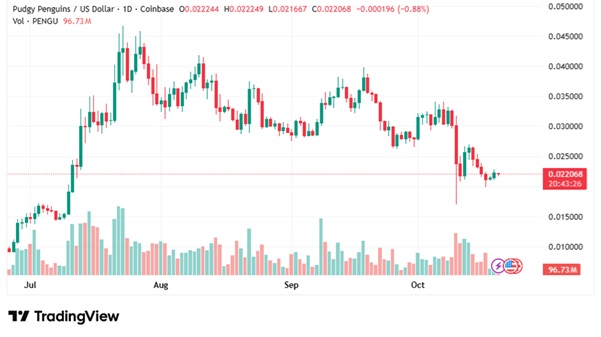
PENGU/USD 1D Price Chart|Source: TradingView

On-chain and market signals show both volatility and structural demand. NFT activity tied to the Pudgy collection has rebounded in October. This supports token sentiment, even as short-term regulatory uncertainties, such as ETF timing, have produced headline pressure.  Because PENGU pairs cultural IP, gaming, and real-world merchandise, it may capture more mainstream inflows during a renewed meme-coin cycle. That combination suggests PENGU is a candidate for measured upside. Although it’s less explosive than microcaps, analysis suggests it could see a strong rally. PENGU trades around $0.022 at press time.

MemeCore (M): Meme Ecosystem Token with Layer-1 Ambition

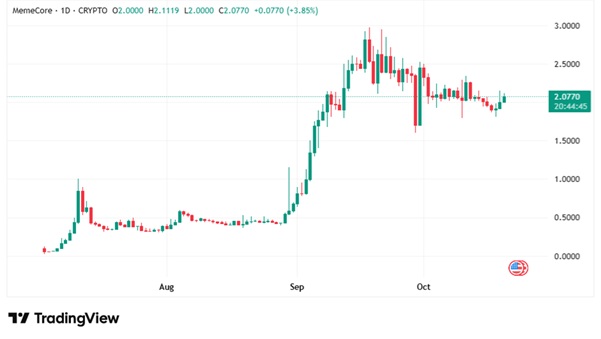
MemeCore is trading at around $2.07 with a market capitalization of nearly $2.1 billion. Memecore creates a niche as the first “Meme 2.0” Layer-1 blockchain. It aims to transform viral meme energy into structured infrastructure by enabling creators, stakers, and validators to participate in a shared meme economy.

M/USD 1D Price Chart|Source: TradingView

Significant recent developments include a strategic partnership with Alchemy?Pay for fiat on-ramp integration. The project is also expanding into South Asia. These moves will boost accessibility and the user base.   With its native “Proof of Meme” consensus, cross-chain staking, and decentralized launch features, MemeCore stands out among meme coins for its ambitious infrastructure.  Some analysts suggest that a short-term consolidation will precede a breakout. The token combines ecosystem vision, community virality, and relative youth. This makes it a contender for higher gains this year.

Conclusion

Dogecoin’s surge past $0.20 has brought investors’ attention back to the meme space. But the next group of leaders might look very different. Little Pepe (LILPEPE) is becoming known as the first Layer 2 chain dedicated to memes. Memecore is creating a decentralized platform where memes may be traded. Pudgy Penguins (PENGU)  connects blockchain culture with mainstream appeal through gaming and global merchandise expansion. Together, these three coins are the top meme coins to watch. Little Pepe, in particular, is nearing an exchange listing, as its presale is nearing sell-out.  ? Visit littlepepe.com to know more about the presale today.

For more information about Little Pepe (LILPEPE) visit the links below:

Website: https://littlepepe.com

Whitepaper: https://littlepepe.com/whitepaper.pdf

Telegram: https://t.me/littlepepetoken

Twitter/X: https://x.com/littlepepetoken

$777k Giveaway: https://littlepepe.com/777k-giveaway/