DD
MM
YYYY

PAGES

DD
MM
YYYY

spot_img

PAGES

Home Blog Page 31

Long-Term Forecasts Place Ozak AI in a Potential $15–$35 Range, Giving Presale Buyers 100,000%+ Growth Windows

0

As the crypto market continues searching for the next sector-defining winner, long-term analysts are beginning to converge around a surprising projection: Ozak AI could land in a $15–$35 trading range within the next major AI cycle, creating one of the largest potential ROI windows seen in years.

With the presale still priced at $0.014, these projections translate into theoretical returns between 107,000% and 249,000%, placing Ozak AI among the highest-upside early-stage opportunities of the decade—if execution aligns with expectations.

Why Analysts Are Setting Such an Aggressive Range

The $15–$35 zone isn’t being thrown around lightly. Multiple contributing factors have led analysts to these long-term forecasts:

  1. AI Tokens Already Proven to Deliver Extreme Multipliers

The last bull run turned AI tokens into the biggest multipliers in the entire market:

  • TAO surged from under $1 to over $700
  • FET exploded from cents to nearly $3
  • AGIX, RNDR, and GRT delivered triple- and quadruple-digit multipliers

Analysts argue that Ozak AI is entering the market at the perfect time—right before the next global AI acceleration.

Youtube embed
What is Ozak AI ($OZ)? Complete Educational Breakdown of the AI-Driven Crypto Project

  1. Ozak AI Is Building Full AI Infrastructure, Not Just Tools

The project’s feature stack places it deeper in utility than most AI presales:

  • Prediction Agents (PAs) for automated decision-making
  • Ozak Stream Network (OSN) for high-speed AI data transfer
  • EigenLayer AVS integration for verified execution
  • Arbitrum Orbit compatibility for scalable operations
  • Ozak Data Vaults for long-term decentralized data storage

This broad infrastructure approach signals that Ozak AI isn’t aiming to be “another AI token”—it’s aiming to be an AI backbone.

  1. Ecosystem Associations Boost Credibility

The project’s ecosystem mentions—SINT, HIVE, Intel, Weblume, Pyth Network—appeal strongly to analysts who prioritize technical legitimacy. These associations suggest that Ozak AI is building along recognized standards rather than in isolation.

How the ROI Math Looks for Presale Buyers

At the current presale price of $0.014, the long-term projections reveal some striking possibilities:

  • At $15, early buyers would see 107,000%+ growth
  • At $20, the upside crosses 142,000%
  • At $35, early buyers could exceed 249,000% gains

This kind of percentage window is extremely rare—and only appears when a token has both narrative power and structural utility.

Why $15–$35 Is Considered Achievable

The projected range isn’t based on blind speculation; it’s tied to a few technical and market realities:

  1. AI Spending Is Expected to Grow 500%+ by 2030

In every sector, from finance to healthcare, even logistics, everyone is moving towards autonomous AI systems. Tokens backing AI infrastructure are anticipated to gain significant value over this transition.

  1. Exchange Demand Is Rising for High-Utility Tokens

Rumors continue to circulate about Ozak AI being reviewed by multiple major exchanges, some of which may consider a $1 listing target.
A token with this level of early traction and utility could be fast-tracked into highly liquid trading environments.

  1. Supply Dynamics Could Send Price Higher

Ozak AI’s tokenomics emphasize:

  • early utility demand
  • circulation reduction over time
  • and natural scarcity as key networks (like OSN and PAs) expand

This positions the token for long-term upward pricing pressure.

The Millionaire-Maker Conversation Has Already Started

Small presale allocations—$100, $250, $500—are being highlighted in community threads as potentially life-changing entries if Ozak AI reaches even the lower bound of the forecasted range.

To put it in perspective:

  • $250 at $0.014 turns 17,857 tokens
  • At $15 turns $267,855
  • At $35 turns $625,000+

This growing speculation is drawing more buyers into the presale, pushing the raise closer to the $6M mark.

Final Outlook: A Rare High-Upside Window

Long-term projections don’t guarantee outcomes—but when multiple analysts converge around a $15–$35 range for a project still in presale, it signals something unusual.

Ozak AI is combining:

  • accelerating presale momentum
  • deep AI infrastructure utility
  • high-level ecosystem associations
  • and strong early market demand

The result? A token many believe could deliver one of the largest ROI windows of the coming AI cycle.

If current growth continues, Ozak AI’s presale may be remembered as one of the most advantageous entry points of 2026.

For more information about Ozak AI, visit the links below:

Website: https://ozak.ai/

Twitter/X: https://x.com/OzakAGI

Telegram: https://t.me/OzakAGI
 

Huang Heads to Beijing as Nvidia Navigates Shrinking China Access Under U.S. Chip Curbs

0

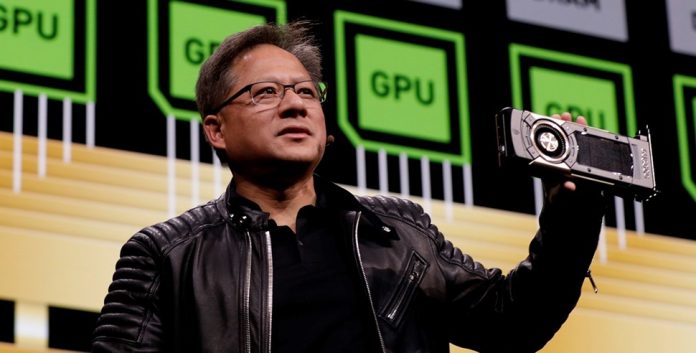
Nvidia CEO Jensen Huang is expected to travel to China in the coming days, ahead of the mid-February Lunar New Year, according to people familiar with the matter who spoke to CNBC.

Huang’s visit comes as Nvidia continues to grapple with tightening U.S. restrictions that have sharply narrowed the range of advanced artificial intelligence chips it can legally sell into China. Before those controls were imposed, China accounted for at least 20% of Nvidia’s data center revenue, making it one of the company’s most important overseas markets.

One of the sources said Huang is expected to attend an Nvidia company event in Beijing on Monday, part of what has become a regular Lunar New Year visit schedule for the chief executive. Huang, who was born in Taiwan and has longstanding ties to the region, has traveled to mainland China multiple times over the past year, including at least three visits in 2025 alone.

Beyond ceremonial appearances, the trip carries strategic weight. Another person with direct knowledge of the plans said Huang is also expected to meet with potential Chinese customers and partners to discuss ongoing challenges in supplying Nvidia chips that comply with U.S. export rules. These discussions are likely to focus on logistics, availability, and the practical limits of demand for downgraded products designed specifically for the Chinese market.

While Nvidia has spent the past two years redesigning processors to comply with successive rounds of U.S. export controls, the company is discovering that formal approval does not necessarily translate into commercial certainty. Even when chips meet U.S. rules and clear licensing hurdles, broader security anxieties on both sides of the Pacific are increasingly shaping what can actually be sold, how it can be used, and who is willing to buy.

At the core of the impasse is Washington’s belief that advanced computing power has become inseparable from national security. U.S. officials view high-end AI chips as “force multipliers” that can accelerate military modernization, surveillance capabilities, cyber operations, and the development of autonomous weapons. That assessment hardened after China’s rapid advances in AI model training, drone swarms, and military-civil fusion programs, where commercial technologies are routinely adapted for defense use.

As a result, U.S. export controls on Nvidia are no longer narrowly targeted at the most powerful chips. They are designed to restrict aggregate computing capability, interconnect speeds, and scalability, making it harder for Chinese firms to cluster large numbers of compliant chips into systems capable of training frontier AI models. Each new rule has forced Nvidia to produce China-specific variants that are progressively less capable and, in many cases, less attractive to customers.

Beijing, for its part, sees the restrictions as a deliberate attempt to slow China’s technological rise and preserve U.S. dominance in AI. Chinese policymakers argue that Washington is weaponizing supply chains under the banner of security, even as U.S. companies continue to profit from global markets. This tension has fostered a climate of caution inside China, where regulators, state-linked firms, and research institutions are increasingly wary of over-reliance on U.S. suppliers, even when purchases are technically legal.

That dynamic helps explain why reports have surfaced suggesting that Nvidia’s H200 chips may be approved only for limited research use. From Beijing’s perspective, allowing broad deployment of U.S. AI hardware in commercial data centers risks future disruptions if relations deteriorate further. From Washington’s standpoint, even research use can raise concerns if it contributes to long-term capability building in sensitive sectors.

The situation leaves Nvidia navigating a narrow and shifting channel. On paper, the company can sell certain chips in China. In practice, those chips face layered scrutiny, informal guidance, and uncertainty over acceptable use cases. Chinese customers, especially large cloud providers and state-linked enterprises, must weigh whether investing in Nvidia hardware today could expose them to abrupt policy reversals tomorrow.

Security concerns also extend beyond China’s borders. U.S. officials worry that chips sold for civilian purposes could be diverted, resold, or integrated into systems supporting sanctioned entities. Enforcement has become more aggressive, with Washington pressing allies to tighten oversight and signaling that compliance failures could carry penalties. That has increased the compliance burden on Nvidia and its partners, complicating logistics even for approved products.

For Nvidia, China’s shrinking accessibility carries real financial implications. Before the restrictions, the country generated at least one-fifth of its data center revenue and played a key role in smoothing demand cycles. While U.S. hyperscalers and Middle Eastern customers have helped offset lost sales, China remains a market where demand for AI compute is structurally strong and politically constrained.

Huang’s repeated visits to China reflect this reality. They are not about reopening the floodgates, but about maintaining trust, clarifying boundaries, and keeping Nvidia relevant as Chinese firms accelerate domestic chip development. Beijing has poured billions into building alternatives, from state-backed foundries to AI accelerators designed by companies like Huawei. While these chips still trail Nvidia in performance and software maturity, the strategic push is unmistakable.

The geopolitical standoff has effectively turned Nvidia into a case study of how technology companies are being pulled into great-power competition. Approvals, licenses, and redesigned products now operate within a broader context of strategic suspicion that neither side appears willing to ease. Even as Nvidia complies with every written rule, unwritten concerns about security, leverage, and long-term dependence continue to limit what is possible.

In that sense, Huang’s China trip highlights a sobering shift for the global chip industry. The constraints facing Nvidia are no longer primarily technical or commercial. They are political, strategic, and enduring, shaped by a rivalry in which advanced semiconductors are viewed not just as products, but as instruments of power.

Why Modern Men Are Rethinking Dating

0

For many men, dating no longer feels like an adventure. It feels like a process.

Profiles are optimized. Conversations are filtered. Expectations are negotiated before chemistry even has a chance to appear. What once unfolded organically now often resembles a performance—measured, compared, and quietly exhausting.

It’s no surprise, then, that a growing number of men are stepping back and asking a different question: Is there a better way to experience connection?
For some, the answer has taken shape in what is commonly called the Girlfriend Experience—not as an indulgence, but as a considered alternative to modern dating culture.

To understand why, we need to look honestly at how dating has changed—and how men have changed with it.

When Dating Became a Marketplace

Dating apps promised convenience and access. What they delivered, in many cases, was choice overload.

Endless swiping encourages comparison rather than curiosity. First impressions are compressed into seconds. Conversations compete for attention in crowded inboxes. Even when matches occur, they often carry an unspoken sense of replaceability.

For men who value depth, this environment can feel strangely hollow. Not because opportunity is lacking—but because presence is.

The Girlfriend Experience stands in quiet contrast to this dynamic. It removes the marketplace element entirely. There is no audition, no competition, no ambiguity about intent. What remains is space—space for interaction to breathe.

Emotional Clarity in an Age of Ambiguity

One of the least discussed aspects of modern dating is emotional uncertainty.

Mixed signals, shifting expectations, and unspoken assumptions have become normal. Men are often expected to lead confidently while simultaneously navigating unclear emotional terrain. The result is tension rather than ease.

What draws many men toward the Girlfriend Experience is not control, but clarity.

When intentions are defined upfront, something unexpected happens: the emotional atmosphere softens. Conversation becomes lighter. Attention becomes more sincere. There is no need to guess where one stands.

In a world full of half-signals, clarity can feel remarkably intimate.

The Quiet Fatigue of Constant Performance

Modern masculinity often demands competence in every arena: career, social life, emotional intelligence, ambition, restraint. Dating adds yet another stage where men are expected to perform—confident but sensitive, decisive but flexible, successful but effortless.

Over time, this performance takes a toll.

Many men who explore the Girlfriend Experience are not seeking novelty. They are seeking relief—from having to impress, to prove, to posture.

What they find instead is a dynamic that feels surprisingly old-fashioned: mutual presence, natural conversation, and a sense of being received rather than evaluated.

Why Success Doesn’t Guarantee Connection

There is a common misconception that men who “have it all” lack nothing. In reality, success often narrows rather than expands emotional space.

High-achieving men tend to live structured lives. Time is measured. Energy is allocated carefully. Social interactions are often transactional by necessity.

Within this context, spontaneous emotional connection becomes rare—not because it isn’t desired, but because it doesn’t easily fit into optimized schedules and guarded environments.

The Girlfriend Experience appeals because it offers something that success alone cannot buy: unrushed attention. Moments that are not optimized for outcome, but allowed to exist for their own sake.

Beyond Fantasy: The Appeal of Emotional Realism

Despite assumptions, the Girlfriend Experience is not primarily about fantasy. Its appeal lies in emotional realism.

Natural conversation. Shared moments. Comfortable silences. A sense of ease that mirrors the best parts of a genuine relationship—without the pressures that often accompany early dating.

In film and literature, audiences are drawn to stories where intimacy unfolds quietly, without spectacle. GFE follows a similar logic. It values tone over intensity, connection over excess.

For many men, this feels less like escapism and more like remembering what closeness used to feel like.

A Cultural Shift Toward Intentional Connection

We curate our lives more than ever: our work, our media, our social circles. Dating, inevitably, has followed the same path.

The rise of experiences like GFE reflects a broader cultural movement toward intentional connection. Rather than leaving intimacy entirely to chance—or to algorithms—some men are choosing environments where emotional quality is prioritized.

This is not a rejection of traditional relationships. It is a response to a reality in which meaningful connection has become harder to access organically.

Choosing GFE Is Not Opting Out — It’s Opting In

Perhaps the most important distinction is this: men who choose the Girlfriend Experience are not opting out of connection. They are opting into a form of it that feels aligned with their values, their time, and their emotional needs.

In an era where dating often feels transactional, GFE offers something quietly radical: presence without pressure, intimacy without ambiguity, and connection without performance.

And that, more than anything, explains why modern men are rethinking dating—and choosing the Girlfriend Experience.

Intel’s AI-Fueled Comeback Hits a Reality Check as Supply Bottlenecks Rattle Investors

0

Intel’s sharp sell-off at the end of the week did more than erase tens of billions of dollars in market value. It exposed the fault lines in a comeback story that, until now, had been powered largely by belief that the chipmaker was finally re-entering the center of the artificial intelligence boom it once ceded to rivals.

Shares of Intel fell 14% after the company issued quarterly profit and revenue guidance that missed expectations, jolting investors who had bid the stock up aggressively over the past year. If losses hold, more than $35 billion will be wiped from Intel’s market capitalization, a stark reversal for a company whose shares surged 84% in 2025 and extended that rally into early 2026 with a further 47% gain in January.

At a surface level, the irony is hard to miss. After years of watching Nvidia dominate AI workloads with its graphics processors, Intel is now grappling with the opposite problem: too much demand and not enough supply.

The AI spillover effect

What has changed is the nature of demand in data centers. While Nvidia’s GPUs remain the backbone of AI training and inference, they do not operate in isolation. They require traditional server CPUs to orchestrate workloads, manage memory, and connect systems at scale. Intel, long the incumbent supplier of these processors, is now seeing a surge in orders as data center operators race to expand capacity.

That surge has reignited interest in Intel’s core server business, helping convince investors that the company could still play a meaningful role in an AI-dominated computing landscape. High-profile backing from the U.S. government, SoftBank, and even Nvidia itself added further credibility to the turnaround narrative, reinforcing the idea that Intel was strategically important to the future of advanced chip manufacturing.

But demand alone does not translate into earnings if it cannot be met. Intel’s factories are running at full capacity, and the company has struggled to shift its production mix quickly enough toward the most in-demand data center processors. Chief Financial Officer David Zinsner acknowledged that available supply hit its lowest point in the first quarter, with improvement expected only from the second quarter.

Analysts broadly agree with that timeline. Jefferies said the supply shortage would likely bottom out in March, while Oppenheimer expects constraints to ease in the second quarter. Still, for a market that had priced in a faster payoff from AI-related demand, that lag proved disappointing.

“The rally had been largely driven by the dream rather than the near-term reality or fundamentals,” TD Cowen analysts said, reflecting a growing view on Wall Street that Intel’s share price had outrun its operational progress.

Capacity, complexity, and miscalculation

Bernstein analysts were more direct, arguing that while the server upgrade cycle appears genuine, Intel “woefully misjudged it,” leaving its capacity footprint “massively caught off guard.” Unlike fabless rivals that rely on external manufacturers, Intel must retool its own factories, a process that is capital-intensive and slow-moving. Changing what a fabrication plant produces is not a matter of weeks or even months, and that rigidity is now weighing on Intel’s ability to respond to the AI-driven upswing.

The problem is compounded by the company’s broader manufacturing transition. Intel is in the midst of a complex effort to modernize its process technologies, regain leadership in chipmaking, and, eventually, attract external customers to its foundry business. Each of those goals competes for capital, engineering resources, and management focus.

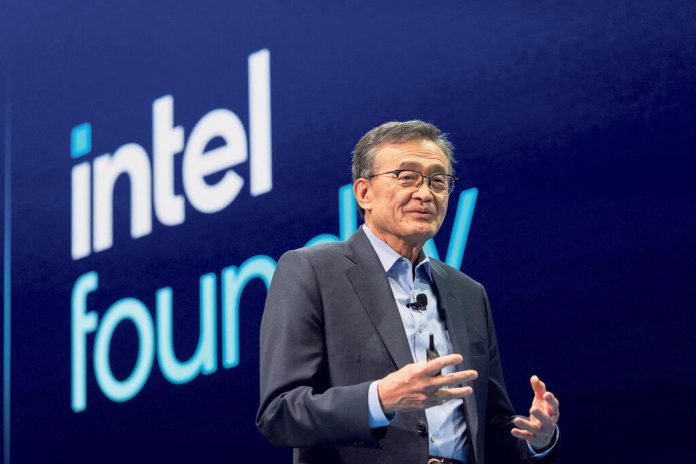
That balancing act became more visible in the latest earnings call. Much of the stock’s rally ahead of results had been fueled by expectations that Intel would announce new external foundry customers, validating its ambition to manufacture chips for other companies. Instead, CEO Lip-Bu Tan said two potential customers had only evaluated the technical details of Intel’s upcoming 14A manufacturing process, stopping short of firm commitments.

That reminded investors that Intel’s foundry aspirations remain a work in progress rather than a proven growth engine.

PC market headwinds return

Beyond data centers, Intel is also facing renewed pressure in its largest business segment: personal computers. A global memory supply shortage is expected to push prices higher, which could dampen demand for PCs just as Intel prepares to launch its “Panther Lake” chips. Those processors were widely seen as a chance for Intel to claw back market share lost to AMD after years of competitive setbacks.

If higher component costs slow PC upgrades, Intel’s hoped-for recovery in that segment could be delayed, limiting its ability to offset volatility elsewhere in the business. That risk added to investor unease, particularly given how central PCs remain to Intel’s revenue base.

All of this feeds into a broader reassessment of Intel’s turnaround under Tan, who has emphasized cost discipline and a more focused strategy. He has already scaled back some of the expansive ambitions around contract manufacturing that raised concerns about cash burn under previous leadership. While that shift has been welcomed by parts of the market, it also means Intel must prove that a leaner approach can still deliver growth and strategic relevance.

Friday’s sell-off suggests investors are no longer willing to take that on faith. The enthusiasm that carried Intel’s shares higher over the past year was built on the idea that the company was finally aligned with the AI wave. The latest results show that alignment exists, but execution is lagging.

Looking ahead into the next few quarters, investors will be watching closely for signs that supply constraints are easing, that AI-driven demand is converting into sustained revenue growth, and that Intel’s manufacturing roadmap is attracting real external customers rather than tentative interest.

Nissan to Exit South African Manufacturing as Chery Moves In, Marking a Strategic Shift in the Auto Market

0

Nissan Motor said on Friday it plans to sell its manufacturing assets in Rosslyn, South Africa, to Chery Automobile’s local subsidiary.

The move is understood to underline the Japanese carmaker’s deepening retreat from underperforming production hubs while highlighting the growing footprint of Chinese automakers across Africa. It is seen as a window into the pressures reshaping South Africa’s auto industry, the strategic retreat of some legacy carmakers, and the accelerating advance of Chinese manufacturers across emerging markets.

At the center of the deal is Nissan’s Rosslyn facility, a plant with more than 50 years of history that once symbolized the Japanese automaker’s long-term commitment to local manufacturing. If regulatory approvals are secured, Chery South Africa will take ownership of the land, buildings, and associated assets in mid-2026. Production of the Navara pickup truck, the plant’s sole remaining model, is expected to end in May, effectively drawing a line under Nissan’s manufacturing chapter in the country.

The sale marks another step in a painful global reset for Nissan. The company is closing or consolidating seven plants worldwide as it attempts to stabilize finances after years of weak sales, internal restructuring, and strategic missteps.

South Africa has been particularly challenging. The end of NP200 production in 2023 removed a key volume driver, while competition in the pickup segment intensified. Toyota’s Hilux, Ford’s Ranger, and Isuzu’s D-Max have tightened their grip on the market, benefiting from stronger product cycles, deeper localisation, and, in some cases, export scale.

Nissan Africa president Jordi Vila’s reference to “external factors” weighing on Rosslyn’s viability points to a mix of issues: underutilization, rising input costs, currency volatility, and a market that has become less forgiving of marginal players. While Nissan declined to disclose the plant’s capacity, industry analysts say utilization had fallen well below levels needed to justify continued investment, particularly as Nissan prioritizes capital allocation to fewer, more competitive global hubs.

Yet while Nissan is pulling back, Chery’s move in the opposite direction highlights a structural realignment. Chinese automakers are no longer content with exporting finished vehicles into Africa. They are increasingly seeking local manufacturing footprints to reduce costs, qualify for incentives, and anchor long-term growth.

Thus, acquiring Rosslyn offers a shortcut for Cherry. Building a greenfield plant in South Africa can take years, not just because of construction timelines, but due to permitting, localization requirements, and labor negotiations. Taking over an existing facility provides immediate industrial infrastructure and a trained workforce. Nissan’s commitment that most affected employees will be offered roles by Chery on similar terms is likely designed to smooth the transition and limit political and social friction.

The deal also intersects with South Africa’s automotive policy ambitions. The government has long used incentives under the Automotive Production and Development Programme (APDP) to attract and retain manufacturers, with an emphasis on exports and local value addition. A key question now is whether Chery will commit to exporting vehicles from Rosslyn, which would be crucial for maintaining economies of scale and preserving South Africa’s role as an automotive hub rather than a purely domestic assembly base.

Chery’s broader strategy suggests it might. The automaker has expanded aggressively across Africa, positioning itself as a volume player with competitive pricing and a growing portfolio that includes internal combustion, hybrid, and electric vehicles. Local production would strengthen its hand against rivals, including other Chinese brands that are currently importing vehicles duty-paid.

The transaction also carries implications for South Africa’s trade relationships. Local production can help manufacturers tap preferential trade agreements, including access to regional African markets and, potentially, the United States under the African Growth and Opportunity Act (AGOA), depending on product mix and rules of origin. For Chinese automakers facing trade barriers in Western markets, Africa increasingly offers both growth and strategic optionality.

For Nissan, maintaining a sales and service presence — with new models such as the Tekton and Patrol planned for the 2026 financial year — signals a shift to a lighter, asset-lean approach. The company is effectively betting that it can remain relevant in South Africa as an importer, even as it concedes manufacturing ground. That strategy carries risks, particularly in a price-sensitive market where locally built vehicles often enjoy cost and policy advantages.

More broadly, the Rosslyn handover reflects a changing balance of power in the global auto industry. As legacy manufacturers streamline and retrench, Chinese firms are stepping into spaces they vacate, not just with vehicles, but with capital, factories, and long-term industrial ambitions. South Africa, with its established automotive ecosystem and access to regional markets, has become a key battleground in that shift.