DD
MM
YYYY

PAGES

DD
MM
YYYY

spot_img

PAGES

Home Blog Page 3126

How Office Cleaning in Denver Can Boost Employee Productivity and Morale

0

Introduction 

A persistent commercial is not just about maintaining tidiness; it is a powerful messenger.

You will notice an immediate difference in the ambiance when your office space is uncluttered and clean.

Thus, a tidy environment looks good and elevates your employee’s mood, allowing positive energy to flow through the workplace. This boost in the workplace surroundings can, in turn, boost your entire team’s productivity and morale.

In this article, we will emphasize ways office cleaning assists in boosting employee productivity and morale.

Ways Office Cleaning Can Boost Employee Productivity

The following are ways in which regular office cleaning fosters employee productivity.

1. Reduces Stress And Anxiety

When the workplace is clean and organized, employees feel safer and controlled when their immediate surroundings are neat, lowering anxiety.

Therefore, a clean environment is a canvas where your thoughts can be put without disruption or disarray for your mental health.

Hence, with this sense of control, performing without adding the weight of a messy working area is possible.

Furthermore, a clutter-free desk will let your employee locate any document instantly.

2. Improved Focus

Messy and clutter make it difficult to concentrate on work tasks. Similarly, grime, dirt, and smell can make employees feel uncomfortable.

On the other hand, an unhygienic working space will also reduce work space. Here, the employees might not have the space to spread out and do their work efficiently.

Therefore, cleaning up can create a more comfortable environment where employees can focus and complete their work. Beng can emphasize assisting the workforce to boost the company’s overall productivity.

However, better concentration can also result in better work output. Similarly, employees can give their work their utmost attention and complete it on time.

3. Fewer Illness And Absences

A dirty office is the breeding ground for every sort of germ.

Therefore, when your employees are exposed to germs and dirt, they often fall sick. This eventually adds up to a lot of sick days.

Similarly, clutter and disorganization in work areas place employees at risk of injuries. Items sticking off the shelf in the warehouse can cause your employees to trip.

Furthermore, spills on the floor that are not cleaned instantly often cause slipping hazards.

4. Improved Morale

Maintaining a clean work environment is about more than aesthetics. It significantly impacts employee satisfaction and overall morale.

So, imagine entering an office cluttered with papers, where every corner holds remnants of yesterday’s meetings, and the air feels stale.

Hence, such an environment hardly inspires creativity or professionalism.

In contrast, a well-organized, clean space feels welcoming. It signals to employees that their well-being is a priority, fostering a sense of respect and value within the team.

The psychological impact of a clean workspace cannot be overstated. When people are comfortable in their physical surroundings, stress levels can be drastically reduced.

Moreover, clutter and mess are often linked to heightened anxiety and difficulty concentrating. Thus, eliminating these distractions allows employees to focus better, leading to higher productivity and a more pleasant working experience.

5. Encourage Creativity

A clean office transcends mere aesthetics; it cultivates a conducive environment for creativity.

By eliminating distractions, it clears the physical space and paves the way for mental clarity.

Therefore, this absence of clutter facilitates an environment where creativity can thrive.

In essence, a well-maintained workspace becomes fertile ground, like a blank canvas, ready to be painted with innovative ideas and creative solutions.

Furthermore, this principle underscores the importance of regular commercial cleaning, as it ensures enhanced overall productivity, health, and safety compliance and fosters a positive business image through improved air quality, workplace safety, and more.

6. Higher Quality Standards

If you slack on organizing and cleaning, you can send a message that quality work does not matter. So, why should employees care about the quality of their work if they work in a dirty environment?

Therefore, your priority should be to set the tone for what you expect. Thus, keeping an organized and clean office sets the expectation slightly higher.

Besides, when you maintain your workplace, you set a standard of goodwill and respect.

Furthermore, it also helps everyone feel good about the company as they work.

7. Fosters Teamwork 

A clean office can contribute to better teamwork and collaboration. Therefore, the employees are most likely to utilize common areas that are inviting and clean.

If the common areas are not clean, they become breeding grounds for brainstorming sessions, discussions, and corporate efforts.

Thus, this sense of shared responsibility and mutual respect can significantly improve the team’s dynamics and foster increased productivity.

Foster A Clean Office Space 

Thus, clean office surroundings play an integral role in fostering productivity.

Thus, a well-kept workplace can become an essential tool for enhancing workplace productivity by minimizing distractions, promoting health, boosting morale, and increasing efficiency.

Moreover, the cost of maintaining a clean office, whether through monetary investment or time, is minimal compared to the remarkable productivity gains it offers.

So, remember, the cleanliness of your workspace reflects your brand, your consideration for your employees, and your work ethic.
Nigeria’s Domestic USD Dollar Bond Will Weaken Naira

0

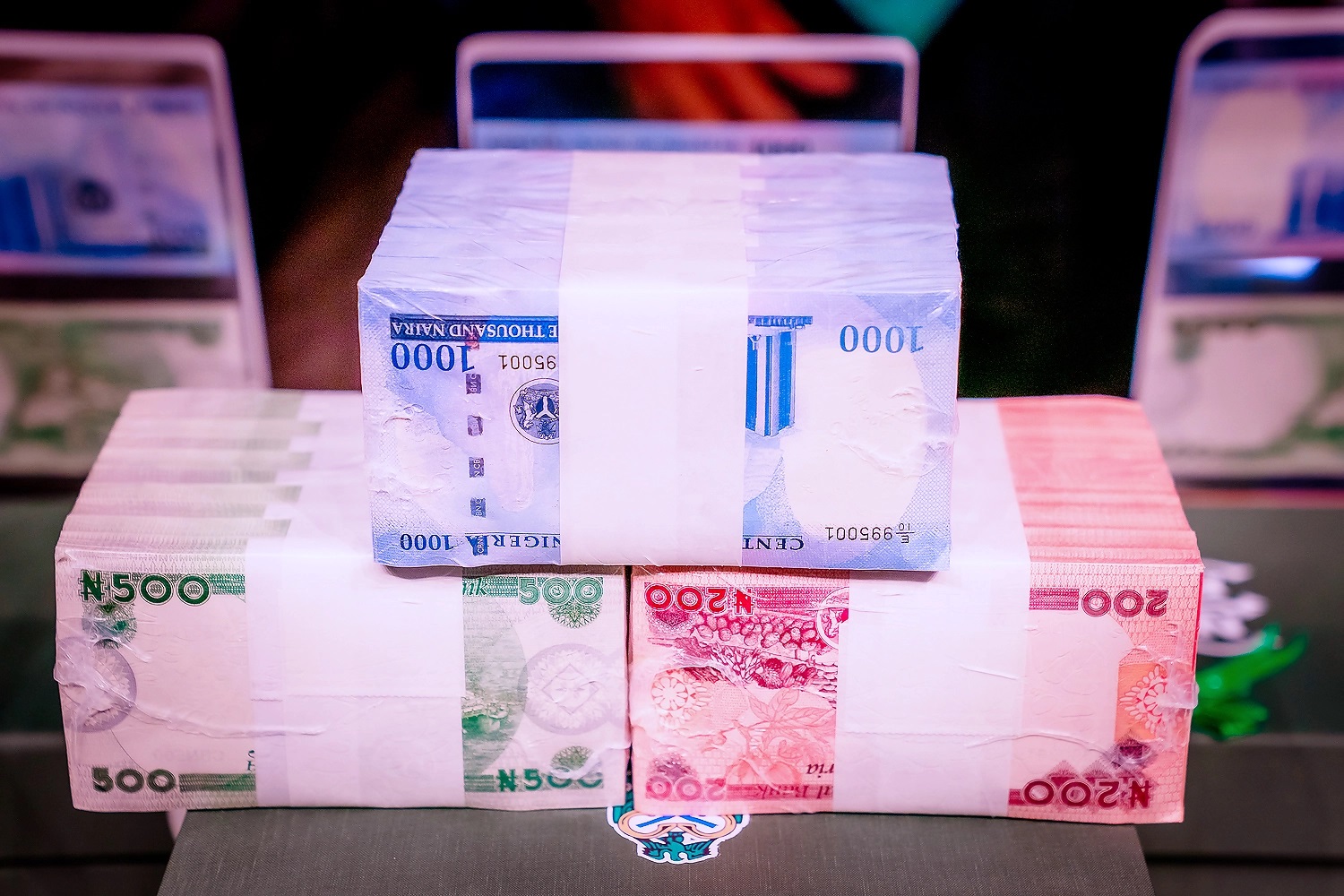
The Federal Government of Nigeria is preparing to issue its first-ever dollar-denominated domestic bond on Monday, aiming to raise $500 million from a mix of local and international investors. This groundbreaking move comes as the government seeks to diversify its funding sources and attract foreign investment into the country.

The announcement, made by Dr. Gbadebo Adenrele, Managing Director of Investment Banking at United Capital Group, during a hybrid roadshow organized by the Debt Management Office (DMO), signals a pivotal moment in Nigeria’s financial markets. Adenrele confirmed that the auction will open next week on Monday, with more details to be communicated to investors.

A US dollar bond is not a bad idea, but one done LOCALLY in Nigeria, has been my concern. As I noted in May 2024, doing this US dollar bond in Nigeria will bring the fight on Naira at home, unlike if they have done it in New York or London, and import the USD into Nigeria.

First, Nigeria needs this money for many reasons which include defending Naira, funding the national budget, servicing our debts, etc. They call it a “bond” but it is nothing but a loan which investors give to the government, and the government will repay the loan, with interest and the principal as agreed.

The government possibly hopes to entice people to bring those hidden US dollars which are in special bunkers, pillows, etc into the banking system in Nigeria. I doubt if criminals will do this for a 10% yield rate when they can make 10,000% return overnight. Yet, this is so amazing for ordinary people: give the government USD and be paid interest in USD while in Nigeria – and when done, the government will return your principal in USD.

Good People, the idea is good on paper, but this policy will destroy Naira further. Yes, he is coming again. Hold on – and chill. My point is simple: if you allow Nigerians to invest in USD to be paid interest in USD, people will sell Naira to look for USD to invest in this bond. In other words, Naira will WEAKEN because this bond will put pressure on the local currency.

I call the government to focus on its policy to support local manufacturers with the billions of Naira it is discussing. But instead of giving any company money, offer a credit-back guarantee. Through that mechanism, you eliminate briefcase companies. That said, the local USD bond offer opens on Monday which means our ranting here changes nothing!

Nigerian Government to Issue $500m First Domestic Dollar Bond on Monday

“Sovereign guarantee” clause And Seizing of Nigeria’s Presidential Jets in France

0

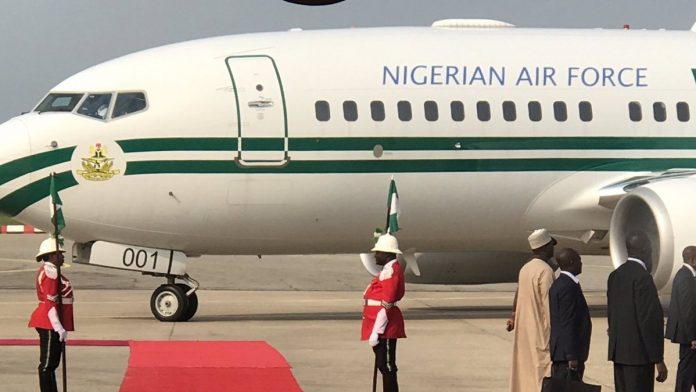
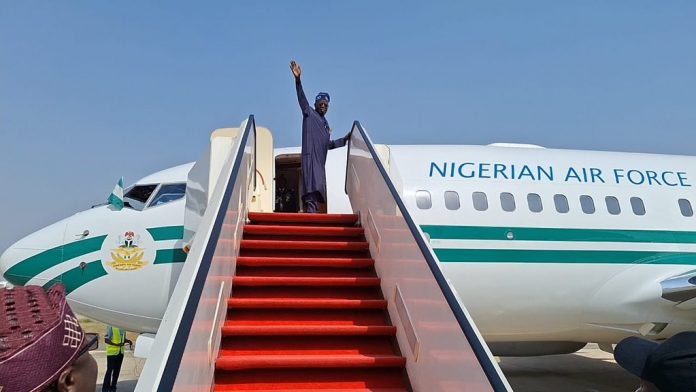
China again….they took some federal properties in the UK, and now aircraft: “The Nigerian government is embroiled in a deepening legal crisis following the seizure of three of its aircraft by French authorities, marking a new chapter in a long-standing legal dispute with Zhongshan, a Chinese company. The seizure, involving a Dassault Falcon 7X, a Boeing 737, and a newly acquired Airbus A330 valued at over $100 million, has drawn widespread attention and triggered reactions from both federal and Ogun State governments.”

Sometimes you actually pity these politicians. One regime can create problems for the next one. Imagine if Mr. President cannot have his new aircraft because of what Ogun State civil servants did. And from the federal government angle, this is another P&ID where international firms play bad games.

“The material facts in the transaction between the Ogun State Government and Zhongshan point to another P&ID case in which unscrupulous and questionable individuals falsely present themselves as investors with the sole objective of undercutting and scamming Governments in Africa” – Nigerian government.

“Sovereign guarantee” clause is a powerful clause in global business. As Nigeria offers that to states, it must understand the implications.  No Chinese firm will do anything for you without asking for Sovereign guarantee. This is where we are united. They can even go for our bank accounts in New York, London, etc.

French Court Orders Seizure of 3 Nigerian Presidential Aircraft Over Contract Dispute Between Ogun State and Chinese Firm

French Court Orders Seizure of 3 Nigerian Presidential Aircraft Over Contract Dispute Between Ogun State and Chinese Firm

0

The Nigerian government is embroiled in a deepening legal crisis following the seizure of three of its aircraft by French authorities, marking a new chapter in a long-standing legal dispute with Zhongshan Fucheng Industrial Investment Co. Ltd, a Chinese company.

The seizure, involving a Dassault Falcon 7X, a Boeing 737, and a newly acquired Airbus A330 valued at over $100 million, has drawn widespread attention and triggered reactions from both federal and Ogun State governments.

According to a report by Premium Times, the three aircraft, which either form part of the Nigerian presidential fleet or were recently purchased by the government, were seized under orders from a French court. The Dassault Falcon 7X was undergoing maintenance at Paris-Le Bourget Airport, while the Boeing 737 and Airbus A330 were stationed at Basel-Mulhouse International Airport for similar services.

The seizures stem from a protracted legal battle in 2016 when Ogun State revoked Zhongshan’s management contract for a free-trade zone project in Nigeria. Despite an arbitral tribunal chaired by a former President of the UK Supreme Court ruling in favor of Zhongshan, awarding them €74.46 million in compensation, Nigeria has yet to comply with the judgment. Consequently, Zhongshan sought enforcement of the award through the French legal system, successfully obtaining a court order to seize Nigerian assets to secure their claim.

The court granted Zhongshan the authority to impound the aircraft, citing that “this protective seizure will take place to secure and preserve the claim arising from the arbitration award dated 26 March 2021, made by an ad hoc arbitral tribunal.”

To prevent the aircraft from leaving the airports, the court ordered that they be parked in a way that their cockpits face a wall or other structure, ensuring that the jets cannot take off autonomously.

Zhongshan has pursued similar enforcement actions in other jurisdictions, including the United Kingdom. In Liverpool, buildings owned by the Nigerian government have reportedly been seized, further aggravating the ongoing dispute.

Government Reactions

Federal Government Statement

In response to the aircraft seizures, Bayo Onanuga, Special Adviser to the President on Information and Strategy, released a statement acknowledging the situation but dismissing Zhongshan’s claims. The presidency emphasized that the Federal Government was not under any contractual obligation with Zhongshan and attributed the dispute to the Ogun State government. According to Onanuga, the Chinese company has no solid legal ground to demand restitution, as it only constructed a perimeter fence for the free-trade zone before the contract was revoked in 2015.

The presidency decried Zhongshan’s tactics, likening the situation to the notorious Process and Industrial Developments Limited (P&ID) case, where foreign entities sought to exploit Nigeria through questionable legal claims.

“The material facts in the transaction between the Ogun State Government and Zhongshan point to another P&ID case in which unscrupulous and questionable individuals falsely present themselves as investors with the sole objective of undercutting and scamming Governments in Africa,” the statement said.

The federal government accused Zhongshan of withholding vital information from the French court and misleading it regarding the nature of the presidential jets.

“We are convinced the Chinese company misled the Judicial Court of Paris regarding the use and nature of the assets it seeks to attach and did not fully disclose to the court as required by law,” the statement said.

“The Federal Government is not under any contractual obligation with the company. The case in which Zhongshan is trying to use every unorthodox means to strip our offshore assets is between the company and the Ogun State Government,” the statement added.

Ogun State Government’s Response

Ogun State issued a separate statement signed by Kayode Akinmade, Special Adviser on Media and Strategy to the Ogun State Governor. The state government condemned the seizure, labeling Zhongshan’s actions as part of a “subterfuge” aimed at defrauding the state and Nigeria at large.

“It must be said without any equivocation that Zhongshan has no solid ground to demand restitution from the Ogun State Government based on the facts regarding the 2007 contract between the company and the State Government to manage a free-trade zone,” the state said.

“We naturally regret any embarrassment this has caused the Federal Government of Nigeria, HE President Asiwaju Bola Tinubu, GCFR and the good people of Ogun State and re-affirm our commitment to constantly and consistently protect the integrity of the nation and its assets. We have taken all necessary legal steps to ensure that this spurious and baseless order is vacated within the shortest possible time,” it added.

Ogun State disclosed that it had been engaged in settlement negotiations with Zhongshan as recently as September 2023, but the discussions broke down when the company reversed its initial willingness to consider a reasonable settlement and instead insisted on full payment of the arbitration award.

It also emphasized that the current administration could not, in good conscience, accept the arbitral ruling, which was described as “unfair and unconscionable,” given that Zhongshan had only built a perimeter fence. The state also revealed that it had successfully resisted the enforcement of the award in eight different jurisdictions and that appeals were pending in both the U.S. and the UK.

A Case of Sovereign Immunity

Both the federal and state governments have invoked the principle of sovereign immunity, asserting that the aircraft used for sovereign purposes should not be subject to seizure under international and French law. They have vowed to take swift legal action to vacate the French court’s order and prevent further embarrassment to the nation.

“The use and nature of the Presidential jets as assets of a Sovereign entity whose assets are protected by diplomatic immunity forbid any foreign Court from issuing an order against them,” they said.

The Ogun State government reaffirmed its commitment to protecting Nigeria’s assets and the integrity of its legal framework.

“As a sovereign nation, whose assets are protected by laws of sovereign immunity, we vow to resist any attempts at blackmail and theatrics clearly designed to extort and embarrass our dear country,” it said.

Unfortunately, while the Federal and Ogun States governments are making efforts to resolve the matter, the U.S. Court of Appeals for the District of Columbia has reportedly rejected Nigeria’s sovereign immunity and authorized the Chinese consortium to proceed with its efforts to confiscate Nigeria’s assets abroad.

The U.S. court’s decision was particularly significant because it found that Nigeria had grossly violated both the commercial and fundamental rights of Zhongshan executives involved in the free-trade zone project. Following their successful case in the UK in 2021, Zhongshan was awarded $55.6 million in compensation for breach of contract and $75,000 in moral damages, with additional interest and fees.

Implications of Apple Opening Payment Chip to Third Parties

0

In a significant shift in its approach to third-party access, Apple Inc. has announced that it will open up the iPhone’s payment chip to third-party developers. This landmark decision marks a departure from Apple’s previous stance on maintaining exclusive control over the NFC (Near Field Communication) chip used for Apple Pay transactions.

The move comes after years of regulatory pressure and industry demand for greater access to the payment technology embedded within Apple devices. By allowing third-party banks, Blockchain-financial institutions, and other services to utilize the payment chip, Apple is fostering a more competitive environment and potentially broadening the utility of its devices.

The implications of this decision for blockchain infrastructures are profound. Blockchain technology, known for its decentralized and secure nature, could potentially integrate with Apple’s payment chip, paving the way for a more seamless and interoperable financial ecosystem. This integration could enhance the user experience by providing a more diverse range of payment options and increasing the speed and security of transactions.

Moreover, the opening of Apple’s payment chip could accelerate the adoption of blockchain-based payment systems and digital currencies, such as Bitcoin, Central Bank Digital Currencies (CBDCs), USDC payments and other cryptocurrencies. It could also foster the development of new applications that leverage the secure, near-field communication (NFC) technology for various uses beyond payments, such as access control and identity verification.

However, this development also raises questions about the future of payment processing fees and the role of traditional financial institutions in a landscape increasingly dominated by tech giants and decentralized networks. Apple’s decision to charge associated fees for access to the NFC chip indicates a continued commercial interest in maintaining some level of control over the payment process.

Starting with the iOS 18.1 update, developers will be able to integrate the iPhone’s payment chip into their own applications, enabling users to conduct a variety of transactions directly from third-party apps. These transactions include in-store payments, transit system fares, and even access to work badges, home and hotel keys, and reward cards. Future updates are expected to support government identification cards as well.

However, this openness does not come without stipulations. Developers looking to take advantage of this new capability will need to enter into a commercial agreement with Apple and adhere to the company’s security and privacy standards. Additionally, Apple will charge associated fees for access to the NFC chip, ensuring that only authorized developers who meet certain industry and regulatory requirements can integrate this technology into their apps.

This strategic move by Apple could potentially alter the landscape of mobile payments and digital wallet services. By enabling third-party access to the NFC chip, Apple is not only complying with regulatory demands but also enhancing the versatility of the iPhone as a digital wallet. Users stand to benefit from increased flexibility and choice in payment options, while developers gain the opportunity to innovate within a previously restricted space.

The implications of this decision are far-reaching, with potential impacts on consumer behavior, developer engagement, and the broader financial technology industry. As the program rolls out in various countries, including Australia, Brazil, Canada, Japan, New Zealand, the U.S., and the U.K., it will be interesting to observe how this new level of access influences the market dynamics of mobile payments.