DD
MM
YYYY

PAGES

DD
MM
YYYY

spot_img

PAGES

Home Blog Page 316

Remember When Ethereum Was $0.70? That Feeling When You Didn’t Buy? Ozak AI at $0.012 Prevents That

0

In 2015, Ethereum was priced at just $0.70, a number that today feels almost mythical. Fast forward to 2025, and a new AI-powered crypto project, Ozak AI ($OZ). Built at the intersection of artificial intelligence and DePIN (decentralized physical infrastructure network), Ozak AI fuses AI automation, decentralized infrastructure, and tokenized growth, positioning itself as one of the most promising blockchain ventures in today’s evolving market.

Unlike typical AI-themed tokens, Ozak AI doesn’t stop at buzzwords. It’s building an ecosystem where predictive AI agents, real-time analytics, and decentralized compute layers operate together to create the foundation for next-generation DePIN intelligence. This isn’t just another token—it’s a blueprint for decentralized cognition.

Ozak AI Presale: Momentum Backed by Real Numbers

The Ozak AI presale continues to surge with remarkable momentum, showing early investor enthusiasm similar to Ethereum’s early trajectory. Currently, Ozak AI is priced at $0.012, having raised over $3.70 million and sold 941 million $OZ tokens. The next phase price is set at $0.014, and the target listing price stands at $1, signaling an extraordinary potential upside of more than 8,000% from early stages.

The presale’s growth curve reflects long-term confidence, with early participants already witnessing a 1100%+ gain since the project’s initial launch price of $0.001. With a total supply strategically allocated toward presale and ecosystem development, Ozak AI’s progress underscores strong fundamentals, transparent growth tracking, and active community participation.

Core Features Defining the Ozak AI Ecosystem

At its heart, Ozak AI is not just another token—it’s a technological infrastructure layer for decentralized intelligence. The platform introduces a suite of AI-driven tools and systems that redefine how data interacts with decentralized networks:

  • AI-Powered Infrastructure: Ozak AI automates high-frequency analytics and smart decision-making through its predictive agents and machine learning core.
  • DePIN Design: It operates on a decentralized physical infrastructure, allowing scalable and efficient AI computation at a global scale.
  • Cross-Chain Functionality: Ozak AI bridges multiple blockchains, ensuring interoperability and smooth data exchange.
  • Token Utility: $OZ powers the ecosystem through staking, governance, and participation in future AI-driven dApps.
  • Security & Transparency: A successful @sherlockdefi audit confirmed zero unresolved issues, validating the project’s robust architecture and investor security.
  • Strategic Partnerships: The Engine Behind Ozak AI’s Growth

Ozak AI’s evolution is being fueled by powerful partnerships that extend its capabilities across AI, blockchain data, and Web3 infrastructure.

Through its partnership with SINT, a “one-click AI upgrade” platform, Ozak AI integrates autonomous agents, voice interfaces, and cross-chain bridges—allowing its predictive systems to operate seamlessly across networks. The Ozak AI × Hive Intel (HIVE) alliance grants access to rich blockchain data APIs that decode wallet behavior, NFT trends, and DeFi flows, sharpening Ozak AI’s analytical precision across multiple chains.

Meanwhile, its collaboration with Weblume embeds Ozak AI’s real-time market signals into a no-code Web3 builder, empowering developers and creators to add AI intelligence to their dashboards and dApps instantly—no coding required. Expanding its decentralized footprint further, Ozak AI’s partnership with Meganet, a bandwidth-sharing network with 6.5 million active nodes and 77,000+ members, enhances computational scalability and cost-efficiency by combining predictive agents with distributed infrastructure for faster AI processing and analytics.

Why Ozak AI Could Be the “Ethereum Moment” of This Decade

Ethereum revolutionized programmable finance and smart contracts. Ozak AI is doing the same for intelligence infrastructure, bridging AI’s predictive capabilities with blockchain’s trustless design. Its combination of AI-powered analytics, DePIN scalability, cross-chain interoperability, and audited reliability positions it as the next frontier for decentralized intelligence networks.

So, if you once watched Ethereum rise from $0.70 to $4,000 and wondered, “What if I had acted then?” Ozak AI at $0.012 might just be your second chance. By choosing innovation over hesitation, this could be the moment that prevents the déjà vu of another missed opportunity.

For more information about Ozak AI, visit the links below:


Website: https://ozak.ai/

Twitter/X: https://x.com/OzakAGI

Telegram: https://t.me/OzakAGI
Nexchain AI Testnet 2.0 Bonus Extends Whale Accumulation to 90%: Could This Signal Major Gains for Crypto Presale Investors?

0

As the crypto presale market continues to evolve, Nexchain AI is quickly emerging as one of the most compelling projects for investors. With its innovative approach to integrating artificial intelligence (AI) into blockchain technology, Nexchain aims to address many of the scalability, security, and interoperability challenges that traditional blockchains face. Notably, the project is gearing up for the launch of Testnet 2.0 in November, which will bring crucial features like AI-driven risk scores and anti-scam tools. These updates could enhance the project’s appeal to early-stage investors, especially as the crypto presale enters new stages, attracting whale investors and increasing token demand.

Nexchain AI: Revolutionizing Blockchain with AI Integration

Nexchain AI stands apart in the crowded blockchain space by offering a unique blend of AI-driven enhancements. The platform combines a hybrid Proof-of-Stake (PoS) consensus mechanism with AI-powered optimizations, which enhances scalability, security, and transaction efficiency. The integration of Directed Acyclic Graphs (DAGs) further boosts the system’s throughput, allowing for parallel processing and reduced network congestion.

The key to Nexchain’s success lies in its focus on creating adaptable systems. With AI-enhanced smart contracts, the blockchain can self-optimize based on real-time conditions, and fraud detection mechanisms powered by machine learning reduce the risk of malicious activity. Additionally, the upcoming Testnet 2.0, set to launch in November, will feature a new design, along with AI-driven risk scores during transaction validation. This will provide users with a clear indication of potential risks before confirming a transaction, adding an extra layer of security and trust to the platform.

Testnet 2.0: What’s Coming in November?

Nexchain’s Testnet 2.0 is set to debut in November, marking a significant milestone in the project’s roadmap. The main highlight of Testnet 2.0 is its introduction of AI Events, which will help prevent scam transactions and reduce Miner Extractable Value (MEV) risks. As users make transactions, they will be able to view an AI-generated risk score, offering real-time insights into the potential threats associated with each transaction. This feature is crucial for enhancing user trust and ensuring the security of the network as it grows.

The Testnet 2.0 phase started on October 13 and will run until November 28. Participants can use the promo code “TESTNET2.0” to claim a 100% bonus on their investments during this period. This bonus, combined with the innovative features introduced in Testnet 2.0, has already attracted significant whale interest. As the crypto presale progresses, Nexchain AI is poised to capture the attention of both retail and institutional investors, offering a promising opportunity for early adopters.

Nexchain AI’s Growing Presence in the Crypto Presale Market

Nexchain AI’s crypto presale continues to gain momentum, with multiple stages of token sales already completed. The presale started with Stage 25 at $0.1 per NEX token, and the demand has only increased as each stage progressed. By Stage 27, the price had risen to $0.108, with substantial participation from whale investors and others looking to capitalize on the early-stage growth of the platform.

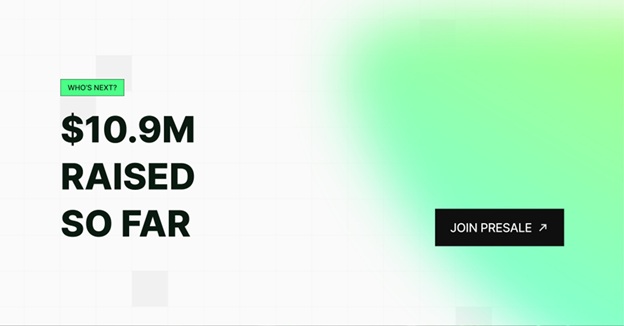
At the time of writing, Stage 28 is live, with 1 NEX token priced at $0.112. With over $10.9 million already raised in this stage, Nexchain is positioning itself as a serious contender in the blockchain space. This continued uptrend suggests strong investor confidence, especially with the upcoming launch of Testnet 2.0 and the ongoing airdrop events.

The Airdrop Keeps Expanding with Mainnet Launch Underway

The Nexchain AI airdrop continues to expand, providing more opportunities for early supporters to earn rewards before the mainnet launch. This week brings two big chances to boost your score. According to an X post by the Nexchain team, the Flash Quest offers a 48-hour bonus, where users can buy NEX in the next 48 hours and receive an additional 100 points. Additionally, from October 16–23, all buy quests during the Double Presale Points Week will give users double the points, significantly increasing their chances to earn more rewards.

These short-term quests are designed to help participants earn more rewards in preparation for the mainnet launch. The continued expansion of the airdrop is another way Nexchain AI is engaging its community and ensuring maximum participation in the lead-up to mainnet. This quarter is all about the core. Nexchain AI is scaling blockchain infrastructure, optimizing Testnet 2.0, and preparing every piece needed for the mainnet launch. A lot’s happening under the hood, stability, governance, and AI-driven tracking are coming together to finalize the ecosystem for Nexchain’s mainnet readiness.

Nexchain AI’s integration of AI into blockchain technology, coupled with the upcoming Testnet 2.0 release, offers an exciting opportunity for early investors in the crypto presale market. The platform’s unique approach to scalability, security, and interoperability sets it apart from traditional blockchain projects. With AI-powered risk scores, fraud detection, and anti-scam measures, Nexchain is preparing to become a cornerstone in the blockchain ecosystem. As the crypto presale enters its later stages, and with the added incentive of Testnet 2.0 and the 100% bonus, the platform is poised for significant growth and adoption in the coming months.


More Details:

Website: https://nexchain.ai/

Telegram: t.me/nexchain_ai/3

X: https://x.com/nexchain_ai

Airdrop: https://nexchain.ai/airdrop

Nexchain AI’s Crypto Presale Testnet 2.0 Features: How Will AI Events and Risk Scores Protect Transactions?

0

Nexchain AI’s crypto presale is attracting significant attention as the platform gears up for the launch of Testnet 2.0. This new development promises to bring major advancements in security and scalability. With Testnet 2.0 launching in November, Nexchain AI is introducing innovative features designed to enhance transaction protection. The integration of AI events and the use of AI-powered risk scores are among the key highlights that will redefine how transactions are validated, offering greater security to its users.

How AI Events Enhance Transaction Protection in Testnet 2.0

The upcoming crypto presale continues to garner interest, with Testnet 2.0 set to launch in November. One of the standout features of Testnet 2.0 is the introduction of AI events that work to protect users during the transaction process. These events are designed to prevent scam transactions, a common concern in the crypto world, and minimize the risks associated with miner-extractable value (MEV).

AI-driven anomaly detection will be employed to identify suspicious activity in real time. This ensures that users are alerted to any potential fraud before they proceed with a transaction. In addition, during transaction confirmation, users will see an AI Risk Score, which provides a detailed evaluation of any risks associated with the transaction.

This allows users to make more informed decisions and adds a layer of security to the token presale process. The crypto presale is also offering a promotional bonus of 100% for early participants using the promo code TESTNET2.0, further incentivizing investors to join before Testnet 2.0 officially launches.

The Role of Risk Scores in Protecting Transactions

Another vital feature of Testnet 2.0 is the integration of AI Risk Scores, which will be displayed during transaction confirmation. The AI Risk Score will provide real-time insights into potential risks, such as fraudulent transactions or unusual network activity, before users approve a transaction. This real-time evaluation is crucial for preventing errors and malicious activities, giving users greater control over their investments.

This integration of AI-powered risk analysis sets Nexchain AI apart from other blockchain platforms. While many systems rely on manual or outdated methods of fraud detection, Nexchain AI uses machine learning models to provide continuous, adaptive protection throughout the entire transaction process. These advancements will be crucial as Nexchain prepares for the continued success of its token presale and future growth.

Nexchain AI’s Tokenomics and Presale Progress

The crypto presale has already shown impressive progress. Stage 25 of the presale raised $9.3 million, followed by Stage 26, which raised $10.1 million. Currently, Stage 28 is underway, with 1 NEX token priced at $0.112. As of the latest update, the stage has already raised $10.96 million out of the $11.97 million target.

In addition to the successful presale, the airdrop is growing with exciting new opportunities for early supporters to earn more. This week, take advantage of two major chances to increase your score: the Flash Quest offering +100 points for any NEX purchase within the next 48 hours and the Double Presale Points Week that started 16th and will extend up to 23rd, where all buy quests earn ×2 points.

Nexchain AI’s crypto presale is supported by strong tokenomics and the use of CERTIK’s security protocol. With a solid security framework in place, the platform ensures that investor funds are protected. These developments, combined with the launch of Testnet 2.0, enhance the project’s long-term potential, making it an attractive investment for those looking to be part of a groundbreaking blockchain project.

Conclusion: The Future of Nexchain AI and Enhanced Security Features

Nexchain AI’s crypto presale continues to gain momentum as the platform prepares for the launch of Testnet 2.0 in November. The introduction of AI events and AI Risk Scores offers significant improvements to transaction security, providing users with real-time risk assessments before approving any transactions.

This innovative approach not only enhances the security of the token presale but also positions Nexchain AI as a leader in AI-driven blockchain technology.

As Testnet 2.0 moves closer to its official release, the platform’s strong focus on scalability, security, and real-time risk mitigation will likely play a pivotal role in shaping its success. Investors in the crypto presale can expect continued improvements and opportunities as Nexchain AI strives to set a new standard in blockchain technology.

More Details:

Website: https://nexchain.ai/

Telegram: t.me/nexchain_ai/3

X: https://x.com/nexchain_ai

Airdrop: https://nexchain.ai/airdrop

Judge Keeps Musk’s Antitrust Lawsuit Against Apple and OpenAI in Fort Worth, Mocks Companies’ “Minimal Ties” to Texas

0

A U.S. federal judge has ordered that the antitrust lawsuit filed by Elon Musk’s X and xAI against Apple and OpenAI remain in Fort Worth, Texas — even though none of the companies involved have significant connections to the area.

In a sharply worded four-page order, U.S. District Judge Mark Pittman of the Northern District of Texas said he would allow the case to stay in Fort Worth, but not without irony. Pittman, a Trump appointee known for his plain-spoken rulings, mocked the parties’ choice of venue, encouraging them to “consider moving their headquarters” to the city if they truly wanted their disputes heard there.

“Given the present desire to have venue in Fort Worth, the numerous high-stakes lawsuits previously adjudicated in the Fort Worth Division, and the vitality of Fort Worth, the Court highly encourages the Parties to consider moving their headquarters to Fort Worth,” Pittman wrote.

In a footnote, he even directed the companies to the City of Fort Worth’s Business Services website “to get the process started.”

A Subtle Rebuke of Forum Shopping

Pittman’s order, though procedural, carried a pointed subtext: a rebuke of “forum shopping,” the controversial practice where plaintiffs strategically file lawsuits in specific courts perceived as more ideologically friendly.

For years, the Fort Worth Division of the Northern District of Texas has been a magnet for such filings, particularly from plaintiffs aligned with conservative or business interests. The division’s two active judges — Pittman and Reed O’Connor — were both appointed by Republican presidents and have presided over high-profile cases challenging Biden administration regulations, corporate penalties, and federal oversight.

Those trends have included filings by Musk’s own companies, such as X and Tesla, which have repeatedly sought to move litigation into the Fort Worth court.

While Pittman was appointed by Trump, he has previously expressed discomfort with the manipulation of venue rules. In Thursday’s order, he reiterated his stance that “venue is not a continental breakfast; you cannot pick and choose on a Plaintiffs’ whim where and how a lawsuit is filed.”

Little Connection to Fort Worth

Despite allowing the case to proceed in his division, Pittman acknowledged that the lawsuit has “at best minimal connections” to Fort Worth.

“Possibly one of the strongest points made by Plaintiffs is the mere fact that ‘Apple sell[s] iPhones [in this Division] (and many other products) and OpenAI offer[s] ChatGPT nationwide,’” Pittman wrote, adding that this logic could make “any district in the entire United States an appropriate venue.”

X Corp., which Musk relocated to Bastrop, Texas — about 200 miles south of Fort Worth — is the only party with even a remote Texas presence. Apple and OpenAI are both headquartered in California.

Pittman noted that the Fort Worth docket is “two to three times busier” than that of nearby Dallas, which has more judges and greater administrative capacity. Nonetheless, since neither Apple nor OpenAI filed a motion to transfer the case before the October 9 deadline, Pittman said he had “little, if any, choice” but to keep it.

“The fact that neither Defendant filed a motion to transfer venue serves as a consideration for the Court,” he wrote. “And the Court ‘respect[s]’ Plaintiffs’ choice of venue.”

Bound by 5th Circuit Precedent

The judge also cited constraints from the U.S. 5th Circuit Court of Appeals, which has repeatedly restricted his authority to move cases to other jurisdictions. Last year, the appellate court twice overruled Pittman’s attempts to transfer a lawsuit by major banking trade groups against the Consumer Financial Protection Bureau to Washington, D.C., after the bureau sought to defend a new rule capping credit card late fees at $8.

In that case, the 5th Circuit said Pittman had “clearly abused his discretion,” effectively warning him against unilaterally relocating cases in the future.

“The 5th Circuit has raised the standard for transferring venue to new heights,” Pittman noted in his latest order, adding that this precedent influenced his decision to retain the case.

Musk’s Broader Legal Battles

The lawsuit, filed in August, accuses Apple and OpenAI of running an “anticompetitive scheme” designed to maintain monopolies in artificial intelligence markets.

X and xAI allege that Apple gives preferential treatment to OpenAI’s ChatGPT in its App Store rankings while demoting rival AI products, including Musk’s chatbot, Grok. The complaint argues that Apple’s alleged favoritism, coupled with OpenAI’s market dominance, has distorted fair competition in the fast-growing AI sector.

Neither Apple nor OpenAI has publicly commented on the case. OpenAI told CNBC it would not comment beyond its court filings, while X and Apple did not respond to requests for comment.

The case adds to Musk’s expanding list of legal confrontations with federal regulators and rival corporations. Earlier this month, a judge in Washington, D.C., denied Musk’s request to move a separate lawsuit filed by the Securities and Exchange Commission — concerning his alleged improper disclosure of his stake in Twitter before acquiring it — from D.C. to Texas.

Musk, who rebranded Twitter as X after his 2022 acquisition, has increasingly centralized his corporate operations in Texas, where he has aligned himself with business-friendly political and judicial environments. Yet, as Judge Pittman’s wry tone suggested, even that strategy has limits.

“Fort Worth has much more going for it than just the unique artwork on the fourth floor of its historic federal courthouse,” Pittman quipped — a closing line that captured both the irony and the fatigue of a judge aware that his courtroom had once again become a magnet for high-stakes tech litigation.

China’s Slowing Economy Faces Structural Crossroads Amid Real Estate Crisis and Weak Investment Confidence

0

China’s economy grew by 4.8% year-on-year in the third quarter of 2025, marking its slowest expansion in a year and signaling that the world’s second-largest economy is entering a more complex phase of structural adjustment.

Although the growth rate aligned with analyst expectations, the underlying data reveal a deepening crisis in investment and confidence — particularly in the property sector, which continues to drag on overall output.

The weakness was most visible in fixed-asset investment, a crucial driver of China’s growth for decades. For the first nine months of the year, investment unexpectedly contracted by 0.5%, a rare decline and the first such contraction since 2020, when the pandemic paralyzed the economy. Analysts had anticipated a modest 0.1% increase, making the result significantly worse than expected.

The data highlight the fragility of China’s growth model, still heavily dependent on property and infrastructure, both of which are now faltering.

The country’s property sector remains the epicenter of the downturn. Property investment plunged 13.9% in the year through September, extending the 12.9% drop recorded through August. The sector’s prolonged slide reflects not just declining sales but also tighter financing, unfinished housing projects, and growing defaults among major developers.

The drop in fixed-asset investment is rare and alarming, CNBC quoted Zhiwei Zhang, president and chief economist at Pinpoint Asset Management, warning that fourth-quarter GDP growth faces downward pressure.

According to CNBC, Bruce Pang, adjunct associate professor at CUHK Business School, said the property slump could mark a lasting structural shift: “Weakness in real estate investment may persist for a longer period than previously anticipated. This could represent a structural restructuring, and it’s possible that investment will never return to its prior levels.”

Such a scenario would force Beijing to rethink its long-standing growth model, which has relied on heavy property development and infrastructure spending to sustain economic momentum.

Shifting Growth Drivers: From Property to Production

There were, however, pockets of strength in September. Industrial production grew 6.5%, exceeding expectations of 5% and rising from 5.2% the previous month. The resilience of manufacturing helped offset some of the drag from the property downturn.

Excluding real estate, fixed-asset investment rose 3% for the first three quarters, though that was slower than the 4.2% recorded as of August. Private sector investment outside property climbed 2.1%, down from 3% in August — another signal of waning business confidence.

“The weakness in investment spending, especially by the private sector, reflects a lack of confidence in the economy’s growth prospects as well as in government policies that could support growth,” said Eswar Prasad, professor of economics at Cornell University.

This hesitation among private investors underscores a growing challenge for Beijing: stimulating long-term, innovation-led investment without falling back on state-driven construction projects that have already led to excessive debt.

Consumer Spending Falters Despite Income Gains

Household consumption — the other critical pillar of domestic demand — remained tepid. Retail sales grew 3% in September from a year earlier, in line with forecasts but down from 3.4% in August. The slowdown suggests that consumers are tightening their wallets amid concerns about jobs and real estate wealth.

Sales of home appliances rose 3.3% in September, a sharp drop from the 25.3% surge recorded over the first three quarters, suggesting that the earlier consumer goods subsidy program is losing steam.

“I don’t think we could stimulate domestic demand without stabilizing the housing market first,” Dan Wang of Eurasia Group said Monday ahead of the data release on CNBC’s “Squawk Box Asia,” indicating the tight link between property confidence and consumer spending in China.

Official data show disposable income for urban residents rose 4.5% in the first nine months of the year, while rural income increased 6% after adjusting for inflation. Meanwhile, the urban unemployment rate edged down slightly to 5.2% in September, from 5.3% in August, providing a limited cushion for household sentiment.

Despite modest wage growth and employment gains, the combination of falling home prices, rising living costs, and subdued policy support has continued to sap consumer confidence — an issue Beijing has struggled to reverse.

Inflation and Policy Constraints

China’s price dynamics also point to persistent deflationary pressure. The core consumer price index (CPI), which excludes volatile food and energy costs, rose at its fastest pace since February 2024, but the headline CPI fell 0.3%, missing expectations.

This points to the dilemma facing policymakers: weak demand is keeping inflation below target, while financial risks tied to property and local government debt limit the scope for aggressive stimulus.

Earlier Monday, the People’s Bank of China kept its benchmark lending rates unchanged for the sixth straight month, maintaining the one-year loan prime rate at 3% and the five-year rate at 3.5%. The pause is seen as Beijing’s preference for targeted measures over broad rate cuts, as it seeks to stabilize the yuan and manage capital flows amid U.S. monetary tightening.

One bright spot remains China’s export sector, which showed continued resilience in September despite mounting geopolitical tensions with the United States. Manufacturing and high-value electronics exports have held up relatively well, supported by robust demand from Southeast Asia and Latin America.

Yet analysts warn that external demand may weaken if global growth slows further, especially with the U.S. economy showing signs of cooling and Europe battling persistent inflation.

The Push for Reform, Stability, and Control

China’s top leaders began a four-day policy meeting on Monday to chart economic priorities for the next five years. The central challenge, experts say, is how to maintain growth while steering the economy toward a new model less dependent on property and infrastructure.

Beijing has signaled a greater emphasis on domestic consumption and homegrown technology, particularly in sectors such as semiconductors, electric vehicles, and artificial intelligence. But analysts caution that this transition will take time and may not immediately compensate for the lost momentum in the property sector.

“China should step up its efforts in tech, but we also firmly believe the so-called old economy will remain the backbone of the economy for the foreseeable future,” said Ting Lu, Nomura’s Chief China Economist. “Beijing will have to clean up the property sector mess in 2026–2030 for several reasons.”

Lu noted that real estate remains second only to exports in contributing to GDP. At the same time, about half of Chinese household wealth is tied to property, and the sector still accounts for roughly 18% of local government revenue. He added that overinvestment in emerging industries such as electric vehicles has already become counterproductive, leading to overcapacity and inefficiencies.

However, the third-quarter data suggest that China’s economy is not in crisis, but at a crossroads. Growth remains respectable by global standards, yet its composition is shifting in ways that could redefine the country’s economic trajectory.

The property slump, weak private investment, and subdued consumer sentiment all point to a longer-term structural adjustment — one that will require a new balance between state guidance and market confidence.

Beijing’s next five-year plan will test whether the country can move beyond its property-dependent past toward a more innovation-driven future without triggering deeper financial instability.