DD
MM
YYYY

PAGES

DD
MM
YYYY

spot_img

PAGES

Home Blog Page 3205

Meet Antony Turner – Former SwissOne Capital Executive Leads BlockDAG, Bullish Forecasts Ahead for Notcoin & Tron

0

The cryptocurrency arena is buzzing, with Notcoin (NOT) signaling a bullish trend reversal and Tron (TRX) displaying stability amidst market ebbs and flows. Both cryptocurrencies contribute distinctly to the ongoing fascination with digital currencies.

In this dynamic scene, BlockDAG has recently disclosed its CEO, Antony Turner, sparking conversations about BDAG’s substantial future growth and bullish price forecasts post-launch. With a presale totaling $62.8 million and a current coin price of $0.0164, Turner’s leadership has marked a remarkable period for BlockDAG.

Notcoin (NOT) Poised for Upsurge

The price forecast for Notcoin (NOT) suggests an imminent bullish turn. Despite previous downturns, market conditions are improving. Indicators such as the RSI and MACD are pointing to increasing momentum, suggesting Notcoin might soon overcome its resistance, aiming for $0.031.

Continued technical analysis reveals an inverted head and shoulders pattern for Notcoin, hinting at a potential upturn. With a favorable technical landscape and positive market sentiment, Notcoin is expected to target the $0.031 level by month-end. This analysis remains impartial, focusing strictly on technical prospects without promoting investment.

Tron Maintains Consistency in Volatile Markets

Tron (TRX) continues to perform well, maintaining a price above $0.13 in a sluggish market and securing the 11th position with an $11 billion market cap. Its moderate 2% growth reflects a steady pace. Indicators like the Awesome Oscillator show diminishing green bars and a decreasing Average Directional Index at 23.61 suggests a potential slowdown in Tron’s immediate momentum.

Tron’s extensive transaction volume of over 8.1 billion underscores active network engagement. However, a bearish MACD crossover and negative funding rates could temper optimism, possibly leading to a consolidation phase and casting doubt on Tron’s short-term direction.

BlockDAG Announces Its CEO and Leadership Team!

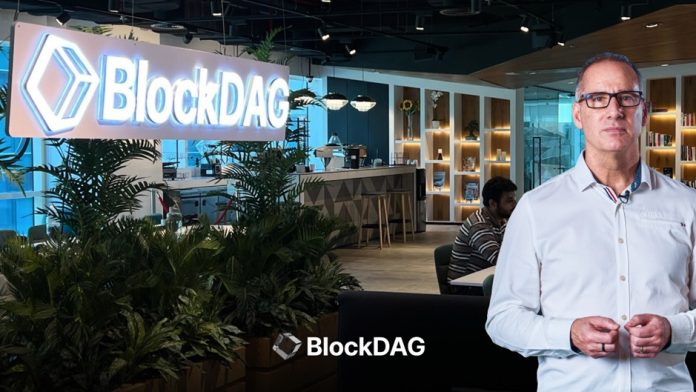
BlockDAG has unveiled its leadership team, announcing Antony Turner as its CEO. This revelation has sparked enthusiasm within the cryptocurrency community, leading to increased speculation about BlockDAG’s prospective market value. Antony Turner brings more than twenty years of experience in technology and blockchain, having held significant roles at companies like SPIRIT Blockchain Capital. His founding role at Axona-Analytics showcased his ability to enhance asset management tools dramatically, demonstrating his profound skills in financial modeling and strategic business management.

Guided by Turner, BlockDAG is revolutionizing the creation and management of digital assets. Its advanced low-code/no-code platform, complete with versatile templates, democratizes token and NFT creation for developers of varying expertise. Furthermore, BlockDAG’s dedication to smart contract support is driving innovations in decentralized finance and increasing transparency in supply chains, paving the way for automated processes across multiple sectors.

This strategic disclosure has not only reinforced investor confidence but also accelerated BlockDAG’s financial success, with the presale now amassing an impressive $62.8 million and the coin priced at $0.0164. With Turner steering, BlockDAG is poised for remarkable growth in the crypto space. After the CEO’s revelation, industry analysts forecast that BlockDAG’s valuation could go sky high. BlockDAG is initiating a new era of innovation and investment in the cryptocurrency market, establishing itself as a top contender.
Last Say

As the crypto community observes BlockDAG under Antony Turner’s guidance, Notcoin and Tron’s movements, although quieter, still pose potential for unexpected shifts in investor interest and market behavior.

However, BlockDAG’s strategic advancements set it on a path of unprecedented growth, with significant funds already raised in the presale and a promising price forecast, heralding a vibrant future for BlockDAG and the broader cryptocurrency market.

Join BlockDAG Presale Now:

Website: https://blockdag.network

Presale: https://purchase.blockdag.network

Telegram: https://t.me/blockDAGnetworkOfficial

Discord: https://discord.gg/Q7BxghMVyu

UFC Champ Alex Pereira’s Endorsment Pushes BlockDAG Presale to $62.8M Mark; Polkadot Price Dips Amid MATIC Whales Movements

0

BlockDAG has swiftly climbed the ranks in the cryptocurrency scene, mainly through its partnership with UFC legend Alex Pereira. Pereira, a kickboxing virtuoso, infuses BlockDAG with robustness and novelty, helping it achieve a notable $62.8 million during its presale, soaring by 1540%. This alliance has not only captured the attention of sports aficionados and digital currency investors but also catapulted BlockDAG into international fame.

On the flip side, Polkadot (DOT) is currently wading through tough times, with its value teetering at $6, barely clinging to vital support thresholds. Conversely, Polygon (MATIC) is witnessing a spike in substantial transactions, signaling keen interest from prominent investors.

BlockDAG’s $62.8M Presale Fueled by UFC Icon Alex Pereira

BlockDAG’s engagement with UFC champ Alex Pereira has significantly boosted its visibility and presale achievements. Known for his strategic acumen and strength in the arena, Pereira symbolises BlockDAG’s cutting-edge spirit in the cryptocurrency realm.

This collaboration hasn’t just elevated BlockDAG’s worldwide stature but also played a pivotal role in its presale, amassing an impressive $62.8 million with a 1540% value increase. Pereira’s involvement has drawn the eyes of both sports lovers and crypto investors, with his arena dominance mirroring BlockDAG’s tactical advancements in the competitive digital currency market.

As BlockDAG’s main sponsor, the dedication to innovation and excellence is clear, resonating with enthusiasts from both the sports and cryptocurrency communities. This partnership has sparked considerable interest and confidence in BlockDAG’s offerings, with over 12.4 billion coins snapped up during the presale. For investors, BlockDAG’s robust growth, high-profile collaborations, and innovative methods present a lucrative opportunity in the ever-evolving crypto landscape.

Polkadot Braces for Downturn: Critical Signs to Monitor

Polkadot (DOT) investors may need to brace for further downturns unless significant improvements emerge soon. Various indicators predict ongoing challenges as DOT’s price hovers around $6. The critical support zone at $5.45 played a crucial role in its rise above $6, but after peaking at $6.49 on July 22, DOT experienced a 7.64% fall, reaching $5.96 before marginally recovering.

Present indicators hint that DOT is still in precarious waters. The token trades beneath the 21-day Exponential Moving Average (EMA), hinting at a potential downward trajectory. Moreover, the Relative Strength Index (RSI) continues to linger below the neutral 50 mark, reflecting subdued market momentum.

Polygon Experiences Significant Whale Transaction Spike

Polygon (MATIC) has observed a substantial boost in large-scale transaction volumes, showcasing increased engagement from major investors, or “whales.” In the last 24 hours, Polygon logged $152.75 million in significant transactions, marking an impressive 745.3% uptick, as per IntoTheBlock data.

Such substantial transactions often suggest that major investors are bullish about the asset’s future prospects, positioning it as an appealing choice for individual investors. For those looking to capitalize on nascent trends, Polygon’s scaling solutions offer efficient, cost-effective transactions on the Ethereum network, enhancing its attractiveness.

Final Thoughts

BlockDAG, with its remarkable $62.8 million presale coin triumph and strategic UFC partnership with Alex Pereira, shines as a promising investment. Its swift expansion and innovative strategy position it as an appealing choice for investors. Meanwhile, Polkadot (DOT) grapples with potential downturns, struggling to stay above essential support levels. Conversely, Polygon (MATIC) has experienced a significant uptick in whale transactions, indicating robust interest from key investors.


Invest in the BlockDAG Presale Now:

Presale: https://purchase.blockdag.network

Website: https://blockdag.network

Telegram: https://t.me/blockDAGnetwork

Discord: https://discord.gg/Q7BxghMVyu

Ledger’s second ‘Flex” Touchscreen-focused Product

0

Ledger, the renowned crypto hardware wallet company, has once again made headlines with the introduction of its second touchscreen-focused product of the year, the Ledger Flex. This announcement comes on the heels of the earlier release of the Ledger Stax, marking a significant step in the company’s product lineup refresh for 2024.

With a touchscreen interface, the Flex aims to make self-custody of digital assets more accessible and intuitive for consumers and enterprises alike. This move is not just about staying ahead in the technology race; it’s about shaping the future of how we interact with and secure our digital identities and assets.

The Paris-based firm has been a pioneer in the crypto security space since its inception in 2014. Over the past decade, Ledger has sold approximately six million devices, securing more than 20% of the world’s digital assets. The new Ledger Flex, along with its sibling product Ledger Stax, designed by Tony Fadell—a key figure in the development of the iPod—represents a leap forward in hardware wallet technology.

One of the standout features of these new products is their touchscreens, which offer proof-of-humanity and proof-of-identity capabilities. In an era where the lines between reality and fiction are increasingly blurred, especially with the rise of AI, such features are crucial for ensuring the security and authenticity of user interactions.

Furthermore, the Ledger Security Key app, compatible with both the Flex and Stax, introduces two-factor authentication and passkey capabilities, enhancing the security framework for users. Ledger’s CEO, Pascal Gauthier, emphasized the importance of these developments in a recent statement, highlighting the inadequacies of smartphones and laptops in terms of fundamental security features necessary for the upcoming era of digital asset management.

Key security features that set the Ledger Flex apart:

Secure E Ink® Touchscreen: The Ledger Flex boasts a Secure E Ink® touchscreen, which is a significant upgrade in terms of security and usability. This feature ensures that users can securely verify and approve transactions directly on the device, providing an additional layer of security against remote attacks.

Ledger’s Secure OS: Powering the device is Ledger’s proprietary Secure OS, which is designed to protect against a wide array of sophisticated attacks. This operating system is the backbone of the device’s security, safeguarding your digital assets from unauthorized access.

NFC Capabilities: Near Field Communication (NFC) technology enables the Ledger Flex to communicate with other devices wirelessly, allowing for convenient and secure transactions. This feature simplifies the process of transferring information between the wallet and other NFC-enabled devices.

Two-Factor Authentication (2FA): The Ledger Flex supports 2FA, which adds an extra layer of security when logging into various platforms. This means that even if a password is compromised, unauthorized users would still need access to the physical hardware wallet to gain entry.

Passkey Capabilities: Moving beyond traditional passwords, the Ledger Flex introduces Passkey capabilities. Passkeys offer a more secure alternative, eliminating the risk of phishing and other password-related security threats.

The introduction of Ledger Flex follows a challenging period for the company, which endured a supply chain attack on its ConnectKit in December. Despite this setback, Ledger’s proactive response and commitment to making victims whole demonstrate the resilience and dedication to customer security that the company stands for.

As we look to the future, Ledger’s vision is clear: to reshape how hundreds of millions of people own and manage value. The crypto revolution is upon us, and with innovative products like the Ledger Flex and Ledger Stax, Ledger is positioning itself at the forefront of this transformative movement.

ROI for AI Engineering Implementations in Financial Services

0

In the rapidly evolving landscape of financial services, the pressure to innovate while managing costs has never been greater. Financial institutions are increasingly turning to engineering solutions to streamline operations, enhance customer experiences, and create new revenue streams. However, the challenge lies in ensuring that these engineering investments yield a substantial return on investment (ROI).

The concept of ROI in engineering within financial institutions is multifaceted. It encompasses not only the direct financial gains from the investment but also the qualitative improvements in processes and services. A comprehensive ROI analysis should consider factors such as cost savings, efficiency gains, revenue growth, and customer satisfaction improvements.

Leveraging AI for Enhanced ROI

Artificial Intelligence (AI) has emerged as a game-changer for financial services. According to Autonomous Research, AI technologies could reduce operational costs for financial services companies by up to 22%, potentially saving $1 trillion by 2030. AI’s ability to process vast amounts of data and automate complex tasks makes it an invaluable asset for credit scoring, fraud detection, and personalized customer service.

For engineering leaders, articulating the impact of their teams on the institution’s bottom line is crucial. A guide by Jellyfish Blog emphasizes the importance of adapting ROI calculations to engineering organizations, highlighting the need for engineering leaders to translate the value of their work into strategic business objectives.

Implementing AI and other engineering solutions comes with its challenges, including the initial costs and the complexity of integration with existing systems.

Before embarking on AI initiatives, it’s crucial for financial institutions to have a clear strategic plan that aligns with their business objectives. This involves identifying the areas where AI can have the most significant impact, such as customer service, fraud detection, or operational efficiency.

AI projects require a combination of skills, including data science, engineering, and domain expertise in finance. Financial institutions should focus on assembling a diverse team with the right mix of talents or consider partnering with technology providers that specialize in AI solutions for finance.

AI systems are only as good as the data they are trained on. Financial institutions must ensure they have robust data management practices in place, including data quality, governance, and privacy measures, to leverage AI effectively. The financial sector is heavily regulated, and any AI solution must comply with existing regulations. Institutions should work closely with legal and compliance teams to navigate the regulatory landscape and integrate AI in a compliant manner.

Implementing AI often requires significant changes to existing processes and systems. Financial institutions should invest in change management strategies to help employees adapt to new technologies and workflows. The AI landscape is continuously evolving. Financial institutions should foster a culture of innovation that encourages ongoing learning, experimentation, and adaptation to new developments in AI technology.

Improving the ROI of engineering investments in financial institutions requires a strategic approach that integrates technology with business objectives. By leveraging AI and other advanced technologies, financial institutions can not only cut costs but also enhance their services, ultimately leading to a stronger competitive position in the market.

Israel Call on NATO to Expel Turkey from the Union

0

The recent developments in international relations have taken a dramatic turn with Israel’s call for NATO to consider the expulsion of Turkey from the alliance. This unprecedented move comes in the wake of statements made by Turkish President Recep Tayyip Erdo?an, which have been perceived as threats by the Israeli government.

The tension between Israel and Turkey has escalated following President Erdo?an’s remarks suggesting a possible military intervention in Israel, akin to Turkey’s previous actions in Libya and Nagorno-Karabakh. These comments have not only raised concerns within Israel but have also sparked a broader debate on the dynamics of NATO and its member states.

Israel’s Foreign Minister, Israel Katz, has been vocal in urging NATO to take action against Turkey, citing the need to maintain regional stability and security. The call for expulsion is a significant step that highlights the strained relations between the two nations, which have deteriorated over the past decade.

The situation is complex, given Turkey’s strategic position and its role as a longstanding member of NATO. The alliance, established on the principles of collective defense and security, does not have a formal mechanism for expelling members, which adds another layer of complexity to the issue.

The historical roots of Israel-Turkey tensions can be traced back to the establishment of diplomatic relations between the State of Israel and the Republic of Turkey in March 1949. Turkey was the first Muslim-majority country to recognize Israeli sovereignty, less than a year after Israel’s declaration of independence. Initially, both nations prioritized bilateral cooperation in diplomacy and military/strategic ties, sharing concerns about regional instabilities in the Middle East.

However, the relationship has experienced significant fluctuations, particularly under the leadership of Turkey’s President Recep Tayyip Erdo?an. The strategic partnership that once saw booming trade and tourism, military cooperation, and plans for high-tech collaboration has faced challenges due to various geopolitical events. The turning points included the 2008–09 Gaza War, the 2010 Gaza flotilla raid, and the exposure of Israeli special agents in Iran in 2013, which created further tension.

The historical context also includes the legacy of the Ottoman Empire, the predecessor of modern Turkey, which welcomed Jewish refugees and was home to a significant Jewish community. However, with the rise of Turkish nationalism in the late 19th century, the situation for Jews in the region began to change.

The fluctuating relationship between Israel and Turkey is also influenced by the broader Israeli-Palestinian conflict, where Turkey has often positioned itself in support of the Palestinian cause. This stance has led to periods of strained relations, especially following incidents that have heightened tensions between Israel and Palestine.

Understanding the historical roots of Israel-Turkey tensions requires a nuanced view of the complex interplay of diplomatic, military, and cultural factors that have shaped the relationship over the decades. The current state of affairs is a reflection of this intricate history, marked by periods of cooperation and contention.  It underscores the need for continuous dialogue and cooperation among nations to ensure peace and stability in an increasingly interconnected world.

As the international community watches closely, the unfolding events could potentially reshape the geopolitical landscape of the region. The implications of such a move by NATO could be far-reaching, affecting not only the involved parties but also the operational dynamics of the alliance itself.