DD
MM
YYYY

PAGES

DD
MM
YYYY

spot_img

PAGES

Home Blog Page 321

Antony Turner’s Leadership Powers BlockDAG’s $425M Success: Real Vision, Real Results, Global Credibility!

0

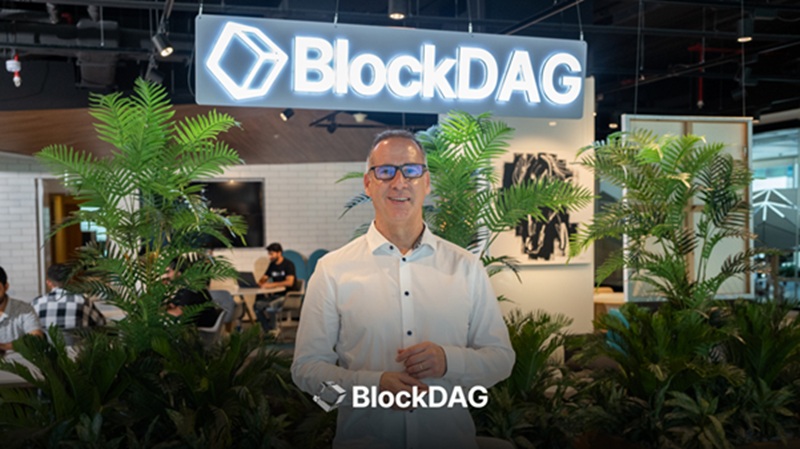
Who is the founder of BlockDAG? Unlike many anonymous crypto ventures, BlockDAG (BDAG) stands out by putting real leadership and accountability at its core. Antony Turner, an experienced professional in finance and blockchain infrastructure, drives one of the most remarkable crypto launches of 2025 with transparency, credibility, and results.

His leadership extends beyond crypto circles, with global collaborations such as the BWT Alpine Formula 1® Team. Turner’s deep expertise and hands-on guidance have turned BlockDAG into a leading blockchain project known for real progress and public trust. This article explores how his financial acumen, technical direction, and open communication continue to shape BlockDAG’s rise.

From Finance Expertise to Blockchain Innovation

The story of BlockDAG’s founder begins in the finance sector, where Antony Turner built a solid background in structured markets and blockchain-driven ventures. Before creating BlockDAG, he served as Managing Director of Spirit Blockchain Capital, bridging traditional financial strategies with blockchain assets. His responsibilities included managing regulated financial products and introducing blockchain applications into institutional-grade portfolios.

Turner also worked with SwissOne Capital, recognised for launching one of Switzerland’s first equally weighted crypto index funds. This experience gave him a strong understanding of institutional crypto management. Such expertise shaped BlockDAG’s foundation, positioning it not as a speculative trend but as a scalable Layer 1 infrastructure project built for longevity.

How BlockDAG’s Vision Took Shape Under Turner

Antony Turner established BlockDAG to deliver high performance and inclusivity within blockchain technology. The platform uses a unique hybrid of DAG and Proof-of-Work architecture, allowing parallel transaction execution for faster and more secure processing. It also supports EVM and WASM compatibility, providing a developer-friendly environment for smart contracts and decentralised applications.

Unlike projects that overpromise and underdeliver, Turner’s leadership ensured tangible progress early on. Over 3 million users are currently mining BDAG via the X1 app, while more than 20,500 physical miners have already been distributed. These achievements prove how leadership vision and structured development can produce measurable results. Turner’s focus on practical delivery instead of speculative hype has earned strong support from miners and contributors alike.

Consistent Delivery and Expanding Global Reach

Since the project’s inception, Turner has prioritised visibility and accountability. Through multiple Keynote events, frequent AMA sessions, and open testnet reports, he showcases BlockDAG’s evolution. These public milestones highlight key advancements like Dashboard V4, smart account architecture under EIP-4337, and the network’s upcoming mainnet transition.

BlockDAG’s global exposure grew further through its collaboration with the BWT Alpine Formula 1® Team, linking blockchain innovation with top-tier motorsport events in Singapore and Austin. This approach differentiates BlockDAG from projects that remain hidden behind pseudonyms, reinforcing its authenticity and transparency.

Trust and Transparency in a Market Filled with Anonymity

In an industry where hidden founders are common, Antony Turner’s open presence adds unmatched credibility. Many past collapses in the crypto space stemmed from a lack of identifiable leadership, something Turner deliberately avoided. By publicly representing BlockDAG, hosting discussions, and publishing updates, he has instilled confidence among BDAG holders and the developer community.

To back its transparency, BlockDAG has undergone comprehensive audits from CertiK and Halborn. The presale structure has been organised through clear, tiered phases, now exceeding $425 million with nearly 27 billion BDAG coins sold. Currently, Batch 31 is priced at $0.0304, though users can still access a limited-time offer at $0.0015, an opportunity that continues to attract early supporters.

A Recognisable Name Behind the Success

Anyone searching for who owns BlockDAG will find a real name and verifiable achievements. Turner’s financial expertise ensures responsible fundraising, while his blockchain insights strengthen the system’s architecture. His leadership ensures BlockDAG operates with purpose, transparency, and long-term goals instead of short-lived trends.

Although the project remains under centralised management for now, Turner has hinted at plans for community integration. Even in its current phase, the presence of a clearly accountable leader has set BlockDAG apart as one of the most reliable blockchain projects in the sector.
Final Remarks

Antony Turner’s journey with BlockDAG showcases leadership that is both credible and measurable. Combining his extensive financial experience with blockchain execution, he has built an ecosystem grounded in transparency, delivery, and global recognition. With more than $425 million raised, 27 billion coins sold, and millions of miners worldwide, BlockDAG’s progress is undeniable.

When people ask who the founder of BlockDAG is, the answer reflects more than just a title; it highlights a proven record of real-world leadership and accountability. Turner’s role demonstrates that behind every successful blockchain stands a name, a vision, and an ongoing commitment to sustainable growth.

Presale: https://purchase.blockdag.network

Website: https://blockdag.network

Telegram: https://t.me/blockDAGnetworkOfficial

Discord: https://discord.gg/Q7BxghMVyu
Ghana Moves to Regulate Crypto Industry Before Year-End

0

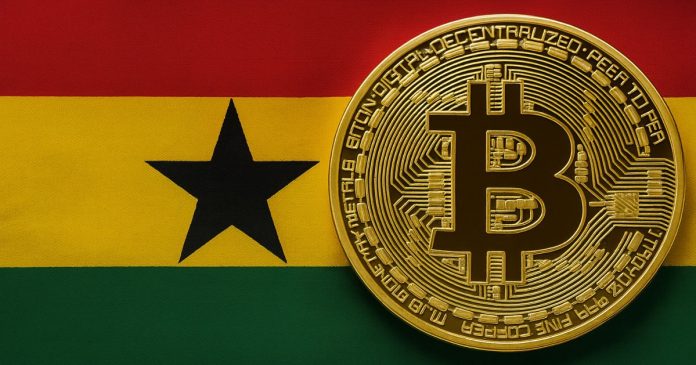
Ghana is moving closer to establishing a regulatory framework for cryptocurrencies, with the Bank of Ghana (BoG) announcing plans to have crypto legislation in place by the end of the year.

This was revealed by the Bank of Ghana governor, Johnson Asiama, while speaking at the International Monetary Fund’s annual meetings in Washington, that the country has made significant progress over the past four months in developing a comprehensive regulatory environment. “That bill is on its way to parliament, and hopefully before the end of December, we should be able to regulate cryptocurrencies in Ghana,” he stated.

Earlier, the central bank had set a September deadline for finalizing the regulations and even released draft guidelines in August 2024 to solicit public feedback. Asiama emphasized, however, that implementing laws is only the beginning. “The ability to monitor crypto flows will be key. We are developing the expertise and manpower to manage this space effectively. It is an important area we can no longer ignore,” he added.

The Bank of Ghana has traditionally maintained a cautious approach to digital assets, warning citizens that cryptocurrencies are not legal tender and advising them to transact only with central bank–backed money. However, growing adoption rates in the country have made regulatory oversight increasingly urgent.

Millions of citizens are reportedly embracing crypto assets for payments, savings, and investment, as data from Demandsage reports that more than 3 million Ghanaians, or approximately 8.9% of the population, currently engage with crypto in some form. Between July 2023 and June 2024, the country recorded roughly $3 billion in crypto transactions, reflecting strong grassroots adoption and growing public confidence.

BoS governor Asiama noted that such widespread usage has made it impossible for policymakers to “leave it unregulated,” stressing the need for oversight to prevent potential abuse and illicit activities. Once the crypto legislation has been enacted,

As part of its broader digital finance strategy, the BoG is also operating a regulatory sandbox, which allows selected companies to test and innovate with cryptocurrency-related products under controlled conditions. Industry experts have lauded the central bank’s call for swift action, after earlier warnings that the country risks falling behind its peers if it fails to act.

“The digital train has left the station. Nigeria, Kenya, South Africa, and Rwanda are already miles ahead in piloting CBDCs, launching regulated crypto exchanges, and issuing digital asset licenses. Inaction is a policy, and currently, our inaction is costing us through loss of tax revenue, exposure to illicit flows, and a stifled youth-led digital economy operating outside”, said Isaac Simpson, senior head of financial advisory and equity capital markets at Stanbic Bank Ghana.

The move by Ghana to have crypto regulations by the end of the year follows closely on the heels of Kenya’s approval of its Virtual Asset Service Providers (VASP). Earlier this month, the East African country introduced a clear licensing framework to regulate virtual asset service providers and address the risks associated with the misuse of virtual asset products and services.

The gradual licensing of crypto across several African nations represents a mature policy evolution from fear and bans to structured adoption. For years, many African governments treated cryptocurrencies with suspicion, warning citizens against their use.

By introducing licensing frameworks and regulatory bills, these nations are acknowledging crypto as a legitimate part of the financial system. This wave of regulation shows an emerging digital policy race. Notably, this could lead to regional harmonization of crypto laws, improving cross-border trade and payments within Africa, especially under the African Continental Free Trade Area (AfCFTA).

Solana Price Prediction: Will SOL Push to $400 as This $0.0075 Crypto Presale Sets to Explode in 2025

0
Blazpay - crypto presale

As the crypto market heats up in late 2025, investors are looking for the best crypto presale opportunities combined with the most promising AI crypto presale projects. Solana, a leading Layer 1 blockchain, is trading near $193 and poised for growth with potential upside to $225-$230 in the coming weeks.

Meanwhile, Blazpay is capturing attention with its Phase 2 presale at $0.0075, offering innovative AI utilities such as Unified Services and Conversational AI. Together, these projects represent a strategic combination of stability, innovation, and high-growth potential for those exploring top AI crypto coins and the next wave of crypto AI investments.

Blazpay Presale: AI-Powered Multichain Innovation

Blazpay (BLAZ) is emerging as one of the most dynamic top AI crypto coins of 2025. Its Phase 1 presale is completed, with over 40 million tokens sold and $250,000+ raised. The Phase 2 price increase to $0.0075 incentivizes early participation.

Beyond price speculation, Blazpay integrates AI-powered Multichain technology, allowing users to interact seamlessly across Ethereum, Solana, Polygon, and BNB Chain. This cross-chain capability simplifies swaps, bridges, and portfolio management, positioning Blazpay as a key player in the evolving AI-driven decentralized finance ecosystem.

Unified Services: Streamlining Crypto Operations

One of Blazpay’s standout features is Unified Services, which consolidates multiple DeFi functions into a single, intuitive interface. Investors can stake, swap, track portfolios, and access NFT marketplaces without navigating separate platforms. This utility enhances usability, reduces friction, and increases adoption, making Blazpay a highly practical choice for both beginners and experienced users seeking efficient exposure to crypto AI projects.

Blazpay - layer 1 crypto presale

Conversational AI: Personalized DeFi Assistance

Blazpay’s Conversational AI utility adds another layer of innovation by acting as an intelligent assistant for crypto management. Users can query market trends, receive portfolio insights, and execute trades via natural language commands. This tool transforms traditional DeFi engagement into a user-friendly experience, attracting retail investors while demonstrating how AI integration is reshaping decentralized finance.

How to Buy Blazpay

Investors can participate in Blazpay’s presale through the official website. Start by connecting a compatible wallet such as MetaMask, Trust Wallet, or Coinbase Wallet. Fund the wallet with USDT, USDC, or ETH, then select the number of BLAZ tokens to purchase at $0.0075. Confirm the transaction, and the tokens will be deposited in your wallet. From there, users can access AI utilities, Unified Services, and Conversational AI features through the Blazpay app, unlocking the full potential of this AI crypto presale.

$2,000 Investment Strategy: Balanced Growth With Blazpay

For investors aiming for high-growth exposure in 2025, allocating the full $2,000 to Blazpay offers a focused strategy to maximize returns from its AI-powered DeFi ecosystem. At the current Phase 2 presale price of $0.0075, this investment secures around 266,666 BLAZ tokens, positioning investors early in one of the most promising AI crypto projects of the year.

As Blazpay’s ecosystem expands through Gamified Rewards, Perpetual Trading, and Multichain utilities, token demand is expected to rise sharply. With projections suggesting a potential price range of $0.25-$0.30 post-adoption, this allocation could grow substantially. Investing solely in Blazpay allows investors to capture the full upside of an AI-driven presale positioned to redefine decentralized finance through innovation, engagement, and utility.

Blazpay - AI crypto presale

Solana Outlook: Layer 1 Strength and Market Performance

Solana continues to impress investors with its high throughput and Proof of History consensus, maintaining a market capitalization of around $90.2 billion and daily volumes near $9.37 billion. Technical indicators show cautious optimism, with SOL trading above $190 but below the 50-day average of $216. Analysts forecast short-term fluctuations between $202 and $209, with potential growth toward $219 by December 2025. Longer-term projections see Solana possibly exceeding $400 as adoption increases, supported by decentralized applications, NFT marketplaces, and social finance platforms built on its network. With a moderate ROI of 2.5-3.7% in the near term, Solana remains a compelling layer 1 crypto presale benchmark.

Solana Use Cases: Scaling Decentralized Applications

Beyond price performance, Solana continues to drive adoption through its high-performance blockchain infrastructure. Developers are leveraging Solana to launch decentralized applications, NFT platforms, and SocialFi projects that benefit from low transaction fees and fast confirmation times. These real-world applications contribute to network activity, liquidity, and long-term investor confidence. As adoption expands, Solana’s ability to support scalable, efficient dApps positions it as a key Layer 1 network, enhancing its status among the best crypto AI coins and increasing its appeal to institutional and retail investors alike.

Conclusion: Stability Meets Innovation

Solana provides the reliability of a high-cap Layer 1 blockchain, while Blazpay introduces cutting-edge AI utilities like Unified Services and Conversational AI, designed to maximize investor engagement and returns. For those exploring the best layer 1 crypto presale and top AI crypto coins, Blazpay offers a unique opportunity to participate in the next generation of decentralized finance.

Take Action Today: Secure your Phase 2 Blazpay tokens at $0.0075 via https://blazpay.com and explore AI-powered utilities that are shaping the future of crypto.

Alt Text – Blazpay – AI crypto presale

Join the Blazpay Community

Website: https://blazpay.com Twitter: https://x.com/blazpaylabs
Telegram: https://t.me/blazpay


FAQs

  1. Why is Blazpay one of the top AI crypto coins?
    Blazpay integrates AI-powered Multichain, Unified Services, and Conversational AI utilities, making it both practical and innovative.
  2. What is the Phase 2 presale price?
    The current Phase 2 price is $0.0075, following 73% completion of Phase 1.
  3. Why invest in Solana alongside Blazpay?
    Solana offers Layer 1 stability, high throughput, and strong adoption, balancing the high-growth potential of AI-powered presales.
  4. How to participate in Blazpay’s presale?
    Connect a compatible wallet, fund it with USDT, USDC, or ETH, and purchase BLAZ tokens at $0.0075 through the official website.
  5. What is the best crypto presale to invest in 2025?
    Blazpay stands out in 2025 for its AI integration, strong seed funding, and structured growth model.

A Foray Into Gold’s Historic Milestone of Surpassing $30 Trillion Market Cap

0

Gold has continued its remarkable rally, achieving a groundbreaking feat by becoming the first asset in history to exceed a $30 trillion market capitalization.

This surge underscores the metal’s enduring appeal as a safe-haven asset amid escalating global uncertainties, including geopolitical tensions, persistent inflation, and anticipated U.S. Federal Reserve rate cuts.

As of October 17, 2025, spot gold prices have pulled back slightly to around $4,310 per ounce after touching record highs above $4,350 earlier in the week, but the overall upward trajectory remains intact.

Gold’s performance in 2025 has been nothing short of explosive, with year-to-date gains exceeding 58%—far outpacing major asset classes like equities and cryptocurrencies.

Heightened U.S.-China trade frictions, political instability, and credit concerns in banking sectors have driven investors toward “durable value” assets like gold.

Institutions such as the People’s Bank of China, Reserve Bank of India, and Central Bank of Turkey added over 500 tonnes in the first half of 2025 alone, marking one of the strongest years for official-sector demand.

With inflation lingering and dollar debasement fears rising, physical bullion and exchange-traded funds saw record inflows, boosting prices from around $2,600 at the start of the year.

Total above-ground gold stocks are estimated at approximately 218,000 metric tonnes as of mid-2025, with mine production hitting records but struggling to keep pace with demand.

The $30 trillion threshold was crossed as prices peaked at $4,357 per ounce, valuing the entire investable gold supply at roughly $30.42 trillion based on World Gold Council data.

Gold’s dominance is even more striking when benchmarked against modern financial powerhouses. At $30 trillion, it eclipses the combined market value of the “Magnificent Seven” tech giants NVIDIA, Microsoft, Apple, Alphabet, Amazon, Meta, and Tesla, which totals about $20 trillion.

Bitcoin, often dubbed “digital gold,” lags far behind at $2.1 trillion—making gold roughly 14.5 times larger by market cap. This milestone isn’t just symbolic—it’s a signal of shifting capital flows.

Analysts at JPMorgan note that gold is evolving into a “parallel global reserve,” potentially pressuring yields on bonds and equities as investors reallocate.

For cryptocurrencies, the news has sparked speculation: If Bitcoin captures just 20% of gold’s market share a $6 trillion valuation, its price could soar to $300,000 per coin, based on its ~19.7 million circulating supply.

However, Bitcoin’s 16% YTD gain pales against gold’s run, and prediction markets like Kalshi favor gold outperforming BTC through year-end. Looking ahead, forecasts suggest gold could average $3,675 per ounce by Q4 2025, with upside to $4,000 by mid-2026 if supply tightens further.

While a near-term pullback is possible support at $4,200, the structural bull case remains strong. For portfolio diversification, experts recommend 5-10% allocation to gold, especially in uncertain times.

Gold’s $30T market cap milestone signals a shift toward safe-haven assets amid geopolitical and economic uncertainty. It outpaces tech stocks and crypto, reinforcing its role as a “parallel reserve.”

Investors may face pressure on bond and equity yields, while Bitcoin could see upside if it captures even a fraction of gold’s market share. Portfolio allocations of 5-10% to gold are advised for diversification. Prices may test $4,000 by mid-2026, with near-term support at $4,200.

If you’re considering exposure—via physical bars, ETFs like GLD, or mining stocks—now’s a pivotal moment to assess your strategy.

OpenSea’s Treasure Chests Unlocks Rewards Ahead of $SEA Token Launch, as Uniswap Integrates Solana

0

OpenSea, the leading NFT marketplace, has rolled out a gamified rewards program called Treasure Chests as part of its final pre-Token Generation Event (TGE) push for the $SEA token.

Launched in mid-September 2025, this initiative allows users to earn and level up virtual “chests” through on-chain activity, with unlocks revealing a mix of tokens like OP and ARB and high-value NFTs.

As of October 17, 2025—just two days after the program’s October 15 deadline—the chests have begun unlocking, distributing shares from a prize pool that grew to over $3.8 million by early October.

How Treasure Chests Work

Users log in to OpenSea’s Rewards Portal, connect/link an EVM-compatible wallet like MetaMask, and claim a Starter Treasure Chest. Linking multiple wallets aggregates activity for better rewards.

Leveling Up: Chests range from Level 1 to 12, with higher levels unlocking bigger shares. Earn XP via:Buying NFTs (e.g., $5+ on any chain = +50 XP; $10+ on Ethereum = +100 XP).

Trading volume ($1 traded = +1 XP). Completing daily “Voyages” missions like social shares or on-chain interactions. Collecting surprise “Shipments” airdrop-style bonuses.

Funding the Pool: 50% of OpenSea’s platform fees 0.8% for NFTs, 0.85% for tokens flow into the Rewards Pool, seeded with $1 million in OP and ARB tokens. Activity across 22 chains counts toward your chest.

Chests “unlock” at wave ends (e.g., after 30-day cycles). Your final level determines your allocation—higher levels get proportionally more from the pool. Post-October 15, unlocks are live, with treasures distributed directly to linked wallets.

Tokens and NFTsUnlocked chests contain tokens and shares of the pool, including $SEA allocations from the OpenSea Foundation based on historical activity and bridged assets like OP/ARB.

NFTs: Drops from blue-chip collections, such as: Bored Ape Yacht Club (BAYC). Pudgy Penguins. CryptoPunks via OpenSea’s $1M Flagship NFT Reserve, starting with Punk #5273.

Total Pool Value: Started at $1M; reached $3.8M+ by October 5, with ongoing growth from fees. Allocations are pro-rata based on chest level and total participants.

$SEA Token and OpenSea Evolution

This program ties into OpenSea’s shift toward a full on-chain trading hub, with $SEA enabling governance, fee discounts, and staking rewards. Full tokenomics were detailed in early October total supply ~1B tokens, with community allocations emphasizing active traders.

OpenSea also launched a mobile app with AI tools for market analysis, syncing seamlessly with the web platform. Recent X buzz highlights excitement around the unlocks, with users sharing hauls like “leveled to 9—scored a Pudgy!” and pool growth updates.

Unlike many launches, $SEA skips private sales, focusing on airdrops to historical and active users including U.S. residents. Allocations prioritize community 50-60% total, with heavy emphasis on historical OpenSea users pre-2025 activity and recent OS2 participants.

No private/VC sales; instead, bootstrapped via platform fees 50% of 1% NFT/0.85% token fees fund rewards. Projections draw from Foundation hints and analyst models (e.g., 20% community airdrop at TGE equating to $100-1,000M value at varying FDVs).

Community gets the lion’s share to drive adoption, with ~20% unlocked at TGE for immediate liquidity. Vesting cliffs prevent dumps, mirroring successful models like Uniswap ($UNI). Treasure Chests ended Oct 15 contribute ~4% via pro-rata shares from a $3.8M+ pool, blending tokens OP/ARB/$SEA and NFTs.

If you missed the October 15 wallet-linking deadline, you may forfeit EVM-based prizes most rewards are on Ethereum-compatible chains. However, historical OpenSea activity could still qualify you for separate $SEA Foundation allocations.

Uniswap Integration of Solana Is A Major Leap for Cross-Chain DeFi

Solana support is now officially live on the Uniswap web app. This marks Uniswap’s first integration with a non-EVM blockchain, allowing users to connect Solana wallets and swap Solana-based tokens directly within the familiar Uniswap interface—without needing bridges, separate apps, or chain-switching.

It’s powered by Jupiter’s Ultra API, which aggregates liquidity from Solana’s DEX ecosystem for optimal routes and access to over 1 million Solana tokens.

Users can connect wallets like Phantom or Solflare to the Uniswap app and trade SOL or other Solana assets alongside Ethereum, Base, Unichain, and 13+ other networks. Swaps are executed on Solana for now no liquidity pools yet, with Uniswap handling the UI and Jupiter routing the trades under the hood.

Solana’s DeFi ecosystem boasts $11.4B+ in TVL and $140B in monthly DEX volume, but users previously had to leave Uniswap to access it. This reduces fragmentation, simplifies UX, and positions Uniswap as a “universal liquidity layer” for multi-chain trading.

It’s phase one—future updates include cross-chain swaps, bridging tools, and full Uniswap Wallet support for Solana.

The announcement has sparked excitement across X, with users calling it a “bridge between worlds” and a game-changer for Solana’s high-speed, low-cost trading.

Uniswap’s official post racked up over 2.4K likes and 1M views in hours. Solana’s team chimed in with a playful “Solana is for everyone—even unicorns,” nodding to Uniswap’s mascot.

Despite the hype, SOL’s price dipped ~8% to around $181 in the 24 hours post-launch, amid broader market volatility BTC down 5%, ETH down 6.5%. Analysts see this as a short-term pullback, with potential for SOL to test $240 if DeFi inflows accelerate.

The integration of Solana into Uniswap’s web app, powered by Jupiter’s Ultra API, is largely a net positive for Jupiter—the leading DEX aggregator on Solana.

Rather than cannibalizing Jupiter’s volume, it acts as a powerful distribution channel, funneling Uniswap’s massive user base into Jupiter’s routing engine for Solana swaps. This embeds Jupiter deeper into the multi-chain DeFi fabric, potentially amplifying its liquidity aggregation, revenue, and ecosystem dominance.

All Solana trades on Uniswap are routed through Jupiter’s Ultra API, which aggregates liquidity from 20+ Solana DEXs like Orca, Raydium for optimal pricing and minimal slippage.

This gives Uniswap users access to 1M+ SPL tokens without Uniswap building its own Solana infrastructure—essentially making Jupiter the “black box” engine for Solana execution.

Traders stay in Uniswap’s familiar UI, connect a Solana wallet like Phantom, and execute swaps natively. No bridges or chain-switching needed yet, but Jupiter handles the heavy lifting on the backend, ensuring low fees and high speed.

Jupiter co-founder SIONG called Uniswap the “first major partner” for Ultra API, highlighting its role in cross-chain efficiency. This isn’t competition—it’s symbiosis, positioning Jupiter as the go-to aggregator for non-EVM chains.

Solana’s DEX ecosystem already dwarfs many rivals, with $140B in monthly volume and Jupiter capturing ~80% market share excluding bots. Pre-integration benchmarks show Jupiter’s strength, and the tie-up could accelerate this.Metric

Echoing 1inch co-founder Sergej Kunz’s prediction, CEXs/DEXs will evolve into front-ends for aggregators like Jupiter—Uniswap’s move reinforces this. Concerns are minimal—some worry about “UI fragmentation” if Uniswap dominates discovery, but Jupiter’s API-first design insulates it.

Long-term, phase two cross-chain swaps, Uniswap Wallet on Solana could route even more volume through Jupiter. This cements Jupiter’s edge over rivals like 1inch EVM-focused, potentially flipping Uniswap in cross-chain volume long-term.

For Solana, it’s a retention win: EVM users get a low-friction entry, reducing “chain tourism.” Bullish for $SOL holding despite -8% dip if inflows hit $500M+ in Q4. Overall, Jupiter emerges stronger—think of it as Uniswap outsourcing its Solana homework to the class valedictorian.