DD
MM
YYYY

PAGES

DD
MM
YYYY

spot_img

PAGES

Home Blog Page 324

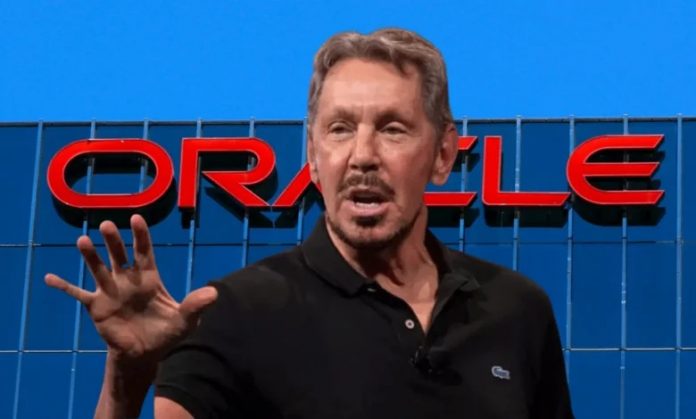
Oracle Shares Slide 7% After AI-Fueled Rally as Analysts Question Lofty Growth Targets

0

Oracle’s remarkable two-year rally, powered by its growing role in the artificial intelligence revolution, hit a snag on Friday as the company’s stock fell 7%, marking its sharpest single-day drop since January.

The decline came just a day after the enterprise software giant unveiled a bold long-term financial outlook during its AI World conference in Las Vegas, projecting exponential growth in its cloud and AI businesses through 2030.

On Thursday, Oracle executives told analysts that they expect cloud infrastructure revenue to soar from $18 billion in fiscal 2026 to $166 billion in fiscal 2030 — an eightfold increase — as demand for AI computing continues to surge worldwide. The company also forecast total revenue of $225 billion and adjusted earnings of $21 per share in fiscal 2030, representing a compound annual growth rate of more than 31%.

Initially, investors cheered the ambitious vision. Oracle shares rose more than 3% on Thursday, extending a rally that has lifted its market capitalization by over 160% in the past two years. However, sentiment quickly shifted on Friday, as analysts began to question whether the company could realistically sustain such a pace of expansion in a market that has become increasingly crowded and capital-intensive.

“It feels like the stock may take a bit of a breather here as investors digest those numbers and try to get comfort around the achievability of long-term numbers,” said Rishi Jaluria, senior analyst at RBC Capital Markets, in an email to CNBC’s Seema Mody.

Jaluria maintained a “hold” rating on the stock, signaling confidence in Oracle’s fundamentals but caution over its aggressive targets.

The company’s bullish projections come amid a broader AI infrastructure boom that has transformed Oracle into a key player alongside industry titans such as Amazon Web Services, Google Cloud, and Microsoft Azure. In recent quarters, Oracle has rapidly expanded its cloud division, striking major deals with both corporate and government clients seeking to deploy AI workloads.

In July, Oracle secured a five-year deal with OpenAI — valued at more than $300 billion — to supply high-performance computing resources and access to specialized AI chips. The agreement positioned Oracle as a vital back-end provider to one of the most influential players in the AI space. Following its strong earnings report in September, Oracle’s shares recorded their best single-day gain since 1992, after revealing $455 billion in remaining performance obligations — a staggering 359% increase from a year earlier.

At Thursday’s conference, Oracle executives announced a new partnership with Meta Platforms, the parent company of Facebook and Instagram, to provide cloud infrastructure support for AI development. Clay Magouyrk, who was recently appointed one of Oracle’s two CEOs, told analysts that the company secured $65 billion in new cloud infrastructure commitments this quarter alone.

“It was across seven different contracts from four different customers,” he said, emphasizing that none of those contracts involved OpenAI. “I know some people are questioning sometimes, ‘Hey, is it just OpenAI?’ The reality is, we think OpenAI is a great customer, but we have many customers.”

Oracle also said its adjusted gross margins for AI infrastructure were between 30% and 40%, higher than analysts’ earlier expectations. Those margins, the company noted, reflect the profitability potential of AI workloads even after accounting for steep capital expenditures on land, power, and computing equipment.

Yet some analysts remain unconvinced that Oracle can maintain that momentum indefinitely. Karl Keirstead, an analyst at UBS, raised his price target on Oracle to $380 from $360, arguing that the market has not fully priced in the long-term upside from AI. But he also warned that the company’s rapid buildout carries risks.

More cautious voices will look at the concentration of business with OpenAI and various unforeseen go-live bottlenecks that could come with such an aggressive buildout, Keirstead wrote in a note to clients.

Despite the pullback, Oracle remains one of the largest and fastest-growing enterprise software firms in the world. Its shift from traditional database systems to AI-optimized cloud infrastructure has helped it capture a wave of corporate spending on artificial intelligence applications. The company’s AI infrastructure has become increasingly attractive to clients seeking alternatives to Amazon and Microsoft — both of which have faced capacity bottlenecks amid skyrocketing AI demand.

The broader context of Friday’s sell-off suggests that investors are grappling with a delicate balance between enthusiasm and realism. Oracle’s ambitious revenue targets would require consistent double-digit growth over the next five years and significant global expansion of its data center footprint. Analysts say that even if Oracle delivers half of its forecasted gains, it would still represent one of the most successful corporate transformations in modern tech history.

For now, the market remains divided between believers in Oracle’s AI-driven future and those urging caution after the recent rally. The stock closed Friday at $291.31, down sharply from Thursday’s close, but still more than double its price two years ago.

Whether Oracle can sustain its extraordinary growth momentum will depend on how effectively it scales its infrastructure, diversifies its client base beyond marquee partners like OpenAI, and competes in an industry where hyperscale efficiency and innovation are the ultimate differentiators.


Trump Admits 100% China Tariffs ‘Not Sustainable’ as Trade War Threatens Global Markets

0

U.S. President Donald Trump on Friday acknowledged that his administration’s newly imposed 100% tariff on Chinese goods would not be sustainable in the long term but said Beijing’s latest trade restrictions forced his hand.

In an interview with Fox Business Network, Trump defended the move as a necessary response to China’s decision to expand export controls on rare earth elements — materials critical to the global technology and defense industries.

“It’s not sustainable, but that’s what the number is,” Trump said. “They forced me to do that.”

The announcement, which came a week after Trump reimposed sweeping tariffs on U.S.-bound Chinese exports, represents the sharpest escalation yet in a renewed trade standoff between Washington and Beijing. The tariffs, combined with new export controls on “any and all critical software,” are scheduled to take effect by November 1 — just days before existing tariff relief was due to expire.

Trump’s aggressive move follows Beijing’s tightening of controls on rare earth exports — a strategic resource where China commands over 80% of global supply. These elements are indispensable in manufacturing semiconductors, electric vehicles, and military hardware, and any disruption threatens to send shockwaves through the global technology supply chain.

Despite his tough rhetoric, Trump sought to ease fears of a prolonged confrontation, revealing that he will meet Chinese President Xi Jinping in two weeks in South Korea — a summit he had earlier suggested might not happen.

“I think we’re going to be fine with China,” he said. “But we have to have a fair deal. It’s got to be fair.”

Trump’s remarks, coupled with his confirmation of the upcoming meeting, appeared to calm Wall Street after a volatile week. U.S. stock indexes, which had been rattled by the tariff announcement and renewed concerns about regional bank stability, began to recover in afternoon trading.

As Trump prepared for a separate lunch meeting with Ukrainian President Volodymyr Zelenskiy at the White House — focused on Ukraine’s war with Russia — he signaled a willingness to continue dialogue with Beijing.

“China wants to talk, and we like talking to China,” he said.

U.S. Treasury Secretary Scott Bessent, speaking at the same event, echoed the president’s optimism, revealing that he planned to hold talks with Chinese Vice Premier He Lifeng later on Friday to keep negotiations on track.

“I think that things have de-escalated,” Bessent said. “We hope that China will show the respect that we have shown them, and I am confident that President Trump, because of his relationship with President Xi, will be able to get things back on a good course.”

Global Concern and WTO Warning

The renewed tensions between the world’s two largest economies have triggered concern among global financial institutions. The head of the World Trade Organization (WTO), Ngozi Okonjo-Iweala, told Reuters she’s concerned about the latest escalation of the tension and has urged both sides to ease trade hostilities.

The WTO’s appeal underscores growing anxiety within the international community as fears mount over supply chain disruptions, inflationary pressures, and declining investor confidence. The 100% tariffs, while aimed at pressuring Beijing, also risk raising costs for U.S. manufacturers and consumers already grappling with high borrowing rates and slow global growth.

Despite signals of renewed dialogue, the rift between Washington and Beijing appears to be widening. In a statement to the International Monetary Fund’s steering committee on Friday, Treasury Secretary Bessent accused China of using “state-driven economic practices” that distort global trade. He urged international financial institutions such as the IMF and World Bank to adopt a tougher stance toward Beijing’s industrial and trade policies, which he said have led to “excess manufacturing capacity flooding the world with cheap goods.”

Beijing pushed back strongly. China’s Commerce Ministry accused the United States of undermining the rules-based multilateral trading system since Trump’s return to office in 2025, vowing to intensify its use of WTO dispute settlement mechanisms to challenge U.S. measures it considers discriminatory.

The exchange highlights the growing tension between Trump’s nationalist trade agenda — which aims to bolster domestic manufacturing and reduce reliance on Chinese imports — and Beijing’s insistence on defending its export-driven economic model.

Rare Earths and Economic Stakes

At the heart of the dispute lies China’s dominance of rare earth elements, a sector that has become increasingly weaponized amid geopolitical rivalry. China’s decision to tighten exports of these materials has raised fears among Western manufacturers of potential shortages, particularly in industries such as defense, renewable energy, and electric mobility.

Analysts have warned that if the restrictions persist, they could destabilize key segments of the global economy, as the United States and its allies scramble to diversify supply chains and ramp up domestic production. However, experts also caution that Trump’s 100% tariffs could boomerang by inflating input costs for U.S. firms and slowing industrial investment.

However, Trump’s acknowledgment that the tariff is “not sustainable” reflects the precarious balance between political posturing and economic reality. The president has repeatedly portrayed himself as a dealmaker capable of extracting concessions from Beijing, but his latest move risks entrenching the standoff rather than resolving it.

For now, markets appear cautiously optimistic. The rebound in U.S. equities on Friday indicated that investors are betting on an eventual compromise. Yet the underlying uncertainty remains high, as the world watches to see whether Trump and Xi’s meeting will produce a meaningful breakthrough or merely a temporary pause in an escalating economic rivalry that continues to define global trade.

Top 5 Crypto Coins to Buy in 2025 – Blazpay’s Crypto Presale Momentum Builds as Ethereum and Bitcoin Lead Recovery

0
Blazpay- best crypto presale 2025

The crypto market is showing renewed momentum in late 2025, as investors shift focus toward the best crypto presales 2025 — early-stage projects offering both innovation and substantial upside. With increased market stability and ongoing advancements in decentralized technologies, presales have become a key strategy for those looking to secure tokens before public exchange listings.

Among the wave of new crypto coins drawing attention, Blazpay ($BLAZ) stands out for its AI-powered DeFi ecosystem and growing presale success. Alongside established networks like Sui, Polkadot, Cardano, and Avalanche, Blazpay’s blend of automation and accessibility positions it as one of the best crypto coins to buy this quarter for investors seeking early entry into the next major phase of blockchain growth.

Blazpay ($BLAZ)

Blazpay continues to gain recognition among the best crypto presales 2025, currently in its Phase 2 stage at a price of $0.0075 per token, up from its launch price of $0.006. The presale has already sold a major portion of its allocation, showing strong early interest from both retail and institutional investors.

Built on the Binance Smart Chain, Blazpay is not a typical presale token—it’s an AI-integrated DeFi platform designed to simplify decentralized finance through automation and usability. The ecosystem is powered by two standout utilities: Conversational AI, which enables users to execute DeFi tasks through natural commands, and Unified Services, which connects trading, NFTs, payments, and portfolio management in one seamless hub.

Blazpay- best crypto presale

For investors, the ROI potential is striking. A $2,000 investment at the current Phase 2 price secures roughly 266,666 BLAZ tokens. If Blazpay reaches its projected listing range of $0.40–$0.50, this could translate into an estimated return of 6,000–8,000%. With the next phase approaching and token allocations selling rapidly, many consider Blazpay the best crypto coin to buy before its next price adjustment.

Sui (SUI)

Launched at $0.10, Sui has emerged as one of the most efficient and developer-friendly new crypto coins in the Layer-1 space. Its current trading price near $2.14 highlights over twentyfold growth since its debut. Throughout 2025, Sui has expanded its developer base and ecosystem, attracting projects focused on gaming, decentralized apps, and smart contracts with low transaction costs and high throughput.

Sui’s recent advancements in scalability and interoperability continue to boost confidence in its long-term potential. Although it has already achieved substantial growth, investors looking for more aggressive upside often shift part of their focus toward crypto presales like Blazpay that still offer early-entry multipliers.

Blazpay- best crypto presale

Polkadot (DOT)

Polkadot entered the market at around $2.90 and currently trades near $8.47, showing consistent but steady growth. Known for its multi-chain structure and parachain ecosystem, Polkadot remains a core part of the Web3 interoperability vision. The 2025 developments in parachain slot auctions and network governance updates have kept Polkadot relevant among developers building scalable, cross-chain decentralized apps.

However, its growth has plateaued compared to the newer crypto coins entering the market. While Polkadot’s fundamentals remain strong, it lacks the early-stage ROI opportunity found in crypto presale projects like Blazpay, which combine technological innovation with early investor access.

Cardano (ADA)

Cardano’s journey from its $0.02 launch price to a $0.60 current value underscores years of steady growth and research-driven progress. 2025 has been a significant year for Cardano, marked by the rollout of the Hydra scaling solution and Mithril upgrades, improving both network performance and decentralization.

Cardano continues to serve as a reliable foundation for long-term investors due to its methodical development approach. Still, with its maturity, the project offers less exponential potential than younger entrants. Traders seeking stronger short-term upside increasingly view presales such as Blazpay as a complement to their ADA holdings for diversified exposure.

Avalanche (AVAX)

Avalanche began trading near $0.50 and has climbed to about $35.40 in 2025. The platform’s focus on institutional DeFi, tokenization, and customizable subnet architecture has positioned it as one of the fastest ecosystems for real-world asset integration. Its partnerships with major enterprises have solidified Avalanche’s place among top-performing blockchain networks.

While AVAX continues to appeal to institutional investors and developers, retail traders searching for higher growth potential are turning to the best crypto presales 2025, where the upside remains more dramatic. Blazpay, with its AI-driven DeFi approach, offers that kind of asymmetric opportunity early investors look for before mainstream adoption begins.

Final Verdict: Why Blazpay Tops the Best Crypto Presales 2025 List

Blazpay’s presale surge reflects a perfect mix of early entry opportunity, AI-powered innovation, and strong utility value. Its Phase 2 progress and planned price increase make it a time-sensitive entry point for investors seeking high potential ROI before the token’s next stage.

With its Conversational AI simplifying DeFi for mainstream users and Unified Services bridging blockchain tools under one roof, Blazpay ($BLAZ) isn’t just a new crypto coin; it’s a full-fledged AI DeFi ecosystem redefining user experience. In short: If you’re scanning for the best crypto coin to buy this quarter, Blazpay’s presale offers one of the most asymmetric reward profiles in 2025.

Join the Blazpay Presale Today:

Buy Now: https://blazpay.com

Community: t.me/blazp

Follow Updates: x.com/blazpaylabs

Mixed Reactions as Niger Governor Claims to Pay Farm Workers N500,000 Monthly

0

A statement by Niger State Governor Umar Bago claiming that he pays graduate assistants N500,000 on his farms and has built farm communities has stirred a wave of mixed reactions across social media, with Nigerians questioning the truth of his claim and the state’s economic priorities.

The governor said: “On my farms, I pay graduate assistant ?500,000, build farm communities in farm estates.” The comment, meant to highlight his investment in agriculture, quickly became a talking point among citizens who debated its authenticity, implications, and relevance to the current realities in Niger State and Nigeria at large.

For many users, the governor’s statement sounded unbelievable in a country where a large number of university graduates struggle to earn even half that amount in government or private jobs. Several commenters challenged him to back up his claim with evidence. “Let him show the payslips of those workers. Haba!” one user demanded. Another added, “Where is the produce of the farm from Niger State in the Nigerian market?” Their comments reflected deep public skepticism toward political figures and their pronouncements.

Others used the opportunity to question the government’s broader handling of labour and education. “How much do you pay primary school teachers in your state, sir?” a commenter asked, suggesting that if such high wages were possible on his farms, the same attention should be given to public workers. Another user drew attention to the security challenges facing farmers: “People are ready to go to farm without anyone employing them, but the issue is insecurity. People are scared of being killed by bandits or terrorists. Solve this insecurity first.”

Several reactions were laced with sarcasm and disbelief. One commenter dismissed the governor’s words as “Talk talk with a pinch of fact,” while another wrote simply, “These people lie with ease… Baby tyrant.” Some went further, linking the statement to a wider problem of political dishonesty. “Nigerian politicians will never make heaven,” one wrote bluntly.

Yet amid the chorus of doubt, a smaller but notable group of users expressed support for the idea of fair pay in agriculture. One commenter said, “I have always advocated for this! Hourly wages are the way to go, especially for the size of Nigeria’s population.” Another user praised the governor’s statement as forward-thinking, saying, “If what the Governor said is true, he needs to be applauded.” A few others interpreted his post as a call for wage reform, with one adding, “This is what I have been clamouring for. Salaries should be weekly or hourly like in developed countries.”

Some reactions also carried humour. A user from Minna joked, “Abeg make una help me find job for this farm, I dey Minna currently,” earning several laughing emojis from others who joined the thread. The playful tone reflected the frustration and resignation many Nigerians feel when hearing lofty political claims that seem detached from their daily struggles.

The online discussion revealed three broad patterns: widespread doubt about the governor’s claim, criticism linking the issue to larger governance problems such as low wages and insecurity, and a small cluster of supportive voices who saw value in higher pay for farm labour. The division illustrates the complex relationship between political communication and public trust in Nigeria, where citizens increasingly demand proof before accepting official statements.

Although the governor’s post aimed to promote his agricultural ventures as a model for rural development, it instead became a test of credibility. For many Nigerians, the issue was less about how much he pays farm workers and more about whether such claims reflect the actual situation in the state. The call for evidence shows a public eager to hold leaders accountable in a climate of economic hardship and rising unemployment.

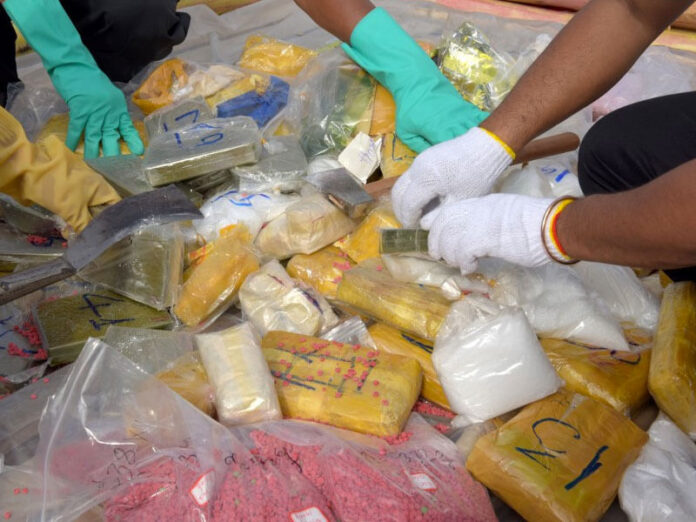
TikTok Content Creators Glamorise Cocaine Trade, Study Finds

0

A new academic study has raised alarm over the role of TikTok in reshaping public perception of the illicit cocaine trade. The research, conducted by Hafsah Hussain of the University of Huddersfield, reveals that content creators on the popular video-sharing platform are glamorising cocaine use and humanising drug traffickers, potentially influencing young audiences and undermining global anti-drug efforts.

Published in Fields: Journal of Huddersfield Student Research, the study analysed 90 TikTok posts and found that many creators use upbeat music, party-themed visuals, and personal storytelling to portray cocaine consumption as fashionable and socially acceptable. In contrast to traditional media’s criminalised portrayal of drug trafficking, TikTok videos often depict pride and enjoyment in participating in the trade.

“Distributors and producers are shown celebrating their roles in the cocaine supply chain,” Hussain writes. “This shifts the narrative from fear and condemnation to admiration and relatability.”

The findings come amid a surge in global cocaine trafficking. According to the United Nations Office on Drugs and Crime, coca cultivation rose by 35% between 2020 and 2021, with Colombia remaining the world’s top producer. The study suggests that social media is now playing a role in sustaining this trade by normalising its presence and obscuring its dangers.

TikTok, which boasts over 1.6 billion users globally, has become a powerful tool for narrative construction. Hussain’s analysis is framed by two sociological theories—social constructivism and moral panic. Social constructivism explains how users form shared realities through digital interaction, while moral panic theory explores how media exaggerates threats to social norms.

“TikTok allows users to construct new realities around cocaine,” Hussain notes. “These realities challenge dominant narratives and can normalise illegal behaviour.”

The study’s qualitative approach allowed for a deeper analysis of the language, visuals and social context of the posts. Hussain found that many videos depicted pride in working within the cocaine trade, with creators celebrating their roles in production and distribution. This contrasts sharply with the criminalised portrayals typically seen in mainstream media.

“Viewers are not responding with panic or fear,” Hussain observes. “Instead, they’re engaging with content that presents the drug trade as ordinary, even admirable.” The research suggests that this shift in tone could have serious implications for public policy and law enforcement, particularly as platforms struggle to enforce guidelines around illegal content.

TikTok’s community standards prohibit drug-related content, but the study found that creators often exploit loopholes and grey areas to share videos that glamorise cocaine. Hussain calls for stricter regulation and more effective monitoring to prevent the spread of such content.

Beyond the cocaine issue, the research touches on broader concerns about social media’s impact on self-image, behaviour, and public discourse. Referencing the Hypodermic Needle theory, Hussain argues that repeated exposure to glamorised drug content can shape attitudes and beliefs, especially among impressionable users.

“Social media algorithms reinforce existing beliefs,” she warns. “If users are constantly exposed to content that normalises drug use, their perception of the cocaine trade may shift dramatically.”

While TikTok is the focus of this study, Hussain recommends further research across other platforms such as Instagram and X (formerly Twitter) to understand the full scope of social media’s influence on drug-related narratives.

The study also highlights the potential for social media to be used positively. Hussain references the role platforms played in raising awareness during the George Floyd protests in 2020, showing that digital media can be a force for social change. However, she cautions that misinformation and sensationalism remain serious risks.

As Nigeria and other nations grapple with the consequences of drug abuse and trafficking, the study’s findings offer a timely reminder of the evolving digital landscape. Hussain urges policymakers, educators, and law enforcement agencies to pay closer attention to the narratives being constructed online.

“The cocaine trade is no longer just a criminal issue,” she concludes. “It’s a cultural phenomenon shaped by likes, shares, and algorithms.”