DD
MM
YYYY

PAGES

DD
MM
YYYY

spot_img

PAGES

Home Blog Page 328

DOGE Rallies, Stellar Eyes Breakout, But BlockDAG’s $0.0015 Offer and Global Reach Make It the Top Crypto to Buy Now!

0

The crypto market is stirring as Dogecoin (DOGE) price rises and Stellar (XLM) price breakout captures traders’ attention. DOGE has rebounded from $0.16 to $0.212, showing that dip-buying and bullish derivatives positioning are driving momentum. Stellar (XLM) is climbing above its 200-day moving average, with $0.35 as a critical hurdle before targets at $0.415, $0.470, and $0.515 come into play.

Yet, amid these established names, BlockDAG (BDAG) is rapidly emerging as the most compelling option. Priced at just $0.0015 in Batch 31, the project has gained global attention through its Formula 1® partnership and upcoming U.S. market expansion.

With over $425 million raised, 3.5 million X1 users, 312K+ holders, and 4,500+ developers active on the Awakening Testnet, BDAG combines adoption, visibility, and technological depth in a way DOGE and XLM have yet to match. For investors seeking top crypto coins to invest in, BDAG stands out as a frontrunner.

DOGE Builds Bullish Momentum Toward $0.26

Dogecoin (DOGE) price rise has caught traders’ attention after bouncing from $0.16 support to reach $0.212. The rebound comes amid improving market sentiment, though the token is still in a recovery phase rather than a confirmed uptrend.

Futures data shows optimism, with open interest climbing 16% to $2.13 billion and trading volume up 71% to $17 billion. Aggressive dip-buying helped DOGE recover above the 20-EMA at $0.210, but resistance around $0.225–$0.235 remains a key hurdle. A sustained move above $0.235 could open the path toward $0.26, while a fall below $0.20 may bring renewed weakness.

Investors may consider Dogecoin’s (DOGE) price rise as a potential buying opportunity, especially as momentum builds and derivatives data show strong bullish positioning. On-chain outflows suggest selling pressure is easing, which could support steadier gains in the near term.

Stellar (XLM) Price Breakout Signals Jump to $0.515

Stellar (XLM) price breakout is gaining attention as the coin holds above key support near $0.31 and has climbed back above its 200-day moving average at $0.3287. A clean daily close above $0.35 could confirm bullish control and open the way to targets at $0.415, $0.470, and $0.515.

Technically, XLM is bouncing inside a descending channel and reclaiming the 200-day moving average, which often triggers buying from algorithmic traders. Market rotation from Bitcoin to mid-cap altcoins, combined with Stellar’s real-world use in cross-border payments, adds fundamental support.

Stellar (XLM) price breakout presents a potential opportunity to enter before higher levels are tested. While risks remain if support breaks, the current setup shows momentum building and bulls regaining control, making it a key moment for those considering a strategic position in XLM.

BlockDAG $0.0015 Offer & F1® Debut Fuel Global Interest!

BlockDAG (BDAG) is quickly emerging as one of the most talked-about blockchain projects of the year, and the momentum is only accelerating. With its recent Formula 1® debut in Singapore and a U.S. market push on the horizon, BDAG is capturing attention on a global scale.

This isn’t just flashy marketing; each high-profile event reflects strategic institutional alignment and growing confidence from key investors, signaling that BDAG is positioning itself for long-term relevance in the crypto space.

Currently, the presale is in Batch 31, with a special price of just $0.0015 per BDAG. With over $425 million raised, nearly 27 billion coins sold, 20K+ miners activated, and 312K+ BDAG holders already on board, the ecosystem is thriving. The X1 app has crossed 3 million users, further demonstrating the adoption and community growth driving BDAG’s visibility.

The Awakening Testnet is live, attracting more than 4,500 developers, while grants and developer programs are fueling innovation within the ecosystem. Every milestone, from high-profile partnerships to developer adoption, adds legitimacy to the project and creates massive FOMO among early investors.

With Genesis Day approaching, this is a defining moment to secure your position. The current batch price of $0.0015 offers early buyers unmatched launch priority, and every passing day brings the market closer to a potential revaluation. Investors looking to capitalize on global traction and early adoption should act fast. BlockDAG is turning heads worldwide, and hesitation could mean missing out.
The Bottom Line

As the Dogecoin (DOGE) price rises and the Stellar (XLM) price breaks out, showing potential short-term upside, the broader crypto landscape points to BlockDAG as the true market mover.

While DOGE gains from speculative momentum and XLM benefits from cross-border use cases, BDAG’s combination of global partnerships, live Awakening Testnet, active developer engagement, and presale adoption at $0.0015 creates a unique opportunity. The project has already sold nearly 27 billion coins, activated 20K+ miners, and onboarded 3.5 million+ X1 users, signaling an ecosystem set for explosive growth.

For investors looking for top crypto coins to invest in, BDAG offers unmatched launch priority and early exposure before GENESIS Day. Unlike DOGE or XLM, BDAG merges real-world visibility, institutional interest, and a developer-led ecosystem, positioning it as the top choice for those aiming to capitalize on the next wave of crypto adoption.

Presale: https://purchase.blockdag.network

Website: https://blockdag.network

Telegram: https://t.me/blockDAGnetworkOfficial

Discord: https://discord.gg/Q7BxghMVyu

Over 200 Nigerians Killed in Artisanal Mining Disasters in 10 Years

0

Over 200 Nigerians have died in artisanal and small-scale mining accidents across the country in the last decade, according to an analysis of newspaper and agency reports from 2015 to 2025. The fatalities, recorded in more than ten states, expose a decade-long pattern of unsafe mining practices, poor regulation, and worsening insecurity in mineral-rich communities.

Yearly Death Toll Rises as Pit Collapses Dominate

Data compiled from Premium Times, Daily Trust, Vanguard, Reuters, and The Punch by our analyst show that pit collapses account for more than 80 percent of the fatalities, while explosions and violent attacks make up the rest.

The earliest recorded incident in the dataset occurred in 2018, when six people died during a clash over gold ownership in Uke, Karu Local Government Area of Nasarawa State. The dispute, according to The Authority newspaper, erupted after the discovery of a new gold deposit that several groups tried to control.

In 2019, tragedy struck in Ebonyi State where 22 artisanal miners were buried alive in a tunnel collapse. Residents and fellow miners dug through the rubble using their hands and crude tools in an attempt to rescue victims. No rescue equipment or safety officers were deployed at the scene.

A year later, in 2020, another 18 miners died in Nasarawa State after a section of an illegal mine collapsed. Survivors told reporters that the site had shown cracks days earlier, but no one left because the miners were paid only for the amount of ore extracted.

2021 and 2022: Deadliest Years Before 2025

In 2021, a major pit collapse in Kogi State claimed 25 lives, according to Daily Trust. Heavy rainfall caused the soil to cave in, trapping miners underground. Despite rescue efforts, most victims suffocated before help arrived.

The following year brought twin tragedies. In Ogun State, 20 miners were killed, and later in Benue, 28 others died in separate collapses. The 2022 total reached nearly 50 deaths, the highest annual figure up to that point. Experts blamed the disasters on unstable soil and the absence of geological assessments before excavation.

2023–2024: Explosives, Rainfall, and Renewed Danger

In 2023, reports from Premium Times confirmed three deaths and 11 injuries in a Zamfara mining pit collapse. The state has become a flashpoint for illegal gold mining and bandit activity.

A year later, Oyo and Niger States recorded two different forms of tragedy. In January 2024, three people were killed and over seventy injured when stored explosives linked to illegal mining detonated in Ibadan’s Bodija area. In June, heavy rains caused another pit collapse in Shiroro, Niger State, killing one person and trapping dozens.

2025: Bloodiest Year for Artisanal Mining

The year 2025 stands out as the bloodiest in the decade-long record. In March, eleven miners were killed in a Boko Haram attack on a gold site in Karaga. Six months later, in September, a massive pit collapse in Kadauri, Zamfara State, left about 100 miners feared dead. Witnesses described the collapse as the worst mining disaster in Nigeria’s history. Although official figures were later revised downward, dozens of families never recovered the remains of their relatives.

Collapse Sites Turn to Graves

From Nasarawa to Zamfara, collapsed mines have become unmarked graves. In communities where mining provides the only source of livelihood, safety precautions are often ignored. Miners, mostly young men and women, dig without helmets, protective clothing, or ventilation. When pits cave in, local volunteers lead rescue operations with shovels and ropes.

Calls for Regulation and Safety Oversight

Analysts and community leaders argue that Nigeria’s mining regulations remain too weak to protect small-scale miners. Experts have also urged the Ministry of Solid Minerals Development to enforce licensing, monitor mining pits, and introduce safety training for artisanal workers. Without such action, they warn, the number of casualties could keep rising as more Nigerians turn to mining amid widespread unemployment.

Future of Private AI: Why Zero Knowledge Proof (ZKP) Matters to Businesses, Governments & People Alike

0

Blockchain has long been criticized as an innovation trapped within its own echo chamber, promising in theory, but limited in application. Zero Knowledge Proof (ZKP) changes that perception entirely. By using advanced cryptography to validate information without exposing private data, it introduces practical, real-world use cases far beyond speculation.

The Zero Knowledge Proof AI crypto enables privacy, compliance, and scalability at a level that global industries can actually utilise. From finance to healthcare to government, it offers tools that solve real problems faced every day. The upcoming whitelist offers presale access to a network whose true potential lies not in token trading, but also in powering the future of transparent, trust-based systems.

How ZKP Solves the Privacy Problem in Business

Corporate privacy and transparency have always been in conflict. Traditional audits and compliance checks often require revealing sensitive financial details, while full secrecy invites distrust. Zero Knowledge Proof (ZKP) bridges this divide by enabling proof without exposure. Businesses can verify solvency, ownership, or compliance through mathematical proofs rather than document sharing.

Some of the key applications include:

  • Proof of solvency: Demonstrate liquidity without disclosing internal ledgers.
  • Private transactions: Enable verified payments without revealing sender, receiver, or amount.
  • Regulatory compliance: Offer selective disclosure when legally necessary.

The ZKP blockchain enable companies to gain both accountability and confidentiality. This capability is especially relevant in industries like banking and insurance, where privacy and verification are equally critical. The system provides a digital trust layer that aligns with modern regulations while protecting competitive and financial data from exposure.

Healthcare’s Privacy Revolution

Healthcare data holds some of the most sensitive information about individuals. Sharing it has always been a double-edged sword, essential for treatment, yet dangerous if leaked. Zero Knowledge Proof (ZKP) offers a framework for secure data exchange that maintains privacy at every stage.

Its cryptographic design allows patients, doctors, and researchers to verify information without revealing personal details. Use cases include:

  • Private medical sharing: Patients can provide medical proofs without releasing their full history.
  • Cross-institution data access: Hospitals can verify patient data while maintaining confidentiality.
  • Insurance validation: Claims can be verified without revealing medical conditions.

Zero Knowledge Proof (ZKP) brings patient control to the forefront of healthcare. It ensures that personal health data remains private while enabling collaboration between healthcare providers and insurers. This technology isn’t theoretical. It’s the privacy framework the healthcare industry has been waiting for.

Verifiable Elections and Governance

Public trust in elections has declined due to manipulation, data breaches, and opaque verification processes. Zero Knowledge Proof (ZKP) presents a new model for digital democracy, one where every vote is verifiable yet completely private. Using zero-knowledge cryptography, votes can be confirmed as valid without exposing voter identities or preferences.

Practical benefits include:

  • Privacy-preserving voting: Protects identity while proving authenticity.
  • Immutable verification: Ensures votes can’t be altered or duplicated.
  • Transparent counting: Publicly auditable results without revealing individual votes.

By applying blockchain to electoral systems, Zero Knowledge Proof (ZKP) makes the democratic process both secure and credible. Governments, institutions, and communities can adopt these tools to ensure election integrity without compromising voter privacy. This marks a turning point, proof-based trust replacing outdated systems of central verification.

Real-World Industries, Real Adoption

Unlike many blockchain networks focused purely on digital assets, Zero Knowledge Proof (ZKP) was built to integrate with real economies. Its modular Layer 1 architecture and developer SDKs make it adaptable across multiple industries. The network supports high-speed transactions, low fees, and full privacy protection, all prerequisites for enterprise-level adoption.

Key target sectors include:

  • Finance: Private DeFi systems and compliance solutions.
  • Supply chain: Product authenticity tracking without exposing trade data.
  • Enterprise software: Integration with existing systems through developer-friendly SDKs.

Zero Knowledge Proof (ZKP) isn’t an isolated ecosystem. It’s designed for cross-chain interoperability, connecting with major blockchains like Ethereum and Solana. This universal connectivity ensures it can serve as a bridge between decentralized networks and traditional industries, paving the way for real-world integration on a global scale.

Summing Up

The world doesn’t need another speculative token. It needs technology that solves real problems. Zero Knowledge Proof (ZKP) is redefining blockchain’s purpose by applying privacy-first cryptography to industries that shape daily life. From secure business audits to private healthcare data and transparent elections, it transforms blockchain from concept to utility.

The chance to join ZKP’s upcoming whitelist offers participants early presale access to a project with tangible global impact. Zero Knowledge Proof (ZKP) stands as proof that blockchain can extend far beyond crypto speculation; it can become the trust layer for finance, governance, and human data. The next chapter of blockchain isn’t about hype, it’s about solving problems that matter.

Tekedia Capital Commends Winich Fairms for Superior Execution

0

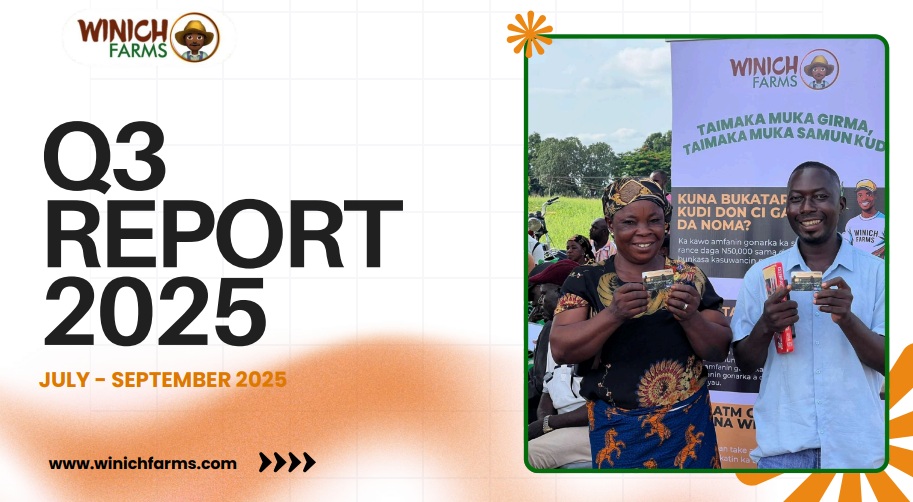
I have previously called Presco and Okomu Oil the agro-Bitcoins of Nigeria, companies that compound value from the soil, turning palm fruits into enduring wealth. Today, I add another name to that hall of value creation: Winich Farms, a Tekedia Capital portfolio company. This one is a junior agro-Bitcoin because it is young, vibrant, and already radiating the signals of greatness.

The numbers speak in the language that markets understand. Yes, growth, efficiency, and trust. And for those of us who believe that agriculture remains one of Africa’s most under-capitalized opportunities, Winich Farms stands as evidence that innovation can indeed sprout from the farmlands.

To Riches Attai and his brilliant team, I say well done. You have demonstrated that youth, when combined with vision and discipline, can feed nations and build prosperity.

In Tekedia, we teach that value compounds when knowledge meets execution. Winich Farms (Winich Inc ) is living that thesis and it is self-evident as I read the Q3 report, one harvest, one data point, and one innovation at a time.

ChatGPT Processes 2.5 Billion Messages Daily as Users Hit 800 Million Weekly

0

OpenAI’s ChatGPT has reached an unprecedented milestone, processing at least 2.5 billion messages every day as its weekly active users climb to 800 million — representing more than 10 percent of the world’s adult population.

The growth trajectory underlines the astonishing global diffusion of artificial intelligence and signals a structural shift in how people work, learn, and shop in the digital economy.

According to OpenAI’s July disclosure, ChatGPT was already handling over 2.5 billion daily prompts when the platform had 700 million users. That figure has now surged even higher as CEO Sam Altman confirmed that the platform’s weekly user base recently expanded to 800 million. The chatbot’s rapid rise is without precedent in technology history — surpassing the speed of adoption of the internet, smartphones, and even social media platforms such as Facebook and TikTok.

Earlier this year, OpenAI crossed the 400 million weekly user threshold in February, a figure that was considered groundbreaking at the time. Within just a few months, usage doubled, demonstrating how deeply ChatGPT has embedded itself in daily life across continents. The company has also maintained its position as the most downloaded app globally, topping iOS and Android charts for seven consecutive months between March and September 2025.

A recent analysis by researchers tracking ChatGPT usage patterns reveals that 70 percent of all queries are unrelated to work. Instead, users employ the AI assistant for everyday guidance, entertainment, and learning. Among professional users, the dominant application remains writing — from drafting emails and articles to generating original content from scratch. The study categorized ChatGPT queries into three main themes: practical guidance, seeking information, and producing text. Writing tasks were the most frequent work-related activity.

The data suggests that while the platform’s reach has exploded globally, deeper integration into structured workplace operations is still evolving. Much of ChatGPT’s traffic continues to come from individual users experimenting with AI for creative, personal, or educational purposes. Still, the fact that hundreds of millions of people interact with ChatGPT weekly means OpenAI now influences how knowledge is accessed and synthesized at a planetary scale.

The adoption speed has astonished analysts. Researchers who studied its diffusion earlier in the year concluded that “for a new technology, this speed of global diffusion has no precedent.” That sentiment echoes across the industry as ChatGPT cements itself not merely as a digital assistant but as a new layer of online infrastructure that connects humans, data, and commerce.

The numbers reveal how explosive that shift has been. In June 2024, ChatGPT processed roughly 451 million messages daily. By June 2025, daily message volume had exceeded 2.6 billion — a fivefold increase within twelve months. During that same period, OpenAI’s user count leaped from the hundreds of millions into the high hundreds of millions, marking one of the most accelerated growth curves ever recorded for a consumer product.

The chatbot’s staying power also highlights its evolution from novelty to necessity. Unlike other viral apps that fade, ChatGPT has sustained usage momentum, bolstered by a series of integrations that bring AI into commerce and productivity ecosystems. Most recently, OpenAI struck a deal with Walmart to allow users to purchase items directly through ChatGPT, transforming the platform into an interactive shopping interface. This development follows earlier partnerships with major corporations and institutions, deepening ChatGPT’s role in everyday economic activity.

Economically, ChatGPT’s rapid expansion poses both opportunities and challenges. On one hand, it has spurred demand for AI infrastructure — from chips and cloud storage to security systems — fueling an entire ecosystem of suppliers, including companies such as Nvidia, Microsoft, and Oracle. On the other hand, OpenAI faces the task of monetizing a vast user base that still includes hundreds of millions of free users. While ChatGPT Plus subscriptions and enterprise offerings are growing, the question of how to sustain profitability amid rising computing costs remains central to the company’s future.

Politically, the surge in AI adoption carries weighty implications. Governments are increasingly aware that platforms like ChatGPT now influence what billions of people read, write, and believe. Regulators in the U.S., Europe, and Asia are scrutinizing OpenAI’s data usage and algorithmic transparency, while debates over privacy, misinformation, and intellectual property intensify.

As adoption deepens, ChatGPT’s impact is also becoming economic in another sense — it is beginning to change labor patterns. Surveys suggest that workers in marketing, research, and education increasingly rely on AI tools to handle routine writing and data analysis tasks, freeing time for higher-order work but also raising fears of job displacement. For policymakers, balancing productivity gains with workforce stability is emerging as one of the defining economic challenges of the AI age.

For OpenAI, the scale of demand means the company must keep expanding its computing capacity. It has already partnered with leading chipmakers, including Nvidia and Broadcom, to design specialized AI processors and data infrastructure to sustain future growth. Analysts expect that, by 2026, ChatGPT’s daily message volume could double again as new features — including voice interfaces and AI agents capable of completing online tasks — reach mass users.