DD
MM
YYYY

PAGES

DD
MM
YYYY

spot_img

PAGES

Home Blog Page 3332

BlockDAG Network Among The Top DeFi Picks With A $37M Presale; Attracts Polkadot and Tron Investors In Q2

0

The cryptocurrency scene is buzzing with activity, as Polkadot and Tron mark significant progress. Polkadot has solidified its position above $7.40, displaying strong upward momentum and steady support. Meanwhile, Tron is broadening its DeFi footprint, pulling in more users and ramping up transaction volumes. Among these, BlockDAG Network steals the spotlight with its $37 million presale success, boasting an 850% surge and a bright outlook, thanks to its strategic marketing and tech innovations, distinguishing it in the digital currency landscape.

Polkadot Price Outlook: Will DOT Hit $8.20?

Polkadot (DOT) is witnessing robust bullish trends, holding its recent gains firmly above the $7.40 mark against the US Dollar. After breaking the $7.20 resistance, it peaked at $7.69 before securing its position above $7.40 and the 100-hourly simple moving average. The main support stands strong at $7.40, with the next resistance near $7.70.

A push past $7.80 could open doors for further uplift, possibly reaching $8.20 or more. Conversely, a slip below $7.70 might drag it to $7.00 or lower. Hourly MACD and RSI indicators signal continued bullish behavior, painting a promising future for Polkadot.

TRX’s Expanding Role in Tron’s DeFi Sphere

Tron (TRX) is advancing its presence in the crypto realm. Its blockchain aims to decentralize the web and empower content creators by letting them own and control their data. Tron operates on a Delegated Proof of Stake (DPoS) system, a greener alternative to the traditional Proof of Work (PoW) models. TRX, Tron’s native token, facilitates transactions, staking, and governance on its network.

Recent expansions in Tron’s DeFi applications have attracted more users and boosted transaction activity. This growth is supported by strategic alliances and integrations that enrich Tron’s ecosystem, positioning it as a versatile and scalable solution in the digital finance space.

BlockDAG’s 850% Presale Spike: A Marketing Triumph

BlockDAG’s $37 million presale leaves an indelible mark on the crypto world. The BDAG coin soared from $0.001 to $0.0095 across 16 batches, achieving an 850% jump in a short span. This remarkable ascent, fueled by its astute marketing strategies, positions BlockDAG as a top crypto contender for 2024.

The campaign started with an engaging event at Tokyo’s Shibuya Crossing, unveiling BlockDAG’s roadmap and decentralized framework to the crypto community. This was followed by an event at the Las Vegas Sphere, celebrating the release of BlockDAG’s technical whitepaper, which addresses the blockchain trilemma of scalability, security, and decentralization.

The buzz peaked at London’s Piccadilly Circus during the celebration of BlockDAG’s listing on CoinMarketCap, projecting a staggering 30,000x ROI for early investors. These events, BlockDAG’s rollouts on prominent DeFi exchanges and the launch of a user-friendly crypto payment card, have significantly elevated investor trust. With a robust $100 million liquidity plan in place, BlockDAG’s presale journey is an epic saga.
Final Thoughts

While Polkadot and Tron continue to excel with their technological advancements and market performances, BlockDAG outshines them with its staggering $37 million presale success and strategic maneuvers. Polkadot’s positive trajectory and Tron’s DeFi expansion underscore their growth potential. Nonetheless, BlockDAG’s massive surge and innovative solutions to the blockchain trilemma highlight its potential for enduring influence in cryptocurrency. As the market evolves, BlockDAG stands out as a formidable player worth watching.


Join BlockDAG Presale Now:

Website: https://blockdag.network

Presale: https://purchase.blockdag.network

Telegram: https://t.me/blockDAGnetworkOfficial

Discord: https://discord.gg/Q7BxghMVyu
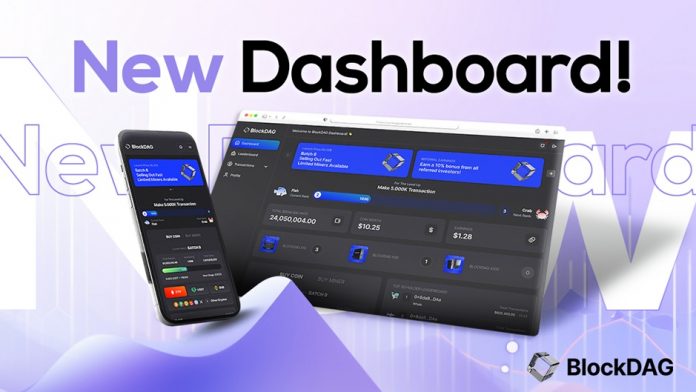
BlockDAG Shines With $37M Presale Following The Dashboard Update As NEAR and Avalanche Prices Climb

0

In the bustling crypto market, NEAR Protocol and Avalanche are posting substantial gains, forecasting a bright future for their respective prices. Amidst these rising stars, BlockDAG distinguishes itself as the prime investment choice, boasting a successful presale that garnered over $37 million. A recent update to its dashboard has further refined the community experience, making BlockDAG a beacon of growth and transparency in the crypto universe.

Performance and Prospects of NEAR Protocol

Early 2024 saw NEAR crypto’s price skyrocket by 140%, peaking at $9 on March 15. Although it has slightly pulled back, NEAR stands resilient, only 12% shy of its high. Innovations by the NEAR Foundation, such as a new AI R&D lab and an incubator, are fueling excitement, aiming to position NEAR as the epicenter of AI within web3.

Future forecasts for NEAR suggest it might ascend to between $11.88 and $12.36. With its Total Value Locked (TVL) nearing a record $360 million, the outlook remains bullish despite signs of possible corrections. These AI-driven initiatives paint a positive future for NEAR, keeping analysts optimistic about its upward trajectory.

Avalanche (AVAX) Price Surge and Gaming Innovations

Recently, Avalanche’s price leaped to monthly highs of $41.07, later steadying at $40.81. Encouraging indicators, including a golden cross on the 4-hour chart and an upbeat MACD, back this ascent. Avalanche’s collaboration with Gamestarter introduces GameChain, a dedicated gaming blockchain that enriches developer engagement and user interaction through tools like GameID and GameScan, simplifying the gaming development process.

This partnership forecasts a rise in AVAX’s value, potentially reaching $60, propelled by these innovations and wider market movements. Avalanche’s robust ecosystem supports a promising forecast for its near-term growth.

BlockDAG’s Innovative Dashboard Update and Future Roadmap

BlockDAG’s impressive presale, raising over $37 million, signals strong investor confidence. The platform’s recent dashboard revamp significantly boosts the user interface and transparency. New features include Hot News, Current Rank insights, a Wallet for transactions, a Leaderboard Preview of top investors, and a Last Transactions Preview for recent activity. The Referral Screen tracks bonuses from referrals.

The dashboard ranks the top 30 investors from “Crab” to “Whale,” incentivizing greater involvement. The Transactions feature splits into My Transactions and Live Transactions, supporting a range of cryptocurrencies and allowing users to update their profiles with latest information securely.

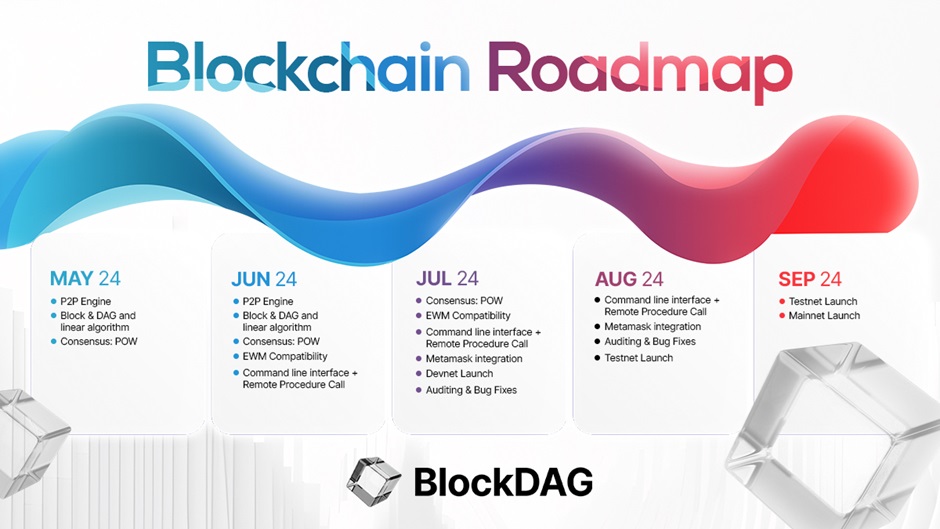
BlockDAG’s updated roadmap outlines future developments in Blockchain Development, BlockDAG Scan (Explorer), and the X1 Miner application, reinforcing its market position. With projections of its coin value hitting $30 by 2030, BlockDAG’s strategic updates promise substantial growth, marking it as a standout in the crypto space.

Final Insights

While NEAR Protocol and Avalanche make significant-tech advancements, BlockDAG captures the spotlight with its monumental presale success and cutting-edge features. With over $37 million raised and a recent dashboard enhancement coupled with a comprehensive roadmap, BlockDAG exemplifies transparency and innovation. As one of the premier crypto gainers, BlockDAG presents an enticing investment prospect in contrast to NEAR and Avalanche, paving its way to future success in the decentralized crypto landscape.


Join BlockDAG Presale Now:

Website: https://blockdag.network

Presale: https://purchase.blockdag.network

Telegram: https://t.me/blockDAGnetworkOfficial

Discord: https://discord.gg/Q7BxghMVyu

TikTok to Create Independent Algorithm for U.S. Market

0

TikTok, the widely popular short-form video sharing app, is in the process of overhauling its recommendation algorithm for its 170 million U.S. users, Reuters has reported.

This effort aims to develop a version of the algorithm that operates independently of its Chinese parent company, ByteDance, to address concerns from American lawmakers who have been advocating for a ban or forced sale of TikTok’s U.S. operations.

The initiative to separate the source code was initiated by ByteDance late last year, prior to the congressional bill that demands the sale of TikTok’s U.S. assets gaining significant traction. This bill, which was signed into law in April, mandates a divestiture or ban of the app by January 19, 2025.

Sources with direct knowledge of the efforts, who requested anonymity, disclosed that ByteDance and TikTok engineers are working meticulously to split millions of lines of code. The goal is to establish a code base that is independent of ByteDance’s Chinese operations and remove any links to Chinese user data.

The separation of the code base could potentially facilitate the divestiture of TikTok’s U.S. assets, although no current plans for such a sale have been announced. TikTok has previously stated that selling its U.S. assets is not feasible due to commercial, technological, and legal challenges. This stance was reiterated in a federal lawsuit filed by TikTok and ByteDance in May, seeking to block the law that mandates the sale or ban of the app.

A U.S. appeals court has set a fast-track schedule to address these legal challenges.

The Complexity of the Task

The task of splitting the recommendation algorithm is described by sources as a complex and tedious process that could take over a year to complete. Engineers are tasked with reviewing each line of code to determine its suitability for the new, independent code base. This process involves sifting through the algorithm, originally developed by ByteDance engineers in China and customized for global markets, including the U.S.

The U.S. government, including President Joe Biden and supporters of the new law, argue that TikTok gives Beijing undue access to vast amounts of data, which could be used for spying or influencing American users. This has led to bipartisan political pressure on TikTok to demonstrate its operational independence from ByteDance.

In response to these concerns, TikTok had previously attempted to silo off U.S. user data through a project known as Project Texas, which failed to satisfy U.S. regulators and lawmakers. Now, the company is escalating its efforts to show its U.S. operations are independent, considering measures such as open-sourcing parts of its algorithm to demonstrate transparency.

One of the significant risks of this separation is that TikTok U.S. might not maintain the same level of performance without the engineering support from ByteDance’s team in Beijing. The recommendation engine’s effectiveness in engaging users is a key factor in TikTok’s popularity, and replicating this success independently could be challenging.

The legal and political battles have already had financial repercussions for TikTok. Any significant changes or disruptions to TikTok’s algorithm could impact its market performance and user engagement. But a sale of the app, including its algorithms, is highly unlikely. In 2020, the Chinese government added content recommendation algorithms to its export-control list, meaning that any divestiture or sale of TikTok’s algorithm must undergo its administrative licensing procedures.

Trump Considers Bitcoin as A Solution to The US National Debt Crisis

0

Former President and Republican Presidential candidate Donald Trump is reportedly considering Bitcoin as a solution to the US National debt crisis.

According to an audio recorded by the Bitcoin.com News team, Bitcoin Magazine CEO David Bailey shared during an X space that in their first meeting, Trump asked if Bitcoin could help tackle the $35 trillion U.S. national debt.

In his words,

“When we met, the first thing he asked was like, ‘Hey, can Bitcoin do anything about the 35 trillion dollar debt?’ I was like, we have some ideas, but we are not talking about that in the first meeting”.

Trump’s consideration of Bitcoin as a solution to the US national debt crisis, is coming at a time when the US faces a challenging fiscal outlook that has been predicted to worsen in times ahead.

Reports reveal that the amount of money that the US Treasury has borrowed and not yet repaid to meet its spending obligations has reached a record $34.1 trillion. Government spending also exceeded government revenues by $1.7 trillion in Fiscal Year 2023.

The cost of servicing the national debt is also projected to grow to historic levels over the next decade because of higher spending and higher interest rates, which makes financing additional debt more expensive and further exacerbates the Debt Crisis.

The debt-to-GDP ratio shows the burden of the national debt relative to the country’s total economic output and reveals the United States’ ability to pay down its debt. Public debt stands today at its highest level since World War Il by 99 percent and is projected to grow even higher in the next decade.

Trump’s interest in using Bitcoin as a solution to cater to the US national debt, highlights a broader trend of increasing attention to digital currencies among policymakers. This interest underscores the need for a deeper examination of how cryptocurrencies could be effectively integrated into national economic policies.

The crypto asset has gained prominence for its decentralized nature, limited supply, and potential to serve as a hedge against inflation. However, analysts argue that its volatile price and regulatory uncertainties present significant challenges. They also state that integrating Bitcoin into national financial strategies could promote innovation and financial sovereignty, while critics caution against the risks associated with such a volatile and largely unregulated asset.

Trump’s support for Bitcoin and cryptocurrency marks a notable departure from his previous skepticism and reflects the growing influence of digital currencies in politics.

While speaking at the Libertarian National Convention on 25 May 2024, he said,

“I will ensure that the future of crypto and the future of Bitcoin will be made in the USA, not driven overseas”.

This initiative may normalize the utilization of cryptocurrencies in mainstream politics and signal a shift toward the wider acceptance of digital assets.

OpenAI Onboards PwC as First Major B2B Customer in Push for Profitability

0

OpenAI, the creator of ChatGPT, has announced a significant partnership with PwC, marking its first major enterprise customer in a bid to monetize its generative AI technology.

PwC, a leading management consulting firm, will integrate OpenAI’s enterprise solutions for 100,000 users, making it OpenAI’s largest customer. Moreover, PwC will resell OpenAI’s AI offerings to other businesses, expanding its market reach.

Richard Hasslacher, OpenAI’s global head of alliances and partnerships, highlighted the strategic importance of this partnership in a statement.

“PwC is the first partner that we are leaning into in this way… It is penetration into industry verticals, but also providing an expansive set of services that customers desperately need to take advantage of in a brand-new solution category,” he said.

This move is part of OpenAI’s broader strategy to become profitable following substantial investments from Microsoft and other backers. To date, OpenAI has raised billions of dollars, aiming to maximize returns by transitioning from small-scale use of AI tools to significant enterprise applications.

PwC’s involvement underscores a shift in how consulting firms like PwC are evolving, with AI playing a crucial role in digital transformation despite concerns that it will result in job losses. Bret Greenstein, partner and generative AI leader at PwC, emphasized that AI would not replace jobs but enhance the company’s capabilities without expanding its workforce.

“This is very important for us,” Greenstein stated, adding that generative AI tools have shown high engagement and promise for future business growth. He noted that PwC has been building its work structure around ChatGPT tools.

“But as the technology stack gets better, we can buy versus build more things. We can then focus more on outcomes, transformation, workflow, use cases, and business process, and less on assembling APIs to build an experience for our employees,” he said.

Greenstein pointed out that the company’s educational tools to train employees on generative AI have seen 90% engagement, indicating strong internal adoption. This level of engagement suggests that employees are not only receptive to the technology but are also finding value in its application to their daily tasks.

For PwC, the integration of ChatGPT underlines the company’s commitment to innovation. By leveraging advanced AI tools, PwC aims to streamline its operations, improve service delivery, and enhance client experiences. The use of generative AI can automate routine tasks, freeing up employees to focus on more strategic and creative work. This shift is expected to boost productivity and drive growth without requiring a proportional increase in headcount.

The partnership between OpenAI and PwC marks significantly, the growing adoption of generative AI in the enterprise sector. While OpenAI continues to engage with enterprises directly, the partnership with PwC is a strategic move to expand its reach through a robust channel strategy.

“Today, we have our own customer success team that will support our customers in the deployment of their GenAI solutions,” said Hasslacher. “But we have limited capacity, and that’s really where the partner ecosystem comes into play.”

As OpenAI looks to maximize profit for its investors, building a comprehensive partner ecosystem will be crucial. The PwC partnership is the first step, and Hasslacher hinted at more developments in this area.

“Today, we have our own customer success team that will support our customers in the deployment of their GenAI solutions,” said Hasslacher. “But we have limited capacity, and that’s really where the partner ecosystem comes into play.” For now, PwC is its reselling partner, but “I think you will be seeing a lot more related to that ecosystem.”

Collaborating with partners who have extensive industry knowledge and customer networks, is seen as a way OpenAI can accelerate the adoption of its generative AI products across various sectors.

However, one of the significant challenges for generative AI companies is convincing enterprises to transition from pilot projects to full-scale deployments. Enterprises often approach new technologies cautiously, conducting extensive trials before committing to widespread implementation.

OpenAI’s collaboration with PwC aims to mitigate this challenge by leveraging PwC’s credibility and expertise in consulting. PwC can provide the necessary support and assurance to other enterprises, facilitating smoother transitions and broader adoption.

The partnership comes on the heels of OpenAI’s launch of ChatGPT’s enterprise tier in August 2023, designed to offer enhanced capabilities such as faster, unlimited interactions, custom model building, and advanced analytics. With PwC’s extensive workforce in the U.S., U.K., and the Middle East, OpenAI’s enterprise user base is expected to see a significant boost, potentially influencing how AI is adopted across industries.

OpenAI’s self-service ChatGPT costs $30 per user, while the consumer version is $20 per user. Enterprise pricing remains undisclosed, though estimates suggest it could be around $60 per seat per month for substantial volumes.