DD
MM
YYYY

PAGES

DD
MM
YYYY

spot_img

PAGES

Home Blog Page 3389

As Official Rate (N1,482/$1) Exceeds Black Market Rate (N1,460/$1), Nigeria Should Declare A Currency State of Emergency

1

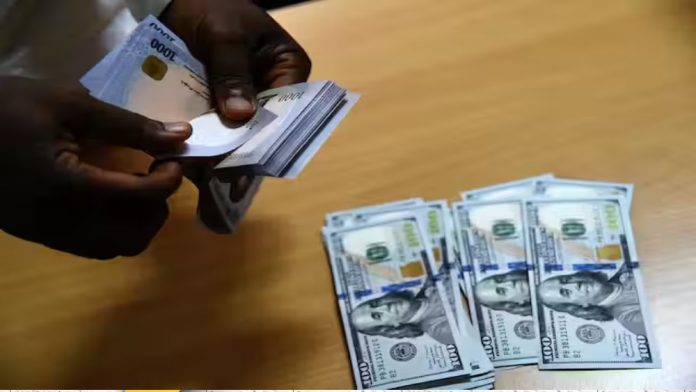
History was made yesterday in Nigeria: “In a surprising turn of events on Tuesday, the foreign exchange market experienced an unusual occurrence as the naira reached N1,482/$1 on the Nigerian Autonomous Foreign Exchange Market (NAFEM). This marked a significant increase compared to the parallel market rate, which remained anchored at N1,460/$1, maintaining the rate from the previous day.”

Yes, the official rate rose above the black market rate. So, if the official rate is ahead of the black market, we can all agree that some asymmetric endogenous factors are deeply at play here.  Simply, the official demand was so high that the supply side crashed, moving price to a new equilibrium point in the supply-demand curve of Naira/USD.  I think a state of emergency is due right now to save Naira.

(I suspect that Dangote Refinery is mopping all available USD to import crude oil since it cannot rely on Nigeria now, creating more pressure on the Naira. That is a reverse osmosis which could be sustained since you cannot shut down the refinery now that it is firing. The firm possibly went to the official market to buy at all costs.)

If indeed it is true that Dangote Refinery is sourcing crude oil from outside Nigeria,  it would be a major own-goal for Nigeria: “Dangote Refinery, Africa’s largest refinery, is set to begin crude oil import from the United States in February…According to reports from Bloomberg, Trafigura Group has brokered a deal to supply Dangote Refinery with 2 million barrels of WTI Midland crude expected to be delivered by the end of next month, marking the first instance of the refinery purchasing non-Nigerian crude.”

Good People, it may be time for the president to address the nation on what is going on because basic economics does not work in Nigeria anymore. As that happens, I commend the central bank for the new policy on foreign currency exposure by banks (see directive). That call is necessary because USD, Euro and GBP are making banks have great parties, even as those same currencies could destroy them if there is a flip. So, making sure they stay within 20% of net open position (NOP) is a nice call by the apex bank.

Naira’s Fall to N1,482/$1 in NAFEM suggests A Move for Convergence by the CBN

0

In a surprising turn of events on Tuesday, the foreign exchange market experienced an unusual occurrence as the naira reached N1,482/$1 on the Nigerian Autonomous Foreign Exchange Market (NAFEM). 

This marked a significant increase compared to the parallel market rate, which remained anchored at N1,460/$1, maintaining the rate from the previous day.

The official NAFEM window, which closed at N1,482.57, reflected an N133.95 loss or a 9.94 percent decline from the previous rate of N1,348.62. This shift in the exchange rates has caught the attention of market participants, prompting speculation about the central bank’s potential move towards the convergence of the naira.

Data from the Financial Markets Dealers Quotations (FMDQ) website revealed a notable increase in daily turnover, reaching $72.33 million on Tuesday, a 12.50 percent rise from the $64.29 million recorded on Monday. The spot rates recorded for the day ranged from the highest at N1,531/$1 to the lowest at N789/$1, indicating increased volatility in the market.

The drastic fall in the exchange numbers in NAFEM indicates a possible devaluation for the naira’s convergence by the CBN especially considering that the official rate has been dangling around N890 per dollar.

Mrs. Hakama Sidi-Ali, the Acting Director of the CBN’s Corporate Communications Department, said on Monday that the apex bank has implemented reforms to streamline and unify multiple exchange rates, foster transparency, and reduce arbitrage opportunities.

The Lagos-based FMDQ said in a notice to financial market operators that the change to the pricing methodology “aims to address recent fluctuations and challenges encountered in the Nigerian Foreign Exchange.” The measures will ensure “rates accurately reflect market conditions while upholding price formation and transparency,” it said.

The central bank has for long been pointing accusing fingers at speculators, whom it believes their report of inaccurate figures is impacting the naira’s performance in the FX market.  

“The NAFEX [NAFEM] fixing and closing rates were weighed down by trades going through at off-market levels’” Samir Gadio, head of Africa strategy at Standard Chartered Plc told Bloomberg. “What is clear at this point is that these off-market trades are not factored in anymore, hence the jump in NAFEX.”

In a circular published Monday, the CBN said it had become aware of traders reporting “inaccurate and misleading information,” including under-reporting of transaction pricing, which affected the exchange rate.

“Deliberate attempts to create price distortions by reporting false transaction details amounts to market manipulation which will not be tolerated and will henceforth face sanctions,” the central bank said. It added that it is “committed to a well-functioning and transparent market” conducted on a willing buyer, willing seller basis, with prices quoted and displayed transparently.

While the CBN has not commented on the strategy shift, analysts have faulted the idea that speculators are responsible for the naira free.

“Blaming speculators for falling Naira is like Arsenal fans blaming Man City for Arsenal not winning the league last season,” Kalu Aja, a financial analyst humorously said.

Analysts say the answer to Nigeria’s FX crisis is tied to adequate liquidity of the dollar, to fill the gaps orchestrated by the scarcity – such as Nigeria’s inability to fulfill its financial obligations involving matured FX forwards with banks and repatriation of trapped revenue of multinational companies operating in Nigeria.

The central bank said it recently released $500 million, targeting the backlog of verified foreign exchange transactions spanning various sectors. This latest action comes on the heels of an earlier payment of approximately $2.0 billion to settle outstanding commitments in crucial sectors such as manufacturing, aviation, and petroleum. This includes payment of $61.64 million to members of IATA, who have more than $700 million in earnings trapped in the country.

While the depreciation has been “very significant,” dollar supply from the central bank will need to improve for the naira to stabilize or even strengthen, Gadio said. Currency inflows from portfolio investors would follow, further supporting the naira, once short-term interest rates rise significantly, he added.

Investors have reportedly expressed doubt about Nigeria’s foreign reserve, said by the CBN to be around $33 billion. They argue that if the amount of the foreign reserve is correct, the nation will not be struggling to repatriate funds to multinational companies. 

The CBN said last year that it’s looking to secure $10 billion to clear Nigeria’s FX backlogs, which the Minister of Finance Wale Edun has fingered as a major contributor to the FX crisis.


The new CBN directive on foreign currency exposure; download here.

As the naira hits N1,520/$1, Experts call for new approach

0

The Nigerian naira has continued on its downward spiral, depreciating further to N1,520.123 against the dollar in the parallel market on Wednesday, according to data from the trading platform Naira Rates.

This marked a substantial decline from the N1,482.75 per dollar recorded in the official foreign exchange market (NAFEM) just a day earlier, representing a staggering N38 depreciation in less than 24 hours.

Tuesday’s depreciation was noteworthy as it marked the first instance, post-COVID-19, where the official exchange rate surpassed the parallel market rate. The parallel market had traded at N1,470 per dollar on Monday, up from N1,425.

The economic policies of President Bola Tinubu’s government were cited as a significant factor contributing to the further downward slide of the naira. The decision to float the currency, coupled with the scrapping of fuel subsidies and consolidation of multiple foreign exchange windows into the single Nigerian Autonomous Foreign Exchange Market (NAFEM), reportedly led to a drastic 98 percent depreciation in the naira’s value, according to a report by PwC.

Efforts by the federal government to boost foreign exchange liquidity have not been entirely successful. Late last year, the Nigerian National Petroleum Company Limited (NNPCL), on behalf of the government, secured a $3.3 billion emergency loan from the Import and Export Bank (Afreximbank) to address forex volatility.

Nigeria is currently grappling with over $7 billion in forex backlogs, further intensifying the naira’s free fall and creating an investment phobia for the nation’s economy. The Central Bank of Nigeria (CBN) has acknowledged disbursing over $2.5 billion to tackle the country’s FX challenges, including the recent release of $500 million announced on Monday to address the backlog of verified foreign exchange transactions across various sectors.

Despite these efforts, the backdrop of FX volatility has continued to impact severe economic consequences, with inflation surging to 28.20 percent in December. This has unleashed economic hardship on the Nigerian people, leading to a significant depletion of spending power since the FX reforms were introduced in June last year.

Facing this dire situation, economic experts have suggested proactive measures to address the economic challenges. Oluseun Onigbinde, Director of BudgIT and ForeFront, proposed the following measures to mitigate the impacts.

Emergency Fund Seeking: Exploring options such as securing an emergency fund from entities like Gulf Sovereign Wealth Funds, the International Monetary Fund (IMF), and global banks to curb the economic downturn.

Optimizing Onshore Oil Production: Implementing strategies to enhance onshore oil production and, if necessary, issuing new licenses to optimize the utilization of oil resources.

Rapid Non-Oil Export Strategy: Developing and implementing a swift strategy to boost non-oil exports, capitalizing on the current economic climate for diversification.

Fiscal Tightening: Exercising fiscal discipline by gaining control over public spending and reforming government culture, especially in addressing issues within the budget.

FX Policy Review: Reassessing the existing flexible foreign exchange (FX) policy and considering adjustments to certain metrics. Further details on this aspect may require additional data.

These proposed measures aim to stabilize the economic situation, enhance revenue streams, and address fiscal and monetary policies to promote economic resilience and sustainability.

PayPal Announces Plans to Cut 9% of Its Global Workforce

0

American multinational financial technology company operating an online payments system, PayPal, has announced plans to eliminate 9% of its global workforce, which is about 2,500 jobs.

The cuts will affect both existing roles and job listings that PayPal had planned to hire for and will take place over the course of the year.

In an internal letter to employees, the company’s CEO Alex Chriss wrote that the job cuts were necessitated to drive more focus and efficiency, and also to reduce complexity and duplication.

Part of the letter reads,

While I have been encouraged by the innovation our team is delivering, we must execute faster and ensure we are focused on solving our customer’s most critical needs and problems. Specifically, across our organization, I need to drive more focus and efficiency, deploy automation, and consolidate our technology to reduce complexity and duplication. We have started on that journey, but there is a lot of work to do, and 2024 marks a year of change, including some difficult but necessary decisions to get us to where we need to go.

Today, I am writing to share the difficult news that we will be reducing our global workforce by approximately 9% through both direct reductions and the elimination of open roles over the course of the year. We are doing this to right-size our business, allowing us to move with the speed needed to deliver for our customers and drive profitable growth. At the same time, we will continue to invest in areas of the business we believe will create and accelerate growth.”

PayPal’s layoffs are happening despite the company’s strong growth throughout 2023. The company’s revenue as of September 2023 was $7.42 billion an increase of more than eight percent compared to its revenue a year before. It beat earnings expectations and reported a “double-digit growth” in the number of transactions that happened over its platform.

The Information noted that Chriss, who took over as the company’s CEO in September 2023, said in PayPal’s last earnings call in November 2023 that its costs were “too high” and were slowing the company down.

Also, PayPal’s 9% cut of its global workforce is coming after the company last week, introduced six new artificial intelligence (AI)-based customer engagement solutions.

According to PayPal, the integration of AI features will reduce latency by as much as 50% and enable customers to check out twice as fast, with the same level of security. Also, the new login solution will leverage AI to get smarter and faster over time.

Nigerian Fintech Company Klasha Partners FOMO Pay to Power Cross-Border Payment Between Africa And Asia

0

Nigerian fintech company that powers African payments for global companies to sell cross-border online to and from Africa, Klasha, has partnered with FOMO Pay, a digital payment solution provider in Asia.

The new partnership between the digital payment providers aims to enhance cross-border payment capabilities for merchants between Africa and Asia.

Furthermore, with this partnership, FOMO Pay will enhance collections for its corporate clients through Klasha’s platform, empowering businesses to receive payments in local African currencies and money methods while they get payouts in their preferred currencies.

This will also enable businesses in Asia to unlock opportunities to expand into new markets in Africa and broaden their customer base with Klasha and FOMO Pay’s joint effort in facilitating cross-border payments.

Speaking on the partnership, CEO of Klasha Jess Anuna said,

We are excited about our new partnership with FOMO Pay and what this unlocks for merchants in Africa and Asia. With combined efforts, we will continue to enable merchants in Asia to collect payments from the continent more seamlessly through our payment rails and our unique ability to terminate payments in greater Asia. We look forward to widening our services to more merchants with this partnership.”

Also speaking, co-founder of FOMO Pay, Zack Yang said,

In this era of globalization, the synergy between FOMO Pay and Klasha marks a significant milestone in increasing financial connectivity between Africa and Asia. Our partnership is more than just a business collaboration; it’s a commitment to fostering seamless payments and economic growth across continents. By partnering with Klasha, we enhance our service offerings, expand payment corridors, and empower our institutional clients to grow in the global market.”

The strategic partnership between Klasha and FOMO Pay is poised to contribute to the advancement of international financial services, promoting smoother and more accessible cross-border payment solutions for businesses and individuals operating between these two regions.

About Klasha

Klasha is a technology company that powers African payments for global companies to sell cross-border online to and from Africa. The startup has built payables and receivables solutions for businesses and consumers that allow frictionless movement of money between Africa and the rest of the world.

Using Klasha, global businesses can accept payments from Africa in many African payment methods and currencies, send cross-border payments frictionlessly online, and get paid in hard currencies.

About FOMO Pay

Founded in 2015, FOMO Pay is a major payment institution headquartered in Singapore and licensed by the Monetary Authority of Singapore to conduct Cross-border Money Transfer Services, Domestic Money Transfer Services, Digital Payment Token Services and Merchant Acquisition Services.

Currently, the startup is a leading one-stop digital payment and digital banking solution provider enabling more than 10,000 merchants and financial institutions across Asia and Africa.