DD
MM
YYYY

PAGES

DD
MM
YYYY

spot_img

PAGES

Home Blog Page 3391

MultiChoice Nigeria Appeals Tribunal Ruling Over Fine and Free Subscription Order

0

MultiChoice Nigeria has taken its battle to the appeals court, contesting a recent ruling by the Competition and Consumer Protection Tribunal. The tribunal had imposed an N150 million fine and mandated the company to provide a free monthly subscription for disobeying the tribunal’s interim orders against a planned price hike.

According to Nairametrics, which cited sources familiar with the development, a “notice of appeal” has been lodged against the Tribunal’s recent decision. The tribunal had previously restrained MultiChoice from increasing its subscription rates pending the hearing and determination of a motion on notice filed by Barrister Festus Onifade.

The Backstory

The controversy began when Onifade filed a lawsuit against MultiChoice Nigeria Ltd and the Federal Competition and Consumer Protection Commission (FCCPC), accusing the Pay-TV operator of unfairly increasing subscription fees without giving the required one-month notice to customers. A three-member tribunal chaired by Saratu Shafii ruled in favor of Onifade, restraining MultiChoice from proceeding with its scheduled price hike on May 1, 2024.

On the other side, MultiChoice’s legal counsel, Moyosore J. Onibanjo (SAN), argued that similar cases had been previously settled in favor of MultiChoice and urged the tribunal to dismiss the suit. However, Onifade maintained that the issue at hand was not the price increase itself but the inadequate notice given to subscribers.

Justice Thomas Okosu, leading the three-member panel, upheld that the tribunal had jurisdiction over the matter, focusing on the legality of MultiChoice’s 8-day notice rather than the price hike. Consequently, MultiChoice’s preliminary objection was dismissed, leading to the imposition of a N150 million fine and a one-month subscription order.

Economic Pressures and Operational Losses

MultiChoice Nigeria’s decision to increase subscription rates cannot be fully understood without considering the broader economic pressures it faces. The Nigerian economy has been grappling with hyperinflation, a devaluing currency, and widespread poverty, affecting both businesses and consumers.

In a bid to manage escalating operational costs, MultiChoice announced new price adjustments on April 24, 2024, informing subscribers of an impending increase across all DStv and GOtv packages from May 1, 2024. The company cited rising business costs as the driving force behind this difficult decision.

“We understand the impact this change may have on you – our valued customer, but the rise in the cost of business operations has led us to make this difficult decision. It remains our mission to provide the best entertainment and viewing experience to you, and we are committed to continuing to deliver high-quality content and unparalleled service,” the company communicated to its subscribers.

The price hike resulted in a 25% to 26% increase across various packages, stirring dissatisfaction among customers and catching the attention of regulatory bodies. The Federal Competition and Consumer Protection Commission (FCCPC) noted it would review the reasons for the price increase and might involve other regulatory bodies such as the National Broadcasting Commission (NBC).

Declining Subscriber Base

MultiChoice Group has been vocal about the challenges posed by Nigeria’s economic conditions, which have significantly impacted its operations. The company reported an 18% decline in active DStv subscribers in Nigeria, attributing this to the economic hardships that limit consumer spending power. The declining subscriber base has compounded MultiChoice’s financial struggles, pushing the company to adjust its pricing strategy in an attempt to sustain operations.

Sources within the company revealed that MultiChoice has been operating at a loss in Nigeria, struggling to balance the cost of delivering high-quality content with the revenue generated from subscriptions. This financial strain has made it imperative for the company to re-evaluate its pricing models, even as it faces backlash from both consumers and regulators.

Following the tribunal’s ruling, MultiChoice’s legal team expressed their intention to appeal, arguing that their right to a fair hearing was compromised.

“The matter was adjourned to 7th June 2024 for ruling on our application challenging jurisdiction; however, surprisingly, rather than just ruling on its jurisdiction, the Tribunal went ahead to pronounce us guilty of disobedience of its orders and issued severe sanctions against us all without hearing us on the matter in breach of our constitutionally guaranteed rights to a fair hearing,” the legal team told Nairametrics.

In the face of these challenges, MultiChoice has formally filed an appeal, seeking to overturn the tribunal’s decision. The outcome of this appeal will likely set a precedent for future disputes involving consumer protection and corporate regulation in Nigeria.
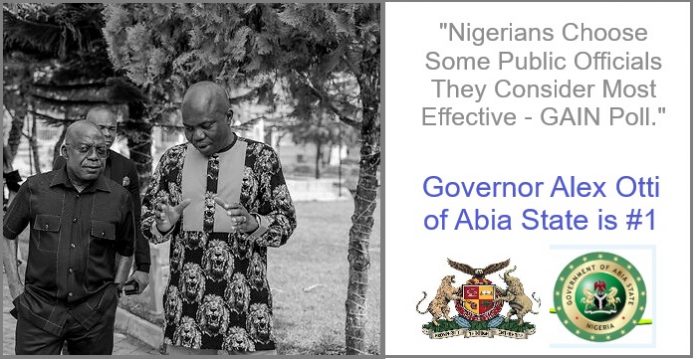
Abia State Governor, Alex Otti, is #1 As Most Effective Public Official In Nigeria

0
The result is out and Abia State Governor is #1: “The elected official that was viewed as being the most effective nationwide, was Governor Alex Otti of Abia State with 33.6% of respondents identifying him as the most effective official overall, whether elected or appointed….” Governance Advancement Initiative for Nigeria (GAIN).
 
Vox Populi, Vox Dei.
 
Congratulations Mr. Governor. Of course, the main deal is enabling shared prosperity for all Abians across our communities, making Abia #1 on opportunity, human welfare and development.
 
Ndubuisi Ekekwe
Member, Abia Global Economic Advisory Council
Co-Chair, Abia Economic Transformation Council

Ghana’s Floating Solar Projects as Positive Economic Implications

0

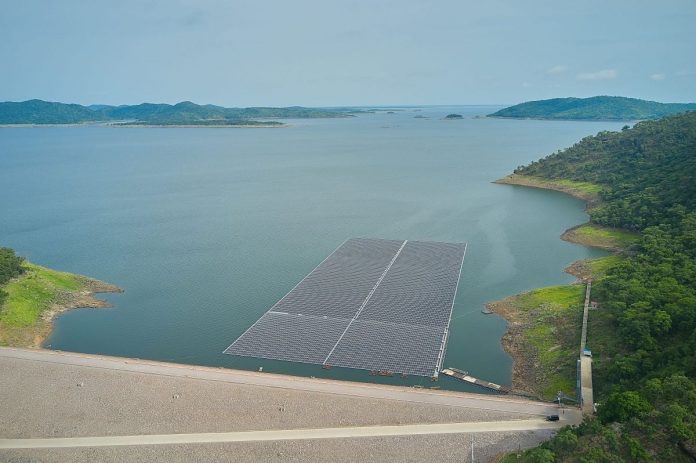
Ghana is making significant strides in sustainable energy with the launch of its floating solar projects. These innovative installations are not only a testament to Ghana’s commitment to renewable energy but also represent the largest floating photovoltaic (PV) initiative in Africa.

The flagship project at the Bui Reservoir is a remarkable feat, combining solar and hydro resources to create a hybrid plant. This 5-megawatt facility contributes to the national grid, conserving land and fostering a healthier environment for aquatic life. The photovoltaic panels are designed to provide shade, which helps in maintaining the temperature of the water, thus protecting the aquatic ecosystem and aiding fish spawning.

However, the journey to realizing these floating solar projects has not been without challenges. The displacement of residents and the impact on local fishermen’s activities have sparked controversy, highlighting the need for a balanced approach to development and environmental stewardship.

Despite these hurdles, the potential benefits of the floating solar projects are immense. They are expected to play a crucial role in achieving Ghana’s goal of generating 10% of its electricity from renewable sources by 2030. The projects also demonstrate Ghana’s innovative approach to overcoming land-use conflicts typically associated with large-scale solar installations.

The Bui Power Authority, instrumental in the development of these projects, has shown that with careful planning and community engagement, renewable energy projects can be both environmentally friendly and socially responsible.

The floating solar power plants, being assessed for feasibility on Lake Volta and Kpong hydropower reservoir, represent a shift towards more environmentally friendly and socially acceptable energy production methods. By avoiding land-intensive setups required for traditional solar facilities, Ghana is not only conserving its precious land resources but also tapping into the vast potential of its water bodies.

The economic implications of such projects are far-reaching. They are expected to create jobs, both in the construction phase and in the ongoing maintenance and operation of the plants. Moreover, the move towards renewable energy sources aligns with Ghana’s commitment to generate 10% of its electricity from renewables by 2030. This commitment is part of a broader strategy to achieve net-zero emissions by 2060, which could unlock US$550 billion in investment opportunities.

The recent launch of Africa’s largest floating solar project in Ghana is a testament to the country’s dedication to renewable energy and its potential to boost the national grid while promoting aquatic ecosystems. This project, along with future expansions, is expected to contribute significantly to the nation’s energy mix, providing a reliable and sustainable power supply.

Ghana’s floating solar projects are not just an investment in renewable energy; they are an investment in the nation’s future. With the promise of economic growth, job creation, and environmental sustainability, these projects are setting a precedent for other African nations to follow, showcasing the possibilities of green technology in driving economic development.

As Ghana continues to expand its floating solar capacity, it sets an example for other nations in the region to follow. The integration of renewable energy sources is crucial in the global effort to combat climate change, and Ghana’s floating solar projects are a shining example of what can be achieved with vision and determination.

How US Sanctions Eclipsed Apple In China, as Huawei Rose On Motivation to Overcome Sanctions

0
Most parts of the world have been pushing to cage Huwaei

Do not wake up a sleeping tiger. Yes, the United States has scored an own-goal by making China’s Huawei to decouple from America, and in the process restructured and redesigned its business. Before the big sanctions, Huawei depended on many American firms. They made money from Huawei and Huawei used their technologies to make money – call it win-win, the benefits of globalization to a large extent.

Post-sanctions, Huawei was forced to return to the basics. And now it is back: “Huawei’s homegrown operating system, HarmonyOS, has reached a significant milestone in the Chinese market, according to recent data from Counterpoint Research. The report indicates that HarmonyOS has surpassed Apple’s iOS to become the second most popular mobile operating system in China, trailing only Android. This development marks a notable shift in the Chinese smartphone market and highlights Huawei’s resilience and innovation in the face of severe challenges.”

According to Counterpoint, HarmonyOS held an 8% market share in China in the first quarter of 2023. By the first quarter of 2024, this share had more than doubled to a commendable 17%. In contrast, iOS experienced a decline during the same period, dropping from 20% to 16%. This suggests that the sales of Apple’s latest iPhone 15 series may not have met expectations in China, where consumer preferences appear to be shifting towards local alternatives like HarmonyOS.

Be wise, do not motivate your competitor! Do not inspire your competitor. Because a tiger can roar…If Apple loses China, you can blame the US government for making it easier for Huawei to create everything to the extent that its product prices are now lower, as it has replaced more expensive US raw materials/inputs/components. And it may not stop in China because everyone wants a great deal across the world.

Of course, this is not to say that Apple has a problem. No, it has the world minus China, and that is big enough! You should be concerned why the Ovim tablet failed in Nigeria.

Huawei’s HarmonyOS Surpasses Apple’s iOS in China, Unleashing A New Era in the Smartphone Market

Multichoice Slash Price of Dstv And Gotv Subscription After Court Order

0

Major satellite television service in Sub-Saharan Africa Multichoice, which owns Dstv and Gotv has reportedly slashed the subscription prices in Nigeria, following a court order mandating the company to avoid the hike in price.

Reports revealed that checks on the company’s app show that it has reverted to the old prices after subscribers paid the new rates for May 2024 after the new hike.

The new DStv prices have been revised, with Premium, package subscribers now paying N29,500 instead of N37,000, Compact+ package subscribers paying N19,800 instead of N25,000, and so on. Similarly, GOtv subscribers will now pay the previous rates for their packages. N5,700 for GQtv Max, N3,950 for GOtv Joli, and N2,700 for the lowest package, GOtv Jinja, which subscribers will now pay from the new N3,300 rate.

Meanwhile, it is still being determined if the company is offering a month-free subscription as ordered by the court. However, there have been no comments from the company’s officials yet.

This development is coming after Multichoice blamed Nigeria’s harsh economic condition which saw active DStv subscribers in the country decline by 18%. The company stated in its financial result for the year ended March 31, 2024, that the decline in Nigeria affected its overall subscriber database leading to a 9% decline for the year.

Background of the Story

In April 2024, Multichoice announced an increase in prices on the DSTV and GOtv packages.

In a statement titled ‘Price Adjustment on DStv and GOtv Packages’, signed by its Chief Executive Officer, John Ugbe, sent to its customers, it noted that the increase was necessitated by the rise in the cost of business operations. According to the statement, the increment would take effect on May 1, 2024.

The development sparked outrage among customers, who felt betrayed by Multichoice’s disregard for the legal system and its customers’ interests.

Moving forward to May 2024, the tribunal fined MultiChoice Nigeria the sum of N150 million for disobeying its order. The order had restrained the pay-TV company from increasing its monthly subscription, pending the determination of the suit brought before it by an Abuja-based lawyer, Festus Onifade.

The tribunal had also ordered the company to provide its Nigerian customers with a one-month free subscription to its DStv and GOtv packages.

Reacting to the judgment through a statement, MultiChoice disagreed with the ruling and vowed to file an appeal against it.

The statement partly reads,

“MultiChoice Nigeria is aware of the recent ruling by the Competition and Consumer Protection Tribunal regarding its jurisdiction to entertain a price regulation matter. We disagree with the ruling, and will therefore file an appeal against the said ruling. As the matter is currently sub-judice, we are restrained from making further comments,” the company added.