DD
MM
YYYY

PAGES

DD
MM
YYYY

spot_img

PAGES

Home Blog Page 34

Copper Reaches ATH As K9Strategy Burns 144 BoDoggos

0

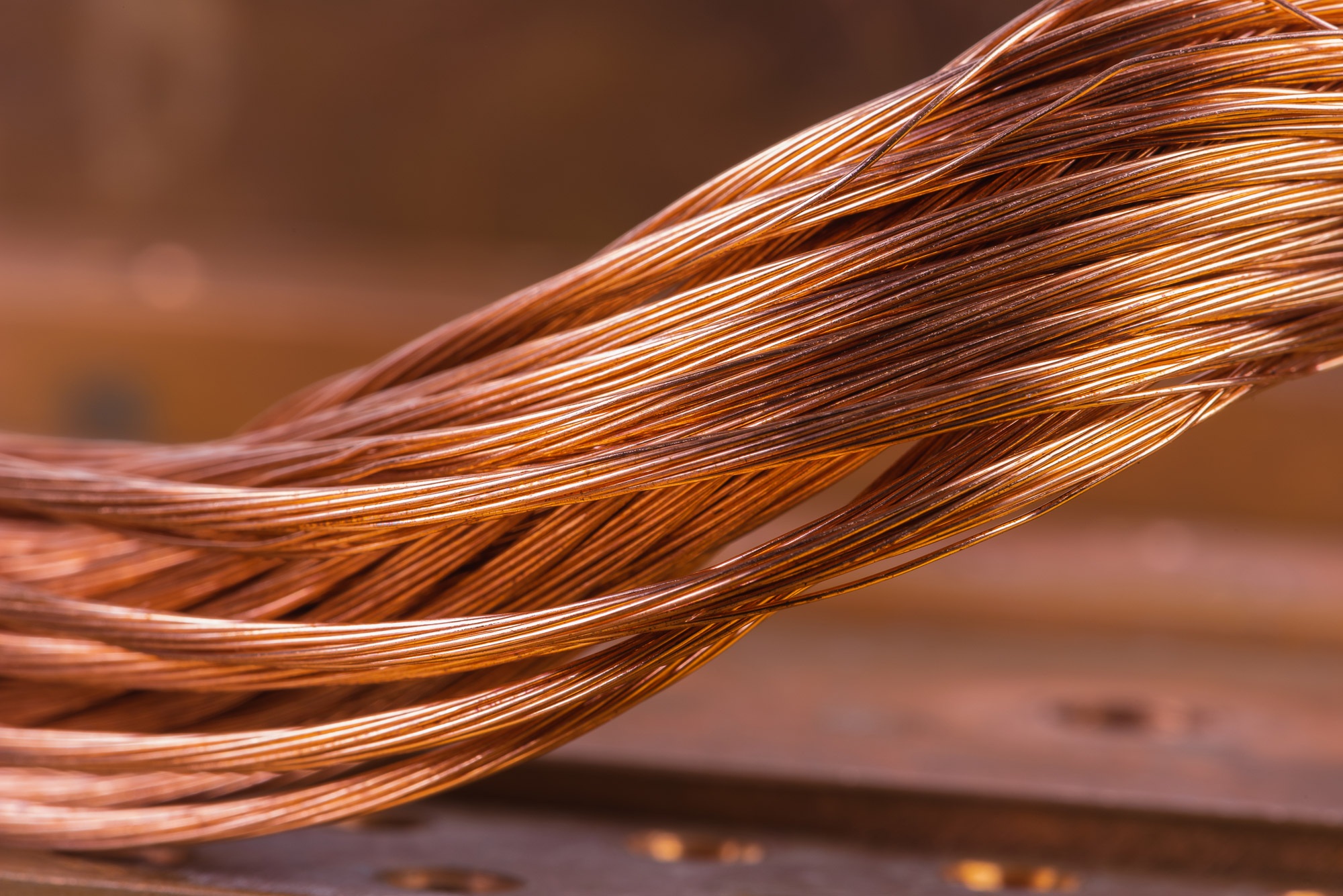
Benchmark copper prices on the London Metal Exchange (LME) surged past $13,000 per metric ton for the first time, reaching intraday highs around $13,387–$13,387.50 on January 6, before settling slightly lower.

This extends a massive rally from 2025 up ~42% annually, driven by: Tight global supply from mine disruptions e.g., strikes in Chile, accidents in Indonesia. Strong demand from electrification, EVs, AI data centers, and grid upgrades. US stockpiling ahead of potential import tariffs under the Trump administration, creating regional shortages elsewhere.

Speculative buying amid broader metals bullishness. Prices have pulled back slightly today to around $13,200–$13,300 range, but the ATH is confirmed across sources like Bloomberg.

K9Strategy burns 144 BoDoggos

This appears to refer to activity in the BoDoggos ecosystem—a popular Solana-based NFT collection (8,888 dog-themed PFPs launched in 2023) with associated crypto elements.

K9Strategy or similar, like Bodoggos Strategy token/treasury manages a “treasury company” that buys, relists, and sometimes burns BoDoggos NFTs or related tokens to reduce supply and create scarcity/yield for holders.

Burning 144 specifically isn’t directly confirmed in recent public news or posts no exact match for that number/event today, but the project frequently engages in buy-burn-relist mechanics via DEX fees and treasury actions. Recent X chatter involves BoDoggos community discussions, podcasts, and bets involving individual NFTs—consistent with ongoing burns or supply reduction strategies.

If this is from a specific announcement or transaction, it aligns with their model to boost value. These seem like two unrelated bullish headlines—one macro commodity, one crypto/NFT. The recent surge in copper prices to an all-time high of over $13,000 per metric ton in early January 2026 is poised to raise production costs for electric vehicle (EV) batteries, given copper’s critical role in battery components.

While this could squeeze margins for battery manufacturers and potentially contribute to higher EV prices in the short term, ongoing efficiency improvements and material substitutions are helping mitigate the effects, with EV copper demand still projected to grow substantially.

Copper’s Role in EV Batteries

Copper is essential in lithium-ion batteries, primarily used for: Thin electrolytic copper foils act as the anode’s substrate, enabling electron flow between the anode and cathode. These foils are shifting toward thinner variants (4-6 microns) to improve energy density and reduce material needs.

Other components: Busbars for power distribution and thermal management, wiring harnesses, connectors, motors, and charging cables. An average EV requires about 70 kg (155 lbs) of copper—roughly 4 times more than a traditional internal combustion engine vehicle—dominated by wiring (55.7 lbs) and batteries (50.6 lbs).

The global market for electrolytic copper foils specifically for EV batteries is forecasted to grow significantly, driven by rising EV adoption in regions like China, Europe, and North America.

Cost Increases and Supply Chain Effects

Elevated copper prices—projected to average $10,600–$10,710 per metric ton in the first half of 2026, with volatility due to supply surpluses and deficits—are directly inflating raw material expenses for battery producers.

This stems from:Supply disruptions: Mine strikes in Chile, accidents, reduced output from Chinese smelters, aging mines with falling ore grades ~40% decline since 1991, and a projected global concentrate shortfall leading to structural deficits as early as 2026.

Global copper mine output is expected to increase only 3.3% year-on-year in 2026. Demand pressures: Strong pull from electrification, including EVs, renewable energy grids, AI data centers, and US stockpiling amid potential tariffs at least 25% on refined copper imports by mid-2026, which could accelerate regional shortages.

For EV batteries, this translates to higher input costs, as batteries already account for 30-40% of an EV’s total price. Specific impacts include: Production costs jumping $2,000–$4,000 per EV unit, potentially killing budget models and causing manufacturers to raise prices or cut output.

Squeezed profit margins for manufacturers, especially small and medium enterprises (SMEs) in the supply chain, due to higher expenses for wiring, connectors, chargers, and components, with limited hedging options.

Potential misses in EV adoption targets by 40-50%, as the transition hits bottlenecks from copper shortages more than other metals like lithium or nickel. Raw materials like copper, alongside geopolitical tensions, amplify volatility.

To counter high prices, the industry is pursuing: Material thrifting and substitutions: Replacing copper busbars with aluminum, reducing per-vehicle copper intensity by up to 38 kg by 2030, with busbars seeing a 6% annual reduction.

Thinner foils, better recycling though scaling takes 7-10 years, and design optimizations, as substitution is impossible for ~60% of electrical applications needing copper’s conductivity. Despite these pressures, copper demand from the EV and battery sector is expected to rise 177% by 2030 to 2.5 million tonnes annually, driven by BEV deployment and charging infrastructure, offsetting per-vehicle reductions.

Overall demand could reach 40 million tonnes by 2040, with massive shortfalls unless new projects accelerate, as mined supply growth is capped at 3-4% annually. Prices may ease somewhat in 2026 due to short-term surpluses but are set for long-term upward pressure from structural deficits.


Intel Targets Handheld Gaming With Panther Lake, Testing Its Manufacturing Revival Against AMD’s Grip

0

Intel is preparing a deeper push into gaming hardware, setting its sights on the fast-growing handheld gaming market with a new chip and platform built specifically for portable devices.

The move, unveiled at CES, signals a strategic attempt to enter a segment where rivals, particularly AMD, have already built a commanding lead and where technical margins for error are thin.

Daniel Rogers, Intel’s vice president and general manager of PC products, said on Monday that the company is developing a handheld gaming platform that will combine hardware and software. The platform will be based on Intel’s Core Series 3 processors, known as Panther Lake, which were announced last year and are now being rolled out across a range of PCs.

According to reporting by IGN, later confirmed by TechCrunch, the platform will include a chip designed specifically for handheld gaming devices. While Intel has yet to disclose specifications, performance targets, or launch timelines, the confirmation alone marks a notable shift. Until now, Intel’s presence in portable gaming has been indirect, limited largely to general-purpose mobile CPUs rather than silicon tailored for handheld consoles.

Panther Lake sits at the center of Intel’s broader turnaround strategy. These processors are the company’s first to be built on its 18A manufacturing process, a next-generation node that entered production in 2025. Intel has positioned 18A as a critical milestone in its effort to reclaim leadership in advanced chipmaking after years of execution setbacks that allowed competitors to pull ahead.

Handheld gaming presents a demanding test case for that process. Devices in this category require high graphics performance within tight power and thermal limits, often operating on batteries for extended periods. Efficiency per watt is as important as peak performance, and sustained workloads can quickly expose weaknesses in chip design or manufacturing.

Intel’s gaming credentials are not new. The company has supplied CPUs for gaming PCs since the 1990s, and gaming has long been a pillar of its high-performance computing business. In 2022, Intel made a more aggressive move with the launch of its Arc discrete GPUs, signaling an ambition to challenge Nvidia and AMD in graphics. While Arc has improved over time, it has struggled to gain significant market share, highlighting how difficult it is to break into established gaming ecosystems.

The handheld gaming space raises similar challenges, but with higher stakes. Over the past few years, the category has expanded rapidly as devices blend PC gaming flexibility with console-style portability. That growth has been driven overwhelmingly by AMD, whose custom processors power most leading handheld systems. AMD’s advantage lies in tightly integrated CPU and GPU designs that deliver strong graphics performance at low power levels, an area where Intel has historically lagged.

AMD reinforced that position at CES. The company used its keynote to unveil the Ryzen 7 9850X3D processor for gaming PCs, alongside new ray tracing and graphics technologies. While not a handheld chip, the announcement underscored AMD’s continued focus on gaming performance across form factors and its willingness to push innovation aggressively.

Intel’s decision to bundle hardware and software into a single platform suggests a recognition that silicon alone may not be enough. Intel could reduce complexity for device makers, streamline optimization, and provide closer ties to the Windows PC ecosystem by offering a more integrated solution. For smaller manufacturers, that could be attractive, particularly if Intel can offer strong developer tools, driver stability, and long-term platform support.

There is also a competitive undercurrent tied to the Windows ecosystem itself. Most handheld gaming devices run Windows, and performance optimization at the OS and driver level plays a significant role in user experience. Intel may see an opportunity to leverage its long-standing relationships with PC OEMs and software partners to carve out space, even in a market where AMD currently dominates on hardware merit.

Timing, however, will matter. Rogers said Intel will share more details about its handheld gaming products later this year, implying that commercial devices are still some distance away. By then, AMD is expected to further refresh its mobile gaming lineup, while ARM-based alternatives continue to advance in efficiency, raising the bar Intel must clear.

Beyond gaming, the implications are broader. A successful Panther Lake-based handheld chip would serve as a high-visibility proof point for Intel’s 18A process, showing it can compete in power-sensitive, performance-critical markets. That would strengthen Intel’s credibility not just with gamers, but with customers evaluating its foundry ambitions and future product roadmaps.

Failure would be harder to dismiss. Struggling in handheld gaming would reinforce doubts about Intel’s ability to challenge AMD in mobile and low-power computing, areas that increasingly define consumer and edge devices.

However, for now, Intel is laying down intent rather than execution. By stepping into handheld gaming, it is signaling that it does not plan to concede emerging PC form factors without a fight.

NALA Launches Stablecoin-backed USD Global Account to Revolutionize Cross-Border Money Management

0

Tanzania-born remittance startup NALA has unveiled the NALA USD Global Account, a product designed to redefine global money management for emerging markets.

The stablecoin-backed account enables users to save in USD, send money across borders, and maintain access to their funds anytime, anywhere.

Expressing excitement, CEO Benjamin Fernandes said, “I’m excited to unveil USD Global Accounts at NALA built to give emerging markets the opportunity to save in USD, spend across borders – all stablecoin backed.

The account allows users to:

•Receive payments in USD with global payment details

•Store and save in a stable currency to hedge against local currency volatility

•Send or withdraw funds locally at any time

•Pay across the 18 markets NALA currently supports

According to the startup, this product will be rolled out to all 18 countries in NALA’s network, enabling recipients to also send money across borders. The NALA USD Global Account would redefine money management for millions in emerging markets, offering financial security, global accessibility, and cost-efficient cross-border payments.

It is likely to have several important impacts on users, emerging markets, and the broader remittance ecosystem, which include;

1. Financial Stability for Users

By allowing users to store and save in USD, the account provides a hedge against local currency volatility—a major issue in many emerging markets. This can protect savings from inflation or currency depreciation, giving individuals more financial security.

2. Easier Cross-Border Payments

Users can receive payments in USD and send money across borders seamlessly. This simplifies international transactions for freelancers, remote workers, diaspora communities, and small businesses, reducing dependence on traditional banks or expensive remittance services.

3. Lower Costs of Sending Money

Traditional remittances are expensive, especially in Africa. NALA’s account can reduce transaction fees for sending and receiving money internationally, saving billions collectively for consumers.

4. Boost for Emerging Market Economies

By enabling cross-border payments and USD savings, the account can help emerging market economies integrate more fully into the global economy, encouraging international trade, entrepreneurship, and investment.

Notably, by offering a stablecoin-backed product, NALA sets a precedent for innovative fintech solutions in Africa and other emerging markets, pushing other companies to modernize remittance and payment infrastructure.

Founded in 2017 by Fernandes, NALA initially focused on local money transfers in Tanzania. In 2021, the company pivoted to foreign remittances, addressing the costly and unreliable nature of cross-border payments, especially in Africa, the most expensive continent for sending money. Emerging markets, which account for 45% of global remittances, have been the company’s key focus.

Since its re-launch in 2022, NALA has grown rapidly, generating $24 million in revenue in just 28 months, achieving profitability, and building a strong moat through an integrated service model. Its consumer business now accounts for over 90% of total revenue, serving nearly 500,000 customers worldwide.

Alongside its consumer offerings, NALA is pushing Rafiki, a B2B payments platform launched in March 2024, which enables global businesses to make payments into and out of Africa via a single API. Rafiki not only strengthens NALA’s own infrastructure but also empowers international companies to trade more effectively with the continent.

In July 2025, NALA raised $40 million in a Series A round, following a $10 million seed round in 2022. According to the CEO, he stated that this fund will support the startup’s expansion into Asian and Latin American markets.

With a mission to “Build payments for #TheNextBillion,” NALA continues to focus on reducing the cost and increasing the reliability of global remittances, solidifying its position as a leading fintech innovator for emerging markets.

Samsung Set for Biggest Profit Surge in Years as AI-Driven Chip Shortage Supercharges Memory Prices

0

Samsung Electronics is poised to cap off the year with its strongest quarterly profit in more than six years, riding a severe global shortage of memory chips that has sent prices soaring as customers scramble to secure components needed for artificial intelligence workloads.

The world’s largest memory chipmaker is expected to report a 160% jump in fourth-quarter operating profit, according to LSEG SmartEstimate, which aggregates forecasts from 31 analysts weighted toward those with a stronger track record. Samsung is likely to post an operating profit of 16.9 trillion won ($11.7 billion) for the October–December period, compared with 6.49 trillion won a year earlier.

If confirmed, the result would mark Samsung’s highest quarterly operating profit since the third quarter of 2018, when earnings hit a record 17.6 trillion won. Some analysts have gone further in recent weeks, lifting their estimates to above 20 trillion won as memory prices rose faster than expected late in the quarter.

Samsung is scheduled to release preliminary estimates for revenue and operating profit on Thursday, according to Reuters.

At the heart of the surge is a sharp rebound in the memory market, driven by the rapid expansion of AI computing. As chipmakers redirect capacity toward advanced AI-related products, the supply of conventional memory has tightened just as demand has jumped across data centers, servers, PCs, and smartphones.

Prices for DDR5 DRAM, a mainstream memory chip used widely in servers and personal devices, jumped 314% in the fourth quarter from a year earlier, according to market researcher TrendForce. The firm expects conventional DRAM contract prices to rise another 55% to 60% in the current quarter, extending the rally that has transformed Samsung’s earnings outlook.

“As conventional DRAM prices continue to surge, Samsung — whose production capacity is largely concentrated in this segment — stands to gain relatively more from the current price upcycle,” TrendForce analyst Avril Wu said.

DDR5 DRAM is faster and more energy-efficient than its predecessor and has become increasingly important as AI workloads place heavier demands on memory performance. The strength of that segment has allowed Samsung to benefit even as competition intensifies in the most advanced AI chips.

The tightness in memory supply is not unique to Samsung. In December, Micron Technology forecast second-quarter adjusted profit at nearly double Wall Street estimates. Micron chief executive Sanjay Mehrotra said he expects memory markets to remain constrained beyond 2026, adding that in the medium term, the company expects to meet only half to two-thirds of demand from several key customers.

The profit boom represents a sharp reversal of fortunes for Samsung. Just over a year ago, chief executive Jun Young-hyun publicly apologized for disappointing earnings and operational performance after the company fell behind its cross-town rival SK Hynix in supplying high-end memory chips to Nvidia, the dominant player in AI processors.

Since then, investor sentiment has swung dramatically. Samsung shares surged 125% last year, their biggest annual percentage gain in 26 years. The stock eased 2.1% on Tuesday morning, underperforming a broader South Korean market that was down 0.2%, as investors paused after the recent rally.

Momentum picked up again last week after Jun said customers had praised the competitiveness of Samsung’s next-generation high-bandwidth memory chips, known as HBM4. Quoting customers, he said they had remarked that “Samsung is back,” comments that helped propel the stock to record highs in recent sessions.

While Jun did not name those customers, analysts said Samsung is making progress in supplying chips to Nvidia, potentially clawing back market share from SK Hynix and Micron. Nvidia chief executive Jensen Huang said on Monday that the company’s next generation of chips is now in full production, adding that its Vera Rubin platform — which will incorporate HBM4 — is on track to arrive later this year.

Looking ahead, analysts expect Samsung’s operating profit to more than double in the current year to above 100 trillion won, as elevated chip prices are forecast to outweigh weaker performance in its mobile business. Memory remains Samsung’s core profit engine, but its sprawling electronics empire means the effects of the chip cycle are not uniformly positive.

Rising chip prices are squeezing margins in Samsung’s smartphone division, its second-largest source of revenue. Lee Min-hee, an analyst at BNK Investment & Securities, said he remains cautious on Samsung’s valuation, warning that higher component costs could dampen demand for PCs and smartphones. He also pointed to risks of a slowdown in AI data center spending, noting that many operators are relying increasingly on debt to finance expansion.

Samsung itself has acknowledged the strain. “As this situation is unprecedented, no company is immune to its impact,” co-CEO TM Roh, who oversees the group’s mobile, TV, and home appliance businesses, told Reuters. He said the company is working to minimize the damage, but added that the impact looks “inevitable.”

Currently, the balance of forces strongly favors Samsung’s semiconductor arm. A rare combination of tight supply, explosive AI-driven demand, and surging prices has pushed memory chips back to the center of the global tech cycle, delivering the strongest earnings rebound the company has seen since its last peak more than half a decade ago.

Naira to Strengthen to N1350/$1 in 2026 as FX Reforms and Liquidity Gains Offset Oil Market Headwinds — CardinalStone

0

Nigeria’s naira could stage a meaningful recovery in 2026, strengthening to between N1,350 and N1,450 per dollar, as foreign exchange reforms, improving liquidity, and easing inflation begin to reshape the macroeconomic landscape, according to CardinalStone Partners.

The projection is contained in the firm’s 2026 economic outlook report, “Indicators Align for Sustained Macro Gains,” published on January 6, 2026. The report outlines a more supportive environment for the currency and prices, even as it cautions that global oil market weakness and rising domestic insecurity could still test the durability of the gains.

After years of sharp depreciation and volatility triggered by FX market reforms, devaluations, and persistent dollar shortages, CardinalStone said the naira’s outlook is improving as fundamentals gradually align.

“We expect Naira to appreciate to a range of N1,350.00/$ – N1,450.00/$ in 2026, supported by improving fundamentals,” the report stated.

At the core of this view is a belief that recent reforms in Nigeria’s foreign exchange market are beginning to yield results. CardinalStone points to improved price discovery, better transparency, and stronger FX liquidity as factors that could help stabilize the currency. With inflation expected to moderate and confidence slowly returning to the FX market, the firm argues that pressure on the naira could ease further in 2026.

This optimism comes against a less supportive global oil backdrop. CardinalStone expects crude oil prices to weaken in 2026 due to oversupply and softer global demand, a scenario that would normally spell trouble for Nigeria’s FX earnings.

“Elsewhere, due to oversupply and weaker demand, crude oil prices are likely to be lower,” the report said.

Lower oil prices reduce dollar inflows from exports and government revenue, but CardinalStone believes Nigeria’s FX outlook may prove more resilient this time. Structural changes in the FX market, coupled with improved capital flows and reduced distortions, are expected to help cushion the impact of weaker crude prices.

The firm’s outlook also extends to domestic energy prices, which have been a major driver of inflation and cost pressures over the past two years. CardinalStone projects that a combination of weaker global oil prices and a firmer naira could translate into lower fuel costs in 2026.

“The weak oil price, coupled with an improving FX outlook, should further drive down the domestic prices of AGO and PMS,” the report noted.

This would mark a notable shift after repeated fuel price increases following subsidy removal and currency weakness. Lower prices for Automotive Gas Oil and Premium Motor Spirit would ease transport and logistics costs, offering relief to households and businesses, particularly in manufacturing and trade.

CardinalStone also highlighted rising competition in Nigeria’s downstream petroleum sector as a stabilising factor. Increased supply from local refineries, alongside continued imports, is expected to limit price spikes and improve market efficiency.

“More so, competition in the domestic market between local refineries and importers bodes well for the local energy price outlook,” the firm said.

On inflation, the outlook is cautiously optimistic. CardinalStone expects headline inflation to trend lower in 2026 as currency pressures ease and energy costs decline. However, it warned that insecurity, especially in food-producing regions, remains a significant threat to price stability.

“Nonetheless, we note the increased traction of insecurity as a risk factor, especially in food-producing regions, which could limit food supply,” the report said.

Food inflation has been a major contributor to Nigeria’s elevated headline inflation in recent years, and disruptions to farming and distribution continue to pose risks. CardinalStone also flagged pre-election year spending as another factor that could complicate the inflation outlook, given its historical tendency to fuel demand and strain fiscal balances.

Taking these dynamics into account, the firm forecasts that headline inflation will ease to an average of 15.5% in 2026 and close the year at 13.9%. While still elevated by historical standards, this would represent a significant improvement from recent peaks.

The broader implications of the outlook are substantial. A stronger naira would help reduce imported inflation, stabilize consumer prices, and improve planning for businesses dependent on foreign inputs. Easing inflation and lower energy costs could support purchasing power and help unlock a more durable economic recovery.

Still, CardinalStone’s projections underscore that the outlook is finely balanced. Security challenges, fiscal discipline ahead of elections, and swings in global oil markets remain critical variables. Sustaining currency stability and disinflation, the firm suggests, will require continued reform momentum and improved domestic stability.

Nigeria’s exchange rate has endured sharp swings in recent years following FX liberalization and persistent dollar shortages, while inflation has remained stubbornly high due to food prices, energy costs, and currency weakness. Against that backdrop, 2026 is shaping up as a pivotal year for testing whether recent policy changes can deliver lasting macroeconomic stability.

CardinalStone also projects that global oil prices will average $55.08 per barrel in 2026, reinforcing its view that Nigeria’s economic outlook will depend less on crude prices and more on structural improvements in FX management, energy supply, and inflation control.