DD
MM
YYYY

PAGES

DD
MM
YYYY

spot_img

PAGES

Home Blog Page 3401

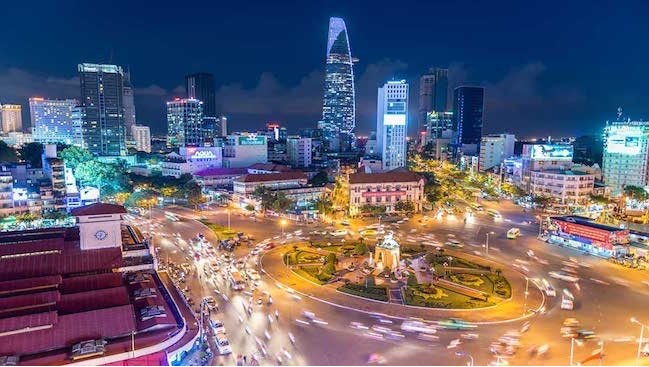
Vietnam becomes Cambodia’s second largest source of Tourists

0

In a remarkable turn of events, Vietnam has surpassed China and Thailand to become the second largest source of international tourists to Cambodia in 2023, according to the latest statistics from the Ministry of Tourism. Only South Korea, which has maintained its top spot for several years, sent more visitors to the Kingdom last year.

The surge in Vietnamese arrivals can be attributed to several factors, such as the easing of travel restrictions amid the COVID-19 pandemic, the improved connectivity and infrastructure between the two countries, and the growing cultural and economic ties that have fostered mutual understanding and appreciation.

According to the ministry’s report, Vietnam accounted for 18.7% of the total 4.2 million foreign tourists who visited Cambodia in 2023, up from 12.4% in 2022 and 8.9% in 2021. In contrast, China’s share dropped from 21.7% in 2021 to 16.5% in 2022 and 14.3% in 2023, while Thailand’s share declined from 15.2% in 2021 to 13.8% in 2022 and 12.6% in 2023.

The report also revealed that Vietnamese tourists spent an average of $1,050 per person per trip, higher than the overall average of $950 for all foreign visitors. This indicates that Vietnamese travelers are not only interested in visiting Cambodia’s famous attractions, such as Angkor Wat and Phnom Penh, but also willing to explore other destinations and experiences that offer more value and diversity.

The ministry’s spokesperson, Mr. Sok Chenda, said that Vietnam’s rise as a major tourism market for Cambodia is a positive sign for the recovery and development of the sector, which has been severely affected by the global health crisis since 2020.

He added that the ministry will continue to work with its Vietnamese counterpart and other stakeholders to promote bilateral tourism cooperation and exchange, as well as to enhance the quality and safety of tourism services and products for both domestic and international visitors.

Mr. Sok also expressed his hope that Cambodia will be able to attract more tourists from other ASEAN countries and beyond, as the region gradually reopens its borders and resumes its travel activities. He said that Cambodia has a lot to offer to the world, not only in terms of its rich cultural heritage and natural beauty, but also its friendly people and hospitable environment.

One of the most obvious attractions of Cambodia is its cultural heritage. The country is home to the famous Angkor Wat, the largest religious monument in the world and a UNESCO World Heritage Site.

Angkor Wat is a stunning example of Khmer architecture and art, dating back to the 12th century. It is part of a complex of temples and monuments that span over 400 square kilometers, making it one of the most impressive archaeological sites in the world.

But Angkor Wat is not the only cultural treasure in Cambodia. The country also has many other ancient temples, palaces, museums, and monuments that showcase its rich history and diversity. Cambodia’s culture is also reflected in its cuisine, music, dance, and festivals, which are colorful and vibrant expressions of its identity and traditions.

Another reason why Cambodia is a wonderful country to visit or invest in is its natural beauty. The country has a variety of landscapes, from mountains and forests to rivers and lakes to beaches and islands. Cambodia has some of the most biodiverse ecosystems in the world, hosting thousands of species of plants and animals, many of which are endangered or endemic.

Some of the natural wonders that Cambodia offers include the Tonle Sap Lake, the largest freshwater lake in Southeast Asia and a biosphere reserve; the Cardamom Mountains, one of the last remaining rainforests in Asia and a hotspot for wildlife; the Mekong River, the longest river in Southeast Asia and a lifeline for millions of people; and the Koh Rong Archipelago, a group of pristine islands with white sand beaches and coral reefs.

But perhaps the most appealing aspect of Cambodia is its people. Cambodians are known for their friendliness, hospitality, and resilience. Despite the hardships and challenges that they have faced in their history, they have maintained their optimism, dignity, and generosity. Cambodians are always ready to welcome visitors with a smile and a warm greeting.

They are also eager to share their culture, stories, and perspectives with anyone who is interested. Cambodians are also hardworking, creative, and entrepreneurial. They have shown remarkable progress and potential in various fields, such as education, technology, agriculture, tourism, and trade. Cambodia has a young and dynamic population that is ready to contribute to the development and prosperity of their country and the world.
Farmers protest intensify in Narbonne 2, France

0
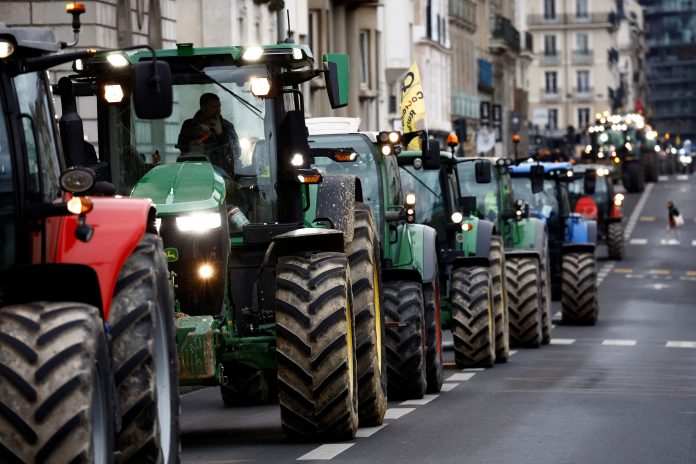
French farmers drive their tractors during a demonstration to protest over price pressures, taxes and green regulation, grievances shared by farmers across Europe, in Rennes, Brittany, France, January 25, 2024. REUTERS/Stephane Mahe

The situation in Narbonne 2, a rural commune in the south of France, is becoming more tense as farmers continue to protest against the government’s agricultural policies. The protesters have blocked several roads and highways, set fire to tires and hay bales, and clashed with the police. They demand more financial support, better prices for their products, and less bureaucracy and environmental regulations.

The farmers say they are facing a crisis due to the impact of the Covid-19 pandemic, the Brexit deal, and the EU’s Common Agricultural Policy (CAP). They claim that they are not able to compete with cheaper imports from other countries, and that they are losing their markets and customers. They also accuse the government of ignoring their needs and imposing unfair rules that limit their production and increase their costs.

The government has tried to calm the situation by sending representatives to meet with the farmers and listen to their grievances. The Minister of Agriculture, Julien Denormandie, said that he understands the farmers’ anger and frustration, and that he is willing to work with them to find solutions. He also announced some measures to help the farmers, such as increasing the budget for agricultural insurance, creating a fund for young farmers, and simplifying some administrative procedures.

However, these measures have not satisfied the farmers, who say they are too little and too late. They have vowed to continue their protests until they get concrete results and guarantees from the government. They have also called for more solidarity from other sectors of society, and invited consumers, environmentalists, and workers to join their movement.

The farmers’ protest in Narbonne 2, France, has escalated in the past week, as thousands of demonstrators blocked roads, burned tires, and clashed with police. The protesters are demanding more government support for their sector, which has been hit hard by the Covid-19 pandemic, climate change, and trade disputes.

The protest began on January 15, when a group of farmers from the Occitanic region decided to set up a camp near the Narbonne 2 toll booth, one of the main access points to the city. They claimed that they were paying too much for the tolls, which they said were unfair and discriminatory. They also denounced the lack of dialogue with the authorities, who they accused of ignoring their plight.

The protest soon gained momentum, as more farmers from other regions joined the camp. They brought their tractors, trailers, and livestock, and erected barricades on the A9 and A61 motorways. They also staged rallies in front of the prefecture and the regional council, where they demanded to meet with the representatives of the government.

The protesters say that they are facing a crisis of unprecedented proportions, as they struggle to cope with low prices, high costs, and increased competition. They say that they have not received enough financial aid from the state, which they claim has favored other sectors such as tourism and industry. They also blame the European Union for imposing strict environmental and sanitary regulations, which they say are unrealistic and harmful to their production.

The protesters have received some support from other social movements, such as the yellow vests and the environmentalists. They have also attracted some sympathy from the public, who understand their frustration and anger. However, they have also faced criticism from some sectors, such as the transporters, the retailers, and the residents of Narbonne 2. They argue that the protest is causing disruption, pollution, and economic losses for the city and its surroundings.

The authorities have tried to defuse the situation by engaging in dialogue with the protesters. They have offered some concessions, such as reducing the toll fees, increasing the subsidies, and facilitating the access to credit. They have also promised to review some of the EU regulations that affect the farmers. However, these measures have not satisfied the protesters, who say that they are insufficient and temporary. They have vowed to continue their protest until they obtain more concrete and long-term solutions.

The situation remains tense and uncertain in Narbonne 2, as the farmers’ protest shows no sign of abating. The conflict poses a challenge for the government, which has to balance between addressing the legitimate grievances of the farmers and ensuring the public order and safety of the citizens.

The outcome of this dispute could have significant implications for the future of agriculture and rural development in France.

The protests in Narbonne 2 are part of a wider wave of discontent among farmers across France, who have been organizing similar actions in other regions. The farmers’ unions have warned that the situation could escalate further if the government does not respond adequately to their demands. They have also expressed their concern about the future of agriculture in France, and the risk of losing their identity and sovereignty as farmers.

Ayodhya, ancient of India is witnessing a surge of spiritual tourism as Tanzania and Indonesia strengthen cooperation

0

Ayodhya, the ancient city of India, is witnessing a surge of spiritual tourism and development after the historic verdict of the Supreme Court in 2019 that paved the way for the construction of a grand temple at the disputed site where Hindus believe Lord Ram was born.

The temple, which is expected to be completed by 2025, has attracted millions of devotees and visitors from across the country and abroad, who come to witness the progress of the project and offer their prayers and donations.

The city, which is also considered one of the seven holy places for Hindus, has seen a transformation in its infrastructure and amenities, with new roads, bridges, hotels, guest houses, parks, museums and cultural centers being built or renovated.

The government has also announced several schemes and projects to boost the economy and employment of the region, such as the Ayodhya airport, the Ramayana circuit, the Ayodhya-Shri Lanka ferry service and the Ayodhya film city.

The city’s spiritual hub, however, is not limited to the temple alone. There are many other places of worship and historical significance that draw pilgrims and tourists alike. Some of these are:

Hanumangarhi: A temple dedicated to Lord Hanuman, the monkey god and devotee of Lord Ram. It is believed that Hanuman lived here in a cave and guarded the Ramkot hill where the temple is located. The temple has a 76-step staircase that leads to the main shrine where a statue of Hanuman is installed.

Kanak Bhawan: A palace gifted to Sita by her mother-in-law Kaushalya after her marriage to Ram. It is also known as Sone ka Ghar or the house of gold, as it is adorned with gold and silver ornaments. The palace has a temple where idols of Ram and Sita are worshipped.

Ram Janmabhoomi: The birthplace of Lord Ram, where the temple is being constructed. It is also the site where a 16th-century mosque, known as Babri Masjid, stood until it was demolished by Hindu activists in 1992, sparking communal riots and a long legal battle. The Supreme Court ruled in favor of the Hindus in 2019 and allotted the land to a trust for building the temple.

Nageshwar Nath Temple: A temple dedicated to Lord Shiva, who is believed to have been worshipped by Kush, the son of Ram and Sita. It is said that Kush lost his armlet in the Sarayu River, and it was found by a Nag (snake) who recognized it as belonging to Ram.

The Nag then built a temple for Shiva and placed the armlet there. The temple is one of the oldest in Ayodhya and has a unique architecture with intricate carvings.

Ram ki Paidi: A series of ghats or steps along the bank of the Sarayu River where devotees take a holy dip and perform rituals. The ghats are illuminated with lamps and lights in the evening, creating a spectacular view.

The ghats also host cultural events and festivals such as Deepotsav, when millions of earthen lamps are lit to mark the return of Ram to Ayodhya after 14 years of exile.

Tanzania and Indonesia strengthen cooperation in Gas, Health and Agriculture sectors

Meanwhile, Tanzania’s President Samia Suluhu Hassan recently concluded a successful two-day official visit to Indonesia, where she met with her counterpart Joko Widodo and signed five bilateral agreements to boost cooperation in various sectors. The agreements cover the areas of agriculture, minerals, marine economy, education, diplomatic relations, technology and trade.

One of the highlights of the visit was the agreement on gas development, which will see Tanzania benefit from Indonesia’s expertise and investment in the oil and gas industry.

According to the deal, about 100 employees of the Tanzania Petroleum Development Corporation (TPDC) will receive scholarships from Indonesia’s state-owned oil and gas company Pertamina to enhance their skills and knowledge. Pertamina will also partner with TPDC to manage the Mnazi Bay gas block and process natural gas into chemical products and fertilizers.

Another key area of cooperation is health, where Indonesia will support Tanzania’s pharmaceutical sector by investing in local production and distribution of medicines and medical equipment. Indonesia will also share its experience and best practices in handling the Covid-19 pandemic and other health challenges.

In agriculture, Indonesia will assist Tanzania to improve its productivity and quality by providing funding and training to the Farmers Agriculture and Rural Training Centre (FARTC) in Morogoro.

The center will receive human resources and technical support from Indonesia to enhance its capacity to train farmers and extension officers. Indonesia will also explore opportunities to invest in Tanzania’s agricultural value chains, such as palm oil, coffee, tea, spices and horticulture.

The two countries also agreed to enhance their cooperation in education, technology and trade. The University of Dar es Salaam (UDSM) and the Bandung Institute of Technology (ITB) signed a memorandum of understanding to conduct joint research and academic exchange in various fields.

The two countries also agreed to facilitate trade and investment promotion by establishing a joint business council and holding regular business forums. They also pledged to strengthen their diplomatic relations by opening embassies in each other’s capitals.

President Samia expressed her satisfaction with the outcome of the visit, saying that it marked a new chapter in the relations between Tanzania and Indonesia. She said that her government was committed to implementing the agreements and ensuring that they translate into tangible benefits for both countries. She also invited President Widodo to visit Tanzania at his earliest convenience.

President Widodo welcomed President Samia’s visit as a historic milestone that reflected the strong friendship and partnership between the two nations. He said that Indonesia was ready to increase its investments in Tanzania, especially in the strategic sectors of gas, health and agriculture. He also thanked President Samia for her support for Indonesia’s candidacy as a non-permanent member of the UN Security Council for 2024-2025.

The visit was President Samia’s first to Indonesia since she assumed office in March 2023 following the death of her predecessor John Magu Fuli. It was also part of her tour of Asia, which included stops in China, Japan and South Korea.

The Brilliance of Victor Osimhen and Building High Performance Teams

1

When he touched the zenith of African football, winning the CAF Player of the Year award, I dropped these lines on Victor Osimhen: “Victor has been phenomenal and has created a new era in Napoli Italy. Today, we have the eras of Diego Maradona and Victor Osimhen (that is not an exaggeration if you follow Serie A).” 

Watching this young man is supremely delightful. He works hard for his team. He is generous to his team. He has an electrifying vision, making teammates better. His tenacity is unbounded. For his attacking prowess, he uses offense to build a great defense, allowing his goalkeeper to enjoy the game!

His field work rate is consistent with legends. They are great, and they deliver super-greats in teams. Usain Bolt ran the world’s best 9.58 seconds for 100 meters. But four Jamaicans ran the 4 x 100 meters relay at 36.84 seconds. If you run the numbers, each became better, running 100 meters, on average, at 9.21 seconds, when they ran together. Simply, by running together, they beat the individual world’s 100 meters record. 

The effort of Victor today reminds me of Nigerian-native but Greek- registered Giannis Antetokounmpo who plays for Milwaukee Bucks. Giannis in some games will have the most points, most blocks, most assists, and everything! Through that, he led a team to an NBA championship.

Victor is very promising. For the very first time, I felt like I was watching a super eagle. Why? When you bring an eagle home in ancestral Igbo, the elders will take you to Ikoro, the large wooden drum the size of a room. Today, I watched “Super Eagles” and if they continue to fly this way, my car stops at all the good parties and the laurels can come home – and they can enter the “Ikoro” of Nigeria!

And for all, find “Victors” in your team. They do offer great assists in producing high performance teams, well beyond their individual brilliance.


NoteAs a lover of sports who has zero skill on any sports (always coming last), I branched into sports analysis and strategy, earning the nickname Sausa, the sports strategist in Secondary Technical School Ovim, Abia State. So bear with me; I like to analyze sports. 

Today in America, my Baltimore Ravens are going against the Kansas Chiefs and we’re hoping that Lamar Jackson plays his best game against Patrick Mahomes & Team. (Your prayer for Ravens will be appreciated as it will make this teacher happy as they need to WIN).

Again, Super Eagles, bring it home. I am available to offer the toast.

Suzuki USA issues stop sale order on 2024 Hayabusas as Cars produced in Romania set new records in 2023

0

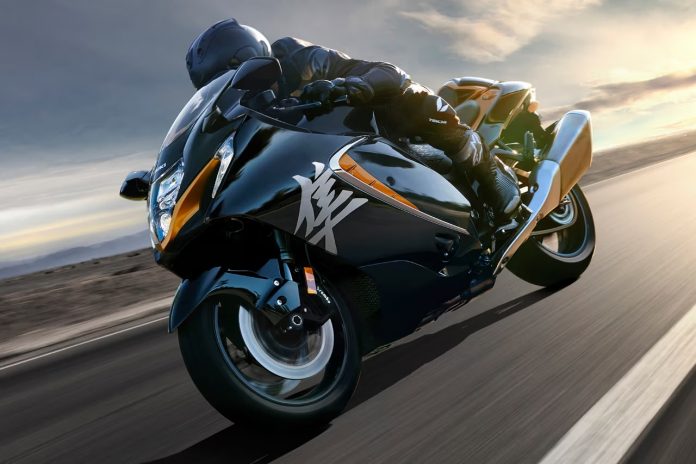
Suzuki USA has announced a stop sale order on all 2024 Hayabusa motorcycles due to a potential brake fluid leak that could affect the braking performance of the bike. The company said that it has received reports of some customers experiencing a loss of brake pressure or a spongy feeling in the brake lever while riding the new Hayabusa, which was launched earlier this year.

According to Suzuki, the cause of the problem is a faulty seal in the front brake master cylinder, which may allow air to enter the brake system and reduce the hydraulic pressure. Suzuki said that it is working with its supplier to fix the issue and provide a remedy as soon as possible. In the meantime, customers who have purchased or reserved a 2024 Hayabusa are advised not to ride their bikes until further notice.

How Suzuki Created the Ultimate Sport Motorcycle

The name Hayabusa means “peregrine falcon” in Japanese, a fitting choice for a bike that can fly faster than any other production motorcycle in the world. The peregrine falcon is also known for hunting blackbirds, which was a subtle jab at the Honda CBR1100XX Super Blackbird, the previous speed king that Suzuki aimed to dethrone.

The first generation Hayabusa (1999-2007) was unveiled at the 1998 Intermot show in Germany, and it immediately caused a sensation. It had a sleek and aerodynamic design, inspired by fighter jets and wind tunnel testing.

It had a massive 1,299 cc inline-four engine that produced 173 horsepower and 102 lb-ft of torque. It had a top speed of 303 to 312 km/h (188 to 194 mph), depending on the source, which was 16 to 23 km/h (10 to 14 mph) faster than the Super Blackbird.

The Hayabusa was not only fast, but also balanced, stable, and comfortable. It handled well on the track and on the road, offering a smooth and exhilarating ride. It was praised by critics and riders alike for its all-round performance and versatility. It invented a new category called “Ultimate Sport”, combining the best of sport bikes and touring bikes.

The first generation Hayabusa also sparked a controversy over the safety and environmental impact of such high-speed machines. In 1999, there were fears of a European regulatory backlash or import ban that could limit the top speed of motorcycles.

To avoid this, the Japanese and European manufacturers agreed to voluntarily restrict the top speed of their bikes to 299 km/h (186 mph) from 2000 onwards. This meant that the 1999 and 2000 models of the Hayabusa remained the fastest production motorcycles ever made, until they were surpassed by the Kawasaki Ninja H2 in 2015.

Suzuki apologized for the inconvenience and said that it is committed to ensuring the safety and satisfaction of its customers. The company also said that it will contact the affected customers directly and arrange for a free inspection and repair of their bikes at authorized Suzuki dealerships. Customers who have any questions or concerns can call Suzuki customer service at 1-800-444-5077 or visit www.suzuki.com for more information.

The 2024 Hayabusa is the fourth generation of Suzuki’s flagship sportbike, which debuted in 1999 and became famous for its speed, power and aerodynamics. The new model features a redesigned bodywork, a more powerful engine, improved electronics and suspension, and a host of advanced rider.

Cars produced in Romania set new records in 2023

The year 2023 was an exceptional year for the Romanian automotive industry, which saw an impressive increase in car production and exports. According to data published by the Association of Automobile Manufacturers and Importers (APIA).

Romania produced over 800,000 cars in 2023, 15% more than in 2022 and 25% more than in 2021. This is the highest number of cars produced in Romania in a single year, surpassing the previous record of 672,000 units in 2019.

The biggest contributions to this success came from the two largest car factories in Romania: Dacia and Ford. Dacia, which is part of the Renault group, produced more than 600,000 cars in 2023, 12% more than in 2022 and 20% more than in 2021. Dacia has launched two new models in 2023.

Dacia Spring, its first electric model, and Dacia Bigster, a compact SUV with a modern and robust design. Both models were in high demand on the domestic and foreign markets, consolidating their position.

Ford, which has a factory in Craiova, produced more than 200,000 cars in 2023, 25% more than in 2022 and 40% more than in 2021. Ford has benefited from significant investments in recent years that have allowed it to expand production capacity and introduce new models to the market.

Ford in 2023 launched the Ford Puma ST, a sporty version of its popular crossover, and the Ford EcoSport Hybrid, a hybrid model that combines a gasoline engine with an electric motor Ford managed to grow.

In addition to Dacia and Ford, Romania hosted other companies that produced cars or auto components in 2023. These include Hyundai, which produced over 50,000 cars under the Kia brand in Pitesti, Volkswagen, which produced over 40,000 cars under the Skoda brand in Timisoara, and Toyota, which produced over 30,000 cars under the Suzuki brand in Brasov.

Romania has also been an important supplier of auto parts and accessories for other European markets, such as Germany, France or Italy.

The increased production of cars in Romania has had a positive impact on the national economy, generating income and jobs for thousands of Romanians. According to APIA, the Romanian automotive industry contributed over 15% to Romania’s Gross Domestic Product (GDP) in 2023 and directly or indirectly employed over 300,000 people.

Also, the Romanian automotive industry has been an important factor for the development of road and rail infrastructure in Romania, as well as for stimulating innovation.

In conclusion, 2023 was a remarkable year for cars produced in Romania, which set new records and demonstrated their quality and competitiveness on the international market. This trend is expected to continue in the coming years, as Romania consolidates its position as an important player in the European and global automotive industry.