DD
MM
YYYY

PAGES

DD
MM
YYYY

spot_img

PAGES

Home Blog Page 3470

Andreessen Horowitz’s Strategic $30M Injection into Gaming Startups

0

The gaming industry has been a hotbed of innovation and growth, attracting significant investment from venture capitalists and investors. In recent times, several gaming startups have caught the eye of the investment community, securing funds to drive their growth and development.

In a bold move that underscores the burgeoning potential of the gaming industry, Andreessen Horowitz (a16z), a leading venture capital firm, has announced a substantial $30 million investment into a slew of gaming-related startups. This strategic infusion of capital is part of a16z’s SPEEDRUN program, an early-stage accelerator designed to propel the most promising gaming ventures to new heights.

The gaming sector, already a titan in the entertainment industry, continues to expand at an exponential rate, with technological advancements such as AI, VR/AR, and blockchain-based games (Web3) leading the charge. a16z’s investment initiative, spearheaded by Andrew Chen, a general partner overseeing the Games One Fund at a16z, is a testament to the firm’s confidence in the sector’s future. The initiative focuses on startups that are innovating at the intersection of technology and gaming, including infrastructure, 3D tools, and gamified consumer applications.

The SPEEDRUN program, which has gained notoriety for its highly selective process, admits only about 1% of applicants, yet boasts an impressive track record with 80% of its first cohort securing subsequent funding post-Demo Day. The program offers more than just financial backing; it provides startups with industry coaches, mentors, and a community of ambitious founders, all aimed at fostering success in an increasingly competitive market.

The $30 million will be distributed over the next 45 days, with each participating startup receiving $750,000 to fuel their growth and development. This move is not just about funding; it’s about building a robust ecosystem where tech-driven gaming startups can thrive and innovate. With applications due by May 19, the 12-week course will commence between July 29 and October 20, 2024, in Los Angeles, California, setting the stage for the next wave of gaming innovation.

The investment by a16z is a clear indicator of the venture capital firm’s belief in the transformative power of gaming. As the industry evolves, it’s becoming increasingly clear that gaming is not just a form of entertainment but a platform for technological advancement and social interaction. With this $30 million commitment, a16z is not only fueling the growth of individual startups but also investing in the future landscape of gaming, where the lines between play, technology, and reality continue to blur.

For those at the helm of gaming startups, this presents an unparalleled opportunity to be part of a16z’s vision for the future of gaming. It’s a call to arms for innovators and creators who are ready to push the boundaries of what’s possible in the virtual realm. The future of gaming is bright, and with a16z’s backing, it’s set to become even more dynamic and immersive.

BlockDAG Tech Whitepaper Launch Position Project for $5M Daily Inflows Amid CORE and Mantle (MNT) Price Surges

0

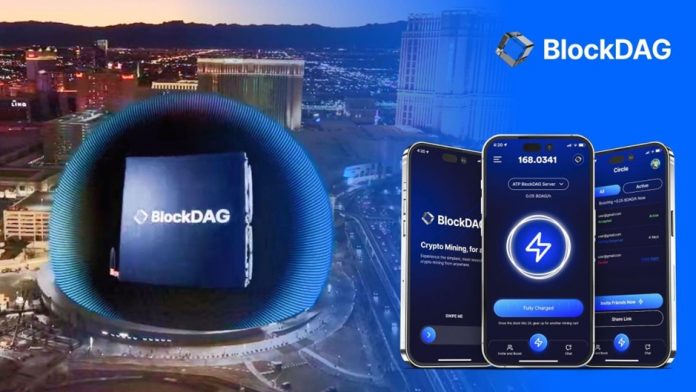
Ignite your portfolio with BlockDAG Network as it stands unparalleled, the fastest-growing titan, eclipsing others. With the Mantle (MNT) price and CORE Token making waves, BlockDAG Network‘s novel leads the charge toward unprecedented growth. As Mantle price climbs and CORE Token forecasts dazzle, BlockDAG’s ascent symbolises the pinnacle of crypto innovation and investment potential.

The CORE Token’s Meteoric Rise

The CORE token, issued by CoretoshisLab, spiked in popularity following an official tweet hinting at a potential price surge to $100 before the Bitcoin halving event. The tweet suggested over 100 crypto funds would buy and hold CORE, forecasting an unimaginable growth for 2024. Recently jumping from under $1 to $2.69, such a leap would mark a 3,600% increase, emphasising the token’s promising future amidst high credibility claims.

Mantle (MNT) Price Surge & its Innovative Rewards Station

Mantle (MNT) has made headlines with its innovative Rewards Station, allowing users to lock Mantle crypto in a vault for various rewards. This feature has sparked interest, leading to a price increase from $0.89 to $1.22 and a market cap growth from $2.91B to $3.93B. With 19 technical indicators in the green, analysts predict a rise to $1.15 before Q2 2024 ends.

Analysts’ Mind-Blowing Predictions for BlockDAG

BlockDAG, the fastest-growing crypto titan, is setting the digital currency world ablaze! With a staggering $13.2 million in funds and over 6.5 billion coins sold, BlockDAG’s dynamic ascent in the cryptocurrency market is revolutionary. This digital juggernaut is on track to eclipse giants like Kaspa, powered by an unparalleled innovation in handling digital assets. Imagine being part of a movement where your investment could skyrocket to $10 by 2025 – that’s the electrifying potential of BlockDAG, backed by real achievements and a visionary team driving its unstoppable growth.

????????????????????????????????????????????????????????

Every day, $1 million worth of transactions are executed, with projections hitting a breathtaking $5 million daily. This isn’t just growth; it’s a monumental surge placing BlockDAG at the pinnacle of crypto innovation. Offering a diversified portfolio through its four robust revenue pillars—Coin Investment, Mobile Mining, Dedicated Miner Units, and Trade Miners—BlockDAG is the beacon for those seeking wealth diversification in the crypto realm. From enjoying passive income with the simplicity of mobile mining to reaping substantial active gains through dedicated units, the opportunities are boundless.

As top analysts forecast a staggering 30,000x return post-launch, BlockDAG isn’t just another crypto project; it’s a golden ticket to unparalleled investment heights. Blending the best features of Bitcoin and Kaspa, BlockDAG stands as a testament to the future of cryptocurrency. Seize the moment and be part of this historic rise. BlockDAG isn’t just growing; it’s reshaping the very fabric of digital finance. Get ready to witness history in the making – join the BlockDAG revolution today!

Investing in BlockDAG’s Future

BlockDAG, the titan of the crypto world, is setting the pace as the fastest-growing digital currency, eclipsing rivals with its groundbreaking technology and visionary approach. As Mantle (MNT) and CORE Token make waves, BlockDAG’s unprecedented ascent offers a unique investment opportunity.

With its price on a meteoric rise, backed by robust revenue streams and a daily transaction value hitting millions, BlockDAG is not just growing; it’s revolutionising the financial landscape. Seize the moment with BlockDAG and witness your investment soar to unimaginable heights.


Join the BlockDAG Presale:

Website: https://blockdag.network

Presale: https://purchase.blockdag.network

Telegram:https://t.me/blockDAGnetworkOfficial

Discord: https://discord.gg/Q7BxghMVyu

Will We See a New Banking Crisis in the Near Future?

0

2023 was definitely a shaky financial year as we deal with inflation that is slowly going down, and yet we still haven’t experienced lowered prices on goods, the government is still not lowering the interest rate, hoping for a soft landing (which will probably never happen), and if that wasn’t enough, we had a banking crisis that could lead to a domino effect.

But how can banks collapse in modern times? Do we now have regulations to prevent that from happening, and aren’t banks observed by the government?

Well, as we saw, banks can collapse. In fact, not just any banks, but some pretty big banks that had a lot of money in circulation.

So, what does this mean for the banking sector and the entire economy? Should we expect another collapse in the near future?

Banking Crisis

The whole situation in the banking sector began when Silicon Valley Bank, Silvergate, and Signature Bank, the top 3 crypto-friendly lenders collapsed within a week. This is quite strange but explainable.

One bank collapse leads to a domino effect where people get scared for their money and they go to withdraw them. This causes other banks to fail since most of the money they have to operate has been withdrawn.

The banking crisis, which was controlled well had an impact on the entire banking sector, and other banks felt the effect. Banks like First Republic narrowly escaped the same scenario, and the situation quickly spread to Europe, leading to the downfall of Credit Suisse, which is an institution included in the list of Global Systemically Important Banks.

Even other banks in the eurozone (Deutsche Bank) went under pressure as investors started to dump their shares.

So, in order to control the crisis, the obvious step is for governments and central banks to step in and rescue banks. The economic impact will be far greater if other banks start to fail, compared to bailing out those that struggle.

Although this might have been the right step, it received a lot of backlashes from the public as people were angry that the government was using taxpayer money to bail out private institutions. However, the US government claimed that they were non-taxpayer bailouts similar to the ones implemented during the 2008 financial crisis.

But even if the bailout isn’t coming from taxpayers, people will be impacted indirectly through inflation.

Can All Banks Be Saved by Governments?

Well, not really. If we take the banking crisis from Switzerland, we can see why. In order to get the crisis under control the government required UBS, (Switzerland’s biggest bank) to buy their long-time rival Credit Suisse (which was facing financial problems) for $3.25 billion.

But, this raised another issue. Maybe the situation in Switzerland is currently under control, but with the forced marriage of both banks, UBS’s market share could now exceed more than 30 percent. Additionally, their total assets are now worth $1.7 trillion, which is twice as large as Switzerland’s GDP.

So, what if another banking crisis is on the horizon?

Who will bail UBS? Most people would say that this bank is currently too big to fail, but anything can happen. I would argue that this bank is currently too big to bail, which is scarier.

Can a New Bank Crisis Happen in the Near Future?

It is quite hard to predict a banking crisis. As we all remember last March, the situation with the banking sector went from good to horrible in a few days.

But one thing is for sure. The Banking crisis from 2023 really left a mark on the global banking sector.

First and most importantly, the customer trust went out the window. And in a financial industry like a bank, trust is the most important thing. This will definitely send shock waves in the future, as people are prepared to take drastic measures even for small changes or negative news.

That’s why banks immediately started earning that trust and clearing the situation. It is really important for banks to earn people’s trust once again, as that will ensure the liquidity of the banking sector.

On top of that, the banking sector is advancing with the introduction of platforms like Genome bank, that provide online banking options.

We are definitely still in a disruptive economy where governments still fight inflation to the point where we can enter a recession or depression. There are speculations that the US government will start to decrease interest rates on their first meeting this summer, which will increase the money flow into the economy.

As for the banking crisis, it could happen, but it will be mainly fueled by the fear that people have about the banking sector. Fortunately, since the banking crisis in 2023, governments and banks have done a really good job of earning back that trust.

How Can a Bank Fail?

Well, there are many different reasons why banks can fail but it all comes down to how they manage risks. If one bank has a higher risk exposure and fails, this is a domino effect where people take out their money from other banks fearing the same scenario, causing a liquidity problem for the other bank.

And that can be the birth of a new banking crisis.

In last year’s case, most banks failed just because of high indebtedness, unreasonable exposure to liquidity risk, mismatch between assets and liabilities, poor investment performance, and excessive risk-taking.

Can this happen again? – Absolutely. However, governments wouldn’t want another banking crisis to happen, which is why they keep a close eye on banks right now.

Final Words

So, should you prepare for another banking crisis? – Not really. It seems that the effects of last year’s banking crisis are slowly fading away and won’t impact the sector much in the future.

Additionally, there are some signs that the global economy is recovering, and with the government lowering interest rates, people will start spending money more which will eventually improve the bank’s liquidity.

There is always a possibility for another banking crisis, but in reality, people shouldn’t live with that fear just because the problem will become self-inflicted which will be the reason for another banking crisis.

Pendle & Sui Charts Show Decline; Scorpion Casino Booming Ahead Of Its Launch On April 15

0

In the crypto world, the anticipation surrounding new launches, coupled with the performance of existing tokens, shapes the investment landscape.

Today, we examine Scorpion Casino ($SCORP), set to revolutionise the crypto gambling sphere with its unique rewards system, against the backdrop of Pendle and Sui’s recent market trends.

Our focus is on guiding readers to the next big crypto investment, spurring excitement for Scorpion Casino’s April 15 launch. Let’s dive into why Scorpion Casino is stealing the spotlight, while also shedding light on Pendle and Sui’s current positions.

Scorpion Casino: Providing Passive Income in Crypto Gambling

Scorpion Casino, in the crypto gambling domain, offers unparalleled passive income opportunities. With its presale already drawing significant attention, $SCORP boasts features that set it apart. Imagine earning daily rewards directly linked to a casino’s performance – a first in the crypto world.

Scorpion Casino isn’t just about gambling; it’s an investment in a system designed to thrive independently of market volatilities, providing up to 10,000 USDT in daily passive income. The platform’s upcoming launch on the crypto exchanges LBank and XT.com further underscores its potential as the next billion-dollar crypto entity.

Pendle: A Future-Forward Approach to Yield

Pendle offers a platform for the tokenization and trading of future yields, providing users with flexibility in managing their investments. Despite its forward-thinking model, recent trends have seen Pendle experiencing a decline, a reflection of the broader market’s challenges. However, Pendle’s commitment to offering control over future yields through its novel AMM system remains a cornerstone of its value proposition.

SUI: Redefining Scalability and User Experience

Sui stands out for its groundbreaking layer-1 blockchain platform, designed with global adoption in mind. Its unique object-centric data model and Move programming language address key inefficiencies in existing blockchain systems. Despite its technical prowess and emphasis on user experience, Sui has also faced a downturn in its recent performance. Yet, its innovations, particularly in enhancing the blockchain user interface, continue to position it as a significant player in the industry.

SCORP, Pendle, and Sui: A Comparative Insight Ahead of April 15 Launch

Scorpion Casino’s unique selling point is its tokenomics, including a reward system that promises daily income from the casino’s earnings. This approach not only differentiates $SCORP from traditional crypto investments but also provides a buffer against market volatility.

With over 210 casino games and 30,000 monthly betting opportunities, Scorpion Casino is designed to generate continuous engagement and revenue, making it an attractive proposition for those seeking both entertainment and investment opportunities.

Scorpion Casino Launching On LBank On April 15th

Scorpion Casino $SCORP presents a compelling investment opportunity, especially with its launch on the horizon. While Pendle and Sui offer valuable transformations in their respective domains, the current market trends highlight the challenges they face.

In contrast, Scorpion Casino introduces a groundbreaking model that not only enriches the online gaming experience but also offers a stable passive income stream, irrespective of market conditions.

As we approach its April 15th launch, the anticipation surrounding Scorpion Casino’s potential to reshape the crypto gambling landscape is palpable. We invite you to explore this unique opportunity further and consider investing in the $SCORP presale. Embrace the chance to be part of a venture poised for exponential growth.

By prioritising security and user benefits, Scorpion Casino is set to be a leader in the crypto gambling industry. Its launch represents not just a new product but a new era in cryptocurrency investment.


Presale Ending Soon, Get Your Hands On Scorp Today!

Presale: https://presale.scorpion.casino/

Twitter: https://twitter.com/ScorpionCasino

Telegram: https://t.me/scorpioncasino_official

Utilitarianism versus Neoliberalism in the Quest for Ensuring Inclusive Education for All by 2030

0

All forms of education are essential to the development of both human and non-human life. Whether obtained through a formal or informal system, it is a crucial component of production since the global power marketplace is shifting toward a knowledge-based economy rather than one centered around resources. This has been a major factor in the different growth agendas and plans that the government, the organized private sector, and individuals have all had.

One of such agendas is the Sustainable Development Goals, which were agreed on by political and business leaders in 2015 after the inability to realise all the goals and targets of the Millennium Development Goals.

In the global effort of achieving Sustainable Development Goal 4 (SDG 4), which is to provide inclusive and equitable quality education for everyone by 2030, utilitarianism and neoliberalism are intricately interacting. This intersection exposes the market-driven approach to education accessibility and quality, as well as the philanthropic motivations behind delivering education as a fundamental human right.

SDG 4’s fundamental tenet is the promotion of free, egalitarian, and high-quality education for all children, irrespective of their socioeconomic background or any other discriminating criteria. This aligns with utilitarian values. The focus on making sure all boys and girls finish their primary and secondary school relates to the utilitarian idea of optimizing total well-being by giving everyone access to necessary educational opportunities, which in turn promotes individual growth and society advancement.

However, within the framework of neoliberalism, the nature of education is often viewed through an economic lens, emphasizing market-oriented policies and privatization. This perspective is evident in the goal’s focus on affordability and access to technical, vocational, and higher education, highlighting the importance of education as a means for economic advancement and financial success. While neoliberal principles promote individual choice and competition, they also risk exacerbating inequalities by commodifying education and perpetuating disparities based on wealth and privilege.

The various targets outlined within SDG 4 illustrate the multifaceted challenges facing education systems worldwide, reflecting the complexities of balancing utilitarian ideals with neoliberal realities. For instance, the goal to eliminate gender disparities in education and ensure equal access for vulnerable groups underscores the utilitarian imperative of inclusivity and social justice. Yet, achieving these targets requires confronting neoliberal policies that prioritize profit-driven models and perpetuate systemic inequalities.

Moreover, the emphasis on acquiring relevant skills for employment and entrepreneurship underscores the neoliberal notion of education as a tool for enhancing human capital and market competitiveness. While skill development is essential for economic empowerment, the neoliberal approach may neglect broader educational goals, such as critical thinking, civic engagement, and cultural awareness, which are vital for sustainable development and global citizenship.

A comprehensive strategy that recognizes the importance of education as a basic human right and a driver of socioeconomic development is needed to resolve these conflicts. This means acknowledging the need for innovation, accountability, and efficiency in the delivery of education while also enacting policies that place a priority on equality, social justice, and inclusive education practices.

Our analyst notes that stakeholders can endeavour to realize the transformative potential of education in creating a more equitable, prosperous, and sustainable future for all by carefully and comprehensively managing these contradictions.