DD
MM
YYYY

PAGES

DD
MM
YYYY

spot_img

PAGES

Home Blog Page 3476

The Political Economy of Fuel Production and Distribution at the Dangote Refinery

0

Following the discovery of crude oil in what is now Bayelsa State in 1956, Nigerians, particularly their political leaders, thought that the country’s revenue would remain adequate to support basic amenities for its population and propel the economy forward. According to some reports, the discovery was effectively used and handled up until the late 1960s. However, scholars, professionals, and public affairs analysts claim that between the late 1970s and this year, what was the largest source of income for the most populous nation in Africa became a curse.

Despite being the world’s tenth largest crude oil reserve and the thirteenth largest crude oil producer, Nigeria and its people continue to struggle to supply and access basic social amenities. This is based on a variety of social and political issues affecting the administration of oil refineries in Kaduna and Port-Harcourt. Over the years, the failure to gain large amounts of cash from crude oil sales has had a massive impact on the country’s economy, particularly the value of its currency.

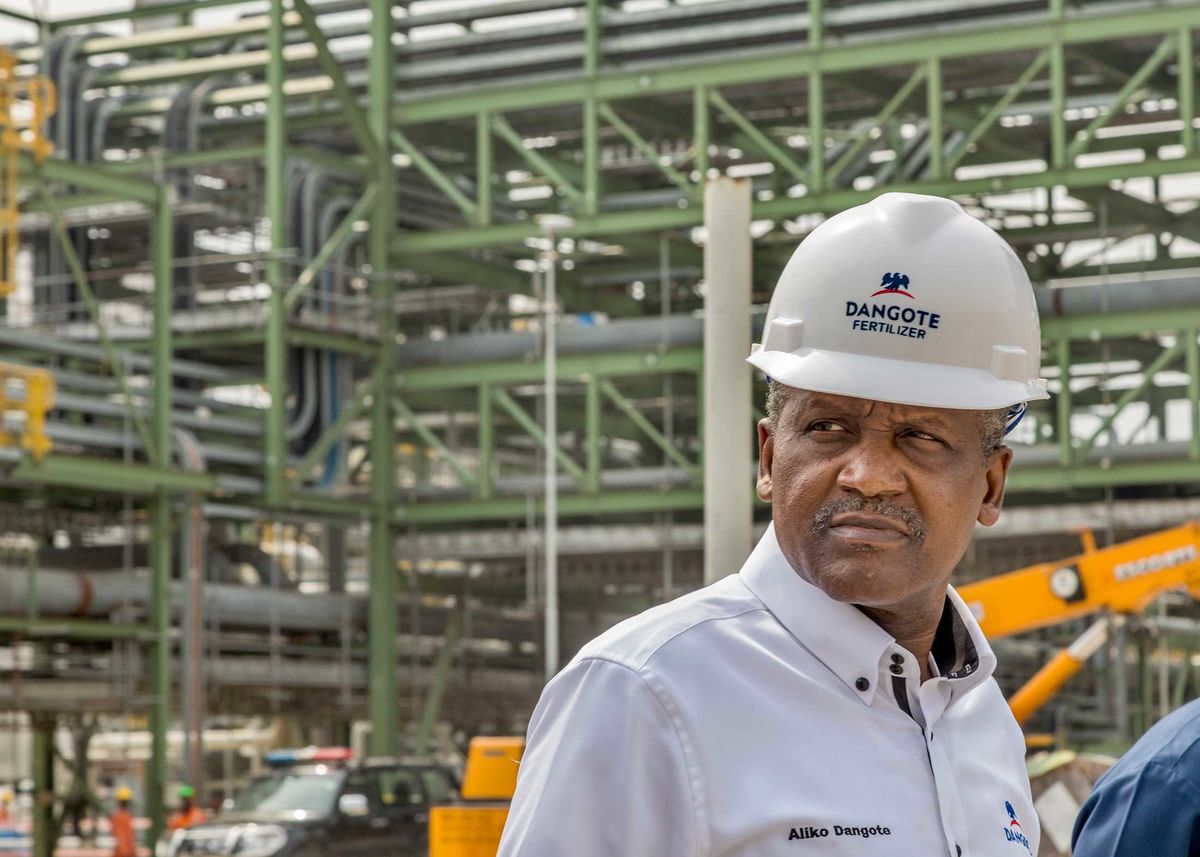
However, having played significant roles in the advancement of the country’s economy through various businesses, attention is shifted to Mr. Aliko Dangote. It is obvious that social and political forces causing negative outcomes for the national refineries will remain for a long time. According to several sources, Mr. Dangote is regarded as an entrepreneur who can solve the country’s dysfunctional refineries through private ownership of a refinery.

Mr. Dangote took the risk and established Dangote Petroleum Refinery, covering a land area of approximately 2,635 hectares, and located at Victoria Island, Lagos State.  According to the company, “The Refinery will meet 100% of the Nigerian requirement of all refined products and also have a surplus of each of these products for export. Dangote Petroleum Refinery is a multi-billion dollar project that will create a market for $21 Billion per annum of Nigerian Crude. It is designed to process Nigerian crude with the ability to also process other crudes.”

In May 2023, the refinery was officially inaugurated by former President Muhammadu Buhari, with Nigerians hoping to get a better deal from the company in terms of having a sigh of relief from pricey imports for almost all of its petroleum use. On January 12, 2024, the company announced the commencement of its Automotive Gas Oil and Aviation Fuel, or JetA1, after several months of additional political and economic regulation.

Immediately after the announcement, a number of professional associations, marketers, and other critical stakeholders were associated with the company for the distribution and sales of its products. At the same time, business, and political leaders, as well as citizens, expressed their views on the company’s ability to start production after experiencing a series of bottlenecks.

  1. Our analyst notes that Aliko Dangote’s hard work and determination led to the commissioning of the Dangote refinery, inspiring future generations to strive for success and set self-goals goals. In this piece, our analyst examines some of the views expressed by Nigerians and corporate organizations about the emergence of the refinery from a political economy perspective with a view to revealing the interests of the stakeholders.

Eterna PLC, one of the integrated energy providers in the country, announced its official recognition by the Dangote Refinery as domestic sales distributor. By becoming one of the major distributors of Dangote domestic petroleum in the country, Eterna said its commitment to improving product supply had been reinforced. “The appointment is a testament to the company’s long-standing reputation for excellence,” the company’s statement noted. With this comment, our analyst observes that the corporation intends to extract significant value from the new refinery, leveraging its (Eterna) superior market position.

Fellow business leaders, especially Mr. Femi Otedola, also believes that the refinery has potential to promote energy security, independence, and economic transformation for Nigeria.

The refinery is a significant environmental sustainability initiative, aiming to capture 90% of CO2 emissions and reduce well-to-tank carbon emissions from crude oil maritime transportation. It recirculates 100% of its water, producing 50MW of power and replacing Euro 5 with Euro 5, and shipping 65,000 barrels of crude and 650kbpd in refined products daily saves 1.5m-2m tons of CO2 emissions.

Benefits to the host community

Children are training at a refinery site, passing Level 1 and Level 2 exams for Electrical and Mechanical Engineering certification. Chief Shakiru Bello praises Dangote’s scholarship scheme, which has helped parents in communities by increasing beneficiaries annually, despite initial doubts.

The massive infrastructure project will create an ecosystem of demand, with thousands of workers directly and indirectly working there. The project will also require provision of food, uniforms, transportation, security, cleaning services, and housing, resulting in a multiplier effect. Lagos’ economic nodes will expand from Victoria Island and Ikeja to include Epe-Ibeju, ensuring decentralization.

Spur growth in other sectors

The Nigerian government should support Dangote refinery operations and encourage business competition among the business community. The Nigerian National Petroleum Corporation Limited should support modular refineries through partnership injection and ensure operational readiness. Government actions promote competition, prevent monopolistic tendencies, and promote innovation, technical progress, price moderation, and consumer choices. Dangote businesses aim to control industries like cement and sugar, aiming for control over their antecedents.

The refinery should prompt entrepreneurs to consider the spillover benefits of its operations on their businesses. For instance, foreign companies importing refined crude to Nigeria could acquire large shares in transportation, impacting banks, insurance companies, and other service providers.

The Dangote mega refinery’s inauguration has sparked speculation about the iron, steel, forestry, and paper industries. Paper mills with outdated machines and buildings should be sold for profit, and their states should revive trees for rebirth. Rethinking agricultural and industrial policies that promote export of raw materials is necessary.

Meeting local needs and improving foreign earnings

With a 20% stake in the project, the government should persuade Dangote to meet local demand first, easing subsidy payments and ensuring efficient supply. The government should attract more investments to boost production and bridge the supply gap with OPEC falling below its target.

Dangote Refinery will shift the country from a net importer to a net exporter of petroleum products, creating jobs and generating foreign exchange. This move aligns with the Dangote Group’s commitment to greater private sector participation in the economy. The refinery will also foster a booming private sector, boosting the economy and fostering increased productivity.

Toye Eniola, Executive Secretary of the Association of Housing Corporations of Nigeria, suggests reducing refined oil importation to conserve foreign exchange and stabilize the forex market.
BlockDAG Unites Blockchain and DAG for 20,000x ROI, Challenges Solana as SUI Prices Soar

0

In a landscape where digital currencies like Sui and Solana are making notable strides, BlockDAG distinguishes itself with a compelling trajectory. Sui’s recent price increase, attributed to its partnership with Tencent Cloud and Mysten Labs, showcases its growth potential. Meanwhile, Solana remains a robust player in the market, known for its resilience and strong performance.

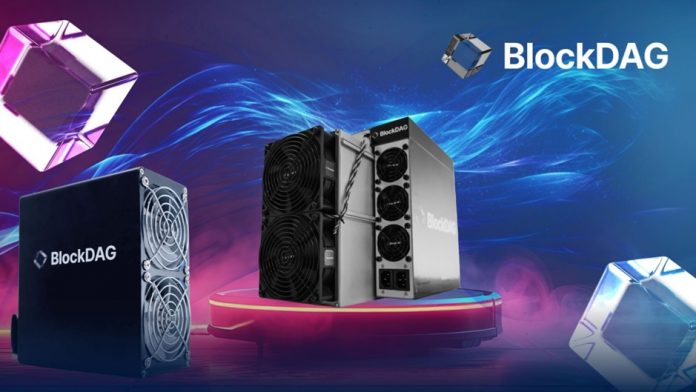
Amidst these developments, BlockDAG Network‘s remarkable presale success, with over $12.4 million raised and more than 6.3 billion coins sold, highlights its significant appeal. Combining blockchain’s reliability with DAG’s efficiency, BlockDAG not only stands out for its technological innovation but also for its promising potential in the crypto landscape, offering a compelling case for those looking to diversify their digital asset portfolios.

SUI Price Surges Amid Tencent Cloud & Mysten Labs Partnership

Sui (SUI) witnesses a price surge fueled by Tencent Cloud and Mysten Labs’ partnership, hitting its all-time high. Tencent Cloud supports the Sui blockchain through Blockchain RPC service, enhancing the developer ecosystem. Mysten Labs, a key collaborator, brings expertise in distributed systems and cryptography.

Sui’s innovative Layer 1 architecture and Move programming language position it as a leader in blockchain tech. The SUI price rally reflects optimism for decentralised app development, with the current price at $1.99 and a market cap of $2.48 billion. Despite a recent dip, SUI maintains a monthly gain of nearly 20%.

Solana Rival BlockDAG Presale

Solana garners attention for its resilience amid market volatility, solidifying its position in the crypto realm. Trading impressively at $192.34, Solana showcases its robust network through a thriving ecosystem and a DeFi TVL of $4.05 billion. Close to breaching the $200 mark, Solana stands resilient amidst market fluctuations. Its speed, efficiency, and scalability allure investors and developers, cementing its status as a significant player in the crypto investment landscape.

Though BlockDAG presale presents a superior option, while Solana enjoys stability, BlockDAG outperforms with its promising presale, surpassing $12.1 million and selling over 6.3 billion coins. BlockDAG’s potential for higher returns surpasses Solana’s momentum, making it the preferred investment. Unlike Solana, BlockDAG offers an innovative approach and a clear roadmap, setting it apart as the ultimate choice for investors seeking substantial gains.

BlockDAG: Best Crypto Tool with Over 6.3 Billion Coins Sold

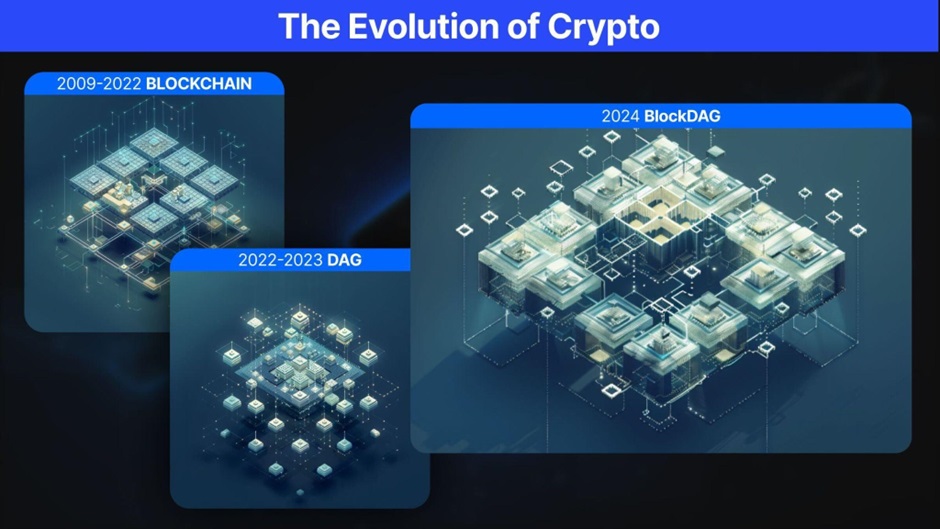
BlockDAG’s whitepaper is a pivotal resource in the blockchain field, providing a comprehensive analysis of how the platform merges traditional blockchain reliability with the efficiency and scalability of Directed Acyclic Graph (DAG) technology. The paper elaborates on BlockDAG’s distinctive features, particularly highlighting its adoption of sophisticated mathematical algorithms such as k-cluster and GHOSTDAG, which facilitate fast transaction processing and bolster network robustness.

This document not only demonstrates BlockDAG’s technical innovation but also aligns with a remarkably successful presale phase that has energized the cryptocurrency community. With $12.4 million raised quickly and an ambitious goal of $600 million by the end of 2024, BlockDAG’s presale reflects strong market enthusiasm and belief in the platform’s novel approach.

Investors participating in the presale at $0.0035 per BDAG coin are poised for significant gains, with an anticipated 1328% ROI at the projected launch price of $0.05. The presale’s vigor is accentuated by the swift purchase of over 6.3 billion BDAG coins, indicating strong community support and confidence in BlockDAG’s future.

Given the intense demand and quick completion of presale stages, there’s a clear expectation that the presale could wrap up in just three months, possibly delivering up to a 30,000x return on investment for early backers.

Wrap-Up

As the digital currency landscape continues to evolve, BlockDAG’s impressive presale achievements and innovative technology set a new standard. While Sui and Solana demonstrate significant progress and potential in their respective areas, BlockDAG emerges as a noteworthy entity with its unique blend of blockchain and DAG technologies, promising rapid transaction speeds and enhanced scalability.

Its successful funding rounds and strong community support reflect growing confidence in its potential to reshape the crypto landscape. For investors and enthusiasts alike, BlockDAG represents a compelling opportunity to engage with a platform that is not only forward-thinking in its approach but also demonstrates a clear commitment to delivering value and innovation in the digital currency space.


Join BlockDAG Presale Now:

Website: https://blockdag.network

Presale: https://purchase.blockdag.network

Telegram:https://t.me/blockDAGnetworkOfficial

Discord: https://discord.gg/Q7BxghMVyu


Blockchain Evolution: World’s First DAG Chain, BlockDAG’s 20,000x ROI Potential MANA and Chainlink Prices Surges

0

As the landscape of decentralized finance (DeFi) expands, investors are keenly eyeing assets like Chainlink (LINK) and Decentraland (MANA) for their unique contributions to the digital ecosystem. Chainlink’s recent uptrend of 14.44% underscores growing interest in secure blockchain technologies, while Decentraland pioneers immersive virtual real estate experiences.

However, amidst these advancements, BlockDAG Network emerges as a standout player, offering swift transaction speeds of 10,000 to 15,000 confirmations per second (TPS) and an advanced Explorer platform for comprehensive network analysis. With its presale success and projected ROI of 20,000x by 2025, BlockDAG promises to revolutionize decentralized networks.

Navigating the DeFi Landscape with Chainlink (LINK) Token

The Chainlink (LINK) token shows a promising uptrend, marking a 14.44% increase over the past week. This growth reflects an escalating interest in secure blockchain technologies. Chainlink (LINK) token bridges real-world data with smart contracts, enhancing transparency and trust in decentralised finance (DeFi).

As the DeFi ecosystem evolves, the Chainlink (LINK) token emerges as a key player due to its unique ability to connect external data sources to blockchain-based smart contracts. This utility fosters a more open and reliable digital economy. Observers note that the Chainlink (LINK) token is closely watched for its potential to influence market trends, signifying a keen interest in its future trajectory within the crypto market.

Exploring the Virtual Frontiers of Decentraland

Decentraland (MANA) stands at the forefront of the virtual world, offering a digital space where users can buy, sell, and interact on virtual land. This platform’s growth, fueled by Decentraland (MANA) tokens, showcases the potential of immersive virtual real estate, albeit influenced by market trends and the broader acceptance of the metaverse.

Despite its position in the play-to-earn arena and NFT marketplaces, Decentraland needs help in diversifying entertainment and investment returns. The future trajectory of Decentraland (MANA) heavily relies on metaverse adoption and the platform’s ability to attract and retain users with its unique offerings in the ever-evolving digital landscape.

BlockDAG’s Swift Transactions and Advanced Network Exploration

The BlockDAG Network stands out primarily due to its impressive transaction speed, achieving between 10,000 to 15,000 transaction confirmations per second (TPS), surpassing traditional blockchains like Bitcoin and Ethereum in efficiency. Additionally, BlockDAG’s Explorer platform represents a significant advancement in network analysis, offering users a comprehensive search tool for real-time network data. With this platform, users can easily monitor transaction histories, examine public wallet addresses, review smart contracts, and observe network nodes, ensuring transparency within the BlockDAG ecosystem.

The presale of BlockDAG has seen significant success, selling over 6.3 billion coins and raising approximately $12.4 million. Currently in its sixth presale batch, BDAG coins are priced at $0.0035 each, with a listing price set at $0.05, presenting a potential ROI of 1327% upon launch. Analysts are optimistic about BlockDAG’s future prospects, foreseeing a substantial increase of 20,000x in value by 2025 once the mainnet is operational.

Final Thought

As investors navigate the evolving landscape of decentralized finance (DeFi) and virtual worlds, assets like Chainlink (LINK) and Decentraland (MANA) continue to capture attention for their respective contributions. However, the emergence of BlockDAG stands out as a beacon of innovation, offering unparalleled transaction speeds and advanced network exploration capabilities.

With its successful presale and promising projected ROI, BlockDAG exemplifies the potential to reshape the future of decentralized networks. As the digital ecosystem continues to evolve, BlockDAG remains poised to lead the way towards greater efficiency, transparency, and opportunity in blockchain technology.


Join BlockDAG Now!

Website: https://blockdag.network

Presale: https://purchase.blockdag.network

Telegram: https://t.me/blockDAGnetworkOfficial

Discord: https://discord.gg/Q7BxghMVyu

LemFi Receives Approval to Operate Remittance Services in Kenya

0

LemFi, a leading Nigerian global financial technology company offering international payment solutions, has received approval from the Central Bank of Kenya (CBK) to operate remittances in Kenya.

This move highlights LemFi’s dedication to providing secure and efficient services while complying with the regulatory framework in Kenya.

The Fintech company says with its recent remittance approval, customers can do so at the best exchange rates available, which aligns with its promise to ensure seamless international payments to thousands of Kenyans in the diaspora.

The LemFi app provides a Kenya Shillings wallet setup, allowing users to fund their accounts with mobile money and open accounts. Afterward, based on their transactions, users can easily exchange their Kenya Shillings for other foreign currencies, such as US dollars (USD), British pounds (GBP), and Canadian dollars (CAD).

It is worth noting that when the payment platform first announced its entry into Kenya, in 2023, its Country Manager Kakea Mbacha said the services would not attract any fees as the fintech strives to ensure that Kenyans in the diaspora can send money home instantly, at the best rates. 

“Our services will not attract any fees as we strive to ensure that Kenyans in the diaspora can send money home instantly, at the best rates”, she said.

LemFi’s approval to operate remittance services in Kenya is coming after it announced in February 2024, that it has obtained approval from the Bank of Ghana (BoG) to resume its remittance services to Ghana with some of its approved partners.

LemFi’s return to Ghana was marked by a renewed focus on improved customer satisfaction, strengthened partnerships with key stakeholders, and a commitment to fostering financial inclusion.

Founded in 2020, LemFi delivers innovative services and products in various markets, through the LemFi app. It is available in Canada, the United Kingdom, and the United States, with plans to expand to more countries in the future.

The fintech service is aimed at Africa’s diaspora community and the company said it wants “to revolutionize the international money transfer market” with innovative solutions at zero fees.

Also, LemFi supports the use of multiple currencies through various wallets that customers can open and use to deposit money in different accounts. It is backed by leading investors who share the same vision.

The fintech company is reshaping the future of financial services, ensuring access for immigrants across the globe. Its mission is To improve the financial life of the next generation of immigrants.

Fraudsters Clone Air Peace Website, Defraud Passengers

0

Air Peace, one of Nigeria’s leading airlines, has issued a cautionary alert to the public after reports emerged of passengers being defrauded by fraudsters who cloned the airline’s official website.

This disconcerting revelation surfaces mere days after Air Peace’s historic launch of direct flights from Nigeria to the United Kingdom.

In a statement shared on social media platform X (formerly Twitter), Air Peace disclosed the existence of a fraudulent website, “www.flyairpeace.uk,” which masquerades as the airline’s legitimate booking platform.

The perpetrators behind this scam have adeptly replicated Air Peace’s website identity collaterals, leading unsuspecting individuals to believe they are engaging with the airline’s official portal. Emphatically, Air Peace clarified that its authentic website remains “www.flyairpeace.com” and urged the public to exercise caution and avoid the fraudulent site, which preys upon innocent passengers.

“Our attention has been drawn to the existence of a website “www.flyairpeace.uk” purporting to be an official website and defrauding unsuspecting individuals,” the airline said in a statement.

“We would like to dissociate the Air Peace brand from this fraudulent site because it is not owned by us. The one and only website of the Air Peace remains “www.flyairpeace.com.

“Members of the public should totally ignore the site, as it is impersonating Air Peace and fleecing passengers.”

This development follows Air Peace’s grand entry into London with more affordable ticket costs, forcing other airlines to slash their fares.

The airline’s foray into the UK market has been met with significant enthusiasm, as evidenced by the overwhelming demand for its services. Commencing its daily flight operations to Gatwick, London, on March 30, 2024, Air Peace experienced a remarkable surge in ticket sales.

CEO Allen Onyema revealed that tickets for the Lagos-London route are fully booked until September, underscoring the remarkable success of the newly launched service.

“When you say what has it been like, right from the day we published our fares, even that inaugural flight got sold out within days.

“It got sold out in days and even up to September. So, the traffic is there; however, the last 48 hours has not been easy.”

In an interview with Arise TV, Onyema elaborated on Air Peace’s ambitious expansion plans, envisioning ownership of over 60 aircraft in the near future. He said the airline is exploring other direct routes, including New York and Houston.

“At the end of the day, Air Peace will be owning over 60 aircraft,” he said.

However, the CEO candidly acknowledged the challenges encountered during the airline’s journey to establish operations in the UK market. Among these hurdles, Onyema highlighted Gatwick Airport’s demand for a substantial security deposit exceeding £2 million before permitting Air Peace to commence operations.

This demand raised pertinent questions about equity in regulatory requirements, prompting Onyema to question whether other international carriers faced similar financial obligations in Nigerian airports.

“Are British Airways and Virgins paying that amount of money to Nigeria airports as security deposits? And when you ask them when you will get this money back, they would tell you until you stop flying to Gatwick,” he said.

He however explained that following negotiations between Air Peace and Gatwick Airport, there was a reduction of the security deposit amount.

Despite the internal and external obstacles encountered, Air Peace successfully navigated the complexities and launched its Lagos-London operations, marking a significant milestone in the airline’s expansion endeavors.