DD
MM
YYYY

PAGES

DD
MM
YYYY

spot_img

PAGES

Home Blog Page 351

German Government Sees Slight Popularity Uptick in Latest Polls

0

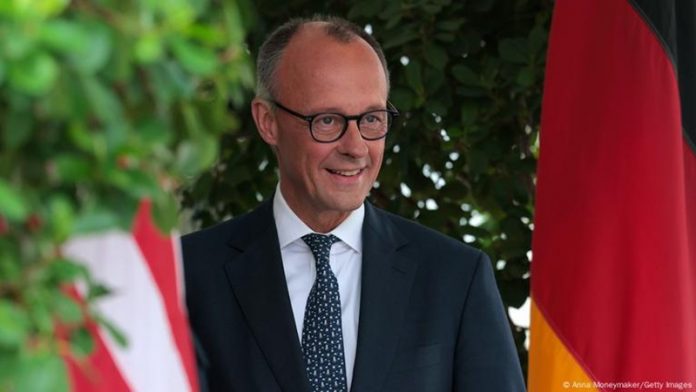
Recent opinion polling in Germany, conducted in the lead-up to the next federal election expected by March 2029, indicates a modest boost for Chancellor Friedrich Merz’s center-right coalition government.

Formed after the CDU/CSU’s victory in the February 2025 snap election securing 28.6% of the vote and leading a grand coalition with the SPD, the administration has navigated economic stagnation, immigration debates, and rising unemployment.

Current trends show the governing parties—primarily CDU/CSU and SPD—collectively polling at around 45.2% nationally, up from post-election lows but still trailing the surging far-right Alternative for Germany (AfD) at 25.4%.

This minor lift is attributed to Merz’s focus on tax cuts, economic revitalization, and stricter migration controls, which resonate amid public concerns over inflation and border security. Data aggregated from recent polls; AfD’s gains highlight ongoing polarization, while the coalition’s edge provides short-term stability.

Analysts note this uptick could be fleeting, as the AfD continues to erode support from both conservatives and the center-left by capitalizing on anti-immigration sentiment.

AfD Stumbles in Key Mayoral Run-Off, Failing to Claim First Major City Win

In a closely watched local election on October 12, 2025, the far-right AfD fell short in its bid to secure its first mayoral position in a significant German city.

The run-off in Frankfurt an der Oder—a border town in Brandenburg with around 58,000 residents—pitted AfD candidate Wilko Möller against independent Axel Strasser. Preliminary results show Strasser winning decisively with 69.8% of the vote to Möller’s 30.2%, amid a 49.4% turnout.

This outcome blocks what would have been a symbolic breakthrough for the AfD, which has been classified as a “suspected right-wing extremist” organization by German intelligence and faces ongoing surveillance.

The race followed a tight first round on September 21, where Strasser edged Möller 32.4% vs. 30.2%, eliminating candidates from the CDU and SPD. Political observers, including University of Potsdam’s Jan Philipp Thomeczek, had warned that an AfD victory could signal the party’s viability in urban centers beyond its eastern strongholds.

Instead, the loss reinforces the “firewall” strategy by mainstream parties, who refuse coalitions with the AfD despite its national polling surge.This defeat echoes earlier setbacks for AfD mayoral hopefuls, such as losses in North Rhine-Westphalia run-offs in late September 33% in Gelsenkirchen, 28% in Hagen.

However, the party did notch a historic small-town win in July 2025 with Hannes Loth in a rural eastern municipality, underscoring its rural-urban divide in appeal. On X, the result sparked quick reactions, with users sharing Al Jazeera coverage and debating the AfD’s broader momentum.

These developments highlight Germany’s deepening political fault lines: a stabilizing but vulnerable center-right government against an AfD capitalizing on discontent, yet repeatedly rebuffed at executive levels.

The minor boost reflects public approval of Merz’s focus on tax cuts and stricter migration policies, addressing economic stagnation and immigration concerns. However, with unemployment rising and inflation persistent, sustained gains depend on tangible economic results by 2026.

The CDU/CSU (25.1%) and SPD (14.4%) face internal tensions, as the SPD’s declining share (-2.0% since February 2025) pressures the coalition’s unity. Failure to align on contentious issues like migration or budget deficits could erode this uptick.

The AfD’s strong 25.4% polling, closing in on the CDU/CSU, underscores a polarized electorate. The coalition’s modest gains may not withstand AfD’s anti-establishment appeal if economic or social crises intensify, particularly in eastern Germany.

A stabilized German government could bolster the EU’s center-right leadership, especially as Germany pushes for tighter EU migration policies. However, the AfD’s influence may complicate Berlin’s ability to project unity in Brussels.

AfD’s Mayoral Run-Off Loss

The loss reinforces the AfD’s struggle to break through in urban centers, where diverse electorates and mainstream party “firewalls” block its path. This contrasts with its rural successes like Hannes Loth’s 2025 small-town win, highlighting a geographic limit to its executive ambitions.

The decisive victory of independent Axel Strasser, backed by a united anti-AfD front, shows the effectiveness of mainstream parties’ refusal to cooperate with the AfD. This strategy, if maintained, could cap AfD’s local governance gains, even as its national polling surges.

An AfD mayoral win would have been a historic milestone, amplifying its legitimacy and media presence. The defeat tempers its momentum, potentially cooling donor and activist enthusiasm, though its strong showing (30.2%) still alarms opponents.

Despite the loss, the AfD’s ability to reach a run-off in a city like Frankfurt an der Oder signals growing acceptance among some voters, especially in the east. Its national polling strength (25.4%) suggests that future local breakthroughs remain possible, particularly in smaller municipalities or if mainstream parties falter.

The AfD’s rise, coupled with the coalition’s fragile gains, points to a volatile electorate ahead of the 2029 federal election. Smaller parties like The Left (10.8%) and Greens (11.6%) could play kingmaker roles if the coalition weakens further.

The AfD’s anti-immigration rhetoric, while divisive, resonates with a significant minority, risking deeper societal divides. The government’s pivot to stricter migration controls may mitigate this but alienates progressive voters.

The AfD’s strength in eastern Germany like in Brandenburg versus its urban rejections highlights a regional divide that could shape future campaign strategies and resource allocation.

The government’s slight popularity boost offers breathing room but not security, while the AfD’s mayoral loss delays its local ascent without diminishing its broader challenge. Both trends underscore Germany’s delicate political balance, with economic performance and migration debates likely to dictate future shifts.

Salesforce Adds Voice to Agentforce, A New Feature That Lets AI Agents Speak to Customers Naturally

0

Salesforce is stepping deeper into the generative AI race with the introduction of Agentforce Voice, a new feature that lets its AI agents speak to customers in natural-sounding conversations.

The move expands the company’s AI-powered customer service platform beyond text-based chat, allowing businesses to customize tone, pacing, and pronunciation — and even let customers interrupt the agent mid-conversation, much like in real human interactions.

Announced ahead of Salesforce’s annual Dreamforce conference in San Francisco, Agentforce Voice marks the company’s most ambitious step yet to modernize enterprise customer service with AI. The feature integrates with major telephony systems, including Amazon, Five9, Genesys, NICE, and Ericsson’s Vonage — platforms already widely used across corporate call centers.

With this, Salesforce is aiming to position itself at the center of an emerging era of AI-enabled voice interaction that promises to redefine how businesses handle customer engagement.

The development signals how rapidly voice technology has become the next competitive frontier in artificial intelligence. What began as a text-driven revolution with OpenAI’s ChatGPT in late 2022 has evolved into a more immersive experience where machines can hold conversations that sound increasingly human. Both OpenAI and Anthropic have launched spoken versions of their chatbots that can converse fluidly without the flat, robotic tone typical of earlier voice assistants. Now, that same capability is finding its way into the backbone of corporate software — the systems that handle everything from customer inquiries to tech support.

Salesforce launched Agentforce in 2024 as part of its sweeping push to embed generative AI into its suite of customer relationship management (CRM) tools. The platform uses large language models to help companies automate and personalize responses to client requests over chat, email, and now, phone. According to Salesforce, Agentforce has been deployed in more than 12,000 business environments — a notable milestone that demonstrates its appeal, even if adoption has not matched early investor expectations.

Analysts at RBC Capital Markets noted last week that “investor enthusiasm around Agentforce has moderated as adoption has lagged expectations,” maintaining a “hold” rating on Salesforce’s stock. The cautious sentiment reflects broader market unease about how enterprise software firms will adapt as AI becomes more capable — and more autonomous.

Salesforce’s share price has slid about 28% since the start of 2025, a sharp contrast to the Nasdaq Composite, which has gained around 15% over the same period. The decline marks growing investor anxiety that AI could erode the long-term value of traditional software. In its latest earnings report, Salesforce itself warned that “new AI products may disrupt workforce needs and negatively impact demand for our offerings,” an admission that even industry leaders are not immune to the transformative, and potentially destabilizing, power of AI.

Those fears were amplified in September when Anthropic demonstrated that its Claude Sonnet 4.5 model was able to build a working chat application — similar to Salesforce’s Slack — in just 30 hours. The demonstration showcased how AI could potentially automate complex coding tasks and build full-scale software systems at a fraction of the time and cost, raising questions about the future relevance of traditional enterprise software development.

Yet Salesforce CEO Marc Benioff has sought to project calm. In a recent interview with CNBC’s Morgan Brennan, he rejected the notion that AI poses an existential threat to the business software industry.

“When we get into this kind of zero-sum game — that all this is going to get wiped out or change overnight — you’re not dealing with somebody who actually runs a company,” Benioff said. “Business is incremental, it’s evolutionary. We don’t see that kind of change.”

Benioff’s comments pinpoint a more measured view of how technology disruption unfolds — not as an immediate revolution, but as a process of adaptation. Salesforce has weathered multiple technological transitions over its two-decade history, from the rise of cloud computing to the era of mobile-first enterprise software. For the company, AI represents both a challenge and an opportunity: a chance to reinvent itself while maintaining the scale and reliability that large businesses require.

The new Agentforce Voice offering could become a key part of that reinvention. Salesforce is entering a race to make AI interactions more natural and contextually aware — a vital advantage for customer service operations that depend on human-like empathy and responsiveness. Voice, after all, remains the dominant mode of communication for many customers who prefer calling over typing.

The company says that with Agentforce Voice, users will be able to set different personalities for their AI agents — adjusting tone, accent, and delivery speed to align with brand identity or cultural context. The ability for callers to interrupt the AI mid-sentence adds a touch of realism, acknowledging one of the most common elements of human conversation: interjection.

Salesforce also plans to roll out Agent Script in November, a companion product that allows businesses to customize what AI agents say and do. Organizations will be able to fine-tune dialogues, craft guided responses, and set behavioral parameters for AI-driven customer service — effectively building a digital workforce tailored to their communication style.

However, a growing roster of startups is racing to build similar products, led by Sierra, a company co-founded in 2023 by former Salesforce co-CEO Bret Taylor. Sierra, now valued at around $10 billion, has been attracting attention with its AI agents that can “pick up the phone” to handle customer calls. Its clients include major names like ADT, SiriusXM, and SoFi, positioning it as a credible challenger to its former parent company.

For Salesforce, that competition carries symbolic weight: a sign that even its former executives are betting that AI-driven automation could define the next era of enterprise software. Sierra’s rapid ascent shows how new entrants are capitalizing on the market’s hunger for practical AI applications — tools that not only demonstrate novelty but also save costs and streamline operations.

Still, Salesforce’s advantage lies in its scale and integration. Few companies can match its reach across global enterprises, where its CRM products are already deeply embedded in daily workflows. Salesforce is betting that its existing relationships, combined with the trust it has built over decades, will help it retain an edge, even as nimbler competitors emerge.

The introduction of Agentforce Voice comes at a moment when the AI landscape is undergoing a shift from experimentation to execution. Businesses are no longer merely testing generative AI; they are deploying it at scale. Yet, as enthusiasm rises, skepticism lingers about whether AI systems can maintain reliability, handle complex customer emotions, and comply with privacy laws in live interactions.

Salesforce’s decision to spotlight Agentforce Voice at Dreamforce is believed to be a strategy to reassure investors that the company remains not only relevant but essential in the new AI-driven economy. Its challenge now will be to prove that these AI innovations can generate tangible revenue growth — and not merely serve as buzzwords to placate a restless market.

Breaking Down The FCA’s Lift on the Crypto ETN Retail Ban in UK

0

The Financial Conduct Authority (FCA) officially ended its four-year ban on retail access to crypto exchange-traded notes (ETNs) on October 8, 2025.

This move, announced in August following a June consultation, reflects the regulator’s view that the crypto market has “matured” enough to allow safer, indirect exposure for everyday investors—without them needing to hold actual cryptocurrencies.

IG Group, a major UK-based trading platform, has indeed forecasted a 20% surge in the domestic digital asset market as a result, driven by increased retail participation and institutional inflows.

What Are Crypto ETNs and Why the Ban Lift?

Unlike spot ETFs which hold the underlying assets like Bitcoin or Ethereum, ETNs are unsecured debt instruments issued by financial firms. They track the price of digital assets but don’t require physical custody, making them simpler to list on exchanges.

However, they introduce issuer credit risk—if the issuer defaults, investors could lose everything. Imposed in January 2021 amid crypto’s wild volatility and complexity concerns, the restriction limited these products to professional investors only.

This was part of broader FCA efforts to shield retail clients from high-risk derivatives. Effective October 8, retail access is now permitted only for ETNs listed on FCA-approved Recognised Investment Exchanges (RIEs), like the London Stock Exchange (LSE).

Products must be fully physically backed no leverage, with strict financial promotion rules ensuring clear risk disclosures. The ban on riskier crypto derivatives (e.g., futures, options, CFDs) remains firmly in place.

This isn’t a full green light for crypto—it’s a calibrated step to foster innovation while prioritizing consumer protection. As FCA Executive Director David Geale noted, the market is now “more mainstream and better understood.”

IG Group, a FTSE 250-listed firm with deep roots in CFDs and spread betting, bases its optimistic outlook on several factors: About 12% of UK adults roughly 7 million people already own some crypto, up from 4% in 2021. ETNs lower barriers by allowing tax-efficient exposure via pensions from October 2025 and Stocks & Shares ISAs from April 2026.

Issuers like 21Shares, WisdomTree, ETC Group, BlackRock launching its iShares Bitcoin ETN, Bitwise, and CoinShares are gearing up for LSE listings. This could mirror the 2024 US spot Bitcoin ETF inflows, which topped $15 billion in months.

The change positions London as a European crypto hub, potentially drawing post-Brexit capital back onshore. Analysts expect short-term Bitcoin price pressure upward due to heightened trading volumes, though volatility warnings persist.

Combined with the new “Digital Markets Supervisor” role for blockchain in wholesale markets, this could accelerate hybrid products and stablecoin rules, injecting fresh liquidity.

IG’s 20% estimate aligns with global trends—Europe’s crypto market grew 15-25% post-similar approvals in places like Germany and Switzerland. However, it’s tempered by risks: no Financial Services Compensation Scheme (FSCS) protection means full exposure to crypto swings and issuer failures.

Easier, regulated entry to BTC/ETH price tracking; tax wrappers enhance appeal for long-term holds. High volatility crypto can drop 50%+ in days; double risk from issuer default; no FSCS safety net.

20%+ growth via £5-10B in new inflows; boosts London’s fintech status. Initial volatility from “FOMO” buying; ongoing FCA scrutiny could tighten rules if issues arise.

Encourages EU peers; contrasts US ETF focus by emphasizing debt-based products.
Lags behind US spot ETFs; derivatives ban limits advanced trading.

This is a bullish signal for UK crypto adoption, validating IG’s growth call while underscoring the FCA’s risk-averse evolution. If you’re eyeing investments, start with diversified platforms like IG or Hargreaves Lansdown— but DYOR, as crypto ETNs aren’t for the faint-hearted.

“Don’t Stop Believing”: MicroStrategy CEO Michael Saylor Maintains Bullish Stance Amid Crypto Market Meltdown

0

MicroStrategy CEO Michael Saylor has continued to maintain his bullish stance on Bitcoin, after the crypto market last week, endured one of its most brutal sell-offs of the year, wiping out $20 billion.

The massive sell-off was reportedly triggered by U.S President Donald Trump’s announcement of a new 100% tariff on China, coupled with fresh export restrictions that sent shockwaves across global financial systems. Data from Coinglass revealed that more than 1.6 million traders were liquidated as panic swept through global markets.

While billions were erased in liquidations and other top assets like Bitcoin, Ethereum, Solana, XRP, and SUI plunged dramatically, Saylor’s message to the Bitcoin community was simple yet defiant.

Amid the market bloodbath, he wrote on his X profile, “Don’t Stop Believin.” This was accompanied by a chart that showed the growth trajectory of Strategy’s Bitcoin purchase since 2020.

Unlike previous dips, Saylor refrained from posting a new orange dot on his well-known Bitcoin accumulation chart signaling that MicroStrategy made no new Bitcoin purchases last week. Despite a staggering $6.4 billion dip in paper gains from MicroStrategy’s Bitcoin holdings, Saylor’s conviction in the world’s largest cryptocurrency has not wavered.

With over 640,000 BTC under management and an unrealized profit still exceeding $24 billion, the outspoken Bitcoin evangelist continues to embody the unwavering faith that has defined his strategy even as the broader market reels from a liquidation shock.

His company Bitcoin holdings currently stand at 640,031 BTC, valued at $71.71 billion with an average purchase price of $73,983. Despite the market downturn, the firm still holds an unrealized profit of approximately 51.44%, or about $24.35 billion.

However, the numbers also reveal the magnitude of the recent correction. Earlier this month, when Bitcoin traded near $122,000, the company’s holdings were worth around $78.1 billion. At current levels near $112,000, that value has dropped by roughly $6.4 billion, a sharp paper loss, though not a realized one.

On the equity side, MicroStrategy carries a market capitalization of $87 billion ($97 billion on a fully diluted basis) and an enterprise value of $101 billion, with more than two-thirds of its valuation directly tied to Bitcoin.

Notably, MicroStrategy is the largest corporate holder of Bitcoin, with 638,460 BTC. Saylor sees Bitcoin as a long-term asset. He believes it offers a hedge against inflation and an unparalleled store of value. The company’s Bitcoin strategy started in 2020. Since then, it has spent over $40 billion on growing its Bitcoin treasury.

In August 2020, MicroStrategy shocked the financial world by announcing its initial purchase of 21,454 Bitcoin for $250 million. Over the following months, MicroStrategy doubled down, adding another 48,916 BTC through subsequent purchases. This initial foray was fueled by Saylor’s belief that Bitcoin was a better store of value than cash.

In 2021, the company purchased nearly 54,000 BTC, further solidifying its position as a corporate whale in the crypto market. By 2022, the crypto market had entered a bearish phase, but that didn’t deter MicroStrategy, as the company still managed to add over 8,000 BTC to its holdings.

Despite market volatility, 2023 marked another active year for MicroStrategy. The company added over 56,000 BTC during periods of price consolidation, expanding its already substantial position.

In 2024, MicroStrategy went all in, acquiring 234,509 BTC. Following President Trump’s victory, MicroStrategy purchased more Bitcoin, a profitable strategy as the price of Bitcoin went up. In February 2025 MicroStrategy, rebranded as Strategy and has aggressively expanded its Bitcoin holdings throughout 2025 as part of its “42/42” capital plan, aiming to raise $42 billion in equity and $42 billion in fixed income to acquire more BTC.

As of September 29, 2025, Strategy holds 640,031 BTC, acquired at an average price of $66,384.56 per coin for a total cost of $33.139 billion. This staggering amount underscores its long-term commitment to the cryptocurrency. Just recently, reports reveal that Strategy has purchased 220 Bitcoin worth $27.2 million.

While MicroStrategy’s Bitcoin holdings are impressive, Michael Saylor’s personal investments in Bitcoin are equally noteworthy. Saylor has revealed that he owns 17,732 BTC, purchased for $175 million at an average price of $9,882 per Bitcoin.

Amid Saylor’s bullish stance on Bitcoin, several other analysts remain optimistic. They argue that the current downturn is a temporary pause in a larger bullish cycle, with one final surge potentially pushing Bitcoin to new all-time highs before a true bear phase begins.

Portfolio Manager at Bitwise Investments, Jonathan Man, described the $20B liquidation as “the worst in crypto history” but a net positive, arguing it flushed out overleveraged positions without structural damage. He highlighted Bitcoin’s rapid rebound as evidence of maturing market infrastructure. “The aftermath matters more than the drop, leverage is reset, and institutional flows will drive the next leg up”. He estimates $150,000–$180,000 by end-2025, driven by ETF inflows matching 2024’s $35B+ pace.

Also, in-house analysts at CoinDCX, one of India’s largest crypto exchanges, in their October 8, 2025, weekly prediction report called the liquidation a “temporary consolidation” in an uptrend, with RSI at 58 signaling neutral-bullish sentiment and 24-hour volume at $74B confirming renewed interest. They stressed the “Uptober” seasonal factor (historical 20% October gains) and ETF rebound potential post-fiscal clarity.

Outlook

The message from Saylor is unmistakable, even after a $20 billion market-wide sell-off and a $6.4 billion hit to his firm’s Bitcoin valuation, he remains steadfast urging the crypto community to keep believing in Bitcoin’s long-term vision.

From Stock to Smart: Toyota Tundra Tesla-Style Screen Upgrade Breakdown

0

For many Toyota Tundra owners, driving is more than transportation. It reflects power, reliability, and comfort. Yet, even the most capable trucks can seem behind in entertainment and connectivity. If you’ve wanted your Tundra’s cabin to match its performance, now is the ideal time for a touchscreen upgrade for Toyota Tundra that transforms your dashboard into a modern command center.

Why Tundra Owners Choose Screen Upgrades

Tundra drivers trust their trucks for strength and dependability, but the stock infotainment often feels dated. Older systems limit app use, map access, and audio streaming. A Tesla-style display brings responsive technology that updates the experience without replacing the vehicle.

This change doesn’t only refresh appearance; it delivers convenience, safety, and smoother control on every trip.

What Sets a Tesla-Style Display Apart

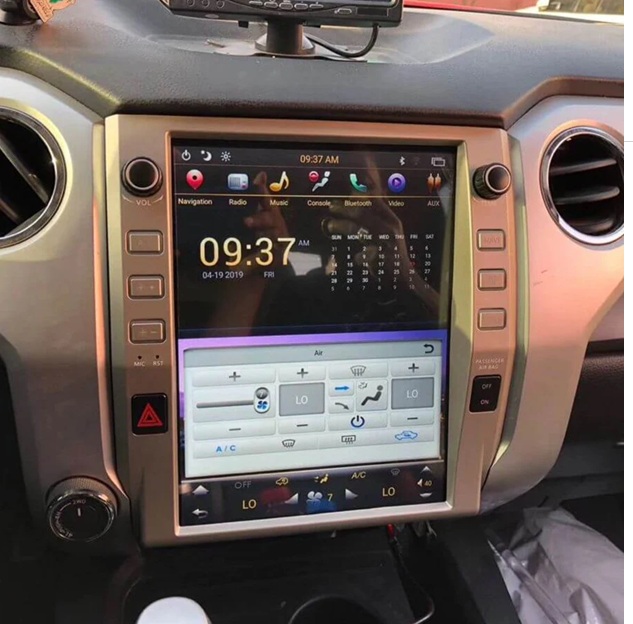
Picture a tablet built directly into your dash. This advanced display provides a clear, responsive interface supporting Apple CarPlay and Android Auto. It connects easily with navigation, music, and communication apps.

The larger screen keeps all essential functions in view, allowing easier adjustments and fewer distractions.

Main Advantages of the Tundra Touchscreen Upgrade

  1. Effortless Smartphone Connection
    Operate navigation and music through Siri or Google Assistant while keeping your hands on the wheel.
  2. High-Definition Visuals and Fast Touch Response
    The display offers bright, sharp detail and reacts instantly to every tap.
  3. Keeps Factory Controls
    You retain steering wheel buttons, climate settings, and the rear camera, preserving original comfort.
  4. Simple Plug-and-Play Setup
    Most units connect using existing wiring, eliminating complicated installations.
  5. Personalized Interface Options
    Customize themes and layouts to match your preferred style and routine.

A Smarter Daily Drive

After installation, your truck feels entirely new. Road trips become easier with live navigation and streaming services. City drives feel more manageable with quick touch commands. When paired with cameras and sensors, even tight parking becomes stress-free.

This is a true improvement to function and comfort, not just appearance.

Installation: Straightforward and Quick

Many assume adding a new screen requires professional rewiring. In reality, most Tesla-style kits are made for direct connection to the factory harness. Some owners install theirs at home using online guides, while professionals can complete it within hours.

Where Innovation Meets Quality

MergeScreens designs systems that combine advanced software with precise fitment. Each screen matches your truck’s original setup for stability and long-term reliability.

Choose from 12-inch or 16-inch options to give your Tundra a refined interior and improved usability. Explore more options at Mergescreens.

Spotlight Feature: Toyota Tundra Tesla-Style Display

The touchscreen upgrade for Toyota Tundra merges elegant design with reliable engineering. It aligns perfectly with your truck’s dashboard and adds GPS, app compatibility, and media features—all through a simple plug-and-play system.

Why Choose Tested Equipment

Not all aftermarket screens perform equally. Cheap versions can lag, freeze, or interfere with built-in controls. MergeScreens products undergo quality testing to ensure consistent performance during daily use. That reliability builds confidence and safety on the road.

What Drivers Say

Owners highlight several improvements:

  • A sleeker dashboard and brighter visuals
  • Faster system response and quick startup
  • Smooth compatibility with factory features
  • Clearer sound from advanced audio processing

The change brings real value and a modern touch without buying a new truck.

Final Thoughts: Upgrade with Confidence

Adding a Tesla-style display turns your Toyota Tundra into a more connected and capable vehicle. It enhances comfort, navigation, and entertainment while maintaining safety and ease of use.

Browse current models at MergeScreens and see how an intelligent display can make your Tundra feel future-ready today.

FAQs

  1. Does the Tesla-style screen fit every Tundra model?
    Most kits fit 2014–2021 models. Confirm compatibility before ordering.
  2. Will my steering wheel controls still work?
    Yes, quality upgrades keep your original functions, including climate and camera controls.
  3. Do I need professional installation?
    Not always. Plug-and-play kits are easy to set up, though professionals ensure perfect alignment.
  4. Does this affect my vehicle warranty?
    Usually not, as these systems install without cutting wires. Check with your dealer for details.
  5. Does it include navigation?
    Yes, GPS and app navigation like Google Maps and Waze are supported through CarPlay or Android Auto.