DD
MM
YYYY

PAGES

DD
MM
YYYY

spot_img

PAGES

Home Blog Page 353

A Look Into Recent Incident on Backpack Exchange: Automatic Liquidation and Deposit Settlement

0

Backpack Exchange—a Solana-based centralized crypto platform founded by Armani Ferrante—experienced massive volatility-driven liquidations totaling $181.6 million, with $71.8 million from SOL perpetuals alone.

This was part of a broader market crash where DeFi lending platforms saw over $210 million in liquidations, and platforms like Backpack faced technical strains, including order lags and position anomalies.

Amid this, some users reported that after full liquidation wiping their account balance, subsequent deposits did not appear in their accounts. Instead, these funds were automatically applied to cover “unsettled equity” or negative balances from the liquidation, effectively settling debts owed to profitable traders the “winners”.

This sparked widespread outrage on X, with users calling it “diabolical,” “worse than banks,” and a “debt spiral” where losses extended beyond the initial position. Critics argued it blurred the line between trading and involuntary debt repayment, lacking safeguards like insurance funds or explicit user agreements seen in traditional finance.

Armani Ferrante’s Explanation

Backpack’s founder and CEO, Armani Ferrante addressed this directly in a reply on X, framing it as standard risk management to ensure platform solvency and fairness. If you didn’t have enough dollars to pay your losses, then you owe the winners money. If your deposit didn’t land, it’s because you paid the winners the money you owed them.”

Ferrante elaborated that this is non-recourse—meaning users can’t owe more than they deposit post-liquidation—and aligns with Backpack’s design philosophy. The exchange uses an insurance fund to cover negative equity initially, but if a user deposits before full settlement, it’s automatically allocated to close the gap.

Richard_ISC He emphasized that the system “operates as it should,” preventing the exchange from holding user debt and ensuring “the exchange has no debt. We settled all the unsettled equity.”

Ferrante has repeatedly discussed Backpack’s risk engine in detail, drawing lessons from FTX’s collapse where he was an early engineer. In an April 2025 thread, he outlined the three-stage liquidation waterfall to prioritize user protection and transparency.

Positions sold directly on the public order book to minimize impact. 99.82% of recent liquidations handled here; chips away slowly using order book depth to avoid “stink bids” and price bands for protection.

If book fails, positions handed to participating market makers. Absorbs cascades without market disruption; open program for MMs to join. Only 0.18% used in recent volatility.

Auto-Deleveraging (ADL) matches against opposite-side positions by margin fraction and delta. Prioritizes reducing system risk delta to zero; 0% usage recently, but “like a seatbelt” for worst-case scenarios.

Ferrante stressed that bankruptcy is a “valid state transition” in any margin system CEX or DEX, and Backpack avoids FTX-like issues by lacking internal market makers, infinite credit lines, or single points of failure. No liquidation fees are charged forgoing ~$18M in annual revenue, and real-time ZK proofs of reserves run every 10 minutes for transparency.

Backpack’s unique setup blends spot, perps, borrow-lending, and cross-collateral into one subaccount-based engine, inspired by DeFi (e.g., Aave). Users can borrow against their full portfolio, earning yield on collateral while paying interest on borrows—treated like “directional delta” positions.

Liquidation triggers at 100% Maintenance Margin Ratio (MMR): orders cancel, borrows repay from available balance, and positions unwind via the waterfall. The “automatic” part for deposits stems from unsettled negative equity.

If volatility spikes faster than liquidation like during the October 10 crash, accounts can briefly go negative. New deposits settle this to protect lenders and winners, as Backpack’s borrow-lending requires over-collateralization and real-time monitoring.

Ferrante argues this is “friendly and fair,” as it avoids exchange insolvency and uses deposits only up to the owed amount—no further pursuit. Those liquidated during the crash who deposited soon after saw funds “vanish” until settlement cleared typically quick.

Platform assets remained solvent $425M vs. $421M user assets, 100.89% reserve rate. No prior clear disclosure; feels like “stolen” funds or TradFi-style margin calls without recourse. Some question tech reliability, as the engine failed to close positions before negatives in extreme volatility.

Supporters note it’s non-recourse no endless debt and isolated to affected accounts; the system held up without broader failures. Backpack’s normalized post-crash; historical data synced. Ongoing improvements: Higher leverage caps, performance upgrades and clearer UI for rates/equity.

Ferrante: “Transparency around risk is key,” urging diligence on any exchange’s risk management. This incident highlights tensions in high-leverage crypto trading: Innovation vs. user protection.

Backpack prioritizes systemic solvency over individual buffers, but the backlash may push for better disclosures. For alternatives, users eye DEXs though they have their risks or lower-leverage CEXs. If trading there, monitor MMR closely and avoid depositing mid-liquidation.
Binance Announces $283 Million Compensation for Users Impacted by Recent Depegs and Liquidations

0

On October 13, 2025, Binance, the world’s largest cryptocurrency exchange by trading volume, revealed a comprehensive $283 million compensation program to reimburse users affected by a chaotic market event on October 10, 2025.

This initiative addresses losses from forced liquidations triggered by temporary depegging of key stablecoins and liquid staking tokens (LSTs), compounded by technical glitches during a broader crypto market crash.

The announcement comes amid a partial market rebound, with Bitcoin surging 3.74% to around $114,913 following a staggering $20 billion in total liquidations across the industry.

The incident unfolded during a high-volatility selloff on October 10, between 21:36 and 22:16 UTC, exacerbated by external factors like U.S. President-elect Donald Trump’s announcements on tariffs against Chinese imports.

Over $7 billion in positions were liquidated in a single hour, with Binance alone accounting for $2.4 billion including $1.4 billion in longs and $981 million in shorts. This was part of a 24-hour wipeout affecting 1.6 million traders globally.

Stablecoin and LST Depegs: Three assets used as collateral in Binance’s Futures, Margin, and Loan products temporarily lost their pegs: USDe Ethena’s synthetic stablecoin dropped from $1 to as low as $0.66, despite maintaining stability on other platforms.

BNSOL (Binance’s Solana LST): Experienced sharp price swings. WBETH (Wrapped Beacon ETH LST): Also depegged amid the chaos. Surging volumes led to transaction errors, order delays, and redemption/transfer glitches, preventing some users from closing positions in time.

Binance noted that long-standing limit orders exacerbated spot price distortions during the liquidity crunch. These events particularly hit users in Binance Earn products, where the depegged assets served as collateral, forcing unintended liquidations.

Binance’s native token, BNB, dipped nearly 10% in the aftermath but has since recovered, reclaiming its spot as the third-largest non-stablecoin crypto by market cap. Binance’s two-phase program is designed to make affected users whole, focusing on verifiable losses.

Phase 1 (Liquidation Compensation): Covers Futures, Margin, and Loan users who held USDe, BNSOL, or WBETH as collateral during the depeg window. Payouts equal the gap between the liquidation price and the asset’s market price two hours later at 00:00 UTC on October 11.

Phase 2 (Operational Delays): Addresses delays in internal transfers or redemptions caused by system overloads. Automatic for verified impacted accounts; users who bought depegged assets at discounts retain gains. Wealth management clients follow a separate process.

Binance CEO Richard Teng and co-founder Yi He issued public apologies, emphasizing accountability: “We don’t make excuses and will learn from what happened.” Notably, Ethena Labs’ CEO Guy Young disputed the severity of the USDe depeg, calling it a Binance-specific anomaly rather than a protocol-wide issue.

Binance outlined enhancements: Adding redemption prices to index weights for affected assets. Implementing a “soft price floor” in USDe’s reference index.

While decentralized protocols like Uniswap and Aave handled the volatility without major hitches—processing record volumes and liquidations seamlessly—the event highlights ongoing risks in centralized exchanges during extreme conditions.

Community calls for regulatory scrutiny on liquidation fairness have emerged, with OKX CEO Hong Fang criticizing the scale of user harm. This compensation underscores Binance’s commitment to user protection amid crypto’s inherent volatility, though it serves as a reminder that trading remains high-risk.

Solana Experienced Highest Stress Test Amid the Largest Crypto Crash on Record

0

The cryptocurrency market endured its most severe liquidation event ever, with over $19 billion in leveraged positions wiped out across major assets like Bitcoin, Ethereum, XRP, and Solana (SOL).

Triggered by U.S. President Donald Trump’s surprise announcement of 100% tariffs on Chinese imports, the shock rippled through global markets, causing altcoins to plummet 20-90% in minutes and affecting 1.66 million traders—mostly long positions.

The total crypto market cap dipped below $4 trillion, marking a steeper drop than the 2020 COVID crash in terms of liquidation volume.While the price action was brutal—SOL fell 17.5% to around $144 before rebounding to ~$183—the real story was Solana’s underlying network performance.

Unlike past outages like the 2021 spam-induced halts, this event served as the blockchain’s toughest real-world benchmark yet, and it passed with flying colors. Solana’s core development team, Anza, confirmed the network hit a peak throughput of 100,000 transactions per second (TPS) while maintaining full stability—no downtime, no congestion, and median fees under $0.00011 SOL negligible even at scale.

The Agave validator client processed 6x the usual peak traffic and fully utilized 60 million compute units (CU) per block without degradation. This outpaced Ethereum’s L2s (e.g., Arbitrum faced delays) and even traditional systems like Visa average 65K TPS.

Decentralized exchanges (DEXs) on Solana handled over $7 billion in 24-hour volume. Protocols like Ethena 100% uptime, peg held, Aave record stress-test with zero delays, and Hyperliquid flawless traffic handling shone, while centralized exchanges like Binance halted trading and mispriced assets, exacerbating liquidations.

Solana’s status page reported zero disruptions on October 10-11, contrasting with broader market chaos where some altcoins briefly hit “zero” prices on CEXs due to overwhelmed systems.

What Caused the Crash and Why Solana Thrived

The downturn stemmed from over-leveraged positions up to 100x on some platforms and thin liquidity in altcoins, amplified by automated liquidations creating a feedback loop.

Market makers pulled back, and CEXs like Binance auto-sold collateral, pushing prices into “extreme wick lows” that weren’t reflective of organic demand. Solana’s edge? Its proof-of-history consensus and recent upgrades such as priority fees, local fee markets prevented the spam floods that plagued it in 2021.

This wasn’t just hype—decentralized market makers and DeFi protocols outperformed centralized ones, proving Solana’s design for high-volume, low-cost trading. As one analyst noted, it felt like “a stock exchange where the app never glitches during a market crash.”

Solana emerged as the “true Layer 1 MVP,” alongside resilient tokens like Zcash +9% post-crash and niche chains like Hyperliquid. Losers included Ethereum high fees, congestion, Cosmos ATOM briefly to zero, and CEXs liquidity failures.

Institutional interest is surging—Pantera Capital allocated $1.25B to Solana assets, DeFi TVL hit $12.2B, and Bloomberg pegs a 90% chance of Solana ETF approval by mid-2025. Despite the dip SOL down 15% weekly, this validates its scalability for real-world adoption.

While technically sound, SOL remains volatile—traders eye support at $175, with potential drops to $110 if macro pressures (e.g., U.S. bank M&A, regulatory probes) intensify. Long-term predictions range from $255-$480 by year-end, driven by ETF tailwinds.

This crash wasn’t just destruction; it was a proving ground. Solana didn’t just survive—it accelerated, handling chaos that would cripple most networks. As the dust settles, expect more capital flowing to proven performers like SOL.

FASMICRO Is Here To Serve You on Intel Technologies

0

To our corporate and university partners across Africa, I am happy to note that Intel is rising, to provide deeper, smarter and larger support on your technical missions. For more than a decade, our business has provided technical support to you, and that tradition will continue, with Intel technologies.

First Atlantic Semiconductors & Microelectronics (listed on Intel website https://www.intel.com/content/www/us/en/support/programmable/support-resources/fpga-training/overview.html ) is here to help your business, with Intel, under the new Intel® Partner Alliance Refresh program.

As your programmable microprocessor knowledge partner for Africa, we have the chipsets, kits and all the necessary knowledge to help you design, engineer, build and grow.

Cardano Hits $0.50, Ethereum Crosses $4,600, and BlockDAG’s $0.0015 Price Sparks Huge Market Buzz

0

Cardano (ADA) and Ethereum (ETH) are regaining strong momentum, creating excitement across the crypto world as people look to invest in crypto before 2026. Cardano’s ADA has climbed near the $0.50 mark after a drop in selling pressure, with analysts expecting steady gains through Q4.

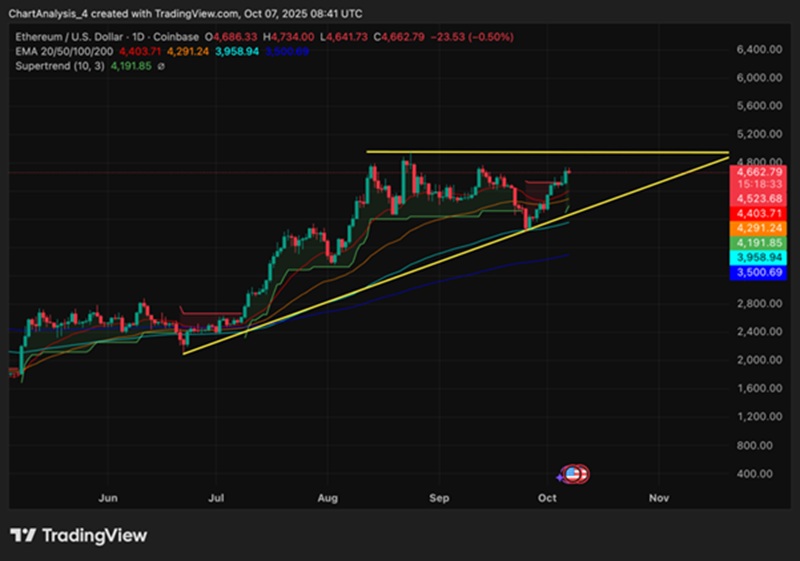
Ethereum, meanwhile, remains solid above $4,600 thanks to a sharp rise in staking demand and optimism about a possible ETF approval. These moves have reignited trust in top digital coins and may signal the start of another major rally.

While Cardano and Ethereum show renewed energy, BlockDAG (BDAG) focuses on actual progress and delivery. Buyers can still grab BDAG at a discounted $0.0015 before Genesis Day on November 26 with code “TGE”. Cardano and Ethereum are riding on speculation, but BlockDAG is showing concrete action.

Cardano Price Outlook: Building Back Toward $0.50

Cardano’s network is showing recovery signs, backed by better liquidity and stronger on-chain data. ADA’s flirtation with the $0.50 highlights growing confidence and room for further expansion into late 2025. Developers are improving system upgrades to make smart contracts faster and more efficient, helping ADA maintain its place among leading blockchain projects.

Still, Cardano’s main hurdle is keeping up with its development pace. Its progress often runs behind schedule, which can slow real-world use. Many remain hopeful about ADA’s rise, yet one key question stays open: Can it reach full performance and scalability by 2026?

Compared with BlockDAG’s clearly defined path, including a nearly finished presale, live TGE, and a set Genesis Day, Cardano’s steps appear slower. The $0.50 resistance is a key stage, but consistent ecosystem delivery will decide if ADA holds its strength long-term.

Ethereum’s $4,600 Break Fueled by Staking and ETF Excitement

Ethereum’s jump above $4,600 reflects a return of optimism for the second-largest crypto asset. The growth comes from higher staking activity and ongoing speculation about Ethereum ETFs. Analysts believe Ethereum’s breakout above $4,600 could continue into the next cycle as demand for ETH-backed products rises. Layer-2 networks such as Arbitrum and Base are adding to transaction volume and overall network use.

However, Ethereum’s future price depends on lowering network fees, improving scalability, and refining its proof-of-stake setup. Though staking demand and ETF excitement boost prices, they don’t automatically solve long-term usability concerns.

To stay on top before 2026, Ethereum must deliver faster, cheaper network experiences. In contrast, BlockDAG is achieving its roadmap goals in real time, while Ethereum’s gains lean more on optimism than on direct delivery.

BlockDAG: Real Action Ahead of Genesis Day

BlockDAG is changing how people see new crypto launches by turning talk into measurable progress; a major shift for anyone investing in crypto today. With over $420 million collected in its presale and nearly 27 billion coins sold, the project is in its final stage before mainnet release. The live TGE code has replaced the CLAIM phase and gives buyers ranked airdrop access based on how early they joined.

The TGE code gives users early launch access based on their position on the leaderboard. Your rank decides when your airdrop becomes available:

Ranks 1–300: Receive the airdrop instantly at launch

Ranks 301–600: Airdrop unlocked after 30 minutes

Ranks 601–1000: Airdrop released after 1 hour

Ranks 1001–1500: Airdrop delivered after 2 hours

Ranks 1501–2000: Airdrop available after 4 hours

Ranks 2001–5000: Airdrop accessible after 6 hours

Ranks above 5000: Airdrop becomes available after 24 hours

Currently, Batch 31 is live at $0.0304, reflecting a 2940% gain from Batch 1. Yet, BDAG remains available for just $0.0015 for a limited time through the TGE code, offering one of the lowest entry points available. This makes BlockDAG an appealing choice for anyone seriously considering investing in crypto with proven execution.

Unlike Cardano and Ethereum, which rely on market trends and future hopes, BlockDAG follows a clear and visible timeline. Genesis Day is fixed for November 26, marking a public signal of readiness. The project has already shipped over 20,000 mining units and formed partnerships, such as its collaboration with the BWT Alpine Formula 1® Team; these achievements add both credibility and visibility.

With over 3 million X1 app users, BlockDAG is proving that structured delivery and consistent updates can redefine how people approach investing in crypto before 2026.

Conclusion: Real Results Set the Leaders Apart

By 2026, the crypto space will be divided between projects that deliver and those that only talk. Cardano keeps improving its network, but timelines remain uncertain. Ethereum continues to grow, yet faces high costs and slower updates that depend heavily on speculation.

BlockDAG, however, has built real progress that people can measure: a $420 million presale, a live TGE system, operational mining hardware, and a confirmed Genesis Day. These steps define why it stands apart.

As ADA and ETH work to maintain momentum, BlockDAG’s countdown to November 26 shows clear readiness. It’s $0.0015 special offer, active TGE, and ranked rewards make it one of the top choices for those serious about investing in crypto.

When Genesis arrives, promises will give way to proof. And in that moment, BlockDAG won’t be waiting for 2026;  it will already be leading it.

Presale: https://purchase.blockdag.network

Website: https://blockdag.network

Telegram: https://t.me/blockDAGnetworkOfficial

Discord: https://discord.gg/Q7BxghMVyu