DD
MM
YYYY

PAGES

DD
MM
YYYY

spot_img

PAGES

Home Blog Page 353

Polymarket’s $POLY Token Tease Could Spark Crypto’s Largest Airdrop, as YZI Labs Accelerates BNB Expansion

0

Polymarket, the decentralized prediction market platform that’s exploded in popularity—fueled by high-stakes bets on everything from elections to crypto prices—is at the center of massive speculation right now.

On October 8, 2025, CEO Shayne Coplan dropped a cryptic tweet listing “$BTC $ETH $BNB $SOL $POLY ,” positioning a hypothetical $POLY token alongside the biggest names in crypto.

This came hot on the heels of Intercontinental Exchange ICE, the NYSE’s parent company announcing a strategic investment of up to $2 billion, valuing Polymarket at around $9 billion post-money.

It ignited chatter that a $POLY token launch could include an airdrop rewarding early users, potentially dwarfing past giants like Uniswap’s $6.4 billion UNI drop or Pi Network’s rumored $12.6 billion distribution.

Polymarket isn’t just hype—it’s backed by real traction. The platform boasts over 1.35 million active traders, with daily volumes hitting $84 million in October alone. That’s a highly engaged user base, far beyond many DeFi protocols.

After acquiring QCX LLC now Polymarket US for $112 million in July 2025, the CFTC issued a no-action letter in September, allowing self-certification of markets. U.S. users can now trade legally, competing with rival Kalshi which raised $300M at $5B valuation.

On-chain analyst Pranjal Bora noted Coplan’s post “hinted that $POLY could become one of the biggest tokens by market cap,” and with institutional backing like ICE’s, the setup screams major community rewards.

Airdrop eligibility rumors point to rewarding activity: trading volume, trade count, and early adoption. DeFi researcher Didi broke it down on X—only 0.51% of wallets have >$1K in net profits (PNL), and 1.74% exceed $50K in volume—meaning even modest participants could qualify for substantial drops, while whales get amplified shares.

If Polymarket allocates 10-20% of supply common in big drops at a $9B+ valuation, we’re talking billions in value distributed—potentially to hundreds of thousands of users.

At scale, $POLY could eclipse Pi by sheer tradable value and real utility in prediction markets. The Caveats: No Official Confirmation YetPolymarket hasn’t announced a token, let alone an airdrop—Coplan’s tweet is the closest thing to a signal.

Details like issuance mechanics, chain likely Polygon or Ethereum, governance, or eligibility windows remain absent. Some speculate a hybrid model: an IPO on NYSE via ICE, paired with a full protocol airdrop to decentralize supply over time.

Regulatory hurdles; Polymarket faced CFTC scrutiny in the past could delay things, but the ICE deal suggests they’re clearing paths for mainstream adoption. X buzz is electric, with users farming bets on politics, crypto prices, and even other airdrops ironically, Polymarket hosts markets on 2025 drops like Berachain’s.

But beware scams—airdrop rumors always draw phishers.  If You’re Farming No guarantees, but here’s a low-risk playbook based on community strategies: Trade Actively: Bet on high-volume markets (e.g., BTC price in October, elections). Aim for 10+ trades/month to hit eligibility thresholds.

Diversify Bets: Mix politics, sports, crypto—shows broad engagement. Use USDC on Polygon: Low fees; connect via WalletConnect. Track Metrics: Tools like Dune Analytics for volume dashboards. Only use official polymarket.com; enable 2FA.

If $POLY drops, it could redefine prediction markets as a “truth engine” for real-world events, blending TradFi muscle with DeFi rewards.

YZI Labs Is Accelerating BNB’s Expansion and Actively Providing Ecosystem Support for New Projects

YZi Labs, the rebranded venture arm of Binance previously known as Binance Labs, has been actively investing across Web3, AI, and biotechnology sectors in 2025.

Following its January 2025 rebranding under Changpeng Zhao’s (CZ) leadership, the firm manages over $10 billion in assets and emphasizes early-stage ventures with strong fundamentals.

In 2024, it backed 46 projects evenly split between infrastructure and applications, setting the stage for expanded activity this year amid a favorable U.S. regulatory climate. The focus for 2025 includes blockchain innovations, AI integrations, biotech advancements, and underperforming areas like gaming, zero-knowledge (ZK) proofs, and privacy tech poised for resurgence.

Recent investments highlight a push into DeFi, DEXs, and AI-blockchain hybrids, with notable deals announced in Q1-Q3 2025. These represent a mix of seed, Series A, and strategic rounds, often co-led with other VCs.Project

YZi Labs’ strategy of nurturing ecosystem growth, with a portfolio market cap exceeding $33.7 billion as of October 2025 dominated by holdings like Sui, Ethena, and Aptos. The firm also launched a $1B BNB Builder Fund on October 8, 2025, specifically for BNB Chain projects, signaling further acceleration.

No direct ties to high-profile rumors like Hyperliquid, as clarified by CZ on October 10, 2025—its founder participated in a failed 2018 incubation but received no ongoing funding.

Ethereum Staking Entry Queue Hits 2-Year High

Ethereum’s validator entry queue has surged to its highest level since September 2023, signaling renewed confidence in the network amid rising institutional adoption and favorable market conditions.

On September 2, 2025, the queue peaked at 860,369 ETH—valued at approximately $3.7 billion at the time—waiting to be activated as staked validators. This represents a sharp increase from earlier in the year, driven by factors like ETH’s recent all-time high of $4,946 on August 24, historically low gas fees and growing participation from corporate treasuries and funds.

Currently, 35.7 million ETH about 31% of the total supply is staked across the network, worth roughly $162 billion. Institutional inflows have been key: public companies now hold 3.9% of ETH supply, with many opting to stake for yields rather than trade.

Staking protocols like Everstake noted this as a “strong signal” of long-term trust, especially as the exit queue has balanced out—dropping 20% from a record 1 million ETH on August 29 to around 852,000 ETH, easing fears of a post-rally sell-off.

This surge could indicate broader bull market momentum for ETH, which traded around $4,300 as of early September before stabilizing. However, longer wait times up to days for activation highlight Ethereum’s deliberate rate-limiting to prevent network overload, capping daily activations at 57,600 ETH.

Analysts see this as a healthy sign of demand outpacing supply, potentially pushing staked ETH toward 46% of total supply ~55 million ETH within the next year if trends hold.

CZ Reveals Hyperliquid’s Founder Was Part of YZi Labs Incubation Program in 2018

In a candid X post on October 10, 2025, Binance co-founder Changpeng “CZ” Zhao addressed rumors about ties between his venture firm YZi Labs and Hyperliquid, a leading decentralized perpetuals exchange.

CZ confirmed that Hyperliquid co-founder Jeff Yan was part of YZi Labs’ inaugural incubation cohort in 2018—but emphasized the project ultimately failed, with no investment recouped and no ongoing equity or token holdings in Hyperliquid.

CZ noted limited personal interaction with Jeff at the time, only recalling the connection earlier this year via YZi Labs head Ella Zhang. A planned call fell through due to a scheduling mix-up, and no rescheduling occurred.

This comes amid Hyperliquid’s rapid growth—boasting $670M TVL, $800M daily volume, and $15B open interest—sparking comparisons to rivals like Aster DEX, which briefly hit $2B TVL in September after YZi Labs investment and CZ’s public shoutout.

The revelation highlights the crypto ecosystem’s small-world dynamics: many founders cycle through accelerators like YZi Labs’ program, which has incubated over 65 projects across 25 countries since 2018.

YZi Labs, now manages $10B+ in assets including family office capital from CZ and Yi He and focuses on AI, biotech, and Web3. No evidence suggests YZi Labs influenced Hyperliquid’s success, which stems from its HIP-3 perpetual markets and integrations like MetaMask support.

This transparency from CZ underscores ongoing industry gossip around affiliations, especially as Hyperliquid eyes Nasdaq and wallet integrations for broader adoption.

Beyond the Boardroom: Risk Lessons from the Blackjack Table

0

In the world of business, leaders are tasked with making high-stakes decisions under pressure, where uncertainty is the only constant. We look to financial models, market analysis, and historical data to guide our choices. But what if some of the most potent lessons in risk management come not from a business school textbook, but from the felt of a blackjack table? It’s a provocative thought, but the strategies employed by professional blackjack players offer a powerful, distilled model for capital allocation, disciplined execution, and emotional resilience that any entrepreneur or executive can learn from.

Before we proceed, it’s crucial to draw a line. We are not discussing recreational gambling; we are analyzing the calculated, mathematical approach of professionals who treat the game not as a thrill, but as a business venture. For them, the casino floor is a marketplace of probabilities, and their success hinges on a mastery of risk.

Basic Strategy: The Power of a Data-Driven Framework

Every professional blackjack player has mastered “basic strategy.” This is a rigorously tested, mathematically proven set of decisions for every possible hand combination. It tells the player exactly when to hit, stand, double down, or split, removing all guesswork and emotion from the equation. Playing with basic strategy doesn’t guarantee a win on every hand, but it significantly minimizes the house edge over the long term, maximizing the player’s expected value.

This is a direct parallel to the importance of standard operating procedures (SOPs) and data-driven decision-making frameworks in business. Whether it’s a sales process, a marketing launch checklist, or a capital investment model, having a proven framework ensures consistency and optimizes outcomes over time. As detailed in a popular Harvard Business Review article on making better choices, structured processes help overcome cognitive biases that lead to poor judgment. A business that relies on “gut feelings” is like a gambler playing on a hunch; a business that adheres to a data-backed framework is playing like a professional. For players who also explore different opportunities like side bets, examples can be found here: https://blackjackinsight.com/side-bets/

Bankroll Management as Strategic Capital Allocation

The first and most sacred rule for any professional player is bankroll management. This is their equivalent of a company’s operating capital. A player never risks a significant portion of their total bankroll on a single hand, no matter how confident they feel. They typically use a “unit” system, where one bet is a small, predetermined percentage of their total funds. This ensures that a string of losses, an inevitability in any game of probability, doesn’t wipe them out. Translate this to the boardroom. How often do businesses become over-leveraged on a single, promising project? A disciplined bankroll strategy is identical to prudent capital allocation. It means setting firm budgets for initiatives, diversifying investments across a portfolio of projects, and resisting the temptation to “go all-in” on a speculative venture. By treating capital as a finite bankroll, leaders can ensure the company has the resilience to withstand inevitable market downturns and project failures.

Navigating Variance: Separating Bad Luck from Bad Strategy

Even with perfect execution of a basic strategy, a professional player can endure a brutal losing streak. This is known as “variance.” The key is their ability to differentiate between a bad outcome and a bad decision. If the strategy is sound, they trust the process and understand that, statistically, their results will normalize over time. They don’t abandon a winning long-term strategy because of short-term noise.

This is perhaps the most difficult lesson for entrepreneurs. A product launch might underperform, or a quarter’s sales might dip. The immediate temptation is to panic and pivot. The professional mindset, however, asks a different question: Was the strategy flawed, or did we just hit a patch of bad market luck (variance)? A competitor’s unexpected move, a sudden economic shift, these can create short-term losses even for a brilliant strategy.

The disciplined leader, like the disciplined player, analyzes the “why” behind the loss before upending the entire corporate playbook. Professional players understand that deviating into supplementary ventures, which can present a return potential in some cases, requires a completely different risk assessment. For entrepreneurs, fully understanding the odds in these high-risk scenarios is the difference between a calculated risk and a reckless gamble.

The Discipline to Walk Away: Conquering the Sunk Cost Fallacy

Finally, a professional player knows exactly when to leave the table. They set clear win goals and, more importantly, strict stop-loss limits. Once that limit is hit, they walk away, no matter what. This prevents “chasing losses,” an emotional reaction that leads to ruin. This discipline is a powerful antidote to one of business’s most persistent cognitive traps: the sunk cost fallacy.

This fallacy is the tendency to continue pouring resources into a failing project simply because of the investment already made. As behavioral science shows, this is an irrational impulse. Leaders must have the discipline to recognize when a venture is no longer viable and cut their losses, reallocating that capital to more promising opportunities. Just as a player sets a stop-loss to protect their bankroll for the next day, a CEO must be willing to terminate a failing project to protect the company’s future. It’s not an admission of failure; it’s an act of strategic discipline.

Frequently Asked Questions

Isn’t it irresponsible to compare business principles to gambling?

The comparison is not to gambling in the recreational sense, but to the mathematical and psychological discipline of professional players. These individuals operate as risk managers in an environment of pure probability.

What is the single most important lesson a business leader can take from this?

The concept of separating the decision-making process from the outcome. A good decision can lead to a bad outcome due to factors beyond your control (variance). Conversely, a bad decision can sometimes result in a lucky win.

How can I apply the “bankroll management” concept to my startup?

Start by viewing your total investment capital or annual budget as your bankroll. Define what a single “bet” or project investment unit looks like as a percentage of that total.

The Trust Advantage: How Unified Platforms Strengthen Transparency

0

Trust is the cornerstone of every thriving business partnership. Absent trust, collaboration deteriorates, clients are hesitant, and your team is disengaged from the organization’s intended outcome. Trust-building cannot be built on established promises, rather it requires visibility, consistency, and openness in the work being done. However, in many organizations, disconnected tools facilitate trust-erosion. Data is scattered about many different apps, sign-offs become lost in emails, and employees function in silos. Rather than nurturing trust, disconnectedness creates distrust.

For this reason, modern project management tools are changing the game. By consolidating communication, planning and decision-making, they deliver clarity and accountability at work. When employees can see the work and values connected to the strategy, and clients receive reliability in the transactions, that’s trust something that is no longer abstract, but tangible. Lark is one example of a platform that is designed for transparency; the connectedness of the systems gives the organization a trust advantage that is critical for growth.

Lark Base: Clarity for collective work

Lark Base


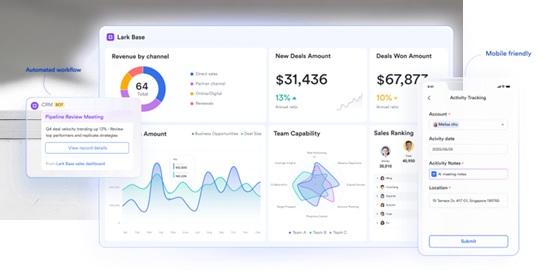
Transparency begins with visibility. When teams track projects in separate spreadsheets and tools, leaders often struggle to see progress clearly. Employees are left guessing about priorities, and accountability becomes blurred. Lark Base addresses this by creating a single hub where projects, data, and responsibilities are visible to all.

Taking sales teams for an example: With the capabilities of tracking, syncing, automating, and analysing, Lark Base can help the team to build up a CRM app to manage customer relationships. Because it all lives in one system, departments no longer compete with conflicting versions of the truth. Leaders see real-time updates, and employees know their contributions are recognized and aligned with broader goals. This visibility fosters trust internally, as individuals no longer feel their work is hidden or undervalued, and externally, as clients see consistent progress reflected in shared updates.

Lark Docs: Transparency through collaboration

Lark Docs

Documents can often demonstrate how much value an organization assigns to transparency. When drafts or reports are circulated without transparency and real feedback is lodged in an inbox, collaboration feels closed off and fragmented. Employees may feel like they are outside the process, and clients may not have confidence in a process that is so opaque. Lark Docs solves this shared thinking by promoting what are called living documents, where collaboration occurs openly in real time.

With Docs, teams can co-edit reports, strategies, or plans together and avoid the inefficiencies of drafts. Feedback lives in comment form, visible to everyone involved, so no view is “dropped.” If a product launch plan continues to evolve or change, every stakeholder can see how the new plan was developed and what decisions led to it. Docs can also link to Base projects or Calendar events, preventing ambiguity because information drives execution. Not only is this shareable format and transparency a better way to work together, but it creates a better situation for all employees and clients, who feel they are part of the process.

Lark Calendar: Making commitments visible

Lark Calendar

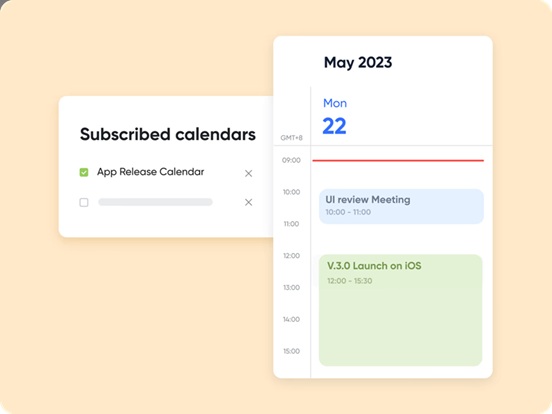
Trust is built not only on words but on commitments kept. Yet in many organizations, deadlines are unclear or schedules live in isolated systems, making it easy for commitments to slip. Lark Calendar makes time management transparent by embedding deadlines and events directly into workflows.

When a milestone is created in Base, it appears automatically in Calendar, visible to everyone responsible. Employees no longer wonder whether deadlines are real or tentative, they see them clearly alongside their other priorities. For global teams, automatic time zone adjustments ensure no one is left out of the loop due to scheduling errors. By keeping commitments visible and reliable, Calendar builds trust within teams and reassures clients that promises will be met on time.

Lark Approval: Confidence in decision-making

Lark Approval

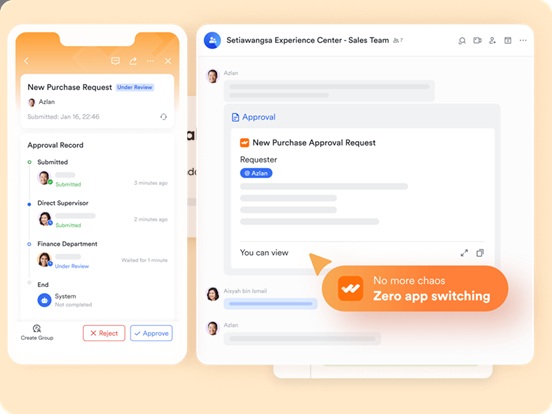
Unclear decisions can erode trust faster than anything. When the approval process slows down, or if it seems tied to whims, employees get frustrated and clients question the reliability of the organization. Lark Approval creates a more trustworthy environment by providing a more transparent method of decision-making. Instead of requests fading into oblivion inside email chains, requests are now being made within a contextual workflow, the process is visible, and employees can follow the progress of their requests without feeling the need to nag for an update.

The same goes for managers who will know where approvals are flowing to the right people. Because Approval works as part of an automated workflow, escalations and reminders progress automatically to ensure no approval seems like forever, and the decisions are clear. Over time, this builds trust across the organization, as the consistency of outcomes both internally and externally builds confidence that decisions are made fairly and predictably.

Lark Wiki: Access to knowledge without barriers

Lark Wiki

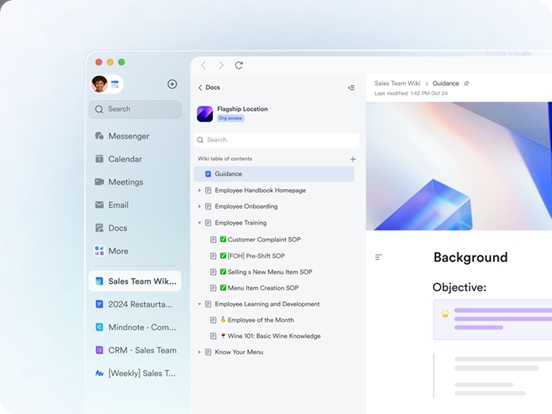
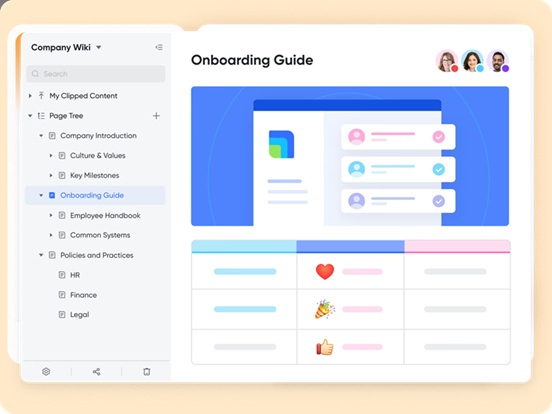
When knowledge is stored in personal files or behind conversational doors, trust diminishes. Employees who cannot access necessary information can feel left out, while newcomers struggle to build knowledge of processes expediently. Lark Wiki creates transparency by establishing a central place for organizational knowledge to reside that is always accessible.

Policies, playbooks, or best practices exist in Wiki, and employees will see a current version in real time. Teams and departments can share learnings and best practices across organizational lines, and onboarding becomes easier as new employees can easily find reliable materials from Day 1. Instead of knowledge being hoarded, it becomes collectively owned. This type of transparency creates trust, so employees can feel confident they can find the needed information without obstruction.

Lark Messenger: Trust in everyday communication

Lark Messenger

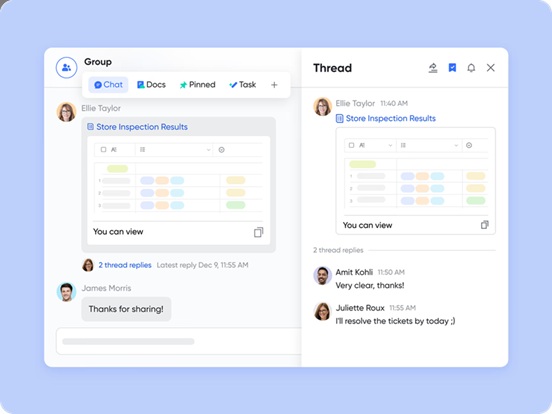
Trust is tested every day in communication. Quick bits of information quickly disappear in chat threads, and important decisions and discussions get lost in silos of messaging applications. Lark Messenger solves this problem by linking communication directly to workflow, so discussions are attached to the activity.

Teams can have conversations about projects and effortlessly convert tidbits of communication into tasks or connect the information with Base records. The translation features enable global teams to partner without misinterpretation, while file-sharing keeps all of the context together. The conversations do not just fade away into white noise; they now become part of the transparent workflow of the organization. This transparency establishes trust because employees see communication tied to outcomes, and clients experience responsiveness without confusion.

Conclusion

You cannot build trust based on a strong intention alone; it requires systems that make work transparent, consistent, and visible. Work that happens in fragmented tools creates opacity. Integrated systems that work on a single, connected platform will show the connection between your strategy, actions, and outcomes. Lark shows us how connected workflows provide that trust advantage that businesses need today.

Base will bring clarity to shared projects. Docs creates an environment for collaborative open work. Calendar shows commitment over time. Approval creates transparency in every decision. Wiki retains knowledge and makes it accessible. Messenger connects conversations to outcomes. Trust turns from an aspiration into practice.

In the long term, the advantage is clear. When the employee feels trusted and empowered, their engagement increases. When the client sees reliability and openness, their relationship continues to deepen. With connected platforms, transparency will no longer be an afterthought; it will be the foundation of positive, strong, enduring success for your business.

Perp TRADER Profits $190M From Hyperliquid As Market Plummeted

0

On October 11, 2025, the cryptocurrency market experienced one of its most severe flash crashes in history, triggered by U.S. President Donald Trump’s unexpected announcement of 100% tariffs on all Chinese imports effective November 1.

Bitcoin (BTC) plummeted from around $125,000 to as low as $104,000—a 17% drop—in under three hours, while Ethereum (ETH) fell 18% to $3,574, and many altcoins shed 60-90% of their value.

Over $1 trillion in market capitalization evaporated, and more than 1.6 million traders faced liquidations totaling $30 billion, the largest such event on record. This chaos highlighted vulnerabilities in both centralized and decentralized platforms, but two stories dominated: a mysterious Bitcoin whale’s massive profits and an outage on the emerging perpetuals DEX Lighter.

$200M Profit from Perfectly Timed Shorts Blockchain analytics firms like Lookonchain and on-chain sleuths quickly spotlighted a Satoshi-era (2011) Bitcoin whale who appeared to “front-run” the crash with uncanny precision. This trader, identified by wallet addresses, opened over $1.1 billion in short positions on BTC and ETH across platforms like Hyperliquid just days before the announcement.

Three days prior on October 8, the whale initiated shorts worth hundreds of millions, betting on a downturn amid rising U.S.-China trade tensions.

Exactly 30 minutes before Trump’s tariff speech, the whale doubled their exposure, adding another nine-figure short on BTC and ETH. Linked wallets mirrored these moves, fueling speculation of insider knowledge or coordinated trading.

As the market tanked, the whale closed 90% of their BTC short and fully exited ETH positions at the bottom, locking in realized profits of approximately $190-200 million in under 30 hours. They left a small $92 million BTC short open, with an additional $35.8 million in unrealized gains.

Most activity occurred on Hyperliquid, where the whale’s trades contributed to the liquidation frenzy. Funds were swiftly withdrawn to new accounts, and the trader has since gone neutral—no further shorts.

This wasn’t isolated luck; the timing raised red flags about information asymmetry in crypto. Whales with ties to traditional finance or policy circles may have anticipated the tariff bombshell, turning a geopolitical shock into a windfall.

Lighter Perp DEX: Outage Amid the StormAs the crash unfolded, decentralized exchanges (DEXs) faced unprecedented stress from cascading liquidations and thin order books.

While some platforms like Hyperliquid and Pacifica held up, Lighter—a fast-rising zk-rollup-based perpetuals DEX on Ethereum L2—suffered a significant outage. Lighter, backed by a16z Crypto and known for its zero-fee model and 10,000 orders-per-second speed, was in private beta with $700M TVL and $5.75B daily volume pre-crash.

But the event exposed scaling limits. Withdrawals began glitching hours before the tariff announcement, with charts freezing shortly after. During the peak cascade BTC dipping to $104K, Lighter went fully offline for about 1 hour at record throughput levels.

Trading halted, preventing closes or new orders, and recovery lagged behind competitors. High leverage up to 200x amplified liquidations, overwhelming Lighter’s central limit order book (CLOB) and zk-proof verification.

Unlike centralized exchanges (CEXs) like Binance, which could throttle APIs, Lighter’s on-chain settlement left no “off-switch,” turning a $400M liquidity pool into a vulnerability during the black swan event.

Users reported inability to exit positions, exacerbating losses. This echoed past DEX issues like the Hyperliquid’s July outage but hit Lighter harder due to its youth—launched in beta early 2025, with spot trading eyed for late October.

The outage wasn’t Lighter’s first rodeo—earlier ties to Hyperliquid’s API issues hinted at dependencies—but it underscored a broader. Even “decentralized” platforms can falter under extreme volatility. Perp DEX trading volume had hit $1T monthly in September 2025, but events like this test infrastructure beyond incentives.

This crash wasn’t just a tariff tantrum; it was a stress test for crypto’s maturity. Whales like this one thrive on opacity, extracting value while retail bleeds—$30B in liquidations vs. one entity’s $200M haul.

For DEXs, Lighter’s stumble highlights the need for hybrid safeguards without sacrificing trustlessness. As markets recover BTC at ~$111K as of October 12, expect regulatory scrutiny on insider trading and calls for better DEX resilience.

If history rhymes, this could mark the cycle’s “purge” phase, weeding out weak hands before the next leg up. Stay vigilant—crypto’s playground favors the informed, not the hopeful.

Rug Radio Transitions to Myriad Markets Sunsetting $RUG and Genesis NFTs

0

Rug Radio, a decentralized media platform known for its Web3 podcast ecosystem and community-driven content, has officially announced the sunset of its $RUG utility token and Genesis NFT collection.

This move integrates the project into the MyriadMarkets ecosystem, a Solana-based prediction markets platform emphasizing no-KYC betting, fast settlements, and community rewards. The transition rewards early Rug Radio supporters by converting their holdings into allocations of the upcoming $MYR token.

A comprehensive snapshot was taken on October 7, 2025, capturing all Genesis NFT ownership and $RUG token balances—whether claimed, unclaimed, or pending earnings. This ensures no value is lost for holders.

Support for $RUG token production, claims, and Genesis NFT utilities like daily $RUG yields of 5-11 tokens per NFT ends immediately. The Genesis NFTs will no longer generate rewards within the Rug Radio ecosystem.

Snapshot data will convert into $MYR community allocations at Myriad’s Token Generation Event (TGE), expected soon. Early estimates suggest Genesis NFT holders could receive around 26% of total $MYR supply as rewards, though exact ratios are pending confirmation.

$RUG and $RDAO governance token balances will also factor into allocations. Rug Radio is pivoting to amplify its community within Myriad’s high-signal prediction markets meta, where betting volumes have already exceeded $10M mostly sub-$50 bets settled in <1 minute.

This aligns with broader Web3 trends toward integrated ecosystems, potentially boosting NFT floor prices amid the shift. Utility token for Rug Radio ecosystem (e.g., DAO access via 1,800 $RUG ? 1 $RDAO swap; earned via NFTs, listening bounties). Contract.

he announcement has sparked bullish sentiment among holders, with posts highlighting it as a “big move” for long-term value in prediction markets. One holder noted their Genesis NFT appreciated ~$245 in a week, attributing it to the Myriad integration.

Speculation on exact $MYR allocations per NFT is rampant, with calls for predictions on platforms like Xeet.ai. This evolution positions Rug Radio’s community in a “much bigger” narrative, blending media, DAOs, and on-chain betting.

Myriad Markets is a decentralized prediction market platform built on Solana, emphasizing no-KYC access, fast settlements often under 1 minute for small bets, and integration with social media and content ecosystems like Decrypt and Rug Radio.

It allows users to speculate on real-world outcomes—ranging from crypto prices and elections to sports events and cultural happenings—by trading “shares” in binary or multi-outcome markets.

The platform uses a constant function market maker similar to automated market makers in DeFi to dynamically price shares, ensuring liquidity and reflecting crowd-sourced probabilities.

Bets can be placed with USDC for real-money stakes or points for low-risk practice and rewards. The core appeal lies in its simplicity: shares act like probabilistic bets, where the market price signals the community’s consensus on an event’s likelihood.

For instance, a share priced at $0.63 implies a 63% chance of the outcome occurring. This setup aggregates collective intelligence, often outperforming polls or experts in accuracy.

Points vs. USDC Markets

Free-to-play with $MYR points earn via predictions, quests, leaderboards, or referrals—e.g., share PNL cards for bonuses. Ideal for testing; points convertible to $MYR tokens post-TGE or used for rewards.

Real-money bets with stablecoin. Higher stakes, direct USD payouts. Promotions like zero-fee October drops encourage entry. Bet via X extension; share referral links for USDC kickbacks on referred trades.

Earn $MYR points for activity (e.g., top leaderboard wins NFTs like Lil Pudgy). Ties into Rug Radio migration for airdrops. Solana enables sub-second trades; handled 415K users in 30 days via thirdweb infra, with $10M+ volume mostly micro-bets.