DD
MM
YYYY

PAGES

DD
MM
YYYY

spot_img

PAGES

Home Blog Page 3541

Exploring the Most Popular Online Casino Games in Singapore

0

Singaporean online casino games are some of the best in the world. Thousands of players visit Singapore-based online casinos each day because they are trusted and well-regulated gambling platforms. If a player has a computer and high-speed internet connection, they can create a gambling account and start betting real money within minutes. 

Overview of the Online Casino Industry in Singapore

The online casino industry in Singapore is worth billions of Singapore Dollars. Out of the nearly six million residents, roughly 97% have high-speed internet connections. And since Singapore is one of the wealthiest countries in the world, many residents like to gamble at licensed online casinos. 

Singapore laws are favourable to online casino gaming. The primary requirement is for online casino platforms to obtain a licence to operate and conduct online gambling activities in Singapore. Once they have their official licences, they can legally run their online casino platforms in Singapore. 

Singapore online casino games use the Singapore Dollar (S$) currency. Any tourists in Singapore who wish to gamble at Singapore online casinos will need to convert their nation’s currency to the Singaporean Dollar when depositing money into their casino accounts. Just be aware that credit card companies will charge extra for that. 

The one exception to this is cryptocurrency, such as Bitcoin. Many Singapore online casino platforms like me88 Singapore now accept Bitcoin deposits from players. Since Bitcoin is the top globally accepted cryptocurrency, tourists and native Singaporeans can deposit it into their casino accounts without worrying about bearing additional currency conversion fees. 

Importance of Understanding Online Casino Games

Online casino games in Singapore function like the in-person casino games you would find at physical casinos. Most rules and gameplay are similar, except you must conduct the gameplay virtually instead of in person. 

The online casino games offered on licensed platforms are programmed to generate random results to make the gaming experience fair to players. Although many online casino games use computerised dealers, you can find some casino games with live human dealers. They are always more fun. 

Before playing any online casino games, it is crucial to choose a reputable and licenced online casino platform in Singapore. Licensed online casino platforms like me88 Singapore have been thoroughly vetted and authorised to provide legal online casino gaming to players in Singapore. They take the necessary safety precautions to ensure a safe, secure, and fair online gaming experience for players. 

When you are ready to play an online casino game, make sure you learn and understand the rules before betting real money. Try practising with play money until you feel comfortable betting real money, and ecosystems like new era bv casinos provide support. And, of course, only bet as much money as you can afford to lose. Being a responsible player will ensure you have a happy and joyous experience. 

Popular Casino Games for Singaporeans

Some of Singapore’s most popular casino games include baccarat, roulette, blackjack, slots, and poker. Singapore online casinos like me88 Singapore offer all these games, including different variations and themes to make them more exciting and fun for players. 

Here is an overview of the most popular online casino games for Singaporeans:

Online Slot Games

Online slot games come in various themes and skins. They are straightforward to play but also a lot of fun. The computer screen displays a virtual slot machine with three or more reels. The player places their bet and then selects the SPIN button to spin the reels. As each reel stops spinning, it displays a particular image or picture related to the game’s theme. 

To win the bet, the reel images must be in a specific match order. It is a game of chance, so the player must depend on luck to win. The upside to online slot games is that the minimum bet amounts are small, yet there is still the potential to win huge cash prizes from a small bet. Most online slots have jackpots, which pay the most but are the hardest to win. 

Online Blackjack

Online Blackjack is the beloved “21” card game brought to your computer screen. The dealer starts by giving each player and then themselves two cards. The player can choose to “HIT” or “STAND”. HIT means they want another card, while STAND means they do not want any more cards. 

The main goal is to have a total card value as close to 21 as possible, or at least closer to 21 than the dealer’s card value. If the player’s hand value beats the dealer’s hand value, the player doubles the money they bet. But they lose their bet if the player’s total hand value exceeds 21 or does not beat the dealer’s hand value.

Live Roulette

Live roulette offers a realistic gaming experience as if the player is in a real casino playing roulette with a dealer and other players. What makes live and regular online roulette different is that live roulette has a human dealer interacting with the players in real-time. That makes it a more fun and interactive experience for the players.

The live roulette game is like playing traditional roulette at a casino. Each player bets on where the small ball will land inside of the spinning roulette wheel after it stops spinning. Some examples of bets include solid red, solid black, odd numbers, even numbers, or any number between 1 and 38. 

The easiest way to win and double your money is to bet on one of the two solid colours. There is almost a 50/50 chance of winning when betting on a solid colour, which is some of the best odds you can find compared to most other casino games. 

Online Baccarat

Online baccarat is as exciting and suspenseful as in-person baccarat at a casino. Many Singaporeans love online baccarat the most because it is fun to both learn and play. There are even several variations of the game. 

A standard baccarat game has a player and a banker. Some people confuse the banker for the dealer or the “house,” but they are not the same thing. Before the start of the game, the player places their bet on either the player’s or the banker’s hand. Between the two, they need to predict which has the higher value.

So, for example, if the player believes the banker’s hand will have the highest value, they will bet on the banker’s hand. 

When the game begins, the dealer issues two cards to the player and the banker. The player can decide to have an additional card dealt to either the player’s hand or the banker’s hand. The player will win when whichever he or she bets has the higher value. However, their hand cannot go over 9, or it will start at 0 again. 

Online Poker

Online poker is a game for experienced gamblers. Players should develop their poker playing skills before betting real money because the game requires a lot of strategy and critical thinking to be successful. The most skilled players have the potential to win a lot of money. 

There are different variations of online poker, but the standard one is like regular in-person poker. Online poker requires a minimum of two people to join a virtual table to play the game. After the players make their bets, the dealer issues five cards to each player.

None of the other players can see each other’s cards. Each player must look at their cards and decide whether they want to exchange any of them for new cards. Their goal is to get the best poker hand out of all the other players’ hands. 

A Royal Flush is the best poker hand but the most difficult to obtain. It requires the player to have an Ace, King, Queen, Jack, and a 10-card. Other winning poker hands include Straight Flush, Three of a Kind, Four of a Kind, Two Pair, Full House, Pair, and High Card. 

Register and Play at me88 Singapore

Are you ready to start playing online casino games in Singapore? I recommend you register for an account at me88 Singapore. They are a trusted Singaporean online casino with an official gaming licence issued by the Government of Curacao. 

Here are the five basic steps to register for an account and play online casino games on me88 Singapore:

1) Visit me88 Singapore and click on the JOIN NOW button at the top of the homepage.

2) Fill in the Username and Password you would like to have for your account. Click Register.

3) Fill in your contact information and payment details so that you can make your first deposit. 

4) Begin making your first deposit. Many acceptable payment methods are available, including Visa, Mastercard, and Bitcoin. All payment information is protected and secured to prevent unauthorised access. 

5) Start joining games and betting on them!

me88 Singapore makes it fast and easy to register for an account and begin playing their extraordinary online casino games. 

Bill to Regulate Igbo Apprenticeship System Passes Second Reading in Anambra

0
The coat of arm of Nigeria

A bill seeking to revive and provide a framework to regulate the Igbo apprenticeship system (IAS) also known as ‘Igba Boi’ has passed a second reading at the Anambra House of Assembly.

The bill, ‘Anambra State Igbo Apprenticeship Bill 2024,’ was sponsored by Ejike Okechukwu, a member representing Anaocha Constituency II, according to NAN.

‘Igba Boi’ is described as the Igbo worldview business philosophy of entrepreneurial capitalism and prosperity through enterprise, succession planning, retirement, etc.

In his submission, Mr Okechukwu said that if the apprenticeship scheme were regulated, it would become lucrative and reduce the rate of unemployment. He said the apprenticeship system was a major source of employment in the South-East in the 1970s, 1980s, and 1990s, as many youths were absorbed into it.

According to him, this is why the South-East has one of the biggest markets in West Africa. “The trainee system began to die when a servant or trainee would serve his master for years, and when it would be time to settle him, stories would come up, and the servant would be sacked without any compensation.

“This made most of our young people begin to see the system as a waste of time and effort. This bill is, however, seeking to establish a commission to oversee and create a database to match individuals with their trades or businesses of interest and with stipulated agreements.

“The bill also looks at the rights of the ‘Oga’ and the trainee. The ultimate objective is to create employment as well as improve trade and commerce in the state,” he said.

Patrick Okafor, a member representing Onitsha North Constituency II, said the bill would restore confidence in the Igbo apprenticeship system.

“When there is no law, there is always abuse. With this bill, the apprenticeship scheme will become attractive again as many youths will be encouraged.

“Most people who passed through this system learnt the secret of becoming successful through their masters. Many billionaires and millionaires today are products of the ‘Igba Boi’ scheme,” he said.

Nkechi Ogbuefi, a member representing Anaocha Constituency I, said that the bill would help to create self-reliant youths and employers of labor, who would contribute to Anambra’s gross domestic product.

The speaker of the assembly, Somtochukwu Udeze, said the bill was laudable, focusing on youth employment and economic development.

The bill was committed to the assembly’s joint judiciary and justice committees and commerce, trade, and industry for further deliberations. The committees are to report back to the whole assembly a month. The assembly adjourned until March 22.

Recently, there has been an uptick in interest in Igba Boi, which has been recognized as the largest business incubator in the world, birthing thousands of ventures yearly.

In 2021, a comprehensive work on the IAS by Prof. Ndubisi Ekekwe was published in Harvard Business Review. Ever since then, other events promoting it have been developed.

Last April, Abia State University proposed Igba-Boi Centre with a mandate to train and educate students and the world on the principles of the Igbo apprenticeship system. The Centre will work to uplift and internationalize this Igbo heritage in this age of stakeholder capitalism and upgrade, codify, and modify where necessary the framework, for more international adoption.

Also, earlier this year, Showmax, owned by MultiChoice and NBCUniversal, released a documentary on the IAS.

There have been calls on the federal government to adopt the scheme as a means of fighting unemployment and creating wealth nationally.

N64m Per Annum: Nigerian House Approves Salary Increment for Judicial Officers

0

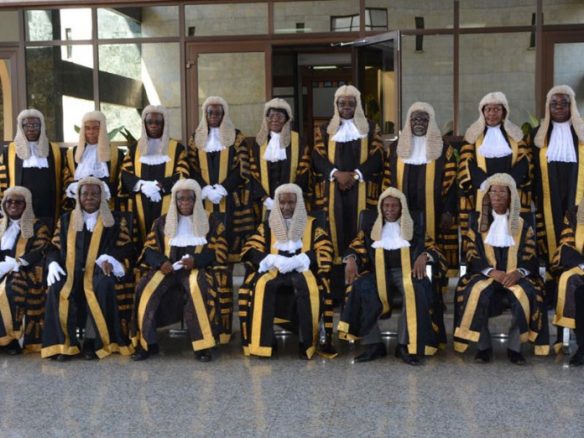
The House of Representatives has given its stamp of approval to President Bola Tinubu’s proposal to enhance the salaries and allowances of judicial officers.

This move, aimed at revitalizing the judicial sector and bolstering the integrity of the judiciary, comes amidst longstanding concerns about the need for judicial reform and the eradication of corruption within the legal system.

The approved bill, seeking to review the salaries and allowances of the country’s judicial officers, represents a significant departure from previous remuneration structures. Under this legislation, substantial increases in compensation have been allocated to various positions within the judiciary, including the Chief Justice of Nigeria (CJN) and justices of the Supreme Court.

According to the provisions outlined in the bill, the CJN is slated to receive an annual salary package totaling N64 million. This comprises a basic salary of N13.5 million annually, supplemented by regular allowances amounting to N51.2 million. Similarly, the President of the Court of Appeal is earmarked to receive an annual compensation package of N62.4 million, with justices of the Supreme Court set to earn N61.4 million annually.

The breakdown of the CJN’s salary package reveals a monthly basic salary of N1.1 million, complemented by regular allowances covering various expenses such as personal assistants, hardship, entertainment, utilities, outfit, journal subscriptions, medical expenses, long service allowance, and legal researchers. Additionally, the CJN is entitled to benefits such as a motor vehicle loan of N53 million, leave allowances, and estacodes for foreign trips.

Similarly, justices of the Supreme Court are to benefit from significant increases in their remuneration, with annual allowances totaling N52.6 million, encompassing basic salary and regular allowances.

The salary and allowance structures for other justices within the judiciary mirror similar increments, with Chief Judges of various courts and their counterparts at the state level slated to receive comparable compensation packages.

The Chief Judge of the Federal High Court, President of the National Industrial Court, Chief Judge of FCT High Court, Grand Kadi FCT Shariah Court of Appeal, President of FCT Customary Court, Chief Judge of State High Court, Grand Kadi State Shariah Court of Appeal, and President State Customary Court of Appeal are entitled to the same salaries and allowances.

For this category, the annual basic salary is N7.9 million, and N42.3 million is allocated as annual regular allowances. Additionally, severance gratuity and motor vehicle loans are set at N23.9 million and N31.9 million, respectively.

But will it end corruption in the judiciary?

While the envisaged salary increases hold promise in ameliorating the financial standing of judicial officers, concerns linger regarding their potential efficacy in curbing corruption within the judiciary. Despite the implicit intent of bolstering judicial integrity through enhanced financial incentives, the endemic nature of corruption within the Nigerian judicial system underscores the multifaceted challenges that necessitate a comprehensive approach.

The specter of corruption within the judiciary is intricately intertwined with Nigeria’s political and ethnic interests, as noted in recent allegations levied by retired Justice Musa Dattijo.

Late last year, Dattijo alleged that the exclusion of justices from the southeast and north-central zones from the Supreme Court bench is deliberate. He said, in view of post-election tribunals, the situation was orchestrated by the CJN to shape the outcome of electoral tribunals.

“To ensure justice and transparency in presidential appeals from the lower court, all geo-political zones are required to participate in the hearing. It is therefore dangerous for democracy and equity for two entire regions to be left out in the decisions that will affect the generality of Nigerians. This is not what our laws envisage,” he said.

Dattijo’s assertions denote concerns about the purported manipulation of judicial appointments to sway electoral outcomes, underscoring broader anxieties surrounding equity and transparency in the judiciary’s adjudicative functions.

Transparency advocates said addressing systemic issues that perpetuate corruption within the judiciary requires a multifaceted approach, which means that merely increasing salaries may not suffice in fostering a truly impartial and transparent judicial system. Structural reforms, coupled with robust anti-corruption measures, are said to be essential to upholding the rule of law and restoring public trust in Nigeria’s judiciary.

Stakeholders have called for a holistic approach to judicial reform, encompassing not only remuneration but also measures to enhance transparency, accountability, and professionalism within the judiciary. They said by prioritizing these reforms, Nigeria can bolster the integrity of its judicial system and uphold the principles of justice and fairness for all citizens.

Central Bank of Nigeria (CBN) Report Reveals N193B Lost, N418.9B Doubtful in Intervention Loans

0

A recent report released by the Central Bank of Nigeria (CBN) has shed light on the status of intervention loans disbursed by the bank, revealing concerning figures. Out of the total loans amounting to N10.3 trillion disbursed as intervention, N193 billion has been declared lost, while another N418.9 billion remains doubtful.

The report, last updated in September 2023, provides a detailed breakdown of the bank’s intervention funds over the years. It highlights that of the N10.3 trillion disbursed, N4.4 trillion has been repaid, leaving approximately N5.8 trillion outstanding. Some loans are tenured, meaning their principal repayments are scheduled for future dates.

However, the report notes that only N969.8 billion of the outstanding amount was past due, with some loans having repayment tenures extending beyond 2023. Consequently, the percentage of repayments to amounts due is calculated at 75.8%.

Further analysis in the report reveals that N289 billion of the loans are performing, N67.9 billion are classified as substandard, and N418.9 billion are labeled doubtful, with N193.9 billion declared lost.

The apex bank’s governor, Yemi Cardoso, has criticized the intervention funds initiated under the leadership of his predecessor, Godwin Emefiele, contending that the bank failed to implement the interventions appropriately.

In a significant shift in approach, the CBN announced last December a suspension of applications for new loans under its development finance intervention funds program. This suspension marks a departure from the central bank’s previous emphasis on development finance interventions.

Moreover, Deposit Money Banks have been tasked with the recovery of previously granted loans under the scheme, affecting more than 4.6 million farmers and over 1,358 projects that have benefitted from various initiatives over the years.

Cardoso has expressed intentions to steer the CBN away from development finance interventions, prioritizing its core mandate of ensuring price and monetary stability. A circular issued by the CBN in December outlined the bank’s transition towards limited policy advisory roles supporting economic growth.

“In furtherance of the Central Bank of Nigeria’s new policy thrust focusing on its core mandate of ensuring price and monetary stability, the Bank has commenced its pullback from direct development financing interventions,” a circular issued in December by the CBN said.

“Accordingly, the CBN would be moving into more limited policy advisory roles that support economic growth.

“In consideration of the above, the CBN wishes to inform you that it has stopped accepting new loan applications for processing under any of its existing intervention programmes and schemes.”

Under Emefiele’s tenure, the CBN delved into encouraging backward integration through initiatives like the Anchor Borrowers Programme (ABP), which saw over N1.09 trillion lent to millions of farmers nationwide. In total, the CBN disbursed more than N5.25 trillion to individuals and companies across various sectors.

Cardoso views this as a deviation from the central bank’s core mandate, resulting in a lack of clarity in the relationship between fiscal and monetary policies, among other challenges. He argues that the CBN’s engagement in quasi-fiscal activities diverted resources away from its primary objectives and ventured into areas where expertise was limited.

“Hitherto, the CBN had strayed from its core mandates and was engaged in quasi-fiscal activities that pumped over N10 trillion in the economy through almost different initiatives in sectors ranging from agriculture, aviation, power, youth and many others. These clearly distracted the Bank from achieving its own objectives and took it into areas where it clearly had limited expertise.”

Nigeria Braces for Inflation Surge, CBN Projects 32.63% Rate in March 2024

0

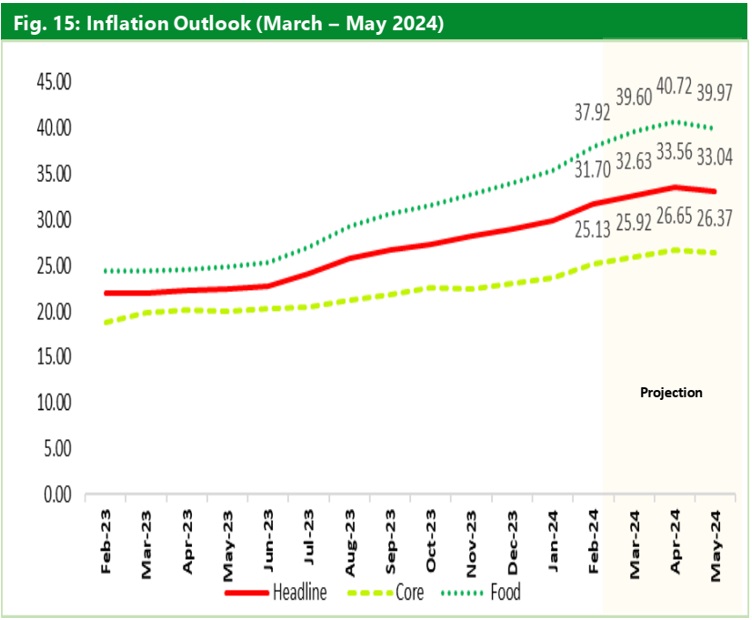
Muhammad Sani Abdullahi, Deputy Governor of the Economic Policy Directorate at the Central Bank of Nigeria (CBN), presented projections indicating a substantial rise in headline inflation. Abdullahi disclosed these forecasts during the CITI-CEEMA Macro Conference held in London on March 20, 2024.

Drawing from insights shared during Abdullahi’s presentation, the anticipated surge in inflation, expected to soar to 32.63% in March 2024, is ascribed to three critical factors: escalated energy costs, the reverberations of exchange rate fluctuations, and persistent concerns surrounding insecurity.

Abdullahi’s presentation noted the following drivers of inflation:

High Energy Prices: The removal of fuel subsidies has triggered a ripple effect, leading to escalated expenses across various sectors including household utilities, transportation, and production costs.

Exchange Rate Passthrough: The depreciation of the naira, influenced by market-determined exchange rate policies, is anticipated to exert a passthrough effect on domestic prices, amplifying inflationary pressures.

Insecurity: Lingering security challenges have disrupted food production activities, coinciding with the conclusion of the harvest season. Additionally, inflated costs of farm inputs further exacerbate the inflationary trend, particularly in the food sector.

Despite the somber outlook, the CBN remains cautiously optimistic, foreseeing a potential reversal in the inflation trajectory commencing from May 2024. This optimism is underpinned by a strategic framework designed to mitigate inflationary pressures through various initiatives.

Key measures outlined by the CBN to combat inflation include the adoption of an Inflation Targeting Framework, enhanced communication strategies, and a pivot towards a more stringent monetary policy stance.

Notably, the Monetary Policy Rate (MPR) has been subject to a significant hike of 400 basis points, soaring to an unprecedented 22.75%. Simultaneously, the Cash Reserve Ratio (CRR) has been adjusted upwards to 45%, from the previous 32.5%. Furthermore, adjustments have been made to the asymmetric corridor surrounding the MPR, signaling a robust approach to managing inflation expectations.

In light of persistent inflationary pressures, in February 2024, Nigeria’s headline inflation rate surged to 31.70%, marking a notable increase from 29.90% recorded in January 2024. This surge persisted despite the robust adjustment of the Monetary Policy Rate (MPR), highlighting the entrenched structural impediments within Nigeria’s economy.

Murtala Sabo Sagagi, a member of Nigeria’s Monetary Policy Committee (MPC), noted the limitations of traditional monetary policy tools in addressing systemic issues such as insecurity and food shortages.

Sagagi’s remarks underline the need for a comprehensive approach including economic and social rejuvenation to effectively tackle Nigeria’s inflationary challenges. Experts have warned that without addressing these underlying issues, any monetary policy adjustments may yield limited results in controlling inflation rates.

With Nigerians barely surviving under the current inflation rate, economists warn that inflation at 32.63% will come with dire implications, permeating various facets of the economy. Such high inflation rates, they say, erode purchasing power, exacerbate poverty levels, and hamper economic growth.

In addition to businesses facing heightened uncertainty, leading to reduced investment and job creation, they warn that vulnerable populations, particularly those on fixed incomes, will be forced to bear the heightened brunt of soaring prices, further exacerbating income inequality.

However, they advised that addressing these challenges requires a multi-pronged approach, encompassing both monetary and fiscal measures, alongside structural reforms to address underlying vulnerabilities.