
DD
MM
YYYY

PAGES

DD
MM
YYYY

spot_img

PAGES

Home Blog Page 3564

Global Funding Crunch: Africa Tech VC Funding Plummets by 51% YoY in Q1 2024

0
Fund, money cash dollar

In a recent report by BD funding tracker, Africa’s tech venture capital (VC) funding faced a significant setback in the first quarter (Q1) of 2024, with a staggering 51% year-over-year decline.

Venture capital funding in the African tech start-up ecosystem has steadily declined driven partly by rising interest rates, and global geopolitical tensions which have impacted investor confidence.

In Q1 2024, startups on the continent raised a total of $369 million across 64 publicly announced deals. Equity funding, traditionally dominant, accounted for 67% of deals, with debt funding closing up 14.90% and undisclosed mixed deals.

In an unexpected twist, the mobility sector emerged as the funding leader in Q1 2024, commanding a 31.17% share with merely six deals. Nigerian mobility startup Moove played a pivotal role in this dominance, single-handedly attracting $110 million, constituting 30% of all Q1 funding for African startups, accomplished through two deals, one equity and one debt.

Other sectors saw modest shares, with Cleantech accounting for 13% funding with just eight deals, followed by health tech (10.89%) with just seven deals and fintech clinching 7.78% with 11 deals.

Africa’s “big four”, Nigeria, South Africa, Egypt, and Kenya continued their dominance in terms of funding, capturing 91.22% of the total funding in the region for Q1 2024.

According to the report, based on the number of deals, early-stage funding dominated Q1 2024, with accelerators, pre-seed, and seed rounds accounting for 27 deals worth a combined $38.5 million.

This focus on early-stage ventures contrasts sharply with the later stages -pre-Series A, Series A, and Series B, where just sight rounds secured $144.2 million. A significant portion, $185.8 million, was raised across 36 undisclosed rounds.

Following the decline in investments in Africa, this has led to a drop in the valuation of companies, as well as startups resorting to consolidation. This was followed by at least 29 mergers and acquisitions (M&A) in Q1 2024 with approximately seven exits.

While several others tried to keep the business afloat, by downsizing the workforce and implementing other measures, some startups could not absolve the pressure of the funding crunch and were forced to close shop.

On a global scale, Global venture funding reached $66 billion in the first quarter, up 6% quarter over quarter but down 20% year over year (YoY).

AI continued to stand out as a leading sector for investment in the first quarter. Companies in the AI sector raised $11.4 billion in Q1 or around 17% of global funding.

With the VC funding decline, many startups across the globe are hoping that the gradual opening of an IPO window and the prospect of interest rate cuts later this year will finally encourage VCs to be less stingy with their capital.
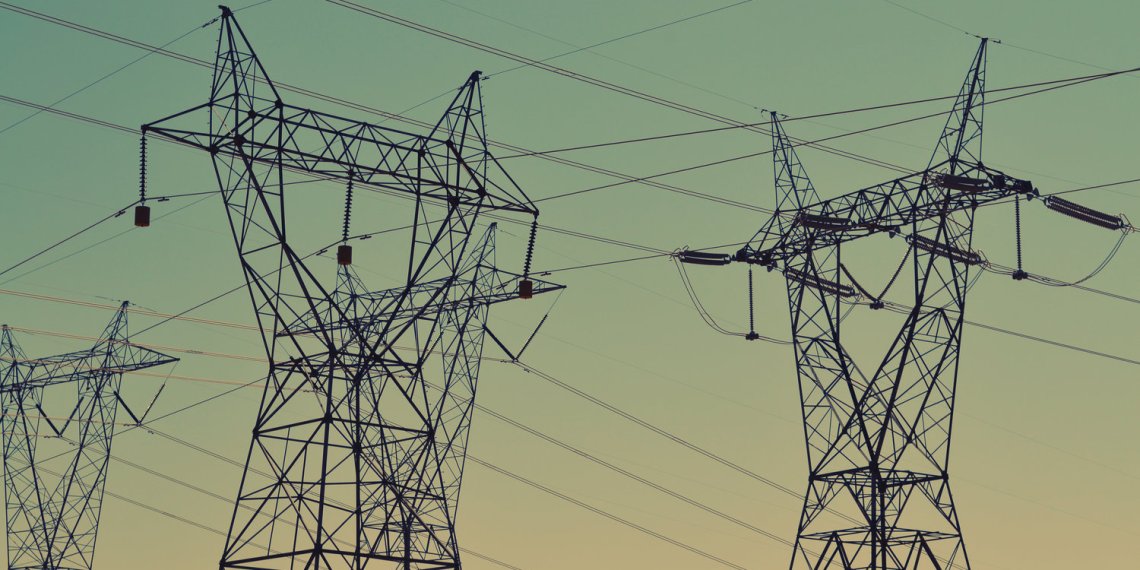
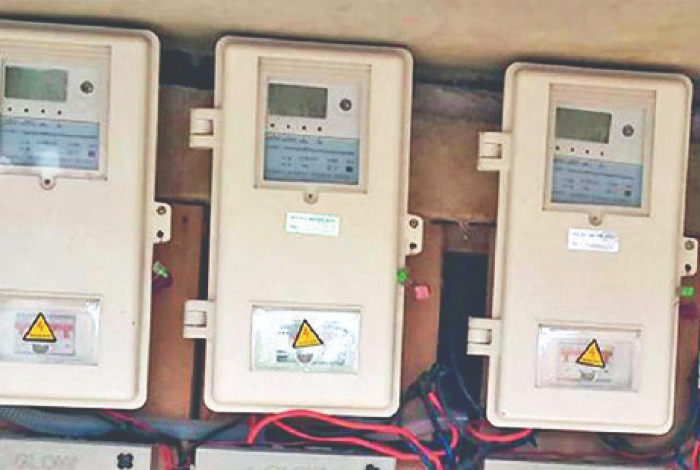
As Nigeria Revamps Its Electricity Tariffs and Subsidy Regimes, Things To Consider

1

“This tariff review is in conformity with our policy thrust of maintaining a subsidized pricing regime in the short run, with a transition plan to achieve a full cost-reflective tariff over a period of, let us say three years.” – Nigeria’s Minister of Power, Adebayo Adelabu.

It looks scary but what the Honourable Minister is trying to do is actually what should be done. I understand the emotions and his non-elegant way of explaining things (an example: asking people to switch off freezers to save energy cost), but the path he is taking is the right one.  Many do not pay electricity bills in Nigeria even as they complain of no electricity. So, besides reflective tariff, we must ensure we also improve collections.

Our challenge as a nation is how to make the rich pay their fair share. In America (feel free to attack me for bringing comparison), those in the cities pay more for phone bills than those in the rural areas. Their model is that if you do not subsidize the low density rural areas with the revenue from the high density city areas, no person can afford rural telephony.

If you apply that in Nigeria, Eti Osa LGA cannot be on the same rate as Epe on electricity rates, just like Oriendu Market Ovim traders cannot pay the same rate as Ariaria Aba traders. It is our lack of the use of data that makes our governance system inefficient.

I just want to caution the Honourable Minister, you cannot phase out electricity tariff; it would be a bad policy. What you can do is to phase out all for commercial customers, modulate for some residential customers especially in rural areas, but sustain subsidy for industrial customers to make them globally competitive as energy is a huge component of production.

For industrial customers, if a $100m subsidy helps to improve output by $15 billion, when you tax that output and activity associated with it, you can recover that $100m. But if a high tariff makes their products so expensive that the only option is Chinese products, Nigeria loses. Always remember that whenever Nigerian Customs beats annual revenue targets  on import duties, we are de-industrializing Nigeria; reverse that for us.

In a move that could potentially impact millions of Nigerians, the Nigerian government has hinted at extending the recent increase in electricity tariffs to customers beyond the Band A classification.

The announcement came just two days after the Nigerian Electricity Regulatory Commission (NERC) approved the tariff hike for Band A customers.

During a briefing held in Abuja on Friday, the Minister of Power, Adebayo Adelabu, outlined the government’s plan to gradually phase out electricity subsidies in the country. He described the recent tariff increase as a pilot phase in this transition process, aimed at attracting more investment into the power sector.

Nigeria Hints at Further Electricity Tariff Increase, Emphasizes Phasing Out Subsidy

Nigeria Hints at Further Electricity Tariff Increase, Emphasizes Phasing Out Subsidy

0

In a move that could potentially impact millions of Nigerians, the Nigerian government has hinted at extending the recent increase in electricity tariffs to customers beyond the Band A classification.

The announcement came just two days after the Nigerian Electricity Regulatory Commission (NERC) approved the tariff hike for Band A customers.

During a briefing held in Abuja on Friday, the Minister of Power, Adebayo Adelabu, outlined the government’s plan to gradually phase out electricity subsidies in the country. He described the recent tariff increase as a pilot phase in this transition process, aimed at attracting more investment into the power sector.

Adelabu explained, “This tariff review is in conformity with our policy thrust of maintaining a subsidized pricing regime in the short run, with a transition plan to achieve a full cost-reflective tariff over a period of, let us say three years.”

He noted the government’s commitment to mitigating the impact on consumers while gradually moving towards cost-reflective tariffs.

Acknowledging the challenges faced by consumers, Adelabu highlighted the need for this transition, citing the significant financial burden of electricity subsidies on the government.

“We are not ready to aggravate the sufferings any longer, which is why we said it must be a journey rather than a destination,” he stated.

The Minister emphasized the need for a gradual migration from the subsidy regime to a full cost-reflective regime, with certain customers being the first to experience tariff adjustments.

“This is more like a pilot for us at the Ministry of Power and our agencies. It is like a proof of concept that those that have the infrastructure sufficient enough to deliver stable power of enjoying 20 hours of light to be the ones to get tariff add,” he explained.

Adelabu also provided insight into the current subsidy system, revealing that the government previously subsidized 67 percent of the cost of electricity. He highlighted the immense financial strain this placed on the government, stating, “The government would have paid N2.9 trillion for 2024. This is more than 10 percent of the national budget.”

While acknowledging the potential impact on consumers, Adelabu emphasized the need to address other pressing issues facing the country.

“It will be insensitive on our part to compel the government to pay such subsidy when we have other competing issues the government needs to fund,” he asserted.

The Minister’s remarks come amid growing backlash over the recent increase in tariff for Band A electric consumers, with many sounding the warning that it’s capable of crippling economic activities in the country.

While the backlash is largely tied to the concern that the N1225/KWH approved by NERC for Band A customers does not commensurate with the earning power of Nigerians – with the minimum wage currently at N30,000 per month, many believe that there is no moral justification increasing tariffs for other bands currently receiving around 12-hour supply of electricity daily.

Many of the consumers in Band A are already lamenting that they don’t get up to 15 hours of the required 20 hours of daily electricity supply. This means that, even though the customers are paying as much as N170,000 per month on electricity bills, they’d still have to rely on alternate means of electricity supply which don’t come cheap.

Adelabu attributed the backdrop to poor consumption management of Nigerians saying, “We don’t have consumption management in this country. Some people leave their AC and freezers on for days because we are not paying enough for the power.”

However, experts have maintained that the electricity crisis is as a result of insufficient power generation. Nigeria currently generates around 4,000MW of electricity, which is significantly insufficient for its over 12 million consumers.

The government has been urged to address the long-standing challenges within the power sector, ensuring a sustainable and affordable electricity supply for all Nigerians.

Join the Next Wave of Crypto Millionaires: Tokens Set for 1000X Returns

0

The crypto market is entering an exhilarating phase. With the 2024 bull run underway, the potential for unparalleled investment returns is capturing attention. Some tokens have prospects of remarkable growth, igniting discussions among investors aiming for considerable gains. The article ahead explores which tokens might surge by massive multiples, offering insights for those looking to be part of this financial revolution.

BlastUP Goes Viral, Raising $4 Million in a Few Weeks

BlastUP, the premier launchpad on Blast, has recently made waves in the crypto world with its stunning debut, raising $4 million in just a few weeks. Many smart investors are rushing to buy BlastUP tokens before their value skyrockets.

Holders of BlastUP tokens may benefit from a number of privileges including  participation in an Airdrop , exclusive loyalty rewards for participating in IDOs, and the ability to earn interest through staking.

BlastUP stands out from the crowd in the crypto world. Backed by Blast, the sixth largest blockchain by TVL, it offers genuine utility as a launchpad for DApp ventures. With its motto Grow faster, earn more, BlastUP is dedicated to propelling the success of blockchain startups. Those who join BlastUP now become part of a project poised to become the next big thing in this bull run.

>> Buy BlastUP tokens before they skyrocket <<

Aptos Price Fluctuates Amid Market Uncertainty

The Aptos token price has been moving up and down recently. It has seen highs and lows, facing tough points where it could drop, and points where it might rise higher. While some short-term measures suggest Aptos has been weak, long-term changes don’t rule out a big swing upwards.

Aptos is a new blockchain that is supposed to be fast, cheap, and easy to fix or improve. It uses the same way of reaching agreement as other big chains but was made by some of the people who worked on a project from a big tech company. Aptos is built to handle a lot of activity and uses a new kind of code for its contracts, which might attract more people to its network.

NEAR Protocol Shows Promising Market Mood

The current market sentiment toward NEAR Protocol is quite positive. This optimism is evident as the price movements have been majorly upward in the recent period. The enthusiasm can be partly attributed to NEAR’s innovative approach to solving common issues in blockchain technology. Its use of sharding, for instance, aims to increase transaction speeds and overall network efficiency.

Investors appear to be responding well to NEAR Protocol’s technical foundations and the strong team behind its development. With significant funding support from top venture firms, NEAR is positioning itself as a serious player in the decentralized application space. Its unique solutions like Nightshade sharding and the Rainbow Bridge indicate a forward-thinking approach, which may further inspire confidence and attract attention in the competitive crypto market.

Is Optimism’s Market in a Slump or Poised for a Rebound?

The crypto community has their eyes on Optimism’s token price which has seen some turbulence. Skepticism seems to be prevailing with recent downward trends. The market appears hesitant, often a precursor to cautious trading. However, glimpses of a potential comeback are evident as the token strives to regain lost ground.

Optimism’s future could swing either way, given its governance-driven approach and enticing incentives for ecosystem contributors. The promise of a sizeable token distribution to projects on the blockchain shows the platform’s commitment to growth and innovation. This strategic move could entice new builders and participants, possibly leading to a more dynamic phase for the token.

Conclusion

While the crypto market is experiencing a strong upswing and many investors are looking closely at tokens like APT, NEAR, and OP for their potential, it’s essential to focus on the projects with the highest promise for massive returns. Among these, BlastUP stands out due to its innovative concept and its role within the larger Blast ecosystem. Although APT, NEAR, and OP present possibilities, their short-term prospects appear modest compared to BlastUP, which emerges as the dominant player likely to reward investors significantly. This project harnesses a powerful combination of fresh ideas and strategic placement within an established ecosystem, setting it apart as the prime candidate for extraordinary growth.


Site: https://blastup.io/

Twitter: https://twitter.com/Blastup_io

Discord: https://discord.gg/5Kc3nDhqVW

Telegram: https://t.me/blastup_io 

Discover the Next Major Cryptocurrency Investment for 2024

0

The search for the next big cryptocurrency investment intensifies as the market sees renewed vigor in 2024. This article uncovers a promising opportunity poised to capture investors’ attention in the current bull run. Insightful analysis can guide those looking to capitalize on new trends as they shape the future investment scene. Read on to understand the key factors behind this potential success story.

BlastUP Goes Viral, Raising $4 Million in a Few Weeks

BlastUP, the premier launchpad on Blast, has recently made waves in the crypto world with its stunning debut, raising $4 million in just a few weeks. Many smart investors are rushing to buy BlastUP tokens before their value skyrockets.

Holders of BlastUP tokens may benefit from a number of privileges including  participation in an Airdrop , exclusive loyalty rewards for participating in IDOs, and the ability to earn interest through staking.

BlastUP stands out from the crowd in the crypto world. Backed by Blast, the sixth largest blockchain by TVL, it offers genuine utility as a launchpad for DApp ventures. With its motto Grow faster, earn more, BlastUP is dedicated to propelling the success of blockchain startups. Those who join BlastUP now become part of a project poised to become the next big thing in this bull run.

>> Buy BlastUP tokens before they skyrocket <<

Solana Weathers Market Swings, Holds Potential

Solana’s market presence is showing mixed emotions among investors. Recently, there’s been a lot of up and down movement in its value. Despite some falls in price, the general trend points to growing interest, with more people putting their money in Solana over the past several months. The fact that its price hasn’t fallen below a key psychological level suggests that supporters are staying put for now.

The crypto community sees the strength in Solana’s technology. Its ability to handle many transactions swiftly and its friendly approach to developers are gaining attention. This could mean more dapps choosing Solana’s network over others. As more projects take root on the platform, those holding SOL may find the coin becoming more valuable since it’s the key to everything on Solana.

Avalanche: A Climb or Slide in the Market’s Eyes?

Recent trends in Avalanche’s market activity show a mixed view among investors. The market sentiment seems cautious with a hint of optimism. The price has seen some pushback from lower levels, suggesting there might be a growing interest after a recent downturn. This tentativeness among traders could be linked to the broader market environment and specific developments within the Avalanche ecosystem.

Considering Avalanche’s strong technological foundations and its capacity for quick, cost-effective transactions, the community appears to recognize its potential. The platform’s unique features and practical use cases, such as customized Subnets, create a promising outlook. The market’s current stance could influence AVAX, potentially drawing attention to its utility and fostering trust in its long-term value proposition amongst investors.

Aptos Price Fluctuates Amid Market Uncertainty

The Aptos token price has been moving up and down recently. It has seen highs and lows, facing tough points where it could drop, and points where it might rise higher. While some short-term measures suggest Aptos has been weak, long-term changes don’t rule out a big swing upwards.

Aptos is a new blockchain that is supposed to be fast, cheap, and easy to fix or improve. It uses the same way of reaching agreement as other big chains but was made by some of the people who worked on a project from a big tech company. Aptos is built to handle a lot of activity and uses a new kind of code for its contracts, which might attract more people to its network.

NEAR Protocol Shows Promising Market Mood

The current market sentiment toward NEAR Protocol is quite positive. This optimism is evident as the price movements have been majorly upward in the recent period. The enthusiasm can be partly attributed to NEAR’s innovative approach to solving common issues in blockchain technology. Its use of sharding, for instance, aims to increase transaction speeds and overall network efficiency.

Investors appear to be responding well to NEAR Protocol’s technical foundations and the strong team behind its development. With significant funding support from top venture firms, NEAR is positioning itself as a serious player in the decentralized application space. Its unique solutions like Nightshade sharding and the Rainbow Bridge indicate a forward-thinking approach, which may further inspire confidence and attract attention in the competitive crypto market.

Conclusion

Investing in cryptocurrencies means keeping an eye on upcoming stars with strong potential. While established names like SOL and AVAX might seem attractive, and rising players APT and NEAR pose interesting options, they offer less potential in the short term. In contrast, BlastUP stands out as the top pick for significant growth. This newcomer benefits from an innovative concept and integration within the well-crafted Blast ecosystem, positioning it as the top investment choice for 2024 as the bull run takes off.


Site: https://blastup.io/

Twitter: https://twitter.com/Blastup_io

Discord: https://discord.gg/5Kc3nDhqVW

Telegram: https://t.me/blastup_io