DD
MM
YYYY

PAGES

DD
MM
YYYY

spot_img

PAGES

Home Blog Page 3582

Ndubuisi Ekekwe To Keynote A Google AI Summit in January 2024

0

The village boy from Ovim wishes to announce that he has accepted to deliver a special keynote speech in an upcoming Google Summit. As a PhD student in Johns Hopkins University, faculty in Carnegie Mellon University, global lead ASIC design engineer in Analog Devices, investor in Tekedia Capital, and owner of Intel Corp’s only programmable microprocessor knowledge partner in Africa*, I have worked at the highest level of robotics and AI systems. And in Harvard University’s Harvard Business Review, I have written many seminal papers examining the impacts of AI in markets, economic development and more.

In Harvard, I predicted how AI and robotics will transform developments across nations, and challenged Africa to look for new developmental paradigms, instead of mimicking China’s trajectory, because what worked for China has expired, and cannot be used in another country or region. Simply, the Western factory jobs which were outsourced to China will not move to Africa as wages rise in China because Africa will be competing against AI and robots in America and Europe, not Chinese workers.  The piece, written in 2019, remains insightful, and OpenAI ChatGPT and Google Bard are making everything clearer

AI will change the foundational pillars upon which market systems operate, and only firms and nations which develop capabilities will thrive. When Pythagoras postulated centuries ago, as they looked for the “core” of natural philosophy, that our world is nothing but Numbers, little did he know that AI will make that postulation self-evident in this age. With AI and broad autonomous systems, the Western world and China will transition from their current innovation era to accelerated era, even as some regions in the world are stalled on a transition from invention era to innovation one. The economic gap can widen, and that is why your firm must not just run on AI, but be transformed by AI.

My speech is on January 11, 2024, and I will be attending live; will share webcast link later. More updates coming…

  • Fasmicro, an Intel Partner 

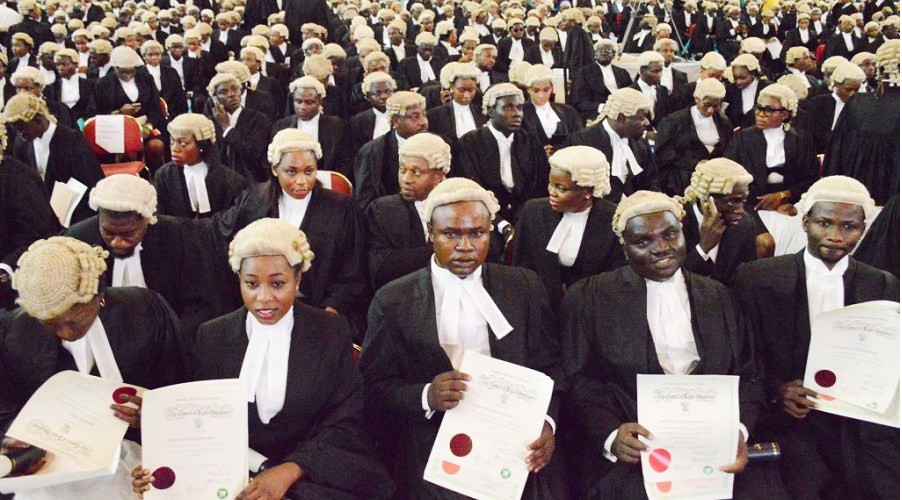
Guidelines for Professional Relations Between Lawyers and The Court System In Nigeria Under The New Rules Of Professional Conduct

0

Legal Practice :- Guidelines For Professional Relations Between Lawyers In Nigeria Under The New Rules Of Professional Conduct

This article talks about the relationship between legal practitioners as governed by the rules of professional conduct (RPC), particularly in the areas of :- 

– Fellowship & precedence. 

– Good faith & fairness among lawyers. 

– Association in matters. 

– Change of lawyer. 

What is the provision of the RPC on fellowship and precedence among lawyers?

 – Lawyers are required to treat each other with fairness, respect, consideration and dignity.

 – Lawyers are required to always regard each other with no ill feelings. This includes addressing each other in courteous & respectful language.

 – Under the RPC, all legal practitioners, regardless of their ranking and placement at the bar,are equal in status. This is without prejudice to the rights of Senior Advocates Of Nigeria (SANs) and Honourable Benchers having the right to get their matters called out of turn in court and to not share seating arrangements in court with members of the outer bar. 

What are the provisions of the RPC on good faith & fairness among lawyers?

 – Lawyers are required to always honour agreements made with other lawyers.

 – Lawyers are barred from entering into late holding brief agreements.

 – Lawyers are barred from speaking with an opposing legal counsel’s client in his absence.

 What are the provisions of the RPC on associations of lawyers in matters?

 – When being briefed by a client who already has a former lawyer still representing him in a matter, the second lawyer is required by the RPC to refuse being briefed in that matter if it is objectionable to the previous lawyer.

 – The new lawyer being briefed to replace the previous lawyer is also required by the RPC to ensure that all outstanding fees owed to the previous lawyer are paid by the client.

 What are the provisions of the RPC on the change of lawyers?

 – Where a lawyer has been briefed by a client to replace another lawyer currently representing him, the new lawyer is to  :-

 a). Give notice to the former lawyer.

 b). Use his best endeavors to ensure that the former lawyer is paid his earned fees.

 – In litigation :-

 a). Both lawyers shall give notice of change of counsel to the court.

 b). All documentation in the client’s brief in the possession of the former lawyer is to be handed over to the client upon the change of counsel.

 c). The former lawyer in line with ethical rules on the recovery of unpaid fees may place a lien on documentation belonging to the client.

Legal Practice :- Guidelines On Relations Between Legal Practitioners & The Court System In Nigeria Under The New Rules Of Professional Conduct (RPC) 2024 

This article focuses on the roles required of legal practitioners in their relationships with the courtroom hierarchy under the new rules of professional conduct slated to take effect in January, 2024. 

What are the duties required of lawyers by the RPC as officers of the court? 

– Lawyers are required to be respectful to the court and to not obstruct, delay or adversely affect the administration of justice. 

– Where there is a reasonable cause of action, lawyers are required to only seek redress against judicial officers through the appropriate authorities. 

– A lawyer failing to comply with undertakings to a court constitutes professional misconduct. 

– Lawyers are not allowed to discuss pending cases with the judge trying or hearing the case, except in the presence of opposing counsel in the suit. 

What are the requirements of the RPC concerning candid and fair dealings? 

– In appearing in his professional capacity before a court or tribunal, a lawyer shall not deal with the court unless otherwise candidly and fairly. 

What are the provisions of the RPC on trial publicity? 

– Lawyers are not permitted to engage in television,radio and other media interviews or shows for the purpose of commenting on courtroom or litigation matters which are pending before the court, especially where there’s a clear intention of possible or calculated interference with the fair trial of the suit. 

What are the requirements of the RPC regarding relations between lawyers and judges? 

– Lawyers are required to ensure that they never create the ascertainable impression of gaining or trying to gain special personal consideration or favour from a judge.  

– This can also apply to lawyers having a duty to reveal to opposing counsel, any personal relationship he may have with the judge sitting on matters participated in. 

This is the Nigerian legal ordinance. Understand that laws vary across national boundaries. If your practice involves international law, being aware of the venezuela sanctions ofac is essential for compliance and ensuring smooth legal operations.

Guidelines For Lawyers In Nigeria On Professional Relations With Clients Under The New Rules Of Professional Conduct

0

In this write-up, we will be taking a closer look at a very important issue for many lawyers in private legal practice which is their professional relationship with clients which is regulated by the rules of professional conduct (RPC) in Nigeria.

Our focus will be on the topics of :-

– Dedication & devotion to the cause of clients.

– Client representation within the bounds of the law.

– Competent representation.

– Conflicts of interest.

– Agreements with clients.

What are the requirements of the RPC regarding dedication to the cause of a client?

– A lawyer shall devote his attention, energy and expertise to the service of his client, and subject to any rule of law, act in a manner consistent with the best interest of his client.

– A lawyer shall:

a). Consult with his client in all questions of doubt which don’t fall within his discretion.

b). Keep the client informed of the progress and any important development in the cause or matter as may be reasonably necessary.

c). Warn his client against a particular risk which is likely to occur in the course of the matter.

d). Respond as promptly as reasonably possible to request for information by the client.

e). Where he considers the client’s claim or defence to be hopeless, inform him accordingly.

– A lawyer employed in respect of a court case shall be personally present or be properly represented throughout the proceedings in court.

– Any negligence by a lawyer in handling a client’s affairs may amount to professional misconduct.

What does the RPC say regarding representing clients within the bounds of the law?

– In his representing a client,a lawyer may refuse to aid or participate in conduct that he believes to be unlawful even though there is some support for an argument that the conduct is legal.

What does the RPC provide regarding competent representation of clients by lawyers?

– Lawyers are not allowed to :

a). Handle a legal matter which he knows or ought reasonably to know that he is not competent to handle without associating with him a lawyer who is competent to handle it, unless the client objects.

b). Handle a legal matter without adequate preparation.

c). Neglect a legal matter entrusted to him.

d). Attempt to exonerate himself from or limit his ability to his client for his personal malpractice or professional misconduct.

What does the RPC say on conflicts of interest?

– A lawyer shall at the time of a retainer, disclose to the client all the circumstances of his relating with the parties and any interest in or connection with the controversy which might influence the client in the selection of the lawyer.

What does the RPC say on agreements with clients?

– A client shall be free to change his lawyer and to dispense with his services as he deems fit, provided that nothing in this provision shall absolve the client from fulfilling any agreed or implied obligations to the lawyer including the payment of fees.

Section II

This second article installment will be looking at the provisions of the new rules of professional conduct (RPC) for lawyers regarding their relationships with clients in the areas of  :-

– Maintaining client privilege and confidence.

– Lawyers standing as witnesses for clients.

– Withdrawal from employment of clients by lawyers.

– Calling at the houses or places of business of clients by lawyers to receive briefs.

– Lawyers dealing in properties of clients.

What does the RPC say regarding the privilege and confidence of a client?

– All oral or written communications made by a client to his lawyer in the normal course of professional employment are privileged.

– A lawyer shall not knowingly :

(i). reveal a confidence or secret of his client;

(ii). use a confidence or secret of his client to the disadvantage of the client;

(iii). use a confidence or secret of his client to the advantage of himself or of a 3rd person unless the client consents after full disclosure except with the client’s consent after full disclosure or when necessary to establish his legal fee or defending a wrongful conduct allegation.

What does the RPC say on lawyers standing as witnesses for their clients?

– Lawyers are not allowed to do so in any contemplated or pending litigation where he knows or ought reasonably to know that he or a lawyer in his firm may be called as a witness .

– A lawyer can testify:

a). Where the testimony will relate solely to an unconnected matter.

b). Where the testimony will solely relate to a matter of formality and there’s no reason to believe that substantial evidence will be offered in opposition to the testimony.

What does the RPC say on withdrawal by lawyers from a client’s employment?

– A lawyer shall not abandon or withdraw from an employment once assumed, except for good cause which can be – 

a). conflict with the interest of the client;

b). when the client insists on an unjust or immoral course in the conduct of his case;

c). where the client persists against the lawyer’s advice and persists in pressing frivolous defenses;

d). where the client deliberately disregards an agreement or obligation as to payment of fees or expenses.

Is a lawyer calling at the place of business or residence of a client allowed under the new RPC?

This is not allowed except in special circumstances or for some other reason preventing his client from coming to his law office.

What does the new RPC say regarding a lawyer dealing in the property of a client?

– This is allowed except when it constitutes an abuse of the client’s trust.

The  MultiChoice’s Only Choice as It Raises Prices on DStv, GOtv

1

Yes, your DStv price may be going up and watching your European Champions League games may be imperiled in Nigeria. Before you call me names for trying to make a case why Multichoice needs to increase prices, I have to report that DStv and its owner are not having good days: “Broadcasting company Multichoice has jacked up the prices of its offerings in Nigeria days after announcing a $72m loss in its financial statement for the third quarter of the year. Checks on the company’s reviewed price list showed a 20 percent percent hike in the company’s packages across the board.”

Of course, someone will get a court injunction to stop MutiChoice (owner of DStv and GOtv) from increasing prices since watching these sports games is a right enshrined in the Nigerian constitution+ and the judges are doing their jobs protecting citizens from a “monopolist”.

I do not live in Nigeria to care about DStv. But what I know is that DStv’s core product (European football) is a foreign product, created in Europe. If MultiChoice does its agreements every 5 years, there is a likelihood that it paid for its current rights when Naira was going for say N385/$. It paid the Europeans in foreign currency and never in Naira. If that remains the case, and with Naira hovering around N1000/$, if MultiChoice does not increase price, it has to be assessed for running a charity as a for-profit company.

Interestingly, it was assessed and it reported “$72m loss in its financial statement for the third quarter of the year”. Now, it has to come to reality and increase prices. It is a reasonable thing to do if customers want it to live for the future. 

Indeed, MultiChoice offers customers multiple choices, but here, it has only a single choice to remain in business: jack up prices since it cannot return to Europe to renegotiate rates because the Naira has crashed!

Broadcasting company Multichoice has jacked up the prices of its offerings in Nigeria days after announcing a $72m loss in its financial statement for the third quarter of the year.

Checks on the company’s reviewed price list showed a 20 percent percent hike in the company’s packages across the board.

With the latest price hike, the DStv Premium package increased by 20.4 percent from N24,500 to N29,500. Similarly, the DStv Compact+ has gone up by 19.2 percent from N16,600 to N19,800 while the Compact package increased by 19 percent, from N10,500 to N12,500.

Comment on Feed

Comment 1: Why focus on only football? Is the offering only in Nigeria?

My Response: Because Nigeria is the only country that lost 60% of the value of its currency in 3 months! They are doing well in other countries if you look at their consolidated annual reports. But when you convert the Naira to USD, they become hopeless.

Good point. PPV is even a terrible business model in Nigeria. People think they will divide N20,000/30 days/24 hours and ask you to pay whatever during Champions League games. They can make Champions League N50,000 per 3 hours and allow you to do PPV. In US, PPV can go for $1,000

UK Court Orders P&ID to Pay £20 Million Damages to Nigeria Following Victory in $11 Billion Judgment

0

A UK court has ruled that Process & Industrial Developments (P&ID) Limited must pay £20 million in damages and compensation to Nigeria within the next 28 days.

This decision comes after Nigeria’s success in overturning an $11 billion judgment debt in October, with the court citing P&ID’s reprehensible conduct in securing the gas processing contract.

The consequential ruling in London determined the next steps in the legal proceedings and whether P&ID would be granted permission to appeal the case. However, the UK court denied P&ID the opportunity to take the matter back to arbitration.

The £20 million damages awarded to Nigeria were based on the court’s assessment of P&ID’s conduct in obtaining the gas processing contract. Nigeria had sought at least £20 million from P&ID to cover damages and legal fees.

The dispute between Nigeria and P&ID dates back to 2010 when the two parties entered into an agreement for P&ID to build and operate a gas processing facility in Calabar, Cross River State. The deal collapsed, leading to legal action initiated by P&ID, accusing Nigeria of breaching the contract.

In 2017, a tribunal ruled that Nigeria should compensate P&ID with $6.6 billion in damages, along with pre and post-judgment interest at a rate of 7 percent. In September 2020, a judge within the Business and Property Court of England, Ross Cranston, granted the application for Nigeria to pay damages to P&ID.

However, Nigeria’s legal representatives alleged that P&ID secured the contract through bribery, a claim vehemently refuted by P&ID as “unfounded allegations and conspiracy theories.”

In March, lawyers representing the Nigerian government sought to invalidate the arbitration award, arguing that the gas processing contract was obtained fraudulently. The turning point came in October 2023 when the UK court ruled in favor of Nigeria, stating that the awards were obtained by fraud and contrary to public policy.

“In the circumstances and the reasons I have sought to describe and explain, Nigeria succeeds in its challenge under section 68.

“I have not accepted all of Nigeria’s allegations. But the awards were obtained by fraud and the awards were and the way in which they were procured was contrary to public policy,” Justice Robin Knowles of the Commercial Courts of England and Wales said in the judgment.

The latest directive for P&ID to pay £20 million in damages reflects a significant development in the legal battle and is seen as another victory for Nigeria in the protracted dispute.