DD
MM
YYYY

PAGES

DD
MM
YYYY

spot_img

PAGES

Home Blog Page 3623

This Is How Scorpion Casino Could Emulate Cardano And Ethereum As The Best Crypto For Passive Income

0

Scorpion Casino could stand on par with Ethereum and Cardano as a premier option for passive income in the cryptocurrency arena. Cryptocurrency staking is increasingly favored by investors seeking passive income in the digital asset realm. Scorpion Casino ($SCORP), Ethereum, and Cardano all vie for attention in this domain, each offering distinct advantages and opportunities.

Scorpion Casino Offering Passive Income Rewards In Online Gaming

Beginning with Scorpion Casino (SCORP), this innovative platform presents an attractive opportunity for passive income within the flourishing online gaming sector. Through adept use of blockchain technology, Scorpion Casino has crafted a robust ecosystem conducive to significant earning potential. As the online gaming market is predicted to soar to $145 billion by 2030, SCORP’s token facilitates entry with minimal obstacles, appealing to investors interested in this profitable sector.

The success of SCORP’s presale, amassing over $5.5 million through investors buying over 350 million of its 480 million tokens, highlights considerable investor interest and the promise of substantial returns.

SCORP’s staking rewards enhance its appeal. Investors can amass considerable rewards through passive income in crypto, with Scorpion Casino’s platform enabling users to earn up to 10,000 USDT daily.

SCORP’s unique tokenomics system, including buy-backs, burns, and revenue-sharing mechanisms, enhances the staking experience, providing a dynamic avenue for passive income amid the evolving crypto landscape.

Importantly, SCORP’s revenue-sharing system promotes stability, shielding investors from the volatile swings of the crypto market. This feature distinguishes SCORP as an enticing choice for those seeking dependable passive income in crypto, regardless of market conditions.

Ethereum and Cardano Retain Prominence in Passive Income

In addition to Scorpion Casino, Ethereum and Cardano offer compelling prospects for crypto staking and passive income generation. Ethereum, the second-largest cryptocurrency by market capitalization, serves as a cornerstone of the decentralized finance (DeFi) ecosystem. Staking Ethereum involves locking up ETH tokens to uphold network security and transaction validation, with stakers receiving rewards in newly minted ETH. The shift to a proof-of-stake consensus mechanism through Ethereum 2.0 is set to augment the profitability of staking on the Ethereum network.

Similarly, Cardano’s staking mechanism empowers ADA holders to engage in the network’s consensus process and earn rewards for their contributions. By delegating ADA tokens to stake pools, investors can secure passive income while fortifying the security and decentralization of the Cardano network.

In Summary

While Ethereum and Cardano maintain their stature in passive income within the crypto realm, Scorpion Casino (SCORP) emerges as a formidable contender poised to rival them. With its innovative incorporation of blockchain technology into the online gaming sector, SCORP provides investors with a distinct opportunity to earn substantial rewards while immersing themselves in gaming excitement.

The triumph of SCORP’s presale, coupled with its robust tokenomics and revenue-sharing mechanisms, underscores its potential as a reliable source of passive income amid the ever-changing crypto landscape. As investors explore avenues for wealth accumulation, SCORP shines as an enticing option for seizing opportunities in the burgeoning online gaming market while mitigating risks associated with traditional crypto investments.


For further details on SCORP:

Presale: https://presale.scorpion.casino/

Twitter: https://twitter.com/ScorpionCasino

Telegram: https://t.me/scorpioncasino_official
Maryland Lawmakers Debate Whether Mobile Casino Games are an Economy Booster or an Addiction Risk

0

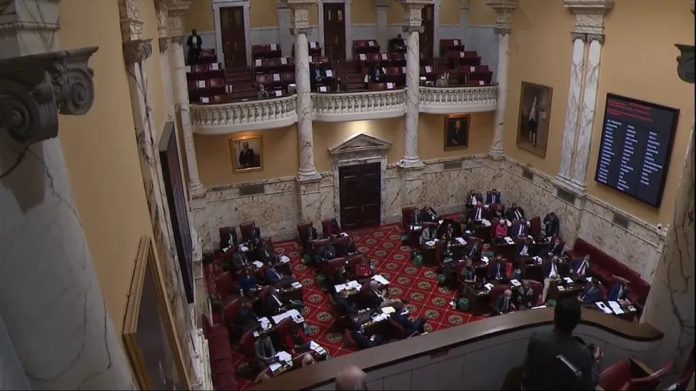
A contentious debate is unfolding in the Maryland state legislature over allowing mobile casino games, pitting potential tax revenues against concerns over increased gambling addiction.

Several Democratic lawmakers are pushing bills to legalize mobile blackjack, poker, roulette and other table games that could be played on phones and computers statewide. They argue the move could haul in an extra $500 million annually.

“Mobile casino gaming is the natural next step to bolster state coffers while giving citizens more entertainment options,” said Del. Brian Frosh (D-Bethesda), chief sponsor of the House bill. “Most folks already use their devices for sports betting, so adding more game variety makes fiscal and practical sense.”

Frosh highlighted successful iGaming expansions in Pennsylvania, New Jersey and other neighboring states. “There’s tremendous undiscovered revenue potential here and we’d be foolish not to explore it,” he said.

However, longtime casino employees worry that increased mobile access to table games could further erode in-person gambling venues.

Deborah Mullins, a 10-year waitress at Horseshoe Casino Baltimore, has noticed fewer patrons since sports betting apps launched.

“On weekends, our table game area used to be buzzing until 3 or 4AM. Now it’s a ghost town by 11PM because people can just play blackjack on their couches instead,” Mullins said. “I’m worried about job security if more gets put online.”

The concerns are backed by research from the American Gaming Association showing a 17% decline in U.S. casino visitation rates after initial sports betting legalization. Industry leaders like MGM have also highlighted mobile gaming cannibalizing land-based revenue.

Beyond economic impacts, mental health experts fear a sharp rise in problem gambling if table games enter homes on apps.

“Having round-the-clock access to high-stakes casino entertainment on your phone poses grave addiction risks,” said Dr. Timothy Landers, a gambling therapist and professor at Johns Hopkins University. “It could trigger relapses for recovering addicts while roping in new vulnerable groups.”

Landers cited multiple studies linking increased gambling availability to higher addiction levels. “The convenience and privacy of mobile play removes critical barriers that protect at-risk individuals in public venues,” he said. “Lawmakers need to weigh public health costs against tax dollars.”

Polling suggests most Maryland residents support legalizing mobile casinos, but opposition lawmakers are unwilling to ignore the risks.

“While I understand the financial motivations, we cannot in good conscience open citizens to greater gambling harm,” said Sen. Heather Frost (R-Baltimore County). “I urge colleagues to prioritize well-being over revenues and vote down this legislation.”

The heated mobile casino debate continues in Annapolis committees as lawmakers grapple with balancing economic gains against social responsibility.

A recent poll about legalizing mobile casino gaming by USAcasinos247.com found that 75% of state residents endorse it, while 45% oppose the move. Supporters point to increased tax revenues and entertainment options, while opponents cite harm from gambling addiction. As lawmakers in Annapolis hear arguments from both sides, the future of expanded online gambling hangs in the balance.

$15,000 for directors, $10,000 for employees: Nigeria Introduces Expatriate Employment Levy to Boost Indigenous Workforce

0

In a bid to bolster local employment opportunities and increase revenue, Nigeria has announced the implementation of a mandatory annual levy targeting organizations employing expatriate workers.

Under this new regulation, companies are required to pay $15,000 for directors and $10,000 for other expatriate employees.

The initiative aims to incentivize foreign companies to hire more Nigerian workers, aligning with President Bola Tinubu’s vision of balancing employment opportunities between Nigerians and expatriates. Tinubu emphasized this objective during the launch of the Expatriate Employment Levy (EEL) handbook, cautioning against any misuse of the levy to deter potential investors.

“The goal is to close wage gaps between expatriates and the Nigerian labor force while increasing employment opportunities for qualified Nigerians in foreign companies in the country,” he said.

According to reports citing data from the interior ministry, Nigeria hosts more than 150,000 expatriates, primarily working in sectors such as oil and gas, construction, telecommunications, and hospitality. Nigeria, being one of Africa’s largest oil producers, relies heavily on oil and gas exports, which constitute 90% of its foreign exchange earnings, as noted by the International Monetary Fund.

This move supplements the existing requirement for companies to pay $2,000 annually for residency permits per foreign employee. However, economists are expressing concern about the potential repercussions on investor confidence.

According to the new controversial methodology adopted by the NBS, Nigeria’s unemployment rate surged to 5.0 percent in the third quarter of 2023 from 4.2 percent in the previous quarter, as indicated by the latest Labour Force Survey. The report from the National Bureau of Statistics also revealed that the labor force participation rate among the working-age population declined to 79.5 percent in Q3 compared to 80.4 percent in Q2.

While the levy seeks to address employment disparities and generate revenue amidst Nigeria’s economic challenges, concerns linger regarding its impact on investor sentiment. Economists fear that the levy could deter foreign investment, exacerbating the nation’s economic woes.

They say while the intention behind the levy is noble, its implementation may inadvertently deter foreign investment, particularly at a time when Nigeria is grappling with economic instability.

But Nigerian economist Abubakar Abdullahi holds a positive outlook, stating that the levy could benefit Nigeria by prompting companies to explore local talent. “I believe Nigeria stands to benefit from this levy as more companies will start looking inwards as there are qualified Nigerians from all sectors,” Abdullahi remarked.

Investor confidence is crucial for Nigeria, especially amid its worst economic crisis in recent history. Widespread hardship and discontent have fueled protests and demonstrations by labor unions and government workers, underscoring the urgency of economic revitalization efforts.

In response to these challenges, President Tinubu reassured Nigerians of ongoing efforts to stabilize the economy and improve financial prospects. However, striking a delicate balance between promoting indigenous employment and sustaining investor confidence remains a formidable task for Nigerian policymakers.

The success of the Expatriate Employment Levy hinges on effective enforcement mechanisms.

Enforcement of the levy falls under the jurisdiction of the Nigerian Immigration Service, with Interior Minister Olubunmi Tunji-Ojo indicating that it will operate under a public-private partnership model involving the government, immigration service, and a private firm.

Collaborative efforts between the government, immigration services, and private entities are said to be essential to mitigate concerns raised by investors and ensure the levy’s contribution to Nigeria’s economic development.

Experts have warned that policymakers must tread cautiously as Nigeria navigates through its economic turmoil, considering the nuanced implications of regulatory measures on investor sentiment and domestic employment dynamics. They said Finding a harmonious equilibrium between these competing priorities will be instrumental in steering Nigeria toward sustainable economic growth and prosperity.

Whales Move To BlockDAG Crypto For 5000x ROI Potential As BTCMTX Presale & Cardano Future Remains Uncertain

0

Have you ever wondered what sets off the FOMO firestorm in the cryptocurrency world? It was ignited and set fire by the extraordinary presale effort known as BlockDAG crypto, which raised more than $2 million in its first two presale batches. Due to its recent fundraising success, BlockDAG has gained attention and generated a lot of buzz that is difficult to ignore. Given that the business raised $2 million in first funding, many people are curious about what Bitcoin Minetrix presale and Cardano’s future will do.

Bitcoin Minetrix Presale is Back!

Bitcoin Minetrix is quickly emerging as one of the preferred options for investors closely behind the BlockDAG presale, which is currently topping the chart. With the help of this unique technology, which combines cloud mining and cryptocurrency staking, mining BTCMTX doesn’t require costly hardware.

Staking your BTCMTX coins gives you control over your mining activity and is a safer option than other cloud mining services. The primary draw of Bitcoin Minetrix is its streamlined cloud mining methodology. There is also less possibility of fraud because every transaction is tracked on-chain. 

30% Drop Makes Cardano Future Uncertain

The 30% drop in the price of Cardano can be attributed to the ongoing negative trend that began in mid-December. Nevertheless, as ADA gets closer to a crucial downtrend line, there are indications that the price may have bottomed out. Resistance is located at the 50-day SMA and $0.5419, the intersection of a horizontal line, if ADA breaks above this trendline.

The resistance level at $0.6412, higher than the present levels, and the $0.5908 barrier, roughly 10% above them, are the following two critical levels to watch. If the falling trendline rejects Cardano, the price may go below the trendline’s support and could test the $0.4668 bottom, which is almost 10% below the current levels. 

BlockDAG’s Batch 2 On A Sellout Frenzy, Raises $2 Million In Presale

BlockDAG (BDAG), inspired by Bitcoin and Kaspa, is reinventing blockchain with its hybrid consensus, combining POW’s security with DAG. As a result of its creative methodology, fastest speeds in the market, and highest level of security, BDAG has become the most advanced layer-1 blockchain globally, raising over 2 million in just two batches.

BlockDAG distinguishes itself in the cryptocurrency market with its commitment to rapid transactions, expansive scalability, and unwavering decentralization. For investors capitalizing on the current second-phase pricing at $0.0015 per BDAG, the anticipated launch price of $0.05 could yield an impressive return of up to 3233%.

Due to the significant interest from early backers, BlockDAG is excited to unveil a $2 million colossal giveaway for 50 fortunate members of its community. To take part in this exceptional opportunity, participants are encouraged to engage with BlockDAG’s social media platforms, register their wallet addresses, enhance their winning probabilities by completing various tasks, and secure additional chances by referring friends.

Conclusion

Even though Cardano Future looks to be approaching a bottom, its price could still be affected by resistance levels in front of it. That being stated, Bitcoin Minetrix & BlockDAG presales are the next to watch. They are undoubtedly following a different route while observing the giants. Its dedication to user needs and success during presale attest to its potential. BlockDAG is a unique option for long-term investment because of its creative strategy, state-of-the-art technology, and commitment to revolutionising the cryptocurrency industry.


Invest In BlockDAG Today

Website: https://blockdag.network

Presale: https://purchase.blockdag.network

Telegram: https://t.me/blockDAGnetwork

Discord: https://discord.gg/Q7BxghMVyu


Nigerian Debt Recovery Startup Bfree Secures $2.95M to Redefine Debt Collection in Africa

0
Fund, money cash dollar

Bfree, a tech-enabled debt collection Nigerian startup has secured $2.95 million in fresh funding, to redefine debt collection in Africa.

The funding round was led by Capria Ventures with participation from Angaza Capital, GreenHouse Capital, Launch Africa, Modus Africa, Axian CVC, and Angel investors.

Commenting on the investment, managing partner at Capria Ventures, Susana Garcia-Robles said,

“The advent of generative Al provides a pathway for more efficient scaling, enabling the company to expand across the continent at a reduced cost. Bfree is well-positioned to play a crucial role in improving accessibility and mitigating risk in financial services.

“We foresee the growing prominence of credit management and are confident that Bfree will spearhead the creation of a secondary market on the continent for distressed assets. Bfree has secured significant partnerships with top-tier banks and fintechs, affirming the effectiveness of its product and reinforcing our belief in its potential to transform credit collection in Africa”.

Through a tech-enabled credit management solution that makes collection processes more scalable, efficient, and user-friendly, Bfree concentrates on helping its customers with their finances.

Commenting on the company’s commitment to addressing the challenges of risk management and how the newly raised fund would enhance that, CEO of Bfree, Julian Flosbach said,

“At Bfree, we are focused on addressing the challenges of risk management in African economies. Through the use of Al, we are developing solutions that help distressed borrowers get back on their feet while empowering lenders and contributing to financial market stability across the continent. With the support of our investors, we are poised to make significant strides in transforming risk management for lenders in Africa.”

Launched in 2020, Bfree offers a personal budgeting service to debt consumers to help them spend within their means and repay their loans with interest promptly.

The startup says 92% of its interactions with customers are fully automated but has maintained a call center, manned by a small team, for when customers call or for follow-ups that require phone calls. It also launched a loan collection management SaaS dubbed Workflow, which targets companies with in-house collection teams or those that are not keen to outsource.

The startup is arguably the only tech-enabled credit recovery company across Africa, where collectors continue to heavily rely on traditional options like call centers to follow up on settlements. Over the years, its customer base has grown to include some of the major banks in Ghana, Kenya, and Nigeria, where it plans to continue scaling.

The startup plans to create a secondary debt market, to allow third-party investors like hedge funds, looking to diversify their investments, to buy non-performing loans (NLPs) from banks in Africa. Debt buyers purchase loans from banks at a fraction of the debt’s face value and make profits from collection. Banks sell NLPs to minimize their risk, manage loan portfolios, and free up funds.

Through its consumer personal budgeting processes, algorithms, and financial literacy, Bfree believes it will tackle Africa’s rising consumer debt.