DD
MM
YYYY

PAGES

DD
MM
YYYY

spot_img

PAGES

Home Blog Page 363

Historic Crypto Market Meltdown Wipes Out $19 Billion in 24 Hours as Trump’s China Tariff Triggers Market Crash

0

The cryptocurrency market experienced its most devastating single-day crash on record on Friday, erasing over $19 billion in value within just 24 hours.

Data from Coinglass revealed that more than 1.6 million traders were liquidated as panic swept through global markets.

The massive sell-off was reportedly triggered by President Donald Trump’s announcement of a new 100% tariff on China, coupled with fresh export restrictions that sent shockwaves across global financial systems.

The announcement reignited the US-China trade war, hitting global risk assets across the board. Stocks, oil, and crypto all went red. The Nasdaq fell 3.6%, while the S&P 500 and Dow Jones also posted their biggest drops in months.

Investor sentiment turned sharply negative, with the Crypto Fear & Greed Index plunging to 35 firmly in “fear” territory and the average crypto Relative Strength Index (RSI) slipping to an oversold level of 25.97.

At the heart of the turmoil, Bitcoin faced unprecedented selling pressure. Having recently reached a new all-time high above $126,000, Bitcoin’s price nosedived  crashing to around $101,725 price, before managing a modest rebound to $112,145, as at writing this report.

CoinGlass data showed that a staggering $19.31 billion in leveraged positions were wiped out within a single day. Bitcoin accounted for the largest share with $5.36 billion in losses. Bitcoin’s four-hour RSI dropped to levels unseen since the early stages of the trade war in February, signaling extreme oversold conditions. Traders who had heavily leveraged on the bullish rally suffered historic losses, with long positions forming the majority of liquidations.

Ethereum (ETH) followed closely with $4.42 billion. The largest single liquidation occurred on the Hyperliquid exchange, where an ETH-USDT position worth $203 million was forcibly closed. The liquidation frenzy marked the biggest leverage flush in crypto history, with over 1.66 million traderscompletely wiped out.

As automated liquidation systems kicked in, panic spread rapidly, accelerating the downward spiral.

The crash extended beyond Bitcoin, hitting altcoins even harder. Solana, XRP, and meme tokens such as Dogecoin and Shiba Inu suffered declines ranging from 16% to 40%, as retail traders raced to exit the market. Analysts had previously warned that the altcoin market was overstretched and vulnerable to sudden shocks.

Adding to the market anxiety, the U.S. government shutdown, now entering its tenth day, has led to a data blackout as official economic indicators remain suspended amid political gridlock in Congress. Despite this, independent data sources continue to reflect the extent of the financial turmoil.

The sell-off also destabilized the USDe stablecoin, which temporarily lost its dollar peg as institutions offloaded assets to cover margin calls. This de-pegging intensified the chaos across leveraged trading platforms, triggering additional waves of forced liquidations.

Despite the carnage, several market analysts remain cautiously optimistic about the long-term outlook. They point to expanding global liquidity and sustained inflows into Bitcoin exchange-traded funds (ETFs) as signs of underlying strength.

Analysts say Bitcoin’s next key support sits at $100,000. Falling below that, said Caroline Mauron of Orbit Markets, “would signal the end of the past three-year bull cycle.”

Arthur Hayes, co-founder of BitMEX, hinted that the crash may have created rare buying opportunities. “Congrats to all you stink bidders,” he wrote. “We won’t be seeing those levels any time soon on many high-quality alts.”

Future Outlook

For now, Bitcoin’s ability to hold above the $110,000 threshold is seen as the key level to watch. Should it maintain that support, experts believe bullish momentum could soon return to the market.

Nigeria’s Public Debt Hits N152.4tn as Weak Naira, Borrowing Costs Deepen Fiscal Strain

0

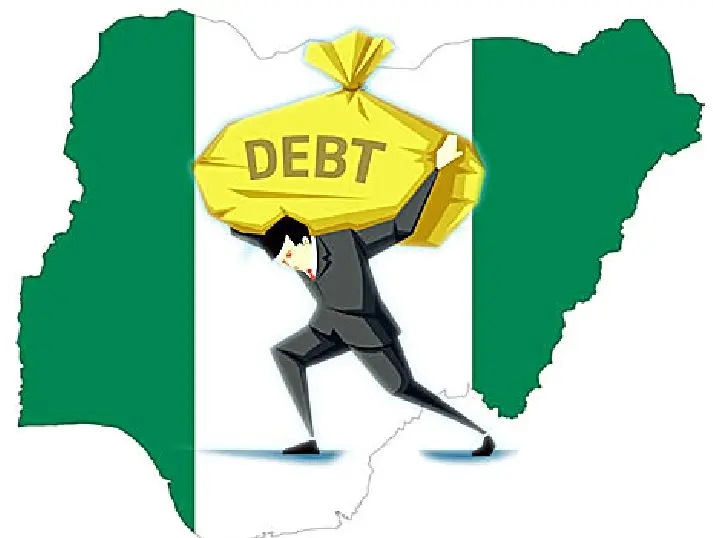
Nigeria’s total public debt has climbed to N152.40 trillion as of June 30, 2025, according to new data from the Debt Management Office (DMO). The figure marks an increase of N3.01 trillion, or 2.01%, from N149.39 trillion at the end of March.

In dollar terms, the debt rose from $97.24 billion to $99.66 billion, reflecting a 2.49% increase in just three months.

The report shows that while borrowing has moderated compared to the previous year, the country’s debt burden continues to swell—largely because of currency depreciation and heavy reliance on domestic and external financing to cover fiscal deficits.

External Debt Sees Modest Increase

Nigeria’s external debt rose to $46.98 billion (N71.85 trillion) in June from $45.98 billion (N70.63 trillion) in March. The increase, though moderate, reinforces concerns about the country’s dependence on external lenders.

Multilateral institutions remain Nigeria’s largest creditors, with a combined exposure of $23.19 billion, accounting for nearly half of the country’s external obligations. The World Bank, through its International Development Association (IDA) arm, remains the single largest creditor with $18.04 billion outstanding.

Bilateral loans totaled $6.20 billion, led by the Export-Import Bank of China at $4.91 billion, followed by smaller exposures to France, Japan, India, and Germany. Commercial borrowings—mostly Eurobonds—accounted for $17.32 billion, representing 36.9% of the external debt.

Analysts say Nigeria’s dependence on Eurobonds and other commercial instruments exposes the country to global market volatility, especially as international investors demand higher yields amid global interest rate hikes. Meanwhile, the concentration of loans from multilateral institutions underscores Nigeria’s reliance on concessional financing, a pattern that reflects weak domestic revenue capacity.

Domestic Debt Heavily Tilted Toward Long-Term Bonds

The domestic debt stock climbed to N80.55 trillion in June from N78.76 trillion in March, an increase of N1.79 trillion. Federal Government bonds dominated the portfolio with N60.65 trillion, representing over 79% of total domestic debt.

This includes N36.52 trillion in naira-denominated bonds, N22.72 trillion in securitized Ways and Means advances—money borrowed directly from the Central Bank of Nigeria (CBN)—and N1.40 trillion in dollar bonds.

Shorter-term instruments made up a smaller share: Treasury bills accounted for N12.76 trillion (16.7%), Sukuk bonds stood at N1.29 trillion, while savings bonds, green bonds, and promissory notes amounted to N91.53 billion, N62.36 billion, and N1.73 trillion, respectively.

The sharp rise in securitized Ways and Means advances points to persistent fiscal pressure, as the government increasingly relies on borrowing to plug budget deficits rather than expand revenue. Economists warn that the trend could worsen inflationary pressures and crowd out private investment if unchecked.

Federal Government Accounts for Over 92% of Total Debt

Of the total N152.40 trillion, the Federal Government is responsible for N141.08 trillion (92.6%), comprising N64.49 trillion in external debt and N76.59 trillion in domestic obligations.

For the first time in 2025, the DMO included a detailed breakdown of subnational debt. States and the Federal Capital Territory (FCT) collectively owe $4.81 billion (N7.36 trillion) externally and N3.96 trillion domestically—bringing their total to N11.32 trillion (7.4%) of the national debt.

Currency Depreciation Inflating Debt Stock

The DMO noted that external debt was converted at the CBN’s exchange rate of N1,529.21 per dollar as of June 30, 2025. The weaker naira—compared with earlier in the year—magnified the naira value of Nigeria’s foreign debt, adding trillions to the headline figure even without significant new borrowing.

This currency effect highlights Nigeria’s vulnerability to exchange rate volatility. The more the naira weakens, the higher the country’s debt appears in domestic terms, further complicating fiscal management.

Although Nigeria’s debt-to-GDP ratio remains within international benchmarks—hovering around 45%—economists are increasingly alarmed by the rate of debt accumulation and the rising cost of servicing loans.

According to data from the Budget Office, debt servicing consumed over 80% of government revenue in the first half of 2025, leaving little fiscal room for capital projects or social programs.

The situation is more alarming as the government continues to borrow. Early this week, President Bola Tinubu wrote the National Assembly, seeking approval for a fresh external borrowing of $2.3bn. This is in addition to a plan to issue a $500m sovereign Sukuk, which will mark Nigeria’s debut in the international Islamic finance market.

The request, contained in a letter read on the floor of the House of Representatives by Speaker Tajudeen Abbas on Tuesday, complies with Sections 21(1) and 27(1) of the Debt Management Office Establishment Act, 2003. The borrowing plan seeks legislative approval for external financing to implement the 2025 Appropriation Act, refinance maturing Eurobonds, and expand Nigeria’s debt instruments to include Islamic finance products.

A Widening Fiscal Gap

Against this backdrop, concerns are growing that Nigeria is heading into a massive debt trap, especially as revenue – largely tied to oil – is not keeping up with the debt increase.

The DMO’s report comes amid concerns that the government’s 2025 budget—anchored on an oil benchmark of 2.06 million barrels per day and an exchange rate of N1,450 per dollar—is already under strain. Actual oil production has averaged below 1.5 million barrels per day, weakening revenue inflows.

Analysts say this combination of low oil revenue, high debt service, and a weakening naira could push Nigeria into deeper fiscal pressure, forcing further borrowing or monetary interventions by the CBN.

The DMO maintains that Nigeria’s borrowing strategy remains guided by sustainability principles, but with the debt stock now above N152 trillion, the challenge has shifted from access to finance to managing the burden without stifling growth.

CBN Gov. Confirms AI Adoption in Nigeria’s Monetary Policy, Says Crypto Guidelines Coming Soon

0

Nigeria’s Central Bank Governor, Yemi Cardoso, has confirmed that the bank has officially adopted artificial intelligence (AI) in its monetary policy framework, particularly for macroeconomic forecasting and decision-making, marking a major step toward digital modernization of monetary governance in Africa’s fourth-largest economy.

Speaking at a fireside chat at the London Business School, moderated by Helene Rey, Lord Bagri Professor of Economics, Cardoso said AI has been fully integrated into the bank’s policy modeling process, describing the technology as an indispensable tool in an era driven by data and predictive analytics.

The governor’s comments mark the first public confirmation that the CBN has formally incorporated artificial intelligence into its policy processes, placing Nigeria among a growing list of central banks globally — including the Bank of England and the U.S. Federal Reserve — experimenting with AI for inflation modeling, exchange rate analysis, and liquidity forecasting.

Cardoso said the initiative is part of a broader effort to make policy “data-driven, transparent, and forward-looking,” as Nigeria continues to confront inflationary pressures and foreign exchange volatility.

On Cryptocurrency Regulation

Responding to a question on cryptocurrency, Cardoso acknowledged the asset class’s growing significance among young Nigerians, signaling a shift from the central bank’s previously restrictive stance.

He said the apex bank understands its importance to young Nigerians and will soon put out a statement in this direction, suggesting that a formal regulatory update is imminent.

The CBN had in 2021 restricted banks from facilitating crypto transactions, citing concerns about money laundering and capital flight. However, under Cardoso’s leadership, the tone has softened, particularly as global financial systems move toward regulated digital asset integration.

Interest Rates and Financial System Stability

On interest rates, Cardoso conceded that rates remain high, but expressed confidence that “as the situation develops, it will start to adjust itself.” He noted that the disappearance of arbitrage opportunities in the foreign exchange market would force Nigerian banks to shift focus toward real business generation and lending, rather than speculative gains.

Turning to the bank recapitalization drive, Cardoso reiterated that institutions unable to meet new capital requirements would have the option to downgrade their licenses or pursue mergers. He stressed that banks have been given sufficient time to comply and dismissed any notion of panic or deadline extension.

Bond Market and FX Reforms

Cardoso also addressed concerns over a perceived “takeover” of the bond market, clarifying that the CBN’s interventions are aimed at price discovery and market efficiency, not control.

He explained that there is no takeover of the bond market but price discovery, similar to FX market reforms, which makes the market function better. The reform, he explained, will get participants to operate transparently, according to their license category.

The governor added that electronic funding and other digital systems continue to play a central role in the ongoing reforms designed to enhance transparency and liquidity in Nigeria’s financial markets.

Reforms and Policy Focus

Cardoso was candid in his assessment of Nigeria’s economic challenges, saying that many of the current hardships stem from reforms that should have been implemented a decade ago.

He explained that things wouldn’t be this bad if reforms such as fuel subsidy removal and the floating of the FX market had been done earlier. He reaffirmed that the Central Bank’s primary mandate remains stability, not short-term economic growth.

Cardoso’s remarks at the London Business School mark a pivotal moment for Nigeria’s monetary policy direction. The adoption of AI for economic forecasting indicates a deliberate modernization of central banking operations — one that could improve the precision of inflation projections and exchange rate management.

At the same time, his openness to digital assets reflects a more pragmatic approach to cryptocurrency regulation, setting him apart from his predecessor and potentially setting the stage for Nigeria’s integration into global fintech trends.

Odds On Polymarket and Kalshi Shows Pricing For Prolonged U.S. Government Shutdown

0

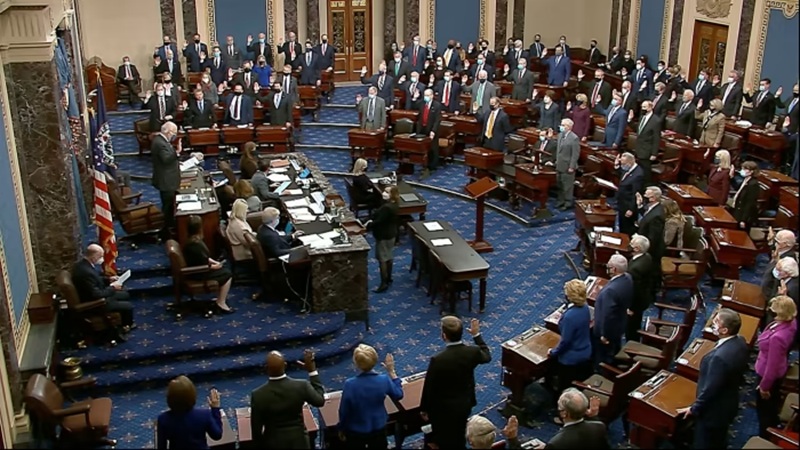
The partial U.S. federal government shutdown—triggered by a lapse in appropriations on October 1—has entered its 10th day. Non-essential services remain halted, affecting hundreds of thousands of federal workers, national parks, and research funding.

Negotiations in Congress have stalled amid partisan disputes over spending priorities, with no immediate resolution in sight. Prediction markets like Polymarket, where users trade shares priced between $0.01 and $1.00 reflecting implied probabilities, are increasingly pricing in a prolonged shutdown.

The platform’s “When will the Government shutdown end?” market resolves based on the U.S. Office of Personnel Management (OPM) announcement of the end of the lapse in appropriations.

These probabilities are derived from share prices: e.g., a “Yes” share for “shutdown lasts 30+ days” trading at $0.37 implies a 37% chance. Trading volume exceeds $1.5 million, with bets tilting toward extension due to failed Senate votes and fiscal hawk resistance.

Similar trends appear on rival platform Kalshi, where the average expected duration is now 24.7 days. Senate votes on funding bills have repeatedly failed, with odds of passage by Oct. 15 dropping from 56% (Oct. 3) to 26% (Oct. 6).

The 2018-2019 shutdown lasted 35 days—the longest on record. Current bets suggest this could approach that if no deal by late October. WSJ reports highlight traders “raising bets on shutdown dragging to end of October,” driven by economic ripple effects like delayed jobs data.

If new developments emerge via breakthrough vote, these odds could shift rapidly—prediction markets update in real-time. While short shutdowns (under a week) typically cause minimal long-term damage, this one is already generating measurable economic strain, with analysts warning of escalating costs if it extends beyond mid-October.

The Council of Economic Advisers (CEA) estimates a baseline hit of $15 billion to GDP per week, driven by reduced federal spending, furlough-related income losses, and ripple effects on private sectors.

For context, the 2018-2019 shutdown 35 days cost $11 billion overall, including $3 billion in permanent losses. These stem from halted operations and mandatory back pay for furloughed workers required by law once funding resumes.

Furloughs equate to temporary layoffs, potentially adding 43,000 unemployed in a monthlong scenario. Indirectly, federal contractors, ~$2 billion in delayed SBA loans from past shutdowns and small businesses face cash flow crunches.

The Bureau of Labor Statistics (BLS) has suspended surveys, delaying the September jobs report (due Oct. 4), October CPI (Oct. 10), and potentially the Social Security 2026 COLA announcement tied to Q3 inflation data.

This “data blackout” leaves Wall Street “in the dark,” complicating Fed rate decisions—officials are still eyeing an October cut despite slowdown signals. Goldman Sachs notes a 0.15 percentage point drag on Q4 GDP from furloughs alone.

National parks like Everglades, Yosemite are closed, costing $76 million/day in visitor spending U.S. Travel Association. Airports face longer TSA lines due to unpaid staff working without pay; air travel disruptions could add $1-2 billion in losses if prolonged.

SNAP benefits are funded through October, but WIC Women, Infants, and Children may exhaust funds by late October, affecting 6.7 million participants. States like Connecticut and Colorado are dipping into reserves to cover gaps, but reimbursement is uncertain—exacerbating fiscal strain amid record $600 billion in 2025 municipal bond issuance.

NIH grants are paused, delaying medical trials; FDA inspections halted could slow drug approvals. Medicare and Social Security processing slows, with longer wait times for 72 million beneficiaries.

Stocks have shrugged it off so far S&P 500 hit records on AI rallies, but prolonged uncertainty could erode consumer confidence—already at 55.1 University of Michigan index, down from 70.3 last year. Gold surged past $4,000/oz as a hedge against debt/inflation fears.

Treasury Inflation-Protected Securities face volatility from delayed CPI. States are fronting costs for federal programs such as Head Start reviews stalled, with unclear repayment prospects. In D.C.-heavy economies like Alaska federal jobs = 15% of workforce, termination threats amplify risks.

Consumer sentiment surveys show 65% expecting rising unemployment, up from 35% a year ago. If the shutdown lasts 15+ days 35-45% odds on Polymarket, indirect effects could tip the U.S. economy—already vulnerable from tariffs and slowing jobs—toward recession.

The 2019 event’s $3 billion irrecoverable hit was just 0.01% of GDP, but today’s higher debt $35+ trillion amplifies multiplier effects. Fed Vice Chair Michael Barr noted “uncertainty remains” on impacts. Most damage is reversible upon resolution, but prolonged stalemate risks confidence erosion 70% of GDP is consumer-driven.

Coinbase and Mastercard Are In Advanced Talk To Acquire BVNK

0

Recent reports confirm that Coinbase and Mastercard are both in advanced talks to acquire BVNK, a London-based fintech startup specializing in stablecoin payment infrastructure.

The potential deal, first detailed in a Fortune exclusive on October 9, 2025, could value BVNK between $1.5 billion and $2.5 billion, making it the largest stablecoin-related acquisition to date if completed.

This comes amid surging interest in stablecoins, with the sector’s market cap exceeding $300 billion, fueled by regulatory progress like U.S. Congress’s recent stablecoin legislation and Circle’s high-profile IPO.

Founded in 2021 by Chris Harmse, Jesse Hemson-Struthers, and Donald Jackson, BVNK provides blockchain-based tools for businesses to handle stablecoin transactions, including cross-border payments, global treasuries, and customer settlements.

Stablecoins here are pegged to assets like the U.S. dollar for stability. The company recently raised $50 million in December 2024 valuing it at ~$750 million then, backed by Haun Ventures, Coinbase Ventures, Tiger Global, Visa, and Citi—highlighting its appeal to both crypto and traditional finance players.

Coinbase (NASDAQ: COIN) and Mastercard (NYSE: MA) are pursuing separate tracks, but no final agreement exists yet—talks could still collapse. Sources indicate Coinbase has the “inside track,” potentially integrating BVNK to bolster its USDC ecosystem via partner Circle for enterprise payments and merchant services.

For Mastercard, it signals a defensive move against stablecoin disruption to card networks, especially after share dips tied to reports of Amazon and Walmart exploring stablecoins.

This follows Stripe’s $1.1 billion acquisition of stablecoin firm Bridge in October 2024, underscoring a wave of consolidation as incumbents race to own stablecoin rails.

Analysts like Ryan Yoon of Tiger Research note diverging motives: Coinbase seeks full value-chain control, while Mastercard eyes white-label crypto services without custody risks.

Circle’s IPO provided a much-needed liquidity event for early investors and executives, with major shareholders like General Catalyst, Breyer Capital, Accel, IDG Capital, Oak Investment Partners, and Fidelity Investments collectively holding over 130 million shares.

Venture firms such as General Catalyst now hold stakes worth billions post-IPO. The company generated $579 million in revenue and $65 million in profit in Q1 2025 annualizing to strong growth, followed by Q2 revenue of $658 million (up 53% YoY) and adjusted EBITDA of $126 million (up 52% YoY).

However, Q2 reported a $482 million net loss, driven by non-cash charges totaling $591 million from IPO-related stock compensation ($424 million) and convertible debt revaluation ($167 million). USDC circulation exploded post-IPO, growing 90% YoY to $61.3 billion by Q2 end and reaching $65.2 billion.

Despite the monster valuation trading at ~215x 2025 earnings and 24x revenue, analysts highlight risks from stablecoin competition and regulatory uncertainties, though Circle’s compliance focus positions it well.

The IPO catalyzed a surge in stablecoin adoption, with global supply hitting $239 billion by mid-2025. It validated regulated stablecoins like USDC, accelerating integrations by JPMorgan, Visa, and others.

This ties into U.S. regulatory progress, including the GENIUS Act which mandates reserves, audits, and redemption rights—using Circle’s transparency as a benchmark. The EU’s MiCA and regulators in Singapore/Japan have aligned similarly, boosting Circle’s global reach.

As the largest crypto IPO since Coinbase’s 2021 debut, Circle’s success up sixfold in weeks signaled thawing SEC scrutiny under a more crypto-friendly administration, sparking optimism for listings from Ripple, Kraken, and Gemini.

It boosted the 2025 IPO drought’s end, with June seeing five tech IPOs up from a monthly average of two, including health-tech firms like Hinge Health. VCs like Sequoia and Kleiner Perkins are eyeing profits from upcoming deals like Figma’s.

Partnerships with Coinbase USDC co-issuer and Binance expanded, while the IPO drew TradFi giants into stablecoin rails. This has pressured competitors like Mastercard in talks to acquire BVNK and fueled speculation on Amazon/Walmart stablecoin explorations, potentially disrupting card networks.

Circle’s IPO continues to underscore 2025 as the “year of stablecoins,” with USDC’s utility in payments, remittances, and DeFi driving real-world adoption. CEO Jeremy Allaire noted post-IPO “acceleration of interest” from major institutions, positioning Circle as a bridge for the “new internet financial system.”

Mastercard, and BVNK have all declined to comment, so developments remain fluid—watch for updates as negotiations progress.