DD
MM
YYYY

PAGES

DD
MM
YYYY

spot_img

PAGES

Home Blog Page 365

Geregu Power Reports N11.151bn Profit, 82% Surge in Q3 Despite Rising Input Costs

0

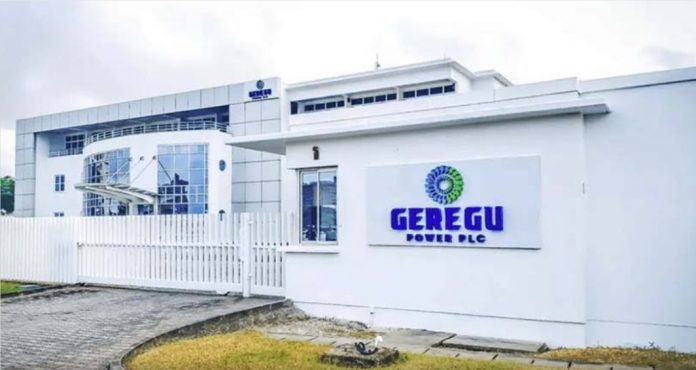
Geregu Power Plc has posted a strong financial performance for the third quarter of 2025, recording a pre-tax profit of N11.151 billion, an 82.47% year-on-year increase.

The result, while slightly below its internal forecast for the quarter, underscores the company’s resilience amid rising gas and transportation costs that continue to squeeze margins across Nigeria’s power sector.

Combined with its half-year profit of N26.311 billion, Geregu’s nine-month pre-tax profit rose to N37.462 billion, representing a modest 3.31% increase from the same period in 2024. The company’s Q3 revenue grew 37.38% YoY to N43.834 billion, lifting total nine-month revenue to N131.467 billion, which already stands at 96% of its 2024 full-year total.

The company’s latest unaudited interim financial statement, released on Friday, shows that energy sales remain the dominant revenue source, accounting for more than 65% of total revenue. Energy sales climbed 39.7% in the third quarter to N28.76 billion, while capacity charges rose 33% to N15.1 billion, reflecting steady demand and improved operational output from the plant.

However, the company continued to face cost pressures from gas supply and transportation, which together consumed over 65% of revenue during the quarter — up from 58% a year earlier. This led to a 53% jump in cost of sales to N28.58 billion, bringing total cost of sales for the nine months to N78.5 billion.

Despite the increased expenses, Geregu maintained robust profitability. Profit from core operations surged nearly 90% to N12.546 billion, up from N6.604 billion in Q3 2024. Gross profit climbed 30.91% year-on-year to N17.253 billion, while administrative expenses fell 14.91% to N2.163 billion, suggesting improved cost control.

On the balance sheet, total assets grew to N273.152 billion as of September 2025, compared to N243.470 billion at the end of 2024. Trade receivables now account for over 62% of total assets — a reflection of the industry’s persistent liquidity and payment collection challenges. Property, plant, and equipment declined by about 9% to N66.238 billion, representing 24.2% of the company’s assets.

On the equity side, Geregu’s retained earnings rose 7.49% to N55.192 billion, making up about 98% of its N56.413 billion in shareholders’ funds. The company’s total assets are now roughly five times its equity base, signaling strong asset growth backed largely by retained profit rather than new equity injections.

After-tax profit for the quarter stood at N4.917 billion, up 17.74% year-on-year, while earnings per share increased 17.96% to N1.97.

At the close of trading on October 10, 2025, Geregu’s shares traded at N1,141.50 on the Nigerian Exchange, representing a slight 0.74% decline year-to-date.

Geregu’s Profit Points to the Power Sector’s Growing Allure

Geregu Power’s third-quarter results highlight not only its strong fundamentals but also the enduring potential of Nigeria’s underdeveloped but highly profitable power market. Despite being Africa’s fourth-largest economy, Nigeria remains severely energy-deficient, generating about 5,000 megawatts on most days for a population of over 220 million.

This chronic shortfall has created an environment where companies able to generate and supply power efficiently — even on a modest scale — can command significant revenue. Geregu’s performance reflects this dynamic: it has managed to consistently post double-digit profit growth in a sector that remains the backbone of the country’s industrial and economic ambitions.

The company’s pre-tax profit margin of over 25% and after-tax margin of nearly 11% underline its strong operational control and pricing power, despite higher gas costs and grid payment delays. Analysts say such figures demonstrate that the Nigerian power sector, while risky, remains one of the most lucrative infrastructure investments in the country, especially as reforms to boost liquidity and expand private participation progress.

However, the sharp rise in trade receivables points to delays in payments from bulk buyers and government-backed offtakers, a longstanding issue in the sector. Gas supply costs, which make up a large portion of operational expenses, have also been volatile, largely due to currency depreciation and upstream pricing disputes.

Even so, Geregu’s consistent profitability — alongside its growing asset base and sustained operational expansion — suggests the company is well-positioned to benefit from Nigeria’s ongoing drive to stabilize and expand electricity generation.

Raenest Expands to The U.S, Strengthening Its Global Remittance Footprint

0

Raenest, a Nigerian multi-currency platform for Africans that makes managing money across borders easy, has expanded to the United States, marking a significant milestone in its international growth strategy.

The announcement was made by the company’s Co-founder and Chief Executive Officer Victor Alade during the inaugural Raenest Exchange 2025 event held in Lagos. Alade emphasized that the company’s mission remains focused on empowering Africans globally, stating that “this product is for Africans wherever their journey takes them.”

Raenest expansion to the U.S, comes just eight months after the company raised $11 million in Series A funding, which was led by QED Investors with participation from Norrsken22 and follow-on investments from Ventures Platform, P1 Ventures, and Seedstars.

The fintech disclosed plans to use the funds raised to strengthen its presence in Nigeria and Kenya while expanding into the United States and Egypt, which it is now leveraging with its latest entry to a new global market.

Raenest’s entry into the U.S. market places it among an emerging group of Nigerian fintech firms with international aspirations, joining industry leaders like Paga and Moniepoint, which are similarly extending their reach into Europe.

Founded in 2022 by Alade, Sodruldeen Mustapha, and Richard Oyome, the fintech started as an Employer of Record (EOR) before transitioning into a fintech platform focused on modernising global banking for Africans. It helps businesses and freelancers manage international payments effortlessly by offering multi-currency wallets, global bank accounts, and physical and virtual dollar cards. Users can send and receive payments in USD, EUR, and GBP, giving them the flexibility to operate in international markets with ease.

The company runs a consumer-facing app, Geegpay, which enables freelancers and remote workers to receive payments from platforms like Upwork, Fiverr, and Gusto, with features like multi-currency wallets, low-fee conversions, and airtime/data top-ups (saving up to 5% on recharges). The company reports that it now serves over one million customers and has processed more than $2 billion in transactions to date.

Also, Raenest for Business, launched in March 2024, targets enterprises for international remittances, capital raising, and cross-border transactions, filling gaps left by restrictions from competitors like US-based Mercury on African accounts.

Since its launch, the company has attracted over 700,000 users and processed more than $1 billion in payments. It serves over 300 businesses, including Moniepoint, Helium Health, Fez Delivery, and Matta.

Raenest operates in a crowded African fintech space for multi-currency and remittance services, including Afriex, Cleva, Fincra, Grey, Verto, and Leatherback. Its edge lies in EOR integration, low fees, and focus on remote work payments.

The company holds licenses as an International Money Transfer Operator (IMTO) in Nigeria and a Money Services Business (MSB) in Canada, with ongoing efforts for additional jurisdictions.

As part of its goal to evolve into a financial super-app, the fintech unveiled a range of new features at the Lagos event. Among these is the ability for users to receive payments in the USDT stablecoin, which are automatically converted to U.S. dollars. The company has also implemented direct integrations with freelance platforms like Upwork, reducing payment processing times to under an hour. Additionally, Raenest has introduced a new stock trading feature, allowing users to buy and sell shares directly within the platform.

With its latest move into the U.S. market, Raenest is reinforcing its vision of building a seamless global payment ecosystem tailored to the needs of Africa’s digital workforce and entrepreneurs, while positioning itself as a key player in the next phase of fintech globalization.

Walrus (WAL) Token Listed on Binance Spot and Alpha

0

Walrus (WAL) token—native to the decentralized data storage protocol built on the Sui blockchain—has officially been listed for trading on both Binance Spot and Binance Alpha as of October 10, 2025.

This marks a major milestone for the project, which raised $140 million in a private token sale earlier this year and launched its mainnet months ago. Walrus enables developers to store, manage, and monetize large files like videos, images, audio via Move-based smart contracts, with applications in AI, media, gaming, DeFi, and more.

WAL is now available for direct spot trading with pairs like WAL/USDT. This provides broader liquidity and accessibility for retail and institutional traders. As part of the launch, Binance Alpha Binance’s early token discovery platform features WAL with an exclusive two-phase airdrop campaign.

Eligible users can claim up to 150 WAL tokens: Phase 1 first 18 hours: Requires at least 210 Alpha Points first-come, first-served. Phase 2 (next 6 hours): Lowers the threshold to 195 Alpha Points. To claim: Log into Binance Wallet > Alpha > Airdrop section > Claim (deducts 15 Alpha Points per claim). Unclaimed tokens after 24 hours are forfeited.

Alpha went live on October 9, 2025, with spot trading following on October 10. This listing validates Walrus as a key player in decentralized storage, especially amid growing demand for programmable data solutions in the AI era.

Rebecca Simmonds, Managing Executive of the Walrus Foundation, noted: “Listing WAL on Binance marks another step in that growing momentum,” highlighting real-world app development and partnerships.

Post-listing, WAL experienced initial volatility: Current Price: ~$0.41 up 3% in the last 24 hours but down ~4-10% overall from pre-announcement levels due to airdrop sell-offs and broader altcoin sentiment. Market Cap: ~$613 million circulating supply: 1.48 billion WAL; total supply: 5 billion.

High at ~$535 million in the last 24 hours, signaling strong interest despite the dip. The price dip is largely attributed to immediate sells from airdrop recipients, but community sentiment remains bullish.

Walrus also recently announced deflationary mechanics: WAL burns on usage fees, paired with USD-pegged storage pricing for stability. Spot listing on the world’s largest exchange (Binance) opens WAL to millions, potentially driving staking, governance, and data payments.

As a Sui-native project, this amplifies Sui’s growth SUI market cap: ~$12.6B, spotlighting storage innovations. Short-term sell pressure from unlocks/airdrops could persist, but long-term utility (e.g., 0.02$/GB storage, 99.99% uptime) positions it well.

The Sui blockchain ecosystem is a rapidly growing Layer 1 blockchain designed for high scalability, low latency, and developer-friendly features, leveraging the Move programming language originally developed by Meta’s Diem project.

Built by Mysten Labs, Sui focuses on enabling decentralized applications (dApps) with high throughput, low-cost transactions, and composable smart contracts. Sui has solidified its position as a top-tier blockchain, particularly for DeFi, gaming, NFTs, and decentralized storage, with projects like Walrus gaining traction after recent Binance listings.

Sui uses an object-centric data model and Byzantine Consistent Broadcast, allowing independent transactions to process in parallel, achieving up to 297,000 TPS transactions per second in tests.

Move Language: Offers secure, flexible smart contracts with asset-oriented programming, reducing vulnerabilities like reentrancy attacks.

Adds validators to increase capacity without compromising performance. Gas fees are minimal often < $0.01, with predictable pricing via USD-pegged reference fees. Enables Web2 logins like Google, Apple for Web3 apps, improving user onboarding.

Sui’s ecosystem spans DeFi, gaming, NFTs, AI, and decentralized storage, with over 900 projects and a Total Value Locked of ~$1.2 billion up 180% YoY. DeFi TVL grew 50% in Q3 2025, driven by stablecoin integration (e.g., USDC) and liquid staking.

Sui’s “DeepBook” provides a central limit order book (CLOB) for on-chain trading, used by multiple DEXes. SuiPlay: A Web3 gaming handheld pre-orders live integrating Sui’s blockchain for in-game assets. Over 1M NFT mints in 2025, with gaming dApps driving 40% of network activity.

WAL token recently listed on Binance . It offers decentralized blob storage for large files videos, images, AI datasets with 99.99% uptime and $0.02/GB pricing. WAL’s $140M raise and Binance Alpha airdrop boosted visibility.

Use Cases: AI model hosting, media streaming, and archival storage, with integrations into DeFi and gaming dApps. Projects like SuiNet use Sui for decentralized AI model training, leveraging Walrus for data storage.

Platforms like SuiFrenz enable tokenized social networks. Tokenized bonds and real estate are emerging via partnerships. Walrus’s Binance listing and SuiPlay’s gaming push signal mainstream adoption.

High FDV ~$50B at full dilution, validator centralization concerns, and competition from Solana/Ethereum. Use Walrus for dApp integration or file hosting.

Monad Airdrop Claim Portal Launches on 14th October

0

Monad, the high-performance EVM-compatible Layer 1 blockchain, has officially announced that its airdrop claim portal for the $MON token will go live on Tuesday, October 14, 2025.

This marks a key milestone ahead of the project’s mainnet launch, though the team has emphasized that the portal opening is separate from the actual token distribution and mainnet rollout—those details, including exact eligibility criteria, allocation amounts, and vesting schedules, will be revealed later.

Based on community speculation and past testnet activities, potential qualifiers include users who interacted with the Monad testnet launched February 2025, such as claiming test $MON tokens, minting NFTs like Monadverse or Lil Chogstars using DeFi apps like PancakeSwap or Ambient Finance, or earning Discord roles like “Full Access” or “Monad Recognizer.”

No first-come-first-served (FCFS) claims— you’ll have weeks to claim. Ignore unofficial links; stick to @monad’s announcements. No eligibility checker exists yet. $MON-USD perpetuals on Hyperliquid are trading around $0.12, implying a fully diluted valuation (FDV) of ~$12B based on 100B tokens.

Trading volume has hit $28M+, signaling strong anticipation. On X, excitement is building with users prepping wallets and sharing guides. Recent posts highlight the portal as a “game-changer” for parallel execution on EVM, with over 1M daily active users already on testnet.

Polymarket odds currently sit at 33% for a full October airdrop, with November/December more favored, so temper expectations.

ZORA’s Robinhood Listing and Price Surge

Zora ($ZORA), the Ethereum-based protocol powering the creator economy built on its own OP Stack Layer 2 network, was surprise-listed on Robinhood on October 9, 2025, triggering a massive 80%+ surge in its token price within hours.

The token hit an intraday high of $0.092 before settling around $0.082, pushing its market cap to ~$374M and 24-hour trading volume to $419M up 369% day-over-day. As the smallest market cap token ~$150M pre-listing ever added to Robinhood, it opened doors to millions of retail traders, frontrunning inflows and boosting visibility.

This follows Zora’s July Binance Futures debut and recent integrations like Coinbase’s Base App for easy post-tokenization. Zora has minted 1.5M+ creator tokens, processed $420M+ in volume, and driven Base’s growth surpassing Solana in daily token launches in August.

It’s positioned as a Pump.fun rival with better institutional ties and creator incentives. The surge confirmed a falling wedge breakout, targeting a potential 39% upside from current levels to ~$0.113. However, volatility remains high—expect pullbacks as markets digest the news.

The project announced via X that the claim portal will go live on October 14, 2025, but details on who qualifies, allocation amounts per user, vesting schedules, or snapshot dates remain undisclosed.

A Monad representative confirmed to outlets like Decrypt that only the portal itself launches next week—not the full airdrop or mainnet—and further tokenomics and eligibility info will be shared “in the near future.”

This opacity has fueled community speculation and skepticism, with Polymarket odds at just 33% for a full October drop higher for November/December. While waiting for official word, early testnet activity launched February 2025 is widely expected to form the basis of rewards, following patterns from projects like zkSync and Blast.

Monad’s team has emphasized rewarding “active and diversified engagement” to build a genuine ecosystem, not just sybil-farmed volume. Eligibility is likely tied to a points-based or tiered system from testnet interactions, with multipliers for quality over quantity.

Execute on-chain actions: swaps, staking, lending, or bridging on Monad-compatible dApps. Aim for 50+ unique transactions across categories to signal “genuine user.” Wallets with 100+ TPS-equivalent activity leveraging Monad’s parallel execution may qualify for higher tiers.

Monad’s inaugural L3 campaign rewards testnet tasks like bridging or liquidity provision. Track progress for badges that could boost scores. Wave 1/2 of Monad Cards distributed to active X users and nominees may retroactively qualify holders, as they rewarded early Twitter supporters.

Monad uses advanced detection via testnet snapshots. Multi-wallet farming could disqualify you; one high-quality wallet is safer. Ignore unofficial checkers or links promising “eligibility scans.”

Stick to verified channels. With $MON perps at ~$0.12 (FDV ~$12B), rewards could be substantial for top users—but vesting is probable.

Bitcoin ETFs Holds Strong, Ethereum Pauses As BTC Whale Short ETH on Hyperliquid

0

U.S. spot Bitcoin ETFs continued their robust momentum on October 9, 2025, recording $197.8 million in net inflows and extending their positive streak to nine consecutive days. This surge was led by BlackRock’s iShares Bitcoin Trust (IBIT), which alone attracted $255.47 million, pushing its assets under management (AUM) to nearly $97 billion.

Other notable performers included Fidelity’s FBTC and ARK 21Shares’ ARKB, contributing to a total AUM across all Bitcoin ETFs of $62.77 billion. The inflows reflect sustained institutional demand amid Bitcoin’s price hovering around $121,000, bolstered by broader market optimism tied to regulatory tailwinds and corporate treasury adoption.

In contrast, spot Ethereum ETFs experienced a minor reversal, with $8.7 million in net outflows—primarily driven by withdrawals from Fidelity’s FETH $30.26 million out—ending their eight-day inflow streak.

Despite this, Ethereum ETFs maintain a solid $29.9 billion in AUM, and the outflow appears more like a brief pause than a trend shift, following $421 million in inflows just the prior day. Ethereum traded at $4,352 on October 9, down 2.3% daily but still up significantly year-to-date amid ETF-driven momentum.

This divergence underscores Bitcoin’s dominance in institutional flows, with analysts noting the “Uptober” effect amplifying BTC’s appeal as a hedge against fiat weakness. Ethereum’s brief dip may signal profit-taking after a strong run, but spot trading volumes rose 9% to $40.4 billion, hinting at underlying resilience.

Bitcoin Whale’s Bearish Ethereum Play on Hyperliquid

Adding a layer of intrigue, a prominent Bitcoin whale—previously linked to selling over $4 billion in BTC for ETH earlier this year—has pivoted to a contrarian bet against Ethereum. On October 9, 2025, the whale address cluster deposited approximately $30 million in USDC to Hyperliquid, a decentralized perpetuals exchange, to open a leveraged short position on ETH.

This move comes after the whale realized gains from prior BTC shorts and ETH rotations, but now targets ETH’s recent highs with up to 25x leverage, eyeing a liquidation threshold around $4,594. The whale’s history includes high-stakes trades: dumping 80,000+ BTC valued at $9+ billion at the time via Galaxy Digital in July for estate planning, followed by phased BTC-to-ETH swaps totaling $4 billion in August-September.

Recent activity on Hyperliquid shows this latest $30M deposit expanding shorts amid ETH’s rejection at $4,700, with the position currently facing mild unrealized losses as ETH stabilizes. Wallet balances sit under $1 million in margin, amplifying risk—liquidation could trigger if ETH surges past the threshold.

This short contrasts sharply with ETF inflows, potentially signaling whale caution on ETH’s overextension relative to BTC. Hyperliquid’s open interest has ballooned to records, with this trade spotlighting leveraged volatility. As one X observer noted, “Whales are flipping scripts—BTC inflows roar while ETH faces the heat.”

Bitcoin Performance is showing modest gains today, continuing the “Uptober” momentum from earlier in the month where it hit a record high above $125,000 on October 5. As of the latest data, BTC is trading at approximately $121,577, up 0.11% over the past 24 hours.

This slight uptick comes after a pullback on October 8 down ~1.8% to $121,788 and a minor recovery on October 9 up 0.41% to around $122,000. The market cap stands at $2.42 trillion, reflecting steady institutional interest amid broader economic stability.

U.S. spot Bitcoin ETFs saw positive activity earlier in the week, with analysts forecasting BTC could reach $148,500 by year-end, driven by ETF growth and a shift toward “maturity phase” investing.

Neutral to cautiously optimistic, with historical October averages showing 14.4% gains since 2013. Recent highs near $125,689 underscore resilience despite U.S. government shutdown concerns fueling a “debasement trade.”

The overall crypto market is up marginally, with a total market cap of $4.13 trillion up 0.15% in 24 hours and trading volume rising 8.23% to $203.74 billion. This follows mixed signals earlier in the week: a 2.2% dip on October 8 market cap briefly below $4T and a near-flat recovery on October 9.

Sentiment remains neutral, with 7 of the top 10 coins up in the last day, buoyed by regulatory tailwinds like high odds 90%+ for Solana ETF approvals due today.

Top gainers in the top 10: Dogecoin +2.32% leads, followed by Cardano +1.68% and BNB (+1.21%), reflecting meme coin hype and ecosystem upgrades. Stablecoins like USDT and USDC show minimal movement, providing liquidity anchors.

Capital is shifting toward high-cap alts like BNB and XRP, with forecasts for an “altcoin season” post-BTC surge. S&P Global’s new Digital Markets 50 Index tracking 15 cryptos and 35 related stocks and potential SOL ETF approvals are enhancing legitimacy.

Altcoin open interest remains elevated >1.4 ratio, signaling potential liquidations if volatility spikes. Overall, the market is stable with upside potential, aligning with October’s historical bullishness. Bitcoin’s institutional fortress strengthens, while Ethereum navigates whale skepticism.