
DD
MM
YYYY

PAGES

DD
MM
YYYY

spot_img

PAGES

Home Blog Page 3663

End of Crypto Winter is Near, as Blomberg predicts Jan 10 for Possible Spot Bitcoin Approval

0
Closeup - Woman is checking Bitcoin price chart on digital exchange on smartphone, cryptocurrency future price action prediction.

The cryptocurrency market has been in a prolonged slump for the past few months, but there are signs of a possible recovery, according to a new report from Morgan Stanley. The investment bank analyzed the factors that have contributed to the decline of crypto prices, such as regulatory uncertainty, environmental concerns, cyberattacks, and competition from central bank digital currencies (CBDCs). It also identified some positive trends that could indicate a reversal of the bearish sentiment, such as increased institutional adoption, innovation in the crypto space, and growing demand from emerging markets.

Morgan Stanley noted that the crypto market is cyclical and has experienced several boom-and-bust cycles since its inception. The most recent one, dubbed the “crypto winter”, started in August 2021, when the total market capitalization of all cryptocurrencies peaked at over $2.5 trillion and then plunged by more than 50% in the following months. The report suggested that this cycle may be nearing its end, based on historical patterns and indicators.

One of the main drivers of the potential recovery is the growing interest and involvement of institutional investors in the crypto space, Morgan Stanley said. The report cited several examples of large corporations, financial institutions, and asset managers that have embraced crypto as an asset class, a payment method, or a technology platform.

These include Tesla, MicroStrategy, Square, PayPal, Visa, Mastercard, JPMorgan Chase, Goldman Sachs, BlackRock, Fidelity, and many others. The report also highlighted the increasing number of crypto-related funds, products, and services that are being launched or planned by various entities.

Another factor that could boost the crypto market is the continuous innovation and development in the crypto space, Morgan Stanley said. The report pointed out that despite the challenges and setbacks, the crypto industry has not stopped innovating and creating new solutions and applications for various use cases.

Some of the examples mentioned in the report are decentralized finance (DeFi), non-fungible tokens (NFTs), layer-2 scaling solutions, stablecoins, and metaverses. The report also noted that the crypto space is attracting more talent and capital from different sectors and regions.

A third factor that could support the crypto market is the rising demand from emerging markets, Morgan Stanley said. The report explained that many people in developing countries are turning to crypto as an alternative to their local currencies, which are often plagued by inflation, devaluation, or instability. The report also mentioned that some governments in these regions are adopting a more favorable or open stance towards crypto, such as El Salvador, which became the first country to make Bitcoin legal tender in September 2021.

The cryptocurrency market is eagerly awaiting the decision of the US Securities and Exchange Commission (SEC) on whether to approve the first Bitcoin Spot ETF in the United States. A Bitcoin Spot ETF would allow investors to buy and sell shares of a fund that holds Bitcoin directly, without the need for intermediaries or complex derivatives. This would increase the liquidity, transparency and accessibility of the Bitcoin market, as well as reduce the risks and costs associated with custody and storage.

According to Bloomberg Intelligence, a leading provider of research and analysis on financial markets, there is a 90% chance that the SEC will approve the Bitcoin Spot ETF by January 10, 2024. This is based on several factors, such as the positive comments from SEC Chair Gary Gensler, the growing demand from institutional and retail investors, the success of similar products in other jurisdictions, and the recent regulatory developments in the crypto space.

Bloomberg Intelligence also expects that the approval of the Bitcoin Spot ETF would have a significant impact on the price and adoption of Bitcoin, as well as on the broader crypto industry. The report estimates that the Bitcoin Spot ETF could attract up to $50 billion in assets under management in its first year, which would boost the demand and value of Bitcoin. Moreover, the report suggests that the Bitcoin Spot ETF would pave the way for more innovation and competition in the crypto sector, as well as for more regulatory clarity and oversight.

The Bitcoin Spot ETF is not a done deal yet, however. The SEC still has to review and approve the applications from several firms that have filed for the product, such as VanEck, Valkyrie, Wisdom Tree and NYDIG. The SEC also has to address some of the concerns and challenges that it has raised in the past, such as market manipulation, fraud, volatility, custody and investor protection. The SEC has already delayed or rejected several proposals for Bitcoin ETFs in the past, citing these issues.

Therefore, investors should be cautious and prepared for any outcome. The SEC could approve the Bitcoin Spot ETF by January 10, as Bloomberg Intelligence predicts, or it could extend its review period or deny the applications altogether. The decision of the SEC will have a major influence on the future of Bitcoin and crypto in the US and beyond.

Morgan Stanley concluded that while the crypto market is still facing many challenges and risks, such as regulatory uncertainty, environmental concerns, cyberattacks, and competition from CBDCs, there are also signs of optimism and opportunity. The report stated that the end of the crypto winter may be near, but it also cautioned that investors should be prepared for high volatility and uncertainty in this nascent and dynamic market.
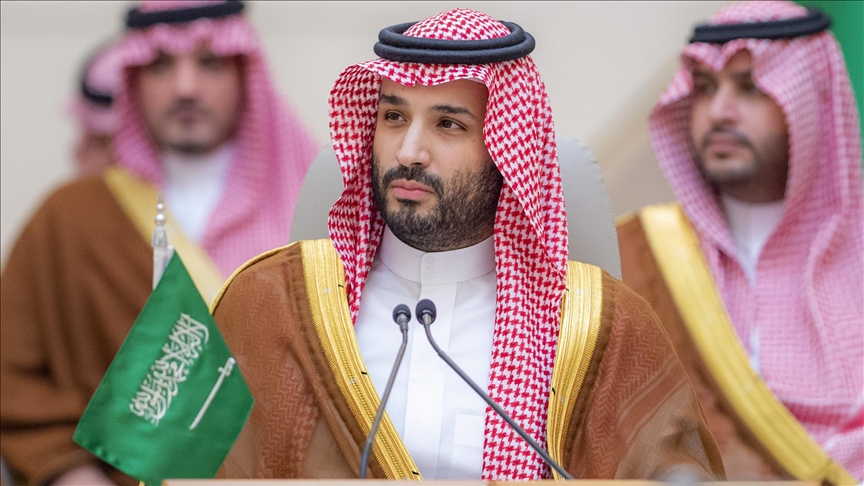

Saudi Arabia’s Crown Prince calls for the establishment of a Palestinian state on 1967 borders

1

In a surprising move, Saudi Arabia’s Crown Prince Mohammed bin Salman has called for the establishment of a Palestinian state within the 1967 borders, with East Jerusalem as its capital. The Crown Prince made this statement in an interview with the Saudi-owned Al Arabiya TV channel, which aired on Sunday.

The 1967 borders refer to the lines that existed before the Six-Day War, when Israel captured the West Bank, Gaza Strip, East Jerusalem, Sinai Peninsula and Golan Heights from its Arab neighbors. The international community considers these territories to be occupied by Israel, and most of them are claimed by the Palestinians as part of their future state.

The Crown Prince’s statement is a significant departure from the traditional Saudi position, which has been to support the Arab Peace Initiative of 2002. The initiative, endorsed by the Arab League, offers Israel full normalization of relations with the Arab world in exchange for a complete withdrawal from the occupied territories and a just solution for the Palestinian refugees.

The Crown Prince did not explain why he changed his stance on the Palestinian issue, but he said that he hoped that his proposal would lead to a peaceful resolution of the conflict and a better future for both peoples. He also said that he respected the right of Israel to exist and to have security, and that he was willing to cooperate with Israel on regional and global issues of mutual interest.

The Crown Prince’s statement has drawn mixed reactions from different parties. The Palestinian Authority welcomed it as a positive step towards ending the occupation and achieving a two-state solution. Israel, however, rejected it as unrealistic and unacceptable, saying that it would not return to the indefensible 1967 borders or divide Jerusalem.

The United States, which has been mediating between Israel and some Arab countries to normalize their ties, said that it appreciated the Crown Prince’s efforts to advance peace, but that it supported a negotiated solution based on mutual recognition and compromise. Some Arab countries, such as Egypt and Jordan, which have peace treaties with Israel, expressed their support for the Crown Prince’s initiative, while others, such as Iran and Turkey, criticized it as a betrayal of the Palestinian cause.

Reports of Hamas’ crypto use could blunt impact of Coinbase lobbying efforts: Berenberg.

The recent news that Hamas, the militant group that controls the Gaza Strip, has been using cryptocurrency to fund its activities has raised concerns about the potential impact of such transactions on the global financial system. Hamas, which is considered a terrorist organization by many countries, including the US and the EU, has reportedly received millions of dollars in bitcoin donations from supporters around the world.

This development could pose a challenge for Coinbase, the largest cryptocurrency exchange in the US, which has been lobbying for more favorable regulations and recognition of digital assets. Coinbase, which went public in April 2021, has hired several former government officials and politicians to advocate for its interests and educate policymakers about the benefits of crypto innovation.

However, Berenberg, a German investment bank, has warned that Coinbase’s efforts could be undermined by the negative perception and reputation risks associated with crypto use by illicit actors. In a report published on October 20, 2021, Berenberg analysts said that Coinbase’s lobbying strategy could backfire if regulators and lawmakers associate crypto with terrorism financing, money laundering, tax evasion and other criminal activities.

Berenberg argued that Coinbase’s main challenge is not to convince regulators that crypto is safe and secure, but rather to demonstrate that crypto can contribute to social and economic goals, such as financial inclusion, innovation and growth. The report suggested that Coinbase should focus on highlighting the positive aspects of crypto, such as its potential to empower individuals, communities and businesses, rather than defending its legitimacy and legality.

The report also recommended that Coinbase should collaborate with other stakeholders in the crypto industry, such as other exchanges, platforms, developers and users, to establish common standards and best practices for compliance, transparency and accountability. Berenberg said that such a collective approach would help to create a more favorable environment for crypto adoption and innovation, as well as to mitigate the risks of regulatory backlash and public distrust.


How Nigeria Won the P&ID Case – Attorney General Lateef Fagbemi

0

The Federal Government of Nigeria has expressed its satisfaction with the judgment rendered by Judge Robin Knowles of the Business and Property Court in London, which awarded a significant victory to Nigeria in the case against Process & Industry Development (P&ID) Limited.

The government described the victory as a damning indictment of predatory international investors.

The Attorney General of the Federation and Minister of Justice, Lateef Fagbemi, announced this during a briefing with State House reporters at the Presidential Villa in Abuja. According to him, P&ID and its associates engaged in unscrupulous attempts to defraud Nigeria and enrich themselves through fraudulent means, bribery, and corruption on a large scale.

Furthermore, Fagbemi noted that the United Kingdom court would conduct further hearings to determine the costs payable by P&ID and other parties involved in the matter. The Attorney General attributed the success of the P&ID case to close inter-agency collaboration within the federal government team.

The team consisted of various government agencies and organizations, including the Attorney General of the Federation, the Federal Ministry of Justice, the Economic and Financial Crimes Commission (EFCC), the Nigerian Police Force, the Central Bank of Nigeria, the Ministry of Petroleum Resources, the Nigerian National Petroleum Company Limited (NNPCL), the Department of State Security Service (DSS), and the Nigerian Financial Intelligence Unit (NFIU). This cooperative effort played a pivotal role in securing a favorable outcome in the case against P&ID Limited.

Fagbemi said: “As you may all be aware by now, the Honorable Justice Robbin St. John Knowles of the United Kingdom commercial court today, handed down a historic judgment, in the suit, where the Federal Republic of Nigeria otherwise known as FRN, moved to set aside the arbitral award of $9.6 billion but which has now accrued interests come to $11 billion, made against Nigeria in 2017 in favor of P& ID for an alleged breach of a gas supply and processing agreement, purportedly entered into with the Ministry of Petroleum Resources to establish a gas processing plant in Calabar for which P&ID never secured any land sight.

“The arbitral award had over the years, played the assets of the Federal Republic of Nigeria and those of its agencies all over the world, at the risk of attachment, erosion of foreign reserves and distortion of monetary, fiscal and other policies of government with attended dire consequences for Nigeria and its people. These emphasized the need for the FRN to vigorously challenge and resist the enforcement of the award by P&ID.

“The High Court has today ruled that the Federal Republic of Nigeria’s challenge to the arbitration award granted against it, to an obscure hedged fund back VVI shell entity process an industrial development limited in 2017 has been successful.”

The judgment delivered today [Monday] is a significant milestone in the legal battle against P&ID Limited. According to the Attorney General, the court’s ruling found that the award received by P&ID had been obtained through fraudulent means and was in direct contravention of public policy.

The judge’s conclusion highlighted that P&ID had engaged in severe abuses of the arbitral process to secure the award. This outcome represents the culmination of a decade-long legal struggle and is not only a victory for the people of Nigeria but also for any entity or nation targeted by corruption and fraud.

The lead counsel to Nigeria, Mark Orwell Casey, emphasized that P&ID was the type of entity willing to resort to bribery to achieve its goals and undermine the administration of justice in Nigeria in the pursuit of wealth.

This successful outcome is a decisive victory for the people of Nigeria, who were at risk of losing over $11 billion, and for the Nigerian government, which has taken a significant step forward in its ongoing mission to combat corruption.

“The judgment also serves as a damning indictment of predatory international investors, who should now rightfully be deterred from prying upon Nigeria and other developing nations to satisfy their greed. P&ID and its associates, both Nigeria and the world over, shamelessly attempted to defraud the country and enrich themselves through sharing the Federal Republic of Nigeria’s privileged document, fraud, bribery and corruption on an industrial scale. Those efforts, which took place over many years have now finally been uncovered for all of us to see,” the Attorney General further said.

“It is imperative to point out that several agents of P&ID made overtures even as at last week to the Federal Republic of Nigeria for settlement on this case, however, the resolve of the administration of President Bola Ahmed Tinubu not to go hand in gloves with fraudulent counterparties or condone corruption informed the position of the Federal Republic of Nigeria to hold fast to its position, not to settle.”

The significance of this judgment was reiterated by the President at the opening ceremony of the Nigeria Economic Summit Group earlier on Monday.

Fagbemi said the ruling stands as a historic moment, not only for Nigeria but for the entire African continent.
“It vindicates the government and sends a clear message to those who may be considering fraudulent schemes to exploit the country: justice will prevail, and Nigeria is determined to protect its interests,” he said.

Tinubu Announces Economic Growth Plan of $1tn in 2026, $3tn in 2030 for Nigeria

0

President Bola Tinubu has unveiled an ambitious economic growth plan, aiming to elevate Nigeria’s economy to $1 trillion by 2026 and further expand it to $3 trillion by the end of the decade in 2030.

He made this declaration during the opening address at the 29th edition of the Nigeria Economic Summit held in Abuja.

President Tinubu expressed confidence in the feasibility of these targets, emphasizing the country’s potential for double-digit, inclusive, and sustainable competitive growth. He called upon the captains of industry present to rally behind this vision of renewed economic hope.

“Distinguished ladies and Gentlemen, a $1 trillion economy is possible by the year 2026 and a $3 trillion economy is possible within this decade. We can do it.”

“We’ve done double-digit inclusive and sustainable competitive growth. This is our agenda and I’d like to charge you- the captains of industry here present, to commit yourselves to and redouble your effort to our vision of a renewed hope,” the president said.

Tinubu announced this vision amid the economic crisis rocking Nigeria from many angles, which has resulted in the abysmal performance of the naira in the foreign exchange market.

Addressing concerns about foreign exchange, the president assured investors and businesspeople that his government had taken responsibility for the assets and liabilities in this area. He affirmed that the administration has a clear understanding of FX liquidity and intends to honor all foreign exchange forward contracts entered by the government.

Furthermore, he outlined initiatives to mobilize finance for economic development, involving both local and external resources. He emphasized the need for a clear distinction between monetary and fiscal policy, particularly in relation to trade policies.

“To mobilize finance for economic development, we have started local and external mobilization of financial resources and capital from a wide range of partners amongst several initiatives. We are progressing forward,” the president said.

“You’ve heard that the CBN removed about 43 items, I’ve read all the comments, but there must be a clear line between monetary policy and fiscal policy.

“Are these items on trade embargo? No. You simply move them to the parallel market. Let’s compete with whatever is available so that the government will work hard and bring more investment to the economy.”

President Tinubu also shed light on education plans, announcing that the student loan program will be launched by January 2024. He stressed the importance of fostering a credit culture, which includes facilitating access to consumer credit and housing mortgages. This, he believes, will be a crucial step towards curbing corruption.

“By January 2024, the student loan program must commence. We are saying no more strikes,” he said.

“There must be consumer credit. The scheme will have to come into effect as soon as possible. I charge my team and colleagues to build this program and develop it now. We cannot talk about anti-corruption when you have to look for cash to buy a car.”

Tinubu conveyed a sense of urgency, urging his team and colleagues to swiftly develop and implement these programs, asserting that a proactive approach is essential for realizing Nigeria’s economic potential.

The Aptos Blockchain Suffered A Five-Hour Outage: Why Ethereum, Cardano, And New Crypto Doge Uprising Are More Reliable

0

While celebrating its one-year anniversary, the blockchain Aptos suffered a 5-hour outage. The outage happened when the platform was hosting a mass drawing application. While blocks on the network usually confirm in less than a second, AptoScan shows a 5-hour and 6-minute difference between two transactions on October 18th. To celebrate its first birthday, the Aptos Foundation created a drawing platform Graffio.art where Aptos wallet users could contribute to a blank canvas to create a community art piece. When the shutdown occurred, 4,000 users were painting on the online canvas.

The outage had an impact on the native gas-paying token APT, which dropped from 2.2% shortly after the outage happened. Overall, the token is trading 35.8% lower than when it launched last year. Outages such as these have long-lasting impacts on crypto projects, rendering them unreliable in the eyes of investors. At a time when crypto is plagued by bad press, experiencing outages like this one can have a devastating effect on the project’s future.

In this article, we’re delving into some crypto projects that are more reliable than Aptos. Ethereum ($ETH), Cardano ($ADA), and the new crypto project Doge Uprising ($DUP) all show a more reliable future – and we’re exploring how.

What Makes Ethereum A Reliable Platform?

Ethereum is widely regarded to be one of the most reliable blockchain platforms. Although there have been a few instances where Ethereum has experienced disruptions in service, this has generally been caused by network congestion issues or problematic nodes rather than complete blockchain outages. As with any complicated system, Ethereum is not immune to technical issues. For example, in early 2023 Ethereum failed to finalize transactions for 25 minutes. However, luckily the platform managed to avoid a full outage and some even argue that the 25-minute period had zero impact on Ethereum at all.

Is Ethereum A Good Long-Term Investment?

Although Ethereum is one of the most reliable platforms, with great long-term potential, nothing is 100% predictable in the crypto space. All crypto investments have the potential to be incredibly volatile, with large peaks and troughs in price movement. If you’re prepared to take the risks, the rewards could be huge, but so could the losses.

Is Cardano A Reliable Cryptocurrency?

Cardano ($ADA) has a reputation as one of the most stable and reliable blockchain networks in the cryptocurrency industry. It ran smoothly for more than five years until early 2023 when 50% of the nodes had a temporary outage. However, this was only brief and didn’t take the whole network offline. The Cardano ‘node’ is a core component that underpins the whole Cardano network. A blockchain network is simply just a collection of interconnected nodes, working together to validate transactions and utilize consensus. Although the 50% node outage caused disruption, it didn’t take the whole network down like Aptos.

Will The New Cryptocurrency Doge Uprising Be Stable And Reliable?

The new crypto project Doge Uprising is looking to be an exciting new project with lots of utility. Putting its community at the forefront, this cryptocurrency will aim to remain reliable and stable for its users. The project has an immersive Web3 universe in its roadmap, which will only find success if users can delve into the space uninterrupted by consistent outages.

As an ERC-20 token, it plans to harness the power of Ethereum, making it the technological backbone of the project. The ERC-20 standard ensures compatibility with other decentralized applications on the Ethereum blockchain which fosters unity. Ethereum is a flexible, reliable foundation to fuel Doge Uprising’s tokenomics and power the staking, yield farming, and NFT collections it has planned. Beyond just the technical prowess, the ERC-20 backbone integrates Doge Uprising seamlessly into the blockchain framework, breathing life into its Doge Mecha NFTs.

If you’re interested in finding out more about this project, follow the links below.


Doge Uprising ($DUP): 

Website: https://dogeuprising.co/
Telegram: https://t.me/+JfnjZpCD9b4wNTlk
Twitter: https://twitter.com/Doge_Uprising
Discord: https://discord.gg/D6auhYKnFS