DD
MM
YYYY

PAGES

DD
MM
YYYY

spot_img

PAGES

Home Blog Page 367

Snowflake CEO Ramaswamy Rejects AI Hype, Says Company Focused on Long-Term Value Creation as Market Fears of an AI Bubble Grow

0

Snowflake CEO Sridhar Ramaswamy says he is determined to keep the company’s focus on long-term innovation and customer value amid the current wave of investor frenzy surrounding artificial intelligence.

The head of the $60 billion data cloud firm said on CNBC’s Squawk Box Europe that he refuses to be distracted by Wall Street’s shifting sentiment, even as Snowflake’s share price continues its steep climb.

“You don’t control the stock price,” Ramaswamy said. “My focus very much is on value creation. We have to earn dollars, every single dollar at a time, so we are focused on the quarter, focused on the year, but, much more, on the value we create with customers. Over the long term, the stock market will settle itself.”

Snowflake, a cloud-based data warehousing platform that helps enterprises manage and analyze vast volumes of data, went public in 2020 in what remains the largest software IPO in history, raising $3.4 billion. Its stock has risen more than 60 percent this year, buoyed by the broader AI boom that has lifted companies like Nvidia, Microsoft, and Palantir. The company’s shares surged another 6.5 percent on Wednesday following renewed investor optimism over its AI integration plans.

Yet, as the AI wave fuels record market valuations, it has also triggered warnings of a potential speculative bubble. Analysts say valuations in the sector may be running ahead of fundamentals as capital floods into any company associated with artificial intelligence — reminiscent of the dot-com era when internet firms saw their stocks soar before the crash of 2000.

Ramaswamy, who previously led Google’s advertising business before joining Snowflake, has positioned the company as a key infrastructure provider for the AI economy — connecting corporate data warehouses to large language models and generative AI tools. He said his strategy remains to make AI practical and value-driven rather than treating it as a buzzword.

“One of the biggest opportunities we see is how quickly AI can accelerate the value that comes from data,” he said. “But we have to stay focused. Some are thinking of AI as a technology that can cure all problems. I think it’s a mistake. Definitely, there’s promise, but some areas are going to be much more amenable than others.”

Ramaswamy said companies adopting AI must do so gradually and strategically, warning that rapid, top-down implementation can backfire.

His comments come amid heightened scrutiny over insider trading activity at Snowflake. Investor Michael Speiser sold shares worth over $11 million last week, while senior vice president Vivek Raghu Nathan sold roughly $2.6 million worth of stock in late September. Ramaswamy, however, said he is not participating in any such sales.

“I am not selling any stock,” he said. “I’m very much in favor of the long-term value that Snowflake is going to be creating, and the sales tend to be very, very modest.”

Snowflake’s leadership transition earlier this year — following the departure of Frank Slootman, who led the company through its blockbuster IPO — has coincided with an accelerated focus on generative AI. Ramaswamy, who co-founded the search startup Neeva before it was acquired by Snowflake in 2023, has emphasized building what he calls the “data foundation for AI.” Snowflake’s AI initiative includes integrating its platform with large language models (LLMs) to help customers query their data more intuitively using natural language.

The company has also launched Snowflake Cortex, a suite of generative AI tools that allows clients to deploy custom AI models directly on their enterprise data. Analysts say this positions Snowflake as a bridge between the corporate world’s vast data repositories and emerging AI ecosystems dominated by firms like OpenAI and Anthropic.

However, Snowflake faces intensifying competition. Cloud giants such as Amazon Web Services, Google Cloud, and Microsoft Azure are rapidly expanding their data services, embedding AI capabilities to lock in customers. Still, Snowflake’s platform-agnostic model — allowing customers to move and analyze data across multiple clouds — continues to distinguish it in the market.

Some business leaders say the debate over whether AI is in a bubble may miss the broader point. Ashley MacNeill of Vista Equity Partners told CNBC’s Closing Bell that while speculative excesses are possible, AI’s adoption trajectory is far deeper and more sustained than previous tech waves.

“Is this a bubble that’s going to burst like it did in 1999? Or is this more like a balloon where we’re going to see it inflate and deflate as we go through the cycles?” she said. “Given the longevity of this technology and the waves that are going to adopt it, I’m more inclined to think we aren’t bursting, but rather inflating and deflating as this technology ebbs and flows.”

Ramaswamy echoed that sentiment, saying temporary market volatility should not obscure the transformation AI is driving across industries.

“Will there be turbulence along the way in the markets, with respect to how the stock market behaves? Absolutely,” he said. “But the value that is going to come out of this AI revolution is pretty firm, and we all need to stay focused on that.”

He concluded by reaffirming his ambition for Snowflake to become a cornerstone technology company in the age of AI-driven data.

Tekedia AI Technical Lab Program – Week 2 Outline

0

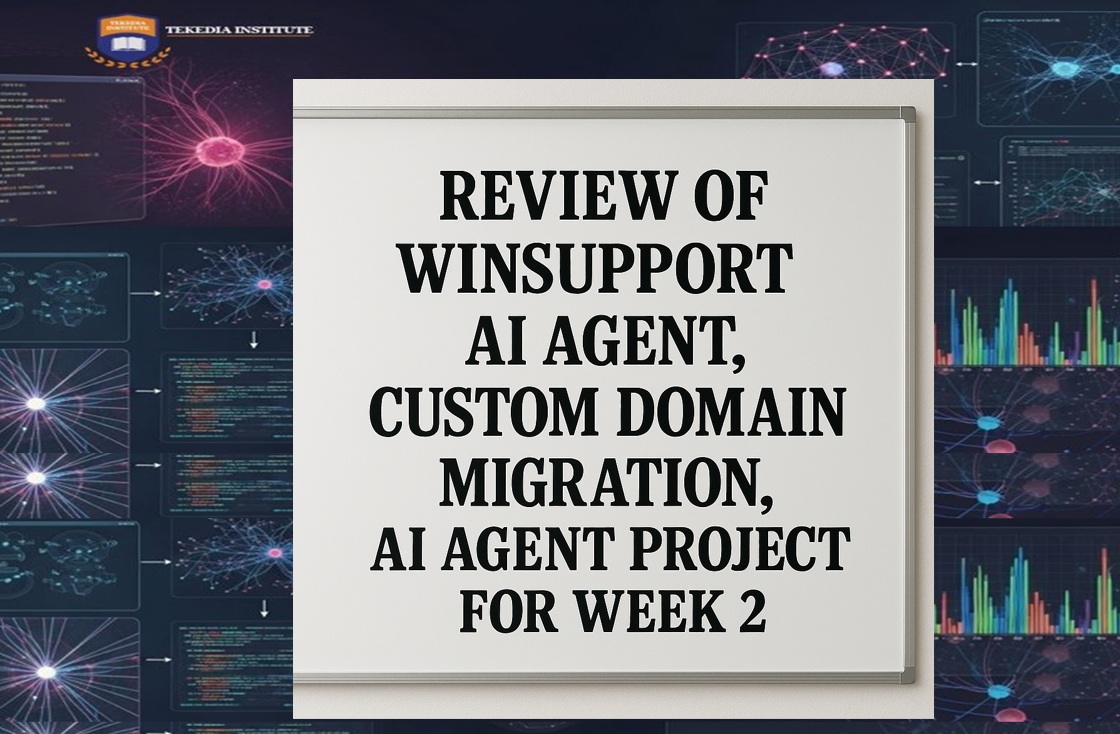
Dear Co-Learners in Tekedia AI Technical Lab, tomorrow (Saturday) we will be doing the following:

–   Review of WinSupport Customer Support AI agent and evaluation of your own deployment in your personal VPS server. I expect everyone’s agent to be working as mine which is here winsupport.zenvus.com.

–   The homework in the Board is suggestions on how to improve the WinSupport AI agent. Share ideas on what you want to see. Be creative.

–   I understand that some co-learners are having issues with the use of PuTTYy and Windows Terminal. We have scheduled today to guide co-learners on how to do ssh, move containers and use command lines. If you still have issues, please attend.

–   Tomorrow, above all, we will begin the process of moving your AI agent from our server to your personal domain. You will learn about A records and some other exciting things on configuring such environments in non-deep -technical way. When we are done, you can have say, example.zenvus.com to example.com.

–     Finaly, I will introduce this week’s AI agent project and you will be building a job recruitment and career portal where AI agents will enable users to upload resume once, and using the data in the repositories, the agent will do the discovery, sorting, etc. Check the agent here winjob.zenvus.com

As always, Tekedia Institute appreciates the opportunity of co-learning with everyone.

Meanwhile, we have opened registrations for the next edition of Tekedia AI Technical lab. That one will begin on Nov 15 to end on Dec 6. Go here and register https://school.tekedia.com/course/ailab/ . We will showcase some new AI agents besides the ones used for the current edition.

(Remember, share an idea of what you want an AI agent to do, we will code it here for learning. Our goal in the Institute is to create AI agents and fuel productivity in firms and homes).

Avalon X (AVLX) Taps Into Grupo Avalon’s Real Estate Backing — Will Bitcoin & Solana Hold Their Dominance

0

The center of gravity of the crypto market is gradually shifting to a new investment approach. While major players like Bitcoin and Solana still command market attention, a lot of retail attention is moving to product-first presales.

For instance, the Avalon X (AVLX) presale, priced at $0.005 and backed by Grupo Avalon’s near $1 billion development pipeline, is combining real estate solidity with blockchain’s access.

Experts believe that it has the potential to be one of the top blockchain real estate projects in the industry and can even defeat Bitcoin price and Solana in terms of ROI. With only 3 days left until the major price increase Avalon X presale gains traction across crypto whales.

Join the Avalon X team for a live AMA today, October 10th on their official X.

What Does the Recent Bitcoin Price Prediction Mean?

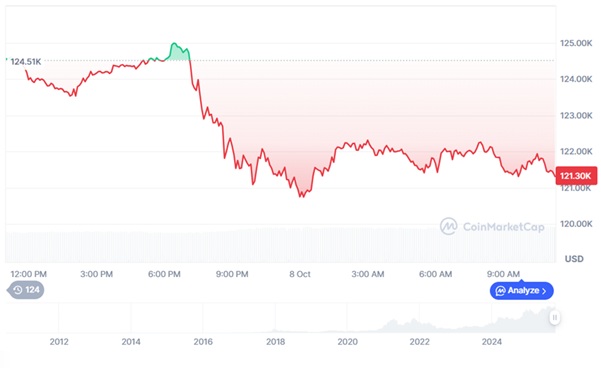
Bitcoin’s recent surge to $122k is mostly driven by massive ETF inflows and safe-haven rotations. This illustrates how deep liquidity invites staying power. CoinShares and other trackers reported record weekly ETF capital flows into digital assets, with Bitcoin leading the charge.

The sheer scale of the market cap kind of stops Bitcoin Price from getting a 100x run. For it to achieve those numbers, humongous fresh capital flows will be required. Comparatively, a new altcoin like Avalon X is much more likely to witness 50x or even 100x growth multiples.

Why is Solana Price Down Today?

Solana’s story is a bit different. Solana price USD spikes are often tied to developer momentum, low fees, and retail liquidity. SOL’s on-chain activity and daily volumes make it a favorite for traders seeking quick turnover.

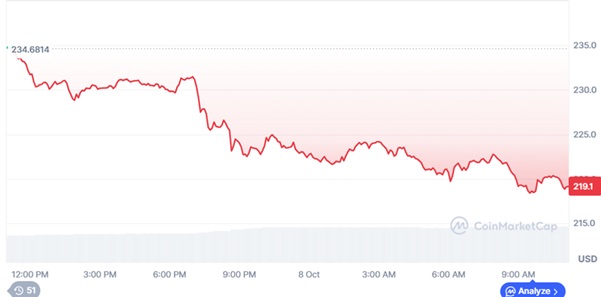
However, platform speed wins rely on continued ecosystem build-out and usage. If developer sentiment or TVL lowers, SOL’s leadership can be tested. For instance, the price of the altcoin has gone down by more than 6% in the past day. It is currently traded near $219.

How is Avalon X’s Model Different?

The Avalon X crypto does something different to retain its staying power in the markets. Its AVLX coin is a real estate-backed cryptocurrency that unlocks hospitality utility, staking benefits, and is backed by Grupo Avalon’s tangible developments.

This gives the Avalon X token a real and stable backing, which is uncommon in most RWA crypto presales. It’s a token that uses blockchain technology to provide real services rather than just speculative liquidity. The capped 2B supply and burn mechanism makes it a long-term bet as well.

Moreover, today, consumer demand for travel experiences is growing. Avalon X exactly taps into this growing demand with its exclusive access and membership perks.

To market the product to the masses, Avalon X has organized two large-scale giveaways that are getting huge traction on social media. The Avalon X $1M crypto giveaway promises $100k in AVLX to ten winners, and the crypto townhouse giveaway is also up for grabs for one lucky winner. The luxury townhouse is located in the gated Eco Avalon development which has already been built. The project has introduced a referral program alongside the giveaways designed to reward community participation. Users will receive 10 bonus entries for each successful referral, along with an additional 10% in tokens, giving them even greater chances to win and earn.

Moreover, the CertiK audit and the ongoing presale success are already proving that investors have confidence in Avalon X’s product and its roadmap. The presale has already achieved more than 50% of its presale target and has sold over 30 million tokens.

Should You Go for Avalon X over Bitcoin & Solana?

Investments naturally depend on an individual’s risk appetite and goals. However, for those targeting 100x crypto coins 2025, Avalon X (AVLX) definitely makes a strong case for itself.

Moreover, with the Avalon X giveaways and the other bonuses running currently, now is the correct time to invest in the altcoin for maximizing gain potential. With only


Join the Community

Website: https://avalonx.io

CoinMarketCap: https://coinmarketcap.com/currencies/avalon-x/

Telegram: https://t.me/avlxofficial

X: https://x.com/AvalonXOfficial

AI and the Future of Trading: How AI is Changing Investment Strategies

0

Artificial intelligence has moved from a buzzword to a key focus in boardrooms. On trading floors and digital platforms, algorithms now guide how investors manage risk and find opportunities in volatile markets. Tasks that once required large analyst teams and months of modelling can now be done in real time by adaptive systems. This marks a major change in investment strategies. It creates new opportunities but also demands stronger control, transparency, and oversight.

For investors in the UK, the growth of AI-driven platforms has been particularly important. Many reviews now point to the best AI trading platform UK as those that combine powerful analytics with tools that remain simple enough for everyday use. This shows that artificial intelligence is no longer limited to hedge funds. It is now part of everyday trading.

From Spreadsheets to Self-Learning Models

For many years, traders relied on spreadsheets, indicators, and intuition. These methods worked in calm markets but often failed when conditions changed quickly. Artificial intelligence offers a different approach. It can process huge amounts of data and find patterns that people cannot see.

Modern trading models now:

  • Handle millions of market updates every second.

  • Scan news, company reports, and social sentiment for signals.

  • Adjust positions automatically as new data emerges.

This brings more speed and accuracy to trading. In the past, only large hedge funds could use such tools. Today, cloud platforms make them available to retail investors, independent traders, and even small firms. This wider access is helping level the playing field in financial markets.

Risk Management Reinvented

Volatility is a constant feature of financial markets. AI is transforming how investors deal with this challenge. Instead of relying on fixed stop-loss rules, modern systems adjust exposure continuously. Portfolio managers can view current positions in real time and also project outcomes under multiple scenarios.

The main advantages are:

  • Speed: instant reaction to sudden market shocks.

  • Accuracy: forecasts based on live probability models rather than static assumptions.

This helps investors protect capital and allocate resources more effectively. It also supports discipline during stressful times, when emotions can lead to poor choices. Investors looking to enhance their portfolio strategies can consider high-risk and low-risk investments. These approaches provide a simple framework for balancing opportunity with stability.

The Rise of AI-First Platforms

The competitive edge is shifting to platforms that put AI at the centre of their design. Investors no longer want basic charting tools. They expect predictive analytics, back-testing powered by machine learning, and alerts that adapt automatically as market conditions change.

In the UK, providers are racing to meet this demand. The strongest platforms combine advanced data processing with simple, user-friendly layouts. This balance allows professionals to test complex strategies while giving retail traders clear insights they can act on confidently. The trend is also visible in the evolution of AI crypto trading bots, which are transforming digital asset management and making automated systems accessible to a wider audience.

Beyond Prediction: Strategy Design

Artificial intelligence is not limited to forecasting. It also supports the design of new strategies. Techniques such as reinforcement learning can test thousands of ideas at once. The most effective survive while weaker methods are rejected.

For investors, this means:

  • Faster discovery of strategies with profit potential.

  • Plans tailored to specific risk preferences.

  • Less reliance on trial-and-error in live markets.

The human role becomes one of oversight. Traders decide when to follow model signals and when to apply their own judgement. This balance reduces error and allows for more consistent performance.

Challenges and Limits

AI in trading carries risks of its own. Systems may inherit bias from the data they are trained on. Some models act as black boxes, giving results without explaining the process. This lack of clarity makes regulation and auditing more difficult.

Key challenges include:

  • Overfitting to historical patterns that may not repeat.

  • Dependence on reliable internet and system infrastructure.

  • Compliance and ethical issues when algorithms operate with little human input.

Regulators in Europe and the UK are working to close these gaps. Their goal is to protect investors without slowing innovation. Rules on model transparency, fair data use, and system testing are expected to become stricter in the coming years.

The Investor’s New Toolkit

The main lesson for investors is not to fear AI but to use it wisely. Best practices involves:

  • Treating AI output as support, not certainty.

  • Combining algorithmic analysis with human judgement.

  • Choosing platforms that explain their models clearly.

This approach positions AI as a partner rather than a replacement. It extends analytical reach while leaving responsibility in the hands of the investor.

Outlook

The direction is clear. Markets are becoming faster, more connected, and shaped by intelligent systems. Investors who adapt gain an advantage through speed and stronger discipline.

As these tools develop, success will not depend on who has the biggest dataset. It will depend on who uses data in a responsible way. The most effective strategies will combine automation with human oversight, mix innovation with governance, and pair technology with skill.

AI is no longer just a feature. It is now the framework that shapes how money moves, how risk is managed, and how opportunities appear in global markets.

Google Asks Court to Allow Integration of Gemini As U.S. Antitrust Remedies Threaten Its AI Ambitions

0

Google is mounting a fierce defense in court to prevent sweeping restrictions that could limit its dominance in search and curb its expansion into artificial intelligence.

The company, already found guilty of monopolizing the search market, is now fighting to ensure new court-ordered remedies do not undermine its efforts to integrate its Gemini AI app with other Google services such as YouTube and Maps.

At a hearing in Washington on Wednesday, Google attorney John Schmidtlein urged U.S. District Judge Amit Mehta not to impose restrictions that would prevent the company from bundling Gemini with its most popular apps. Schmidtlein argued that the court should treat AI differently from search, warning that overly broad remedies could stifle innovation in an emerging market.

“Maps and YouTube aren’t monopoly products,” he told the court. “There’s no notion that Google has to date gained monopoly or market power” in AI.

Judge Mehta, however, expressed skepticism, pointing out that requiring device manufacturers to install Gemini as a condition for accessing YouTube and Maps could give Google undue leverage—similar to the tactics that once allowed it to dominate search distribution channels.

“That leverage,” Mehta said, “could recreate the same kind of dominance we are trying to correct.”

The hearing is part of the remedies phase of a landmark antitrust case in which Mehta ruled last year that Google unlawfully maintained its monopoly in online search. The Justice Department had accused the company of using exclusionary contracts with device makers, browser vendors, and carriers to make Google the default search engine on billions of devices. Those deals, the DOJ argued, shut out rivals such as Microsoft’s Bing and DuckDuckGo by denying them crucial distribution channels.

In his ruling, Mehta agreed with the DOJ, concluding that Google’s dominance was preserved not by superior products but by restrictive agreements that made competition nearly impossible. The case, filed under Section 2 of the Sherman Act, became the most significant U.S. antitrust challenge since the government’s action against Microsoft in the late 1990s.

Now, with the court preparing its final order on remedies, the Justice Department is pushing for broad measures to restore competition. These include ending Google’s exclusive distribution agreements, forcing it to share parts of its search index and user-interaction data with competitors, and requiring it to open up its search advertising services to other firms. The DOJ has also proposed barring Google from tying or conditioning the use of one of its services—like Search, Chrome, or Assistant—to access to another, such as Gemini or Maps.

More controversially, the government has suggested potential structural remedies if behavioral ones prove insufficient, including the divestiture of Google’s Chrome browser or portions of its Android operations. Justice Department lawyers argue that breaking up parts of Google may be the only way to ensure lasting competition in digital search and advertising.

Google has strongly opposed those ideas. The company insists that such drastic remedies would “hold back American innovation at a critical juncture,” especially as it seeks to expand its investments in AI. Executives argue that forcing data-sharing or unbundling could amount to a “de facto divestiture” that would weaken incentives for product improvement and research. They also maintain that Gemini’s integration into its services is comparable to Microsoft’s use of CoPilot in its Office products—a natural evolution of its technology rather than a monopolistic maneuver.

In September, Mehta declined to force Google to divest Chrome or Android, rejecting the DOJ’s most aggressive proposals. However, he did impose a series of behavioral and structural constraints aimed at preventing Google from repeating its past conduct. These include banning exclusive contracts involving Search, Chrome, Assistant, or Gemini; mandating data-sharing arrangements to allow rival search engines to compete; and prohibiting Google from tying the licensing of one product to the distribution of another.

In issuing the remedies, Mehta acknowledged the challenge of regulating in the age of generative AI, describing the task as “looking into a crystal ball and trying to predict the future.” The judge noted that while the court’s goal is to restore competition, it must avoid stifling technological progress in an emerging industry.

For Google, the battle is about more than legal compliance—it is about survival in its current form. The company is fighting to remain whole and to preserve its ability to innovate across its ecosystem. Its legal team has positioned AI as a separate market that should not be constrained by remedies designed for search. The company is also seeking to delay or soften some of the new behavioral restrictions through appeals and ongoing negotiations.

The Justice Department, however, views Google’s arguments as part of a broader strategy to maintain dominance under the guise of innovation. Officials have warned that without strict limits, Google could replicate its monopoly power in the AI market, using its vast distribution network to push Gemini ahead of competitors.