DD
MM
YYYY

PAGES

DD
MM
YYYY

spot_img

PAGES

Home Blog Page 3671

The Easiest Way to Poach and Land Wealthy Clients

0

I recently poached a wealthy client, and as I was trying to pitch to him in the traditional style of who I am and why taking my law firm on as his and his company’s legal representative would be the best decision he could ever make. He stopped me halfway and the only thing he asked me was if I play golf, I said I play not I’m quite good at it, he said I should meet him up at the IBB golf course on “a so so date” so we can play gold together and then we can be discussing whatever proposal with him while we play.

In fact, the only reason why he granted me an audience at first was that another client of mine who happens to be his mutual friend recommended me to him if not the man is approachable and busy and the easiest way he can grant you an audience is to take you on a golf date. 

I recently met up with another prospect who invited me for lunch and I had no idea that what took place in that restaurant for the one hour and some minutes we spent there was an interview. To me all we did was eat, drink, talk about Nigeria and its politics and talk about social events; the issue of business did not even come in there, to my utmost surprise I later found out that that is the mode of operation of the man, that is how he conducts his interviews. He is interested to know if you have a grasp of everyday happenings around you, to know if you do not know or are unaware of some basic things happening in society then you will not be able to handle his business even if you have the best grades and have an outstanding CV. He will raise a topic and take a step back and let you do all the talking while he only nods pretending like he does not know much about the topic, that he own way of getting to know you. 

Most times what a client is looking for is a “wingman”. Someone they can call at any time and they will be best assured that the issue will be taken care of. Once you gain their trust that you can be their wingman you have won the business and you have won their heart. It is not really all about sending proposals and blowing big grammar inside the pitch; of truth, some of the rich clients you are poaching really have no time to go through your pages of proposals; all they need to know is whether can they trust you, can you deliver, are they sure of your unwavering loyalty. Once those boxes are ticked, other things become secondary. 

These are some of the things that are not taught in school that you will have to go out your own way to learn; learn how to network, not in the traditional networking styles, which looks like you are hustling the prospect; your networking should be seamless and not mechanical. Research your prospect and know how to easily bond with him or her; there are some clients that the easiest way to open a conversation and create the first bond is to bring up a discussion about football, while for some is a talk about women, while some is to talk about politics. 

Keep in mind that it is a jungle out there, there are thousands of people who want exactly what you want and are offering what you offer, so you have an added advantage if you learn things or know things that keep you a step ahead of your competitors.

Commercializing Academic Researches in Nigeria

0

One of the key ingredients of advancing any economy is the presence of researchers or scientists in all aspects of the country. From the manufacturing to service sectors, a country must have quality research outputs for creating and sustaining values for every stakeholder, irrespective of race, gender, religion, and political affiliations. Over the years, countries have continued to have various forms of educational institutions for the purpose of training professionals of varied types for academia and industry growth. Being one of the leading countries in Africa, Nigeria has over the years created and is still creating educational and vocational institutions for the purpose of improving the economy. Despite this, the country’s performance on a number of regional and global indicators for measuring the state of the economy remains mixed.

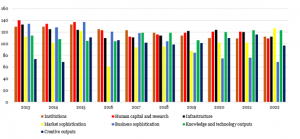
For example, Nigeria has shown a consistent trend of improvement in its Global Innovation Index rankings from 2013 to 2019. This suggests that there has been a concerted effort to enhance the innovation ecosystem in the country. However, there have been fluctuations in rankings over the years, indicating both progress and challenges in different aspects of innovation.

One area that warrants attention is human capital and research. While Nigeria’s ranking has improved slightly, it still lags behind other components of innovation. This underscores the importance of investing in education, skills development, and research to strengthen the foundation for innovation. Infrastructure remains a significant challenge for innovation in Nigeria. Although there has been some improvement in rankings, the country needs substantial investments in areas such as transportation, energy, and digital infrastructure to support innovation-driven activities effectively.

Market sophistication and business sophistication rankings have shown fluctuations, indicating that Nigeria’s business environment can be volatile. Consistency and stability in these areas are crucial for attracting investment and fostering innovation. On the positive side, knowledge and technology outputs have seen improvement, suggesting progress in generating and disseminating knowledge. However, there is room for further investment in research and development to enhance technology outputs.

Nigeria’s creative outputs, including cultural and creative goods and service, have shown potential, as reflected in the rankings. This presents an opportunity for the country to harness its creative industries for economic growth. In terms of the overall GII ranking, Nigeria has hovered around the 110-120 range in recent years. While there has been some improvement, the country still faces challenges in breaking into the top tier of innovative nations. This underscores the need for a holistic approach to innovation, addressing multiple aspects simultaneously.

Figure 1: Rank per key innovation index indicator in 10 years

Source: Global Innovation Index, 2013-2022, Opolo Global Innovation, 2023 

Implications for Commercializing Academic Research

The improving ranks in “Institutions” and “Human Capital and Research” suggest that Nigeria is gradually creating a conducive environment for research and innovation. Challenges in “Market Sophistication” and “Business Sophistication” indicate the need for stronger collaboration between academia and industry to bridge the gap between research and commercialization. The positive trend in “Knowledge and Technology Outputs” is promising for the commercialization of academic research, indicating that Nigeria is producing valuable knowledge and technology.

Academic research is the pillar upon which innovation and progress rest. Therefore, it drives technological advancements, fosters creativity, and contributes to economic growth. In a country like Nigeria, where the population is youthful and eager to tap into its intellectual capacity, commercializing academic research can be a game-changer.

Academic research is not just about generating knowledge; it’s about converting that knowledge into practical applications that benefit society. This process often involves partnerships between academia, industry, and government. In Nigeria, the ability to effectively commercialize academic research can lead to the development of cutting-edge technologies, the creation of new industries, and a significant boost to the national economy.

However, to enhance the commercialization of academic research, Nigeria should continue to address challenges such as investment in education, research institutions, and infrastructure while fostering collaboration between academia and industry. Addressing market-related challenges is also crucial for creating a thriving ecosystem for innovation and research commercialization. In specific terms, Nigeria has to do the following to ensure it reaps more from the researches across its university campuses.


More Targetted Funding

Adequate financial support for research and development is essential for producing innovative results. Nigeria must invest more substantially in research funding to stimulate a culture of academic entrepreneurship. Even though, the Tertiary Education Fund is already pumping billions of Naira into the universities via the National Research Fund and the Institution Based Research Fund, more still needs to be done especially on researches that have the potential to solve societal problems.

Provide Adequate Infrastructure

Robust infrastructure is essential for conducting cutting-edge research. While improvements have been made, further investments are needed in transportation, energy, and digital infrastructure. The laboratories must be well equipped to enable researchers conduct cutting edge research with in real time. The present practice of science based researchers taking samples abroad because of non-availability of latest equipment in Nigerian laboratories cannot help the research commercialization drive of the country.

Deliberate Promotion of Industry- Academia Collaboration

Bridging the gap between the academia and industry is crucial in research commercialization. The culture of collaboration needs to be fostered, with mechanisms in place to facilitate knowledge transfer and technology commercialization. What this implies is that local industries would benefit from solutions derived from researches in the Nigerian universities. There is a need to nurture a well-established ecosystem that facilitates the commercialization of academic research

Intellectual Property Support

Nigeria should enhance its intellectual property protection mechanisms, making it more appealing for investors to engage in research commercialization. Beyond this, the intellectual property protection ecosystem is not well established in Nigerian universities. Federal universities, working with the National Office for Technology Acquisition and Promotion (NOTAP), have Intellectual Property and Technology Transfer Office (IPTTO) offices. The sane could not be said of the state universities. There is a need to ensure that the ecosystem is well spread across the Nigerian universities for research commercialization dreams to be realized.

Creation of Innovation Hubs

Establishing innovation hubs can provide a nurturing environment for startups to emerge from academic research conducted in Nigerian universities. These centers would serve as a platform where researchers and students can incubate, and accelerate their research outputs. This would lead to the emergence of spinoffs from the universities.

Nigeria’s 26 trillion Naira budget 2024, reality or assumptions

0

The Nigerian government has recently unveiled its proposed budget for the year 2024, which amounts to a staggering 26 trillion Naira. This is a 20% increase from the previous year’s budget, and the highest in the country’s history. The budget is based on some optimistic projections, such as a 6% GDP growth rate, a 3.5% inflation rate, and a 1.8 million barrels per day oil production. But are these projections realistic, or are they mere assumptions that will not materialize?

We will examine some of the key assumptions behind the budget and assess their feasibility and implications for the Nigerian economy and society. We will also compare the budget with those of other African countries and evaluate its impact on the regional and global dynamics.

The first assumption that we will scrutinize is the GDP growth rate of 6%. This is a significant improvement from the 2.7% growth rate recorded in 2023, and the highest since 2015. The government claims that this growth will be driven by the recovery of the oil sector, the diversification of the economy, and the implementation of various reforms and infrastructure projects.

However, some experts have expressed doubts about the sustainability and inclusiveness of this growth. They argue that the oil sector is still vulnerable to volatility and shocks in the global market, and that the diversification of the economy is still slow and uneven. They also point out that the reforms and infrastructure projects are often delayed or abandoned due to corruption, mismanagement, and insecurity. Therefore, they suggest that the government should be more cautious and realistic in its projections and focus on addressing the structural and institutional challenges that hinder the economic development.

The second assumption that we will analyze is the inflation rate of 3.5%. This is a remarkable reduction from the 15.7% inflation rate recorded in 2023, and the lowest since 2014. The government asserts that this reduction will be achieved by maintaining a stable exchange rate, improving fiscal discipline, and enhancing monetary policy coordination. However, some analysts have questioned the feasibility and desirability of this reduction.

They contend that the exchange rate stability is dependent on external factors, such as the oil price and the foreign exchange reserves, which are beyond the government’s control. They also warn that fiscal discipline may come at the expense of social spending and public investment, which are essential for poverty reduction and human development.

They also doubt that monetary policy coordination will be effective, given the conflicting objectives and interests of the Central Bank of Nigeria (CBN) and the Ministry of Finance. Therefore, they recommend that the government should be more flexible and pragmatic in its inflation target and balance it with other macroeconomic goals.

The third assumption that we will evaluate is the oil production of 1.8 million barrels per day. This is a modest increase from the current production of 1.6 million barrels per day, which is below the OPEC quota of 1.9 million barrels per day. The government maintains that this production level will be attained by resolving the security issues in the Niger Delta region, investing in new oil fields, and complying with the OPEC agreement.

However, some observers have challenged this assumption, highlighting the environmental and social costs of oil production in Nigeria. They emphasize that oil production has caused severe pollution, degradation, and conflict in the Niger Delta region, affecting the livelihoods and health of millions of people. They also stress that oil production has made Nigeria dependent on a volatile and finite resource, exposing it to external shocks and uncertainties.

One of the main challenges that the budget faces is the issue of revenue generation. According to the budget breakdown, the government expects to generate 10.6 trillion Naira from oil and gas revenues, 6.5 trillion Naira from non-oil revenues, and 8.9 trillion Naira from borrowing. However, these sources of income are subject to various uncertainties and volatilities.
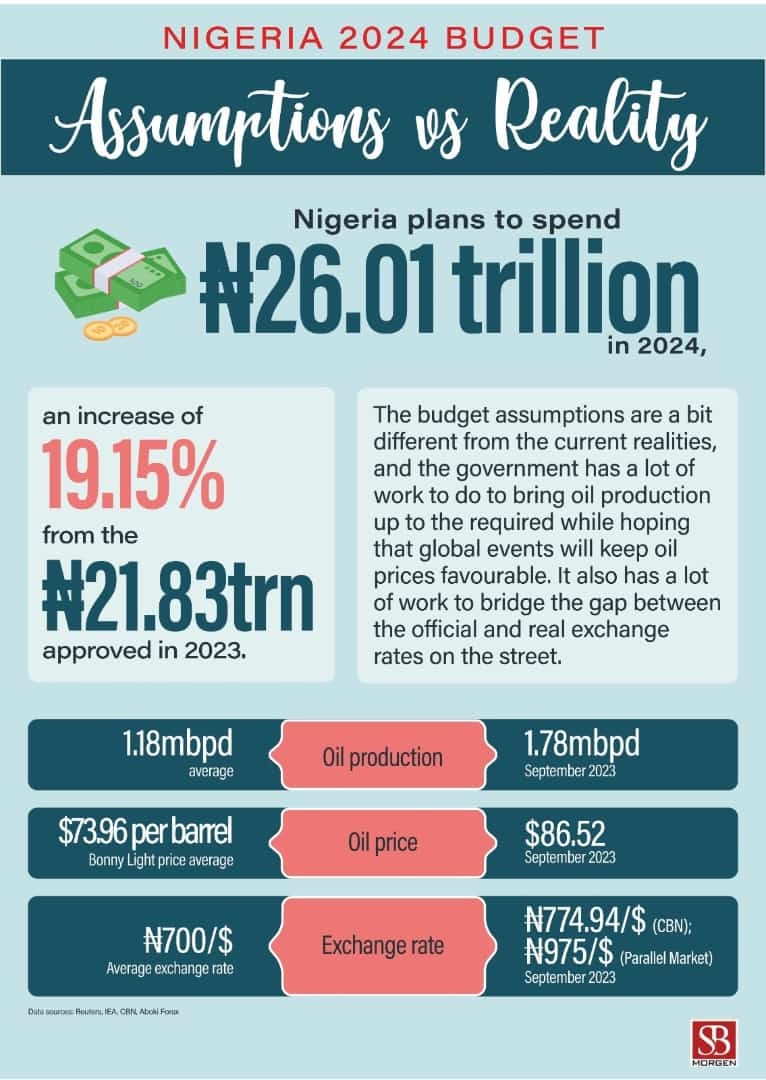
For instance, the oil and gas sector are dependent on the global market prices and demand, which can fluctuate significantly due to various factors such as geopolitical tensions, environmental concerns, and technological innovations. Moreover, the oil and gas sector are also vulnerable to sabotage, vandalism, and theft, which can disrupt the production and export of crude oil. Furthermore, the government has to contend with the demands of the oil-producing regions, which have been agitating for a fair share of the oil revenues and a greater autonomy.

Similarly, the non-oil revenues are also not guaranteed, as they rely on the efficiency and effectiveness of the tax administration system, which has been plagued by corruption, evasion, and loopholes. Moreover, the non-oil revenues are also affected by the performance of the non-oil sectors of the economy, such as agriculture, manufacturing, and services, which have been struggling to cope with various challenges such as insecurity, infrastructure deficits, power shortages, and policy inconsistencies.

Finally, the borrowing option is also fraught with risks and costs. The government has already accumulated a huge debt burden, which stood at 35.5 trillion Naira as of June 2023. This represents about 35% of the GDP, which is still within the acceptable threshold according to international standards. However, servicing this debt consumes a large chunk of the government’s revenues, which reduces the funds available for other developmental purposes. Moreover, borrowing more money exposes the government to external shocks and pressures from creditors and lenders, who may impose stringent conditions and terms on the loans.

Despite these challenges, the budget also offers some opportunities for Nigeria to achieve its developmental goals and aspirations. The budget reflects the government’s commitment to invest in human capital development and social welfare programs, which are essential for improving the quality of life and well-being of Nigerians. The budget allocates 1.5 trillion Naira for education, 1.2 trillion Naira for health, and 0.8 trillion Naira for social intervention programs.

These allocations are expected to enhance access to quality education and health care services for millions of Nigerians, especially those in rural areas and marginalized groups. They are also expected to reduce poverty and inequality levels in the country, which have been exacerbated by the COVID-19 pandemic and its aftermath. Moreover, these allocations are expected to boost human capital productivity and competitiveness in the global market.

Another opportunity that the budget provides is the opportunity to improve Nigeria’s physical infrastructure and security situation. The budget allocates 4.9 trillion Naira for capital expenditure on works and housing, transportation, power, water resources, and defense.

These expenditures are expected to address some of the critical infrastructure gaps and bottlenecks that have hampered the economic growth and development of Nigeria. They are also expected to enhance the security and stability of Nigeria, which have been threatened by various forms of violence and conflicts, such as insurgency, banditry, kidnapping, and communal clashes.

The implications of Nigeria’s 26 trillion Naira budget 2024 are both positive and negative, depending on how well the budget is implemented and managed. On one hand, the budget has the potential to stimulate the economic recovery and growth of Nigeria, which has been battered by the COVID-19 pandemic and its fallout. It also has the potential to improve the living standards and welfare of Nigerians, who have been suffering from poverty, hunger, and disease.

On the other hand, the budget also poses some serious risks and challenges for Nigeria, which could undermine its fiscal sustainability and macroeconomic stability. It also exposes Nigeria to external shocks and pressures, which could compromise its sovereignty and autonomy. Therefore, the success or failure of Nigeria’s 26 trillion Naira budget 2024 will depend largely on the political will, the institutional capacity, and the public accountability of the government and its agencies, as well as the cooperation and participation of the private sector, the civil society, and the citizens.

China Ready to Coordinate with Russia on Middle East Crisis

0

In a recent statement, China’s Foreign Ministry spokesperson Zhao Lijian said that China is ready to coordinate with Russia on the situation in the Middle East, especially in Syria and Iraq. He said that China and Russia share common interests and responsibilities in maintaining regional peace and stability, and that they have been in close communication and coordination on various issues.

Zhao also expressed China’s support for Russia’s efforts to promote a political settlement of the Syrian conflict, and to combat terrorism and extremism in Iraq. He said that China hopes that all parties concerned will respect the sovereignty and territorial integrity of Syria and Iraq and work together to achieve a comprehensive and lasting solution to the crisis.

Syria has been mired in a civil war since 2011, when anti-government protests erupted as part of the Arab Spring. The conflict has killed more than 500,000 people, displaced more than 12 million, and created one of the worst humanitarian crises in history. The war has also drawn in regional and international actors, such as Iran, Turkey, Saudi Arabia, Israel, the US, France, Britain, and Russia.

Russia has been a key ally of Syrian President Bashar al-Assad, providing military, diplomatic, and economic support to his regime. China has also backed Assad politically, vetoing several UN resolutions that would impose sanctions or authorize military action against him.

Iraq has faced instability and violence since the US-led invasion in 2003 that toppled Saddam Hussein’s regime. The country has struggled to rebuild its institutions, economy, and society amid sectarian tensions, corruption, terrorism, and foreign interference. The rise of the Islamic State (IS) group in 2014 posed a major threat to Iraq’s security and sovereignty, as it seized large swathes of territory and declared a caliphate.

A US-led coalition supported Iraqi forces in fighting IS, which was largely defeated by 2017. However, IS still remains active in some areas, carrying out attacks against civilians and security forces. Iraq has also been affected by the rivalry between Iran and the US, as both countries have significant influence and interests in Iraq. Iran has backed various Shia militias that have fought against IS and opposed US presence in Iraq.

The US has maintained thousands of troops in Iraq to train and advise Iraqi forces, as well as to counter Iran’s activities. In January 2020, a US drone strike killed Iran’s top general Qasem Soleimani near Baghdad airport, sparking a major escalation of tensions that threatened to plunge Iraq into a new conflict.

China and Russia have been strategic partners for more than two decades and have cooperated on various regional and global issues. They have also jointly proposed the concept of a “community of shared future for mankind”, which aims to promote multilateralism, dialogue and cooperation among countries.

The Middle East is a region of strategic importance for both China and Russia, as it affects their energy security, economic interests and geopolitical influence. Both countries have advocated for a peaceful resolution of the conflicts in the region and have opposed any external interference or military intervention.

China and Russia have also been active participants in the international efforts to address the Iranian nuclear issue, the Palestinian-Israeli issue, and the humanitarian situation in Yemen. They have called for the full implementation of the Joint Comprehensive Plan of Action (JCPOA) on the Iranian nuclear issue, the establishment of a Palestinian state with East Jerusalem as its capital, and the cessation of hostilities and violence in Yemen.

As two permanent members of the UN Security Council, China and Russia have a special role and responsibility in safeguarding international peace and security. Their coordination and cooperation on the Middle East crisis will not only benefit the people of the region, but also contribute to the stability and prosperity of the world.

European Central Bank Launches Preparation Phase for Digital Euro CBDC

0

The European Central Bank (ECB) announced on October 17th, 2023, that it has entered the “preparation phase” for the development and launch of a digital euro, a central bank digital currency (CBDC) that would complement the existing cash and payment systems in the euro area. The preparation phase is expected to last for about two years, during which the ECB will conduct technical and policy work to design the features and requirements of the digital euro.

According to the ECB, the digital euro would be a form of electronic money issued by the central bank that would be legal tender and accessible to all citizens and businesses. It would be available through digital wallets provided by intermediaries, such as banks and payment service providers, and would allow for online and offline payments, as well as peer-to-peer transfers. The digital euro would be backed by the ECB’s assets and would not entail any credit or liquidity risk for users.

The ECB’s decision to launch the preparation phase was based on the results of a public consultation that took place between October 2022 and January 2023, as well as an investigation phase that involved experiments and analysis by the ECB and the national central banks of the euro area. The public consultation received more than 8,000 responses, which showed a high level of interest and support for a digital euro, as well as a preference for privacy, security, usability, and low cost as the main features of the CBDC.

One of the key questions that arises from the introduction of a digital euro is how it will affect the banking sector. The ECB has stated that the digital euro is not intended to compete with or substitute bank deposits, but rather to offer an alternative and complementary option for payments.

The ECB has also proposed some safeguards to limit the potential impact of the digital euro on banks, such as imposing a cap on the number of digital euro that each user can hold, charging a penalty interest rate for holdings above a certain threshold, or requiring intermediaries to remunerate or invest part of their digital euro holdings with the central bank.

The ECB argues that the digital euro could also bring some benefits for banks, such as reducing their dependence on costly and inefficient payment systems, enhancing their customer relationships and loyalty, and creating new business opportunities and revenue streams. The ECB also expects that the digital euro will stimulate innovation and competition in the payment market, which could lead to more efficient and diverse services for users.

The ECB stated that the main objectives of the digital euro are to support the digital transformation of the European economy, to foster financial inclusion and innovation, to enhance the resilience and diversity of the payment system, and to reinforce the international role of the euro. The ECB also emphasized that the digital euro would not replace cash, but rather complement it as a means of payment.

The preparation phase will involve close cooperation between the ECB and various stakeholders, such as national authorities, European institutions, market participants, civil society organizations, and international partners. The ECB will also conduct user testing and experimentation to ensure that the digital euro meets the needs and expectations of users.

At the end of the preparation phase, the ECB will decide whether to launch a formal investigation phase, which would last for about three years and would involve a pilot project with selected users.