DD
MM
YYYY

PAGES

DD
MM
YYYY

spot_img

PAGES

Home Blog Page 370

Novo Nordisk Makes $5.2bn Bet on U.S. Biotech Akero to Bolster Liver Disease Pipeline and Reignite Growth

0

Novo Nordisk has announced plans to acquire U.S.-based Akero Therapeutics in a deal worth up to $5.2 billion, marking the Danish drugmaker’s first major move under its new CEO Mike Doustdar.

The acquisition gives Novo access to efruxifermin, a late-stage experimental drug that targets metabolic dysfunction-associated steatohepatitis (MASH) — a severe liver condition increasingly linked to obesity and diabetes.

The deal represents a significant strategic shift for Novo Nordisk, the maker of the blockbuster weight-loss drug Wegovy, as it seeks to strengthen its hold in the fast-growing cardiometabolic therapy space.

Doustdar, who took over as CEO in July, is pursuing a more focused growth path — concentrating on next-generation obesity, diabetes, and cardiometabolic treatments rather than diversifying into unrelated therapeutic areas. The acquisition of Akero is the clearest indication yet of that strategy.

In a statement, Doustdar described efruxifermin as “an important building block for Novo’s next phase of growth”, noting that the company aims to expand its portfolio in areas adjacent to obesity and diabetes, where metabolic dysfunction plays a key role.

His leadership began amid pressure to maintain Novo’s dominance after rival Eli Lilly surged ahead in the obesity drug market with its competing Zepbound therapy. Just weeks ago, Novo announced plans to cut 9,000 jobs globally as part of a restructuring meant to refocus spending on high-impact drug development and acquisitions like Akero.

Efruxifermin (EFX) is one of the most promising MASH therapies in late-stage development, having shown potential to reverse liver scarring — a key indicator of disease severity — in earlier studies. MASH, a progressive form of fatty liver disease, affects an estimated 5% of adults in the U.S., and the market for effective therapies is considered one of the next major frontiers in metabolic medicine.

Earlier this year, Novo’s flagship Wegovy became the first GLP-1-based treatment to receive accelerated approval for MASH in the U.S., giving the company a first-mover advantage. The addition of EFX, which works through a different biological pathway, could strengthen Novo’s dominance in this space and allow for combination therapies targeting multiple aspects of metabolic dysfunction.

Novo had previously discontinued its own MASH candidate zalfermin, which was in the same treatment class as efruxifermin, signaling that the company would rather acquire a proven late-stage drug than continue internal development with uncertain prospects.

A Bigger Appetite for Deals

The Akero acquisition also marks a notable expansion in deal size for Novo Nordisk. Its previous acquisitions in metabolic diseases typically ranged between $1 billion and $2 billion, but the $5.2 billion structure — including $4.7 billion upfront and up to $500 million in milestone payments — underscores a renewed appetite for bolder transactions.

The agreement offers Akero shareholders $54 per share in cash, a 16.2% premium over its last closing price, with an additional $6 per share contingent on full U.S. Food and Drug Administration (FDA) approval of efruxifermin by June 2031.

Akero’s shares surged more than 16% after the announcement, while Novo’s stock dipped about 1%, reflecting investor caution about the short-term financial impact.

Portfolio manager Lukas Leu of ATG Healthcare, a Novo shareholder, said the deal was “encouraging” and a sign that Doustdar is intent on rebuilding confidence after a turbulent year.

“They need to start acquiring assets and expanding their pipeline. This is a step in the right direction, though I remain cautious given the stock is still in the doghouse,” he said.

Novo’s move comes as it prepares for a loss of exclusivity on semaglutide, the active ingredient in Wegovy and Ozempic, in several markets, including India and China, starting next year. The acquisition of Akero offers a pathway to diversify earnings and hedge against that risk.

The company plans to finance the deal through debt and expects it to close by the end of 2025, pending regulatory approval.

Analysts at BMO Capital Markets described the acquisition as part of a broader effort by Doustdar to “bring the ship back on course.” They said the combination of strategic restructuring and a focus on high-growth disease areas could set the stage for long-term recovery.

Meanwhile, competitors such as Roche and GSK have been moving into similar territory, betting on MASH and related metabolic conditions as the next lucrative frontier after diabetes and obesity drugs.

Despite investor anxiety, Novo’s shares have risen 11% since Doustdar’s appointment, suggesting that the market is beginning to respond to his decisive strategy — one that is not only defensive but also growth-oriented in the post-Wegovy era.
Microsoft Unveils First Massive Nvidia-Powered AI “Factory” to Run OpenAI Workloads, Promises Global Rollout

0

Microsoft has unveiled its first large-scale Nvidia-powered artificial intelligence “factory”, a massive computing cluster built to run OpenAI workloads and other frontier AI models across its Azure global cloud network.

The factory points to the company’s ambition to dominate the infrastructure layer of the AI revolution as OpenAI’s user base and service offerings continue to expand at an unprecedented pace.

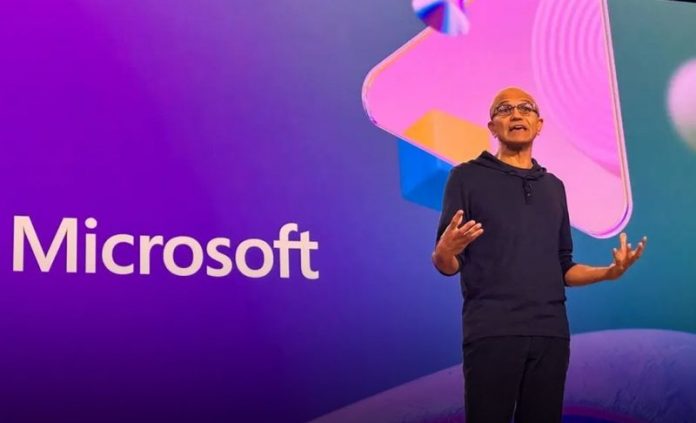
Microsoft CEO Satya Nadella shared a video of the new system on Thursday on X, calling it the “first of many” such AI factories the company plans to deploy worldwide. The system — a cluster of more than 4,600 Nvidia GB300 rack computers — is powered by Nvidia’s new Blackwell Ultra GPUs and linked through InfiniBand, Nvidia’s ultra-fast networking technology. Each of these massive systems can run large-scale AI workloads, including next-generation models with “hundreds of trillions of parameters,” according to Microsoft.

The company said the new AI factory represents a “new class of supercomputing infrastructure” designed to handle both AI training and inference at a global scale. Nadella described the deployment as part of Microsoft’s long-term plan to build out “hundreds” of such systems across Azure’s 300 data centers in 34 countries.

Nadella explained that it is the first of many Nvidia AI factories we’re deploying across Microsoft Azure data centers worldwide to power frontier AI models. He added that Microsoft’s infrastructure “will meet the demands of frontier AI today — and tomorrow.”

The launch comes at a time when infrastructure has become the backbone of OpenAI’s expansion, as the company diversifies its offerings beyond ChatGPT and scales its computing capacity to meet soaring demand. OpenAI’s flagship product, ChatGPT, has now surpassed 800 million active users per week, a milestone that cements its position as the world’s most widely used AI platform.

The surge in user activity has placed enormous strain on computing resources, prompting OpenAI to invest heavily in global data centers and specialized hardware to maintain uptime and support more sophisticated models. The company’s recent $1 trillion data center commitments — spread across partnerships with Nvidia, AMD, and major cloud providers — reflect the scale of its ambition to operate as a global AI utility.

Microsoft’s new AI factories are designed to serve as dedicated infrastructure for OpenAI, as well as for enterprise clients adopting AI tools through Azure. Microsoft emphasized that the systems are optimized not only for ChatGPT and GPT-5-class models but also for multimodal AI systems like OpenAI’s video model Sora and code-generation platforms that demand extreme processing power.

The collaboration between Microsoft and Nvidia marks another milestone in a partnership that has reshaped the AI industry. Nvidia’s dominance in both GPU chips and data-center networking, strengthened by its 2019 acquisition of Mellanox Technologies for $6.9 billion, has made it the undisputed supplier of AI infrastructure. Microsoft’s alignment with Nvidia ensures early access to the Blackwell Ultra GPU, which has become the industry’s most sought-after AI processor.

The timing of Microsoft’s announcement follows OpenAI’s own major data center agreements with Nvidia and AMD, which some analysts saw as a sign that OpenAI was expanding beyond Microsoft’s Azure ecosystem. Microsoft is signaling that it remains the primary infrastructure partner with the capacity and geographic reach to support OpenAI’s exponential growth by unveiling its AI factory now.

Microsoft said its AI systems are built with “sustainability and scalability” in mind, integrating renewable energy sources and advanced cooling systems to offset the enormous energy consumption associated with training large AI models. Each AI factory, according to internal estimates, consumes as much electricity as a small city.

Beyond OpenAI, Microsoft intends to use the same infrastructure to power enterprise AI products like Copilot, its suite of AI assistants embedded in Windows, Office, and GitHub. The company said the infrastructure will also support “custom frontier models” for corporate clients developing proprietary AI systems.

Microsoft CTO Kevin Scott is expected to provide more details about the company’s AI infrastructure roadmap at TechCrunch Disrupt in San Francisco later this month (October 27–29). Scott will outline how Azure’s data centers are evolving to support the next generation of AI workloads and to remain competitive with Amazon Web Services and Google Cloud, both of which are also scaling their own AI supercomputing capabilities.

OpenAI’s growth from a research lab to a global AI platform has transformed it into one of the world’s largest consumers of computing power. However, its continued success depends on the availability of scalable infrastructure capable of handling billions of user queries, video generations, and code executions daily.

HSBC to Buy Out Minority Shareholders in Hang Seng Bank in $13.6bn Deal Amid Hong Kong Property Turmoil

0

HSBC Holdings has announced plans to acquire the remaining 36.5% stake it does not already own in Hong Kong’s Hang Seng Bank for HK$106.1 billion ($13.6 billion), in a move that underscores both confidence in its Asian growth strategy and growing challenges in the region’s property-driven financial market.

According to Reuters, the banking giant said it will pay HK$155 per share — a 30.3% premium over Hang Seng’s Wednesday closing price — valuing the Hong Kong lender at about $37 billion.

The announcement, made on Thursday, sent Hang Seng’s shares surging 26%, while HSBC’s own stock dropped 6% in both London and Hong Kong trading sessions. Investors were rattled by the size of the offer and HSBC’s decision to halt share buybacks for three quarters to preserve capital for the deal.

Chief Executive Georges Elhedery, who took charge last year, said the acquisition was “absolutely not” a bailout, despite Hang Seng’s worsening exposure to Hong Kong’s property market downturn. Instead, he described it as a strategic consolidation aimed at streamlining HSBC’s Asia operations and aligning product manufacturing and international networks under full ownership.

“We are capital generative and we have the financial strength to go out and acquire,” Elhedery said in an interview with Reuters. He added that delisting Hang Seng and bringing it fully under HSBC would “unlock value for shareholders” and prove more accretive than further share buybacks.

Elhedery emphasized that the buyout demonstrated HSBC’s deal-making capacity even as it continues global restructuring efforts. The lender has spent the past year offloading non-core assets across Europe and North America while consolidating in key growth markets such as Hong Kong, the United Kingdom, transaction banking, and wealth management.

Bad Loans and Property Market Strain

Hang Seng has been battling a steady rise in bad loans linked to the prolonged real estate crisis in Hong Kong and mainland China. The bank’s impaired loans climbed to 6.7% of its total loan book as of June 2025, up sharply from 2.8% at the end of 2023. The increase has been driven largely by defaults among property developers and office sector weakness, with bond maturities for debt-laden developers expected to jump nearly 70% in 2026.

Analysts say this makes HSBC’s move both bold and risky. Michael Makdad, senior equity analyst at Morningstar, called it “the biggest acquisition in Hong Kong in more than a decade,” noting that while it comes with governance benefits by removing the dual-listing structure, it also exposes HSBC to heightened risk from the region’s fragile real estate market.

“HSBC will need to pay a premium,” Makdad said, “but there should be some opportunities for cost synergies.”

The acquisition will trim HSBC’s common equity tier 1 (CET1) capital ratio by about 125 basis points from its June level of 14.6%. The bank expects to rebuild the ratio within its target range of 14.0–14.5% through organic earnings and by suspending buybacks. HSBC clarified that its offer price for Hang Seng shares is final and will not be revised.

Citi analysts described the rationale for the takeover as “strategically sound” but questioned the timing and valuation amid economic uncertainty in China and Hong Kong.

“While the strategic rationale is compelling, we expect investors will query why now and at this price,” the bank said in a client note.

A Signal of Confidence in Asia

The deal highlights HSBC’s ongoing commitment to Hong Kong as its most profitable market and a core pillar of its Asia-focused growth agenda. Despite challenges, Elhedery expressed optimism about the long-term outlook.

“We remain constructive on the outcome for the sector in the medium to long term,” he said, acknowledging, however, that “short-term challenges” persist, especially in the commercial property segment.

HSBC’s planned full ownership of Hang Seng marks a striking reversal from its recent string of divestments. It also underscores a strategic pivot — from shedding global sprawl to reinforcing its Asian stronghold at a time when regional economic headwinds continue to test resilience.

The acquisition, if completed, will be one of the most significant banking transactions in Hong Kong since the financial crisis, positioning HSBC to consolidate its control over one of Asia’s most recognized banking brands amid deepening property and credit risks.

BNB Chain Hits $10B On-Chain Daily Volume Milestone

0

The BNB Chain ecosystem has surged to new heights, recording over $10 billion in on-chain trading volume in the past 24 hours as of October 8, 2025.

This marks a significant shift in the memecoin and DeFi landscape, with the chain outpacing competitors like Solana in key metrics. Driving this activity is a boom in new token launches—over 35,000 in the last day alone—fueled by Binance’s Alpha program, which funnels early-stage projects to BNB Chain for seamless on-chain trading.

Platforms like PancakeSwap and the emerging Aster DEX have seen explosive growth, with Aster alone contributing $200 billion in monthly volume and $7.2 million in daily revenue. This volume spike aligns with broader network momentum.

BNB Chain processed 52.5 million active addresses in September, reclaiming the top spot for user engagement. The BNB token itself has rallied 80% in the last three months, flipping XRP to become the third-largest cryptocurrency by market cap at around $183 billion, with its price hovering above $1,300.

Higher throughput is accelerating BNB’s deflationary burn mechanism, tightening supply and supporting price stability amid the frenzy. On X, traders are buzzing about the shift, with posts highlighting how BNB’s low fees and integrations like Chainlink oracles are drawing memecoin liquidity away from Solana and Base.

One analyst noted: “BNB memecoin szn is real,” pointing to over 100,000 traders profiting from new launches. If this trend holds, BNB Chain could solidify its position as the go-to for high-volume, low-cost on-chain activity.

Bitwise Amends Solana ETF Filing to Include Staking, Sets Ultra-Low 0.20% Fee

In a competitive push ahead of potential SEC approval, Bitwise Asset Management updated its spot Solana ETF filing on October 8, 2025, renaming it the “Bitwise Solana Staking ETF” and incorporating staking to generate yield for investors.

The fund will stake SOL holdings to earn rewards typically 7-8% annually, passing them through to shareholders while maintaining exposure to Solana’s price. To sweeten the deal, Bitwise set a management fee of just 0.20%—matching its Bitcoin and Ethereum ETFs—and waived it entirely for the first three months or until $1 billion in assets is reached.

This move follows similar updates from 21Shares adding staking to its Ethereum ETF and comes amid a “fee war” reminiscent of the 2024 Bitcoin ETF launches, where low costs drove massive inflows.

Bloomberg ETF analysts called it aggressive: “Bitwise not playing around,” predicting strong institutional uptake due to the yield edge over non-staking products. With over 16 Solana ETF proposals pending including from Grayscale, VanEck, and Fidelity, the SEC’s October 10 deadline looms—though a U.S. government shutdown may delay final reviews.

If approved, staking could differentiate these ETFs, potentially unlocking billions in inflows and boosting SOL’s price, which recently hit $227. This signals a maturing U.S. crypto market, where funds evolve from pure price trackers to yield-bearing vehicles.

The ecosystem’s ability to handle 35,000+ new token launches daily signals robust infrastructure, potentially making BNB Chain the default hub for speculative and high-volume trading.

With BNB’s price above $1,300 and a market cap of $183 billion, the high throughput accelerates its deflationary burn mechanism, reducing token supply and potentially supporting further price appreciation. This could draw more institutional and retail investors, reinforcing BNB’s position as the third-largest cryptocurrency.

The 52.5 million active addresses in September highlight unmatched user engagement, likely fueled by Binance’s Alpha program funneling projects to BNB Chain. This creates a virtuous cycle: more projects attract more users, which in turn draws more developers.

Adding staking to Bitwise’s Solana ETF, with a low 0.20% fee and a three-month fee waiver, positions it as a compelling product for institutional investors seeking yield 7-8% annually alongside SOL price exposure.

The ultra-low fee and staking inclusion intensify the ETF “fee war,” forcing competitors like Grayscale and VanEck to lower costs or add features. This benefits investors but squeezes profit margins for issuers, potentially consolidating the market around a few dominant players like Bitwise.

Approval of a staking ETF could boost SOL’s price currently $227 by increasing demand and locking up supply through staking. This might also incentivize more validator participation, enhancing Solana’s network security and decentralization, though it risks centralizing staking power with large ETF holders.

The SEC’s October 10, 2025, deadline is critical, but a potential U.S. government shutdown could delay approvals, creating uncertainty. If approved, staking ETFs could set a precedent for other yield-bearing crypto products, reshaping the U.S. crypto investment landscape.

While BNB Chain dominates on-chain volume, Solana’s ETF progress could restore its institutional appeal. Staking yields provide a narrative edge over non-yielding assets, potentially countering BNB’s memecoin-driven momentum. However, Solana must maintain technical reliability to capitalize on this.

Both developments signal a maturing crypto market, with BNB Chain’s volume showcasing DeFi’s retail-driven growth and Solana’s ETF push highlighting institutional integration. This dual track could broaden crypto adoption but also widen the gap between speculative and regulated markets.

MPA Accuses OpenAI of Copyright Breach Over Sora 2 AI Videos as Legal Pressure Mounts on the AI Industry

0

The Motion Picture Association (MPA) has demanded that OpenAI take “immediate and decisive action” to curb what it calls widespread copyright infringement on its new video creation platform, Sora 2, as pressure mounts on the broader AI industry over unauthorized use of copyrighted works.

The call from the powerful Hollywood lobby group follows an explosion of AI-generated videos circulating online since the release of Sora 2 last week. Users have created short films featuring recognizable characters and scenes lifted from popular franchises, including a viral clip of James Bond playing poker with OpenAI CEO Sam Altman and another showing Nintendo’s Mario character in a police chase rendered in realistic, body cam-style footage.

“Since Sora 2’s release, videos that infringe our members’ films, shows, and characters have proliferated on OpenAI’s service and across social media,” MPA CEO Charles Rivkin said in a statement on Monday.

He emphasized that OpenAI must take full responsibility for copyright protection rather than shifting the burden to creators.

“OpenAI must acknowledge it remains their responsibility – not rightsholders’ – to prevent infringement on the Sora 2 service. Well-established copyright law safeguards the rights of creators and applies here,” Rivkin said.

OpenAI has yet to formally comment on the MPA’s statement, but in a blog post responding to concerns, Altman pledged that the company would soon give rightsholders “more granular control” over how their characters are used. He said OpenAI would transition from its previous opt-out system, which required studios to ask for exclusion from Sora’s dataset, to an opt-in model, meaning copyrighted works could not be used without explicit authorization.

However, Altman admitted that enforcement would take time, noting that “there may be some edge cases of generations that get through that shouldn’t, and getting our stack to work well will take some iteration.”

The confrontation with the MPA is part of a growing wave of legal and ethical scrutiny facing AI companies over how their models are trained and used. Over the past year, several of the world’s largest AI developers — including OpenAI, Google, Anthropic, and Stability AI — have been sued by authors, artists, and media companies who allege that their works were used without consent to train generative models capable of recreating similar styles, characters, or narratives.

Earlier this year, The New York Times filed a landmark lawsuit against OpenAI and Microsoft, accusing them of using millions of its copyrighted articles to train the GPT models that power ChatGPT and Copilot, without payment or permission. Meanwhile, visual artists and photographers have filed separate class-action suits against Stability AI’s Stable Diffusion and Midjourney, alleging that the companies scraped billions of images from the internet in violation of copyright protections.

In June, Disney and Universal sued Midjourney, claiming it used and distributed AI-generated characters from their films despite repeated warnings. Disney followed up in September with a cease-and-desist letter to Character.AI, demanding the company stop using its characters to generate dialogue and digital scenes.

Legal experts say the MPA’s intervention against OpenAI could mark a major inflection point in how copyright laws are applied to AI-generated content. Hollywood studios have long relied on licensing and royalties to protect their intellectual property — a system now being tested by the ability of AI to mimic cinematic production at scale.

The MPA’s statement also underscores broader fears in the entertainment industry that generative AI could erode the value of creative labor. Many film studios, artists, and writers argue that AI companies should be required to obtain licenses before training on creative material. Industry unions, including the Writers Guild of America (WGA) and Screen Actors Guild (SAG-AFTRA), have similarly demanded legal safeguards to prevent AI from replacing human creativity in film and television production.

Sora 2 represents one of OpenAI’s most ambitious product launches, promising the ability to generate lifelike, cinematic-quality videos from text prompts. But as the MPA’s letter makes clear, the technology’s rollout has also placed the company squarely in the middle of one of the most consequential legal battles in the history of digital media.