DD
MM
YYYY

PAGES

DD
MM
YYYY

spot_img

PAGES

Home Blog Page 371

Morgan Stanley Announces Plan to Open Crypto Investments to All Clients

0

Morgan Stanley has taken another major step into the cryptocurrency market, announcing that it will broaden access to crypto investments to all clients and allow such investments across all account types, including retirement accounts.

The expansion, which takes effect on October 15, marks a significant policy shift at the world’s largest wealth management firm and underscores how Wall Street is accelerating its embrace of digital assets under President Donald Trump’s crypto-friendly administration.

Previously, Morgan Stanley only allowed clients with at least $1.5 million in assets and a high-risk tolerance to gain exposure to crypto through taxable brokerage accounts. Now, the firm’s more than 15,000 financial advisors will be able to offer crypto funds to any client, regardless of wealth or risk profile. The decision follows last month’s announcement that the bank will enable trading of bitcoin, ether, and solana through its E-Trade subsidiary.

Morgan Stanley’s move comes as it continues to defend its dominant position in the U.S. wealth management industry, where it oversees $8.2 trillion in client assets across its wealth and investment management operations. The expansion represents the latest sign that traditional finance institutions are moving swiftly to accommodate rising investor demand for digital assets following the Trump administration’s reversal of Washington’s previously cautious stance toward the sector.

To mitigate potential risks from the notoriously volatile crypto market, Morgan Stanley will rely on an automated system to monitor client portfolios and ensure that investors are not overly concentrated in digital assets, according to people familiar with the policy cited by CNBC. The bank’s global investment committee has also established a framework recommending that clients limit their initial crypto exposure to between 1% and 4% of their portfolios, depending on their investment objectives — ranging from wealth preservation to more aggressive growth strategies.

“The committee considers cryptocurrency as a speculative and increasingly popular asset class that many investors, but not all, will seek to explore,” said Lisa Shalett, Chief Investment Officer for Wealth Management at Morgan Stanley, in an October 1 report distributed to clients.

For now, advisors will be restricted to offering bitcoin funds managed by BlackRock and Fidelity, according to internal documents seen by CNBC. However, the firm is reviewing additional options as it monitors the evolving digital asset landscape. Clients who wish to do so can also request exposure to any exchange-traded crypto product listed on regulated markets.

Morgan Stanley’s pivot follows a wider trend among major U.S. banks adjusting their strategies to align with the Trump administration’s pro-crypto regulatory outlook. JPMorgan Chase, which once blocked customers from purchasing crypto on its credit cards, has in recent months expanded access to blockchain-based payment rails and quietly integrated its JPM Coin system into more corporate transactions. CEO Jamie Dimon, who had long expressed skepticism toward bitcoin, has softened his tone publicly, recently acknowledging that blockchain technology could play a “permanent role in the future of finance.”

Goldman Sachs, meanwhile, has revived its digital assets trading desk, expanding its offerings beyond bitcoin futures to include ether and tokenized treasury products. The bank has also reopened discussions about launching a broader crypto custody platform, citing growing institutional demand and regulatory clarity from Washington.

Reuters reported several large U.S. banks, including Bank of America and Citi, are working on or studying stablecoins as regulatory clarity improves. Bank of America CEO Brian Moynihan told analysts the bank is “working on launching a stablecoin” and is “still trying to figure out how big or small it is.” Morgan Stanley’s CFO said the bank is “following stablecoin developments closely.”

Citigroup is also reportedly “considering custody and payment services for stablecoins and crypto ETFs,” exploring custody for Treasuries and cash that could back tokenized products. That points to banks looking beyond trading to infrastructure and settlement roles.

Analysts say Morgan Stanley’s latest move underscores how mainstream the crypto market has become, as the combination of Trump’s deregulation efforts and mounting investor interest pushes large financial institutions to adapt. With over $8 trillion in client assets, the firm’s full-scale embrace of crypto is expected to pressure rivals like Bank of America and Citi to revisit their own restrictive policies toward digital assets.


The Evolution of Sportsbooks: From Traditional Bookmaking to Tech-Driven Platforms

0

Sports betting has evolved significantly from its humble, often underground beginnings to the high-tech, global platforms of today. What started as a localized, manual process is now a dynamic, data-driven experience available at the tap of a smartphone.

How did we get from traditional bookmaking to the sophisticated, tech-driven sportsbooks we use today? Let’s explore.

The Era of Traditional Bookmaking

Before the digital age, sports betting primarily occurred at physical locations, such as local bookie offices or casinos, often in unregulated or gray areas. Bettors relied on human bookmakers to set odds, a process that was slow and manual, based on experience and limited data.

Betting options were limited to significant events, such as horse racing, boxing, and football, and bettors had to be physically present to place a bet. In many places, sports betting occurred through local bookies, often operating outside the law. While this created tight-knit communities, it also carried risks like fraud, unfair odds, and a lack of regulation.

The Dawn of Online Sportsbooks

In the late 1990s, the internet began to transform many industries, including sports betting. With the rise of online platforms, bettors no longer had to go to a physical location to place a bet. This shift opened up sports betting to a global audience, making it easier for people to engage with sportsbooks from anywhere with an internet connection.

The first online sportsbooks emerged in the mid-to-late 1990s, enabling individuals to place bets from the comfort of their own homes. Although these early websites were basic and had few features, they provided something traditional bookmakers couldn’t: a wider range of betting options. Bettors could now place wagers on international sports, niche events, and even non-sporting areas, such as entertainment and politics.

By the 2000s, more sportsbooks had launched online, such as FanDuel Sportsbook, which increased competition. To stay ahead, these platforms quickly improved their websites and apps, adding more betting options, better odds, and easier payment methods. This competition led to rapid innovation, creating a better and more user-friendly betting experience.

Key Technological Innovations Transforming the Industry

The shift from traditional bookmaking to online sportsbooks was just the beginning. Several major technological innovations have played a crucial role in shaping the industry and creating the seamless, tech-driven platforms we know today.

Mobile Betting

One of the most significant innovations in modern sportsbooks is mobile betting. With the widespread use of smartphones and tablets, mobile apps have become a primary means for bettors to interact with sportsbooks. These apps allow users to place bets, manage their accounts, and track results from anywhere, making betting more accessible than ever before.

The convenience of mobile betting has led to a surge in participation, particularly among younger users. With everything available at their fingertips, bettors can place wagers and stay updated on results in real-time, enhancing the overall experience and making sports betting easier and more flexible.

In-Play (Live) Betting

In-play betting, also known as live betting, has revolutionized the way people place wagers. Unlike traditional betting, where bets are placed before a game starts, in-play betting enables bettors to place bets while the game is in progress. The odds are continuously updated in real-time, reflecting the events happening in the game, which adds a dynamic element to the betting process.

Artificial intelligence plays a crucial role in live betting, as it rapidly analyzes large amounts of data, enabling sportsbooks to provide updated odds in real-time throughout the game. This creates a more interactive and engaging experience for bettors, who can react to in-game events and place wagers based on the unfolding action.

Data Analytics and Artificial Intelligence

Today’s sportsbooks rely heavily on data analytics and artificial intelligence to drive their platforms. Machine learning models now analyze player statistics, team performance, and historical data at lightning speed, allowing sportsbooks to set more accurate odds. AI also helps bettors make more informed decisions, creating a more innovative betting environment.

Betting Exchanges

Unlike traditional sportsbooks, which act as bookmakers, betting exchanges enable users to bet against one another. These platforms act as intermediaries, facilitating wagers between users and offering more competitive odds. Betting exchanges have become an attractive alternative for those seeking transparency and fairness in their bets.

Enhanced Security and Trust

With the rise of online betting, trust and security have become paramount. Modern sportsbooks have invested heavily in security measures to ensure the safety of their users’ personal and financial information. Strong encryption, two-factor authentication, and secure payment gateways have become standard practice, building confidence in digital platforms and mitigating concerns about fraud and data breaches.

Conclusion

New technologies will shape the future of sportsbooks. AI and machine learning will enhance the accuracy of odds and improve the overall betting experience. Cryptocurrencies and blockchain will offer faster and safer transactions. Mobile apps will make it easier to bet anywhere. As sports betting becomes legal in more places, sportsbooks are expected to continue growing, providing bettors with more opportunities worldwide.

The S&P 500’s New IntraDay High Reflects Economic Strength But Highlights Risks Like Overvaluation

0

The S&P 500 recently hit a new intraday all-time high, reaching 6,753.71 USD on October 3, 2025, before closing at 6,715.79, also a record. This follows a volatile period, with the index up 3.87% over the past month and 16.79% year-over-year.

Despite a government shutdown, momentum has been driven by tech and AI-related stocks like Nvidia, though some experts warn of potential overvaluation, with the index trading at 3.3x sales. Others suggest diversifying beyond the S&P 500 due to its heavy tech concentration.

The record high signals robust investor confidence, driven by strong corporate earnings, particularly in tech and AI sectors like Nvidia, despite challenges like a government shutdown. It suggests expectations of continued economic growth, supported by a 16.79% year-over-year gain.

High valuations S&P 500 at 3.3x sales raise concerns about overvaluation, with potential for volatility if earnings disappoint or macroeconomic conditions shift (e.g., inflation spikes or geopolitical tensions).

The S&P 500’s rally is heavily weighted toward tech and AI stocks, with the top 10 stocks accounting for a significant portion of gains. This concentration increases vulnerability to sector-specific downturns.

A correction in tech could drag the broader index, impacting portfolios heavily exposed to these sectors. The market’s strength amid a government shutdown suggests resilience, but high valuations make it sensitive to Federal Reserve actions.

Expectations of stable or lower interest rates are baked into current prices, but any hawkish pivot could trigger a pullback. Rising yields or unexpected rate hikes could compress valuations, especially for growth stocks with high price-to-earnings ratios.

Rising stock prices boost household wealth, potentially increasing consumer spending and supporting economic growth. This is critical as consumer spending drives ~70% of U.S. GDP. If gains are concentrated among high-net-worth individuals or institutions, the broader economic impact may be limited.

A strong U.S. market attracts global capital, strengthening the USD and potentially impacting emerging markets. It also signals U.S. markets as a safe haven amid global uncertainties such as geopolitical tensions or China’s economic slowdown.

A stronger USD could hurt U.S. exporters and multinational corporations, affecting earnings. The tech-heavy rally prompts diversification into undervalued sectors like small caps, value stocks, or international markets to mitigate concentration risk.

Investors may increase hedges to protect against potential corrections, given warnings of overvaluation. Some analysts advocate for defensive assets like gold or bonds. With the S&P 500 up 3.87% in a month, momentum-driven investors might stay bullish, but value-focused investors could lock in gains by trimming exposure to high-valuation stocks.

Companies, especially in tech, may leverage high stock prices to raise capital through secondary offerings or stock-based acquisitions. Non-tech firms might accelerate investment in AI to stay competitive.

With potential USD strength, multinationals may adjust pricing or supply chains to offset currency impacts. Firms reliant on exports could face margin pressure and prioritize cost-cutting.

High valuations encourage mergers and acquisitions, particularly in sectors lagging the rally, as firms seek growth opportunities to boost market sentiment. The Federal Reserve may face pressure to maintain accommodative policies to sustain growth, but overheating concerns could prompt cautious rate hikes, impacting market sentiment.

The government shutdown underscores the need for fiscal stability. Policymakers may prioritize resolving budget disputes to avoid undermining market confidence. The tech sector’s dominance could attract regulatory attention, influencing strategic planning for tech giants and potentially capping their growth.

Advisors should educate clients on concentration risks and the potential for volatility, recommending diversified portfolios or alternative investments. Shift toward value stocks or sectors like financials and industrials, which may benefit from economic growth without tech’s lofty valuations.

Investors should diversify and hedge, corporations should optimize capital and costs, and policymakers must balance growth with stability. Strategic decisions should prioritize resilience against potential corrections while capitalizing on current market momentum.

Sui Price Speculation Hits $5, Toncoin Flattens, While BullZilla Presale Surges as The 1000x Crypto Presale to Watch Now

0

Sui continues to generate buzz, with speculation driving its price to potential new highs, while Toncoin remains relatively flat in comparison. Both have long been staples in the crypto space, but there’s a new contender rising fast. The 1000x crypto presale, BullZilla, is quickly gaining traction, with early investors already seeing substantial returns.

BullZilla, now one of the most anticipated presale opportunities, is rapidly gaining attention for its promising ROI and innovative features. With the presale already raising over $860k, this meme coin forged on the Ethereum blockchain could offer investors an unprecedented chance to secure massive returns in 2025.

BullZilla: The 1000x Crypto Presale You Can’t Afford to Miss

BullZilla ($BZIL) has quickly gained attention in the crypto world for its groundbreaking approach to meme coins, offering a blend of innovative tokenomics and a robust presale strategy. With its presale currently in full swing, investors have the chance to secure a stake in a project that is poised to make massive strides. The presale is already raising significant funds, with over $860k raised in the latest stage alone, and early participants have seen astronomical returns.

Currently in its Stage 6A, BullZilla is trading at an entry price of $0.00013907, with a projected surge in value as the presale progresses. The ROI for investors joining at this stage is impressive, with a 3690.47% potential return by the time of the listing at $0.00527. Early-stage investors have already reaped a 2318.60% return. Over 2800 token holders have joined the BullZilla community, and with 30 billion tokens sold, the demand is only increasing.

Additionally, BullZilla incorporates a staking reward system, where token holders can earn passive rewards by staking their $BZIL. The referral program provides further incentives for participants to spread the word and grow the community, ensuring organic growth.

How to Buy BullZilla Coins

Investing in BullZilla is simple, but it requires a few steps:

  • Set Up a Wallet: Install a Web3 wallet such as MetaMask or Trust Wallet.
  • Buy Ethereum (ETH): Acquire ETH through exchanges like Binance or Coinbase and transfer it to your wallet.
  • Visit the Presale Site: Connect your wallet to the official BullZilla presale portal.
  • Swap ETH for $BZIL: Choose the amount you wish to purchase and confirm the transaction. Your allocation will be secured immediately and can be claimed at presale completion.

Investment Scenario: Investing $7,000 in BullZilla

Let’s imagine you invested $7,000 at the presale price of $0.00013907. At the listing price of $0.00527, your $7,000 investment could grow to approximately $187,020, a substantial return on investment. This illustrates the enormous upside potential of the BullZilla presale and why it’s garnering attention as one of the top 1000x crypto presale opportunities of 2025.

SUI: Revolutionizing Blockchain with Stablecoin Integration

SUI, a rising star in the blockchain space, continues to make significant progress, especially with its latest initiative, the SUI stablecoin. This move positions SUI to offer both on-chain liquidity and real-world finance integration, a combination that is attracting substantial investor interest.

SUI’s collaboration with BlockchainFX ($BFX) signals a massive shift in the blockchain ecosystem. With over $9 million raised in the BlockchainFX presale, the platform is set to redefine the decentralized finance (DeFi) space. BlockchainFX is not only making waves with its innovative tokenomics but also with its unique blend of DeFi and global financial markets. Investors can trade over 500 assets, from Bitcoin and Ethereum to traditional assets like Tesla, all while earning passive income through USDT rewards.

Toncoin: A Steady Player Despite Market Volatility

Toncoin (TON) has proven itself as a resilient asset in the crypto market. Despite a slight 1.21% dip in its price today, Toncoin continues to be a key player in the market. As of now, TON is trading at $2.72, with a market cap of $6.86 billion. Over the past 24 hours, the trading volume has seen a small drop, but the overall trend remains positive.

Toncoin’s all-time low of $0.39 in September 2021 is a distant memory, as the token has increased by over 597.82% since then. However, it’s still down by 66.9% from its all-time high of $8.24 in June 2024. With a circulating supply of 2.51 billion TON and a total supply of 5.14 billion, Toncoin remains a solid investment, especially for those looking for long-term growth. Its volatility might worry some investors, but for others, it’s a signal of buying opportunities at discounted prices.

Conclusion: The Best 1000x Crypto Presale?

SUI and Toncoin have proven themselves as strong contenders in the ever-changing cryptocurrency space. However, it is BullZilla that stands out as the top 1000x crypto presale of 2025.

With an innovative approach to meme coins, robust features like the Roar Burn Mechanism, and an established blockchain infrastructure, BullZilla presents an opportunity that investors can’t afford to miss.  As the presale continues to gain traction, the question is not whether BullZilla will succeed, but how much investors will stand to gain once the token hits the market.

For More Information:

BZIL Official Website

Join BZIL Telegram Channel

Follow BZIL on X  (Formerly Twitter)

Frequently Asked Questions for $BZIL Presale

What is BullZilla?

BullZilla is an Ethereum-based meme coin with a unique deflationary model and staking rewards system. It’s currently in its presale stage, offering early investors a chance to secure substantial returns.

How can I buy BullZilla tokens?

To buy BullZilla tokens, set up a Web3 wallet, purchase Ethereum, connect your wallet to the presale portal, and swap ETH for $BZIL.

What is the Roar Burn Mechanism in BullZilla?

The Roar Burn Mechanism is a deflationary feature that reduces the total supply of $BZIL tokens over time, increasing scarcity and potentially adding value to existing tokens.

What is the ROI for BullZilla presale investors?

Investors who join at Stage 6A can see a 3690.47% ROI when $BZIL lists at $0.00527, with earlier investors already enjoying returns of over 2300%.

Is BullZilla a good investment?

Given its innovative features, strong backing by the Ethereum network, and significant presale success, BullZilla is considered one of the top 1000x crypto presales for 2025.

Glossary

  • Meme Coin: A cryptocurrency inspired by internet memes, often driven by community interest rather than fundamental use cases.
  • Presale: A phase of cryptocurrency fundraising before the public sale, offering early investors discounted tokens.
  • Ethereum Blockchain: A decentralized platform for creating and managing smart contracts and decentralized applications (DApps).
  • ROI (Return on Investment): The profit or loss generated from an investment relative to its cost.

Summary

BullZilla is emerging as one of the most exciting 1000x crypto presale opportunities in 2025, quickly gaining attention alongside established cryptos like Sui and Toncoin. With its innovative tokenomics, including the Roar Burn Mechanism and staking rewards, BullZilla promises substantial ROI potential for early investors. Currently in its presale, it has already raised over $860k and is attracting a growing community of investors. Forged on the Ethereum blockchain, BullZilla benefits from robust security and liquidity, positioning itself as a key player in the meme coin space.

BlockDAG Smashes $420M+ Presale Milestone With Alpine F1® Deal! Stellar Eyes $0.41 & Pi Network Targets 70% Gains

0

When comparing Pi Network (PI) growth, Stellar (XLM) outlook, and BlockDAG’s progress, clear differences emerge. Pi Network initially gained attention through its smartphone-based mining concept, and analysts still project up to a 70% surge in 2025. However, its slow development pace continues to raise doubts among market watchers. Stellar, on the other hand, shows steady advancement, benefiting from rising institutional adoption and partnerships such as its tie-up with Visa. With a projected price target of $0.41, Stellar’s growth path looks stable but moderate.

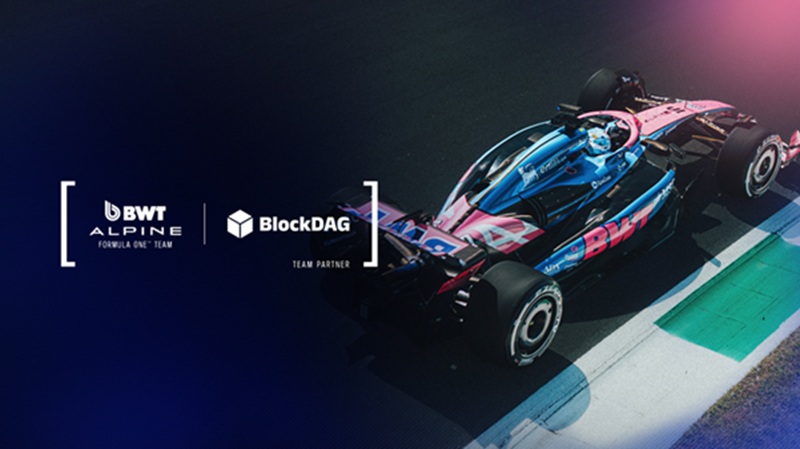
Yet, BlockDAG (BDAG) has stepped into an entirely new tier of recognition. With over $420 million raised, nearly 27 billion coins sold, and a presale price of $0.0012 in Batch 31 locked against a $0.05 listing, it stands out with a global-scale collaboration through the BWT Alpine Formula 1® Team. This partnership merges high-performance technology with unmatched global visibility, connecting BlockDAG to a billion viewers across motorsport platforms. For anyone asking which crypto to buy today, BlockDAG’s momentum clearly sets it apart.

PI Coin’s Possible 70% Rebound: A Second Chance at Growth?

PI Coin could be preparing for a strong rebound next year, as analysts expect a 70% rise once its mainnet launch gets closer. Its concept of allowing users to mine coins through mobile phones attracted huge participation from newcomers in crypto. Although it trails more established digital assets in market influence, PI’s recovery potential remains promising if sentiment across the crypto space strengthens.

Current holders might gain from renewed buying pressure, while new entrants could view it as a chance to join early growth phases. Still, caution remains essential. PI’s slow rollout, combined with uncertainty around its token model, has drawn criticism, leaving questions about long-term adoption unresolved.

Stellar (XLM) Nears a $0.41 Breakout Amid Strong Buying Support

Stellar (XLM) maintains a firm footing near $0.37, where persistent buyer activity keeps prices stable. This zone has served as reliable support for weeks, helping prevent further declines. Analysts suggest that a move above $0.41 could confirm a breakout pattern, potentially pushing prices toward $0.43 or $0.47. With growing transaction volume and institutional engagement, Stellar’s technical picture looks favorable.

For traders, this presents a strategic buying range since entry before confirmed breakouts typically captures upside momentum. However, if support at $0.37 gives way, a deeper correction could occur. Even so, with consistent backing from large-scale partnerships and expanding blockchain utility, Stellar holds appeal among those seeking short-term market opportunities.

BlockDAG’s Formula 1® Partnership Marks the Defining Moment of 2025

Each market cycle reveals one project that sets the tone for what’s next, and in 2025, that title seems to belong to BlockDAG. Its long-term partnership with the BWT Alpine Formula 1® Team represents a milestone beyond branding, serving as tangible proof of credibility on a global stage.

Formula 1® reaches over a billion fans worldwide, placing BlockDAG among top-tier names from finance and technology. Combining this global presence with its presale success of over $420 million, 27 billion coins sold, and a $0.0012 price in Batch 31 against a $0.05 listing, the project demonstrates rapid mainstream traction.

Whale participation is increasing, and community engagement is soaring through millions using the X1 mining app. This partnership validates BlockDAG’s expanding ecosystem and positions it as one of the most recognized names entering 2025. With a built-in 3,200% potential rise between the presale and confirmed exchange listing, it’s clear why many view BlockDAG as the standout crypto project heading into next year.

Wrapping Up

Comparing Pi Network (PI) growth, Stellar (XLM) outlook, and which crypto to buy today reveals a clear frontrunner. Pi continues to build grassroots attention but lacks proven scalability. Stellar remains dependable with real-world use cases but shows limited upside in the near term. BlockDAG, however, brings together adoption, technology, and unmatched visibility.

With over 3 million X1 miners, increasing whale activity, and a powerful Formula 1® partnership serving as its credibility anchor, BlockDAG transforms market recognition into tangible progress. Its presale, priced at $0.0012 in Batch 31 and set for a $0.05 listing, delivers a projected 3,200% growth potential. For those searching for which crypto to buy today, BlockDAG stands as the most decisive and visible signal for 2025.

Presale: https://purchase.blockdag.network

Website: https://blockdag.network

Telegram: https://t.me/blockDAGnetworkOfficial

Discord: https://discord.gg/Q7BxghMVyu