DD
MM
YYYY

PAGES

DD
MM
YYYY

spot_img

PAGES

Home Blog Page 3711

Ministry of Communication Launches ‘Project 774 LG Connectivity’ to Bridge Nigeria’s Digital Divide

0

In a significant stride towards bridging the digital gap and enhancing internet accessibility across Nigeria, the Ministry of Communications, Innovation, and Digital Economy has launched ‘Project 774 LG Connectivity.’ This ambitious initiative aims to tackle the issue of limited internet and digital access by connecting all 774 Local Government secretariats throughout the country to the internet.

The project launch was announced by Dr. Bosun Tijani, the supervising Minister of the Ministry, on Monday. Dr. Tijani said that ‘Project 774 LG Connectivity’ is in line with President Bola Ahmed Tinubu’s Renewed Hope Agenda and the strategic blueprint of the ministry. Its overarching goal is to promote inclusive development and ensure access to digital public infrastructure, even in the most remote areas of Nigeria that have been historically underserved or unserved.

Highlighting the broader impact of the project, Dr. Tijani stated, “Project 774 LG Connectivity will create at least 300 direct jobs as we deploy nationwide and potentially more jobs indirectly from the increase in digital access.” He underscored the project’s alignment with the ministry’s strategic goals and its crucial role in delivering efficient public services to citizens at the local government level.

Through strategic collaborations with the Nigerian Communications Satellite Limited and Galaxy Backbone, ‘Project 774 LG Connectivity’ aims to provide reliable and affordable internet access to local government offices. This initiative is not merely about connectivity but also about empowering these offices with the resources needed to enhance service delivery, promote transparency, stimulate economic growth, and foster better citizen engagement.

Dr. Tijani also addressed the issue of low demand for internet services outside major cities, which has hindered broadband infrastructure investment in certain areas.

“Private companies will tell you that there are parts of Nigeria that if they invested and put fibre optic cable, there are not enough customers there to bring a return on investment,” he said.

In response to this challenge, the Ministry is actively working to stimulate internet demand by ensuring that all public institutions across the country, including schools, hospitals, government offices, libraries, and markets, are connected.

This broader connectivity initiative seeks to address the low consumption of internet services and subsequently improve the return on investment for nationwide fiber network deployment.

Dr. Tijani’s announcement of ‘Project 774 LG Connectivity’ comes at a crucial time for Nigeria, as the country aims to leverage digital technologies to drive economic growth and foster social development.

Despite being the largest economy in Africa, Nigeria faces significant challenges in terms of internet accessibility, particularly in rural and remote areas. This lack of connectivity not only hampers access to information and essential services but also impedes economic progress.

According to recent statistics, Nigeria’s internet penetration rate stands at 55.4 percent in 2023, significantly lower than the global average. This disparity in internet access between urban and rural areas exacerbates existing inequalities and stifles the potential for inclusive growth. Dr. Tijani’s initiative seeks to address this digital divide by extending reliable internet connectivity to all 774 Local Government secretariats across the country.

The implications of limited internet access on Nigeria’s economy are profound. In today’s digital era, access to the internet is synonymous with access to opportunities. Without adequate connectivity, businesses struggle to reach new markets, entrepreneurs face barriers to innovation, and individuals are deprived of educational and employment prospects available online.

Furthermore, the lack of internet access in rural areas hampers agricultural productivity, inhibits e-commerce initiatives, and limits access to telemedicine and other vital services. This digital exclusion not only stifles economic development but also perpetuates social disparities, widening the gap between urban and rural communities.

By investing in projects like ‘Project 774 LG Connectivity,’ the Nigerian government aims to stimulate economic growth by fostering a conducive environment for digital innovation and entrepreneurship. Improved internet connectivity at the grassroots level will enable small businesses to thrive, facilitate the delivery of government services, and empower communities to participate in the digital economy.

Moreover, Dr. Tijani’s emphasis on job creation through this connectivity initiative underscores the potential for technology to drive employment opportunities and socioeconomic advancement. By creating 300 direct jobs and potentially more indirectly, ‘Project 774 LG Connectivity’ not only addresses the immediate need for connectivity but also contributes to long-term human capital development.

IMF Warns Nigeria’s Inflation May peak at 44% in 2024 as FX Crisis escalates

0

The International Monetary Fund (IMF) has issued a dire warning about Nigeria’s economic future, citing the potential for a staggering 44% inflation rate if significant monetary policy adjustments are not made by the Central Bank of Nigeria (CBN).

This cautionary forecast comes amid concerns over persistent pressure on the Nigerian naira and the looming threat of a climate shock in 2024.

According to the IMF’s recent post-financing assessment report, Nigeria faces a troubling sequence of events that could severely disrupt its economic stability. Insufficient tightening of monetary policy, coupled with ongoing pressure on the naira and the potential impact of adverse climate conditions, threatens to exacerbate inflationary pressures. The IMF projects a potential 35% depreciation of the naira in 2024, further contributing to inflationary challenges.

In a statement, the IMF outlined a downside scenario that includes insufficient monetary tightening, persistent pressure on the naira, and the occurrence of another adverse climate shock in early 2024. This scenario could lead to a decline in output, a surge in food prices, and a sharp rise in inflation, peaking at 44%.

“An adverse scenario of an inflation-depreciation spiral combined with a climate shock would increase risks to Nigeria’s capacity to repay the Fund,” noted the IMF. “Given the absence of local production and the recent liberalization of commodity imports, the exchange rate would likely depreciate further—by an estimated 35% in 2024—and contribute to a further sharp rise in inflation, peaking at 44%, before monetary policy is eventually tightened sharply.”

Despite these challenges, the IMF believes Nigeria will repay the Fund, assuming the prioritization of external debt service continues. However, the need to address urgent humanitarian concerns, including rising poverty and food insecurity, threatens this repayment capacity, which would necessitate significant trade-offs.

The uncertainty surrounding Nigeria’s net international reserves and the potential for further exogenous shocks adds additional risk to the country’s economic stability and citizens’ well-being.

Currency Woes and Inflation Surge

The Nigerian Naira has experienced a significant decline against the US Dollar in the FX market, closing the week at a concerning rate of N1,537.96/$1. This downturn is attributed to persistent demand pressures, which continue to erode the currency’s value. The situation is further underpinned by a dramatic 74% drop in forex turnover to $84.10 million, compounding the challenges facing the Naira. Both official and parallel market rates suffer from devaluation, casting a shadow over the nation’s economic stability.

Adding to Nigeria’s economic challenges, the National Bureau of Statistics (NBS) reported a significant surge in inflation to 29.90% for January 2024, up from 28.92% in the previous month. This increase in the headline inflation rate by 0.98% points compared to December 2023 highlights the persistent inflationary pressures plaguing the Nigerian economy.

The implications of rising inflation on the spending power of Nigerians are profound and far-reaching. As prices rise across the board, consumers find their purchasing power diminished, affecting their ability to afford essential goods and services.

Financial analysts warn that the current inflationary trend poses a significant challenge to the Nigerian populace. With prices soaring and wages stagnant, many households are finding it increasingly difficult to make ends meet. This situation not only impacts their standard of living but also exacerbates poverty levels and food insecurity.

Despite the CBN’s efforts to stabilize the currency through various foreign exchange policies and tightening monetary measures, the broad money supply in the country surged to a record N78.74 trillion as of December 2023, marking a 51% year-on-year increase from N52.16 trillion in 2022. This signals potential further inflationary pressures that threaten to diminish Nigerians’ purchasing power.

Financial experts have warned that the relentless rise in inflation coupled with the depreciation of the naira paints a bleak economic outlook for Nigeria. As the cost of living continues to surge, households will have to allocate more of their income towards basic necessities, leaving less room for discretionary spending. They said that this not only dampens consumer confidence but also hampers economic growth prospects in the long run.

Policy Dilemma and the Way Forward

The spotlight is now on the CBN’s first Monetary Policy Committee (MPC) meeting of 2024, anticipated next week. All eyes are on Governor Yemi Cardoso, who is expected to outline the central bank’s stance on interest rate hikes and its strategy to combat rising inflation. This meeting is critical, especially as Governor Cardoso’s policy direction might clash with President Bola Tinubu’s intention to lower interest rates in Nigeria, potentially igniting a policy conflict at a time when cohesive economic strategies are paramount.

The upcoming MPC meeting holds significant importance for Nigeria’s economic trajectory. Economists say it presents an opportunity for the central bank to reassess its monetary policy toolkit and implement measures aimed at curbing inflationary pressures.

However, they add that achieving consensus amid divergent policy preferences requires careful deliberation and consideration of the broader economic implications.

They further note that addressing these challenges requires coordinated efforts from policymakers, including decisive monetary policy actions, fiscal reforms, and targeted interventions to mitigate the adverse effects on vulnerable populations. Failure to act swiftly and effectively could exacerbate economic woes, undermining Nigeria’s growth prospects and jeopardizing its long-term stability.

BlockDAG Puts Up $2M Mega Giveaway  as Meme Kombat Presale Price Hits the $0.279 Mark Amid Pressure

0

In the latest crypto market frenzy, the Meme Kombat presale price has increased to $0.279 as the presale advances. On the other hand, the BlockDAG Coin (BDAG) witnessed a similar surge, rising from $0.0010 to $0.0015 within days as it moved to batch 2 of its presale. This surge occurred thanks to the great success of batch 1, raising $1 million in just 24 hours, which also propelled BlockDAG to start its $2 million mega giveaway and reward the community members. Let’s break down the event.

Meme Kombat: A Mix of Gaming and Crypto

Imagine yourself where you pick funny characters like Pepe the Frog and Spongebob Squarepants and make them fight. This is how Meme Kombat works and how it makes money. People like this idea, and the presale success is a good indicator.

Because each battle is regulated by artificial intelligence, the outcomes are entirely unpredictable. Meme Kombat combines gaming, cryptocurrency, and online casino elements, giving players a variety of reward possibilities and ways to acquire local MK tokens. As a result, it is much more than just a buy-and-sell token, distinguishing it from the vast majority of meme coins on the market.

Although MK is doing great in the presale, raising over $8 million and trading at $0.279 with a possible weekly surge, risks are still high when dealing with meme coins because of their volatile nature. Therefore, BlockDAG’s presale can offer an excellent chance for profitable and more stable investments.

Why is BlockDAG Presale Doing Great

The new crypto coins of 2024 have crashed against the high competition of BlockDAG’s presale. In its 1st presale batch, BlockDAG managed to raise $1 million in a time frame of 24 hours, which pushed the price up by 50%, driving the coin to the second batch. One BDAG coin that was priced at $0.0010 during the first batch has now jumped to $0.0015 within days! This fast success sparked FOMO among investors as they started wondering why BlockDAG has become an overnight sensation.

One reason is the inherent feature of this project – BlockDAG is a layer 1 blockchain technology, enabling scalable thorough output and fast confirmation. BlockDAG’s robust DAG technology prevents orphan blocks during ledger transactions while maintaining security.

As we witness the DeFi growth, BlockDAG jumps on the bandwagon with its model’s simplicity, making it user-friendly while also providing numerous levels of security that Proof of Stake currencies do not have. But that’s not the only reason behind this accomplishment. BlockDAG still has more things to offer.

Powerful Mining Rigs and the $2M Mega Giveaway

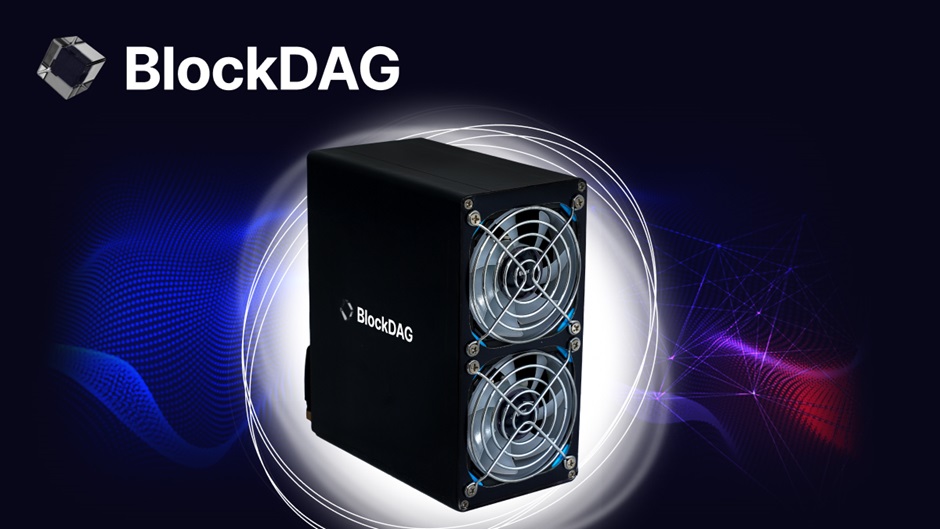
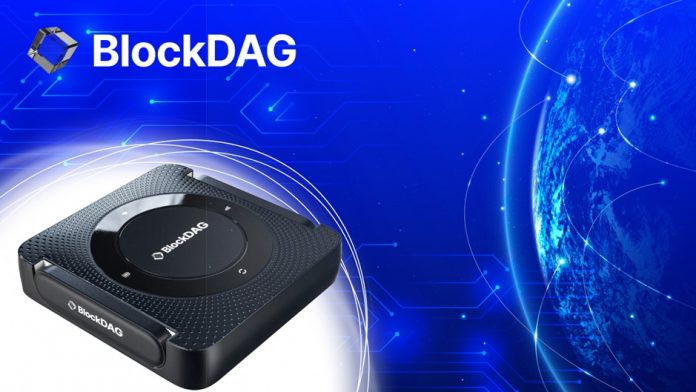
To make the mining industry more decentralised, BlockDAG has recently unleashed the X-Series crypto mining rigs that are meant to make a radical change in the field. This set starts with the BlockDAG x1 mobile mining app that is available for free on Google Play and App Store and can mine up to 20 BDAG coins daily. With this crypto’s price prediction going as high as $0.05 at the end of the presale, this mining capacity means one can make a daily profit of $1 upon launch.

Besides the software, BlockDAG has also unleashed three great hardware products: x10, x30, and x100. These three devices differ in size, power, and energy consumption, with the biggest one, x100, having a remarkable capacity to mine up to 2,000 BDAG coins per day worth $100 as the coin hits the launch price.

And to give the enthusiasm a further push, BlockDAG has just announced its $2 million mega giveaway. The project will splurge on the community in this event with 50 cash prizes. Participants should complete a few steps to get engaged, including following the social media channels, submitting their wallet addresses, completing the quests, and bringing their friends onboard to increase their chances. Later on, BlockDAG will announce the winners on its platforms.

Get in on BlockDAG’s $2M Giveaway

As the Meme Kombat presale price increases weekly, investors, especially the ones who know the fundamental nature of meme coins, still fear a reversal trend that may turn their finances upside down. Amid this, BlockDAG offers the chance for a constantly stable, ever-growing investment with its presale rally and the tremendous momentum it gives to the DeFi growth. With this inherent value, BlockDAG becomes volatility-proof, even if the whole market goes down.


Invest in BlockDAG Presale:

Presale: https://purchase.blockdag.network

Website: https://blockdag.network

Telegram: https://t.me/blockDAGnetworkOfficial

Discord: https://discord.gg/Q7BxghMVyu

The approval of spot Bitcoin ETFs: The story as it happened

0

Every year comes with new innovations and advances for the crypto industry and this one has been marked by the approval of the first spot Bitcoin exchange-traded funds. For the better part of 2023, the whole conversation around crypto was monopolized by speculations on this major development that many deemed crucial for the fate of digital currencies. It was said that the introduction of spot Bitcoin ETFs would enhance Bitcoin’s credibility and legitimacy as a financial tool and pave the way for widespread crypto adoption.

This would also increase investors’ confidence in Bitcoin’s potential which might drive the asset’s price higher. According to Binance, the Bitcoin price has suffered some notable fluctuations since the news broke out, but it’s still too soon to tell if these predictions were right or wrong. What we do know is that the debut of spot Bitcoin ETFs was without a doubt the most anticipated event in crypto’s recent history, and it didn’t unfold quite as expected.

So, now that we’ve finally passed this long-awaited threshold and we’re patiently waiting to gauge its effects, we can take a look back and see how it all went down.

How it started

Although many have only recently found out about spot Bitcoin ETFs, the launching of such a product has been a long time in the making. The decade-long journey started in 2013 when the co-founders of crypto exchange Gemini filed the first application with the U.S. Securities and Exchange Commission (SEC) for a spot Bitcoin ETF.

Other similar applications from the Winkelvoss brothers, Grayscale Investments, SkyBridge, Fidelity and Bitwise followed over the years but they were all met with a negative response from the SEC. The US financial watchdog rejected one filing after another on the grounds of a still immature crypto market and concerns over the risk of fraud and market manipulation. Greyscale proceeded to sue the agency after several rebuffed attempts at creating a spot Bitcoin ETF.

Then in 2022, the crypto winter took over the industry, causing crypto prices to drop from unprecedented highs and leading to the demise of many major crypto companies, including Celsius Network and Sam Bankman-Fried’s FTX. With stakeholders struggling to stay afloat during the crisis, efforts for launching a spot Bitcoin ETF were put on hold.

How it happened

2023 debuted with renewed hopes of an impending recovery for the crypto market. With crypto prices experiencing slow but constant gains, talks about spot Bitcoin ETFs were brought back into the spotlight. Cathie Woods’ ARK Investments was the first to resume the filings for spot Bitcoin ETFs, but it was BlackRock’s application in June that really set the course for what was about to come, prompting a new wave of optimism across the crypto market.

Shortly after BlackRock’s filing, the SEC was flooded with a flurry of proposals from other major asset managers, including Bitwise, VanEck, Wisdomtree, Invesco & Galaxy, and Fidelity. After a court in Washington D.C. ruled in favor of Grayscale, confirming that the SEC’s rejection was unjustified, the agency was required to reexamine the application. Much to the disappointment of many crypto enthusiasts, the SEC delayed decisions on these applications several times, but that only fed into the anticipation that the approval of a spot Bitcoin ETF might be just around the corner.

And that’s exactly what happened on January 10, when the SEC finally gave the green light for 11 applications, including from Grayscale, Hashdex, BlackRock, Valkyrie, Invesco, and Fidelity. However, the watershed moment was somewhat overshadowed by the confusion created one day before the official approval.

On January 9, a post appeared on the Securities and Exchange Commission’s X account (former Twitter) announcing that the agency granted their approval for spot Bitcoin ETFs for listing on all registered national securities exchanges. Several news outlets picked up the story and reported on the SEC’s historical decision, but it was shortly revealed that the news was fake and the post was taken down.

The SEC Chair Gary Gensler immediately announced that the agency’s X account was compromised and the post was not made by the SEC or its staff. New details emerged later, revealing that an unauthorized person gained access to an agency employee’s phone number associated with the account and posted the fake tweet.

One day after the incident, the SEC gave the green light for the first spot Bitcoin exchange-traded funds, but also made it clear that the approval does not equate to support for digital currencies and consumers should remain wary. While investigators have yet to find out who was behind the fake tweet, the mayhem that ensued tempered the enthusiasm and prompted people to verify the information from various sources.

How it’s going

As with all crypto developments so far, opinions on the approval of spot Bitcoin ETFs and their long-term effects on the crypto industry are divided. Some say the event ushered in a new era for digital currencies, bringing them one step closer to mainstream adoption. Others maintain a more skeptical view, claiming that the existence of spot Bitcoin ETFs won’t have much of an impact on the health and development of the market.

After the approval of the funds, the Bitcoin price experienced an initial spike but couldn’t maintain momentum. In the following weeks, the price continued to decline, briefly going under the $40K level. It could be that the excitement around spot Bitcoin ETFs started to wear off and investors rushed to make a profit by selling their funds. But it could also be the usual volatility of the crypto market causing prices to swing erratically.

Whether the debut of spot Bitcoin ETFs is going to push digital assets forward or not remains to be seen. All eyes are now turning to spot Ethereum ETFs as the next logical step in the industry’s development, so we can expect to see more interesting events coming this year.

Injective (INJ) Eyes 200% Breakthrough, Option2Trade (O2T) Revolutionary A.I Platform

0

The Injective Protocol (INJ) and Option2Trade (O2T) are gaining attention due to their potential for breakthroughs and revolutionary trading platforms. These developments signal the growth potential of individual tokens and the broader evolution of the cryptocurrency market into a more accessible, decentralized, and innovative financial ecosystem.

Option2Trade (O2T): A Paradigm Shift in Trading

Parallel to Injective Protocol’s  (INJ) rise, Option2Trade (O2T) is making waves with its revolutionary approach to trading. As a platform that integrates the versatility of O2T tokens with a wide array of trading pairs, Option2Trade (O2T) offers an unmatched level of liquidity and utility. This platform isn’t just for the seasoned trader; it’s designed to welcome new entrants to the market with an intuitive, user-friendly interface that demystifies the complexities of trading. The ability to use O2T tokens as collateral further enhances its appeal, providing a seamless trading experience that’s attracting a broad spectrum of investors. 

The Ascent of Injective Protocol (INJ)

Injective Protocol (INJ) is rapidly becoming a beacon for those invested in the future of decentralized finance (DeFi). With its ambitious goal of achieving a 200% breakthrough, Injective Protocol (INJ) is not just aiming for incremental growth; it’s on the brink of a major leap forward. This potential surge is backed by its robust ecosystem designed to facilitate fully decentralized trading without any barriers. By offering unparalleled access to DeFi applications, derivatives, and borderless trading, Injective Protocol (INJ) is positioning itself as a critical player in the push for a more open and accessible financial world.

Drawing Investor Interest

The trajectories of Injective (INJ) and Option2Trade (O2T) are garnering significant attention from investors worldwide. Injective Protocol’s (INJ) potential for a 200% breakthrough speaks to its growth potential in the rapidly expanding DeFi space. At the same time, Option2Trade’s (O2T) innovative trading platform represents a paradigm shift in how individuals access and engage with financial markets. This dual appeal is creating a buzz among investors eager to capitalize on these groundbreaking opportunities.

Why Investors Are Going Crazy

The excitement surrounding Injective Protocol (INJ) and Option2Trade (O2T) stems from their potential to deliver substantial returns. Injective Protocol’s (INJ) growth aspirations and Option2Trade’s (O2T) revolutionary platform offer a compelling case for investment. The appeal is especially strong for those looking to diversify their portfolios with assets that not only promise growth but also provide tangible utility and innovation. As both platforms continue to evolve and expand their offerings, the investor community is keenly watching, ready to be part of what could be one of the most significant growth stories in the crypto space.

The Future Looks Bright

The paths being forged by Injective Protocol (INJ) and Option2Trade (O2T) highlight the dynamic and transformative potential of the cryptocurrency market. Injective Protocol’s (INJ) ambitious 200% growth target and Option2Trade’s (O2T) commitment to revolutionizing the trading experience are not just drawing investor interest; they’re setting the stage for a new era in finance. As these platforms continue to gain traction, the excitement among investors is a testament to the widespread belief in their potential to reshape the investment landscape.

Injective Protocol (INJ) and Option2Trade (O2T) are two cryptocurrency companies that are poised to revolutionize the financial landscape. Injective Protocol’s  (INJ) is aiming for a 200% breakthrough, while Option2Trade’s (O2T) revolutionary platform is captivating investors. These entities are paving the way for unprecedented growth and are causing significant interest in the investment community.

For more information on the Option2Trade (O2T) Presale:

Use promo code O2TLaunch to get 15% bonus

Visit Option2Trade

Join and become a community member:

https://t.me/O2TOfficial

https://twitter.com/Option2Trade