DD
MM
YYYY

PAGES

DD
MM
YYYY

spot_img

PAGES

Home Blog Page 3727

Telegram launches in-App Crypto Wallet

0

Telegram, the popular messaging app, has announced the launch of an in-app crypto wallet that will allow its users to send and receive digital currencies. The wallet, called Telegram Wallet, is integrated with the app’s chat interface and supports multiple blockchains, including Bitcoin, Ethereum, and Telegram’s own TON network.

Telegram Wallet aims to provide a simple and secure way for users to access the world of cryptocurrencies and decentralized applications (DApps). Users can create a wallet with a few taps, without the need for any personal information or verification. They can then use their wallet to send and receive crypto payments, as well as interact with DApps and smart contracts on various platforms.

According to Telegram, the wallet is designed to be user-friendly and intuitive, with features such as QR codes, contact integration, and chatbot assistance. Users can also customize their wallet settings, such as choosing their preferred currency, network, and fee level. The wallet also supports biometric authentication and encryption to ensure the safety of users’ funds and data.
Telegram Wallet is the latest addition to Telegram’s ecosystem of services, which includes voice and video calls, group chats, channels, bots, stickers, and more. The app has over 500 million active users worldwide and is known for its focus on privacy and security. Telegram claims that its wallet will offer the same level of protection and anonymity to its users in the crypto space.

Telegram Wallet is currently available for Android devices and will soon be released for iOS devices as well. Users can download the latest version of Telegram from the Google Play Store or the App Store and start using the wallet right away.

Telegram trading bots have been making waves in recent months, attracting the attention of both investors and regulators. In this blog post, we will explore what these bots are, how they work, and what are the benefits and risks of using them. For the past ten weeks the Telegram bot narrative made waves. Unibot hit 85x, Loot bot moved to Base, unibot closed a partnership with OKX, Loot bot just partnered with FriendTech, these bots have handled over $190M in total trades.

Telegram trading bots are software applications that can execute trades on behalf of users based on predefined rules and market signals. They can help traders automate their strategies, save time, and optimize their profits. In this blog post, we will explore the benefits and challenges of using Telegram trading bots, as well as some tips on how to choose the best one for your needs.

Telegram trading bots typically rely on two types of inputs: market data and user commands. Market data can include price movements, volume, indicators, news, and other relevant information. User commands can include buy, sell, stop-loss, take-profit, and other trading parameters. You have an opportunity to Capitalize on this narrative.

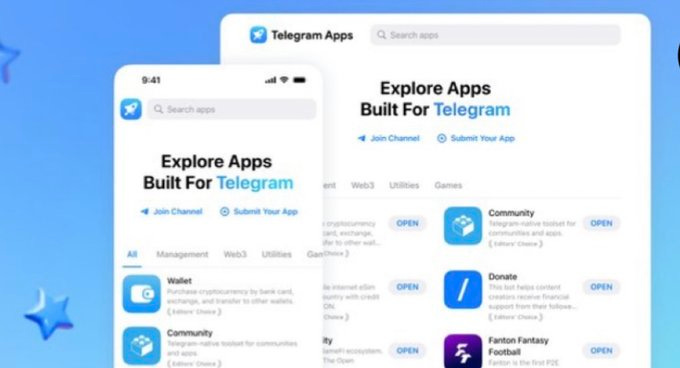
Telegram host almost twice the users on web3 on its platform, they’ve not just allowed this trading bots to run on their API, they’ve brought a web3 supper app to telegram. Telegram is following in WeChat’s footsteps by embracing a super app ecosystem. This move allows third-party developers to build mini apps within Telegram, eliminating the reliance on standalone websites Here’s what this implies 60% of CT traders can login to Dexscreen on telegram.

The bots use various algorithms and strategies to analyze the market data and generate trading signals. These signals can be either executed automatically by the bot or sent to the user for confirmation. The user can also monitor the bot’s performance and adjust the settings as needed.

Telegram trading bots offer several advantages for traders, such as:

Convenience: The bots can operate 24/7, without requiring constant supervision or intervention from the user. They can also access multiple markets and exchanges at once, increasing the opportunities for profit.

Speed: The bots can react faster than human traders to changing market conditions and execute trades in milliseconds, reducing slippage and latency.

Accuracy: The bots can eliminate human errors and emotions that can affect trading decisions, such as fear, greed, bias, and fatigue.

Scalability: The bots can handle large volumes of trades and data, without compromising their performance or accuracy.

Customization: The bots can be tailored to suit the user’s preferences, risk appetite, and trading goals. They can also be integrated with other tools and platforms, such as charting software, portfolio trackers, and social media.

Telegram trading bots are not without drawbacks, however. Some of the potential risks include:

Security: The bots may be vulnerable to hacking, phishing, malware, or other cyberattacks that can compromise their functionality or steal their funds. Users should always verify the legitimacy and reputation of the bot providers and use secure passwords and encryption methods.

Regulation: The bots may operate in unregulated or illegal markets that can expose their users to legal or financial consequences. Users should always check the local laws and regulations before using any bot service and comply with the relevant tax obligations and reporting requirements.

Performance: The bots may not perform as expected or promised by their providers, due to technical glitches, faulty algorithms, market manipulation, or unforeseen events. Users should always test the bot’s performance on a demo account before using it on a live account and monitor its results regularly.

Cost: The bots may charge fees for their services, such as subscription fees, commission fees, or withdrawal fees. Users should always compare the costs and benefits of different bot options and choose the one that offers the best value for money.
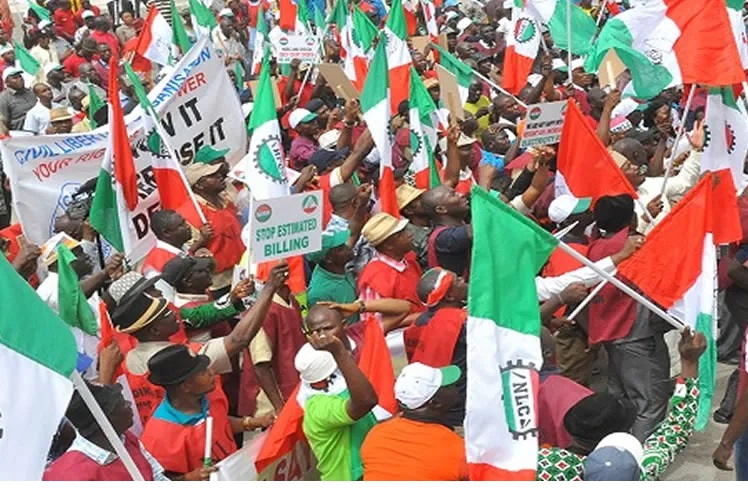
Organized Labour Suspends Proposed Nationwide Strike for 30 Days

0

Organized labor unions have suspended their planned nationwide indefinite strike action for the next one month, according to a memorandum released after a meeting between the federal government and the unions’ leaders.

The document was signed Monday by the NLC President, Joe Ajaero, General Secretary, Emmanuel Ugboaja, the TUC President, Festus Osifo, and Secretary General, Nuhu Toro. It also has the signatures of the Minister of Labour and Employment, Simon Lalong; Minister of State for Labour and Employment, Dr Nkeiruka Onyejeocha; and Minister of Information and National Orientation, Mohammed Idris.

“The NLC and TUC accept to suspend for 30 days the planned Indefinite Nationwide strike scheduled to begin, Tuesday, the 3rd of October, 2023,” the MoU reads in part.

“The Federal Government grants a wage award of N35,000 (thirty-five thousand Naira) only to all Federal Government workers beginning from the month of September pending when a new national minimum wage is expected to have been signed into law.”

The federal government on Sunday, unveiled measures aimed at tackling biting economic hardship emanating from fuel subsidy removal, following a threat by the Nigerian Labour Congress (NLC) and the Trade Union Congress (TUC) to embark on indefinite nationwide strike on Wednesday.

The labor unions said they would consider government’s offer and determine whether to suspend the strike or not, after consultation with stakeholders.

However, after an hours-long meeting with the federal government’s representatives on Monday, the decision to suspend the proposed strike was announced.

Read the full memorandum of understanding below:

MEMORANDUM OF UNDERSTANDING REACHED BETWEEN THE FEDERAL GOVERNMENT OF NIGERIA AND THE NIGERIA LABOUR CONGRESS (NLC) AND TRADE UNION CONGRESS OF NIGERIA (TUC) AS A RESULT OF DISPUTE ARISING FROM WITHDRAWAL OF SUBSIDY ON THE PRICE OF PREMIUM MOTOR SPIRIT (PMS) ON MONDAY, THE 2ND DAY OF OCTOBER, 2023

Arising from the withdrawal of subsidy on Premium Motor Spirit (PMS) by the Federal Government and the resultant increase in the price of the commodity, the Nigeria Labour Congress (NLC) and the Trade Union Congress (TUC) issued a strike notice which had elapsed and they were poised to embark on a strike billed to commence on Tuesday, the 3rd of October, 2023. Consequently, a meeting was called by the Federal Government to avert the strike and after much discussion, the following agreements were reached:

  1. The Federal Government grants a wage award of N35,000 (thirty-five thousand Naira) only to all Federal Government workers beginning from the month of September pending when a new national minimum wage is expected to have been signed into law.
  2. A minimum wage committee shall be inaugurated within one month from the date of this agreement.
  3. Federal Government suspends collection of Value Added Tax (VAT) on Diesel for six months beginning from October, 2023.
  4. Federal Government accepts to vote N100 billion for the provision of high capacity CNG buses for mass transit in Nigeria. Provisions are also being made for initial 55,000 CNG conversion kits to kick start an auto gas conversion programme, whilst work is ongoing on state-of-the-art CNG stations nationwide. The rollout aims to commence by November with pilots across 10 campuses nationwide.
  5. The Federal Government plans to implement various tax incentive measures for private sector and the general public.
  6. On the leadership crises rocking the NURTW and the purported proscription of RTEAN, the Federal Government commits to handling Labour matters in line with relevant ILO Conventions and Nigerian Labour Acts. A resolution of the ongoing impasse is expected by or before October 13.
  7. The issue of outstanding Salaries and Wages of Tertiary Education workers in Federal-owned educational institutions is being referred to Ministry of Labour and Employment for further engagement.
  8. The Federal Government commits to pay N25,000 per month for three months starting from October, 2023 to 15 million households, including vulnerable pensioners.
  9. The Federal Government will increase its initiatives on subsidized distribution of fertilizers to farmers across the country.
  10. The Federal Government should urge State Government through the National Economic Council and Governors Forum to implement wage award for their workers. Similar consideration should also be given to local government and private sector workers.
  11. The Federal Government commits to the provision of funds as announced by the President on the 1st of August broadcast to the Nation for Micro and Small Scale Enterprises. The MSMEs beneficiaries should commit to the principle of decent jobs.
  12. A joint visitation will be made to the refineries to ascertain their rehabilitation status.
  13. All parties commit to henceforth abide by the dictates of Social dialogue in all our future engagements.
  14. The NLC and TUC accept to suspend for 30 days the planned Indefinite Nationwide strike scheduled to begin, Tuesday, the 3rd of October, 2023.
  15. This Memorandum shall be filed with the relevant Court of competent jurisdiction within one (1) week as consent judgment by the Federal Government.

Signed:

NLC:

Comrade Joe Ajaero

President NLC

Comrade Emmanuel Ugboaja, mni

General Secretary

TUC:

Comrade (Engr) Festus Osifo

President

Comrade Nuhu A. Toro

Secretary General

Federal Government:

H.E. Simon Bako Lalong

Honourable Minister of Labour and Employment

Hon. Dr Nkeiruka Onyejeocha

Honourable Minister of State for Labour and Employment

Mallam Mohammed Idris

Honourable Minister of Information and National Orientation

‘You Cannot Float A Currency You Don’t Supply’, Peter Obi Faults FX, Fuel Subsidy Reforms

0

The presidential candidate of the Labour Party (LP) in the 2023 general election, Peter Obi, has faulted the decision of the Central Bank of Nigeria (CBN) to float the FX market, arguing that the Nigerian government cannot float a currency it doesn’t supply.

He also took a swipe at the way the Federal Government removed the fuel subsidy. The former Anambra State governor said the government should have removed the criminality and corruption that characterized the implementation of the fuel subsidy policy rather than the subsidy itself. He criticized the Tinubu-led government for removing the fuel subsidy without having adequate and properly structured palliatives put in place to cushion its effects on Nigerians.

Peter Obi said this during an interview on an AriseTV News programme, Morning Show, on Monday, where he explained that he would have devalued the naira instead of floating it.

He said “You can’t float a currency you don’t have supply… It’s like building a non-gated house in a criminal-ridden society. You have to have a defense mechanism. Nobody floats what you don’t have a supply of.

“Nobody floats his currency without having adequate supply. When you don’t have adequate supply, there were pressures, there was criminality in our exchange rate regime. Again, we should have worked on eliminating those criminality and excesses in our foreign exchange regime because there are strong unmet demands.

“The naira was under pressure and a bit overvalued, everybody knew that. So, what he would have done was to devalue the currency. We were at N412 before now.

“Devaluation to about N600 or thereabout will have been it, while trying to manage the supply by making sure that we deal with issues. What controls your exchange rate? It’s a simple thing, it’s your reserve. And what controls your reserve is your export. You have avenues and things that you will have exported; you’re supposed to export from your oil to other minerals to everything.”

Talking about the removal of fuel subsidy, Obi said “We are suffering from what is called, ANNOUNCEMENT EFFECT. The removal of fuel subsidy was not thought through. It showed limited thinking, that’s why it’s having limited outcomes.”

Obi said the best approach would have been to collaborate with various stakeholders to find a way to remove the fuel subsidy in an organized manner and ensure that the proceeds from its removal would be invested in critical development areas. He added that he would have removed the excess demand that is not factual, thereby reducing our fuel consumption in the country by 50%.

He said, “I have always said we are consuming far above what we should be consuming. Our consumption is just about half of what it is. For me, the approach would have been to remove the corruption and criminal side of the fuel subsidy.

“Remove the excess demand that is not factual and by doing this, you would have reduced it to like 50%. The remaining 50% is what would have been able to, after consultations with various stakeholders, find a way in an organized manner, to remove and ensure the proceeds of the removal are invested in a critical development area.

“When you do it in an organized manner, with proper palliatives that are well structured, not done haphazardly, you would have been able to see Nigerians go along with you.

“Policies like this are not what you just announce haphazardly. They are things you talk through and that’s what we would have done in the Labour Party.

“What this government has been doing since inception, are announcements with limited thinking which again produces limited outcomes. There must be a coordination between the federal, the state and the local governments in trying to pull through this difficult time.”

The Labour Party’s candidate emphasized the need to reduce the use of the US dollar within Nigeria to strengthen the Naira. He noted that the US dollar has become widely circulated in the country, almost like an underground currency. By reducing reliance on foreign currencies and promoting the use of the Naira, the candidate believes that Nigeria can work towards stabilizing its currency and improving economic conditions.

“The dollar has become what you can call an underground currency of our economy. it shouldn’t be. We have a currency called Naira. All these things that people are using dollar to do which is not productive should be removed and I can tell you it will strengthen the currency.

“Today if people want to do a party primary, they would share dollar. That is not our country’s currency and that should warrant a penalty,” he said.

Paradigm Accuses US SEC of Overstepping its Regulatory Boundaries with Suit on Binance

0

Paradigm, a leading crypto investment firm, has criticized the Securities and Exchange Commission (SEC) for its excessive and unwarranted intervention in the affairs of Binance, the world’s largest cryptocurrency exchange. Paradigm argues that the SEC is overstepping its regulatory boundaries and imposing unreasonable demands on Binance, which could harm the innovation and growth of the crypto industry.

The Securities and Exchange Commission (SEC) has recently issued a series of requests to Binance, the world’s largest cryptocurrency exchange by trading volume, as part of its ongoing investigation into the company’s compliance with U.S. securities laws. The requests, which were first reported by Bloomberg, seek information on various aspects of Binance’s operations, such as its customers, transactions, listings, and internal controls.

The SEC is particularly interested in whether Binance has allowed U.S. investors to trade securities-like products, such as tokenized stocks and derivatives, without registering them with the regulator. Binance has denied any wrongdoing and said it is cooperating with the SEC’s inquiries. However, the requests could signal a potential enforcement action against the exchange, which has faced increased scrutiny from regulators around the world in recent months. In this blog post, we will examine the possible implications of the SEC’s requests for Binance and the crypto industry at large.

According to Paradigm, the SEC is acting beyond its jurisdiction by requesting extensive and intrusive information from Binance, such as customer data, trading records, internal communications, and compliance policies. Paradigm claims that the SEC has no authority to regulate Binance, which is not based in the US and does not offer securities or derivatives to US investors. Paradigm also asserts that the SEC is violating the principles of international comity and cooperation by interfering with Binance’s operations in other countries.

Paradigm contends that the SEC’s actions are motivated by a protectionist agenda and a fear of losing control over the financial system. Paradigm believes that the SEC is trying to stifle the competition and innovation that Binance represents, and to preserve the dominance of traditional financial institutions. Paradigm warns that the SEC’s approach could have negative consequences for the crypto industry and the global economy, as it could discourage innovation, reduce consumer choice, and create regulatory uncertainty.

According to a report by Bloomberg, the SEC’s investigation is focused on whether Binance has violated any securities laws or regulations in its dealings with U.S. investors and regulators. The SEC is also interested in how Binance handles the listing and trading of various digital assets, including tokens that may be considered securities or derivatives under U.S. law.

Binance has not publicly confirmed or denied the existence of the SEC probe but has stated that it cooperates with all regulatory inquiries and takes its compliance obligations seriously. Binance has also claimed that it does not offer any products or services to U.S. residents, and that it uses advanced technology to prevent unauthorized access from restricted jurisdictions.

However, some experts and analysts have questioned Binance’s claims of having no presence or customers in the U.S., citing evidence of its links to Binance.US, a separate entity that operates under a license from Binance and offers similar services to U.S. users. Moreover, some reports have suggested that Binance may have allowed U.S. investors to bypass its geo-restrictions by using virtual private networks (VPNs) or other methods to mask their locations.

The SEC’s investigation into Binance is part of a broader crackdown on the cryptocurrency industry by the U.S. regulator, which has been ramping up its enforcement actions and guidance in recent months. The SEC has sued several crypto firms and individuals for allegedly conducting unregistered securities offerings, fraud, or market manipulation, and has issued warnings to investors about the risks and challenges of investing in digital assets.

The outcome of the SEC’s probe into Binance could have significant implications for the future of the crypto exchange and the industry as a whole, as it could result in fines, sanctions, or legal actions against Binance or its executives. It could also affect the regulatory landscape and expectations for other crypto platforms and participants, especially those that operate across multiple jurisdictions and serve a global customer base.

Paradigm urges the SEC to reconsider its stance and to adopt a more constructive and collaborative attitude towards Binance and the crypto industry. Paradigm suggests that the SEC should engage in dialogue with Binance and other stakeholders and seek to establish clear and consistent rules that foster innovation and protect consumers. Paradigm also calls on the crypto community to support Binance and to resist the SEC’s overreach.