DD
MM
YYYY

PAGES

DD
MM
YYYY

spot_img

PAGES

Home Blog Page 3728

Germany hits 2% NATO target for first time since 1992

0

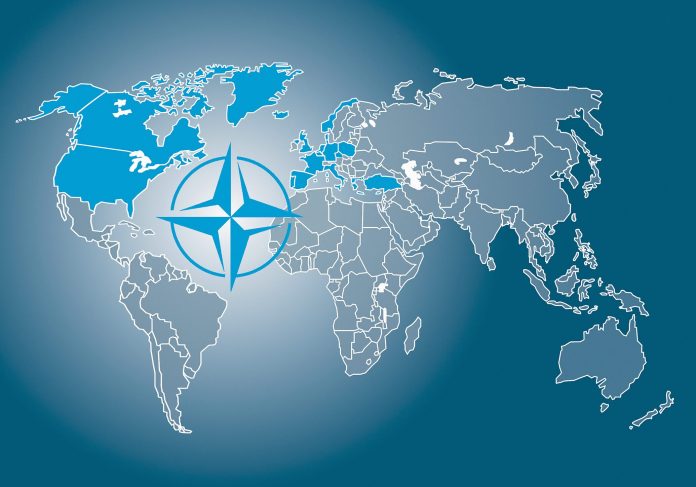
Germany has achieved NATO’s goal of spending 2% of its gross domestic product (GDP) on defense in 2024. This is the first time since 1992 that Germany has exceeded this mark. In doing so, Germany is fulfilling a long-standing demand from the United States and other NATO partners, who have demanded more commitment from Europe’s largest economy.

The increase in defence spending is part of the German government’s strategy to strengthen security and stability in Europe and beyond. In recent years, Germany has expanded its military capabilities, increased its participation in international missions and deepened its cooperation with other NATO members and partners.  Germany has also taken a leading role in the development of a common European defence policy to complement NATO.

The Federal Government emphasizes that the achievement of the 2% target is not an end in itself, but an expression of the responsibility and solidarity that Germany bears as a member of the transatlantic alliance. The German Government is committed to the principle that burden-sharing within NATO cannot be measured by a single indicator, but that other factors such as the quality, efficiency and operational readiness of the armed forces must also be taken into account.

The German government is aware that the increase in defence spending also requires a social debate about Germany’s role in the world. The Federal Government is therefore committed to a broad dialogue with citizens, parliament, the media and civil society organizations in order to promote understanding and support for German security and defence policy.

Germany’s role in the development of a common European defence policy has been multifaceted and constructive. Germany has supported the creation and enhancement of various EU defence instruments and initiatives, such as the Common Security and Defence Policy (CSDP), the Permanent Structured Cooperation (PESCO), the European Defence Fund (EDF) and the Coordinated Annual Review on Defence (CARD). Germany has also participated in numerous EU military and civilian missions and operations, ranging from peacekeeping in Bosnia and Kosovo to training in Mali and Somalia. Germany has also advocated for a stronger strategic dialogue and cooperation between the EU and NATO, as well as for a more inclusive and balanced transatlantic partnership.

However, Germany’s role in the development of a common European defence policy also faces some challenges and limitations. Germany’s constitutional and political constraints limit its ability to deploy military forces abroad and to increase its defence spending. Germany’s public opinion is often skeptical or indifferent towards EU defence matters and prefers NATO as the primary security provider.

Germany’s bilateral and multilateral relations with other key actors, such as France, the UK, Turkey and Russia, are sometimes strained or divergent on various security issues. And Germany’s vision of a common European defence policy is not always shared or supported by other EU member states, who have different threat perceptions, strategic cultures and interests.

Despite these challenges, Germany’s role in the development of a common European defence policy remains crucial and positive. Germany has shown leadership and initiative in advancing the EU defence agenda, especially during its presidency of the Council of the EU in 2020.

Germany has also demonstrated pragmatism and flexibility in finding compromises and solutions among diverse and sometimes conflicting views and preferences within the EU. And Germany has maintained its loyalty and solidarity with NATO, while seeking to enhance the complementarity and coherence between the two organizations.

Germany has taken a leading role in the development of a common European defence policy to complement NATO, because it believes that this is in its own interest, as well as in the interest of Europe and the transatlantic community.

Germany’s role is not without challenges or limitations, but it is also not without achievements or potential. Germany will continue to play an important and constructive role in this endeavor, as long as it remains committed to its values, principles and partners.

The German Government is convinced that Germany can only be a credible and reliable partner if it defends its interests and values by both diplomatic and military means.
Nvidia Overtakes Amazon in Market Value With $1.78 Trillion Valuation

0

American multinational Technology company, Nvidia, has overtaken e-commerce giant Amazon, in market value.

The world leader in Artificial Intelligence Computing on Tuesday hit a market valuation of $1.78 trillion, versus Amazon’s valuation of $1.75 trillion. This saw the company become the fourth most valuable US-listed company, driven by the increasing demand for its chips used in AI computing.

Despite Amazon’s significant performance, Nvidia’s stock rose by over 246% in the past year, as analysts predict a 118% annual sales growth for Nvidia, with the next earnings report due on February 21, 2023.

Speaking on Nvidia’s recent increase in valuation, Head of Equity at Saxo Bank, Peter Garnry said,

Amazon was actually among the winners in the current earnings season as Amazon’s outlook is improving. Nvidia is just riding the first investment wave of the current AI boom with massive capital expenditures being deployed in data centers”.

It is worth noting that Nvidia has been an outstanding performer this year, adding more than $560 billion, nearly the entire value of Tesla to its market cap, and rising just under 50% from late December.

After remaining range-bound in the second half of 2023, Nvidia’s shares have been surging in the new year, amid signs that demand remains strong for its chips used in data centers for complex computing tasks required by Al applications.

Notably, the AI company has added about $600 billion in market value so far this year, more than it gained in the last seven months of 2023.

Nvidia has had complete freedom of the AI landscape, as they have taken advantage of business-savvy investments and focused approaches that enable them to dominate their market.

This has led to a surge in artificial intelligence investment from several tech companies, particularly from large cloud-computing-service providers, which has accelerated interest in Nvidia, given its dominant market position in the chips that drive Al technologies.

The GPU maker has been at the forefront of the Al industry since the generative Al boom, with its advanced Al chips powering Al products and services. According to a report by Reuters, Nvidia will establish a new business unit for custom Al chips. As companies look for alternatives to Nvidia’s standardized Al chips, it potentially opens the door for competitors that can help create these custom chip designs.

Nvidia’s custom chip unit will try to prevent market share leakage by working with customers looking for alternatives to Nvidia’s standardized chip products.

As the world leader in Artificial Intelligence Computing  continues to forge deeper into the AI space, it recently released an artificial intelligence (Al)-powered chatbot called Chat with RTX that runs locally on a PC and does not need to connect to the Internet.

Calling it a personalized Al chatbot, Nvidia released the tool on Tuesday. Users intending to download the software will need a Windows PC or workstation that runs on an RTX 30 or 40-series GPU with a minimum of 8GB VRAM. Once downloaded, the app can be installed with a few clicks and be used right away.

AFCON 2023 was watched by 2 billion people worldwide

0

The 34th edition of the Africa Cup of Nations (AFCON) was held in Ivory Coast from January 9 to February 6, 2023. The tournament featured 24 teams competing for the continental glory. Here are some of the highlights and takeaways from the event.

The African Cup of Nations (AFCON) is the most prestigious football tournament in the continent, featuring 24 teams competing for the coveted trophy.

It is a showcase of the talent, passion and resilience of the African people. It is a spectacle of joy, drama and emotion that captivates millions of fans around the world.

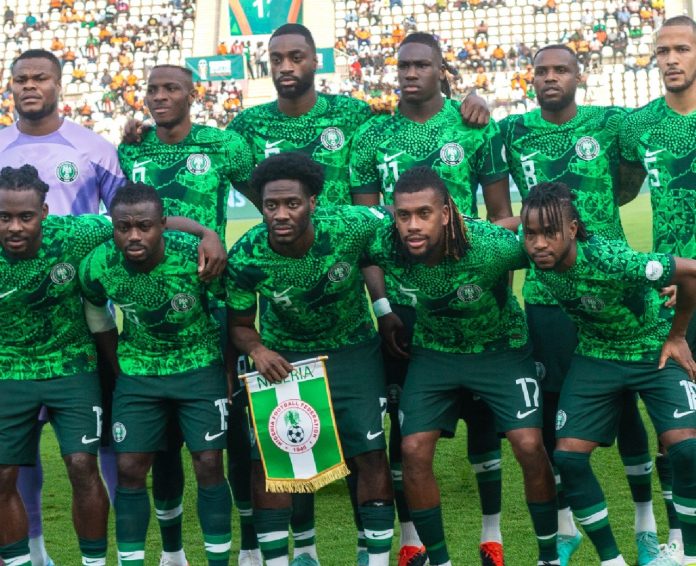
The 2023 edition, hosted and won by Ivory Coast, was a spectacular event that attracted a record-breaking audience of 2 billion people worldwide, according to FIFA.

The success of AFCON 2023 was not only a celebration of sport, but also a testament to the resilience and unity of Africa amid the challenges posed by the COVID-19 pandemic. The organizers, sponsors, and volunteers worked tirelessly to ensure the safety and well-being of all participants and spectators. The host nation, Ivory Coast, also demonstrated its hospitality and cultural diversity, welcoming visitors from all over the world with open arms.

The AFCON has a long and illustrious history, dating back to 1957 when it was first held in Sudan with only three participants: Egypt, Ethiopia and Sudan. Egypt won the inaugural edition and went on to become the most successful team in the tournament’s history, with seven titles to their name.

Other teams that have left their mark on the AFCON include Cameroon, Ghana, Nigeria, Ivory Coast, Algeria and Senegal. The current holders are Algeria, who defeated Senegal 1-0 in the 2019 final in Egypt.

The AFCON is also a platform for individual brilliance, where legends are born, and stars are made. Some of the greatest players in African and world football have graced the AFCON with their skills, such as Abedi Pele, Roger Milla, George Weah, Samuel Eto’o, Didier Drogba, Yaya Toure and Mohamed Salah. The AFCON also offers an opportunity for emerging talents to shine and attract attention from bigger clubs and leagues.

Nigerians boost popularity of 2023 AFCON

The 2023 Africa Cup of Nations (AFCON) was one of the most watched and attended editions of the continental tournament, thanks to the efforts of Nigeria. The Super Eagles, who have won the trophy three times and finished third in the last edition, have been instrumental in promoting the event and attracting sponsors and fans.

Nigeria have been using their social media platforms, such as Twitter, Instagram and Facebook, to share updates and news about the AFCON, as well as engaging with their followers and supporters. They have also been featuring in various media outlets, such as radio, television and podcasts, to talk about their preparations and expectations for the tournament.

Nigeria’s efforts have not gone unnoticed by the Confederation of African Football (CAF), the organizers of the AFCON. CAF President Patrice Motsepe praised Nigeria for their contribution to the success of the event, saying that they have set an example for other teams to follow. He also thanked Nigeria for their cooperation and support, especially in dealing with the challenges posed by the COVID-19 pandemic.

AFCON 2023 was more than just a football competition. It was a showcase of Africa’s potential, talent, and spirit. It was a reminder that football is more than just a game. It is a force for good that can bring people together and inspire positive change.

The Poison Pill of Selling Nigeria’s Crude Oil in Naira

0

It was an unmistakable political advertisement: a factory man explains how Mitt Romney (competing against Obama for the US presidency) had asked them to build a stage, and how Romney later came, and fired all of them while standing on that stage. How do you ask people to build a stage so that you can be visible as you fire them? The message was politically lethal. (The advert below)

That takes me to a new hypothesis on the future of Nigeria’s economy. Yes, why not just collect Naira when you ship oil – and forever abandon the US dollars?  Femi Falana posits: “Human rights lawyer Femi Falana has urged the Nigerian government to adopt a radical economic strategy to strengthen the naira against the dollar. In a recent appearance on Channels Television’s Politics Today program on Tuesday, Falana advocated for Nigeria to join the BRICS economic bloc…He suggested that selling Nigerian crude to foreigners in naira rather than in US dollars could bolster the country’s currency.”

Aso Rock, over to you! This is indeed a new perspective because he posits that we need more Naira, and not actually more US dollars, and by doing that, we can disintermediate US dollars. I do not buy into that because if you collect Naira for crude oil, you will still need US dollars to import toothpicks, TV sets, SUVs, private jets, etc. For this to work, it means our factories and warehouses (the modern and the old) must be firing.

Simply, if we try what Mr. Falana is proposing, Nigeria will crash because this is nothing but a poison pill: take it and die even though it may appear to be helpful at the beginning.

Human rights lawyer, Femi Falana, Urges Nigeria to Join BRICS, sell oil in naira

Human rights lawyer, Femi Falana, Urges Nigeria to Join BRICS, sell oil in naira

1

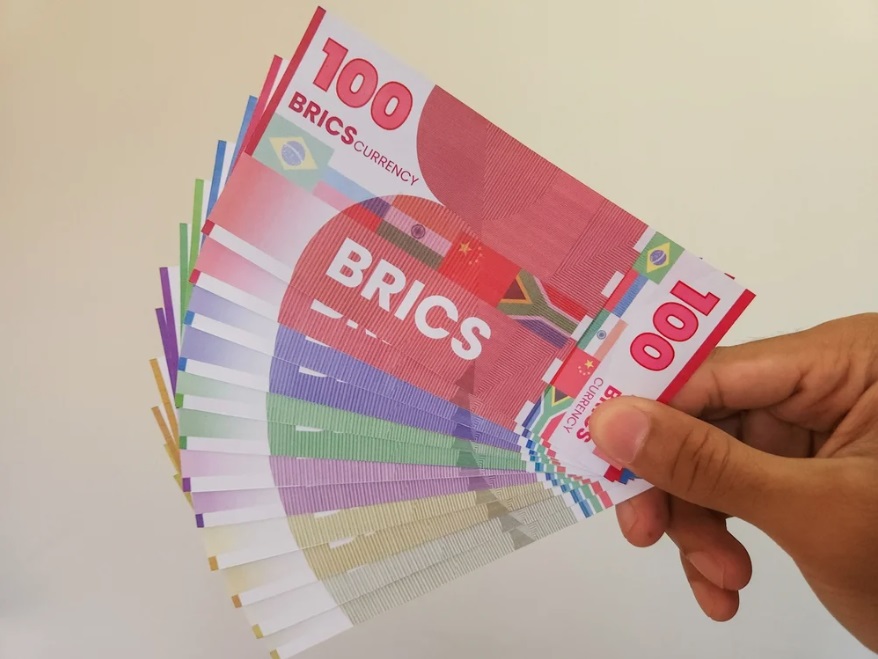
Human rights lawyer Femi Falana has urged the Nigerian government to adopt a radical economic strategy to strengthen the naira against the dollar. In a recent appearance on Channels Television’s Politics Today program on Tuesday, Falana advocated for Nigeria to join the BRICS economic bloc, comprising Brazil, Russia, India, China, and South Africa.

“There are countries in the world today insisting that we are not going to be tied to the American dollars and those countries are in the BRICS – Brazil, Russia, India, China and South Africa,” he said

He suggested that selling Nigerian crude to foreigners in naira rather than in US dollars could bolster the country’s currency.

Falana’s call to join BRICS comes amid Nigeria’s struggle to stabilize its currency and manage foreign exchange reserves effectively. According to Falana, participating in BRICS would enable Nigeria to trade in naira, reducing its dependence on the US dollar.

Last August, Vice President Kashim Shettima attended the 15th BRICS Summit in South Africa where he stated that Nigeria had not applied to join the economic bloc. The BRICS group is considered to be a counterweight to Western powers like the United States.

Last August, Vice President Kashim Shettima attended the 15th BRICS Summit in South Africa where he stated that Nigeria had not applied to join the economic bloc. The BRICS group is considered to be a counterweight to Western powers like the United States.

BRICS has been seeking ways to ditch the US dollar in trades facilitated among its members. For instance, India has reportedly started paying for Russian oil through rupee and ruble exchange. Falana believed that joining the bloc could be a way out of Nigeria’s struggle to save the naira from total collapse.

“Others are joining them; Saudi Arabia has joined them. UAE, Ethiopia, Egypt and all that. We cannot be more Catholic than the Pope. If friends of the West are joining BRICS, why are we not there? So that we can trade in naira,” he noted.

The Senior Advocate of Nigeria (SAN) also criticized the government, stating that it is dancing around the problem. Recently, the Central Bank of Nigeria (CBN) has been releasing a plethora of policy circulars, designed to change the nation’s current FX trajectory for good. Falana said the circulars won’t solve the forex challenges.

“If I had my way, my own radical policy would be that: I would sell Nigerian gas and crude oil in naira. Let those who want to buy our products look for naira. That is how to promote your currency.

“But this business of everybody looking for dollars even to pay school fees, rent houses, and sell houses. It doesn’t happen unless you dollarize your economy. These are the issues the government would have to address to come out of this economic doldrums,” he said.

But economic experts have faulted this advice, saying that the Falana as a human rights lawyer, “does not understand the economics of Nigerian trade.”

“Nigeria is currently facing a shortage of $ to import, selling oil in local currency Naira is meaningless as a strong naira incentivizes more imports draining whatever monetary reserves exist,” Financial analyst Kalu Aja said.

In addition to his call for Nigeria to join BRICS, Falana criticized the Nigerian government’s reliance on economic policies dictated by institutions like the International Monetary Fund (IMF) and the World Bank. He urged the government to discard what he termed “deleterious policies” imposed by these institutions, such as increasing electricity tariffs and removing petrol subsidies.

Falana argued that such measures, recommended by the IMF and the World Bank, were detrimental to Nigeria’s socio-economic climate.

“There is no society in the world where government does not subsidize one product or the other even in the most advanced capitalist societies. And that is why Nigerians must begin to ask the government to discard and jettison the deleterious programmes and policies of the IMF and the World Bank,” Falana stated.

Highlighting the role of the National Economic Council, Falana emphasized its significance in advising the President on economic matters. He criticized the government for allegedly abdicating its responsibilities to international financial institutions, arguing that the Bretton Woods bodies were established by imperialists to undermine the economies of developing nations.

“The only economic body recognized by the constitution to advise the President is the National Economic Council headed by the Vice President and peopled by the state governors, Governor of the Central Bank and the Minister of Finance.”

Falana condemned the disparity between the treatment of developed countries, which receive subsidies, and the expectations placed on developing nations to adhere to strict economic policies.

In addition to his advocacy on economic policies, Falana has taken legal action to address socio-economic challenges in Nigeria. He recently filed a lawsuit compelling the federal government to regulate the soaring prices of goods and services. Falana expressed his intention to pursue further legal action should the government fail to meet the deadline set by the courts for addressing price regulation.

Falana’s proposals and actions reflect growing concerns over Nigeria’s economic trajectory and the government’s approach to addressing key issues. With inflationary pressures, foreign exchange constraints, and social unrest looming, his calls for alternative economic strategies and legal interventions denote the need for urgent reforms to stabilize the Nigerian economy and improve the welfare of its citizens.