DD
MM
YYYY

PAGES

DD
MM
YYYY

spot_img

PAGES

Home Blog Page 373

Google Asks Court to Allow Integration of Gemini As U.S. Antitrust Remedies Threaten Its AI Ambitions

0

Google is mounting a fierce defense in court to prevent sweeping restrictions that could limit its dominance in search and curb its expansion into artificial intelligence.

The company, already found guilty of monopolizing the search market, is now fighting to ensure new court-ordered remedies do not undermine its efforts to integrate its Gemini AI app with other Google services such as YouTube and Maps.

At a hearing in Washington on Wednesday, Google attorney John Schmidtlein urged U.S. District Judge Amit Mehta not to impose restrictions that would prevent the company from bundling Gemini with its most popular apps. Schmidtlein argued that the court should treat AI differently from search, warning that overly broad remedies could stifle innovation in an emerging market.

“Maps and YouTube aren’t monopoly products,” he told the court. “There’s no notion that Google has to date gained monopoly or market power” in AI.

Judge Mehta, however, expressed skepticism, pointing out that requiring device manufacturers to install Gemini as a condition for accessing YouTube and Maps could give Google undue leverage—similar to the tactics that once allowed it to dominate search distribution channels.

“That leverage,” Mehta said, “could recreate the same kind of dominance we are trying to correct.”

The hearing is part of the remedies phase of a landmark antitrust case in which Mehta ruled last year that Google unlawfully maintained its monopoly in online search. The Justice Department had accused the company of using exclusionary contracts with device makers, browser vendors, and carriers to make Google the default search engine on billions of devices. Those deals, the DOJ argued, shut out rivals such as Microsoft’s Bing and DuckDuckGo by denying them crucial distribution channels.

In his ruling, Mehta agreed with the DOJ, concluding that Google’s dominance was preserved not by superior products but by restrictive agreements that made competition nearly impossible. The case, filed under Section 2 of the Sherman Act, became the most significant U.S. antitrust challenge since the government’s action against Microsoft in the late 1990s.

Now, with the court preparing its final order on remedies, the Justice Department is pushing for broad measures to restore competition. These include ending Google’s exclusive distribution agreements, forcing it to share parts of its search index and user-interaction data with competitors, and requiring it to open up its search advertising services to other firms. The DOJ has also proposed barring Google from tying or conditioning the use of one of its services—like Search, Chrome, or Assistant—to access to another, such as Gemini or Maps.

More controversially, the government has suggested potential structural remedies if behavioral ones prove insufficient, including the divestiture of Google’s Chrome browser or portions of its Android operations. Justice Department lawyers argue that breaking up parts of Google may be the only way to ensure lasting competition in digital search and advertising.

Google has strongly opposed those ideas. The company insists that such drastic remedies would “hold back American innovation at a critical juncture,” especially as it seeks to expand its investments in AI. Executives argue that forcing data-sharing or unbundling could amount to a “de facto divestiture” that would weaken incentives for product improvement and research. They also maintain that Gemini’s integration into its services is comparable to Microsoft’s use of CoPilot in its Office products—a natural evolution of its technology rather than a monopolistic maneuver.

In September, Mehta declined to force Google to divest Chrome or Android, rejecting the DOJ’s most aggressive proposals. However, he did impose a series of behavioral and structural constraints aimed at preventing Google from repeating its past conduct. These include banning exclusive contracts involving Search, Chrome, Assistant, or Gemini; mandating data-sharing arrangements to allow rival search engines to compete; and prohibiting Google from tying the licensing of one product to the distribution of another.

In issuing the remedies, Mehta acknowledged the challenge of regulating in the age of generative AI, describing the task as “looking into a crystal ball and trying to predict the future.” The judge noted that while the court’s goal is to restore competition, it must avoid stifling technological progress in an emerging industry.

For Google, the battle is about more than legal compliance—it is about survival in its current form. The company is fighting to remain whole and to preserve its ability to innovate across its ecosystem. Its legal team has positioned AI as a separate market that should not be constrained by remedies designed for search. The company is also seeking to delay or soften some of the new behavioral restrictions through appeals and ongoing negotiations.

The Justice Department, however, views Google’s arguments as part of a broader strategy to maintain dominance under the guise of innovation. Officials have warned that without strict limits, Google could replicate its monopoly power in the AI market, using its vast distribution network to push Gemini ahead of competitors.
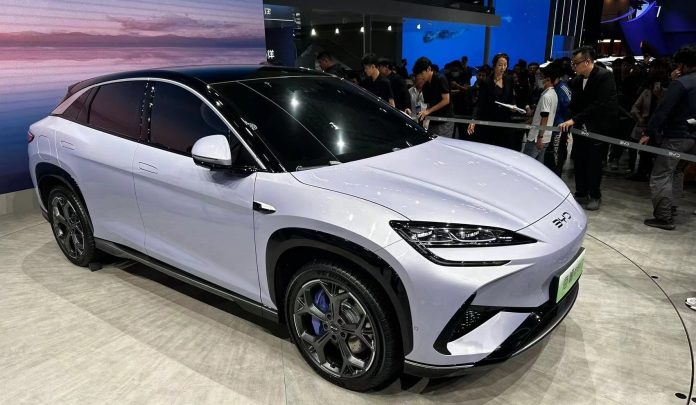
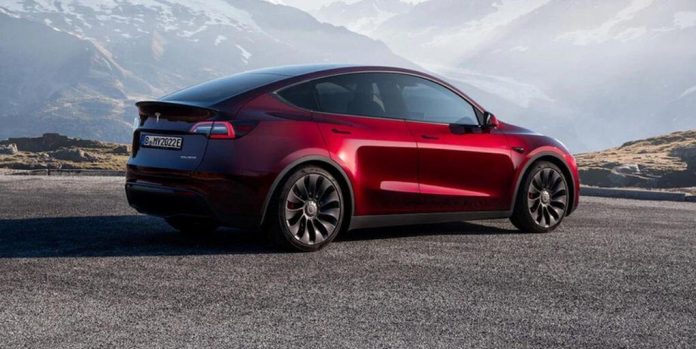
BYD’s U.K. Sales Surge 880% as Chinese EV Giant Strengthens Global Expansion

0

Chinese electric vehicle manufacturer BYD recorded a massive surge in U.K. sales last month, selling 11,271 cars — an 880% year-on-year increase, the company announced on Monday.

The jump solidifies the United Kingdom as BYD’s largest market outside China, underscoring the company’s accelerating global footprint despite intensifying scrutiny of Chinese EV makers in Europe.

The automaker said total sales in the U.K. so far this year have crossed 35,000 units, giving it a 2.2% market share year-to-date. The performance marks a milestone for BYD, which started as a mobile phone battery manufacturer before transforming into the world’s largest EV producer by volume.

Affordable EVs Drive Growth

BYD’s success in the U.K. has been fueled by the company’s strategy of offering lower-priced electric vehicles compared to Western competitors. Its Dolphin compact EV, which starts at just over £26,000 ($34,900), undercuts Tesla’s Model 3, priced at around £40,000, by nearly one-third. The company’s hybrid SEAL U DM-i and fully electric SEALION 7 were among its best-selling models in September, appealing to cost-conscious consumers seeking performance and value.

In addition to its growing retail presence, BYD recently opened a battery service facility in the U.K., primarily to support its electric bus operations, reflecting its commitment to deeper local integration.

Policy Boost and Market Trends

The U.K.’s broader EV market also experienced a strong month. According to the Society of Motor Manufacturers and Traders (SMMT), battery electric vehicle (BEV) sales rose 29.1% year-on-year to 72,779 units in September, following the reintroduction of an EV purchase grant in July aimed at boosting adoption.

However, the incentive excluded Chinese EV brands, a move widely interpreted as a protectionist measure amid growing trade and security tensions between London and Beijing.

European Expansion Gains Pace

Beyond the U.K., BYD’s success in Europe has been equally striking. The European Automobile Manufacturers Association (ACEA) reported that BYD’s sales across Europe rose more than 200% year-on-year as of August, while Tesla’s European deliveries dropped by 36% over the same period.

The surge places BYD among the most formidable challengers to established Western automakers, particularly as it expands its network across key European markets, including Germany, France, and Norway. The company has also announced plans to build a major manufacturing plant in Hungary, further embedding itself within the continent’s auto supply chain.

Domestic Slowdown and Stock Movement

Despite its global gains, BYD recently reported its first year-on-year decline in deliveries in China in 2025, with volumes falling nearly 6%. Analysts attribute the dip to intensifying domestic competition from rivals such as Li Auto, Nio, and Xpeng, along with price wars triggered by Tesla’s continued markdowns in the Chinese market.

Even so, BYD remains China’s best-selling car brand overall, a position it achieved last year by overtaking Volkswagen in total vehicle sales.

Following Monday’s announcement, BYD’s shares slipped 1.3% in Hong Kong trading, as investors weighed the company’s slowing domestic growth against its expanding global market dominance.

Industry observers say BYD’s performance in the U.K. and Europe highlights how Chinese automakers are redefining the global EV industry, leveraging scale, affordability, and strong battery technology to capture markets once dominated by Western firms.

While China’s EV sector faces trade barriers and potential tariffs from the European Union’s ongoing anti-subsidy probe, BYD’s surge in U.K. sales underlines a growing appetite among European consumers for cheaper, high-quality electric cars — even amid geopolitical headwinds.

BYD’s international push and its success in the U.K. signal a broader shift in the balance of power in the global auto industry — one in which Chinese automakers are no longer niche players but central competitors shaping the future of mobility.

U.S. Regulators Open Federal Investigation Into Tesla’s Full Self-Driving System After Dozens of Reported Safety Incidents

0

The U.S. National Highway Traffic Safety Administration (NHTSA) has opened a sweeping federal investigation into potential safety defects in Tesla’s Full Self-Driving (FSD) system, also known as Full Self-Driving (Supervised), after a growing number of crashes and traffic violations allegedly linked to the technology.

According to the NHTSA’s Office of Defects Investigation (ODI), the probe follows 44 reported incidents in which Tesla vehicles using FSD were said to have run red lights, veered into oncoming traffic, or committed other unsafe maneuvers that led to collisions, some resulting in injuries. The agency’s preliminary evaluation, made public Thursday, will cover an estimated 2.88 million Tesla vehicles equipped with either FSD (Supervised) or FSD (Beta).

The NHTSA said it aims to determine whether Tesla’s system provided “adequate warning or sufficient time for the driver to respond to unexpected behavior” and whether its cameras and sensors are capable of correctly detecting lane markings, wrong-way signs, and traffic lights. The review will also assess how the FSD system communicates warnings to drivers and whether those alerts are sufficient for safe supervision.

Even with FSD engaged, Tesla requires a human driver to remain alert and ready to take control at any time — a stipulation that federal regulators say is essential to avoid fatal errors. However, drivers have repeatedly reported instances in which FSD appeared to misread intersections, misjudge other vehicles’ movements, or fail to recognize road hazards.

Tesla has not commented on the new probe, though the company released an updated FSD version 14.1 this week, part of ongoing refinements to the semi-automated system that remains central to CEO Elon Musk’s vision for the future of driving. Musk has long promised that Tesla’s vehicles would eventually operate as fully autonomous “robotaxis”, capable of generating revenue for owners while they sleep or travel.

That vision, however, remains elusive. Tesla has since informed customers that full autonomy will require both software and hardware upgrades, undercutting earlier claims that existing cars could achieve full self-driving through software updates alone.

The new investigation comes at a time when the industry remains divided over the best path to achieving safe autonomous driving — the use of cameras versus LiDAR (Light Detection and Ranging).

Tesla’s approach relies entirely on camera-based vision and neural networks, with Musk frequently dismissing LiDAR as “a fool’s errand” and “a crutch” for developers who, in his view, do not trust computer vision enough. He has argued that human drivers rely solely on visual perception, not laser sensors, so a camera-based AI should eventually be capable of outperforming people on the road.

However, many autonomous driving firms, including Waymo (Alphabet’s self-driving unit) and Cruise, continue to use LiDAR — a laser-based system that builds detailed 3D maps of the vehicle’s surroundings — in combination with radar and cameras. These companies argue that LiDAR provides superior depth perception, distance accuracy, and reliability in poor lighting or weather conditions, areas where camera-only systems have struggled.

Notably, while both technologies have faced challenges, LiDAR-based autonomous vehicles have been involved in far fewer reported safety incidents than Tesla’s camera-only models. Analysts say this reinforces the case for using multi-sensor systems until camera-based AI can consistently match human perception under all driving conditions.

Tesla’s latest regulatory trouble also coincides with continued budget cuts at NHTSA, part of a broader downsizing ordered by President Donald Trump in February to reduce the federal workforce. The cuts reportedly affected several key divisions, including the autonomous vehicle oversight unit, limiting the agency’s resources for comprehensive field investigations.

Despite that, the launch of this new FSD probe signals that regulators remain vigilant as Tesla continues to push the boundaries of driver-assistance technology. The findings could have significant implications for Musk’s long-promised robotaxi rollout and for the broader debate over whether full self-driving cars should rely on cameras, LiDAR, or a hybrid of both.

If the agency determines that FSD poses systemic safety risks, Tesla could face mandatory recalls, new operational restrictions, or further scrutiny of its marketing claims — especially its use of the term “Full Self-Driving,” which many regulators and safety advocates argue is misleading.

For now, the probe adds to growing questions over whether Tesla’s vision-only strategy can safely deliver on its promise of autonomy — or whether, in the race to eliminate human error, it has introduced new dangers of its own.

Shiba Inu’s 20x Dream Is Alive, But Ozak AI’s 100x Forecast Feels Closer Than Ever

0

Crypto markets in 2025 are once again buzzing with excitement as both meme tokens and utility-driven projects surge in popularity. Shiba Inu (SHIB), one of the most recognizable meme coins in the world, is showing renewed life as investors target massive gains ahead of the next bull run. But while Shiba Inu’s 20x dream remains alive, another fast-rising project—Ozak AI—is capturing far more serious investor attention. With its AI-powered blockchain ecosystem, Ozak AI’s 100x forecast is starting to feel increasingly realistic as OZ presale gains unstoppable momentum.

Shiba Inu’s 20x Ambition Returns

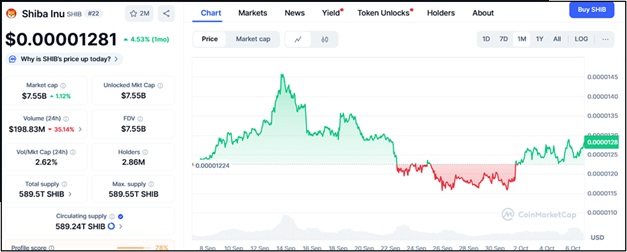
Shiba Inu has been on a steady climb in recent months, fueled by renewed community engagement and increased burn charges, which have tightened token supply. The meme coin that took the world by storm is now aiming for utility beyond speculation, with Shibarium, its Layer-2 blockchain, gambling an important position in revitalizing its space.

Currently trading close to its yearly highs, Shiba Inu’s bullish momentum is supported by a developing variety of use cases, including payments, gaming, and NFTs. Analysts have highlighted key resistance levels round $0.00004, $0.00005, and $0.000065, at the same time as preserving support near $0.000007, $0.000003, and $0.000002. If SHIB breaks above the $0.00005 stage, a 20x surge towards preceding highs could be on the table during the next market rally.

However, despite SHIB’s cultural dominance, it remains a community-driven asset—dependent largely on sentiment rather than real-world innovation. That’s where Ozak AI is standing apart: combining blockchain efficiency with artificial intelligence, delivering substance where hype often fades.

Ozak AI’s $0.012 Presale Is Breaking Records

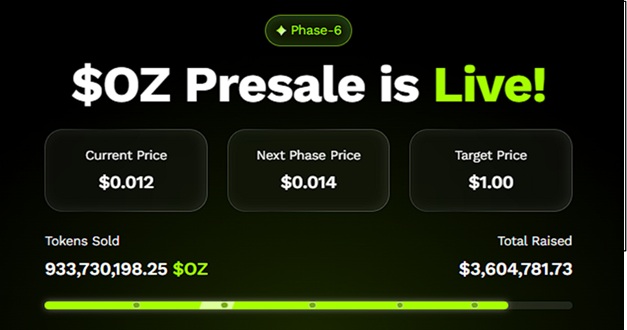
While Shiba Inu is preventing for another breakout, Ozak AI is quietly rewriting the narrative for 2025’s top-performing crypto projects. Priced at $0.012 in its 6th presale stage, Ozak AI has already raised over $3.5 million and offered more than 930 million tokens, drawing early investors who accept as true with its fusion of AI and blockchain should revolutionize decentralized structures.

At its middle, Ozak AI is constructing a community of AI Prediction Agents—self sustaining, data-driven models that examine blockchain interest, forecast tendencies, and execute smart selections in real time. This generation objectives to decorate trading performance, automate DeFi operations, and improve on-chain intelligence across multiple networks.

Its developing list of partnerships adds real credibility. Collaborations with Perceptron Network, which operates over 700,000 active nodes, offer the computational power to teach Ozak AI’s fashions. Partnerships with SINT and HIVE bring in voice-driven AI interfaces, cross-chain compatibility, and ultra-fast 30 ms market record feeds—turning Ozak AI right into a complete AI-blockchain infrastructure instead of a single-use token.

Ozak AI has additionally been audited through CertiK and listed on CoinMarketCap and CoinGecko, further strengthening investor confidence. Its appearances at Coinfest Asia 2025, alongside companions like Manta Network and Forum Crypto Indonesia, have given it international exposure and credibility rarely seen in presale projects.

Analysts Expect 100x Returns Post-Launch

Analysts are increasingly bullish on Ozak AI, forecasting 50x to 100x potential growth once the token lists on major exchanges. The project’s roadmap targets 100 million users by 2029, and with AI being the hottest narrative of the year, Ozak AI’s early positioning gives it a serious competitive advantage. By merging intelligence with decentralization, Ozak AI offers investors exposure to both the AI boom and the crypto revolution—two of the fastest-growing global sectors.

Shiba Inu’s 20x dream proves that meme coins still have the power to rally communities and attract short-term hype. But Ozak AI’s 100x forecast represents something far greater—a technology-driven transformation that could reshape the entire crypto space. While SHIB thrives on community and nostalgia, Ozak AI thrives on innovation and intelligence. And in a market shifting toward real utility, that difference could make Ozak AI not just the next big token—but the next big revolution in crypto.


About Ozak AI

Ozak AI is a blockchain-based crypto project that provides a technology platform that specializes in predictive AI and advanced data analytics for financial markets. Through machine learning algorithms and decentralized network technologies, Ozak AI enables real-time, accurate, and actionable insights to help crypto enthusiasts and businesses make the correct decisions.


For more, visit:

Website: https://ozak.ai/

Telegram: https://t.me/OzakAGI

Twitter : https://x.com/ozakagi 

Ozak AI’s 8,333% ROI Potential from $0.012 to $1—Breaking Down the 83x Returns Early Investors Could Achieve

0

By 2025, Ozak AI will already be a big player in the crypto and AI blockchain market and will be able to provide some of the highest percentage returns to those who buy in early, with a token price that began at a low rate of $0.01 and is currently trading at $0.012. This offers staggering possible returns, forecasting a $1 in terms of tokens that will yield an 8333 percent ROI, or more simply stated, an 83 times back on investments made. It is possible to see the technology, alliances, and tokenomics of Ozak AI as a convincing investment story due to the fundamentals behind such an impressive figure.

Presale Breakdown and ROI

The Ozak AI presale process started with a humble token price of $0.01. Having already sold more than 929 million tokens during the initial price setting of $0.01 and $0.012 currently, the project intends to go through multiple phases, as tokens will be offered at $0.014 and higher before the actual launch of the project at $1.00. Those who invest for $0.012 early may gain an 8,233 percent payoff should the $1 target be hit, and this will be computed as (1-0.012)/0.012×100. Practically, the initial phase investment of 250 dollars would grow to over 20,000 dollars, and the current stage investment of 250 dollars to over 2,000 dollars at the time of launch would reflect growth at the start and potential growth in the long run.

Basic Capabilities that Drive Growth

Ozak AI has a distinct selling point, which is its high-level AI blockchain utility. The major features are:

  • AI-based predictive signals in financial markets are more accurate at predicting market movements than traditional market predictions.
  • Live connectivity to the Pyth Network, which provides live feeds of financial information across more than 100 blockchains, improves the accuracy of decisions made.
  • The one-click AI upgrades through the SINT platform, and users can easily upgrade the voice and other AI features.
  • Bridges to cross-chain transfers of token interactions between different blockchain ecosystems, which make them interoperable and liquid.

Strategic Partnerships Creation of Value

The collaboration of Ozak AI provides the company with a much more substantial base in the market and utilization.

  • Pyth Network co-operation offers real-time financial data feeds of various blockchains, accelerating forecasting capability and market responsiveness of Ozak AI.
  • The Dex3 partnership will help to improve the trading experience with better liquidity solutions and automated trading processes, making it easier to access Ozak AI tokens and trade efficiently.
  • Ozak AI Rewards Hub (Available) is the entry point into the staking and rewarding system, which will establish a sense of community-building and enable users to earn and contribute to the governance.

Position in the ecosystem and in the market

The timely sellout of Ozak AI presales indicates high community demand and investor trust, and its status as not an overly speculative token but a platform with practical uses surrounded by robust blockchain and AI technologies supports its potential to better compete with more established projects such as Ethereum. The Ozak AI tokenomics is an incentive to hold long-term and be governed and staked in real-time to assist in long-term ecosystem growth and stability.

Conclusion

Having a base price of $0.012 and a target launch price of $1, Ozak AI projects an amazing 8333% ROI, or 83x launch capital, to early investors. Backed by its advanced AI capabilities, data integrations based on real-time blockchain, and a powerful collaboration with Pyth Network and Dex3, the project has a solid value offering to intelligent investors who are ready to get substantial returns along with a reasonable level of utility and prospects of growth. Ozak AI Rewards Hub provides an active and rewarding community perspective, and it makes it a full-fledged investment in the AI blockchain niche by 2025 and beyond.


For more information about Ozak AI, visit the links below:

Website: https://ozak.ai/

Twitter/X: https://x.com/OzakAGI

Telegram: https://t.me/OzakAGI