DD
MM
YYYY

PAGES

DD
MM
YYYY

spot_img

PAGES

Home Blog Page 3772

Ethereum and Solana Struggle While Scorpion Casino Presale Hits $3.7 Million

0

The crypto market has had a tough January, with many of the usual best cryptos to buy staying in bearish territory. Ethereum (ETH) and Solana (SOL), two market leaders, lost much of the ground gained in early January. Amidst this chaos, experts have rated Scorpion Casino (SCORP) highly as its presale saw inflows reaching nearly $4 million. Join us as we explore if SCORP can be the answer for investors looking to pivot away from ETH and SOL.

Ethereum Stays in the Red

Ethereum chart paints a picture of stagnating growth. Despite robust fundamentals, Ethereum grapples with an intriguing pattern—a lack of a new higher high. In bullish market phases, assets typically establish a series of higher highs and higher lows. However, Ethereum’s recent inability to surpass its peak raises questions about its long-term performance.

A formidable resistance level acts as a ceiling for Ethereum, hindering further upward movement. This resistance, a cluster of sell orders, poses a challenge to bullish momentum. Even as there are rumors of Ethereum ETFs getting approved ETH prices remain stagnant and unable to scale to the levels previously set in 2021.

Scorpion Casino: A Presale Success Story

Amidst the struggles of Ethereum and Solana, Scorpion Casino presale has raised a remarkable $3.7 million. Scorpion Casino offers unique features that set new industry standards. The allure of daily USDT rewards, withdrawable during the presale, adds an enticing dimension for investors.

The reward scheme has already gained traction, with holders already reaping rewards exceeding $5,000 USDT in less than 30 days. The presence of some famous ambassadors, like Sofia Zamolo, amplifies Scorpion Casino’s reach, creating a buzz in the crypto community. Adding to the excitement is the project’s presale competition that rewards the top three SCORP buyers with 5000, 3000 and 2000 USDT till February 14. The impending listing on BitMart further solidifies its position as a promising investment opportunity.

Solana Battles for Momentum

Once hailed for speed and efficiency, Solana finds itself grappling with volatility in the crypto market. Despite a promising technical outlook, Solana struggles to surpass the $110 mark, facing significant resistance. The price chart tells a tale of resistance and consolidation, indicative of an asset in need of momentum.

The $110 resistance level proves to be a formidable barrier, with sell orders accumulating, exerting downward pressure. The Solana Saga phone launch has instilled some confidence but SOL has still not shaken off bearish pressure as of yet. SOL’s strong ecosystem and the recent spate of airdrops have all given monetary highs but still haven’t provided the push to notch highs, prompting investors to look for other assets.

Picking the Best Crypto

In a lagging market, Ethereum and Solana grapple with their respective challenges, leaving investors in a search for other assets with more potential. Scorpion Casino meanwhile is writing its success story, with its presale surging with daily rewards and a notable $3.7 million in funds raised. The unique withdrawal feature, coupled with a star-studded ambassador lineup, positions Scorpion Casino as a frontrunner in the crypto landscape. As the pre-sale competition heats up, investors find themselves at a crossroads, with Scorpion Casino standing tall, ready to redefine industry standards. Seize the opportunity, join the Scorpion Casino pre-sale, and be a part of a revolutionary crypto journey.


To learn more and invest in the Scorpion Casino presale, visit:

Presale: https://presale.scorpion.casino/

Twitter: https://twitter.com/ScorpionCasino

Telegram: https://t.me/scorpioncasino_official

Will Scorpion Casino’s Crypto Presale Steal the Spotlight from Cardano (ADA) and Ethereum (ETH)?

0

In the dynamic world of cryptocurrency investments, Ethereum (ETH) and Cardano (ADA) have consistently been at the forefront, dominating the scene with their innovative technologies and solid reputations.

However, the emergence of Scorpion Casino ($SCORP) is stirring the pot in the crypto presale arena, sparking debate over its capacity to challenge these titans. With its presale drawing attention, Scorpion Casino is offering investors a chance at substantial passive income through its unique foothold in the thriving online gaming market. Scorpion Casino is setting the stage for what could be a shift in the crypto market, making it a focal point for those on the hunt for the next lucrative crypto investment.

Want to earn up to $10,000 USDT daily?

Scorpion Casino: Revolutionizing the Crypto Presale Landscape

Scorpion Casino’s presale has already gathered an impressive $3.7 million, challenging the status quo. Unlike the traditional ups and downs of the crypto market, SCORP introduces a revenue-sharing system, making it a potential golden goose for crypto passive income in 2024.

The Scorpion Casino platform, operational for over 1.5 years, has achieved significant milestones, including a successful V2 launch, a strategic partnership with Tenset, and recognition on CoinMarketCap. With a revenue-sharing system, daily staking rewards, and collaborations with major influencers, Scorpion Casino has carved its niche in the crypto gaming space. Most recently, it achieved a listing on BitMart, fuelling excitement surrounding its imminent market launch.

Ethereum: Pioneering Blockchain and Leading in DeFi

Ethereum, launched in 2015, revolutionized blockchain with its smart contract functionality, enabling developers to build decentralized applications (DApps) on its Ethereum Virtual Machine (EVM). Central to its acclaim is its pivotal role in decentralized finance (DeFi), making it a prime platform for financial services without traditional middlemen.

Ethereum’s transparency and security features have made it a leading blockchain for DeFi, hosting decentralized exchanges, lending protocols, and yield farming platforms. Its native currency, Ether (ETH), powers transactions and DApp interactions, cementing Ethereum’s status as a top cryptocurrency for DeFi investment.

Cardano: Advancing Blockchain Innovation with a Focus on Best Cryptos

Cardano, known as the “Ethereum killer,” is founded by Ethereum co-founder Charles Hoskinson and stands out for its scientific, research-driven approach to blockchain innovation. It prioritizes security, scalability, and sustainability, featuring a proof-of-stake (PoS) mechanism that allows ADA token holders to participate in governance. This approach not only promotes decentralization but also makes Cardano a top choice for investors interested in influencing blockchain development.

As a significant player in decentralized finance (DeFi), Cardano focuses on interoperability and a secure platform for decentralized applications (DApps), positioning itself as a key investment for those looking to future-proof their stake in the evolving blockchain ecosystem.

Conclusion: Scorpion Casino’s Triumph in the Crypto Arena

Scorpion Casino’s presale stands as a compelling investment, potentially outshining Ethereum and Cardano with its innovative revenue-sharing model in the online gaming sector. With $3.7 million already raised, it offers a unique opportunity for passive income, distinguishing itself with operational achievements and strategic partnerships.

Unlike Ethereum’s focus on smart contracts and DeFi, and Cardano’s emphasis on scalability and sustainability, Scorpion Casino capitalizes on the crypto gaming market’s growth. Its success, including a significant V2 launch and a listing on BitMart, positions it as a promising newcomer in the crypto space, making it an attractive option for investors seeking the next major crypto venture.


More information on SCORP:

Presale: https://presale.scorpion.casino/

Twitter: https://twitter.com/ScorpionCasino

Telegram: https://t.me/scorpioncasino_official

Central Bank of Nigeria’s “FCY Gateway Bank”, And Why Domiciliary Accounts Should Breathe

1

Wow:  The Central Bank of Nigeria (CBN) has an x-factor to the Naira challenges, and is “introducing a single singular foreign currency (FCY) gateway bank to centralize all correspondent banking activities…” in Nigeria . According to Investopedia, a “correspondent bank is a financial institution that acts as an intermediary between domestic and international banks. Correspondent banks provide third-party services on behalf of another financial institution, usually in another country.”

Banks like Citi and UBS serve as correspondent banks to many Nigerian banks; it seems Nigeria wants to take them up. In a post last week, I noted the pressure Naira was getting via cross-border lending. It is indeed very refreshing that the apex bank is looking at how to close some loopholes outside the nation.

If Nigeria goes ahead with this FCY gateway bank, many good things will happen, but it will also open the nation to new risk vectors, on contract obligations. Yes, if Citi serves say Zenith Bank, Zenith Bank arguably expects the funds to be there since they’re far apart. But if a unit of CBN is taking care of that, how would the commercial bank’s global customers view that arrangement in the international market? More so, how would Zenith Bank relate with its regulator in this context?

Yet, if this works, Nigeria can have clarity on the movement of funds in its ecosystems. Possibly, a better view of some activities like money laundering and round tripping of funds will emerge.

Domiciliary Accounts in Nigeria

Domiciliary accounts are not our problem. It has always been here. Think of it: what is $30b in dorm savings to affect Naira if Nigeria is productive? South Africa Stock market is worth $960 billion, Nigeria NGX $50billion. Our national budget is $30b, South Africa’s $137 billion. Because we’re all-money no-capital, we see positives as negative. Those $30b could become asset classes in NGX and deliver capital in Nigeria. In the USA, people package debts & loans and create exotic assets which are worth $billions in the capital market. But Nigerians have cash and some are complaining that dorm accounts are bad. I do not think so.

Poor people use money, great nations build capital on money. Nigeria has $30b (US dollars) in its banking sector which can be turned into capital and advance the nation. If you close dorm accounts, families will still ask for dollars for foreign medicals, schools, etc because we’re destroying local options. So, we need to allow dorm accounts to breathe.

The Strength of Naira Comes from Factories and Warehouses (not CBN headquarters)

The strength of Naira does not come from CBN headquarters, but from warehouses and factories (old and modern). Banning dorm accounts will be a mistake: we cannot focus on symptoms instead of fixing the root causes. If politicians are round tripping funds, arrest and prosecute them, instead of banning dorm accounts. If bad guys are entering Nigeria, arrest them over closing land borders. If people are diverting petrol to Cotonou, arrest them via a better Customs system instead of removing fuel subsidies since every decent economy subsidizes energy for competitiveness.

Yes, if you ban dorm accounts, politicians will still steal and will find new avenues to do their things. Hello, real estate. Dorm accounts are a global thing, from Canada to Kenya, UK to Australia, and beyond; Nigeria did not invent it. In those countries, their currencies have not crashed. In China, HSBC China will help you open bank accounts in China in nine major currencies , from USD to Yen.

Daily, we wake up with directives and circulars to banks, from CBN. In the past, during the military and before 2011, CBN used to publish working papers. I am hoping to read more working papers so that we can see data which they’re using to make these decisions.

In this piece, I also argue that Nigeria’s FX problem is not connected with dorm accounts. Most countries operate dorm accounts, from Canada to China, and their currencies have not crashed. Instead of seeing the $30B in dorm accounts as a negative, Nigeria should flip it as a positive. 

In America, people buy debts, repackage them into exotic assets and sell them for $billions. The Nigerian capital market  which has access to $30B in USD in our banking system can come up with something more exciting. Lack of innovation is the reason we see positives as weaknesses. Our stock market is worth $50B when South Africa is worth more than $960B because they innovate; someone there would turn that $30B from money to capital, and by the time all is done, you have a new asset-sector worth $100B.

Banning Domiciliary Accounts Will Destroy Nigeria’s Economy!

In this piece, I have made my case that dorm accounts are not the cause of Nigeria’s FX paralysis. Most countries have dorm accounts. In HSBC China, you can get nine foreign currencies if you want. Many Canadian banks can offer you US bank accounts in Canada. Within Africa, many countries offer dorm account services via their banks. If we have illegal activities on dorm accounts, prosecute them; do not ban the service. We cannot be using the blanket model. You cannot fix corruption in fuel subsidies, you remove them even though subsidies on energy are not bad. You struggle with contrabands, you close land borders; not great.

But if Nigeria decides to ban dorm accounts [Nigeria will not do that], it must realize that it is equivalent to closing Zenith Bank, one of our nation’s largest banks, on an asset basis.  Yes, people will use peer-to-peer services and move those $30 billion funds outside the nation. Do you prefer the funds in Lagos or scattered in New York, London, etc?

Nigerians must not pressure the central bank to wake up daily fighting Naira just from its headquarters. The strength of Naira does not come from CBN headquarters, but from warehouses and factories, the modern and the old. We should allow CBN to also breathe, and get the team to leave their offices and visit Aba, Kano, Ibadan, Jos, etc and explore how to help those companies. Daily circulars and directives will not solve this problem, only more shifts in factories will do.

I think a lot of “finance” reforms and changes have been made; now is the time to explore the other side: improve manufacturing environments and ease of doing business. Let us help CBN to make that case. Personally, I commend the team for their efforts last week; but I want them to diversify the solution space.
—from Mr. Olayemi Cardoso, the Governor of the Central Bank of Nigeria (CBN) speech

“In the short term, we have put in significant work, and we are witnessing results in improving the market structures and removing all the bottlenecks stifling the supply of FX into the country.”

“We have addressed the challenges to remittance flows, reduced the ability of banks to hold on to positions, and more importantly, we now have the export proceeds from the national energy sector flowing back through the Central Bank. We have also initiated several short-term measures to make naira assets attractive to foreign investors”

“The eventual stability of the Naira will be driven by our ability to address the fundamental issues affecting our economy…bring inflation under control and promote the growth of Nigerian businesses such that we eventually export much more than we consume as a nation.”

Short-to-Medium Term Strategy Focus on Improving FX Inflows and Stabilising the Naira

1. Our policy focus is on achieving rate stability and maintaining market flexibility and liquidity. The move to unify the naira exchange rate and lift currency trading restrictions in June 2023 aims to establish market-driven rates through price discovery. This strategy seeks to create a more efficient and transparent FX market to boost investor confidence and reduce market volatility.

2. Over the past six months, the Bank has taken deliberate steps to enhance liquidity and FX supply in the forex market. All FX transaction windows have been consolidated into the NAFEM platform. Outstanding FX obligations, particularly those of foreign airlines, have been progressively settled. Enhanced monitoring of FX market activities and a continued emphasis on transparency and price discovery are key priorities. These efforts will be further consolidated in the future.

3. Recently, the CBN removed the exchange rate cap to enable International Money Transfer Operators (IMTOs) to disburse remittances at market-determined rates without restrictions, following a willing seller, willing buyer approach. Additionally, the transfer of the NNPC account to the CBN, as directed by Mr. President, aims to increase liquidity in the market. These measures address the FX market’s liquidity challenges, streamline capital flows, and mitigate currency risks.

4. In line with coordinated monetary and fiscal policies, efforts are underway to ensure that all USD-earning agencies and parastatals remit their earnings directly to the CBN to enhance transparency and liquidity in the FX market.

Medium-to-Long Term Strategy Focus on Improving FX Inflows and Stabilising the Naira

1. The CBN is currently devising strategies to revamp the Bureau de Change (BDC) segment for enhanced efficiency and aims to streamline their numbers for better management and supervision.

2. Exploring mechanisms to incentivise individuals holding foreign currency (FCY) outside the banking system to deposit these funds within the banking system, necessitating the establishment of a legal framework.

3. Plans are underway to establish an Investor Relations Group (IRG) modeled after the Philippines to elevate Nigeria’s credit profile and position the country as a prime investment destination.

4. Introducing a single FCY gateway bank to centralize all correspondent banking activities, currently dominated by two major banks in the corresponding banking space.

5. Strengthening surveillance and technological capabilities to monitor cryptocurrency transactions effectively. 

Morocco’s Expat Remittances up 4% to $11.5 Billion in 2023

0

Morocco’s economy has received a boost from the remittances sent by its expatriate workers, who contributed $11.5 billion to the country’s gross domestic product (GDP) in 2023, according to the World Bank. This represents a 4% increase from the previous year, and places Morocco among the top recipients of remittances in the world.

Remittances are money transfers sent by migrants to their families and communities in their countries of origin. According to the World Bank, Morocco is the second-largest recipient of remittances in the Middle East and North Africa region, after Egypt, and the seventh largest in the world.

In 2020, remittances to Morocco reached $7.4 billion, equivalent to 6.5% of its gross domestic product (GDP). This represents an increase of 6.5% compared to 2019, despite the global decline in remittances due to the pandemic.

The report attributes this rise to the recovery of the global economy after the COVID-19 pandemic, which boosted the income and savings of Moroccan migrants, especially in Europe and North America. The report also notes that Morocco has implemented several measures to facilitate and incentivize the transfer of remittances, such as reducing transaction costs, improving financial inclusion, and offering tax benefits.

The remittances sent by Moroccan expatriates constitute a vital source of foreign currency for the country, as they account for about 10% of its gross domestic product (GDP). They also play a key role in supporting the living standards of millions of Moroccan households, who rely on them for consumption, education, health, and investment.

The World Bank expects that Morocco will maintain its position as one of the top recipients of remittances in the Middle East and North Africa region, and that the remittances will continue to grow in the coming years, as more Moroccans seek better opportunities abroad and as the diaspora expands and diversifies.

The World Bank estimates that there are about 5 million Moroccans living abroad, mainly in France, Spain, Italy, Belgium, and the United States. They form a large and diverse diaspora that contributes to the social, cultural, and economic development of their country of origin.

The Moroccan government has implemented various policies and programs to strengthen its ties with its expatriate community, such as facilitating their access to banking services, granting them voting rights, and supporting their investments and philanthropic initiatives.

Remittances are expected to remain a vital lifeline for Morocco in the coming years, as the country faces multiple challenges, such as reducing unemployment, improving education and health outcomes, and addressing climate change.

The World Bank recommends that Morocco continue to enhance its business environment, diversify its export sectors, and promote financial inclusion and digitalization to maximize the benefits of remittances for its development.

Remittances have multiple benefits for Morocco’s development. They provide a lifeline for millions of households, especially in rural areas, who rely on them for consumption, education, health and investment. They also support the balance of payments, the exchange rate and the foreign reserves of the country. Moreover, they have a positive impact on poverty reduction, inequality reduction and human capital development.

However, remittances alone are not enough to ensure sustainable and inclusive growth for Morocco. The World Bank report argues that Morocco needs to leverage its remittance inflows to foster productive investments and economic diversification. To do so, Morocco should continue to enhance its business environment, diversify its export sectors, and promote financial inclusion and digitalization.

Improving the business environment is crucial to attract more foreign and domestic investment, create more jobs and increase productivity. The World Bank praises Morocco’s efforts in this regard, such as the adoption of a new investment charter, a new insolvency law and a new competition law. However, it also points out some remaining challenges, such as bureaucratic procedures, corruption, access to finance and judicial efficiency.

Diversifying the export sectors is essential to reduce Morocco’s dependence on a few products and markets, such as phosphates, textiles and Europe. The World Bank commends Morocco’s achievements in developing new sectors, such as automotive, aeronautics and renewable energy. However, it also urges Morocco to expand its export base to other sectors, such as agribusiness, tourism and services.

Promoting financial inclusion and digitalization is key to enhance the access and use of financial services by individuals and businesses, especially those in rural areas and informal sectors. The World Bank acknowledges Morocco’s progress in this area, such as the expansion of mobile banking, microfinance and postal banking. However, it also recommends that Morocco further develop its digital infrastructure, financial literacy and regulatory framework.

Challenges and Criticisms Continue To Emerge in the Africa-China Ties

0

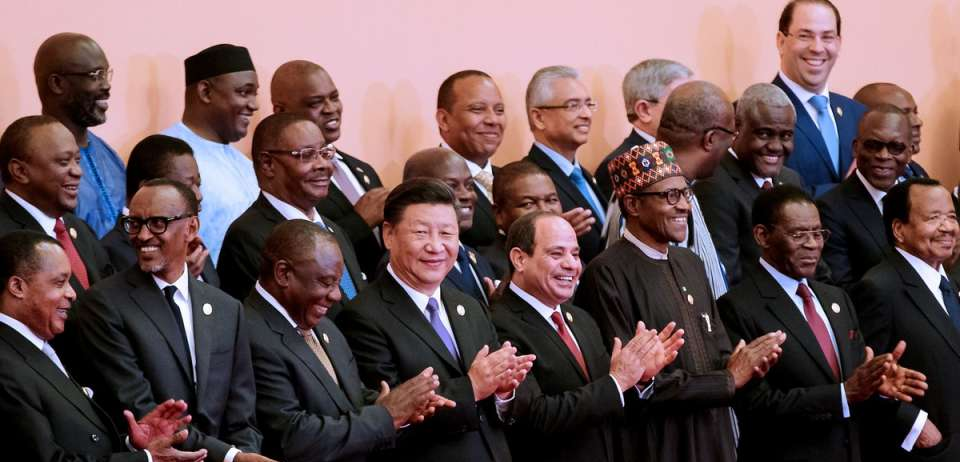
Africa and China have a long history of economic and political ties, dating back to the 1950s when many African countries gained their independence from colonial powers. China supported the liberation movements and provided aid and investment to the newly formed states.

Since then, China has become Africa’s largest trading partner, a major source of infrastructure financing, and a key player in regional and global affairs.

However, in recent years, some critics have raised concerns about the nature and impact of China’s engagement with Africa. They argue that China is exploiting Africa’s natural resources, creating debt traps, undermining governance and human rights standards, and eroding Africa’s sovereignty and agency.

They also claim that China is pursuing its own strategic interests in Africa, such as securing access to markets, raw materials, and political influence, at the expense of Africa’s development and security.

These criticisms are not entirely unfounded, but they also overlook some of the benefits and opportunities that China’s presence in Africa offers. China has contributed to Africa’s economic growth, poverty reduction, infrastructure development, and regional integration.

China has also supported Africa’s participation in multilateral platforms, such as the Forum on China-Africa Cooperation (FOCAC), the Belt and Road Initiative (BRI), and the African Continental Free Trade Area (AfCFTA). China has also cooperated with Africa on various issues of common concern, such as climate change, public health, peace and security, and digital transformation.

Therefore, it is not a question of whether Africa should engage with China or not, but rather how Africa should engage with China in a way that maximizes its benefits and minimizes its risks. This requires a comprehensive and nuanced understanding of the opportunities and challenges that China’s involvement in Africa presents, as well as a clear vision of Africa’s own interests and priorities. It also requires a proactive and pragmatic approach that leverages Africa’s strengths and capabilities, while addressing its weaknesses and vulnerabilities.

Trade and investment: Africa should diversify its exports to China, reduce its trade deficit, negotiate fairer terms for Chinese loans and projects, promote local content and value addition, enhance environmental and social safeguards, and foster more balanced and sustainable economic partnerships.

Governance and human rights: Africa should uphold its own values and standards of democracy, rule of law, human rights, and good governance, while engaging with China on these issues through dialogue and cooperation. Africa should also protect its sovereignty and independence from external interference or pressure.

Security and peace: Africa should enhance its own capacity to address its security challenges, while seeking China’s support for peacekeeping, counterterrorism, maritime security, and conflict resolution. Africa should also ensure that its security cooperation with China does not undermine its relations with other partners or regional organizations.

Development and cooperation: Africa should align its development agenda with China’s cooperation initiatives, such as the FOCAC action plan, the BRI projects, and the AfCFTA framework. Africa should also leverage China’s experience and expertise in areas such as industrialization, urbanization, digitalization, agriculture, education, health, and innovation.

Global governance: Africa should strengthen its voice and influence in global affairs, while working with China to reform the international system to make it more inclusive, representative, and responsive to the needs and aspirations of developing countries. Africa should also collaborate with China on global challenges such as climate change, pandemic response, debt relief, multilateral trade, and human development.

By reviewing and recalibrating its relationship with China in these areas, Africa can enhance its strategic partnership with China in a way that serves its long-term interests and goals.

This will also enable Africa to pursue a more diversified and balanced foreign policy that engages with other partners on the basis of mutual respect and mutual benefit. Ultimately, this will contribute to Africa’s vision of achieving a peaceful, prosperous, and integrated continent.

Some of these include:

  • The debt burden and sustainability of some African countries that have borrowed heavily from China for infrastructure projects.

  • The environmental and social impacts of some Chinese investments and activities in Africa, such as mining, logging and wildlife trade.

  • The lack of transparency and accountability of some Chinese actors in Africa, such as state-owned enterprises, private companies and individuals.

  • The perceived imbalance and inequality of the Africa-China partnership, which is often seen as favoring China’s interests over Africa’s needs and aspirations.

These issues have raised questions about the benefits and costs of the Africa-China relationship, as well as its future direction and prospects. Therefore, it is important for African countries to review and recalibrate their relationship with China, in order to: Ensure that the relationship is based on mutual respect, trust and cooperation, and that it aligns with Africa’s own vision and agenda for development.

Enhance the quality and diversity of the relationship, by expanding the areas of cooperation beyond trade and infrastructure, to include sectors such as health, education, agriculture, science and technology, culture and tourism. Promote the principles and values of good governance, human rights, democracy and rule of law, both within Africa and in its engagement with China.

Strengthen the capacity and voice of African institutions, governments, civil society and media, to effectively negotiate, monitor and evaluate the relationship with China. Foster a balanced and inclusive relationship that benefits all stakeholders, especially the ordinary people of Africa and China.

By reviewing and recalibrating its relationship with China, Africa can seize the opportunities and address the challenges that come with this strategic partnership. This will enable Africa to achieve its goals of peace, prosperity and integration, while also contributing to global peace and development.